Author Archives: SelfPropelled

The UK and Europe. What’s next?

Waking up on Friday morning to see 52% of the population had voted to leave the EU came as a shock, leaving me with feelings of disbelief, anger and sadness. This is the biggest peacetime decision to impact the United Kingdom since the end of the Second World War, as far as the consequences are concerned. Many voters appear to have made their decision to vote ‘leave’ based on wanting to stick two fingers up at the establishment, or concerns about immigration. I can sympathise with the first, given most people despair of our politicians, or are completely disenfranchised with Westminster; something needs to change. On the second, I can see why people worry about ‘how crowded the UK is becoming and the strain of our infrastructure’, but think we’ve shot ourselves in the foot, and encouraged a dangerous and growing trend in xenophobia; thankfully the great majority of the UK population, on both sides of the vote, are by no means racist, and pretty level headed most of the time (just don’t push them too far).

It’s clear we’re in for several difficult years, and that we’re all going to have to work very hard to make it a success. Hopefully it can work and I’ve some thoughts on that later on, so if you want to get to the positive bits you might want to skip the next section.

The ranty bit
It’s clear there have been lies, disinformation and false propaganda spread by both the ‘Leave’ and ‘Remain’ campaigns. Only now are the mainstream media and politicians starting to talk straight about what could happen, and what the actual facts are where they’re known. I acknowledge there were a number of experts who did talk sense beforehand, but they were unfortunately ignored or overlooked by most.

It’s sickening seeing Leave campaigners now back-tracking on statements they made prior to the referendum. I don’t think I need to go into detail as it’s easy to find, and I’m trying to limit the length of this post as it appears most folks aren’t willing to commit time to reading lengthy articles which might actually contain sound reason and factual content; I failed on limiting the length of this post by the way.

It’s massively frustrating seeing some Leave voters now wishing they hadn’t voted that way, as they hadn’t really understood the consequences beforehand. Or saying they’d never thought the Leave vote would actually win. I can’t blame a lot of them as it’s a really complex issue on which, I believe, there should never have been a referendum, and on which there has been so much spin.

It’s disheartening seeing people think that all the red tape is now going to be slashed, even though our own Government and Civil Service invented a lot of it. Do you really think things are going to get easier for UK businesses, both large and small?

Related to the above, on the red tape front, I’m concerned that a lot of the initiatives and rules put in place to combat climate change, protect nature, and improve the environment, for example air pollution action, reducing carbon emissions, and protecting endangered species and habitats, will now be scrapped or put on the back-burner, due to more pressing economic and social concerns; although I believe the environmental challenges we’re facing are still far more pressing that anything else.

I’m frustrated that people think this will reduce immigration, when in all likelihood it won’t, as we’ll still have immigration from outside the EU, and if we want to sign trade deals with European countries I’m sure we’ll have to sign up to freedom of movement. Not only that but I wonder how many Brits living abroad will need to, or be forced to, return to the UK now. That could run into the hundreds of thousands, which surely will put additional strain on our infrastructure.

It’s saddening hearing about a growing tide of racism and xenophobia in many places. There are  lots of stories about inflammatory remarks being made to people who have come here to live and work from the EU, or further afield, many of whom just want a normal life away from harm’s way, and who contribute positively to our economy and culture. Stories I’ve read about so far include remarks like ‘you best start packing…’, a banner promoting repatriation/deportation as well as stopping immigration, polish children in tears after comments made to them at school by other children, offensive graffiti and just general abuse over social media. There are a lot of scared people in this country at the moment, on both sides, and scared people are more likely to do extreme things. A small but dangerous segment of the population seem to see the referendum decision as giving legitimacy for overt racism and abuse.

I’ve just bought a new house, and thankfully been able to fix my interest rate for a couple of years, but am very worried that potential interest rate rises, brought about by us leaving the EU, could make it hard for me to afford my mortgage in future. How on earth are young people going to stand a chance of getting on the housing-ladder if interest rates make it even more expensive; they’ll already be in massive debt if they’ve been through university anyway?

On the voting demographics front it’s sad that the younger generation, who are going to be impacted most by the changes, and who voted for the most part to Remain, are going to have to live with the implications for a lot longer than the older generation, a lot of whom voted to Leave, and who in many cases are comfortably well off with little to worry about on the pension or housing front.

It’s barmy that people in Wales, and other regions who received a lot of EU funding, are now saying there mustn’t be any cuts in grants, when many of them voted to Leave. I’m sorry, it doesn’t work that way; you can’t have it both ways and I suspect the government won’t be able to assign replacement funding as they’ll be too busy stopping the UK going bust. It’s a real shame a lot of the regeneration is now under threat. It’s also a shame that many people in these areas voted Leave on the basis of seeing ‘too many immigrants’ living on their doorstep, when I read earlier that the opposite is the case, madness.

I need to check this, but it appears the UK may have already slipped from being the 5th largest economy, to being the 6th, due to the pound sliding. There are also jitters around us losing our triple A credit rating, which will impact our ability to borrow money cheaply. This in turn could impact the very people who voted to Leave, with cuts to public services and taxes going up. The well off, such as many of the people who run the country, won’t be affected; again, shot ourselves in the foot.

I’m hoping this doesn’t happen, but we could well see the cost of imported goods rise due to changes in the exchange rate, as well as tariffs being imposed. This could lead to food price increases which will hit harder on people already vulnerable to changes brought about by an EU exit. Personally I think food is too cheap anyway, but that’s because of unsustainable or damaging farming practices; I’d rather food prices went up because of improvements in that area, and not because of leaving the EU.

It’s sad that a lot of businesses, both small and large, will probably be adversely impacted by the changes. There may be tariffs to contend with for exporting goods abroad. Borrowing money to start or expand your business could get harder if investors pull out of the UK; some already are. Unemployment could rise as a result, especially if some multi-national companies, for example financial institutions, decide to move elsewhere.

It’s slightly ironic that the banks and investment companies who have been blamed for so much in recent times, and to be fair did make a lot of mistakes, are now so critical to the future success of this country. London is the financial centre of Europe, but will it continue to be so once the UK exits the EU? You can blame the bankers all you want, but at the end of the day they employ thousands, and make a lot of money for this country.

Then there’s what’s going to happen to the UK. Scotland wants another referendum on their independence, and it seems likely the vote leave side will win this time, despite concerns about where their money will come from with oil prices being low. One wonders if Wales will start considering the same; personally think that’s unlikely but who knows.

The EU itself may be doomed, as more countries consider leaving to follow their own path. The UK referendum result has strengthened the position of many Leave campaigns in other countries, and unfortunately given legitimacy to views on the far right of politics, such as the National Front in France under Marine le Pen. It feels like a backwards step for Europe and the rest of the world, with barriers being put up instead of taken down, and the risk that we slip into more dangerous times (see Brexit Bomb blog if you want really dire predictions). I’ve had a few European friends contact me asking what’s going on, with sentiments of confusion and shock at the decision we’ve taken. It’s uncomfortable and slightly embarrassing, but I’ll continue to build bridges wherever possible and they’ll stay on my Christmas card list!

There’s been a lot of talk from many of the younger generation about quitting the UK and seeking opportunities abroad, and I can’t say I blame them. I personally think there won’t be much of an impact from this, but it’s sad that many are at least considering it; we could end up losing good people. It’s also more likely that less people will want to come to the UK, so we won’t benefit from the skills, economic boost,  labour force, and socially enriching cultures they bring with them.

And what are we left with? Some dodgy politicians who lie, change sides for their own political ends, are completely out of touch with the general populace, and who in some cases have racist overtones. Brilliant! Watching the news programmes today most of them still can’t give a straight answer to a question; do they know how irritating that is? One thing for Farage; at least he does give straight answers, even if I don’t believe them.

So what’s next?
One thing I’m not going to do, and I’m sure a lot of us aren’t going to do, including many on the Leave side of the vote who’ve seen just how rubbish a lot of our so-called leaders are, is keep quiet about this. The ‘silent majority’, a lot of whom are middle class hard workers trying to earn a decent living and support their families, should speak up more often, or stop moaning about how politicians aren’t in touch with their constituencies. We’re all encouraged to keep working hard, pay our taxes, take a family holiday and distract ourselves from real issues by prioritising the X Factor, football or celebrity gossip in the tabloids. If we want things to change we’ve got to make sure our elected representatives know we want things to change. I’m going to get on with trying to make things work, but I’m not going to shut up as some people seem to want us to do. Not speaking out when you think something is wrong has caused very bad things to happen in the past, just look at the history books. We’re good in this country at resolving issues via debate and reason, so there’s no need for violence, but make sure you don’t just tow the line and keep quiet when you see ignorance, racism, lies, or just a breakdown in common sense, causing problems. We’ve all a duty to speak up, and the Leave decision is not a mandate for allowing racism and xenophobia to spread; it’s truly distressing hearing some of the media reports about what some people are doing or saying to foreign nationals in this country.

As I mentioned earlier I’m particularly concerned that a lot of environmental issues will be sidelined now, and green initiatives shelved because of money. ‘Red tape’ introduced for very good reasons to protect the environment, endangered habitats and species, might be slashed. I’ll continue to write to my MP, sign petitions and support organisations such as Friends of the Earth, the World Wildlife Fund, and Green Peace to make sure that doesn’t happen. I hope everyone else will do the same on issues they feel passionate about, and to hold their elected representatives accountable. Don’t keep quiet, speak up!


Personally I think talk of a second referendum isn’t very constructive; I’m pretty it’s not going to happen. What we can do is use the upsurge in interest in politics to demand electoral reform in whatever form that may take, and to demand that our politicians listen and take us more seriously. I’d love it if we could prosecute them for proven instances of deliberately misinforming the public, as appears to be the case with some of the statements made in the referendum campaigns; e.g pictures on buses saying they’ll spend £350m a week on the NHS instead.


We can try to keep the UK together, and convince our countrymen in Scotland to stay with us should there be another referendum. I know it’s tempting to wish them all the very best, and to think about moving up there should they vote out and apply to rejoin the EU (I’m tempted, love Scotland), but the break up of the UK would be yet another backwards step for humanity, leading to more barriers and complications; all arguments that have been made before. As an aside, and not really supporting the case for Scotland remaining part of the UK, if Scotland does leave the UK they do have an opportunity perhaps to take over from London as the English-speaking financial centre of Europe. This could significantly boost their income and allow them to stand on their own two feet. They already have a lot of expertise in that area, and who knows, if London does disappear beneath the waves due to Climate Change perhaps a move to Edinburgh would be a good thing; although not sure Edinburgh is actually much higher than London…sorry for the tangent.

To help keep the UK together, and above water (no pun intended), we need to get off on a firm footing as far as the economy goes. So we’ve all got to keep working hard and looking for new opportunities for growth and stability. Keeping in contact with European partners, suppliers, customers and friends seems vital for this, as does reassuring them we’re not all crazy and really do want to keep trading with them. I don’t buy that we can just increase trade with other parts of the world; hopefully we can, but the fact is you’re more likely to trade with countries closer to you, due to transport costs and similar preferences. On the London being the financial centre of Europe front, hopefully we can diversify outside the EU to present new opportunities to foreign investors looking for somewhere to put their cash; not sure how this would work without introducing dodgy tax breaks but worth thinking about.

We need to get new trade agreements set up, build not break, and try not to take 10 years about it; some experts have suggested it might take that long to sort out new deals, and I’m not sure what will be left of our economy if we wait that long. We do have a strong economy, and many world leaders have said they want to continue to trade with us, so we need to use that to establish practical and worthwhile agreements. We’re a huge market for foreign companies who want to export goods abroad, not the size of the EU but still huge. Looking ahead if we can prove that this will work, with deals that benefit all parties in that agreement, then maybe other countries will follow suit and we can set up a new trade organisation, based on principles of free trade but without the rules that have irritated so many, and caused alleged problems, since we joined the EU; please can we keep the rules helping to protect the environment though. We’re going to need to some good politicians and negotiators to get these agreements set up, so I’m hoping people will continue to vote and speak up when the right deal isn’t being made, bad decisions are taken, or common sense fails. The demise of the EU might turn out not to be a bad thing if we can create something new and improved out of the ashes, with the UK as a founding member; that could be really exciting.


Lastly, on the keeping together front, we need to keep embracing our cultural diversity and welcoming people of other nationalities to our country to live and work, so we in turn will be welcomed in their countries to do the same. Having seen so much of Europe last year, and met so many great people, I know we’re all fundamentally the same and have so much to offer one another. We’re still all European, and a break down of relations if xenophobia and racism increase would only take us in a bad direction. If you don’t know your neighbour and are nervous because you’ve heard them speak another language, go and talk to them, pretty sure you’ll find out they’re nice people with very similar motivations to you.

So I think there’s hope, but we’re going to have to work really hard to make it work, and in the short-term (next 10 years) it’s going to be difficult. There are also lots of risks which could impact this, as should be evident from the above; one for those risks is people not really wanting to make it work, either because they’re British and p*ssed off with the direction taken, or European and wanting to make Britain pay – yes, people can be that petty.

One thing for sure, it’s going to be a very interesting next few months and years, and in any case, we’re all going to have to make big changes soon to react to the impacts of climate change, so one way or another the future isn’t certain. A cabin in the woods in Canada still seems quite an attractive proposition to me!

Soon I’ll get back to blogging about adventures and stuff, promise.
 

The Brexit Bomb

The following story is a work of fiction. I thought it would be interesting to think about what the UK, Europe and wider world could look like in a few years time. Who’s to say what will actually happen, it’s very hard to predict with any degree of accuracy, however I do know that within my circle of friends and peers there is a very real fear surrounding the consequences of leaving the EU. I hope at the very least this ‘story’ provokes people already decided on voting to leave, into considering an alternative viewpoint. I hope the events described below don’t come to pass. I’m not scare-mongering, just considering consequences, and writing a story. I wish more people would consider consequences, based on actual research and not unfounded fears of what might happen, or what’s causing alleged issues in our country today.

The Brexit Bomb
It’s cold. And dark. The roads are clogged up with slush again, stained brown by the polluted air. At least we don’t have to worry about global warming any more, that’s one positive, if you can call anything positive that’s happened over the last few years. I’m pretty sure we’re also in the clear on excess immigration, not many people want to move here now, of those that are left anyway. I’d laugh, but it hurts.

Whoever decided to give the UK populace a referendum on leaving the EU should be locked up and the key thrown away. We were no way qualified to make such a decision. Isn’t that what we elected members of parliament to do, advised by ranks of actual experts? I don’t think we can lock them up anyway; think they bought it when the Houses of Parliament burnt to the ground in the riots of 2018.

The referendum did one good thing. It actually got people out voting, and certainly got people interested in politics for a little while. Unfortunately the media and certain politicians spouting nonsense, on both sides of the argument, left voters believing things that simply weren’t true, or with an ill-informed and skewed view of reality.

Looking out of the window now I can see a small group of children playing under the skeletons of long dead trees. They’re young, hungry, and will probably only live into their thirties. They’ve never known anything different. I wonder which way their grandparents voted and if they had the slightest inkling of the path they were leading us down.

Voting day seemed to arrive quickly after months of speculation, with the Leave and Remain campaigns trying to sway the proletariat one way or the other. The polls were roughly even, with no-one knowing which way things would go. Politicians, leaders of commerce, historians, scientists, Nobel prize winners, and leaders of other countries had all voiced their opinions one way or the other. To this day I don’t know why a lot of folks ignored the statements being made on the risks of leaving the EU. These statements were made by highly educated, well-respected and experienced individuals. People instead chose to believe certain tabloid newspapers run by narcissistic idiots only interested in their own agendas, as well as unhinged politicians or public figures spouting badly if at all researched nonsense that only served to play on people’s fears, identifying the wrong causes for alleged problems.

I do wonder if things would have been any different if the vote had gone the other way. I suppose we’ll never know.

We woke up on 24 June 2016, in my moderately sized family home in Derbyshire, to the news that Britain had voted to leave the EU. It wasn’t even that close a vote in the end, with 59% of people voting to leave. It makes me furious even now to think how stupid we all were. I say we all were, as even if you voted to remain in the EU you probably bear some responsibility for not calling to account the voices lying about why we should leave, or doing more to assuage the fears of those voting to leave, or undecided up until the last-minute.

Writing this is giving me a headache, and unfortunately I think I’ve run out of medicine. Medicine and food, along with a whole host of other things including clean water, is in short supply these days. The regional government is doing it’s best, but there really aren’t that many options when your growing season is limited, and anything you do produce is likely to be contaminated. We hear stories that other countries might be doing a bit better, but comms are limited and even if they could help they’re unlikely to want to, seeing as we were the butterfly that casually flapped it’s wings, setting off a whole chain of catastrophic events.

To begin with the Leavers celebrated, and even those who voted to Remain were carried along in the tide of euphoria that swept the country. There was a feeling that maybe things would be better now, after all 59% of the population couldn’t all be wrong could they? We’d get back control of our country, reduce immigration, give our businesses more chance to thrive, get rid of all those petty rules made by EU bureaucrats, rules that had no place in the UK, etc etc

Unfortunately that kind of relied on our own government being clever, and the arguments for leaving the EU being true. It turns out they weren’t, and the euphoria was pretty short-lived.

Other countries even jumped on the bandwagon carrying out their own EU exit referendums, with the Netherlands quickly voting to leave, and several others on the borderline. The big shock was Germany voting to leave a year and a half later, as a wave of nationalism swept the country in the wake of the migrant crisis. The death knell for the EU was surely sounding.

Before all that things almost immediately started to go wrong for the UK. We still had a couple of years before we actually left the EU, as it would take ages to disentangle ourselves, but investors began to pull out of UK businesses straight away, deeming it too risky in an already shaky global economy.  The pound started to slide, which in theory could have increased our exports, but our manufacturing industry wasn’t exactly what it had been. London, the once financial centre of the world, was relegated down into the doldrums as the markets and money moved elsewhere. To be fair our politicians tried their damnedest to get us new and improved trade deals, and to capitalise on our new-found ‘freedom’ in a whole host of other areas, but it just didn’t work, as the principles we’d voted to leave on were wrong. It took us quite a long time to realise we were completely stuffed, and by that time it was too late as we’d actually left. I don’t think we could have stayed in anyway as the Prime Minister had promised to abide by the referendum decision.

This water really does taste quite disgusting with the puritabs in it. Still, it’s better than the water they’ve got over in East Anglia; hardly anyone lives there now after the wind blew the toxic clouds in. We keep hoping things will get better again, but I have to admit I’ve been feeling low recently, especially after the flu swept through the city taking many of the young, old or infirm in its wake. We just don’t have the support services anymore.

Where was I? Ah yes, the economy crashed and we entered another recession. We tried to make more trade deals, and did so but had to sign up to freedom of movement within the EU, and compliance with lots of other rules around manufacturing and worker’s rights; the latter was probably a good thing the rate the government was going. In fact we were forced to abide by most of the rules we’d been party to before. People said we should have traded outside the EU more, but it’s simple question of geography; you trade more with countries closer to you.

As we were locked into lots of EU rules anyway, immigration didn’t change, not in the shorter term. To be honest I’m not sure it would have changed even if our politicians had done a better job, as at least 50% of immigrants came from outside the UK in the first place. It was lucky we still had immigration as we relied on a lot EU workers to prop up our crumbling economy, and key services like the NHS. That changed in the longer term though, as the pound continued to slide and things got worse, making Britain a pretty unattractive place to move to.

After we left Scotland held another referendum on their independence, citing that even though economically there was a risk, as North Sea oil revenues were low, they would still be better off in the EU. This time they were successful and quickly exited the UK. Wales started to consider doing the same but never really got the chance. There was talk of the North of England wanting out, and the black flag of Cornwall flying again. The UK was dying, and we considered emigrating to Scotland to try to escape the worst of the recession, and ensuing madness as people got desperate, and eventually really desperate.

Taxes rose, austerity policies continued. The UK’s credit rating dropped meaning the cost of borrowing increased, and in some cases people would no longer lend to us. The government cut back on all spending on environmentally responsible initiatives, something they could do without EU restrictions. This caused a lot of upset amongst the Greens, but to  be honest everyone was too pre-occupied by other worries to pay much attention to the dangers of climate change. Inflation rose along with unemployment and discontent, with extremist and right wings views becoming mainstream as people looked for someone else to blame.

Things got really bad in 2021, with mass riots and violence on the streets. Some towns and cities turn into war zones as rival communities from different ethnic backgrounds kicked off against each other. London was largely spared until the autumn of 2021, but then the touch-paper was lit when someone discovered that allegedly some Tory ministers were embezzling public funds. That’s when the Houses of Parliament burnt down and many were killed before order was restored. Martial law was enacted in several areas after that, until things calmed down. No-one really seems to know what happened to the Royal Family, but they’ve disappeared.

And what was going on in Europe whilst the UK was committing suicide? Things weren’t a lot better there. With the EU destabilised Russia took its chances. They’d already annexed the Crimea and large swathes of Ukraine, and now marched into Latvia, threatening to continue into Lithuania and Belarus. Lack of coherency in the EU made a response slow and indecisive. NATO wanted to act, especially under the steering hand of President Trump and the United States, but the threat of nuclear retaliation by the Kremlin stalled any action. There were also rumours surfacing, which were mostly put down to conspiracy theories, that there was a Russian mole in the UK government, in a position of some significance. Some people claimed the mole had been behind much of the Leave campaign, steered in the background by Russia, and that even now they were continuing to cause confusion and spread lies, leading to an ineffectual UK, or should we say England.

In hindsight it would have been better just to leave Russia to it, not that what was left of the UK had much choice in the matter. In the end Trump acted without the full consent of NATO, moving US Naval vessels and an aircraft carrier into the Baltic. It’s still unclear exactly what happened, but things rapidly went from warm to hot, with a nuclear device taking out the US fleet. Russia claimed it was the action of a rogue commander, which no-one really believed. Europe dithered, but Trump didn’t launching a retaliatory strike. Before people finally saw sense several nuclear explosions had gone off, both in Europe, Russia and the US, with huge numbers of casualties on both sides. President Trump was killed in the exchange, and the US is now facing its own unity challenges, but news is so scarce from that side of the Atlantic, at least publicly, who knows what’s really going on.

That was all several years ago now, but we’re still locked in a nuclear winter with little respite, even though no nuclear weapons actually detonated on the UK mainland. Plenty of people have died anyway was a result of the fallout, further civil unrest, famine and disease, but I think we’re better off than a lot.

I’m tired, really tired, and sick. I’ve lost most of my hair now, and think the cancer has spread. You’d have hoped that over the course of centuries humanity would have learned from its mistakes, and become slightly more sophisticated in its thinking, but it seems we’re doomed to failure again and again. Hopefully anyone reading this in the future might learn something from it, and who knows, we might evolve yet. For now I’m opting out, I’ve had enough…over and out world.

THE END

That was a bit depressing, but one has to ask is it that far-fetched? I think I’ll go and read up a bit more on the pros and cons on both sides of the argument. I hope everyone else does too, seeing as we’ve been granted the responsibility of deciding our own fate.


May Day Bluebells and a modern day mystery

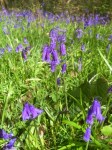
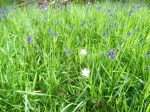
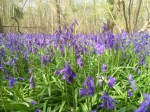
Come Spring and May Day every year I undertake a pilgrimage of sorts, along with thousands of others, to enjoy one of nature’s finest gifts; a woodland landscape carpeted in Bluebells. There’s nothing quite like seeing the forest floor come alive with violet-blue flowers, whose sweet smell tantalize your olfactory sense.

This year I took a trip up to Foxley Wood, just up the road from me in Norfolk, which is famous for its Bluebells and consequently busiest in late April and early May. It’s still a big enough wood to try to get lost in though, whilst avoiding any trampling of flowers of course.

As soon a you start looking more closely one notices all sort of things hidden amongst the Bluebells, from buzzing bees laden with heavy pollen sacs, to lots of other insect life, and other wild flowers such as Celandines, Wood Anenomes, Stitchwort, Primroses, Wood Sorrel and rare orchids.

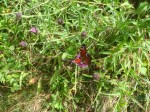
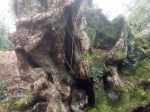
If you’re lucky and patient enough, I’m told you might even spot the odd faerie, especially around May Day, however pretty sure it’s a butterfly in the picture below. It’s easy to imagine faerie kingdoms nestling amongst the gnarled trunks of some of the trees.

There’s still plenty of time to take in the Bluebells yourself, in a woodland near you; it’s a very good way of relaxing. The viewing season usually lasts until the end of May, however it started a bit earlier this year, no doubt due to a warm winter, so will probably end earlier as a result.

If you do go down to the woods, and take your dog, please don’t add to one of life’s modern-day mysteries. I prefer the old mysteries, like how were the pyramids built, or what was Stonehenge used for, or Atlantis. I really dislike the modern-day mystery of why some dog owners will bag up their dog poop, but then choose to throw it in a bush, or hang it, almost artfully in its plastic sack, from a tree…why?! Just…why?!

Cycle to work: Why pollute when you can pedal with a plethora of positives?

With the clocks changing I’ve had the opportunity for a few longer evening rides this week, altering my route home from work to take in more of the Norfolk countryside. I’m really hoping the two glorious days we’ve just had aren’t the sum of our 2016 summer; fingers crossed there’s more good weather to come.

You have lots of time to ponder things whilst you’re pedalling peacefully past pleasant panoramas. I’m sure the roads are getting busier, and the fumes from traffic worse. It made me wonder yet again why more people don’t use a bicycle to get around? There are so many benefits that come from regular cycling, and using your bike to get around often doesn’t take any longer that the same trip by car.

I start my day with a 7.5km ride to work, often with a break for a few minutes at a quiet spot to contemplate the day ahead and organise my thoughts.

Pause for thought on the way to work

Pause for thought on the way to work

Getting to work on my bike takes about 24 minutes. It could be quicker but I prefer to take a more roundabout route to avoid traffic and pollution on the inner ring road. Driving to work, which I very occasionally do, takes the same time or longer to cover a shorter distance, and leaves me feeling thoroughly wound up from sitting in traffic. I know I’m more used to cycling long distances, but it really doesn’t take very long to become accustomed to a self propelled method of transport.

A quick search on the Interweb has revealed that a few years ago the average commuting distance to work in England and Wales was around 15km. I’m not sure why Scotland didn’t get a mention, maybe Scottish commutes are convoluted due to other factors such as the threat of ambush by wild haggis. 15km, which is just over 9 miles, isn’t  very far, and as that’s the average there are an awful lot of people who commute a far shorter distance.

I was trying to think of why people don’t cycle to work, or even walk, instead choosing to use their car instead. Maybe they don’t want to arrive at work a bit sweaty, or with helmet hair, or are scared of cycling due to bad driving. The first two are often easily solved as many work places now have showers you can use, and to be honest a 25 minute cycle doesn’t generate that much unpleasantness, especially during the winter months when it’s colder. If you’re worried about your hair, well…lucky you…a lot of people don’t have much, and frankly there are probably more important things to worry about.

I do however understand people who are nervous about cycling due to the amount of traffic, and bad driving, as it can be intimidating and scary if you’re not used to it. However the only way to overcome such fears is to give it a go and build up your confidence, with a bit of defensive cycling thrown in to make sure you’re seen and drivers don’t try something stupid. Incidentally I in no way condone stupid cycling; riders should obey the rules of the road just like car drivers.

Maybe it’s better to focus on the benefits of using your bicycle, rather than what might put you off. There are so many positives to getting on you bike and leaving the car behind. I’ve compiled a bit of a list, which is by no means exhaustive, of the reasons to take up cycling, especially for that daily commute.

In no particular order…

  1. It’s actually faster  okay, not all the time, and it depends on your route and the traffic, but that’s certainly the case with my morning ride to work. If you live in a town or city and drive to work you’re likely to be stationary for a lot of the trip, whereas on your bike your moving for much more of the journey. So you’re saving time by cycling!
  2. You can eat more – this is one of my personal favourites as I love eating. Pedalling to work every day burns off several hundred calories, which I very much enjoy replacing with the occasional bacon roll, or cake off the tea trolley that comes around at 15.00 each day and which I have great trouble resisting. Guilt free eating really is a lot of fun, and quite handy around Easter time; busy consuming an egg as I write this.
  3. Lose weight  it’s really easy to lose a few pounds each week through cycling. I struggle with this one slightly as I’m really into to benefit number 2, and keep having to add another few kilometres onto my evening ride to burn off that unexpected jaffa cake or sausage roll. If you have any sort of willpower you’ll find the pounds falling off. Also, after exercise your body will continue to burn fat at an increased rate for a short time, even after you’ve stopped pedalling, which has got to be a good thing when you’re tucking into a post ride doughnut.
  4. Be healthier – there are countless health benefits associated with cycling, from a better immune system, to increased brain power, as well as a healthier heart and lungs, better bowels and a reduced risk of cancer. Allegedly it can make you cleverer as well, due to increased blood flow to the brain and boosted hippocampus development, although I’m not convinced it’s had much of an impact on me; I’ll ask my colleagues at work, I’m sure they’ll be kind….maybe I’ll just skip that one. As a result a bit of pedalling will also reduce the risk of degenerative brain disorders such as Alzheimers. Finally cycling a decent distance each week can apparently also improve your sex life, although I suspect that really depends on your saddle; make sure you choose a good saddle, very important.
  5. Look younger and live longer – cycling increases your circulation and thus delivers oxygen and important nutrients more effectively around your body. Exercise of any sort also helps flush out toxins (it’s a good way of getting rid of a hangover). I just read that it can boost collagen production which helps reduce wrinkles and heal wounds, the latter being quite handy for me as I’m always banging my pedals against my shins or calf muscles. You’ll also live longer due to all the points mentioned in 4.
  6. Be happier, and less stressed, sleep better and be less tired – I’ve grouped these together as they often go hand in hand. Exercise of any kind releases endorphins which makes you happier. Time on your bike where you only need to focus on pedalling can reduce your stress levels, especially after a hard day in the office. A decent ride will tire you out so you’re more likely to sleep better, and exercise can actually wake you up which I find always helps in the morning.
  7. Less pollution an obvious one, as by cycling to work you’re not adding to exhaust fumes which do all sorts of bad things both to people’s health, as well as the environment. With climate change getting higher on everyone’s list of priorities this will become more and more important, especially after people read the latest predictions about sea level rises and the need to reduce emissions drastically. This is one of the most important benefits for me, as I’m getting quite sick of breathing in fumes and am very concerned over the dangers posed by fossil fuel burning induced climate change. The more people who cycle the less pollution they’ll be, so get on your bike!
  8. Avoid pollution – by taking the road less travelled to work, or using a cycle path if you’re lucky enough to have one, you’ll get to breathe in cleaner air. Even if you have to use main roads apparently you breathe in less fumes as a cyclist compared with a driver, which surprised me, but is down to being at the edge of the road and not directly behind an exhaust pipe.
  9. Encourage more cycle friendly routes – the more people who cycle the more there’s an argument for money to be spent on cycle paths and cycle friendly routes. This has got to be good for everyone as it’ll mean safer cycling, and fewer cyclists on the roads ‘annoying’ drivers. Likewise the more people that cycle the more used to cyclists drivers should get, and the more tolerant they’ll be, hopefully.
  10. Less traffic – in line with the above point more people cycling equals fewer cars, which in turn means fewer traffic jams and fewer accidents, as well as a reduced requirement for road mending, meaning everyone can go about their business more quickly and less angrily.
  11. Time to think – we lead such busy lives these days, often always connected to social media or otherwise contactable by phone or text. Putting your phone away and going for a pedal gives you time to contemplate whatever you need to contemplate. I often find myself entering an almost meditative state whilst cycling, and studies have shown it can increase your creativity. It’s also gives you a bit of playtime each day, and we don’t play enough these days; playing isn’t just for children!
  12. Increase your motivation – as with any exercise you’ll feel more motivated after going for a bike ride. Exercise can give you a bit of a high, which is one of the reasons people can get addicted to it. So pedalling to work should make you more productive at work, and more motivated to get off your backside at home and do those things you keep meaning to do, like go on adventures.
  13. Learn to appreciate the weather – Modern life means we’re often completely cut off from nature and the outdoors, shuffling from car to office to home and spending as little time as possible exposed to external elements. I don’t think humans were meant to be inside all the time. This is probably one of the reasons people get ill both mentally and physically, with more allergies and suchlike. If you cycle in all weathers you really love it when there’s sunny and warm day, but likewise I have learned to embrace the rain; it can be a lot of fun splashing through puddles – that playtime thing again, try it. The only weather I don’t particularly get on with on a bike is the wind; headwinds can be soul destroying if they go for too long, and I have had a lot of arguments with whichever deity I blame at the time for sending a headwind my way; I mostly blame Loki.
  14. Better communities – in a car I don’t get to say hello to people, or exchange smiles and waves. In fact people are more likely to swear at fellow commuters when they’re driving, or give them ‘the bird’. Each morning on my bike I say hello to people walking or cycling the other way, generally the same people each day, and feel better for it. A smile given, and received in turn, can really make you feel better. You can make new friends too, who knows who you might meet!
  15. Improve in other sports – regular cycling builds muscle, makes you fitter aerobically, and is good for the joints, so it can really help with other sports you participate in. Although don’t assume it’ll make you a good runner. Running hurts. I don’t know how anyone really enjoys running, unless its over an obstacle course with lots of mud and rivers to jump in.
  16. Raise money for charity – a long cycle challenge can be an excellent way to raise money for your favourite charity, as I have discovered when raising money for the Big C. Just be careful what you agree to; might have accidentally said I thought a tandem bike ride from Cambridge to Norwich would be a good idea, really not sure it is but it’ll be fun whatever.

There are no doubt plenty of other benefits that are worthy of a mention. What do you think? Anything I’ve missed which you think is a real positive produced by pedalling?

I’ll finish with a few photo’s from my cycle home through the Norfolk countryside today. It was ‘bootiful’ and I saw my first Swallow of the year which seems a bit early, perhaps not?

And please consider using a bike rather than a car for your commute to work, or to take the kids to school. Got to be better for everyone 🙂


Are you awake yet?

I’m not entirely sure where I’m going with this blog, but bear with me. I guess this post might upset a few people.

Always thougBear with me - ht this is a funny expression

Always thought this is a funny expression

‘You’re waking up,’ or ‘you’re awake now,’ is an expression I’ve seen used a few times recently, and which has been addressed to me several times over the last few years. I sometimes think it’s a bit odd, and slightly insulting as it suggests one has been ignorant and maybe selfish in the past, however perhaps that’s spot on.

I was pondering this on my way to work this morning. I try to pause on my daily cycle commute, in a quiet spot, to contemplate the day ahead, go over anything that’s worrying me, or just to relax in the presence of nature before heading to the office. Forcing myself to stop for a few minutes puts me in a better frame of mind for the day ahead, and I’m lucky enough to have some pretty countryside to pedal through on my route in.

This morning was beautiful, with birds singing, the air clean and fresh, and Blackthorn blossom all over the place. A few days ago the same route looked like this, still captivating but slightly chillier.

At the moment it feels like we might be on the brink of a big shift in thinking, a radical evolution in common consciousness, as people re-evaluate their priorities around wealth, happiness, security and sustainability. At least this is what I’m hoping, and am encouraged to believe as I read similar posts and comments from around the world, or talk with friends who think the same thing. I guess in the Western world we’re fortunate to be in a stable and wealthy enough position, compared to a lot of other places on the planet anyway, to have the luxury of contemplating such things, however unless the majority have this shift in perceptions, regardless of personal circumstances, I can’t see how in the medium to long-term the human race isn’t doomed to extinction, along with a lot of other species on Earth. A lot of the stuff we think is important at the moment, really isn’t, in the grander scheme of things, for example #firstworldproblems

Over the past couple of weeks several scientific sources, including NASA, have reported on how global temperature averages have risen extraordinarily, with the hottest January on record experienced in the Arctic, oceans warming up, sea and glacial ice melting at rapid rates, mass coral die offs due to bleaching, and graphs indicating the temperature rises are likely to continue. This is all pretty bad Ju-Ju, as it looks like these temperature increases are locked in, so we’ll see sea levels rise over the next century, swamping coastal cities and causing huge population migrations inland; bye-bye London and New York, just two of the cities that’ll be impacted. It’s probably too late to do anything about this, despite the Paris COP21 agreement, as the changes we’re seeing are a bit of a vicious circle; warming oceans mean less CO2 is absorbed, melting ice means there’s less about to reflect heat back into the atmosphere and space, permafrost melting releases more Greenhouse gases, Jet Stream disruptions and continuing El-Nino effects lead to more frequent violent storms; I could go on.

I mentioned the Paris COP21 agreement, and am hopeful this will have a positive impact, however I remain deeply suspicious that those in charge, and the fossil fuel industries that are under threat from Green initiatives, won’t comply with the targets that have been set, or that they’ll find excuses to bend the rules, all for the sake of profit; there are already challenges to it going on in the States, and who knows what happens in China. Even if we hit the targets it’s looking increasingly likely we won’t avert some of the dramatic changes being predicted. Fingers crossed the last dozen or so years, or even one hundred, have just been a blip.

If I was a conspiracy theorist I might suggest that the world’s elite actually want it this way. Maybe they’ve realised the planet is in for a tough time ahead, and the best thing to do to ensure their survival is to make hay whilst the sun shines, at the expense of 99.9% of the rest of the planet. Maybe they’re hoping a big plague will come along and wipe out the excess population that’s causing the rapid use of available resources, harmful pollution, and habitat destruction. Maybe that’s why governments keep getting involved in, and seemingly escalating, conflicts in the Middle East, to ensure things remain unstable and in the hope of provoking more widespread conflict they can profit from in the short-term, and in the long-term by there being fewer people around.

Thankfully I’m not really a conspiracy theorist, and simply don’t believe that the world’s top 0.1% either get on well enough, are organised or intelligent enough, or can keep secrets well enough in the age of social media, to pull something like that off. Does make you think though.

One does not simply...

One does not simply…

One thing that does seem evident is that this shift in consciousness needs to continue, away from materialism and how much one earns or owns being the measure of one’s worth, back to family, community and life’s experiences being what people set their stall by. It feels like we need to change our sense of entitlement on what’s available for us to take and use, and what we take for granted every day. Technological progress isn’t always a good thing if it means we’re creating more junk for people to buy that they don’t really need, and which will end up filling landfill sites in a few years. I mean who the f*ck needs to toothbrush that has a bluetooth connection…#extremecivilisation

I’m hoping that we’ll see more people start to really question their day-to-day practices. Do I really need to make that car journey, or could I walk or use a bike? Could I avoid buying that packaged meal or bottle of drink and find non-packaged alternatives instead, that may well be cheaper anyway? Do I need to take a flight to go on holiday? Do I need to need to use baby-wipes that take years to degrade and pollute our seas, or could I use a cloth and wash it? Same with disposable nappys, which the human race got on perfectly fine without for millennia? The list of questions can go on for a long time.

I saw San Francisco has banned the sale of one use plastic bottles, a simple and brave step in the right direction, that’ll no doubt upset a few people but is the right thing to do. Hopefully that’ll happen in more places. I’ve said this before in a blog, but I wonder if in 50 or 100 years time people will look back with incredulity at our generation(s), at how wasteful we were? How could we have thought that making something for a one-time-only use was a good idea? Or burning fossil fuels at the expense of people’s health and the environment was acceptable?

It seems evident we can’t really trust those in charge; the politicians with their short-term and vote seeking agendas (not all of them I admit, but a significant proportion), the ‘captains’ of certain industries that are only driven by profit, the deluded individuals trying to convince people that nothing is really wrong.

But people are waking up to these issues and the fact we can’t continue on this unsustainable path anymore. The mass shift in consciousness is happening, although it’s still got a way to go. The only way we can make things happen and create a better world, is by making our own changes, and encouraging others to do so, and by making those in charge or in positions of power realise we won’t just stand by and let them plunge our world, and the world of future generations, into an abyss.

It’d be great if this blog woke up just a few people, who in turn woke up a few more, along with 1000’s of others looking for positive change. I’d love to hear about people making changes in their own lives for the positive, and how they’re pushing back versus the ‘establishment’ to make them realise we won’t sit idly by.

Are you awake yet?

P.S. If you don’t here from me for a while it’s probably because the aliens, who are the ones really in charge, hence why the planet is being stripped, have kidnapped me and are no doubt inserting probes as you read this. Bonuit. #conspiracytheoryalert


2050 – A day in the life of…

It’s spring again, after yet another wet and windy winter. I’d better go out and feed the chickens,  but can’t say I feel particularly motivated to do so, not with the rain lashing against the window, sending muddy streams of water running down the hill to the already swollen river.

At least we don’t live in the village, that’ll be flooded again. I’m surprised more people haven’t moved, but I guess folks are clinging on to what they can these days. Maybe I’ll trade the last orange with the kids, as payment for doing the morning chores; we don’t see much in the way of oranges, and haven’t done for several years now, not since the new laws came in around carbon footprints. As for bananas, the children have never had one, they got wiped out by some new fungus that couldn’t be eradicated in time to save the plantations, and they’d be too far away to transport now anyway.

Still, life is pretty good, all things considered and despite the lack of exotic foodstuffs. There’s definitely more of a community spirit, and healthier lifestyles going on, both mentally and physically. Sod it, I’ll save the orange for later.

I bang on the kid’s bedroom door to wake them from their respective slumbers, and put on my boots, heading out into the rain as the sun rises behind the clouds, and the neighbours ever hopefully cockerel welcomes in the new day. The constant whirring of the wind turbine supplying power to both our house, and those of several neighbours, reminds me that I should check the solar panels soon, now that we’ve more daylight they’ll need cleaning. There’s a lot more renewable energy now, with the ban on most fossil fuel burning in place. We’ve enough power for everything we need, unless it’s really cloudy and there’s no wind for an extended period.  As long as the kids have an internet connection they’ll be happy, but I ration them to an hour online a day, aside from school, to make sure they have time for chores and learning skills that’ll be important should things deteriorate.

So much has changed in the last 30 years, and so quickly, faster than any of the scientists were predicting, or willing to predict anyway. The CO2 levels in the atmosphere rocketed, due to warming oceans soaking it up less and less, more being released from vast areas no longer locking greenhouse gases away under a permafrost layer, and humankind’s continued thirst for cheap and dirty energy. A few big and unexpected volcanic eruptions didn’t help either, although they did remind people we can’t control everything. We reached a tipping point where global temperature rises were locked in, and are still locked in despite a massive reduction in carbon emissions. In the space of about 20 years the big glaciers in the Arctic Circle had all but melted, causing sea levels to rise dramatically, and huge areas to be flooded; the Norfolk coastline certainly changed, however at least we’re still above water, unlike swathes of Bangladesh and India, the Maldives, and countless other areas around the world.

I let the chickens out, make sure they’ve got enough grain, then do the rounds to check everything is in order, the pigs are happy, and nothing’s been stolen overnight. We don’t have much trouble nowadays, compared with 10 years ago, but there’s still the odd band of desperate people about, those without a home or means to contribute enough in return for food. All’s well and I head back inside hoping Danny and Jess have got breakfast ready.

The altered climate brought with a whole host of challenges. Some areas had too much water, whilst other suffered from extended drought, causing huge population migrations. War had been the motivating factor before, however now climate change took over. Then things got really bad, with economic meltdowns in China and the US sending everyone else down the tube. This led to more unrest, with richer countries no longer able to help out those most in need, or unwilling to do so with so many issues on the home front. Borders started closing, but this didn’t stop huge numbers of people streaming into Europe from the Middle East and Africa. The dystopian future people had feared would happen started to become a reality, with fascism on the rise in many countries, and vicious crackdowns on anyone threatening to further destabilise already precarious governments. The UK, by virtue of the English Channel, was spared a lot of the problems that hit France, Germany and Scandinavia, especially after some radicals blew up the Channel Tunnel; no mean feat considering it was meant to be relatively bomb proof.

Danny and Jess are up and already half way through their breakfasts by the time I’ve shaken the water off my coat and sat down at the table. We chat about who’s doing what today as we munch our way through eggs and bacon, with a few rounds of toast for good measure. I’ll need to go and restock on butter from the farm down the road again soon, and we’re nearly out of jam, with a few months until we can make any more. My wife Cassy used to make the best jam, but she passed away a few years ago, one of the last to die of the Snow virus before a vaccine was made widely available. Danny and Jess will work on their schooling this morning, before helping out in the workshop this afternoon. I leave them to clear up breakfast and head there myself, keen to finish fixing up a couple of biofuel generators that have been on my to do list for the last month, and which the mayor chased me up on yesterday.

I think about Cassy, as I often do, as I get to work cleaning the generator alternators. I miss her so much, but life goes on and I still have Danny and Jess; I’m fortunate compared to so many others. Rising global temperatures and melting ice didn’t just cause sea level rises and intense storms, we got hit by diseases no one was expecting. It started with the Zika virus spreading like wildfire, and then a whole load of other outbreaks as vector numbers and their viable habitats increased. We saw more Ebola due to a deterioration in sanitation in parts of Africa, but the Snow virus was the worst. Scientists reckon it was something locked away in the ice that thawed and went airborne, infecting masses before a vaccine could be created. Survival rates were low, and death not pretty, with funeral pyres lighting up the countryside for miles. The latest stats estimate over 70% of the world population perished due to Snow, with outbreaks still happening in some remote areas; I guess that’s solved the overpopulation crisis. Weirdly Russia seems to have done a lot better than other countries, and there are more than a few conspiracy theories suggesting why that might be, however it might just be that they were more prepared to take drastic measures to look after their own.

I finish the generators, grab lunch with Danny and Jess who as usual seem determined to explain why learning algebra isn’t going to help with anything, then we all head back to the workshop to continue working on the tram components needed for the new network in Norwich; self-drive systems I have the knowhow to build, and which Danny and Jess can help with, sort of, they’re learning anyway, and I’ll get them working in the vegetable patch if they get bored.

It’s great we have power to run things like trams, and electric vehicles, as well as our homes. We didn’t a few years ago when huge storms wiped out a lot of the off-shore turbines; higher sea levels, and massive storm driven waves aren’t kind to turbine blades. Some places started to use old petrol and diesel generators again, but that didn’t last long, with a violent backlash from many who saw such things as the cause of all our problems, and rightly so might I add (just in case the Environment Ministry is reading this). How could the human race continue using resources that are essentially dooming us, for so long, ever since the industrial revolution…bastards…why didn’t they just think a bit more about the future and their children, instead of being so unwilling to make even the slightest change to their excessive lifestyles. We’ve got fusion coming online now, finally. We should no doubt have put more effort into developing it sooner, but hindsight is a wonderful thing. Fusion is going to take a few more years to roll it out across the country, however once it’s in place we’re sorted energy wise, and the last of the nuclear plants can finally be shut down for good, getting rid of another threat to the world’s future.

We knock off an hour before dusk, after a productive day on all counts, even if Danny did fall out of an apple tree trying to retrieve the drone he’d accidentally flown into its branches. They shouldn’t have been playing with it anyway, but I let that pass; they’re good kids for the most part, and I’m conscious they don’t get as much time to just be kids as they should. Over supper we watch the latest news reports, which aren’t all doom and gloom, despite more severe weather warnings as the persisting El Nino effect and disrupted Jet Stream send more storm fronts our way; nothing new there. There’s a great documentary on how marine life has recovered in the last 15 years, since the genocidal fishing fleets were put out of action, and demand fell due to a reduced population. It reminds me we should head up to the coast, not as far away as it used to be, to enjoy some fresh crab and restock on smoked fish. Although we don’t have all the food luxuries that were ever-present 30 years ago, we’re pretty well off now, and even have an abundance of some things, such as vegetables and meat, although we try not to eat too much of the latter. It was bad for a while, with anarchy reigning when food shortages hit and things collapsed, but we got there in the end.

We wash up and ensure any waste is assigned to the relevant pod for recycling, not that there’s much waste these days with packaging made illegal, and people taking their own containers and bags to pick up food or goods from merchants or the government-run outlets. That’s another thing that’s hard to believe nowadays; how could people in the 20th and early 21st century be so wasteful? We’ll be living with a legacy of plastic bottles for millennia to come, but at least we can reuse them for various things, and very few are produced new now due to the restrictions.

After dinner, and for a bit of fun, we take the electric motorbikes out for a scramble around the nearby forest track, wearing our light enhancing goggles to avoid crashing on the way there.  We enjoy seeing who can perform the most outrageous stunts around the solar storage lighted track, and as usual Jess wins; she’s no fear that girl. After a chat with the neighbours on the way back, who are out for a horse ride and like us enjoying a break in the rain, we all plug-in to the Net for an hour before bed, surfing our way through games, adventures, social media or news, whatever takes our fancy, and occasionally interacting with each other, far away friends or relatives as we float disembodied in the ether; I can see why some people were tempted to go fully virtual.

Then some alone time. Jess and Danny are in bed. I sit by the wood burning stove which I’ve lit as a luxury, burning a few kilograms of our wood allowance, and reflect. We’ve made it, things are looking up for the human race now, as long as we remember lessons learned. A tear tracks down my face as my thoughts turn to Cassy, and all the others we’ve lost, including my parents, early victims of the Climate Riots. Yes, we’ve made it, Danny and Jess have a future, and as long as we continue to strive to live in harmony with Earth, rather than exploiting and abusing it and each other, we stand a good chance. There’s still the threat that the climate changes we’ve locked in will throw us some curve-balls, or the odd country might go rogue and contravene the Earth agreement; Russia still worries a lot of us, but we’re getting there. I wonder what our parents, grandparents, great grandparents would have changed if they could have only seen us now.

___________________________________________________________________________________________________

Interesting to write, and think about what life could really be like in the not to distant future. If not by 2050, then within the next few hundred years. It’s fascinating to think about how things could change, quite quickly, for the worse in the short-term, but better in the longer term, with sustainable policies coming into effect, and the human race living in parallel rather than perpendicularly to the rest of the planet, and technological advances still benefiting us. Of course I haven’t mentioned a zombie apocalypse, but I’ll save that blog post for another day.

Now if only everyone would really think about this, and the challenges ahead, and make changes before we’re forced to by circumstance.

Strange things did happen here

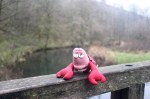
If you go down to the woods today…you might see something odd; me falling off a slackline. Slacklining was originally invented by climbers, but has developed a wider appeal over the last few years, and is definitely up there on my list of self propelled sports. Learning to walk across a 2 inch wide piece of webbing is proving pretty tricky, but great fun, and gets me out into the woods at the weekend which can’t be a bad thing. I can only manage about 5 metres without falling off at the moment, however I’m sure controlled bouncing and backflips are only a few weeks away. Travelling Lobster has already attained a much higher level of competence, however I think that’s due to a lower centre of gravity and more limbs; basically he’s cheating.

Lobster demonstrating how to walk a slackline in Bacton Woods

Lobster demonstrating how to walk a slackline in Bacton Woods

There are allegedly several benefits to be enjoyed from slacklining, including better balance and posture, improved core strength and concentration, and perhaps even a reduction in your chances of ankle or knee injuries when participating in other sports, which can’t be a bad thing. One can enter an almost meditative state whilst walking the line, as you’re only concentrating on putting one foot in front of the other, and getting to the tree at the other end. Unfortunately my meditative state is usually broken after a few seconds as I tumble off. It’s also pretty hilarious, which helps – laughing is good for the soul. I’ve been learning with a friend, who incidentally is far better than me; the inadvertent monkey noises, arm windmilling, intense expressions of concentration and frequent bouts of swearing are all cause for much hilarity. I’m not sure what people out for a walk in the woods think, must look and sound a bit strange, but I’d throughly recommend it as a cheap, fun, and non environmentally harming activity. Of course you’ll need a bit of patience, but one can look forward to feats such as those being shown off by the individuals in this YouTube clip (I’ve got a way to go yet):

There are loads of YouTube videos you can watch on slacklining, with some pretty amazing stunts, including some people riding bikes over them which I’ll have to try at some point; maybe not with all my panniers on though.

Talking of cycling, two cool things this week, the first being I had my first ever go on a tandem bicycle. There’s a vague plan afoot, with a friend from work, to ride from Cambridge to Norwich on a tandem, raising money for charity. I was slightly dubious of this idea to begin with, especially as my fellow tandem rider hasn’t actually ridden a bike for 25 years, however the initial feasibility study has proven successful, so watch this space.

The second cool cycling thing this week is tickets have gone on sale for this years Cycle Touring Festival in Lancashire. I went to the first one last year, which also marked the start point for my 6 month European cycle tour, and can thoroughly recommend it for meeting like-minded individuals who don’t think you’re a bit strange to go off pedalling for weeks, months, or in some cases years, living off what you can pack on your bike. My friend Tony, who with his wife Gill pedalled around the coast of Britain in 2014, following a similar route to mine from 2013, recently wrote an entertaining blog post about the festival and its attendees – http://www.gillandtony.co.uk/its-a-tribal-thing/

You can get tickets for the festival via their website here: http://cycletouringfestival.co.uk

I should probably explain the title of this blog post. Usually I find coming up with a title for a blog pretty easy, but for some reason I’m failing tonight. I’m going to stick with the lyrics from a song I’ve had stuck in my head for the last few days, ever since watching Mockingjay Part 1, which I really enjoyed and very much lived up to the books. ‘Strange things did happen here’ is quite apt in many ways, as lots of strange things do happen, some of which I’ve described above.

And now on to the not so good strange things. Five dead sperm whales have been found on the East coast of England over the last few days, having beached themselves, probably because they got lost in the North Sea where their sonar doesn’t work too well. The North Sea is too shallow for them compared with their normal ranges, meaning they get lost, and if they beach themselves on a sand bank they suffer cardiovascular collapse and organ failure; not a very nice way to go. Sadly this isn’t an uncommon event on our coastline, but I’m hoping it wasn’t caused by humans in this instance; maybe just the whales getting lost whilst chasing their squid prey, rather than getting confused by sounds in the sea originating from us, or becoming ill from a build up of toxins and beaching themselves (PCBs, plastic, radiation etc). I really don’t want to see any more pictures of people taking selfies with dead whales, or as I saw earlier today someone attacking the carcass to claim teeth as trophies; people are pretty awful sometimes.

This week we’ve continued to see strange weather patterns afflicting much of the world, with freezing temperatures in parts of South East Asia that don’t often go below 10’C, massive snow storms hitting the East coast of North America, and now the UK is beset by more gales and wet weather; although we have it lucky in comparison, at least most of us have central heating. The frankly worrying weather patterns are again caused by hot air being drawn up over the Arctic, including Greenland, forcing cold air south, disrupting the Jet Stream and turning weather normal for this type of year on its head in many areas. This will no doubt melt more glaciers and contribute to sea level rises in the season when these glaciers should be expanding. Reading the science behind this, the culprit is again the human race, due to unchecked CO2 emissions causing global warming in places that really don’t need to be warmed, and thus climate change. It seems obvious we’re in for rough times as the climate further destabilises, although who knows, maybe it’s just a blip; the evidence doesn’t seem to back up a blip though, with CO2 levels at their highest in 3 million years*, causing temperature rises that are warming our atmosphere and seas with devastating consequences.

*http://robertscribbler.com/2016/01/26/arctic-heatwave-drives-deadly-asian-cold-snap/

On the subject of CO2 emissions, the low fuel prices we’re seeing at the moment can’t be a good thing can they? A massive increase in oil production, from tapping shale reserves (fracking) has driven prices down, which in turn must have lead to an increase in use, with demand still rising in China and other fast developing countries. Wouldn’t it have been better to keep prices high, by increasing taxes? This would in turn:

  • Show down consumption, meaning reserves would last for longer. It’s not like we’re sustainably farming oil. We don’t plant a new crop every year and thus replace reserves; once it’s gone it’s gone, with some of the alternatives such as Biofuels having equally damaging consequences for the environment.
  • Limit CO2 emissions from cars, planes etc, and thus help with meeting targets set in the Paris COP21 agreement
  • Increase tax revenue that could then be spent on good stuff, like researching and implementing alternative clean energy sources (fusion, renewables), the NHS, or feeding and homing the homeless

I don’t claim to understand all the economics behind the oil price changes, but it seems to be driven by human greed yet again, as well as politics; wealth and politics won’t matter much if we  don’t have a planet we’re able to live on. Can we at least, as I think Stephen Hawking recently said, avoid completely destroying Earth until we have invented viable space travel and are able to colonise other planets; although quite why the human ‘plague’ should be inflicted on other worlds I don’t know, not until we mend our ways slightly anyway.

I’ll pause there on the doom and gloom front, but you have to admit it’s pretty strange how we seem driven as a race to ultimately destroy ourselves? I read a blog today where the author used the phrase ‘challenge our sense of entitlement’. This really struck a chord with me; I think we need to really challenge our sense of entitlement to what we take for granted; excess consumerism, driving a car, burning fuel, waste, our place in the Earth’s ecosystem etc.

I’ll finish with a few humorous, or in the case of the latter touching strange things.

  • Trout tickling. How on Earth was that ever invented?  Did someone just randomly get in a river one day and approach fish with rather strange intentions? This was one of the topics we contemplated whilst slacklining in the woods, and is something I think I need to try at some point. If you don’t know what it is there are videos on YouTube.
  • Ferret Legging. This is the sport where contestants put ferrets down their trousers and see how long they can keep them there. The custom allegedly arose in Yorkshire, which perhaps explains a lot, with individuals trying to hide there poaching activities by keeping these furry and sharp toothed creatures hidden down their trousers; sounds hazardous to me.
  • Cheese rolling. This is another bizarre British tradition, which takes place at Cooper’s Hill in Gloucester. Locals started racing rounds of Double Gloucester cheese down the hill, and now people come from all around the world to participate. This has apparently been going on for hundreds of years, however it sounds like something the Victorians would have invented to me, as was for example Morris Dancing, another odd but entertaining pastime. I think I might right a blog just on odd British pastimes.
  • The performance artist Marina and Ulay reunite: I saw this video a while ago, and remembered it the other day. I challenge anyone not to be moved by it.

http://www.youtube.com/watch?v=CAID_2iKO5Y

Disappearing down the rabbit hole

…”down the rabbit hole”, a metaphor for an entry into the unknown, the disorientating or the mentally deranging, from its use in Alice’s Adventures in Wonderland.

I can’t decide whether I’m disappearing down a rabbit hole, or perhaps emerging from one. Given my state of ongoing confusion and disenchantment with the state of the planet I suspect I may still be spiralling downwards instead of upwards. Incidentally, this might not be the most uplifting of blog posts I’ve ever written, perhaps because today is allegedly the most depressing day of the year, however these are topics I’ve been thinking about a lot since getting back from pedalling around Europe, and as such I thought they deserved an airing. Perhaps I’m still suffering from post expedition blues; a well-known condition where the individual just wants to keep on pedalling/walking/exploring, and has trouble fitting back in to ‘normal’ life and work.

It’s definitely not all doom and gloom. I’ve been enjoying getting out for some long cycle rides in the January sunshine, whilst avoiding too many stunts on icy roads, meeting up with friends, attempting to learn to slackline (look it up), and have even started running a couple of times a week. I’ve decided running isn’t very good for you, but hopefully it’ll get easier, and I’ve joined a team of friends running 2016 miles in 2016 for charity to assist with motivation.

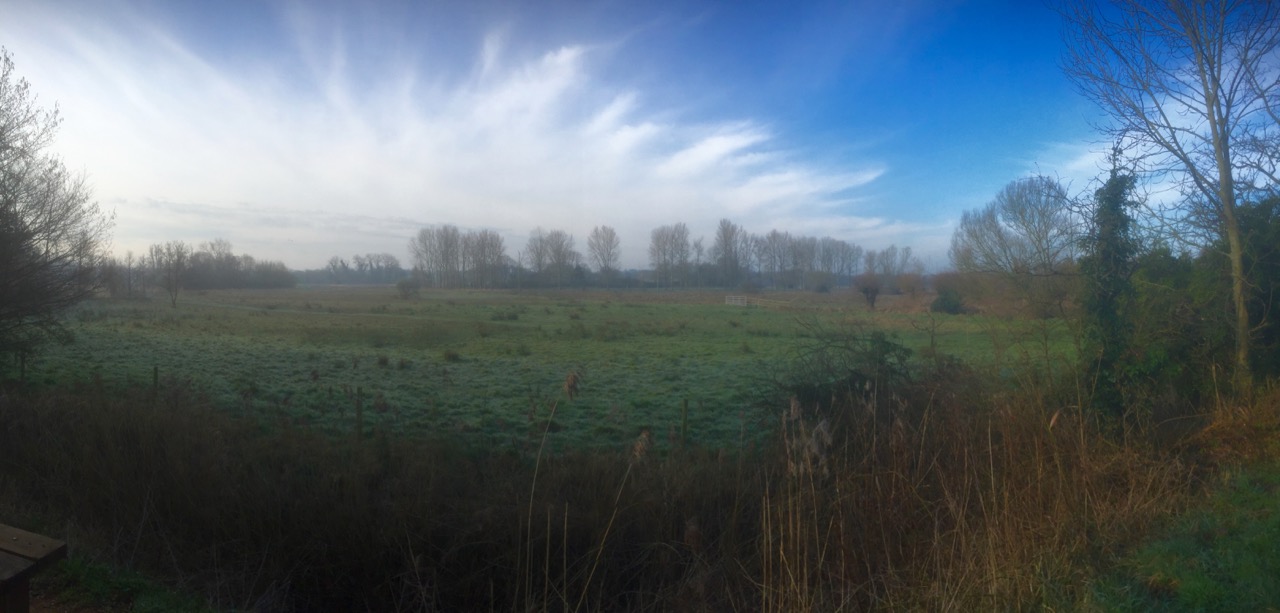
Before I dive into more serious stuff here are some uplifting photos; please refer back to them if reading this all gets a bit much. The Norfolk countryside and coastline is really beautiful at this time of year.

Nature, the environment, conservation and climate change are areas I’ve been interested in all my life, which is probably one of the reasons I studied Biology; not sure why I work in Financial Services now however it pays the bills and allows me to finance cool stuff, so all good. When you’re on the road for a long time, sleeping in a tent and pedalling through all sorts of weather, you tend to become a lot more aware and attuned to the climate and seasons, prone to thinking about the impact it can have on you each day, and to wondering what things will be like if some of the forecast changes come to pass. Travelling also brings you into contact with a wide variety of people, both rich and poor, with varying degrees of security, from refugees on the road to tourists on holiday in expensive villas. If we see some of the major climate changes scientists are talking about it’ll affect everyone regardless of wealth, however as usual it’ll be the poor that’ll suffer the most.

I’ve been doing a fair amount of reading since I returned to the UK, and am increasingly concerned we’re heading for a meltdown; I’ll present my very short conclusion and some of the sources I’ve garnered information from at the end of this post.

Here’s the stuff I’m worried about, especially when I think about the sort of world the last few generations are leaving for future generations. It shocking really, and driven by greed, ignorance to an extent laziness, oh and did I mention greed. I might delve into these topics in more detail in future blog posts.

  • The Plasticene Age – I read that the human race produces over 300 million tonnes of plastic a year, with a third of this going into the trash pretty much straight away. This has an enormous impact, so much so that we’ve created a new age which will be recognisable in the Earth’s geology for hundreds of thousands of years. At least we’ve cut down on plastic bag use, however it’d be great if we started using more sustainable materials; bring back clay pots!
  • Plastic and micro-beads – continuing on the subject of plastic, the polluting effects it has on the planet’s flora and fauna, especially in our oceans, is catastrophic. More recently the issue of the plastic micro-beads you find in so many products  (toothpaste, face scrub etc) being washed straight into the sea has been widely reported. These beads, as well other types of plastic, end up in the food chain, causing pollution and poisoning animals all the way up the chain, including humans eating fish at their favourite restaurant. It’s pretty heart-rending seeing the pictures of seabirds and creatures who’ve ingested too much plastic, often dying a particularly painful and slow death.
  • Overfishing – just when are we going to get real about this? There are still huge factory ships and fishing fleets dredging up anything from our oceans, indiscriminately, effectively turning huge swathes in dead zones. Overfishing is a real problem, with the WWF reporting that the global fishing fleet is 2 to 3 times bigger that the oceans can sustainably support. You can read the stats on the WWF website, and plenty of other sources, on irrecoverable species decline, and how new species are now starting to be exploited due to the old ones not being there anymore. Unfortunately due to economic pressures it looks highly likely oceans such as the Indian will be turned into barren wastelands before too long.
  • Rising sea levels – continuing on a water based theme for the time being, I wonder if it’s now too late to avert a catastrophic rise in sea levels. I know the Paris cop21 agreements might give us some hope, however changes might not come soon enough to avert widespread flooding and certain island based countries disappearing for good. I read recently how the storms this winter have been pushing hot air up into the Arctic, causing temperatures to rise above freezing at Christmas, which could be unprecedented in recent times. These hot temperatures may well be causing glacial melt in Greenland, rather than them freezing and growing during the winter period, which in turn could be causing a massive meltwater run off into the ocean (think lots of analysis still going on). Glacial melt, unlike melting sea ice, contributes to sea level rises, so it’ll be ‘interesting’, or perhaps I should terrifying, to see what impact this has over the next few years.
  • Climate change in general – I don’t particularly care, other than getting slightly annoyed, if you want to dispute the cause of climate change, but I don’t think anyone can say it’s not happening. And yes, we know the Earth has gone through ‘natural’ climate change in the past and bounced back, however the speed it is occurring at now is rather frightening, and whilst the planet might bounce back, will we? Personally I’m with the camp naming human based CO2 emissions from burning fossil fuels as the perpetrator, with contributions from farming practices; 20% of CO2 global carbon emissions alone come from deforestation (WWF). We’ve all experienced the intense storms of the last few years, with many scientists calling them unprecedented, and in particular this year the impact of the El Nino effect. These storms seem destined to become the norm, and get worse, so we’ll see more flooding and damage from hurricanes and typhoons. There’s loads you can read about this on for example Robert Scribbler website, including details on average temperature increases and the knock on impacts weather systems can have on different areas.
  • Migration – more extreme weather types look to be the next big cause of population migration, once we’ve got over fighting one another in different arenas; not sure that’ll happen as part of me thinks it’s deliberate on some governments parts. Drought in Africa and other parts of the world will cause massive population movement to Europe, and other less dry regions. This will in turn cause ongoing social and economic problems, with borders being closed, right-wing movements gaining power, and all the associated problems we’re seeing with the economic and refugee migrants at the moment; not a pretty picture.
  • Increased standards of living – this might seem like a weird one, but it’s going to have an exponential effect on the above unless we find and implement for example a clean source of energy (fusion, more wind farms and solar), and more sustainable sources of protein. China and India all have burgeoning populations, as do several other parts of the world, and they’ll all going to want better lifestyles, and to consume more, whether it be food or goods. This is all going to take up more resources which we’re running out of. You can’t blame people for wanting a better life, and it’s difficult to object when the West has had it good for so long, and is the cause of a lot of the damage, but something has got to stop/give somewhere along the line.
  • Exploitation of natural resources and pollution – huge companies continue to exploit the planet’s natural resources, at the expense of the environment, animals, plants and other humans. You see it in then news with pollution caused from oil and gas leaks, habitat destruction to make way for drilling or mining, and wars being fought to get control of these resources, all for the sake of profit.
  • Species decline and extinction – okay, I know species decline and extinction can be regarded as a ‘natural’ event, it’s what happened to the dinosaurs, but it’s depressing how the human race is causing so much of it; you could argue us causing it is natural, otherwise you’re saying humans are unnatural, maybe natural is an awkward word but best not get too philosophical. There have been reports of mass die offs amongst some sea-bird species, due to starvation; warming sea water leading to food sources moving. Then there is the problem we’re seeing with bee colonies dying, due to Neonicotinoids, at alarming rates, which in turn could impact agriculture, and ecosystems being completely disrupted due to one species disappearing, for example a top predator, due to human interference. I could write several blogs alone on the impact we have on different species due to fishing and farming practices, overhunting, poaching, habitat destruction and climate change. I can’t believe people still hunt endangered species, including for example whales, how is that possibly acceptable other than if you’re doing it because you need to live (e.g. some small aboriginal communities kill the odd whale for food and resources). I fear children in a few generations time will only be able to look at creatures we take for granted today on a computer screen.
  • Conservation – on the face of it conservation has got to be a good thing, right? It is but it’s got to be done right and with the proper commitment from governments and organisations. For example, many of the National Parks in the UK are pretty devoid of wildlife, both flora and fauna, aside from sheep, game birds and deer. They might be nice to walk around, but they’re pretty barren due to overgrazing, and controlled burn-offs (swaling), thus no species succession occurs in terms of long-term tree growth and areas being re-forested with something other than conifers. Economic pressure from landowners wanting to earn money from sheep farming and hunting is often the cause; sheep farming in mountainous National Parks is one of the least efficient forms of farming around, but I suppose it looks nice.
  • Overpopulation – this might be a taboo subject when it comes to discussing a solution, however the basic cause of a lot of the problems we’re seeing is there are too many people, wanting to consume too much. Thankfully with antibiotic resistant bacteria on the rise, due to irresponsible farming practices, it’s probably only a matter of time before a superbug kills off large proportion of the human race.

So what can we do about all this? Does it even matter, in the grander scheme of things? If it all goes horribly wrong then yes lots of people will die, but in a few thousand years the Earth will perhaps have recovered without us, or with a lot less of us. It’s easy to comment on and rant about such topics when we live in a first world country and don’t have to worry about running out of food or somewhere warm to sleep. Do the majority of people even care, other than paying lip service to these issues? What’s it going to take for people to make changes, and change their priorities from consuming to conserving what we have left?

Aside from running away and living in a cabin deep in a forest in the mountains somewhere, waiting for the end, which I’m still seriously considering, there are several things I’ve been doing, and I know a lot of other people are too, or things we should do as a whole, to try to improve matters. Here are some of them.

  • Read more – it’s free, and easy with the Internet. Remaining ignorant on these issues isn’t an excuse when you live in a developed country. There are loads of websites out there you can use to educate yourself, a lot of them using simple language and explanations, which I find very helpful. Following the right people on social media also helps – Twitter very useful for this. In turn you can help to educate other people and encourage constructive changes, or engage in lively debate; there is no doubt stuff I’ve written here that people will disagree with, or offer an alternative view-point or evidence, that’s great, bring it on, as long as it raises the profile of the challenges we’re facing.
  • Reduce ignorance – on the same subject as reading more, it would be great to spread the word on the issues we’re facing, and their causes, to people and in particular other cultures who don’t have it as high on their agendas. I know it’s hard to argue that someone shouldn’t clear that piece of land to grow good to feed their family, however once it’s gone in many cases it’s gone, and alternatives need to be offered. Signing petitions can often help with this, for example by highlighting issues to governments, especially in those countries where people just don’t see it as an issue, or are unaware of the disdain it causes from other nations (e.g. Japan and some Scandinavian countries with their whaling practices)
  • Consume less and recycle more – it would be great if we could all consume less in the way of plastic, and goods in general, however we’re all constantly encouraged to buy and use more stuff we don’t really need to be happy. In fact more stuff often makes you unhappy. I’ve been trying to buy things with less packaging, which is surprisingly difficult, however at least we can all try to recycle more. I’ll also be holding on to my current mobile phone for as long as possible, as well as other gadgets, and not upgrading them, as the amount of resource used to make for example a new smart phone, and the knock impact this can have, is pretty  gruesome.
  • Put pressure on corporations and governments to change their ways – it works as we’ve seen from prominent TV campaigns by the likes of Hugh Fearnley-Whittingstall, or as a result of petitions asking supermarkets to stop stocking certain brands (e.g. Tuna caught unsustainably). If we know something is wrong, and causing damage, we shouldn’t let them get away with it for the sake of profit. Greenpeace run a lot of worthwhile petitions, and engage in a lot of good work to highlight issues and put the pressure on companies or governments, but there are plenty of other organisations to support if you don’t like them. Here’s a petition I recently signed on the micro-bead issue: https://secure.greenpeace.org.uk/page/s/ban-microbeads
  • Eat less meat – I’m trying to have several vegetarian meals a week, and do my bit to reduce CO2 emissions from some types of farming. It’s really not very hard, and enjoyable finding alternatives. I think it’s important we set an example to other countries in areas like this, particularly developing nations where meat is becoming more available, or where there’s an increasing demand for it.
  • Drive less – perhaps this is easy for me to say, as I cycle a lot, and use my bike for commuting to work. I’m also fortunate I have no disabilities preventing me from an active lifestyle. It’s frustrating seeing the number of people using their car for such short journeys; perhaps a few kilometres to drop their kids off at school. I believe the average commute was recorded at around 15km in a 2011 census, which means many people have to travel a lot less than this each day, and could therefore walk or cycle. I felt slightly nauseous cycling to work the other day due to the pollution from car and lorry exhausts; it’d be great if we saw lots more people walking or cycling, and think of the personal health benefits.
  • Change priorities – it’s hard to do this in today’s modern society, with the pressure to keep up with your neighbours, consume more, and of course there’s never enough time to fit everything in. I think it’s a question of priorities. You could make time to walk to school or your workplace if you decided not to do something else, set off a bit earlier, or have a conversation with your employer. You could also choose to consume less, not buy the latest version of such and such, or live a simpler life. There are lots of articles out there about how changing your priorities to lead a simpler life, fitting in time for stuff that matters, or only buying what you really need, can make you a lot happier. I’m giving it a go, but am not going to say it’s easy to escape the trap of the modern lifestyle, especially with so much advertising telling you to consume more. I guess you also need to consider the impact of us all stopping consuming; there’d definitely be an economic meltdown of sorts, which is perhaps what the big cheeses are all scared of and thus do everything to stop. I agree there’d be some pretty tricky times in the short-term, but things would balance out in the longer term, with priorities changing and helpfully a better society and environment resulting.
  • Plant a tree – or even better, plant lots of trees. All the deforestation around not only emits loads of CO2, but also means there are less trees to convert the CO2 back to O2. It can be a fun activity, and something rewarding to watch grow. Even if you can’t plant one yourself you could support organisations doing so.
  • Tolerance – with the issues mentioned around increased migration due to climate change, it’s going to be even more important we become more tolerant of other cultures and nationalities wanting to enter our respective countries. If not we’ll no doubt see more unrest and wars starting, as well as acts of terrorism. Unfortunately I think this is one of the biggest challenges facing us in the next decade, and not one that’s going to be easy to overcome, as people, understandably, want to protect their own interests/families etc. After travelling around Europe for 6 months last year, and meeting people from all over the world, I can safely say that the majority of folks are essentially the same; nice people who want the same as you or I.
  • Reduce overpopulation – okay, this could be a tricky one. Breed less? Overpopulation by the human race is the root cause of so many problems, but not sure how you stop it. Medical advances are brilliant, and I’m all for them, but they unfortunately mean people are living longer, and surviving more illnesses. It’s a bit of a taboo subject really, but we need to start talking about it more.
  • Develop and use more clean energy – this needs to happen, with Fusion being the ultimate goal, however in the meantime I’m supporting the development of , and trying to use, more clean and sustainable forms of energy such as wind, solar and tidal, however these come with their own environmental and social challenges; you can’t please everyone and they all have an adverse impact in one regard or another.
  • Seed and gene banks – seed banks such as the one on Svalbard already exist to safeguard versus catastrophes that wipe out for example a crop type or important plant species. Maybe we could build a gene back as well, in the hope that one day we’ll be able to bring back species that have since gone extinct through genetic engineering and cloning techniques; might be a bit far-fetched however there are new developments all the time in these areas.
  • More conservation areas and re-wilding  – and managed in the right way to encourage species diversity, and environmental benefits such as reducing flood risk. These areas don’t have to be human free, far from it, they just have to respected, allowed to grow, well-managed and non-commercial; this will unfortunately always run into the pressure of making money from tourism through resorts etc.

I think that was mostly a cathartic exercise on my part, however hopefully others will be encouraged to think more on these subjects, and make a few changes for the better. I’m more than happy to be challenged on any of the above, in a constructive fashion, as I learn something new every day, and have seen lots of counter arguments and theories. I’m may also have missed important topics in the above which I’ll write about some other time. It’s often surprising that what you take as a given, on face value, can actually be incorrect or ill-informed when you start digging a bit. If I was being a conspiracy theorist I might suggest that the uber rich and powerful, that top 1% who are richer than the rest of the world combined, don’t want us to change as it’ll impact them too much, whereas if we carry on as we are they’ll be safe in their ivory towers at our expense, but maybe that’s just fantasy. Either way it looks like some big changes are going to happen over the next decade which will impact everyone whether we like it or not, and regardless of whether we make any changes now or not, so maybe my plan of a cabin somewhere remote isn’t such a bad one.

That was also a bit of a diversion from my usual posts, but still has a self-propelled theme from the point of view of sustainability. I think my final conclusion is we’re probably screwed whatever we do now, but that doesn’t mean we shouldn’t keep trying to fix stuff.

Sources include the below – I should really get a bit better at listing them and referencing in future.

The animals of Cycling Europe

From the Arctic tundra of northern Norway, to hot arid climes of Spain, and the varied landscapes of Eastern Europe, I came across a variety of flora and fauna as I pedalled my way around Europe this summer. Whilst some of the animals were too quick to be photographed, such as the Black Woodpecker I saw in France, or just to fast as was the case with the hares in Sweden, I did manage to capture a few on camera; mostly dogs and cats as they tended to make their presence known, whilst in search of fuss or food.

In the far North there wasn’t initially a lot to be seen, aside from a few friendly trolls lurking around Nordkapp.

On the road South to Honningsvag I was pleased to see reindeer, but reminded of Scandinavia’s penchant for hunting at the hostel where I was staying.

I came across more reindeer and a couple of living  moose on my way to Finland and Sweden, and was constantly accompanied by the sounds of birds singing, as the snow thawed and Spring arrived.

I was of course always accompanied by an animal of sorts, Travelling Lobster, and I shouldn’t forget that I am also classified as part of the Animal Kingdom. I couldn’t have done without my ‘jovial’ companion, even if he wasn’t one for doing much pedalling.

Travelling Lobster modelling a catalogue pose in Sweden

Travelling Lobster modelling a catalogue pose in Sweden

The Lobster had a fondness for cows. I’m really not sure why, however it could be to do with his addiction to chocolate, and realisation that cows are integral to its manufacture. It was he that ate all the chocolate I was forced to buy to feed this addiction…honest.

Has anyone else found that some cows get quite excited when you cycle past them? I quite often found they’d follow me as I pedalled past their field, and that they’d sometimes break into a run to keep up. This happened to me a lot on my cycle tour in Scotland in 2013, and I’m wondering if it’s something to do with my red panniers.

As well as cows I encountered lots of goats on my way around Europe, more so in the South where herds sometimes blocked the road, and sometimes on campsites where they were used as environmentally friendly lawnmowers; don’t leave your washing out near them though.

Birds were often to far away to get a good picture, or moving to quickly, however wildfowl proved more easier to photograph, especially when they wanted food.

I lost count of the number of birds of prey I spotted, ranging from huge numbers of buzzards, to Black Kites, massive eagles where I couldn’t be definite on the species, countless Kestrels, and soaring falcons. They were often being mobbed by gangs of crows intent of driving them off; crows a long with pigeons were a constant feature around Europe. Birds of prey weren’t the most lethal of feathered friend I came across, although thankfully I only saw a sign warning of the dangers of the following.

Pretty sure flying sheep don't count as birds, but a worrying development nonetheless

Pretty sure flying sheep don’t count as birds, but a worrying development nonetheless

Yep, sheep, I really hope they don’t evolve wings, no one would be safe. I encountered many sheep ambushes on my tour around the coast of Britain in 2013, and became convinced they were after me and possess some kind of hive intelligence, with a grand conspiracy in play. I came across many more sheep in Europe, however they weren’t quite as vicious as their British cousins.

On the dangerous animal front there isn’t much to report. The only bears I saw were on signs, stuffed, or statues thereof, and although I visited a wolf sanctuary I didn’t see any as they were all asleep.

I guess the most alarming animals of the whole trip were the dogs encountered in Greece, Turkey and Eastern Europe in general. Often wild or feral, they would chase me, snarling and barking. My scariest experience of the whole tour was being surrounded by a pack of 7 or 8 growling feral dogs in the hills outside Thessaloniki. On the flip side I came across a lot of friendly hounds, who were more than happy to say hello and stick their noses in my panniers looking for snacks.

Cats were also a common feature along the way, especially further South. They’d often arrive to inspect my tent and panniers, or to just say hello and settle down beside me in the sunshine.

Horse drawn vehicles became more common in parts of Eastern Europe, however I happened upon many equine beasts elsewhere.

On the farm animal front, I met a few when staying with friends on their farm in the Ardeche, a wonderful break on my tour that I’ll always remember.

And then there were a few exotic or miscellaneous beasts, or imaginary creatures, that I came across.

Finally here are a couple of nice landscape shots, although really I could do a whole series of blog posts just show-casing some of the amazing panoramas I pedalled past.

Poppies in France, not far from Paris

Poppies in France, not far from Paris

Spain also had some stunning countryside

Spain also had some stunning countryside

All these pictures were taken using the camera on my iPhone 6. I considered taking my Canon digital SLR, however it’s just another piece of baggage and thing that I could potentially lose or get stolen, so decided against it in the end; good decision I think.

Still thinking about ideas for my next cycle tour adventure; likely to be a series of shorter expeditions I suspect, to fit around work, but looking forward to whatever they will be next year – for starters mountain biking around some bothies in Scotland has got to be a good plan.

Cycling Europe – bike and kit review

I couldn’t tell you how much all the kit I took with me around Europe for six months weighed, maybe 35 kg, including my bike, I don’t think I ever weighed it. There was certainly quite a lot of ‘gubbins’ involved, making me slightly jealous of the ultralight tourers I encountered with nothing but a sawn-off toothbrush and a credit card for comfort, however not as much as I’ve seen some people take with them.

The following is a review of some of the kit I toured with. It’s worth mentioning that, aside from a few maps, I finished pedalling around Europe with all the kit I started with, apart from one Icebreaker base layer which disintegrated somewhere in Spain.

Travelling Lobster even made it back, although he still needs a wash; a more erstwhile travelling companion I could not have asked for, despite his lack of assistance in the pedalling department, or any department aside from sightseeing and chocolate eating.

Travelling Lobster helping with tour prep

Travelling Lobster helping with tour prep

The Bike
–> Oxford Bike Works – Expedition Bike
Here are a few photos of the bike, christened Smaug, in transit on the way to Nordkapp, then on to Tarifa, followed by Istanbul, before returning back to the UK.

Smaug is based on the Expedition Bike design from Oxford Bike Works, with a few custom tweaks such as the addition of a dynamo hub, as well as a Brooks saddle. I wanted something simple, strong, and reliable, and was not disappointed. Richard from Oxford Bike Works did a great job with the specification, in partnership with Tom Allen of http://tomsbiketrip.com renown.

The steel frame proved resilient, using Reynolds 525 tubing. Some people use aluminium frames when touring, however I prefer the additional strength from steel, even if it is heavier, and the fact you can weld it back together again if it does break; aluminium doesn’t take too kindly to a welding torch. I wouldn’t go near carbon on any part of a touring frame. I also chose the colour red, as everyone knows a red bike goes faster, and that, along with the fact it flew up and down mountains and breathed fire, led to the name Smaug.

I changed the rear cassette and chain twice, once in France on the way to Tarifa, and once upon my return to the UK, so not bad considering that’s over 10,200 miles. I also had to replace the chain set (front rings) once back in the UK. The Schwalbe Marathon plus tyres performed admirably, as you’d expect, although I did suffer from more punctures than on my previous long tour around the coast of Britain. I think the punctures may have been more down to a duff batch of inner tubes, or more likely my impatience whilst mending them. I had to change my tyres once in the South of France, to a set of Malamuts which although larger did the job, and once upon my return to the UK; the rear tyre only just made it back.

The Shimano brakes were great, and simple to change when I needed to. I had to swap the cartridge shoe inserts for brake blocks at one point, as I couldn’t find any replacement inserts, however I was glad of the simple set up, and that I didn’t have to fiddle around with disc brakes. I’ve also heard disc brakes put more strain on your wheels, due to their stopping power which can cause more spoke breakages; I hate spoke breakages so more than happy to forego the extra stopping power and complexity.

Brooks saddle - perhaps the most important part of the bike

Brooks saddle – perhaps the most important part of the bike

Perhaps the most important feature on a touring bike is the saddle. I started with a gel saddle, however soon found this became uncomfortable after long days in the saddle, and caused chafing; gel saddles may be great for a commuting but I would not recommend them for long distance touring. I swapped it for a Brooks B17 in Sweden, which took until Spain to wear in, but proved an excellent choice with no more complaints. I suspect this Brooks saddle will last me a very long time, and will almost certainly move between bikes.

My favourite gadget had to be my SP Dynamo Hub, which did a fantastic job of charging my Garmin GPS and iPhone, as well as powering the fantastically bright Luxos from light. I sometimes wonder if bike lights are getting a little too bright, to the point where they pose a danger to drivers by blinding them, however the Luxos does have a dip and full beam setting, and it was great on the occasions I had cycle at night, especially on the last stretch to Dieppe in the early hours of the morning.

Only two problems over the course of six months, the first being several spokes that all broke at once, and the second being the bike stand. The spoke breakages resulted from the gears being knocked out of alignment during the plane flight, meaning the chain slipped off the top rear ring, and slid down in between the cassette and spokes, chewing several of them up; luckily I wasn’t far from a decent bike shop. I should mention that I had no problems with the rims; Rigida Sputnik 26” (559), 36H, Schrader valve. If I had to choose a vital component of a touring bike, aside from the saddle, it would be the wheels. After having numerous problems with my factory built wheels on my Bike around Britain tour (different bike), I’d always go for hand-built wheels where they use decent spokes (factory built often use shoddy spokes). With such a heavy bike, due to all the luggage, wheel strength is massively important if you want to avoid mechanical issues. I was also happy with 26 inch wheels, rather than going for 700cc size. 26 inch might be slower, however that doesn’t particularly matter when you’re touring on a heavy bike, and there are two distinct advantages; increased wheel strength and ease of finding replacements.

Bike stand attachment deformed over time

Bike stand attachment deformed over time

The bike stand itself was great, however the point at which it attached the bike deformed over time, and eventually made it unusable, probably due to the weight. I think you can attach it slightly differently to the bike, by fitting the clamp over the top of the chain stay tubes, which would probably increase durability, however I might go with one of those clip on bike stands next time. I definitely missed having a stand after it broke, however I wouldn’t say it’s a vital component of a touring set up, as you can usually find somewhere to lean your machine.

Other points:

  • Ergon GP1 BioKork lock-on grips were comfortable, spreading the weight across my palms, however I’d think twice about wearing gel cycling gloves with them. After while they caused me significant pain and actually damaged my hands; the combination doesn’t work, and once I removed my gloves the pain and nerve damage went away. I swapped the standard bar ends for longer versions, which I prefer as it gives me more alternatives grip wise, and more to pull on when I’m standing up on the pedals going up hills; probably do that too much.
  • Tubus racks proved excellent, with no breakages to report, unlike the Blackburn racks I used on by Bike around Britain tour.
  • Using Shimano PD-M324, combination SPD/flat pedals gave me a choice between clipping in, or riding unclipped occasionally for a change, or when I changed into trainers for a bit. My Shimano MT71 cycling shoes were an excellent choice, and comfy to walk around in off the bike.
  • Never go without mud-guards on a cycling tour, I really valued mine; they save on laundry bills and a wet behind.
  • I chose to use security skewers for my wheels, to minimise the chance of theft. I think this is a good idea, however remained nervous throughout the tour of losing the security allen key!
  • I added an extra bottle cage for my stove fuel bottle, bringing the total to 3 cages on the bike. This proved a very good idea, as I had to drink vast amounts in the hotter countries, so was glad of two water bottles, and further bottles stuck through the webbing over my rear rack.
  • I liked the little touches such as the brass bell.
Brass bell still ringing clearly after 6 months on the road

Brass bell still ringing clearly after 6 months on the road

You can find the full specification of the Expedition Bike on the Oxford Bike Works website here: http://www.oxfordbikeworks.co.uk/expedition/

Overall I’m extremely happy with my choice of bike for the Cycle Europe tour. It coped with 6 months on the road, covering over 10,200 miles in all sorts of conditions; snow and freezing temperatures in Scandinavia, rain, weeks of hot weather with temperatures exceeding 40′ Celsius, all sorts really. I wanted something that could contend with rough trails and tree root ambushes, for example through woodland or up and down mountains, as well as road riding, and this machine rose to the task. I’m sure it will continue to serve me well on future tours, although I have just noticed a few rust spots on the front handle bars I’ll have to deal with; wear and tear to be expected.

One last point to mention. This bike could be regarded as expensive, although not versus some road bikes, however I chose to pay more because at the time I could afford to, and wanted a quality build. You don’t however have to buy an expensive machine to tour on, a second-hand mountain bike will do. The most important thing is getting out there, giving it a go, and enjoying an adventure on the road. There’s absolutely loads of advice on the Internet on how to achieve this; send me an email or leave a comment if you can’t find it and I’ll do my best point you in the right direction. The hardest bit is setting off, the rest just happens 🙂

Panniers
–> Ortlieb front and rear classic panniers
No issues with these. They’re the same ones I used on my Bike around Britain tour in 2013, and they’re still going strong. I’ve only ever had to replace one bolt, and although they have a few nicks and small holes in them I think they’ll last for years yet. Ortlieb panniers are fully waterproof, which is a real bonus in wet conditions, however the only downside is stuff sweats in them when it’s hot, meaning things can get a bit smelly, or smellier; still wouldn’t choose anything else though. I also used a 35 litre Ortlieb dry bag, on the top of my rear rack, which I stuck my tent, spare shoes, hammock and other bits and pieces in.

Bike lock
–> D-Lock and Kryptonite Kryptoflex cable – effective security but a bit heavy. Some would say a lock is unnecessary with a heavy touring bike, however I wouldn’t go without, especially when travelling solo.

Camping and misc stuff
–> Hilleberg Akto Tent
My Hilleberg Akto Tent is the same one I used on my tour around the coast of Britain in 2013, and several times since then, and is still going strong. I’ve re-waterproofed it once, which also helps with UV resistance, and it didn’t leak all tour. Compared with some tents it can get a bit too hot in sunny conditions, however this is a feature of tents in general, and the warmth is welcome in colder conditions. With a small porch area it has plenty of room to store your panniers in, and even a bit of shelter to cook under should the need arise. After 6 months my Akto definitely became a home from home.
Only a couple of issues to report:

  • Doesn’t react well to attacks by Varmints. Voles had a go at it in Sweden one night, emerging from their dens under snow drifts to menace me. It’s very unnerving feeling a small rodent moving under your tent at night, and very annoying when they naw holes in your ground sheet and bite through the retaining cord underneath the tent!
  • I’ve had trouble with the tent zip a few times, with it breaking/un-threading and needing to be re-threaded using a pair of pliers and a lot of patience. This can get kind of annoying, especially after a long day and if it’s raining. I’m not sure what caused it.

–> Multimat – thermal sleeping mat and Deuter Travel Lite 300 sleeping bag
This combination served me well over six months, despite the thermarest being punctured so not offering a lot of padding; it still provided a layer of insulation and I got used to sleeping on the ground. The sleeping bag was warm enough, especially when used in conjunction with a set of thermals. The trick to being warm when going to sleep is being warm when you get into your sleeping bag, so a quick run about or a few press-ups were sometimes in order.

–> Hammock
My Ticket to the Moon hammock was a late addition to my touring kit, having acquired it in Marseille, however I wish I’d had one before then. They’re great when it’s hot and there are suitable trees around, even if you just use it for sitting in, rather than sleeping overnight. Spent many a lazy hour chilling out in my hammock after a long ride.

Me in hammock, siesta time

Me in hammock, siesta time

–> Misc – never go without cable ties and gaffer tape. Handy for mending all sorts of things, from  holes in the bottom of your tent to temporary bike fixes, or emergency clothing repairs; my shorts were a little threadbare by the time I got home.

One more thing on camping, as it’s a question I’m often asked. I didn’t always know where I was going to stay each night when I set off in the morning, although I could get ideas on campsites via asking people, an app on my phone, or the Internet.  I tended to plan a few days in advance, but remain flexible in case I wanted to divert to see something interesting. If a campsite didn’t materialise, or a ride took longer than expected, I always had the option to find somewhere quiet and wild camp; when you have a tent, bivvy bag or hammock, you’re never without somewhere to sleep.

Cooking – Whisperlite International – MSR
Great for cooking on, using my Tatonka pans, although didn’t use it a lot after Scandinavia as cold meals were fine. Like the fact you can use unleaded petrol to fuel it, which is available everywhere, unlike some gas canisters. I took a few bits of cooking kit with me including a chopping board that I rarely used, although a sharp knife is vital; had my trusty Bison Bushcraft sheath knife. I was also never without a bottle of Tabasco sauce, or equivalent thereof, to spice up a bland meal. Noodles and pasta featured heavily on the cooking front, as did frankfurters at one point. I ate a lot whilst on tour,including lots of biscuits and Haribos to replace burnt calories. It’s kind of difficult cutting down on food intake after consuming 4000 plus calories a day for 6 months, however I need to do so otherwise the kilograms are going to pile on.

Maps versus GPS
My Garmin 810 GPS worked well on this tour, only needing a factory reset once, and helping to guide me through some confusing parts of Europe. I wouldn’t however always trust it, as it did send me through an army base in Albania, and attempt to do so again in a few other countries. Up until Turkey I also used paper maps, which in general I prefer, however they became tricky to source them in Eastern Europe, so for the return leg from Istanbul to the UK I used a combination of my Garmin and the maps app on my iPhone; worked very well. A bit of preparation each night, memorising key towns or villages along the route, goes a long way to easing navigational issues.

Clothes
I had to take clothes with me that were suitable for the cold conditions of Scandinavia, and parts of the return leg through Germany and into France, as well as the hot conditions of Spain and Southern Europe. This meant some clothes, such as my Rab down jacket, weren’t used a lot, but made a good pillow. I also valued my two buffs (like a snood), which provided protection from the cold, rain, and sun, as well as a pollution mask sometimes; a buff is another piece of kit I wouldn’t go without – simple but effective. My BBB Cycling Sportsglasses worked a treat, with different coloured lenses for different conditions, and for once I didn’t lose or break them! You don’t have room for a lot of clothes, however things like merino base layers don’t need washing that often, and there’s always somewhere you can rinse things through, even if it’s stream in the woods. Don’t go without swimming shorts of the equivalent; can’t miss opportunities to swim in gorgeous and cooling rivers and lakes, or crystal clear seas.

Gadgets
I’ve already mentioned my Garmin Edge 810, and my iPhone which doubled as my camera for the tour. The camera on the iPhone is excellent, and saves on space when compared with lugging around a bulky SLR. You can also use it to record good short movies, which I need to do more of in future. I took an Apple MacBook Air for blogging and browsing purposes, which fitted easily in my rear panniers. Finding wifi wasn’t too much of a problem, although I was amazed that wifi in Western Europe, and the richer countries, was in general much worse than in Eastern Europe and the perceived poorer countries. If I couldn’t find wifi I nearly always had 3G or 4G, which bizarrely I don’t always in the UK, so could tether my phone to my laptop if I really needed to do some planning. I had PowerMonkey-eXtreme solar charged battery pack which I used a few times, but didn’t really need as my dynamo hub worked so well; it was a good back-up in any case.
 

Aside from a hammock, which I bought half way round anyway, there was nothing else I thought I really needed. In retrospect something to scare off dogs wouldn’t have been a bad idea. The best idea I came across for this was from a French couple touring with their 6 year old son; an air horn, which dogs flee from.
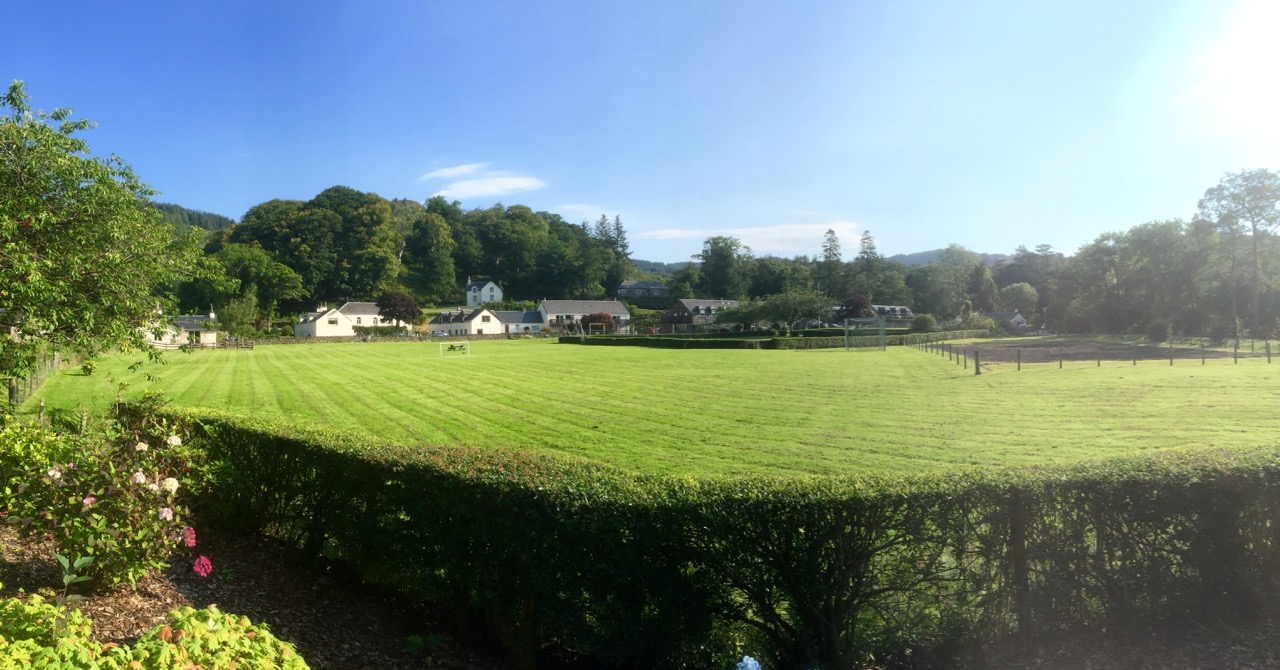
You can find a full list of the kit I took with me on the Gubbins page of my blog, however feel free to leave a comment or send me an email if you’ve any questions. I’m sure I’ve missed something out.

Next blog post will be something fun; the animals I encountered whilst on tour, which will feature a lot of dogs, as well as the occasional Llama, and several cats. Here are a few warm up pics.