Tag Archives: News

Andy Burnham’s speech: Radical? I don’t think so.

Andy Burnham’s speech. I listened to it. I thought it was probably one of the best oratorical performances from a Prime Minister I’ve heard in the last 20 years. He actually made it seem like he cares, I think he probably does. He actually showed empathy which the right keep telling us is weak and should be discarded. He actually came out with some decent ideas although the devil will be in the detail.

Electoral reform; will that mean proportional representation?  Looks like it. Marvellous.

Delinking electricity prices from wholesale gas prices; great that should genuinely reduce electricity bills by benefiting from cheaper renewable energy. 

A National Care System; brilliant, we have an ageing population and don’t seem to want to welcome migrant workers to help with that or many other workforce challenges. 

Rejoining the EU; or some positive moves in that direction, maybe a referendum, super, about time, Brexit has and will continue to be a disaster. 

Reform the State Pension; probably needed at this stage, but going to be a hot potato. 

Housing reform; brill, let’s tackle greedy developers and get more affordable and social housing.

Take water companies into public ownership and create a publicly owned Great British Grid to challenge the private network operators; can we do this very quickly please, especially with the water companies. Privatisation, Thatcher’s legacy, has been another disaster.

A more rapid transition to renewable energy; great, get on with it, and whilst you’re at it stop subsidising oil and gas companies and make them pay for a just transition in terms of energy generation and jobs, and make them pay compensation for the damage they’ve done, deaths caused, and clean up operations.

But…

What about taxing the super rich, a wealth tax, nothing on that meanwhile the poverty divide is growing, we’re getting more multimillionaires and billionaires, and society is sick because of them.

What about the climate and nature crises and the threats these present to our national security, food supplies, flood resilience and wellbeing. And you’re allowing homes to be built on floodplains, madness. We’re facing growing risks to food supplies and prices from El Niño, extreme heat, drought, floods and harvest failures. What are you going to do about that? If people don’t have food to feed themselves and their families then law and order quickly breaks down.

What about oceans accumulating extraordinary amounts of heat, with vast areas experiencing marine heatwaves and some regions releasing stored heat back into the atmosphere? Oceans are acidifying, rivers are polluted, fish stocks are declining, and sea levels rising.

Meanwhile, on land wildfires are raging, the Amazon rainforest is at a tipping point and at risk of  turning into savannah then potentially desert, along with the world’s other major rainforests such as the Congo. The Boreal forests that stretch across land masses in the Northern hemisphere aren’t faring much better. We’re in an insect apocalypse – there go our pollinators. And if we’re talking about the UK we’re one of the most nature-depleted countries in the world.

I created a Global Risk Register for a blog a couple of weeks ago, you can view it here – https://selfpropelled.life/2026/09/17/mad-world/

What about the war crimes Israel are perpetrating in Gaza and the West Bank? Trivial sanctions on goods from the West Bank aren’t going to do much. Many genocide scholars, including several from Israel, and Amnesty are calling it genocide. Israel’s actions meet the criteria for genocide. Here’s a reminder from the UN website:

Convention on the Prevention and Punishment of the Crime of Genocide

Article II

In the present Convention, genocide means any of the following acts committed with intent to destroy, in whole or in part, a national, ethnical, racial or religious group, as such:

  • Killing members of the group;
  • Causing serious bodily or mental harm to members of the group;
  • Deliberately inflicting on the group conditions of life calculated to bring about its physical destruction in whole or in part;
  • Imposing measures intended to prevent births within the group;
  • Forcibly transferring children of the group to another group.

Source: https://www.un.org/en/genocide-prevention/definition

Several of those acts have been extensively documented. The crucial legal question is whether they are being committed with the required intent to destroy Palestinians in Gaza, in whole or in part. In my view, the evidence of that intent is overwhelming.

We just need the International Court of Justice to catch up and the International Criminal Court to arrest the perpetrators. There is no doubt in my mind that history, if there is anyone alive to read it, will show a genocide is taking place. The first live-streamed genocide in human history.

And the UK government is, in my view and the view of many others, complicit because we are selling them arms, giving them intelligence, and haven’t imposed proper sanctions on Israel. Andy Burnham won’t even accuse them of war crimes, no doubt because then legally he would have to do something about it. Meanwhile, over 75k dead, including over 20k children. 

We have lost our humanity to the greed and whims of billionaires and their lackeys – on war, climate, nature, energy, the media, even the judiciary. Burnham’s government is still arresting hundreds of people for holding up cardboard signs opposing genocide. The average age and gender of a ‘terrorist’ in the UK must be female, early 60s. Brilliant. Something to be very proud of Labour and Tory MPs.

What about banning politicians from lying in Parliament? What about holding the media to account and demanding they tell the truth? What about getting the BBC to actually do its job and be journalists, not commentators failing to challenge politicians and business leaders on their falsehoods? What about standing up to the far right and fascism in the 21st century?

What about being honest with the public about the challenges we’re facing, why things are going to have to change – for everyone – and bringing us on that journey. If you explain why there are certain things we can’t do or have anymore, because to do so increases the risk of your children dying, people will probably get it. 

Do what is right, not what you think will get you votes, and if you can’t do that hand over decision making to Citizens’ Assemblies – the subject of my blog last week – https://selfpropelled.life/2026/09/22/what-if-politicians-didnt-make-the-decisions/

Was Andy Burnham’s speech good? Sure, it sounded cool. Was it radical, ending neoliberalism and forming a National Care Service? Nah, I don’t think so. Maybe 30 years ago. But now the things he’s proposing should have already been done, or are just what we should be doing as business as usual, not radical.

As it is we are facing multiple concurrent risks and issues that could lead, are already leading in some instances, or will lead to:

  • Food and water insecurity
  • Health impacts and increased mass mortality events
  • Homes and infrastructure damage and destruction
  • Supply chain disruption
  • Insurance and property risk
  • Price and livelihood shocks
  • Inequality and vulnerability
  • Displacement and increased migration across borders
  • Economic and financial stress

These lead to systemic risks, and potentially societal collapse. 

I’d say the latter is looking more and more likely. Yesterday, Burnham should have declared a state of emergency to tackle these issues, and encouraged other world leaders to do the same.

Who knows, trying to stop societal collapse and provide a future for children might be something everyone, aside from perhaps sociopathic billionaires, can get behind.

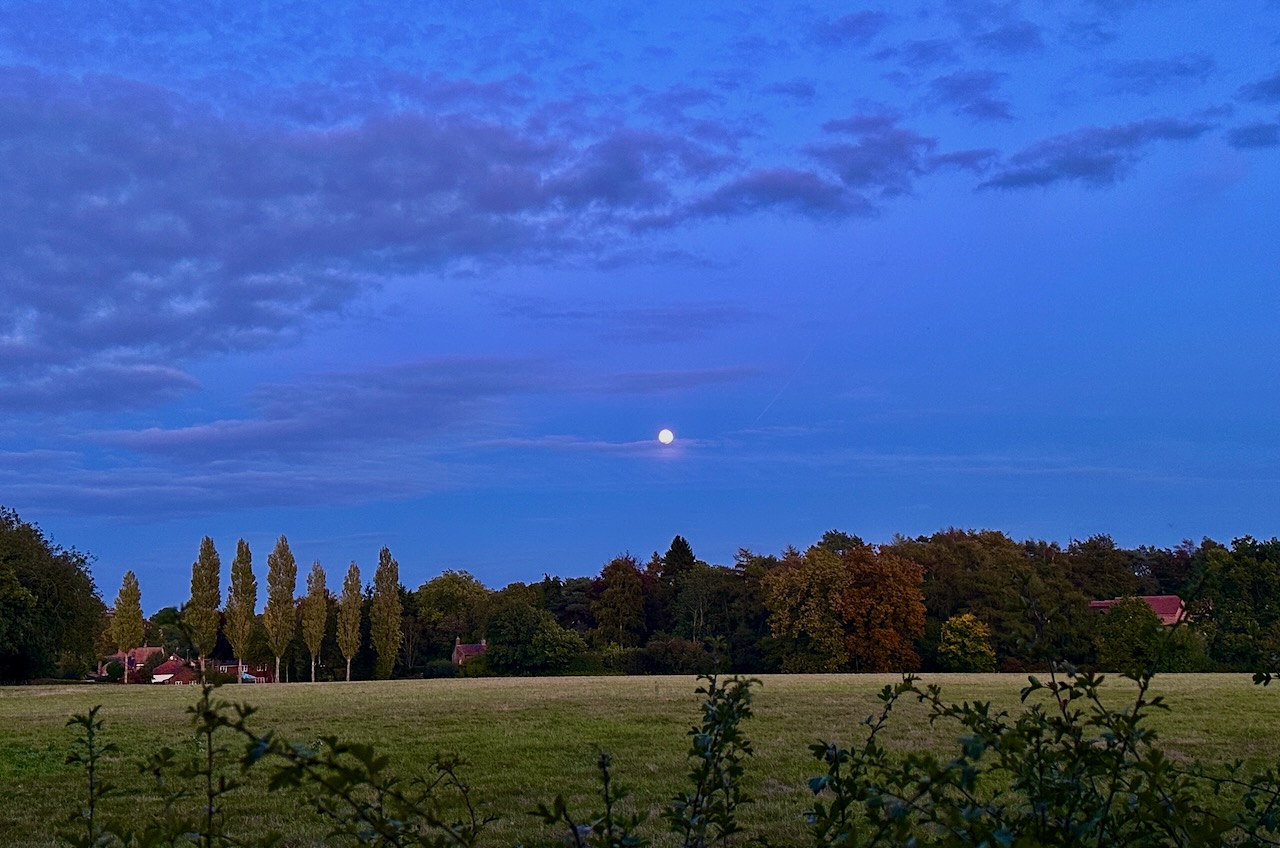
Here’s a picture of a recent Norfolk sunset, because red sky at night, shepherd’s delight.
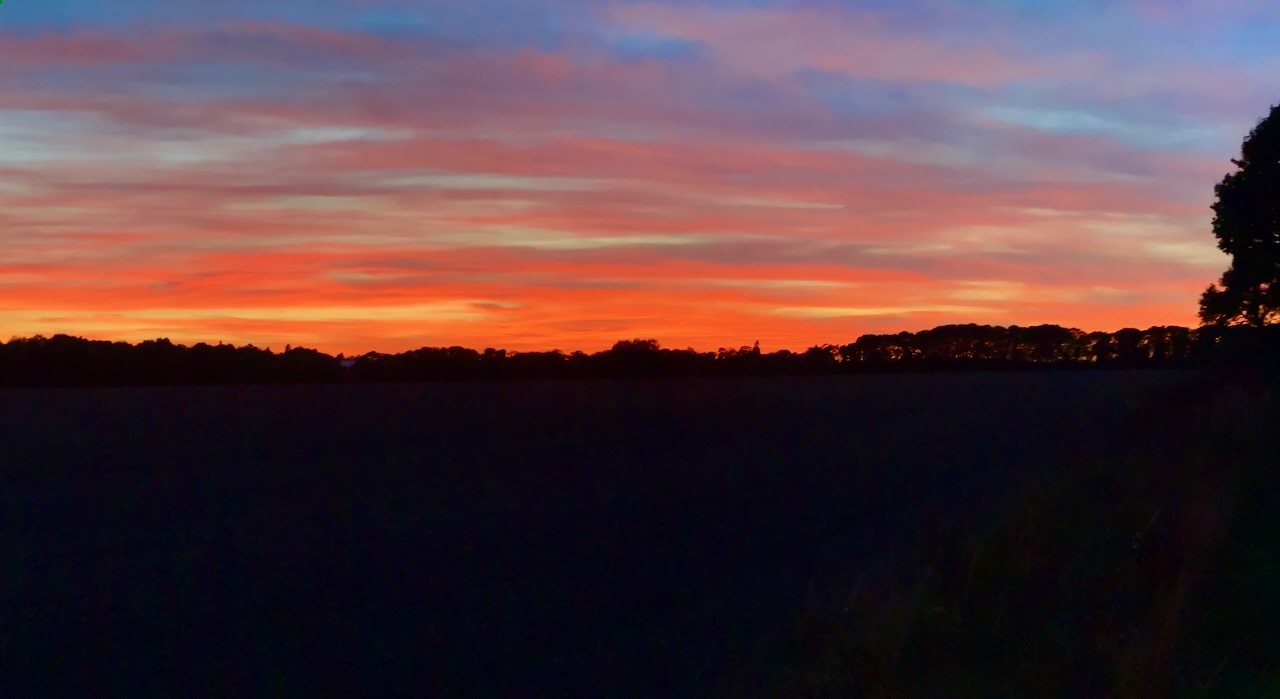
Red sky at night, shepherd's delight.
Red sky at night, shepherd’s delight.
What if politicians didn’t make the decisions?

I keep thinking about something. Please don’t groan, I can hear you.

Why are politicians constantly trying to work out what they need to do to get people to vote for them?

We have focus groups, opinion polls, electoral strategies, carefully tested messages and policies designed to appeal to particular groups of voters. Governments worry about what something will do to their polling. Opposition parties worry about whether saying what they actually think will cost them seats. Lobbyists, corporations, wealthy donors and organised interests all compete for access and influence, far beyond the ken of the ordinary public.

Then politicians go out and try to convince us that the resulting policies are the right thing to do.

It seems completely backwards.

Why don’t we start by asking what the right thing to do actually is, based on the best evidence we have, and then explain honestly and straightforwardly why we need to do it? No lies, misdirection, half truths or bullshit.

Some of the answers will be unpopular. Almost certainly. Dealing seriously with climate breakdown, inequality, defence, housing, taxation, migration, social care or the collapse of nature isn’t going to produce answers which everybody likes.

But perhaps that is what politics is supposed to be for.

I’ve increasingly started wondering whether I’m asking the wrong question. Perhaps the problem isn’t that we need politicians who are courageous enough to make better decisions.

Perhaps politicians shouldn’t be making most of these decisions in the first place. Given the current state of affairs, that seems like, perhaps, a no-brainer.

What if we did politics differently?

I’ve been reading more about anarchism recently, including Rebel City’s excellent little book For a Future Made by Us All. Anarchism isn’t the chaos and disorder that the word usually conjures up. My Mum often used to say something along the lines of “If we don’t fix this now, we’re going to slide into total anarchy.” I don’t think she really understood the principles of anarchism. At its heart are some quite simple ideas about freedom, equality, solidarity and mutual aid, and a profound suspicion of unnecessary hierarchy.

One idea particularly interests me: decisions flowing from the bottom upwards, rather than power flowing from the top downwards. Rebel City describes assemblies as a basic unit of non-hierarchical organisation, with people collectively participating in decisions affecting them.

That raises some interesting questions.

Why do we elect a few hundred people, many of whom change every few years, and then give them enormous power to make decisions for tens of millions of us?

What if we separated political decision-making from political administration?

Imagine that we identified a major issue and convened a Citizens’ Assembly: a randomly selected, demographically representative group of ordinary people. Not people who have spent their lives climbing through political parties, and not done a lot else. Not people who can afford £50,000 dinners with ministers. People like us.

Give them time. Give them access to information. Pay them properly for participating. Let them hear from scientists, economists, engineers, public servants, charities, religious/community leaders, businesses, campaigners and, importantly, people directly affected by whatever they are considering.

Let them question those people. Let them demand more evidence. Let them hear opposing arguments.

And then let them decide.

The process might look something like this:

Issue
↓
Independent evidence gathering
↓
Citizens’ Assembly
↓
Recommendation or decision
↓
Government publishes an implementation plan
↓
Politicians explain the decision and the reasoning behind it
↓
Civil service implements it
↓
Outcomes independently measured
↓
Results return to citizens

Then, if it doesn’t work, we change it.

That last bit seems important.

Our existing political system makes admitting failure incredibly difficult. If a government admits that one of its flagship policies hasn’t worked, the opposition attacks it. The media calls it a U-turn. Ministers become frightened of admitting mistakes, so enormous effort goes into proving that whatever they previously decided was right all along.

That’s a terrible way to learn. A terrible waste of time, money, resources and public faith.

Who chooses the experts?

There is an obvious problem with my imagined system. Who decides what evidence the assembly hears?

If the government chooses the experts, we have simply moved political control one step further away. If corporations can dominate the evidence because they have vastly greater resources than everyone else, we’ve recreated lobbying. If campaign groups can pack the process with people who agree with them, we’ve created another problem.

The evidence process would have to be genuinely independent, transparent and accountable. Assembly members themselves should be able to request additional witnesses, challenge evidence and ask to hear from somebody who disagrees.

And there should be a simple, key rule:

No privileged access for vested interests or lobbyists.

That doesn’t mean excluding them.

A renewable energy company will know something important about renewable energy. A trade union knows things about its members’ working conditions. An environmental organisation may have decades of specialist knowledge. Businesses, charities, campaigners and community organisations should all be able to contribute.

But they contribute in the room, transparently, alongside everybody else.

Nobody gets greater access because they donated £500,000 to a political party. Nobody gets a private dinner with the decision-maker. Nobody gets heard because they employ a former minister. Nobody gets to quietly wander around Westminster whispering into the right ears whilst offering free drinks.

Money shouldn’t buy political access.

Experts shouldn’t rule either

There is another distinction I think matters. Albeit, it’s tricky.

Experts provide knowledge. They don’t provide moral authority.

A climate scientist can explain what increasing atmospheric carbon dioxide is likely to do. An economist can model the economic consequences of different choices. An engineer can tell us what is technically possible. But none of them can tell us what kind of society we want to live in. Those are value judgements. They belong to all of us. And Citizens’ Assemblies will sometimes get those judgements wrong. Of course they will. Ordinary people aren’t infallible.

Neither experts nor Citizens’ Assemblies are infallible. Neither are politicians.

I’m increasingly baffled by the assumption that selecting somebody because they were good at winning an election somehow makes them particularly qualified to make enormously complicated decisions about energy systems, artificial intelligence, healthcare, agriculture, economics or climate breakdown.

A small real-world example: as a councillor I sit on a planning committee, and sometimes we are called upon to make decisions on Tree Preservation Orders. Hardly anyone there, aside from the Arborist, is an expert, yet I see subjective conclusions, and thus decisions, being made about trees that could be incorrect. Scale that up to decisions about the economy, climate, welfare, defence, the NHS and all sorts of other things.

Perhaps we shouldn’t be looking for infallibility. Perhaps we should be designing a system that produces decisions that are informed, representative, transparent, difficult to corrupt and capable of correcting themselves.

So what are politicians for?

We’d still need them. Probably. But their job would be very different.

Politicians would become managers, coordinators, facilitators, communicators and scrutineers. They would make sure decisions were implemented properly, coordinate institutions, allocate resources and hold the machinery of government to account.

Their job might be to tell us:

We asked citizens to consider this problem. They spent time understanding it. They heard the evidence, challenged it and deliberated together. This is what they decided. This is why they decided it. This is how we’re going to make it happen. And this is how we’ll find out whether it worked.

And power shouldn’t all sit in Westminster.

If something can sensibly be decided by a community, let the community decide it. If it needs coordination across a region, move it up a level. Some things inevitably require national coordination, and some problems cross national borders.

But power should move upwards only when it needs to.

That feels much closer to the bottom-up organisation described by anarchist thinkers than our extraordinary concentration of political power at the centre. 

There are, obviously, enormous unanswered questions. How do we protect minority rights? Who decides which questions go to assemblies? What happens in an emergency? What constitutional safeguards do we need? What happens when different assemblies reach contradictory decisions? How do we prevent somebody capturing the supposedly independent evidence system?

I don’t know. But I don’t think what we have is working. And I keep going back to the criticism of democracy attributed to Socrates, particularly through Plato: that political decisions can end up being made by people who have won popular support but don’t necessarily understand the things they are deciding. The argument is more complicated than that, but perhaps one answer to it is a properly constituted Citizens’ Assembly; ordinary people given the time, evidence and access to expertise needed to make informed decisions.

This isn’t a constitutional blueprint. It’s a question. Because perhaps we’ve been trying to solve the wrong problem.

I keep hoping that better people will become politicians. That somehow the next collection of people entering Westminster will resist the machinery of parties, elections, donors, lobbyists, opinion polls, newspapers, social media and the relentless need to win the next election.

They almost certainly won’t.

Perhaps instead of endlessly trying to find better people to give enormous amounts of political power, we should build a society in which politicians have much less power to exercise.

Democracy shouldn’t just mean choosing, every four or five years, which small group of people gets to make decisions for everybody else. Maybe it could mean ordinary people, given the information and time necessary to understand difficult questions, making those decisions together.

From the bottom up.

With politicians working for us, rather than ruling over us.

Or we could go for a dictatorship. All hail our Lord and Master Gideon, who will make decisions based on tribute, warm spots and head scratches. Actually, I’m not convinced that isn’t what is happening at the moment. But Gideon recommends we give him a shot anyway.

Gideon, urr, yeah, sorry, your Lord and Master

Politics is killing us

I am angry. I think I’ve been full of rage for a long time now. But it’s not because I hate people, it’s because I love them – well a lot of them, there are some notable exceptions, let’s not get carried away. It’s the activist mindset of ‘love and rage’, and it keeps me going.

I look around and see a political system visibly failing to respond to the greatest crises humanity has ever faced: climate breakdown, ecological collapse, grotesque inequality, democratic erosion, war, disinformation and the looming disruption of AI and automation.

And yet our politics still feels trapped in short-termism, battling for ratings in a media theatre that ignores truth, whilst our leaders are too cowardly and beholden to the system to do what is desperately needed.

Governments announce climate emergencies whilst approving fossil fuel expansion. Scientists warn of escalating risks whilst billionaires and media barons dominate public discourse. Peaceful protest is criminalised whilst corruption and environmental destruction are treated as normal, even rewarded. Immigrants are blamed for all our problems, rather than inequality and the super-rich exploiting us and the natural world. People are told there is “no money” for welfare, housing or public services – but somehow there is always money for war, subsidies for fossil fuels, or corporate bailouts.

We feel the disconnect. We feel betrayed. Trust in politics is collapsing – it’s already disintegrating. When democratic systems fail to respond to real suffering, people begin searching for alternatives, and as history has shown us they aren’t always good ones. If democracy is perceived as incapable of solving problems, authoritarianism begins to market itself as the solution.

Winston Churchill once said democracy is the least worst form of governance. Socrates was pretty sure democracy was a mistake even though the ancient Greeks invented it. I don’t think the answer is less democracy. It is more democracy – real democracy.

We can’t go on with the current system if we want to survive and thrive. We can’t be reduced to a battle between professionalised parties and politicians every few years, filtered through billionaire-owned media and social media algorithms designed to maximise outrage. We need democratic systems capable of long-term thinking, collective intelligence and genuine public participation.

I increasingly believe citizens’ assemblies must become central to political decision-making. Not just public consultations, but carefully managed exercises that governments are legally bound to act on, and which they can’t ignore. There have been lots of examples of these working, for instance with the abortion debate in Ireland.

We need real citizens’ assemblies:

  • selected by sortition,
  • representative of society,
  • informed by expert evidence,
  • independently facilitated,
  • transparent,
  • protected from lobbying and party control,
  • and crucially, given real power.

Political theorist Hélène Landemore argues that wider participation often produces better outcomes than narrow elite decision-making. Diversity of experience and perspective matters. Collective intelligence matters. She talks about this in her book, Politics Without Politicians – I find the title somewhat appealing.

https://www.penguin.co.uk/books/456838/politics-without-politicians-by-landemore-helene/9780241649169

Frankly, looking at the state of modern politics, it is difficult to argue elite governance is working well. Westminster has produced a catalogue of failures over the last two decades. The same has and is happening in the USA where one could argue matters are even worse.

Citizens’ assemblies have already shown promise in many countries helping unlock progress on issues traditional politics struggled to resolve. Imagine if they were used seriously in the UK on issues such as:

  • climate and energy transition,
  • AI and automation,
  • housing,
  • social care,
  • media reform,
  • constitutional reform,
  • immigration,
  • nature restoration.

Imagine ordinary people being trusted with complexity instead of manipulated with fear – unfettered by corporate interests and not influenced by lobbyists. Most people, when given time, evidence and the chance to deliberate together, are capable of empathy, nuance and compromise. Most people, when told the truth, with options outlined clearly, will choose what will benefit society most. Far more capable, perhaps, than the current political and media class.

Our present system rewards tribalism, outrage, short termism and even narcissism as we’ve seen across the pond. It concentrates wealth and power – there are now 177 billionaires in the UK, up six since 2021. They have a combined wealth of £653bn, roughly 22% of GDP. I found these stats on the net, which I found, frankly, shocking:

  • The Top 1%: The wealthiest 1% of UK adults control 21.3% of the nation’s total wealth, which equates to a collective value in the trillions.
  • Bottom 50% Comparison: By contrast, the poorest 50% of the UK population hold only about 4.6% of the country’s total wealth.
  • The Richest Families: The 50 richest families in the UK hold more wealth combined than the poorest 50% of the population (roughly 34 million people)

    I mean, how is this morally justifiable?

The system actively selects against honesty and long-term thinking. This simply won’t work with the number of crises, many of them accelerating, that we’re facing. We need cooperation on a scale humanity has rarely achieved before and if democratic systems cannot evolve to meet that challenge, darker forces absolutely will fill the vacuum. History will repeat itself.

Given recent political events in the UK, I’ve been pondering the best, median and worst case scenarios for the next few years.

Best case scenario — “Green renewal and democratic repair”

  • The Labour leadership crisis is resolved relatively quickly after a change in direction rather than descending into factional warfare, like we saw with the Tory party. Andy Burnham or a similar figure successfully reframes politics around competence, fairness, infrastructure and hope rather than managerial decline.
  • Labour forms a broader coalition inside the party with stronger voices on climate, welfare, housing, democratic reform, industrial and economic strategy, immigration and public services.
  • Investment in renewables, grid upgrades, home insulation, battery storage, public transport and emerging technologies accelerates. Planning reform and grid connection reform finally unblock stalled projects – without compromising nature protections.
  • Electricity prices fall as the UK becomes less dependent on volatile international gas prices. Energy security improves through domestic renewable generation rather than new fossil fuel dependency.
  • National infrastructure projects begin to show visible benefits – warmer homes, better rail and bus links, cleaner rivers, new jobs in retrofit and energy, more resilient local economies.
  • The NHS stabilises through workforce investment, prevention, social care reform and better pay/conditions, reducing burnout and waiting lists.
  • A more honest public conversation develops around immigration – explaining demographic pressures, NHS staffing needs, agriculture, care work, universities and the economic contribution of migrants. Dehumanising rhetoric loses traction.
  • Public education, media literacy and local community investment help reduce support for far-right politics and conspiracy movements.
  • Protest rights are partially restored. Some authoritarian legislation from recent years is rolled back. Peaceful protest and civil liberties are treated as democratic necessities rather than threats and charges are dropped against the 1000’s currently facing prosecution under anti-terrorism laws for holding cardboard placards.
  • The UK adopts a more balanced and lawful international stance, including stronger pressure for ceasefires, adherence to international law and reduced political tolerance for war crimes or collective punishment. Yes, I’m referring to Israel mostly, but also in Sudan, China, Iran, Venezuela, and other parts of the world.
  • New North Sea oil and gas expansion remains cancelled as renewables become economically dominant, and the UK becomes energy independent.
  • Super El-Nino hits with devastating consequences.
  • Farming policy shifts toward resilience – soil restoration, flood mitigation, regenerative agriculture, food security and partial dietary transition toward lower-emission food systems – plant based diet.
  • AI and data-centre expansion are regulated and taxed effectively enough that some of the economic gains are recycled into public services, training and eventually forms of income support as automation increases. This could include a Universal Basic Income – we have to tax data centres as income tax revenue falls, due to job losses to AI.
  • The Green Party of England and Wales continues making gains in local government and Parliament, helping keep climate and nature breakdown politically unavoidable even if not in government.
  • Media reform begins to address ownership concentration, misinformation, transparency and platform accountability are addressed more seriously – see the Media Sovereignty Act.
  • Despite worsening climate impacts globally, the UK becomes somewhat more resilient through adaptation planning, flood defence, insulation, energy security and social cohesion.

If Labour could manage that, I’d be both amazed and amazingly grateful.


Median case scenario — “Managed decline with partial progress”

  • Labour remains in power or remains the largest poltiical force, but internal divisions and fear of media backlash limit ambition – what we have now.
  • Some green infrastructure succeeds – especially renewables and grid investment (NSIPs) – but projects are slowed by planning disputes, local opposition (NIMBYs), underinvestment and institutional inertia.
  • Electricity becomes somewhat cleaner, but bills remain high because housing inefficiency, the link to gas prices and infrastructure costs are not fully addressed.
  • NHS pressures ease slightly in some areas but remain severe overall due to ageing demographics, staff shortages and chronic underfunding.
  • Climate policy survives but is inconsistent – progress on renewable power exists alongside airport expansion (on the agenda again), road building and continued support for some fossil fuel extraction. Global emissions continue rising.
  • AI expansion and automation increase inequality faster than political systems adapt to it. Productivity gains mostly flow upward into large corporations and asset owners.
  • Immigration remains a toxic political issue. Neither side fully wins the argument. Public frustration continues to be channelled toward migrants rather than structural economic problems.
  • Reform UK and other populist-right forces continue growing but do not fully take power. Their rhetoric shifts mainstream politics further right on migration, protest and culture-war issues.
  • Protest rights remain restricted compared to previous decades, though not completely dismantled.
  • Media sensationalism, billionaire influence and algorithm-driven outrage continue dominating public discourse. Trust in institutions remains low.
  • Climate impacts worsen globally: crop failures, migration pressures, insurance instability and extreme weather increasingly affect everyday life and public finances. Super El-Nino hits with devastating consequences.
  • The public becomes more politically cynical and emotionally exhausted rather than mobilised – stagnation.
  • Living standards stagnate for many people, but outright collapse is avoided through continued state borrowing, technological adaptation and institutional resilience.
  • The Greens continue gradual growth but remain structurally constrained by the electoral system – proportional representation neeeded.

Side note on data centres and AI: Politicians are failing to keep up with the pace of AI advancement, and the need for data centres to provide a viable economic model – if we don’t want to reject that model completely. In order to be competitive and fund the standards of living, welfare, healthcare, and even military resources we’re used to, then we have to move very quickly, increasing electricity production massively and quickly – which nuclear can’t do but renewables could – as well as the number of UK data centres. The alternative, which actually might be healthier and happier but fraught with peril, is to regress, become far more subsistence based, with communities really supporting one another but without luxuries, holidays and many of the privileges we’ve become used to – maybe that would be a good thing, given we have had our fair share of the carbon budget.


Worst case scenario — “Authoritarian fossil-fuel populism”

  • Labour fractures after electoral defeats, leadership crises or economic shocks. Progressive politics becomes divided and demoralised.
  • Reform UK or a broader right-populist coalition wins power during a period of economic stress, migration panic and institutional distrust – this could happen quite quickly.
  • Net zero policies are heavily weakened or more likely abandoned. New North Sea oil and gas extraction expands while renewable deployment slows through planning obstruction and political hostility.
  • Energy prices remain volatile due to continued fossil fuel dependence and international instability. More people die from the cold.
  • Protest laws become significantly harsher. Direct action, climate protest and some forms of dissent are increasingly criminalised or surveilled. More prisons and detention camps are built.
  • Public broadcasters and regulators face increasing political pressure. Media ecosystems become even more dominated by outrage, disinformation and billionaire influence.
  • Migrants, refugees, Muslims, LGBTQ+ people and other minorities become central political scapegoats. Hate crimes and political intimidation increase.
  • Democratic norms erode, but won’t collapse overnight – attacks on courts, civil society, universities, journalists and human rights frameworks become normalised. This is what happened in the 1930s.
  • Economic inequality worsens sharply. Public services including the NHS deteriorate further through privatisation and austerity-style policies.
  • AI-driven job losses accelerate without meaningful redistribution, retraining or welfare reform, fuelling anger and instability.
  • Climate impacts intensify globally while adaptation remains inadequate – flooding, food inflation, insurance withdrawal, water stress and migration pressures become increasingly destabilising.
  • International instability increases through resource conflicts, wars and geopolitical fragmentation – it’s happening now.
  • More extreme far-right movements emerge claiming even right-populist governments are “too weak”, driving a further cycle of radicalisation and authoritarianism.
  • Civil unrest becomes increasingly common – riots, political violence, strikes and heavy-handed policing become part of normal political life.
  • Institutional trust collapses further as large parts of the public conclude the political system no longer works for them.
  • Local resistance movements, trade unions, community groups, environmental organisations and some councils continue resisting and building alternative structures of solidarity and resilience – we will not be silenced, and we will not give in to fascism and hate.
  • Super El-Nino hits with devastating consequences.

Did you spot the bullet point that happens in all the scenarios. It’s my example, and in the case of Super El-Nino probably inevitable, of the impacts of climate breakdown that will happen whatever we do, like sea level rise and coastal cities eventually being swamped.

These scenarios can sound pretty bleak, but the latter has too high a probability for my liking, on our current trajectory. Personally, I have lost faith in our political system, despite being a district councillor and member of the Green Party. Even in the Green Party I’ve seen the desperation to win votes mean people don’t do what is right, and that appears to be getting worse as we get bigger. I will continue to work to the best of my ability within the system, for the moment, but truly believe we need Citizens’ Assemblies to get us out of the mess we’re in.

I do not want a future built on authoritarianism, scapegoating and fear. I want one built on participation, compassion, truth and shared responsibility.

We need to rebuild democracy itself to give long term resilience, community, wellbeing and equality.

We can’t afford to give up, see you on the streets ✊

Useful links:

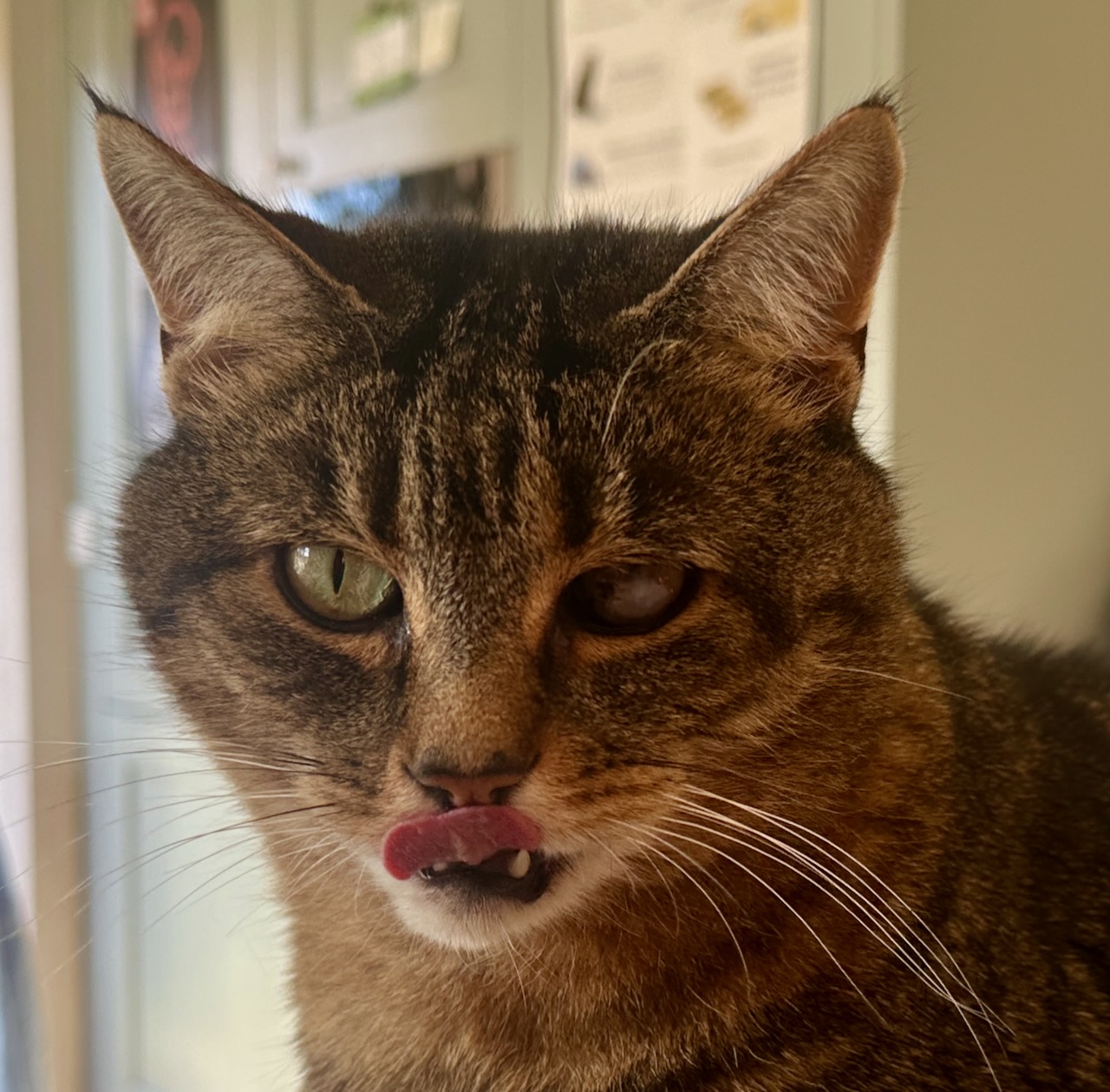
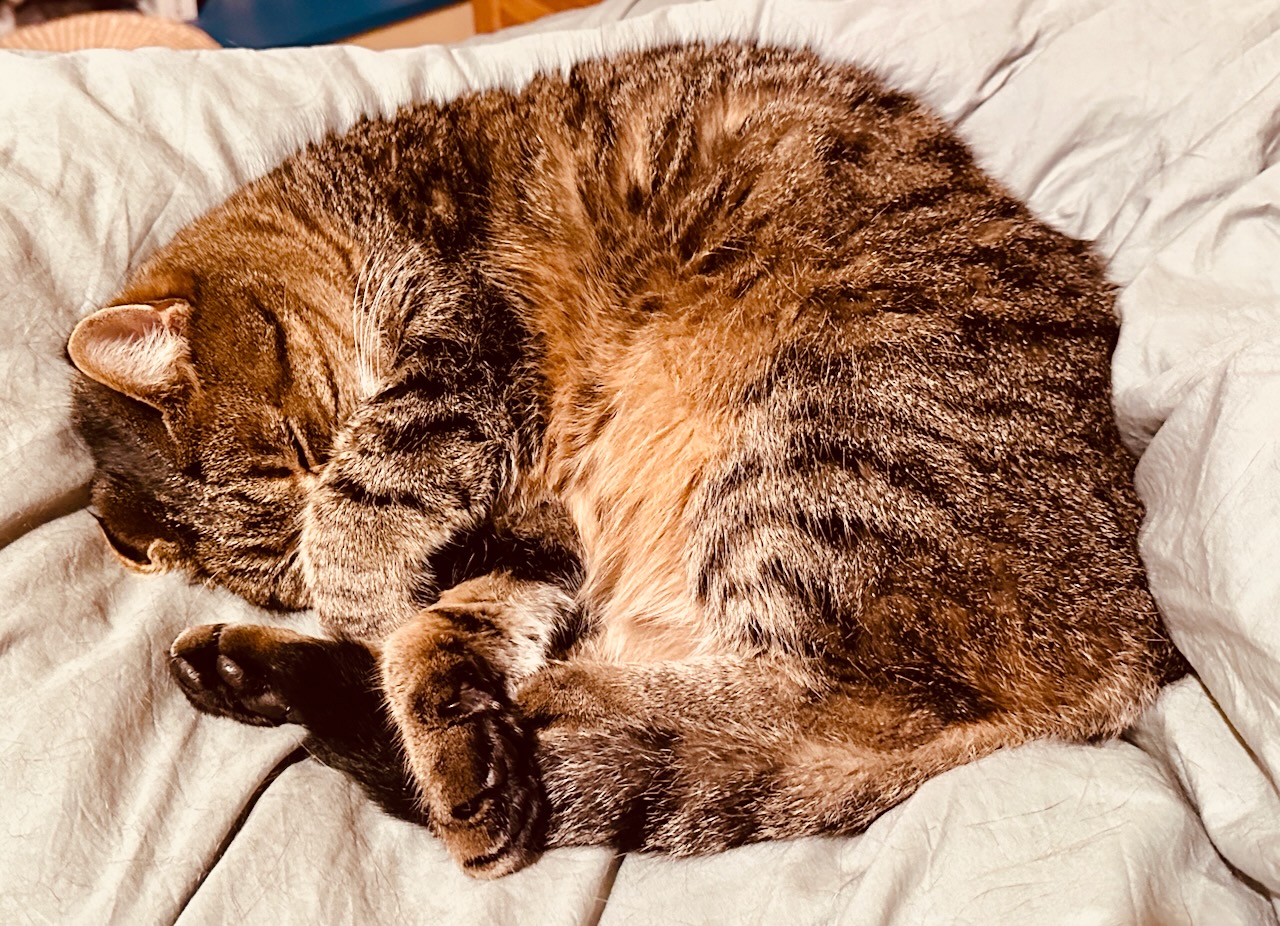
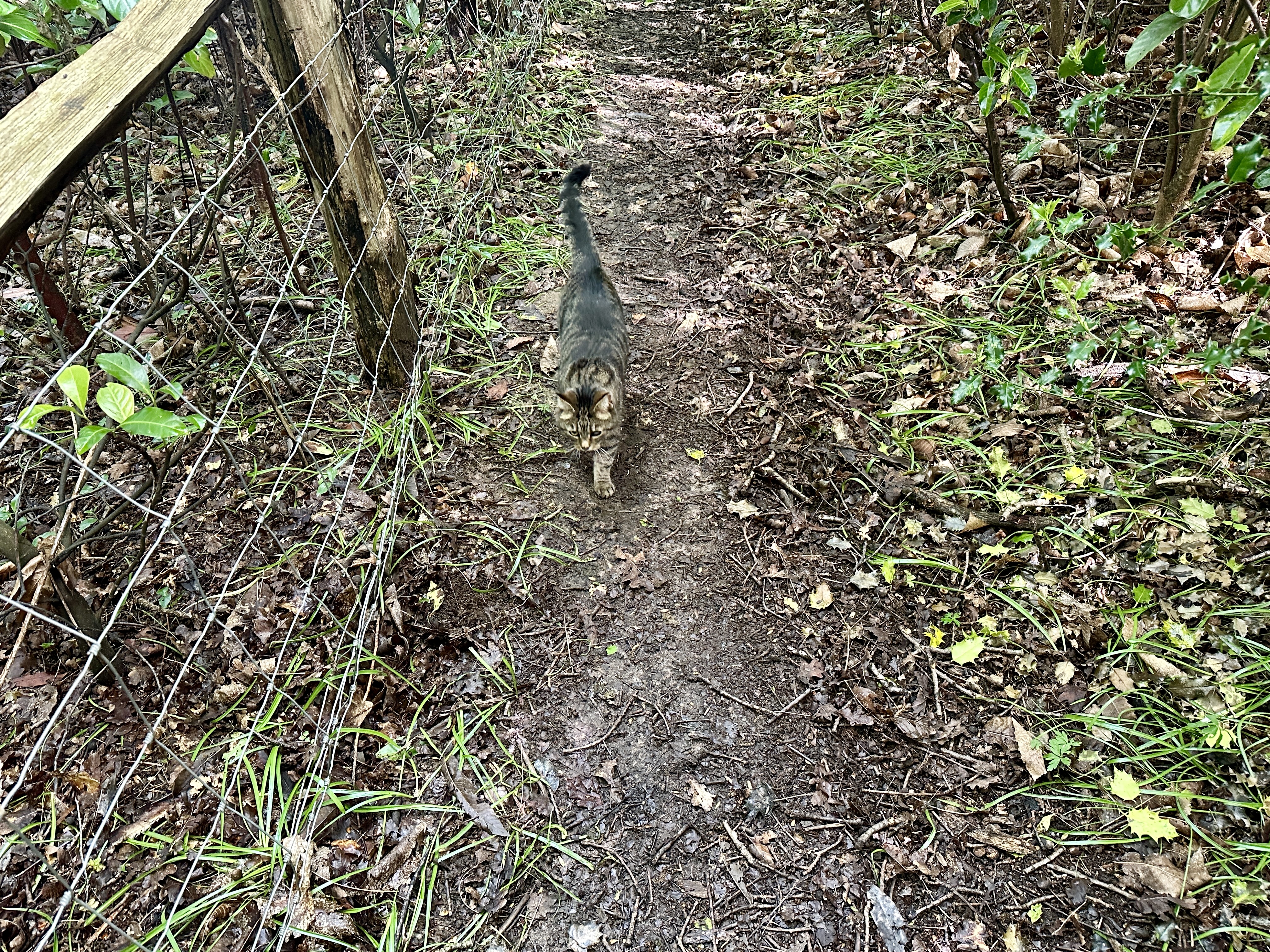
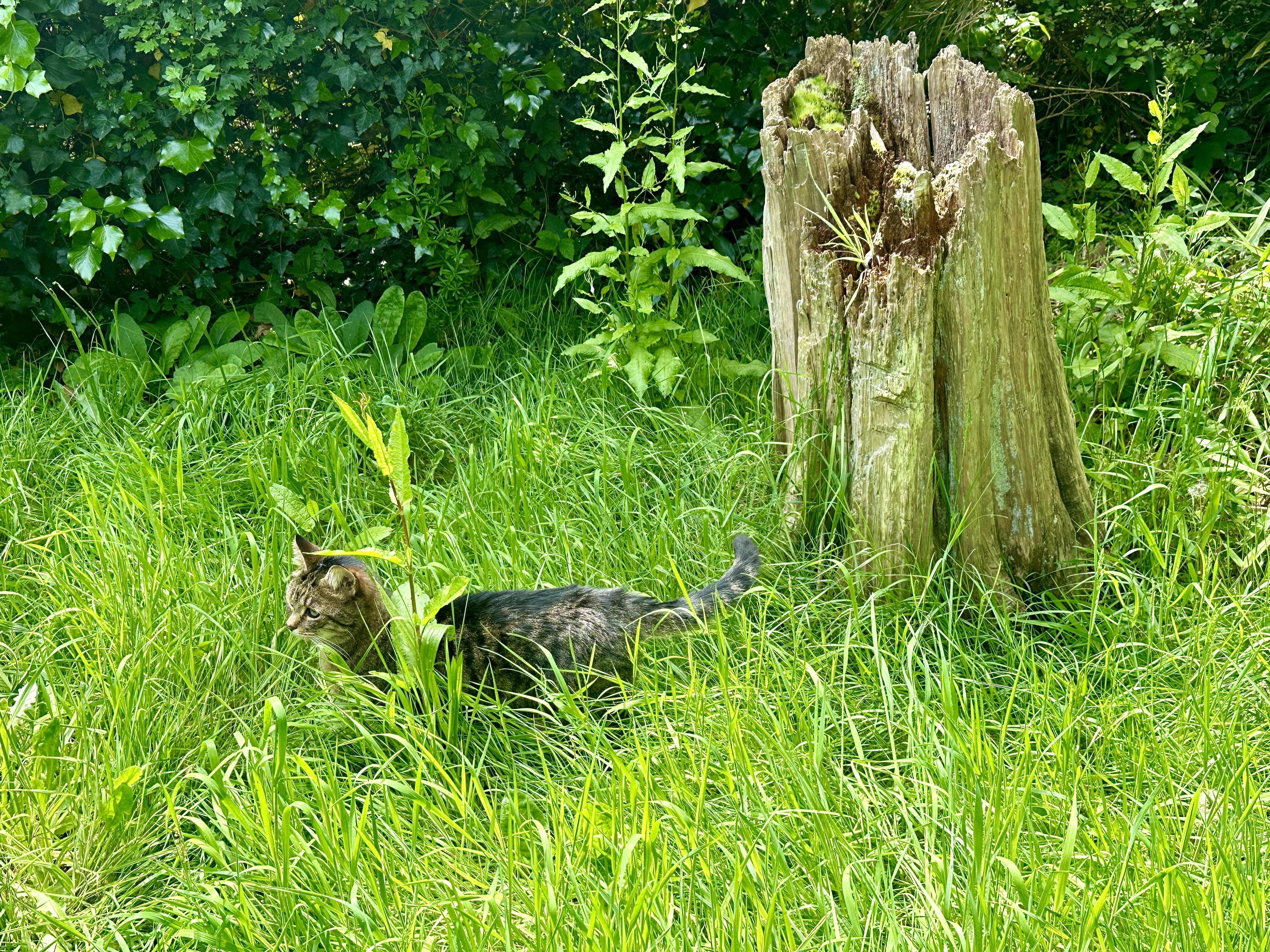
And here is a picture of my cat, being judgemental, because he wanted to be involved and frankly is better at governance than me.

Rage Is a Rational Response

It’s February, and I’m still consumed by rage – with a generous side-order of despair – at our direction of travel. Are we really this stupid? Are we genuinely going to let a tiny proportion of the world’s population completely screw the rest of us over?

Last week I wrote about the government report on the risks of ecosystem collapse to national security. The report was finally released in January, but accusations abound, including from The Times, that this is not the full version. Some of the most worrying conclusions, particularly around food supply chains and geopolitical instability, appear to have been quietly redacted. Hardly in the public interest. And, as mentioned last week, all very Don’t Look Up.

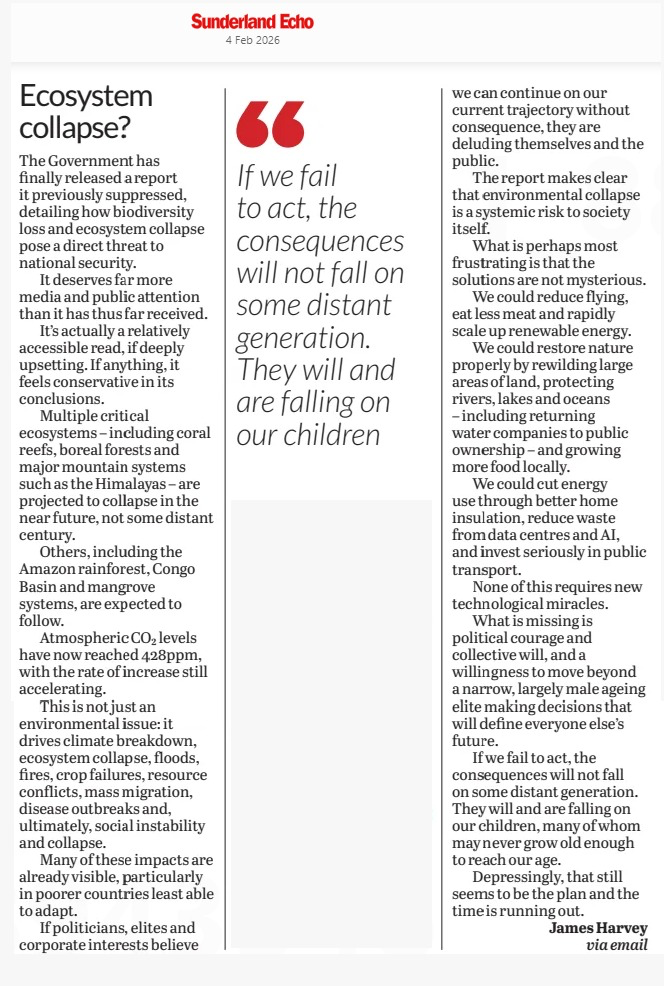
I also wrote a letter to several regional newspapers on the subject, which was published today in the heady heights of the Sunderland Echo.

It’s also appeared in the Eastern Daily Press, Derby Telegraph, Leicester Mercury, and a few others – and, unlike the government report, it hasn’t been redacted. For some reason the Daily Mail hasn’t picked it up yet, but I’m sure it’s only a matter of time.

Our excessive lifestyles are driving global heating. Greenhouse gas emissions are still rising, and the climate and nature crises are accelerating, catalysed by feedback loops that are pushing us over, towards – or dangerously close to – irreversible tipping points. When I say “our excessive lifestyles”, I mostly mean the richest 1% of the global population, who are responsible for a grotesquely disproportionate share of emissions and pollution. According to Oxfam, they emit as much as the poorest 66% — around five billion people.

And even within that 1%, things get worse. A tiny subset – the top 0.1% – is responsible for a massive share of those emissions again, thanks to private jets, yachts, multiple mansions, and lifestyles so carbon-intensive they should probably come with a health warning for the planet.

In other words, a microscopic number of people are wrecking the climate for everyone else.

GroupApprox % of Global PopulationApprox % of Global Emissions
Bottom 99%~99%~(~84% total, much of it very low per person)
Top 1%~1%~16–17% total emissions (Oxfam International)
Top 0.1% (subset of 1%)~0.1%A very large share of that 16% — maybe several % of total emissions just from this tiny slice (per high-emitting daily footprints) (Oxfam International)
Top ultra-rich / Billionaires<<0.1%Extremely high emissions share per capita (data vary) (Oxfam America)

What makes this even more obscene is that while countries like the UK are somewhat insulated from the worst impacts of climate breakdown, it’s poorer countries that are already bearing the brunt: floods, fires, crop failures, heatwaves, and displacement. I say “somewhat insulated” deliberately. We’ve already felt the impacts here over the past few years, and they’re accelerating.

If the AMOC (Atlantic Meridional Overturning Circulation) slows down and stops, as recent research warns it might, the UK will experience far colder conditions alongside extreme weather, making food production incredibly difficult. This is not something we should be sitting comfortably about. It could happen within our lifetimes.

So yes, a small percentage of the world’s elite – the super-rich who control the media, politics, economies, and militaries – are conning us. For years they tried to hide it. Corporations shifted responsibility onto individuals: BP invented the personal carbon footprint calculator; airlines peddled dubious offsetting schemes. But now many of the conmen aren’t even pretending anymore, openly lusting for more power and levels of wealth I can’t even comprehend.

Trump openly told us Venezuela is “about the oil”. An increasingly likely conflict with Iran would be too. Greenland? Rare earth minerals. Netanyahu and Trump have both fantasised about turning Gaza into the “Riviera of the Middle East” – built on the blood, bones, and bodies of Palestinians, thousands of them children. It’s immoral. It’s grotesque.

We’re in the middle of a pandemic, but not COVID, Ebola, or anything biological in the usual sense. This one often presents as a middle-aged or elderly white man with obscene wealth and a messiah complex. A tiny clique with so much money and influence they can bend even well-meaning politicians to their will through donations, threats, blackmail, litigation, and lies.

You see it constantly with oil and gas giants. Their lobbyists meet ministers hundreds of times a year – a level of access completely unavailable to ordinary people. And that access isn’t accidental: it’s transactional.

It’s not just oil and gas. It’s billionaire media barons like Murdoch, pulling the public’s strings while extracting enormous political power. No UK government in recent history has been elected without Murdoch’s blessing. It’s arms manufacturers profiting from wars they often help create through political and media influence. And behind it all sit the financiers and investment firms, funding corruption, death, division, and lies – all to keep shareholder payouts flowing and the illusion alive that they’re “on our side”.

They’re not.

Epstein is one of the most flagrant examples of how far this rot goes. How deep does the abuse run? How far does the money trail stretch? Andrew Mountbatten-Windsor has been outed. Peter Mandelson has been exposed for accepting money and handing over state secrets. Elon Musk, Bill Gates, Bill Clinton, Richard Branson, Steve Bannon, Howard Lutnick, Larry Summers, Brett Ratner, Ehud Barak — all appear in the files, with more names emerging all the time.

Epstein’s links to Putin, the Kremlin, and other authoritarian regimes are well documented. And then there’s Trump – already a convicted sex offender – whose Department of Justice has redacted anything remotely incriminating about him. Yet he’s corrupted the US political system to enrich himself while his brown shirts ICE agents round up and deport thousands, or shoot and kill innocent US citizens.

I’m not saying everyone named in the Epstein files is guilty of a crime. Some will be innocent. But there is a common thread: wealth, power, and overwhelmingly white men. And it’s telling that the only person imprisoned for what Epstein enabled is a woman – Ghislaine Maxwell – while powerful men hide behind redactions. Meanwhile, victims’ names and images are dumped online.

This isn’t justice. It’s a parody of it.

The corrupt, immoral patriarchy rules. A small cabal of the super-rich manipulates political, economic, and social systems to maintain power, controlling much of the media and warping public perception via algorithms and social platforms. The introduction of Palantir will make this worse, but that’s a topic for another day.

In the UK we now live in a surveillance state, with increasingly repressive anti-protest laws, restrictions on freedom of speech, and even the right to trial by jury – enshrined in Magna Carta – under threat. Can we really make the changes needed to safeguard liberty, wellbeing, and democracy in the face of climate breakdown, resource wars, economic collapse, and rising fascism and authoritarianism?

I see no hope in the traditional parties. Labour has reneged on promise after promise and looks set to lose badly next time around. The Conservatives have learned nothing and are racing Reform to the far right. Reform, despite its “anti-establishment” cosplay, is stuffed with millionaire MPs who broke the country, most of them ex-Tories, and now want to privatise what remains — including the NHS.

I do feel hope with the Green Party – of which I’m a member and a District Councillor. Membership is growing. Good, honest candidates are winning. Hannah Spencer stands a strong chance in the Gorton and Denton by-election. Parliamentary gains don’t feel impossible anymore. Coalition power doesn’t feel impossible. Nothing does, not with Labour and the Conservatives floundering and Reform slowly being found out.

But will it be enough?

Will it take back power from billionaires, patriarchy, and the men pulling global strings? Will it stop fascism, protect children, dismantle elite abuse networks? I don’t think it will, not on its own. The systems are too entrenched, too corrupt. Any new party entering power risks being absorbed, neutralised, or corrupted by Westminster and the global elite.

These systems aren’t reformable. They’re fundamentally broken.

Which leaves one conclusion.

We need a revolution – preferably a peaceful one, because history shows violent revolutions rarely deliver lasting justice.

Revolution is the only way to make the radical changes required for a survivable, fair, and just future: tackling the climate and nature crises, redistributing wealth, ending wars of greed, dismantling elite impunity and stopping the rise of fascism. You can already see it beginning: resistance campaigns, mutual aid, community organising, people growing food, fixing things, giving time, showing kindness under adversity.

Resistance is alive. But oppression and repression are fighting back, and the sparks of revolution must be fanned – through non-violent direct action, communication, campaigning, and community – if they are to survive and grow into a blaze that not even the billionaires can extinguish 🔥

If you want to see one example, look at https://takebackpower.net/. There are many others. And yes, consider joining the Green Party. We’ll need its people, ideas, and values for whatever comes next.

That’s all for today.

Simple, really.

We just need a revolution. ✊

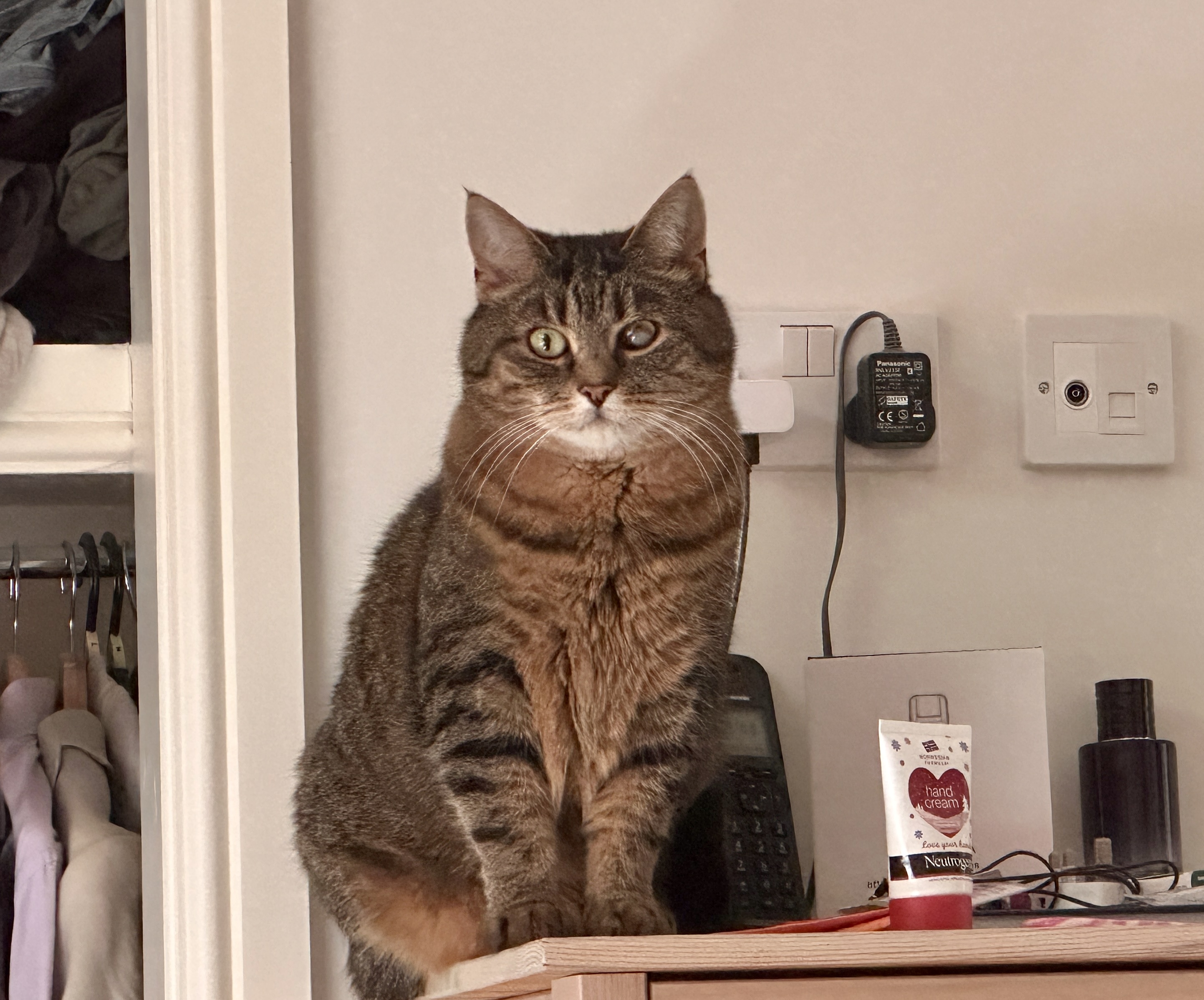
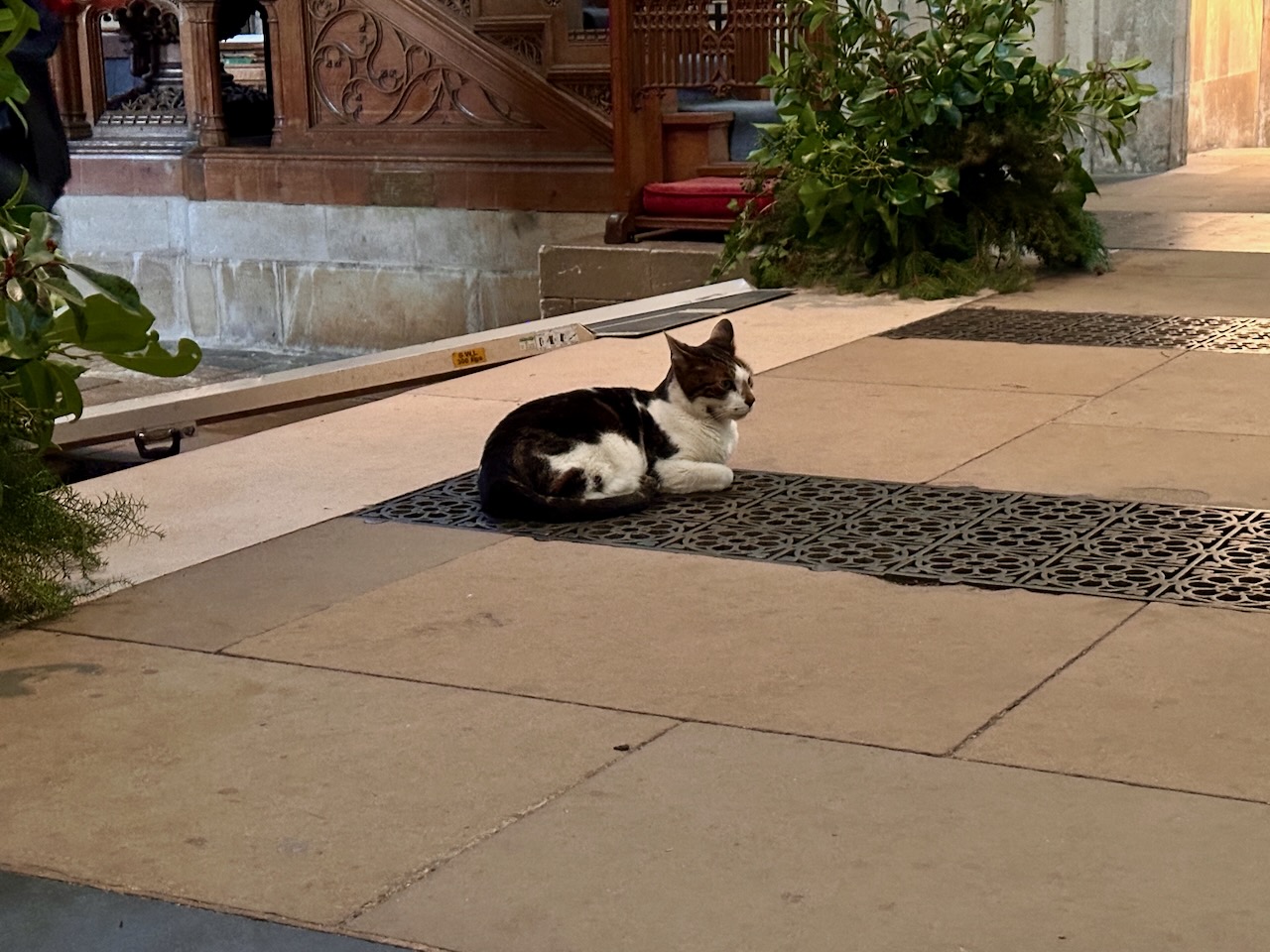
For some light relief here are two pictures of Budge, the Norwich Cathedral cat who I like to visit, and one of Gideon, who runs my house. Who do you think is the most dignified?

The Trio of Tyranny

I just listened to Trump justify the US invasion of Venezuela, and the kidnapping of President Maduro and his wife, Cilia Flores. To give him credit, at least he didn’t bother hiding his intentions: stealing the largest remaining proven oil reserves in the world. He stood there, flanked by sycophants Hegseth and Rubio, and brazenly told the world how the US will run the country “until such a time as we can do a safe, proper and judicious transition.”

I don’t know how true the accusations are that Maduro is involved in drug trafficking, money laundering, embezzlement, and election fraud. It seems entirely possible there’s a case to be made. But is it really right for “Team America: World Police” to invade another sovereign nation, kidnap its elected leader and their spouse, and kill an unknown number of Venezuelan soldiers – and possibly civilians – in the process?

I wrote this in my blog the other day:

“Fight the narcissistic, misogynist, arrogant old white men who have clawed their way to the top of the fetid political pile, treating truth, human lives, welfare, and civil rights as expendable commodities — traded for votes or simply discarded as democracy and the right to protest are eroded.”

The US actions against Venezuela — the power-gaming, the enormous armada sitting off the Caribbean coast, the overwhelming military might, including supposedly unrivalled “American Warriors” from the Department of “War” — are a very clear signal of US foreign policy going forward. And Trump isn’t even pretending otherwise. He wants to boast about it, wrapping naked imperialism in hollow words like “Peace, Liberty and Justice” — three concepts I’m not convinced he understands at all.

Referring to Venezuela, Trump said::

“Run the country til such a time as we can do a safe, proper and judicious transition.”

And referring to other dictators – or, more accurately, any foreign leader he and his administration don’t like – he added:

“What happened to Maduro can happen to them”

Trump has just seized control of the world’s largest remaining proven oil reserves and openly stated he’s sending in US oil companies to manage them — securing vast new fossil fuel supplies and obscene amounts of cash for Chevron and friends. We can’t afford to burn the oil we already have; the climate crisis is spiralling out of control. But of course, Trump doesn’t believe in that. It’s all a hoax, apparently.

He also made it very clear that the US is:

“Ready to stage second and much larger attack if needed.”

So yes — the gloves are well and truly off. If they were ever on to begin with. He’s not even trying to disguise the threats of violence anymore.

Meanwhile, Netanyahu continues slaughtering Palestinians and stealing their land, despite an arrest warrant from the International Criminal Court for war crimes. Putin continues his illegal invasion of Ukraine, with a similar ICC warrant hanging over him. At what point do we stop pretending this is normal? Are we living in some dystopian fever dream? Who, exactly, are the real criminals here?

Wanted, the Trio of Tyranny - Trump, Netanyahu, Putin, for war crimes, corruption, election fraud.
Wanted – The Trio of Tyranny

I could have limited the poster to Trump alongside Hegseth and Rubio. But it feels more honest to include his international war-criminal allies: Netanyahu and Putin. What a tight little club of ageing, authoritarian strongmen. Xi Jinping could arguably be added too, but somehow his crimes feel almost restrained by comparison. The patriarchy is alive and well.

It seems Team America: World Police is here to stay – with US foreign policy openly embracing the right to take whatever it wants, from whoever it wants, whenever it wants. The question is whether Europe will finally find the backbone to stand up to Trump, or whether we’ll continue playing the role of obedient lickspittles and sycophants.

“America, fuck yeah,

Comin′ again to save the motherfuckin’ day, yeah,

America, fuck yeah,

Freedom is the only way, yeah”

And of course, none of this would be possible without the loyal supporting cast: the allies who nod gravely, issue “deeply concerned” statements, and then quietly sign the arms deals anyway. The UK and Europe will huff, puff, and clutch their pearls – right up until Washington snaps its fingers, at which point we’ll rediscover the ancient art of obedience. It’ll all be waved away as “pragmatism”, “security interests”, or the timeless classic “we had no choice”. History, however, has an annoying habit of remembering who spoke out – and who smiled politely while the bombs fell.

Happy New Year


Here’s to hoping 2026 is full of more kindness, empathy, and positive change than 2025 ever managed.

Yeah. A likely fucking story. Fuck this shit.

The Labour government in the UK has been a betrayal — yes, even accounting for media bias and the usual right-wing bullshit. With a mandate that large (even if not proportionally representative), they could have done so much better. Instead, we get this hollow, managerial nothingness. So what the hell has happened to Labour? What’s happened to democracy? To the right to protest? To freedom of speech? To simply being a decent human being?

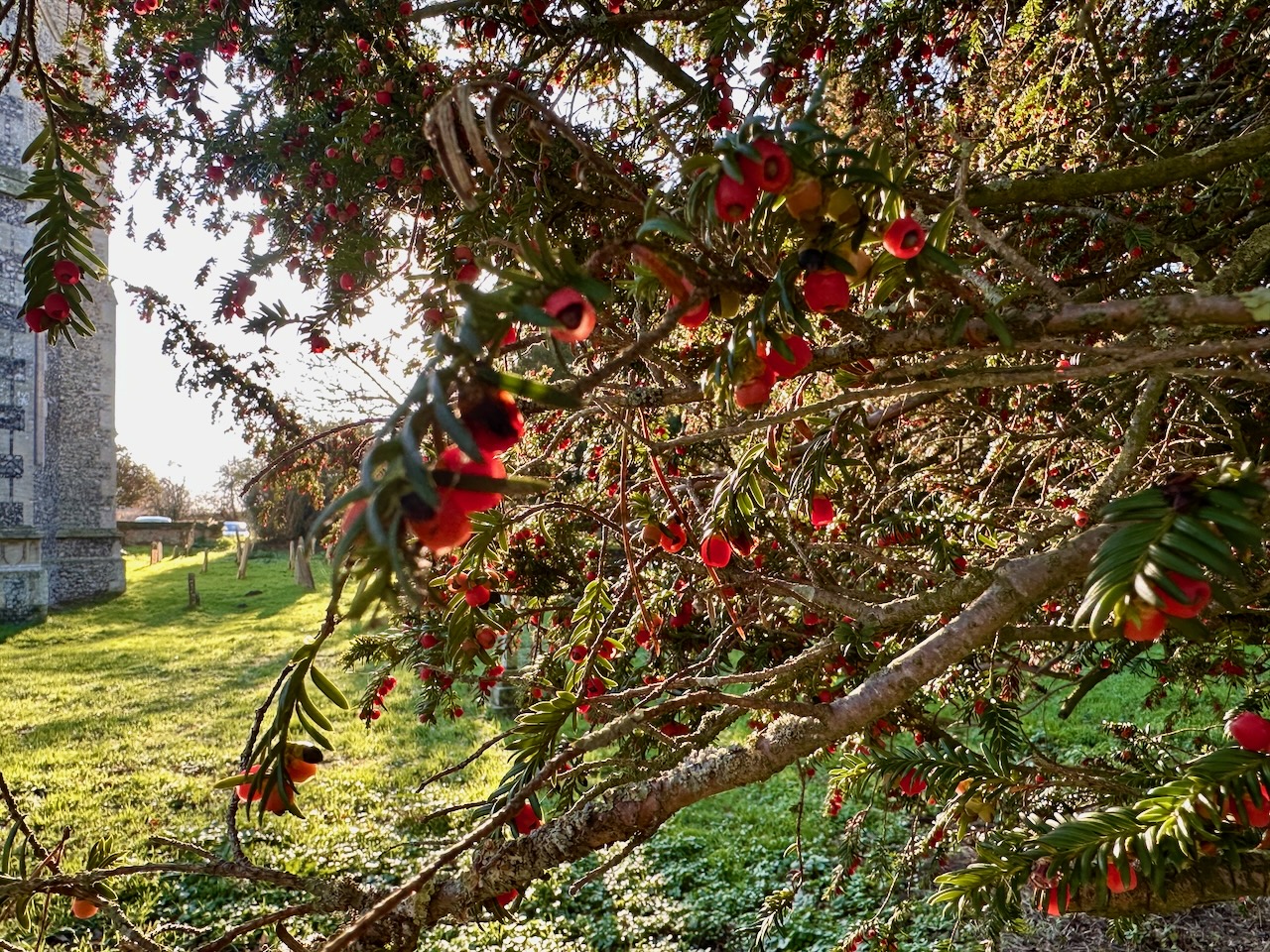
I went for a brief walk around the local church graveyard today, on my way back from the doctors — I’ve succumbed to the traditional Christmas viral cold / bronchitis combo. The gift that keeps on fucking giving.

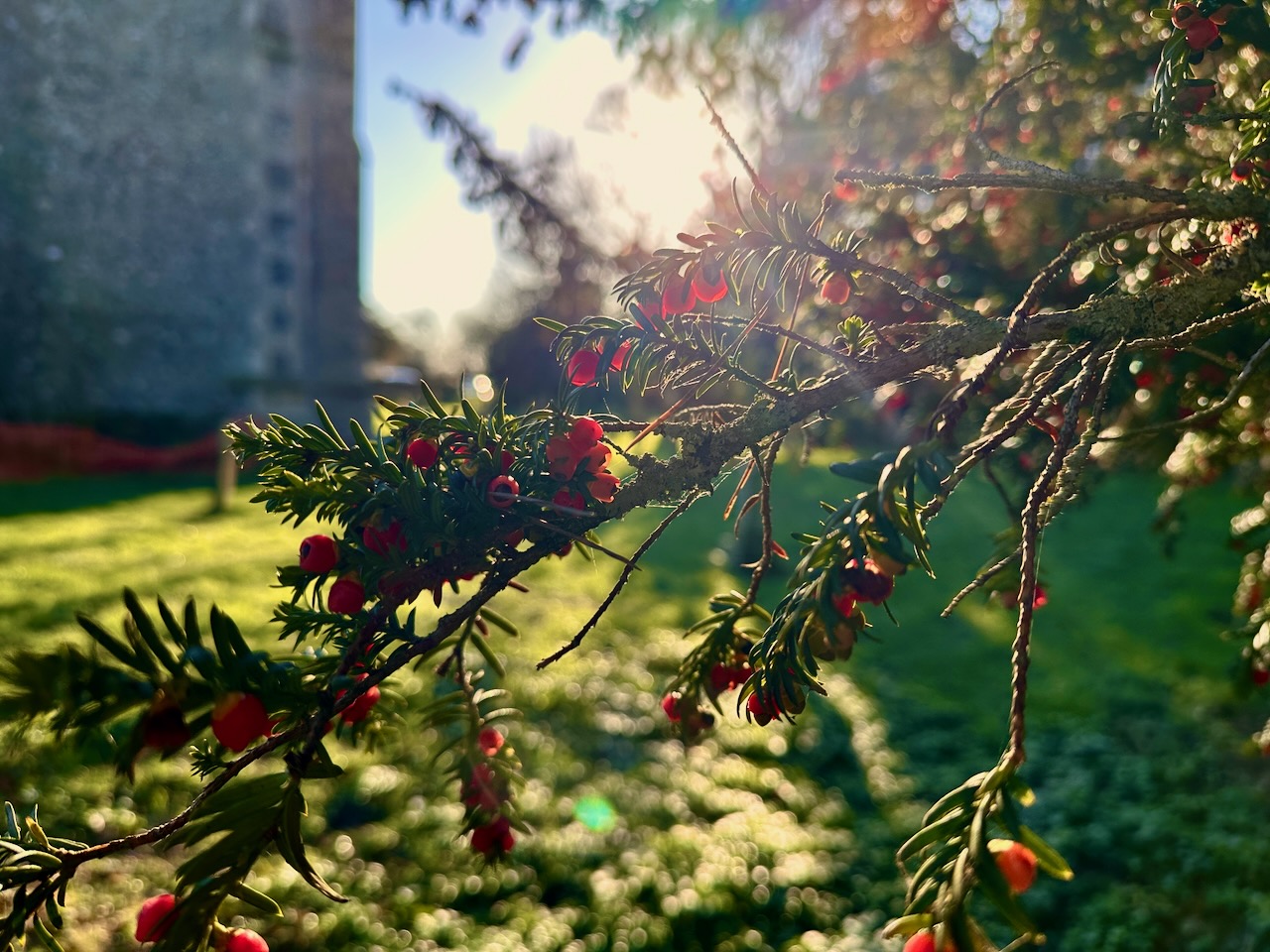
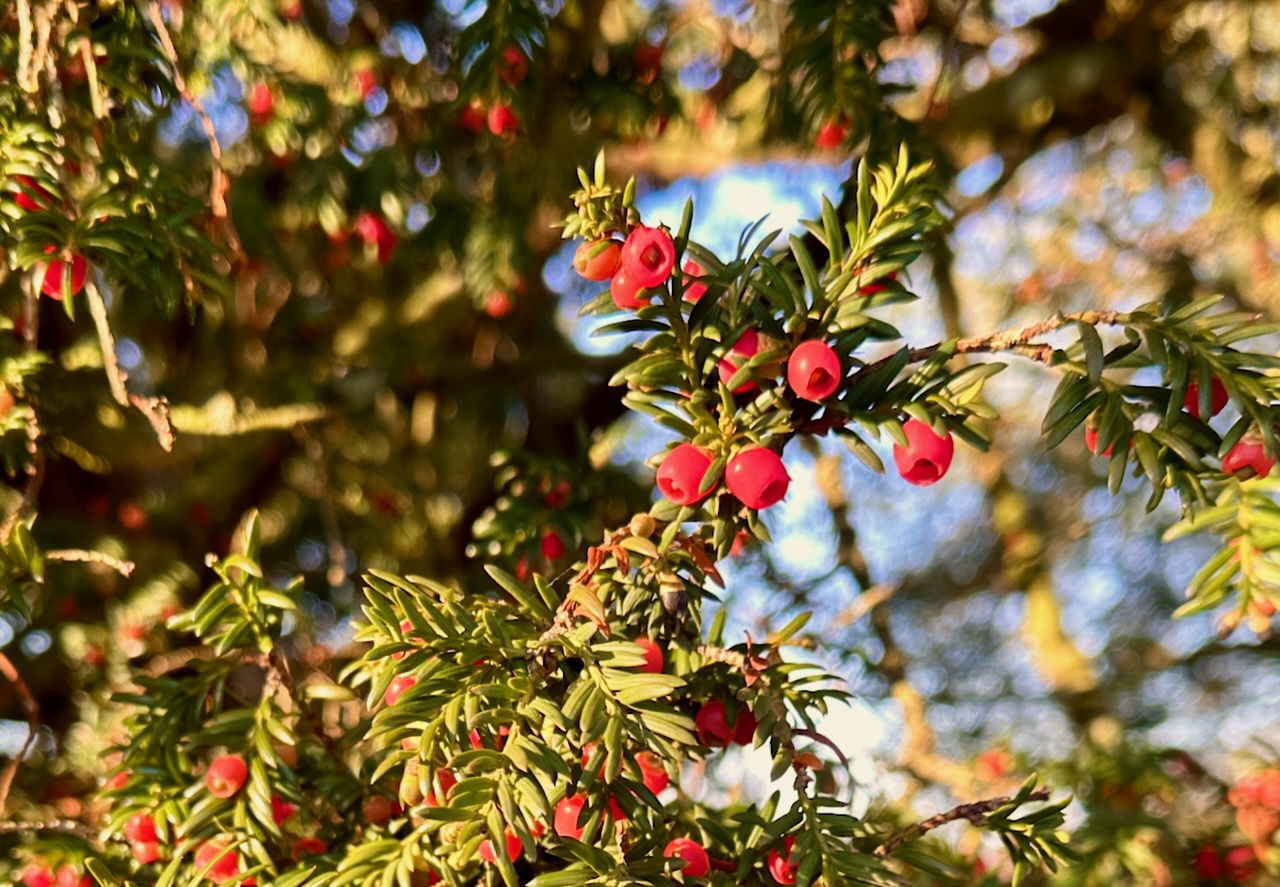
I love Yew trees (Taxus baccata). The berries are magnificent right now — just don’t eat them. If you do, spit out the kernels very quickly, or you’ll get very sick. Possibly dead. Nature doesn’t fuck about.

There are several Yews around Salhouse Church. I often wonder whether they were there before the main church was built in the 14th century. The site certainly has older origins. Maybe it was sacred long before Christianity turned up — first to the Norse who occupied East Anglia, before them the Saxons, before them the Celts, and before that the people who left those astonishing footprints on the Norfolk coast nearly a million years ago.

Who knows what kind of religion or leadership that hominid family followed. Hopefully not the same patriarchal bullshit we’re still trapped in today.

The Yews got me thinking about rebirth as the year turns. About how they grow — sending out looping branches that strike the ground, take root, and become new trees. That process repeats over centuries, meaning that over thousands of years Yews effectively walk across the landscape, if left alone. They’re said to have walked across from America when the continents were joined. Allegedly that’s where Tolkien got the idea for Ents (thanks, Bushcraft instructor Phil – check out https://www.philbrookelongbows.co.uk/).

That ties neatly to my personal motto: Keep On Keeping On.
Be like a Yew.

We have to keep trying to make things better — not just for younger generations, who are utterly screwed as things stand, but for ourselves too. And for the climate. And for other animals, plants, birds, sea life.

What’s happening to the oceans right now is devastating: coral reefs dying, overfishing continuing, grotesque bycatch, ghost nets trapping, suffocating, killing. It’s heart-breaking.

So yes — we need to fight. Non-violently, but relentlessly. Fight for everything:

Fight the far right and hateful extremism in all its poisonous forms.

Fight the oil and gas companies making obscene profits at the expense of climate stability, nature, and human lives.

Fight corrupt governments and politicians who lie, profiteer, and mostly serve themselves. There are notable exceptions — but our own government, and much of UK politics, seems firmly lodged in the corrupt category rather than the redeemable one.

Fight media companies run by billionaire owners desperate to preserve the status quo and their hoarded wealth — whether social media giants or legacy press — pulling political strings while brainwashing us with consumerist advertising and clickbait bullshit.

Fight the narcissistic, misogynist, arrogant old white men (yes, there are women too, but far fewer) who have clawed their way to the top of the fetid political pile, treating truth, human lives, welfare, and civil rights as expendable commodities — traded for votes or simply discarded as democracy and the right to protest are eroded.

Fight banks and insurance companies that prioritise mega-corporations and polluting industries over ordinary people, worshipping shareholder profit while morality gets flushed down the toilet.

Fight the ultra-rich — the billionaires — who hold more wealth and power than any individual should, often avoiding tax while amplifying extremist views from inside their tiny, self-reinforcing echo chambers.

Fight fascism. It’s rising. The warning signs are everywhere. Thanks to my GCSE history teacher — and many books about the 1920s and 30s — for making that painfully obvious. Books are good.

Fight for those worst off: people suffering under neo-colonialism or living on the front lines of climate breakdown. They are dying because of our emissions, our lifestyles, our privilege, entitlement, arrogance, and ignorance — perpetuated by media propaganda, poor education, and comfortable denial.

Fight for Palestinians still being killed in Gaza, and in the West Bank where illegal settlements continue, aid agencies and journalists are blocked, tents sit on rubble, children starve or freeze to death.

Israel is, right now, acting as a terrorist state — and our government still supports it with arms, intelligence, and foreign policy cover. It is heartening to see so many Jewish people worldwide, including within Israel, opposing these war crimes — and to see young Israelis resisting the draft. Please support the UK hunger strikers.

Fight for the people of Sudan, where genocide continues. And for people everywhere —men, women, children — being injured, raped, displaced, and killed. Men use religion as justification, or don’t bother with excuses at all, to dominate, profit, rape, and murder as climate collapse accelerates and wars over finite resources intensify.

We do have abundant resources: sun, soil, ecosystems — if we care for them. But they don’t generate exponential profit for the already-rich, so they’re ignored. They just allow us to live.

You can’t eat money.
We could eat the super-rich, but it wouldn’t be very nutritious. Or sustainable.

Fight for refugees fleeing war, climate catastrophe, and persecution — much of which we helped create. And if you don’t like refugees coming to the UK, then fight for foreign aid instead of cutting it. Cut aid, increase refugees. It’s not fucking complicated.

Fight those putting up flags to spread hate, lies, and division — marking territory for the far right. They target migrants, refugees, LGBTQ+ people, neurodivergent people, black and brown communities — anyone they can scapegoat instead of confronting those actually responsible. They’re manipulated by toxic media and lying politicians. I do wonder how many of those politicians are sponsored by Russia, the US, or both.

Fight for women’s rights — which after decades of struggle are now sliding backwards. And honestly, given the shit job men have done for the last 2,000+ years, maybe it’s time to let women run the show properly. The Abrahamic religions certainly haven’t covered themselves in glory.

Fight for the homeless, the mentally ill, disabled people abandoned by the state while funding is slashed to build obsolete aircraft carriers and weapons of mass destruction. Fuck that shit.

Fight the cult of eternal economic growth on a finite planet. Fight airport expansion. Fight the destruction of our remaining wild spaces, waterways, and seas. Fight pesticides killing insects, herbicides and fertilisers poisoning the land. Fight unnecessary new roads — we need public transport, not more cars. Fight single-use plastic; it’s just oil-industry brainwashing again. Screw Shell, BP, Exxon, Total, and the rest of them.

There is so much to fight for. So many injustices. How the hell do people just ignore it all?

Fight “the man.”
Stand up for kindness, empathy, community, and solidarity. Grow things. Get soaked in the rain and dance anyway. Play music. Just… play.

We can resist this seemingly inevitable slide toward corporate rule, billionaire oligarchy, and societal collapse—but only if we stand up and take back power.

Resist.

People love to say they wouldn’t have stood by while books were burned, neighbours interrogated, friends dragged off to camps. Well, we’re edging frighteningly close to that shit now. Peaceful protesters in the UK are already being arrested in their homes, surveilled, raided.

Democracy, free speech, and the right to protest are being stripped away across the UK and Europe—and it’s far worse elsewhere, including the US, where armed forces are deployed against citizens by a deranged, orange, wannabe strongman and his boot-licking entourage.

So what am I trying to say?

I dunno. Be like a Yew.

Keep on keeping on.
Relentless.
Sheltering.
Regenerative.
Toxic to immoral, illegitimate power.

Work with your neighbours. Trees always do.

So yeah. Happy New Year. Roll on 2026.

And for fuck’s sake—resist before it’s too late.

Or just have a snooze as it all collpases, like Gideon.

BBC Coverage of the Climate Crisis: A Missed Opportunity

I recently wrote to the BBC to complain about their coverage of the climate crisis, which I, and many others, believe remains woefully inadequate given the existential threats it poses. Below is the complaint I submitted.

Coverage of climate change 

I’m writing to complain about the BBC’s inadequate coverage of today’s letter from the Climate Change Committee to Government on the UK’s preparedness for at least 2°C of global warming by 2050.

This is a matter of profound national importance, yet your main news programmes gave it little to no prominence. Such omission feels negligent at best, and at worst suggests a deliberate downplaying of vital information, whether due to editorial decisions, management influence, or political pressure. The public deserves transparency on issues that will shape our collective future. It is already known that Downing Street blocked a government report warning that the collapse of rainforests, reefs, and mangroves could raise food prices in UK supermarkets.

Earlier this year, the Institute and Faculty of Actuaries (IFoA) warned of escalating climate risks -more floods, fires, droughts, and ecosystem collapse. Their analysis projected GDP losses of up to 50% between 2070 and 2090, and warned that global heating of +3°C, possible as early as 2050, could cause over 4 billion deaths, societal collapse, and extinction events.

Despite the gravity of these findings, BBC reporting on the climate and nature crises remains inconsistent and insufficient. This undermines your stated purpose “to provide impartial news and information to help people understand and engage with the world around them.”

While I appreciate an article appeared on your website, this story should have led your main news bulletins, with clear context on what climate breakdown, mitigation, and adaptation mean for ordinary people. It would not have been difficult to feature credible climate scientists or policy experts.

I urge the BBC to give greater priority to the climate and nature crises, ensuring the public are properly informed and able to make meaningful democratic choices, particularly about which leaders and policies will act to safeguard our future and that of coming generations. 

You can read the letter I referenced here: https://www.theccc.org.uk/wp-content/uploads/2025/10/CCC-letter-to-Minister-Hardy-15-October-2025.pdf

The CCC warns that the UK must urgently strengthen its adaptation objectives to protect food security, infrastructure, public services, the economy, and access to financial services such as insurance. Many properties are already becoming uninsurable due to flood risk.

We are beyond the stage where it’s possible to mitigate all catastrophic climate impacts. Yet the current levels of adaptation -and even the plans for adaptation – remain unambitious and wholly inadequate. Inadequate seems to be the word of the day when it comes to both government and media responses to the climate and nature crises.

This is the response from the BBC I received last night:

Dear Mr Harvey,

Thank you for getting in touch about BBC News at Ten on 15 October.

We’re sorry you feel insufficient coverage was given to the letter addressed to the government from the Climate Change Committee (CCC), warning that the UK should be prepared to cope with weather extremes as a result of at least 2C of global warming by 2050.

We know that not everyone will agree with our choices on which stories to cover, or the order in which they appear. Our news editors make these complex decisions, based on the editorial merit of all the stories at hand. We accept that not everyone will agree with each decision – various factors are at play and there’s often debate in the newsroom too.

BBC News did cover this across our news outlets however and you can read the online report here:

https://www.bbc.co.uk/news/articles/cx24kllyye1o

The BBC has been reporting on both the effects of climate change and the changes that individuals and governments can make in order to reduce carbon emissions for many years. In recent years these reports have had increased prominence as the evidence grows about the speed and impact of climate change.

To read our latest News on the issue of climate change, you may be interested in the following link:

https://www.bbc.co.uk/news/topics/cmj34zmwm1zt

We can assure you that the BBC is committed to providing fair and impartial coverage of the latest News stories to our audience, and climate change is an issue that the BBC takes very seriously.

We very much value your feedback. Complaints are sent to senior management and we’ve included your points in our overnight reports. These reports are among the most widely read sources of feedback in the BBC. This ensures that your concerns have been seen by the right people quickly, and helps to inform decisions about current and future content.

If you’d like to understand how your complaint is handled at the BBC, you might find it helpful to watch the short film on the BBC Complaints website about how the BBC responds to your feedback. It explains the BBC’s process for responding to complaints, what to do if you aren’t happy with your response and how we share the feedback we receive.

Kind regards, 

BBC Complaints Team 
www.bbc.co.uk/complaints

I appreciate that the complaints team forwards feedback to senior management, and I can only hope that the BBC – and the wider media – will soon recognise the urgency of reporting on the existential crisis that is climate breakdown.

This crisis threatens the lives and livelihoods of billions over the next 25 to 50 years — and millions are already being affected, displaced, and killed by its impacts. It demands coverage that reflects its true urgency, accuracy, and frequency.

I’d be very interested to hear what others think — please feel free to leave a comment or share your perspective below.

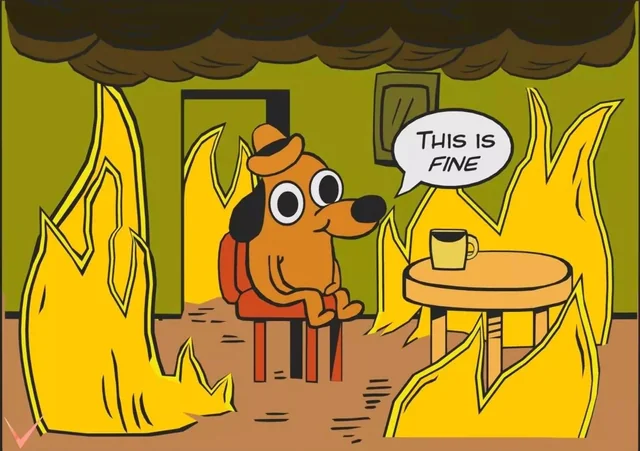
This is fine
This is fine


Our Countryside Deserves Better Than Endless Development

This is a blog post I wrote for the Broadland Green Party website, partly in my capacity as a Green Party district councillor. I think I therefore have to include a digital imprint, so here it is: Promoted by James Harvey on behalf of Broadland Green Party, a constituent party of the Green Party of England & Wales PO Box 78066, London, SE16 9GQ

It can often feel as though our farmland, countryside, and the few remaining wild spaces are being steadily consumed in the name of “growth” — the relentless drive to build more houses and satisfy developers’ appetite for profit.

This was evident at the recent Broadland District Council Planning Committee meeting, where permission was granted for 200 dwellings, including 90 retirement apartments, alongside a country park and parking. This decision was made despite the development not being in the local plan, and despite strong objections from the Parish Council, local residents, and Green Party district councillors.

Communities Ignored

Time and again, developments are approved against the wishes of local communities.
People are rightly concerned about a wide range of issues, including:

  • The loss of good-quality farmland needed for growing food
  • The destruction of nature — our woods, hedgerows, and wildlife habitats are under threat
  • Local roads already struggling with traffic and in poor condition
  • Overwhelmed sewerage systems and limited water supply
  • Insufficient local employment opportunities
  • Overstretched doctors and dentists, making appointments hard to get
  • Local schools with no spare capacity
  • Flood-prone land — a risk worsened by climate breakdown
  • Rising air and noise pollution from more houses and roads
  • Poor public transport links and lack of cycling infrastructure

Yet these legitimate objections are often ignored, overruled, or dismissed due to complex planning regulations and housing targets set by central government.

How the System Fails Local People

Planning officers frequently cite what can be a bewildering array of planning rules and legislation that make it hard for councillors — let alone residents — to challenge inappropriate developments.

Government policy requires councils to maintain a five-year housing land supply, ensuring “sustainable residential development” as set out in the National Planning Policy Framework (NPPF) 2024. Unfortunately, the Labour Government under their “Build, Build, Build” mantra increased the housing target for every Local Plan by 34%. Hence, no sooner had we agreed and published the GNLP it was out of date.

There will now be a “call for sites” in early 2026 to accommodate the extra 600 houses per year, an increase from 2,000 to 2,600. Because Broadland currently cannot demonstrate a five-year housing supply, developers are allowed to put forward speculative (or predatory) proposals for sites outside the Greater Norwich Local Plan (GNLP) – even when local people object.

It’s worth noting that Broadland Green councillors were not in favour of the GNLP, but without a plan, developers would have free rein to build wherever they wanted. Supporting the GNLP became, unfortunately, the lesser of two evils.

A Growing Sense of Anger and Frustration

We fully understand why residents feel angry and powerless as excessive housing developments encroach on towns and villages, straining local infrastructure and changing the character of cherished communities.

We can argue that new developments can bring opportunities, diversity, and economic benefits. While that may sometimes be true, it’s hard to make that case when local councillors and residents alike see their surroundings being irrevocably changed — often without meaningful local input.

The Challenge of Objecting

To make a legitimate objection, we must show how a proposal conflicts with planning policy. Each application must be judged on its own merits, and when there’s a housing shortfall, the so-called “tilted balance” comes into play — meaning that planning permission should be granted unless there are strong reasons for refusal.

This makes it incredibly difficult for communities to resist developments, even when the case against them seems obvious.

Developers and Trust

Many people simply don’t trust developers — and who can blame them? Too often, promises about affordable or social housing are quietly dropped once planning permission is secured.

Meanwhile, faith in national politics has eroded. Too many politicians fail to understand or represent the people they serve. The planning system itself is deeply flawed, with too much power concentrated in the central Planning Inspectorate, which can and does overrule local decisions.

If proposals for single “unitary councils” — Broadland has suggested three — go ahead, this erosion of local democracy could get even worse. All the while, the drive for endless growth continues on a planet with finite resources.

Smarter Solutions Exist

There are better ways to meet housing needs without destroying green spaces.

In England, there are over one million empty homes — including long-term vacant properties, second homes, holiday lets, and homes left empty due to care or probate. According to Action on Empty Homes, around 325,000 people are currently in temporary accommodation, with many more sleeping rough.

Instead of relentlessly building on our countryside to enrich a small number of developers, why not prioritise bringing empty homes back into use?

We also need a wealth tax to address the widening gap between the super-rich and everyone else, ensuring fairer funding for housing and public services.

Building the Right Homes in the Right Places

Some new housing is, of course, necessary. But it must be the right kind of housing — affordable for local people and built in the right locations.

We need more urban regeneration and brownfield development, not sprawl across our countryside and remaining natural habitats. It’s unacceptable that key workers in the NHS, emergency services or care-workers, and other essential services can’t afford to live near where they work, or that local young people are priced out of their own communities.

Likewise, those moving into new areas should have access to suitable housing — and that means utilising empty properties and building responsibly.

And it’s long past time to end the Right to Buy scheme, which has depleted social housing stock and worsened the housing crisis.

Hope for a Greener Future

The Green Party is growing, with more members and support than ever before. Under the new leadership of Zack Polanski, we will continue to challenge government policies that fail local people — both in councils and in Parliament.

With your support, we can build a fairer, greener, and more democratic future — one where communities have a genuine voice, and where hope becomes normal again.

James Harvey, Green Party district councillor for Plumstead Ward

I wanted to tell you about the Blue Tits

Mum passed away a couple of week’s ago. I keep wanting to tell her about stuff. So I wrote her a little poem, by way of an update.

I nearly rang you today, cos of the Blue Tits,
They are nesting in the box that Dad built,
I can hear the chicks cheaping, asking for food,
Their parents are never far away,
In and out of the box with grubs and insects,
Nature is wonderful.

I wish I could tell you about them, constantly on the go,
They work from dawn to dusk,
And get very cross,
When Gideon comes and stares at them,
He is really fascinated,
I know you like hearing about him.

I cleaned out the garage too,
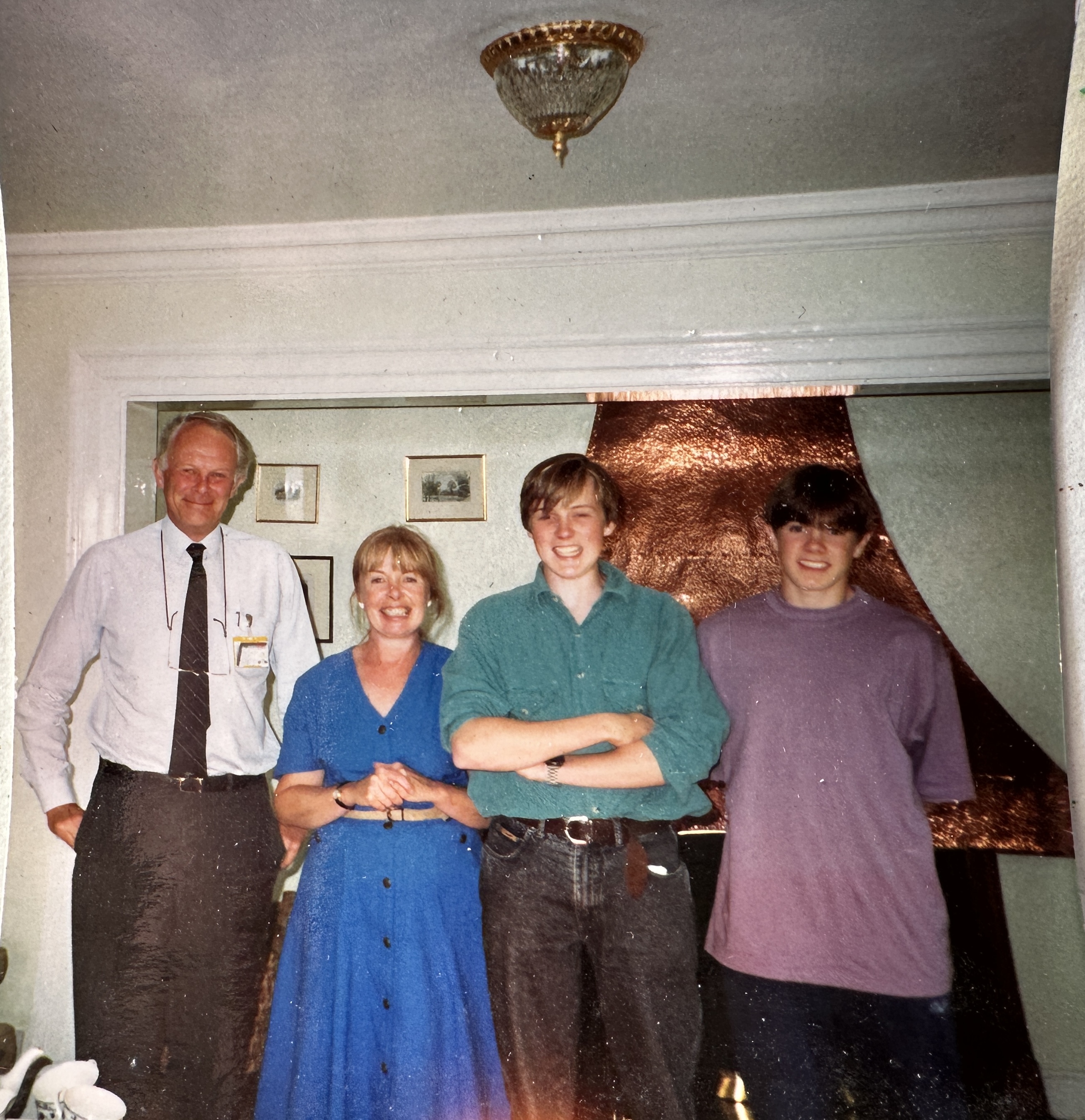
And found a photo from when I eighteen,
All of us together in front of the fireplace,
With the dent in, where someone threw a vase,
Before we moved in,
Always makes me laugh, happy days.

I contacted Catherine in Japan, to let her know,
She said she has photos,
From when you were in Grenoble, learning French,
Like I did when I was 20,
Looking forward to the pictures,
Young Mum, full of life.

The garden is growing at a pace,
Weeds everywhere, of course,
I like weeds, some lovely flowers too,
And raspberries, wish I could give you some,
The Jasmine and Honeysuckle are going to be great,
Scents of summer, and peace.

Got to get back on my bike more,
I cleaned it today, all shiny,
Need to work off a few pounds, and get fit,
And maybe another cycle tour,
Maybe the coast again, or somewhere else,
For you Mum, you loved following my tours.

We are getting their Mum, sorting stuff,
But it would be a lot easier if we could ask questions,
You knew all the names,
We’ll make it work though,
That’s all for now, lots of love,
Will speak again soon.


Some photos Mum would like too.