Tag Archives: Government

What if politicians didn’t make the decisions?

I keep thinking about something. Please don’t groan, I can hear you.

Why are politicians constantly trying to work out what they need to do to get people to vote for them?

We have focus groups, opinion polls, electoral strategies, carefully tested messages and policies designed to appeal to particular groups of voters. Governments worry about what something will do to their polling. Opposition parties worry about whether saying what they actually think will cost them seats. Lobbyists, corporations, wealthy donors and organised interests all compete for access and influence, far beyond the ken of the ordinary public.

Then politicians go out and try to convince us that the resulting policies are the right thing to do.

It seems completely backwards.

Why don’t we start by asking what the right thing to do actually is, based on the best evidence we have, and then explain honestly and straightforwardly why we need to do it? No lies, misdirection, half truths or bullshit.

Some of the answers will be unpopular. Almost certainly. Dealing seriously with climate breakdown, inequality, defence, housing, taxation, migration, social care or the collapse of nature isn’t going to produce answers which everybody likes.

But perhaps that is what politics is supposed to be for.

I’ve increasingly started wondering whether I’m asking the wrong question. Perhaps the problem isn’t that we need politicians who are courageous enough to make better decisions.

Perhaps politicians shouldn’t be making most of these decisions in the first place. Given the current state of affairs, that seems like, perhaps, a no-brainer.

What if we did politics differently?

I’ve been reading more about anarchism recently, including Rebel City’s excellent little book For a Future Made by Us All. Anarchism isn’t the chaos and disorder that the word usually conjures up. My Mum often used to say something along the lines of “If we don’t fix this now, we’re going to slide into total anarchy.” I don’t think she really understood the principles of anarchism. At its heart are some quite simple ideas about freedom, equality, solidarity and mutual aid, and a profound suspicion of unnecessary hierarchy.

One idea particularly interests me: decisions flowing from the bottom upwards, rather than power flowing from the top downwards. Rebel City describes assemblies as a basic unit of non-hierarchical organisation, with people collectively participating in decisions affecting them.

That raises some interesting questions.

Why do we elect a few hundred people, many of whom change every few years, and then give them enormous power to make decisions for tens of millions of us?

What if we separated political decision-making from political administration?

Imagine that we identified a major issue and convened a Citizens’ Assembly: a randomly selected, demographically representative group of ordinary people. Not people who have spent their lives climbing through political parties, and not done a lot else. Not people who can afford £50,000 dinners with ministers. People like us.

Give them time. Give them access to information. Pay them properly for participating. Let them hear from scientists, economists, engineers, public servants, charities, religious/community leaders, businesses, campaigners and, importantly, people directly affected by whatever they are considering.

Let them question those people. Let them demand more evidence. Let them hear opposing arguments.

And then let them decide.

The process might look something like this:

Issue
↓
Independent evidence gathering
↓
Citizens’ Assembly
↓
Recommendation or decision
↓
Government publishes an implementation plan
↓
Politicians explain the decision and the reasoning behind it
↓
Civil service implements it
↓
Outcomes independently measured
↓
Results return to citizens

Then, if it doesn’t work, we change it.

That last bit seems important.

Our existing political system makes admitting failure incredibly difficult. If a government admits that one of its flagship policies hasn’t worked, the opposition attacks it. The media calls it a U-turn. Ministers become frightened of admitting mistakes, so enormous effort goes into proving that whatever they previously decided was right all along.

That’s a terrible way to learn. A terrible waste of time, money, resources and public faith.

Who chooses the experts?

There is an obvious problem with my imagined system. Who decides what evidence the assembly hears?

If the government chooses the experts, we have simply moved political control one step further away. If corporations can dominate the evidence because they have vastly greater resources than everyone else, we’ve recreated lobbying. If campaign groups can pack the process with people who agree with them, we’ve created another problem.

The evidence process would have to be genuinely independent, transparent and accountable. Assembly members themselves should be able to request additional witnesses, challenge evidence and ask to hear from somebody who disagrees.

And there should be a simple, key rule:

No privileged access for vested interests or lobbyists.

That doesn’t mean excluding them.

A renewable energy company will know something important about renewable energy. A trade union knows things about its members’ working conditions. An environmental organisation may have decades of specialist knowledge. Businesses, charities, campaigners and community organisations should all be able to contribute.

But they contribute in the room, transparently, alongside everybody else.

Nobody gets greater access because they donated £500,000 to a political party. Nobody gets a private dinner with the decision-maker. Nobody gets heard because they employ a former minister. Nobody gets to quietly wander around Westminster whispering into the right ears whilst offering free drinks.

Money shouldn’t buy political access.

Experts shouldn’t rule either

There is another distinction I think matters. Albeit, it’s tricky.

Experts provide knowledge. They don’t provide moral authority.

A climate scientist can explain what increasing atmospheric carbon dioxide is likely to do. An economist can model the economic consequences of different choices. An engineer can tell us what is technically possible. But none of them can tell us what kind of society we want to live in. Those are value judgements. They belong to all of us. And Citizens’ Assemblies will sometimes get those judgements wrong. Of course they will. Ordinary people aren’t infallible.

Neither experts nor Citizens’ Assemblies are infallible. Neither are politicians.

I’m increasingly baffled by the assumption that selecting somebody because they were good at winning an election somehow makes them particularly qualified to make enormously complicated decisions about energy systems, artificial intelligence, healthcare, agriculture, economics or climate breakdown.

A small real-world example: as a councillor I sit on a planning committee, and sometimes we are called upon to make decisions on Tree Preservation Orders. Hardly anyone there, aside from the Arborist, is an expert, yet I see subjective conclusions, and thus decisions, being made about trees that could be incorrect. Scale that up to decisions about the economy, climate, welfare, defence, the NHS and all sorts of other things.

Perhaps we shouldn’t be looking for infallibility. Perhaps we should be designing a system that produces decisions that are informed, representative, transparent, difficult to corrupt and capable of correcting themselves.

So what are politicians for?

We’d still need them. Probably. But their job would be very different.

Politicians would become managers, coordinators, facilitators, communicators and scrutineers. They would make sure decisions were implemented properly, coordinate institutions, allocate resources and hold the machinery of government to account.

Their job might be to tell us:

We asked citizens to consider this problem. They spent time understanding it. They heard the evidence, challenged it and deliberated together. This is what they decided. This is why they decided it. This is how we’re going to make it happen. And this is how we’ll find out whether it worked.

And power shouldn’t all sit in Westminster.

If something can sensibly be decided by a community, let the community decide it. If it needs coordination across a region, move it up a level. Some things inevitably require national coordination, and some problems cross national borders.

But power should move upwards only when it needs to.

That feels much closer to the bottom-up organisation described by anarchist thinkers than our extraordinary concentration of political power at the centre. 

There are, obviously, enormous unanswered questions. How do we protect minority rights? Who decides which questions go to assemblies? What happens in an emergency? What constitutional safeguards do we need? What happens when different assemblies reach contradictory decisions? How do we prevent somebody capturing the supposedly independent evidence system?

I don’t know. But I don’t think what we have is working. And I keep going back to the criticism of democracy attributed to Socrates, particularly through Plato: that political decisions can end up being made by people who have won popular support but don’t necessarily understand the things they are deciding. The argument is more complicated than that, but perhaps one answer to it is a properly constituted Citizens’ Assembly; ordinary people given the time, evidence and access to expertise needed to make informed decisions.

This isn’t a constitutional blueprint. It’s a question. Because perhaps we’ve been trying to solve the wrong problem.

I keep hoping that better people will become politicians. That somehow the next collection of people entering Westminster will resist the machinery of parties, elections, donors, lobbyists, opinion polls, newspapers, social media and the relentless need to win the next election.

They almost certainly won’t.

Perhaps instead of endlessly trying to find better people to give enormous amounts of political power, we should build a society in which politicians have much less power to exercise.

Democracy shouldn’t just mean choosing, every four or five years, which small group of people gets to make decisions for everybody else. Maybe it could mean ordinary people, given the information and time necessary to understand difficult questions, making those decisions together.

From the bottom up.

With politicians working for us, rather than ruling over us.

Or we could go for a dictatorship. All hail our Lord and Master Gideon, who will make decisions based on tribute, warm spots and head scratches. Actually, I’m not convinced that isn’t what is happening at the moment. But Gideon recommends we give him a shot anyway.
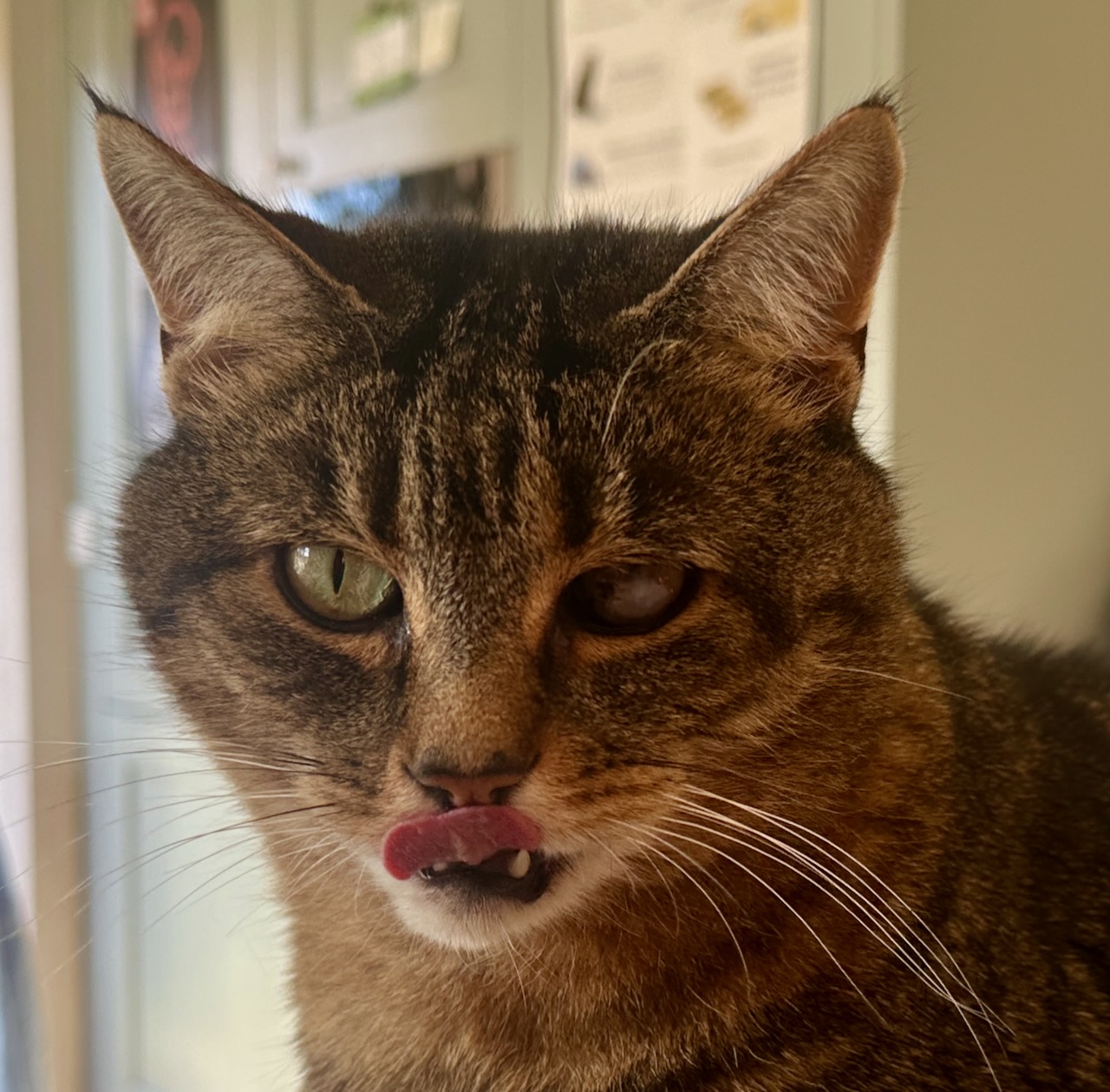
Gideon, urr, yeah, sorry, your Lord and Master

Rage, rage against the dying of the light

This morning I am grateful for last night’s rain, bringing relief to the countryside, plants and animals, humans included. Because we are animals, with the same fundamental needs all animals have – shelter, water and food. We seem to have forgotten that. 

We’ve forgotten that without a stable ecosystem and environment to live in, our existence is compromised. Instead, at least in wealthier countries, we often prioritise non-essentials, things we want but don’t actually need – new tech, expensive clothes and cars, holidays abroad, subscriptions to TV and other digital services – all stuff that are nice to haves but not essential to being alive, being happy, or being healthy.

We are a part of nature, not apart from it. Our lifestyles, driven by the media, advertising and mega-corporations harvesting our earnings to get even richer, are not compatible with a sustainable present, let alone future. We are trained from a young age to be good little consumers, that one’s success is measured by how much stuff you have, how much money, not by the community you are in and shared experiences,  support for one another, connections, kindness and empathy. 

Indeed, the latest attack by some right wing figures is on empathy. Apparently it’s a bad thing – caring is bad, don’t care about other people or nature, that’s weak. Much better to live a hedonistic, selfish lifestyle, if you are following the parables of Musk. What an absolute bell-end.

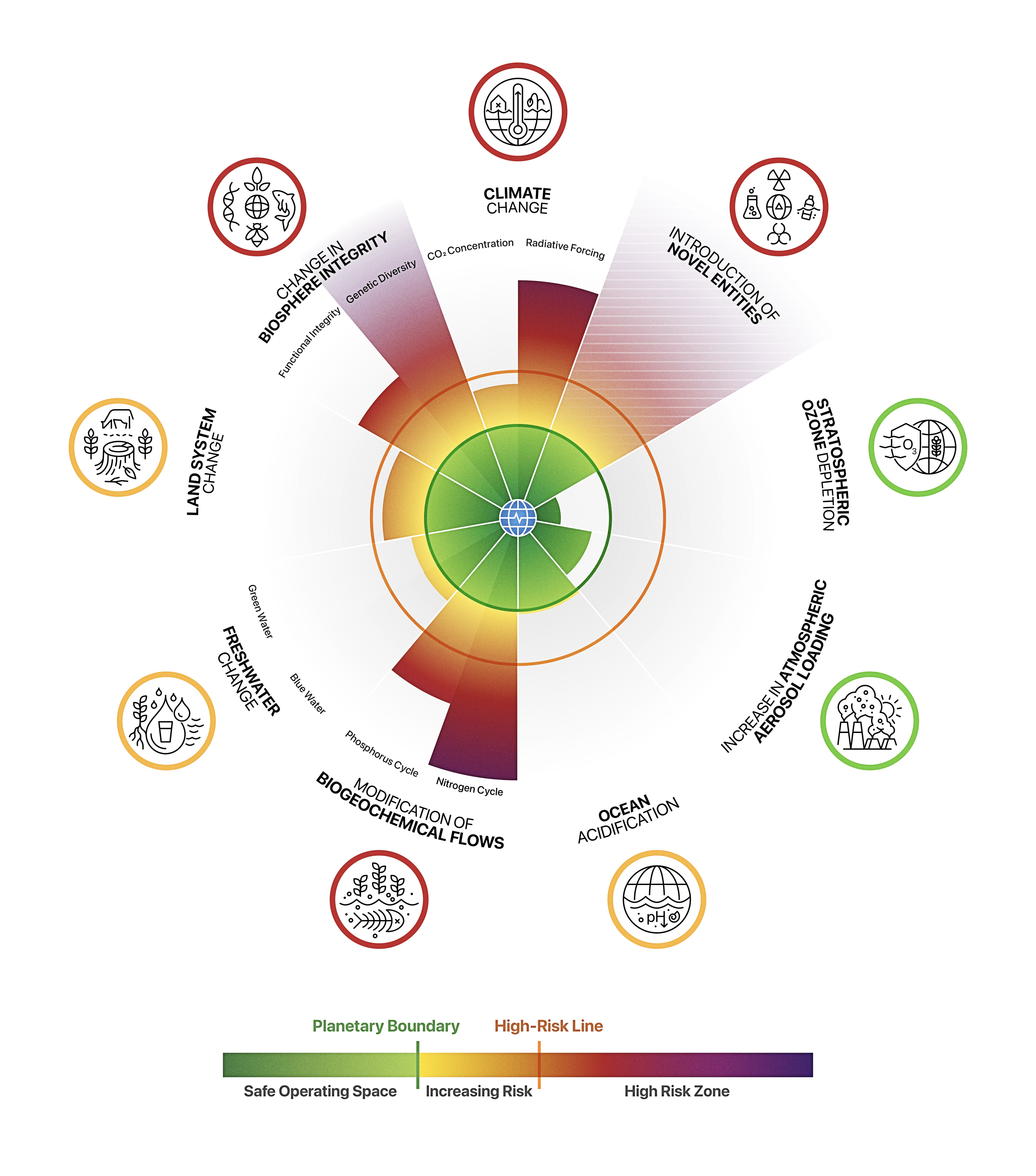
According to the Potsdam Institute for Climate Impact Research we have breached 7 of the 9 critical Earth system boundaries. There are only two that remain in safe zones – the Ozone Layer and Atmospheric Aerosol Loading. Human civilisation developed within an unusually stable Earth system. If we’ve pushed 7 of its 9 major life-support systems outside their scientifically assessed safe boundaries, we are progressively weakening the resilience of the planet we depend upon.

This means increasing the risk of cascading, potentially irreversible changes to climate, water, food systems and ecosystems. We’re back to global heating → drought → floods → failing harvests → food insecurity → displacement → conflict → mass extinction.

The Planetary Boundaries Science Lab at PIK finds that seven of nine critical Earth system boundaries have been breached, leaving only ozone depletion and aerosol loading within safe limits. (PIK, 2025)


Source: Potsdam Institute – The Planetary Boundaries Science Lab at PIK finds that seven of nine critical Earth system boundaries have been breached, leaving only ozone depletion and aerosol loading within safe limits. (PIK, 2025)

We’re also experiencing ecological overshoot every year. We are constantly using more resources, more energy, producing and using more stuff. We are cannibalising the planet, using 1.73 times the resources the Earth can regenerate every year. This is not sustainable. The UK national ecological overshoot day this year was 22 May 2026.

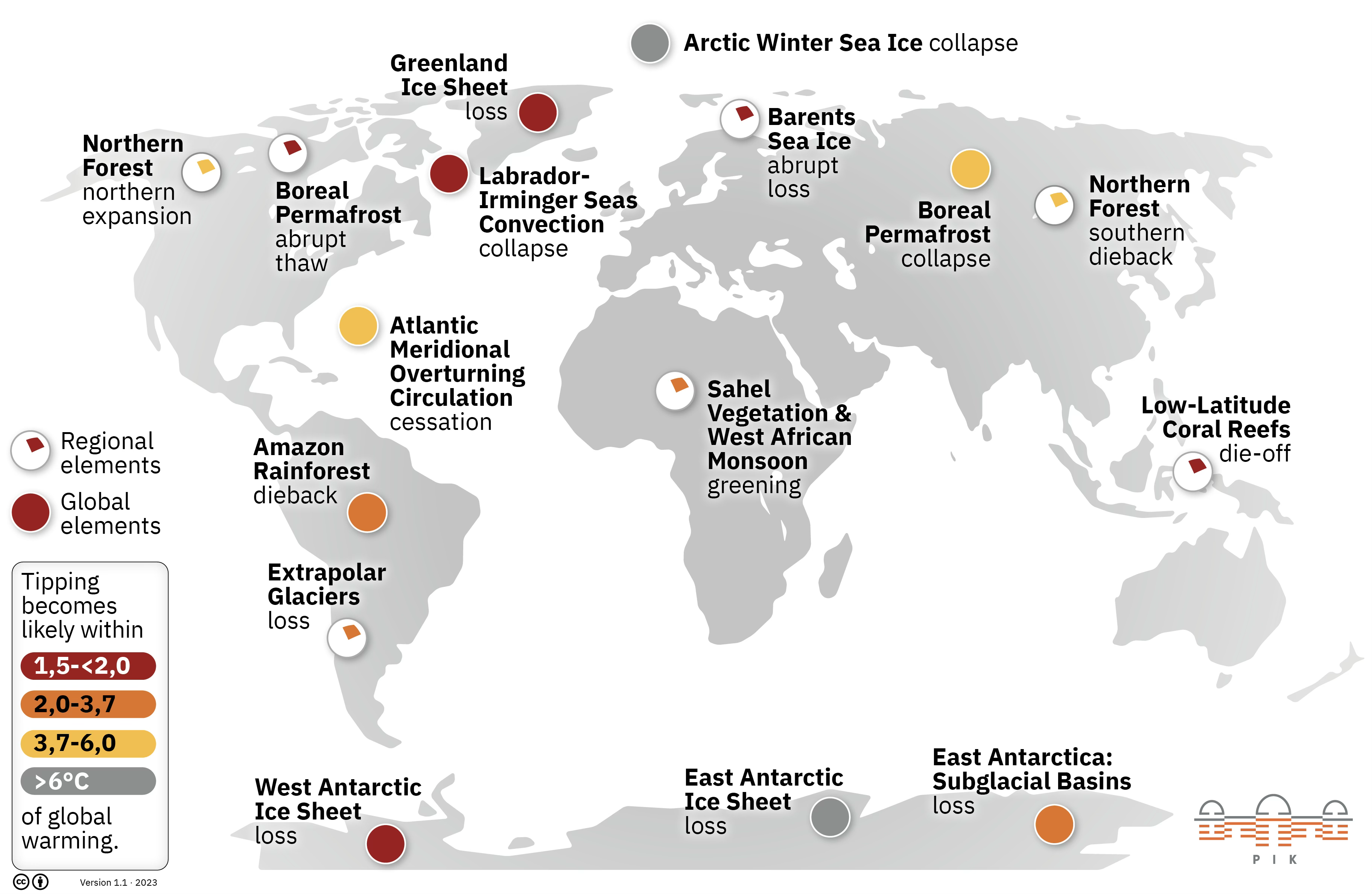
We are approaching, and in some cases may already be passing, critical tipping points. Coral reefs bleaching and dying. Albedos that reflect sunlight back into space are disappearing as ice melts. Permafrost is melting releasing methane into the atmosphere, a far more potent greenhouse gas than carbon dioxide. Parts of the  Amazon rainforest are dying and becoming source of emissions rather than soak for carbon emissions. The oceans are hot, and as they heat up they absorb less carbon dioxide, becoming less effective as a carbon sink whilst they also acidify and become less sustainable for life.  And of course wildfires are raging, destroying nature and carbon sinks, whilst emitting even more carbon dioxide into the atmosphere.

For all practical purposes, we’ve blown any realistic prospect of keeping long-term warming below 1.5°C without substantial overshoot. We are firmly on track for + 2°C, then potentially +3°C, even +4°C in more extreme modelling. The Paris Agreement didn’t define 2°C as safe. It tried to commit governments to keeping warming “well below 2°C” and pursuing 1.5°C because this would significantly reduce climate risks. The IPCC subsequently found that at 2°C the risks to food, water, health, livelihoods and human security rise substantially, with some impacts becoming widespread, severe and potentially irreversible.

The geographical distribution of global and regional tipping elements, color-coded according to the best estimate for their temperature thresholds, beyond which the element would likely be 'tipped'. Figure designed at PIK (under cc-by licence), based on Armstrong McKay et al., Science (2022).


Source: Potsdam Institute. The geographical distribution of global and regional tipping elements, color-coded according to the best estimate for their temperature thresholds, beyond which the element would likely be ‘tipped’. Figure designed at PIK (under cc-by licence), based on Armstrong McKay et al., Science (2022).

We’re already seeing more fires, droughts, and harvest failures. These are hitting especially hard where I live in Norfolk, UK. It’s going to get a lot worse, with more heat injuries and deaths, food and water shortages, floods, sea level rise, poverty, economic damage, rising inequality, war for remaining resources, and ecosystem collapse. We aren’t doing nearly enough to adapt as it is, and simply won’t be able to adapt to what is coming. 

We have to stop greenhouse gas emissions, whilst also implementing adaption measures. And we need to do it now. This rhetoric from the government and fossil fuel industry we’re being programmed with, that we have to be pragmatic, that fossil fuels need to be in the energy mix for a long time yet – it’s a death sentence for billions.

The Institute and Faculty of Actuaries (IFoA), the people that inform the insurance industry, have warned there is a severe risk of a global death toll of billions of people. They have modelled a severe risk of 4 billion deaths at +3°C. This is them doing catastrophic-risk modelling, but we keep passing worst case scenarios. By the way, this model is scaled up for +2°C which predicts 2 billion dead. As things stand we have very little chance of staying under +2°C as emissions are still going up, and those emissions will impact temperatures for decades, centuries, locking in global heating to +2°C and beyond.

Politicians and oil and gas companies tout carbon capture and storage as the panacea. But it has not been built and therefore proven at scale, and will cost a fortune to build. It is not a get-out-of-jail-free card for continued oil and gas use. Why not spend that money on renewables, energy storage and grid upgrades. At the same time this would create thousands of jobs and give the economy a boost, whilst reducing emissions, lowering bills, and improving our energy security. What’s not to like?

The truth is still being hidden, by Governments – who have both their heads in the sand whilst hiding the facts. By large proportions of the billionaire owned press. By oil and gas companies who are doing the same as the tobacco industry, and have done for decades – hiding the science and truth in order to make sick amounts of money, at the expense of our health, of the Earth’s life support systems. And by banks and hedge funds who are funding it all. 

Business as usual is killing us, and making a few people, an absolute minority, absurdly rich and powerful. But they won’t be able to buy their way out of the multiple crises that are both here right now or approaching fast. We cannot adapt our way out of some scenarios, it doesn’t matter how much money you have if the opposition keep putting more players on the pitch.

Here we are then. Our life support systems are failing, yet we are trying to keep calm and carry on. We are being betrayed, totally failed, by governments whose primary responsibility is to protect and serve their citizens. They in turn are being manipulated by lobbyists, oil and gas companies whose employees meet with ministers every day, by billionaires with no empathy and the media and corporations they control. Our political, economic, financial, industrial, legal, food and water, systems, and many more, are broken, not fit for purpose in the world we now live in. 

We talk endlessly about national security and defence budgets – buying more bullets and bombs. But security also means flood defences, reservoirs, resilient food production and storage, secure clean energy, functioning ecosystems and homes for people displaced by climate impacts.

We won’t get these changes under the current system of government. It just can’t do it with the vested interests involved, and the governance processes it is bound by.

We have to act, for our own sakes as well as future generations. We need a peaceful revolution to make changes to all those systems.

Or we’re fucked.

I’ll leave you with this poem, which has been resonating with me a lot today.

Do Not Go Gentle into That Good Night

BY DYLAN THOMAS

Do not go gentle into that good night,
Old age should burn and rave at close of day;
Rage, rage against the dying of the light.

Though wise men at their end know dark is right,
Because their words had forked no lightning they
Do not go gentle into that good night.

Good men, the last wave by, crying how bright
Their frail deeds might have danced in a green bay,
Rage, rage against the dying of the light.

Wild men who caught and sang the sun in flight,
And learn, too late, they grieved it on its way,
Do not go gentle into that good night.

Grave men, near death, who see with blinding sight
Blind eyes could blaze like meteors and be gay,   
Rage, rage against the dying of the light.

And you, my father, there on the sad height,
Curse, bless, me now with your fierce tears, I pray.
Do not go gentle into that good night.
Rage, rage against the dying of the light.

Don’t Look Up: When the Government Finally Admits the Planet Is Breaking

The Government has finally published a report it previously suppressed, calmly explaining that biodiversity loss and ecosystem collapse pose a direct threat to national security. Which is nice of them. Always good to know when the house is on fire, even if the alarm only goes off after the roof has already collapsed.

https://www.gov.uk/government/publications/nature-security-assessment-on-global-biodiversity-loss-ecosystem-collapse-and-national-security

The report itself is actually quite readable. That’s part of what makes it so disturbing. It doesn’t scream. It doesn’t rant. It doesn’t glue itself to the road or throw soup at a painting. It just politely lays out, in civil-service prose, how the life-support systems of the planet are failing, and how that might be a bit of a problem for economies, borders, food supplies, public health, and, you know, civilisation.

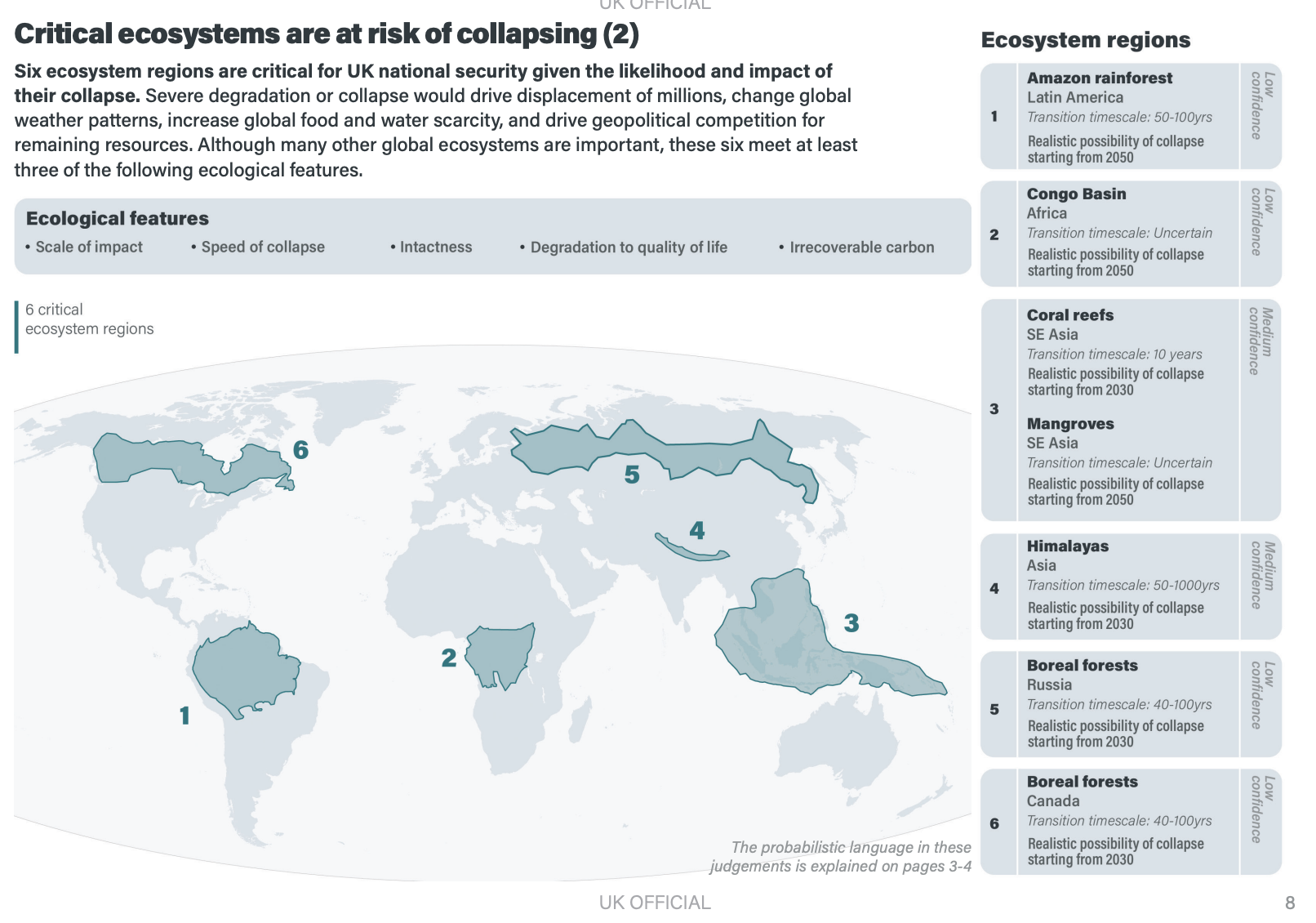
Critical ecosystems are at risk of collapsing

If anything, it feels conservative, which is fairly typical of government or scientific reports on the climate and nature crises. Multiple critical ecosystems – coral reefs, boreal forests, major mountain systems like the Himalayas – are expected to collapse soon. Not in 2100. Not for our grandchildren to worry about. Soon soon. Others, including the Amazon rainforest, the Congo Basin and mangrove systems, are likely to follow. Dominoes, but with forests and oceans instead of plastic rectangles.

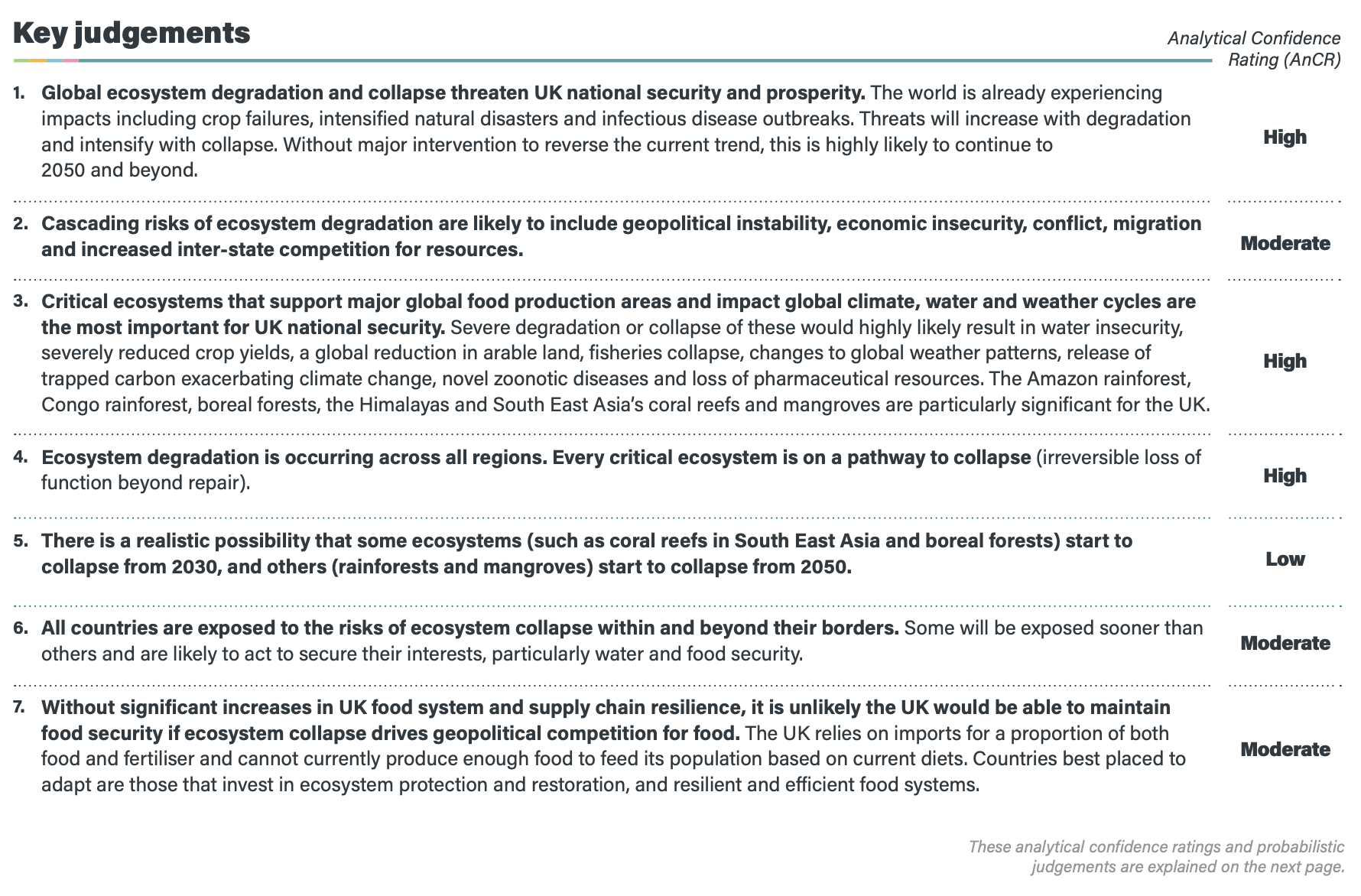
Key Judgements
Key judgements

Meanwhile, atmospheric CO₂ has reached 428 parts per million, and the line on the graph is still curving upward. That single number underpins a whole cascade of consequences: climate breakdown, ecosystem collapse, floods, fires, crop failures, water stress, resource conflicts, mass migration, disease outbreaks, and increasing parts of the planet becoming uninhabitable. From there, social instability and collapse aren’t radical ideas — they’re logical outcomes.

Much of this is already happening, of course, especially in poorer countries that did the least to cause the problem and are least able to adapt. But don’t worry – I’m sure the market will fix it. Any day now.

What’s particularly maddening is that this isn’t some unsolvable mystery. There is no missing equation. No magical technology yet to be invented by a mega-corporation keen to make an even more obscene profit. We already know what to do.

We could fly less. Eat less meat. Scale up renewable energy at speed — the way China is doing while we argue about whether onshore wind or solar is “a bit unsightly”. We could rewild vast areas of land instead of treating nature like a decorative afterthought. We could protect rivers, lakes and oceans – which might help if water companies weren’t allowed to behave like extraction businesses with a sewage fetish. Public ownership, anyone?

We could grow more food locally. Insulate our homes properly. Use public transport that actually works. Stop pouring obscene amounts of energy into data centres and AI so that a chatbot can write slightly worse emails than a human already can. None of this is revolutionary. It’s just unfashionable — and it directly contradicts the Government’s growth mantra.

There will be no growth, of money or nature, on a planet stricken by floods, fires and water shortages, or on one with finite resources that will inevitably run out, despite billionaires’ protestations to the contrary. It’s all a bit King Cnut — in fact, with a little rearrangement, that surname could apply to many world leaders and tech bros.

History remembers King Cnut kindly; he was making a point — today’s leaders genuinely expect the tide to obey.

What really blocks progress isn’t technology — it’s power. Decisions about the future of the planet are still overwhelmingly made by a small group of ageing men, many of them white, some of them inexplicably orange, who will be comfortably dead before the worst consequences arrive. They continue to gamble everyone else’s future while telling us to be realistic. At times, I genuinely wonder whether Trump’s plan is simply to burn everything down, unable to tolerate the idea of a world continuing without him.

And here’s the thing: if we fail to act, the consequences won’t land on some distant, hypothetical generation. They’re already landing. They will fall hardest on our children – many of whom may never grow old enough to reach our age, let alone retire.

But don’t worry. The plan still seems to be: carry on, extract more, emit more, suppress awkward reports, and hope no one joins the dots.

Don’t look up.

Time, unfortunately, is.

Take Back Power – join the Resistance.

Don't Look Up
Don’t Look Up


Not an April Fools, just Fools

I know I post about the the Climate Crisis a lot. I know that it might bore some people. But this week has seen complete madness from our Government. And now this, and it’s not an April Fools.

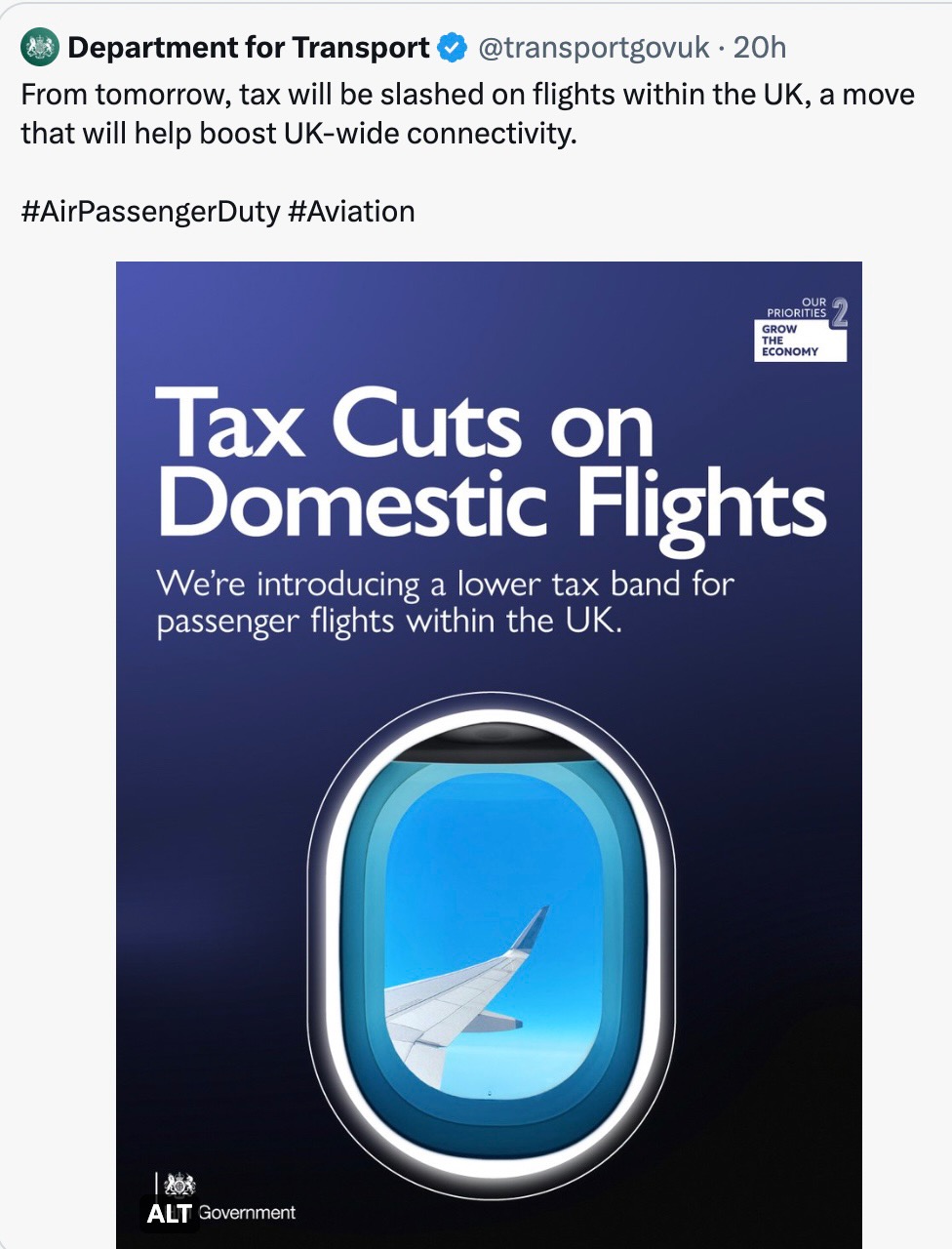
Tax Cuts on Domestic Flights
Tax Cuts on Domestic Flights…lunacy

France has banned short-haul domestic flights to cut emissions, we on the other hand appear to be encouraging them, rather than investing in trains, buses and active transport. Apparently flight bookings have surged since this announcement

This week the Government were originally going to have a ‘Green Day’, instead it turned out to be a day of investing further in fossil fuels; an ‘Energy Security Day’. They want to open over 100 new oil and gas fields in the North Sea, a new coal mine, and claim that unproven carbon capture technology will make it alright; would you bet your future on a three legged horse? They won’t even end routine oil and gas flaring by 2025, a key recommendation.

The carbon capture thing just isn’t proven at scale, and is motivated by politicians and companies like BP, Shell and Exxon (climate criminals) wanting to make as much profit out of oil and gas, whilst the world burns. I strongly suspect carbon sequestration is also an attempt to not make loads of oil and gas infrastructure redundant, which would leave a massive stranded asset. They probably think they can make loads of cash off Europe by trying to store carbon under the North Sea, but it’s just gambling with our future. Money Money Money, Growth Growth Growth = Death Death Death.

People are already dying in their thousands from the Climate Crisis. One person every 36 seconds in East Africa due to climate induced drought/famine. Island nations such as Vanuatu and the Marshall Islands will cease to exist soon, and the Maldives where people love to fly to, ironically, on their holidays.

And the Government are worried about refugees and migrants. Well, we’re going to have billions of climate refugees soon, which will make the ‘small boat crisis’ seem like child’s-play. Millions will be displaced from Africa alone by 2050 – estimates range from 86 million upwards.

Our Government are failing to invest sufficiently in renewables, they won’t back onshore wind, they won’t make solar panels mandatory on new builds, they won’t prioritise improvements to the power grid to make renewable energy work better, they won’t prioritise insulating people’s homes sufficiently. Instead they subsidise the fossil fuel industry to the tune of £236m a week (£11bn a year), oh, and they do this whilst accepting donations from oil and gas companies and climate sceptics, but I’m sure there’s no connection. They’re homicidal maniacs.

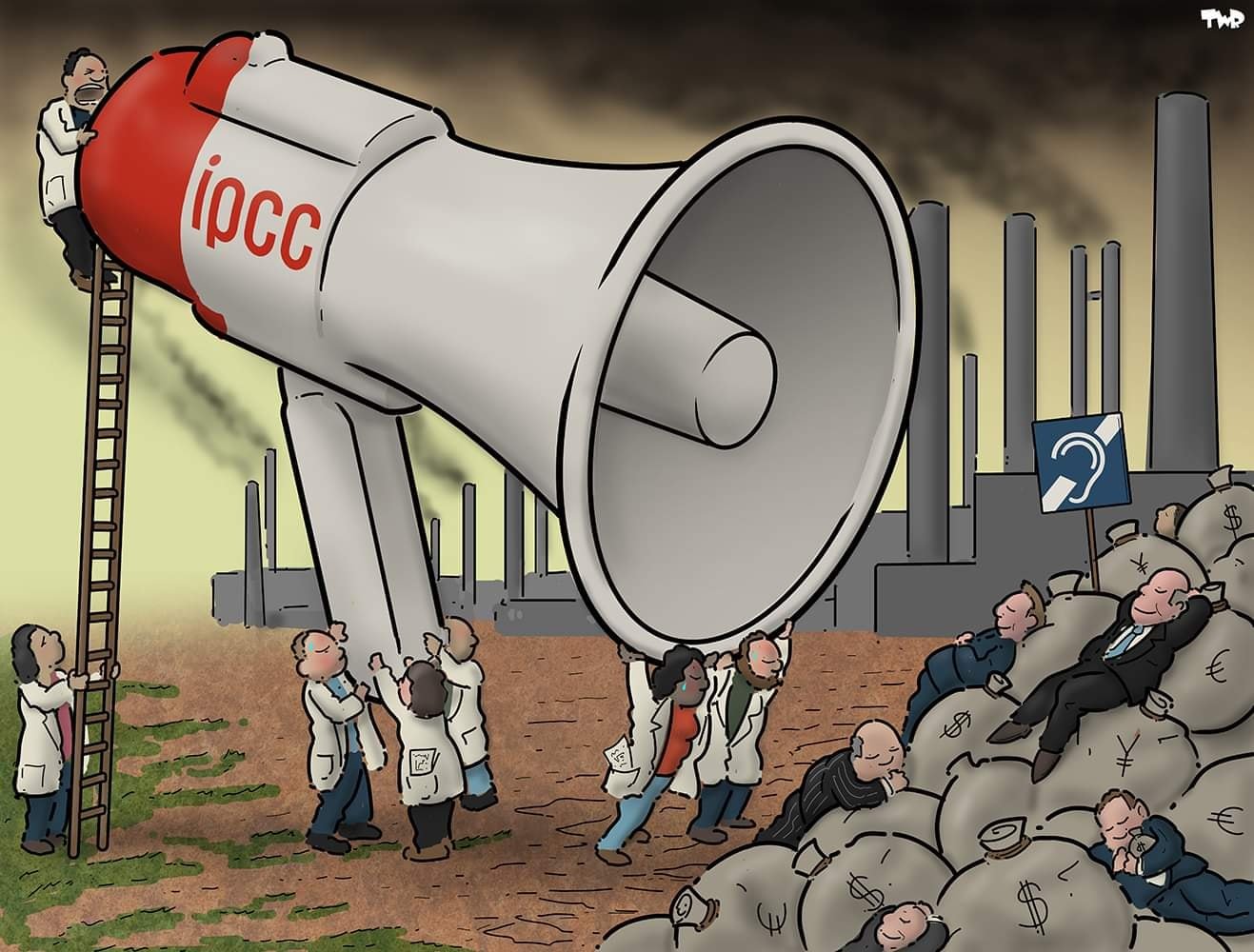
The latest IPCC report says ‘There is a rapidly closing window of opportunity to secure a liveable and sustainable future for all.’ They’re talking a few years. Government policy is a death sentence for future generations.

We’re not going to meet our emissions targets; 68% cut by 2030 and net zero by 2050. The UN say we need to bring the net zero target forward by 10 years anyway. The target to keep temperature increases to 1.5C above pre-industrial averages is blown; we’re on target for +2.7C by 2100, which will be disastrous. Chris Skidmore MP, Chair of the Net Zero Review, has told the Government that any investment in new oil and gas means we won’t hit targets. The UN, IPCC, International Energy Association, thousands of climate scientists, all say no new oil and gas.

We have enough reserves to last us 7+ years whilst we transition to renewables, which incidentally are 9 times cheaper than fossil fuels, and far quicker to come online (months not years). What the hell are the Government doing aside from lining their own pockets, and supporting the billionaires running the fossil fuel industry and right wing press? It’s all short term profit for a few, over people and planet, and during a cost of living crisis.

They are breaking their own laws on meeting targets. This was demonstrated last year when Friends of the Earth took them to the High Court, who deemed the Government’s Net Zero Strategy unlawful on the grounds that they didn’t forecast the emissions impact of its policies, and that third-party forecasts put the impact far short of what would be needed for the UK to meet its legally binding climate targets.

They lie, misdirect, and cheat. If I hear one more claim that we’re ‘world leading’ I might just explode. Do they really think we’re that stupid? The stats might have shown a reduction in emissions but that’s because we’ve outsourced the production of so much we consume to places like China and India, which those stats don’t include, not to mention the transportation of those goods (aviation or shipping).

Antonio Guterres, the UN Secretary General, says ‘We’re on the highway to climate hell with our foot on the accelerator.’

The Conservative Government are criminals, they are knowingly committing murder. They are killing people in the Global South now with their policies, and wiping out our children’s futures. This is a strong word, but really it’s an act of genocide being committed by our Government and Governments around the world, especially in the Global North, for failing to act decisively on the climate crisis whilst actively investing in the root causes. All the science says we shouldn’t invest in new oil and gas. What else would you call it? They know what will happen but are choosing to ignore it in favour of profit.

Who do you trust? It’s time to pick a side. I am incensed, grieving, sickened. All the solutions are there but the Government are choosing to do the opposite of what’s needed. We can’t go on like this, but we can come together, work together, and force the changes needed. We have to unite to survive.

If you’ve read this far, thank you. It was meant to be a short blog on the short haul flight thing, but there’s so much idiocy from our Government it turned into something far longer.

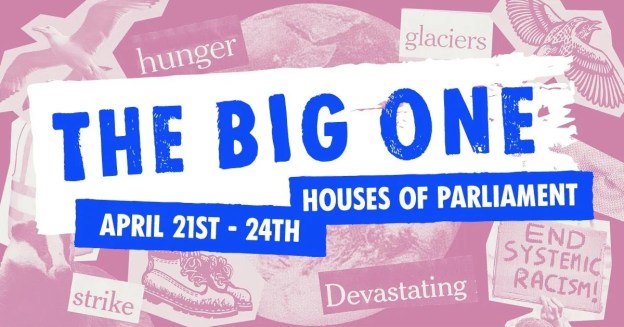
I, and thousands of other ordinary people, are in rebellion against our criminal Government. We’re aiming to get 100,000 people outside Parliament from 21 to 24 April, to send a message they can’t ignore to those in power. The Big One is being organised by Extinction Rebellion, with supporters such as Friends of the Earth, Greenpeace, Earthday, Global Justice Now and many others.

If you can’t do anything else, then please join us for ‘The Big One’. And drop me a message if you want some ideas on how you can get involved by joining 1000’s of others in taking action on the climate and ecological crisis.

https://extinctionrebellion.uk/the-big-one/https://extinctionrebellion.uk/the-big-one/

I’ve not even mentioned new road building, HS2, that we’re the most nature denuded country in Europe, the indigenous climate protestors being killed for taking action, that water companies are making massive profits whilst polluting our rivers and on and on and on. I think I’d better go outside and take some deep breaths.

One other bit of news this week. Gideon has been quite poorly. I had to take him to the vets for an emergency procedure on Tuesday for a blocked urethra. Apparently this isn’t uncommon in male cats, especially when the seasons change. The procedure was successful, and he had a very long wee afterwards. There is a risk it will block again so he’s got to take medicine for a while, which he hates, and has to have special urinary cat food now. Fingers crossed he’ll be alright but I’m having to keep a close eye to make sure he can wee, poor thing. Here he is, convalescing.

As we say when we sign off in Extinction Rebellion, Love and Rage.