Andy Burnham’s speech. I listened to it. I thought it was probably one of the best oratorical performances from a Prime Minister I’ve heard in the last 20 years. He actually made it seem like he cares, I think he probably does. He actually showed empathy which the right keep telling us is weak and should be discarded. He actually came out with some decent ideas although the devil will be in the detail.
Electoral reform; will that mean proportional representation? Looks like it. Marvellous.
Delinking electricity prices from wholesale gas prices; great that should genuinely reduce electricity bills by benefiting from cheaper renewable energy.
A National Care System; brilliant, we have an ageing population and don’t seem to want to welcome migrant workers to help with that or many other workforce challenges.
Rejoining the EU; or some positive moves in that direction, maybe a referendum, super, about time, Brexit has and will continue to be a disaster.
Reform the State Pension; probably needed at this stage, but going to be a hot potato.
Housing reform; brill, let’s tackle greedy developers and get more affordable and social housing.
Take water companies into public ownership and create a publicly owned Great British Grid to challenge the private network operators; can we do this very quickly please, especially with the water companies. Privatisation, Thatcher’s legacy, has been another disaster.
A more rapid transition to renewable energy; great, get on with it, and whilst you’re at it stop subsidising oil and gas companies and make them pay for a just transition in terms of energy generation and jobs, and make them pay compensation for the damage they’ve done, deaths caused, and clean up operations.
But…
What about taxing the super rich, a wealth tax, nothing on that meanwhile the poverty divide is growing, we’re getting more multimillionaires and billionaires, and society is sick because of them.
What about the climate and nature crises and the threats these present to our national security, food supplies, flood resilience and wellbeing. And you’re allowing homes to be built on floodplains, madness. We’re facing growing risks to food supplies and prices from El Niño, extreme heat, drought, floods and harvest failures. What are you going to do about that? If people don’t have food to feed themselves and their families then law and order quickly breaks down.
What about oceans accumulating extraordinary amounts of heat, with vast areas experiencing marine heatwaves and some regions releasing stored heat back into the atmosphere? Oceans are acidifying, rivers are polluted, fish stocks are declining, and sea levels rising.
Meanwhile, on land wildfires are raging, the Amazon rainforest is at a tipping point and at risk of turning into savannah then potentially desert, along with the world’s other major rainforests such as the Congo. The Boreal forests that stretch across land masses in the Northern hemisphere aren’t faring much better. We’re in an insect apocalypse – there go our pollinators. And if we’re talking about the UK we’re one of the most nature-depleted countries in the world.
What about the war crimes Israel are perpetrating in Gaza and the West Bank? Trivial sanctions on goods from the West Bank aren’t going to do much. Many genocide scholars, including several from Israel, and Amnesty are calling it genocide. Israel’s actions meet the criteria for genocide. Here’s a reminder from the UN website:
Convention on the Prevention and Punishment of the Crime of Genocide
Article II
In the present Convention, genocide means any of the following acts committed with intent to destroy, in whole or in part, a national, ethnical, racial or religious group, as such:
Killing members of the group;
Causing serious bodily or mental harm to members of the group;
Deliberately inflicting on the group conditions of life calculated to bring about its physical destruction in whole or in part;
Imposing measures intended to prevent births within the group;
Forcibly transferring children of the group to another group.
Several of those acts have been extensively documented. The crucial legal question is whether they are being committed with the required intent to destroy Palestinians in Gaza, in whole or in part. In my view, the evidence of that intent is overwhelming.
We just need the International Court of Justice to catch up and the International Criminal Court to arrest the perpetrators. There is no doubt in my mind that history, if there is anyone alive to read it, will show a genocide is taking place. The first live-streamed genocide in human history.
And the UK government is, in my view and the view of many others, complicit because we are selling them arms, giving them intelligence, and haven’t imposed proper sanctions on Israel. Andy Burnham won’t even accuse them of war crimes, no doubt because then legally he would have to do something about it. Meanwhile, over 75k dead, including over 20k children.
We have lost our humanity to the greed and whims of billionaires and their lackeys – on war, climate, nature, energy, the media, even the judiciary. Burnham’s government is still arresting hundreds of people for holding up cardboard signs opposing genocide. The average age and gender of a ‘terrorist’ in the UK must be female, early 60s. Brilliant. Something to be very proud of Labour and Tory MPs.
What about banning politicians from lying in Parliament? What about holding the media to account and demanding they tell the truth? What about getting the BBC to actually do its job and be journalists, not commentators failing to challenge politicians and business leaders on their falsehoods? What about standing up to the far right and fascism in the 21st century?
What about being honest with the public about the challenges we’re facing, why things are going to have to change – for everyone – and bringing us on that journey. If you explain why there are certain things we can’t do or have anymore, because to do so increases the risk of your children dying, people will probably get it.
Was Andy Burnham’s speech good? Sure, it sounded cool. Was it radical, ending neoliberalism and forming a National Care Service? Nah, I don’t think so. Maybe 30 years ago. But now the things he’s proposing should have already been done, or are just what we should be doing as business as usual, not radical.
As it is we are facing multiple concurrent risks and issues that could lead, are already leading in some instances, or will lead to:
Food and water insecurity
Health impacts and increased mass mortality events
Homes and infrastructure damage and destruction
Supply chain disruption
Insurance and property risk
Price and livelihood shocks
Inequality and vulnerability
Displacement and increased migration across borders
Economic and financial stress
These lead to systemic risks, and potentially societal collapse.
I’d say the latter is looking more and more likely. Yesterday, Burnham should have declared a state of emergency to tackle these issues, and encouraged other world leaders to do the same.
Who knows, trying to stop societal collapse and provide a future for children might be something everyone, aside from perhaps sociopathic billionaires, can get behind.
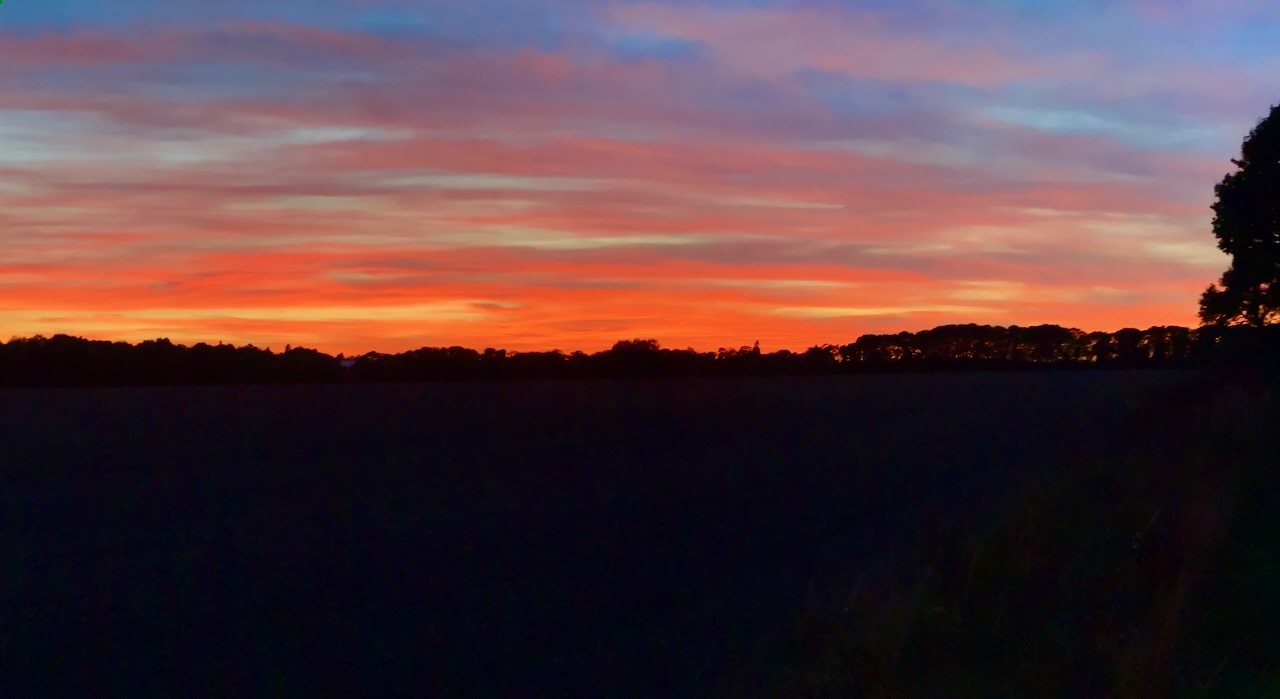
Here’s a picture of a recent Norfolk sunset, because red sky at night, shepherd’s delight.
I keep thinking about something. Please don’t groan, I can hear you.
Why are politicians constantly trying to work out what they need to do to get people to vote for them?
We have focus groups, opinion polls, electoral strategies, carefully tested messages and policies designed to appeal to particular groups of voters. Governments worry about what something will do to their polling. Opposition parties worry about whether saying what they actually think will cost them seats. Lobbyists, corporations, wealthy donors and organised interests all compete for access and influence, far beyond the ken of the ordinary public.
Then politicians go out and try to convince us that the resulting policies are the right thing to do.
It seems completely backwards.
Why don’t we start by asking what the right thing to do actually is, based on the best evidence we have, and then explain honestly and straightforwardly why we need to do it? No lies, misdirection, half truths or bullshit.
Some of the answers will be unpopular. Almost certainly. Dealing seriously with climate breakdown, inequality, defence, housing, taxation, migration, social care or the collapse of nature isn’t going to produce answers which everybody likes.
But perhaps that is what politics is supposed to be for.
I’ve increasingly started wondering whether I’m asking the wrong question. Perhaps the problem isn’t that we need politicians who are courageous enough to make better decisions.
Perhaps politicians shouldn’t be making most of these decisions in the first place. Given the current state of affairs, that seems like, perhaps, a no-brainer.
What if we did politics differently?
I’ve been reading more about anarchism recently, including Rebel City’s excellent little book For a Future Made by Us All. Anarchism isn’t the chaos and disorder that the word usually conjures up. My Mum often used to say something along the lines of “If we don’t fix this now, we’re going to slide into total anarchy.” I don’t think she really understood the principles of anarchism. At its heart are some quite simple ideas about freedom, equality, solidarity and mutual aid, and a profound suspicion of unnecessary hierarchy.
One idea particularly interests me: decisions flowing from the bottom upwards, rather than power flowing from the top downwards. Rebel City describes assemblies as a basic unit of non-hierarchical organisation, with people collectively participating in decisions affecting them.
That raises some interesting questions.
Why do we elect a few hundred people, many of whom change every few years, and then give them enormous power to make decisions for tens of millions of us?
What if we separated political decision-making from political administration?
Imagine that we identified a major issue and convened a Citizens’ Assembly: a randomly selected, demographically representative group of ordinary people. Not people who have spent their lives climbing through political parties, and not done a lot else. Not people who can afford £50,000 dinners with ministers. People like us.
Give them time. Give them access to information. Pay them properly for participating. Let them hear from scientists, economists, engineers, public servants, charities, religious/community leaders, businesses, campaigners and, importantly, people directly affected by whatever they are considering.
Let them question those people. Let them demand more evidence. Let them hear opposing arguments.
And then let them decide.
The process might look something like this:
Issue ↓ Independent evidence gathering ↓ Citizens’ Assembly ↓ Recommendation or decision ↓ Government publishes an implementation plan ↓ Politicians explain the decision and the reasoning behind it ↓ Civil service implements it ↓ Outcomes independently measured ↓ Results return to citizens
Then, if it doesn’t work, we change it.
That last bit seems important.
Our existing political system makes admitting failure incredibly difficult. If a government admits that one of its flagship policies hasn’t worked, the opposition attacks it. The media calls it a U-turn. Ministers become frightened of admitting mistakes, so enormous effort goes into proving that whatever they previously decided was right all along.
That’s a terrible way to learn. A terrible waste of time, money, resources and public faith.
Who chooses the experts?
There is an obvious problem with my imagined system. Who decides what evidence the assembly hears?
If the government chooses the experts, we have simply moved political control one step further away. If corporations can dominate the evidence because they have vastly greater resources than everyone else, we’ve recreated lobbying. If campaign groups can pack the process with people who agree with them, we’ve created another problem.
The evidence process would have to be genuinely independent, transparent and accountable. Assembly members themselves should be able to request additional witnesses, challenge evidence and ask to hear from somebody who disagrees.
And there should be a simple, key rule:
No privileged access for vested interests or lobbyists.
That doesn’t mean excluding them.
A renewable energy company will know something important about renewable energy. A trade union knows things about its members’ working conditions. An environmental organisation may have decades of specialist knowledge. Businesses, charities, campaigners and community organisations should all be able to contribute.
But they contribute in the room, transparently, alongside everybody else.
Nobody gets greater access because they donated £500,000 to a political party. Nobody gets a private dinner with the decision-maker. Nobody gets heard because they employ a former minister. Nobody gets to quietly wander around Westminster whispering into the right ears whilst offering free drinks.
Money shouldn’t buy political access.
Experts shouldn’t rule either
There is another distinction I think matters. Albeit, it’s tricky.
Experts provide knowledge. They don’t provide moral authority.
A climate scientist can explain what increasing atmospheric carbon dioxide is likely to do. An economist can model the economic consequences of different choices. An engineer can tell us what is technically possible. But none of them can tell us what kind of society we want to live in. Those are value judgements. They belong to all of us. And Citizens’ Assemblies will sometimes get those judgements wrong. Of course they will. Ordinary people aren’t infallible.
Neither experts nor Citizens’ Assemblies are infallible. Neither are politicians.
I’m increasingly baffled by the assumption that selecting somebody because they were good at winning an election somehow makes them particularly qualified to make enormously complicated decisions about energy systems, artificial intelligence, healthcare, agriculture, economics or climate breakdown.
A small real-world example: as a councillor I sit on a planning committee, and sometimes we are called upon to make decisions on Tree Preservation Orders. Hardly anyone there, aside from the Arborist, is an expert, yet I see subjective conclusions, and thus decisions, being made about trees that could be incorrect. Scale that up to decisions about the economy, climate, welfare, defence, the NHS and all sorts of other things.
Perhaps we shouldn’t be looking for infallibility. Perhaps we should be designing a system that produces decisions that are informed, representative, transparent, difficult to corrupt and capable of correcting themselves.
So what are politicians for?
We’d still need them. Probably. But their job would be very different.
Politicians would become managers, coordinators, facilitators, communicators and scrutineers. They would make sure decisions were implemented properly, coordinate institutions, allocate resources and hold the machinery of government to account.
Their job might be to tell us:
We asked citizens to consider this problem. They spent time understanding it. They heard the evidence, challenged it and deliberated together. This is what they decided. This is why they decided it. This is how we’re going to make it happen. And this is how we’ll find out whether it worked.
And power shouldn’t all sit in Westminster.
If something can sensibly be decided by a community, let the community decide it. If it needs coordination across a region, move it up a level. Some things inevitably require national coordination, and some problems cross national borders.
But power should move upwards only when it needs to.
That feels much closer to the bottom-up organisation described by anarchist thinkers than our extraordinary concentration of political power at the centre.
There are, obviously, enormous unanswered questions. How do we protect minority rights? Who decides which questions go to assemblies? What happens in an emergency? What constitutional safeguards do we need? What happens when different assemblies reach contradictory decisions? How do we prevent somebody capturing the supposedly independent evidence system?
I don’t know. But I don’t think what we have is working. And I keep going back to the criticism of democracy attributed to Socrates, particularly through Plato: that political decisions can end up being made by people who have won popular support but don’t necessarily understand the things they are deciding. The argument is more complicated than that, but perhaps one answer to it is a properly constituted Citizens’ Assembly; ordinary people given the time, evidence and access to expertise needed to make informed decisions.
This isn’t a constitutional blueprint. It’s a question. Because perhaps we’ve been trying to solve the wrong problem.
I keep hoping that better people will become politicians. That somehow the next collection of people entering Westminster will resist the machinery of parties, elections, donors, lobbyists, opinion polls, newspapers, social media and the relentless need to win the next election.
They almost certainly won’t.
Perhaps instead of endlessly trying to find better people to give enormous amounts of political power, we should build a society in which politicians have much less power to exercise.
Democracy shouldn’t just mean choosing, every four or five years, which small group of people gets to make decisions for everybody else. Maybe it could mean ordinary people, given the information and time necessary to understand difficult questions, making those decisions together.
From the bottom up.
With politicians working for us, rather than ruling over us.
Or we could go for a dictatorship. All hail our Lord and Master Gideon, who will make decisions based on tribute, warm spots and head scratches. Actually, I’m not convinced that isn’t what is happening at the moment. But Gideon recommends we give him a shot anyway.
All around me are familiar faces Worn-out places, worn-out faces Bright and early for their daily races Going nowhere, going nowhere
Their tears are fillin’ up their glasses No expression, no expression Hide my head, I wanna drown my sorrow No tomorrow, no tomorrow
….the Gary Jules version
Over the last couple of weeks I’ve been thinking a lot about risks. Actually, that’s a lie, I’ve been thinking about these sorts of risks for years. It’s quite tiring. Regard that last sentence as British reservedness.
As a project manager, I’m trained to identify what could go wrong, how likely it is, how serious the consequences would be, how risks interact, and what you can do to mitigate, resolve, or in some cases review if we should accept them.
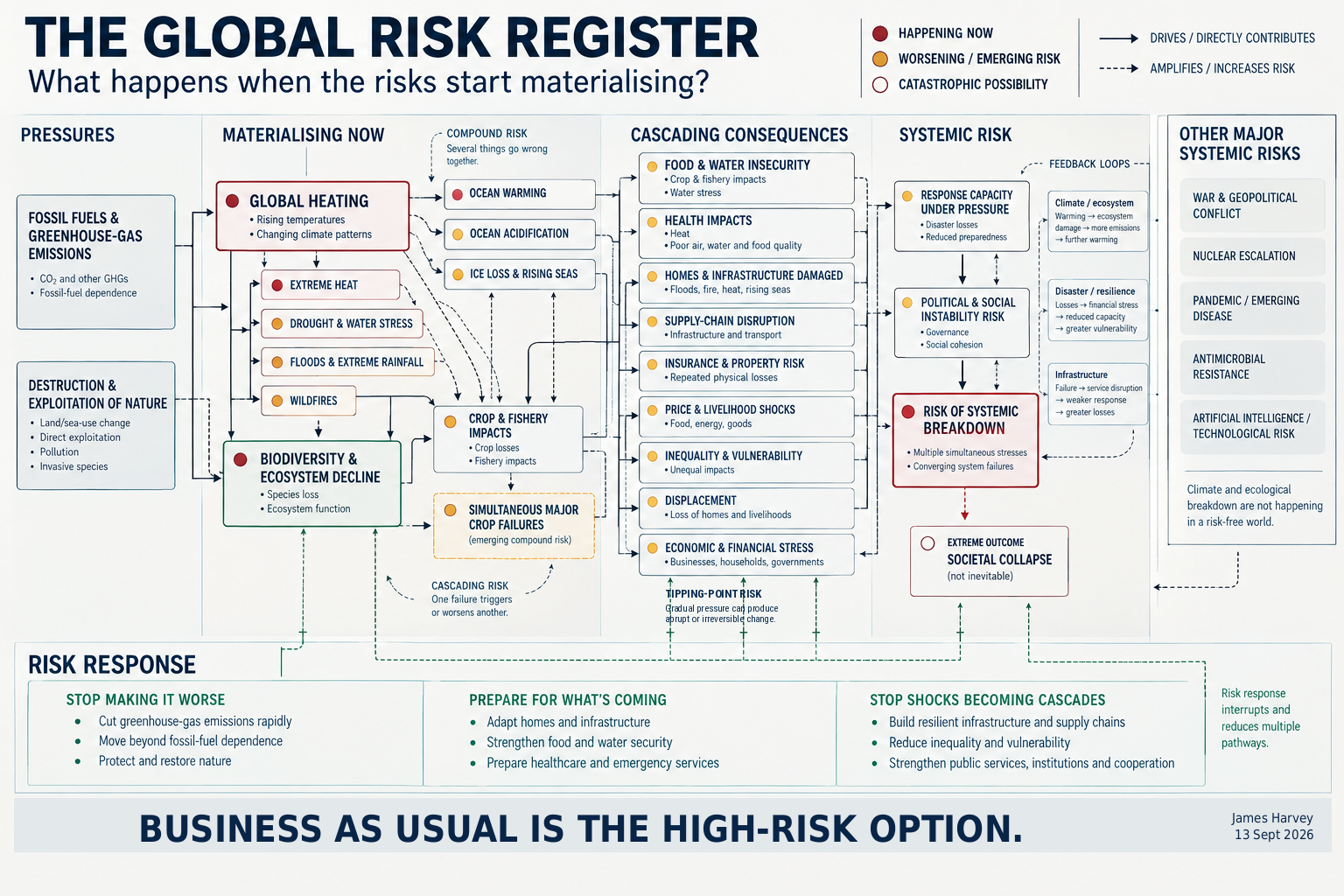
I’ve been wondering what a global risk register would look like, and what the consequences are when you pull them all together.
I’ve stared at this a lot since finishing it. Wondering if I missed anything, or if I’ve exaggerated any of the risks or consequences. If anything it’s probably conservative, as I’ve tried to stick to peer-reviewed science and analysis. One could argue that matters are, in fact, a lot worse. Talk to climate scientists away from the careful language of papers and reports and, in my experience at least, some will tell you just how frightened they really are.
I’ve not put a particular timeline against this, other than some of the boxes are already happening. Personally, I find it increasingly difficult to see how we avoid the systemic breakdown box on our current trajectory. I don’t know when, and I still think we have options. Options are important.
It’s not a very pleasant diagram. Not because every risk shown here will materialise at its worst. They won’t, probably. But some already have. Others are becoming more likely or more severe. And, crucially, they are not independent. Heat affects food. Floods affect infrastructure. Infrastructure affects supply chains. Disasters affect insurance and public finances. Food and housing costs affect poverty and inequality. Those stresses affect societies’ ability to cope with the next crisis.
I added a box on the right hand side too. Other major systemic risks. Because we are facing a multitude of potential catastrophes – I am sure I’ve missed some, feel free to add to the list – we also face war, nuclear escalation, pandemics, antimicrobial resistance and rapidly developing artificial intelligence. I felt like I should add patriarchy, but that’s more a cause than a symptom.
This is the worst risk register I’ve ever looked at. I don’t know how we can start to manage it. If this were any other project, would we really look at it and conclude that business as usual was the safe option? But that’s often the funny thing about risk registers, project managers wave them in front of their sponsors, and they often don’t really look at them, don’t really register or feel what they could mean in terms of successful outcomes. Then, unsurprisingly, projects are often delayed, collapse, or change far beyond their initial remit – I am sure many project managers can empathise.
I should add – I’ve seen many excellently run and delivered projects, at least a couple of them by my good self. They work really well when stakeholders and the project team are engaged and understand what is happening, what the risks and issues are, and what they need to do to help ensure delivery is a success. I maintain that project management, really, is about making lists, effective communication, and nagging.
Back to the diagram. I can create a risk register. Put it in colourful boxes. Draw arrows between the boxes. Find sources for every claim. Make sure every arrow can be defended.
But I can’t put on the diagram what knowing all this makes me feel.
That is, perhaps, the most important bit. People can be good at reading stuff, analysis, reaching conclusions, and they can also be rubbish at it. They can also forget facts and stuff they’ve read quite quickly. I do it all the time as a project manager – I move from one delivery to another, and once one is done I file it in my mind, find myself remembering the high level bits, but the detail is gone after around 3 months because I’ve had to move on something else.
Facts are capricious. Easily forgotten or laid aside in favour of something more current. Like Harry and Meghan. Or Farage. Or Eastenders. We are a wonderfully distractable species and our media and politicians know it.
What aren’t so forgettable, or deletable, are feelings, emotions. A diagram doesn’t necessarily invoke feelings, although this one did for me. A song, a smell, a picture, can all invoke powerful memories that are retained for a lifetime. A diagram doesn’t do that. Strong emotions, felt at a particular event, tied to sensory inputs, have, I think, a far greater chance of being retained.
I think people need to feel these risks. Sadly, many already have as they materialise into regional issues – smoke from fires, hunger in the belly, a parched throat, being engulfed by flood waters, mud, or rockslides, grief at a lake or river dying, a forest or a glacier disappearing, or another animal going extinct.
Feeling is so important. I think only when we really feel what is happening are we motivated to change course. I am talking about when things really matter – health, survival, future generations, survival – food, shelter, warmth.
It makes me frightened. It makes me angry. Often it makes me despair. Because we know what is happening. We know what we need to do. And still we carry on. We let our elected leaders, corporation bosses, billionaires, carry on. ‘Keep calm and carry on’ …screw that.
Can you feel the rage, the grief? Born out of love, but also just, fucking, rage, that we are and have been led to this place. A place where nature is dying – I saw thousands of dead fish floating in the Wensum the other day but it’s alright as Anglian Water shareholders are doing okay – people are dying, especially in the Global South – see Nepal, India, Pakistan, Bangladesh, Tanzania, Zambia, Libya, Zimbabwe, even the USA, although it is better endowed to cope with such events. Is this alright? I guess it is if you just see it on TV or in a newspaper, but what if you actually feel it, and what it could mean for you and people you care about?
I feel it. Every single day. My activist friends – and I hate calling them activist friends, they’re people that just deeply care and can’t stand by – they feel it. Every. Single. Day.
Actually, a lot of religious leaders feel it and have called out that we need to do something, urgently, including the Pope I think. I am sure a lot of charities feel it, as demands on their dwindling resources grow. And some political leaders do, including António Guterres, and a few others. Not many, sadly.
One can present a table of risks, or consequences. One can publish such a thing in countless scientific journals, newspapers, books. But unless people emotionally connect with what is happening, and aren’t anaesthetised by the drugs of social media and TV, we aren’t going to have the revolution – preferably non-violent and accountable – that is needed.
I take action because action gives me hope. XR and Just Stop Oil gave me hope. Defend Our Juries gives me hope. Seeing people sitting in a road with other ordinary people and refusing to cooperate with something profoundly wrong gives me hope. But increasingly I find myself asking whether actions involving tens, hundreds, even thousands of us can possibly force change on the scale now required.
Perhaps we need millions. Not just in the UK. Globally.
It is, after all, a minority of the super rich and powerful, and the vested interests they benefit from and protect, that are disproportionately driving so much of this – climate breakdown, biodiversity collapse, grotesque inequality, hunger, thirst, the sixth mass extinction…I could go on.
Perhaps we need to stop.
Actually stop.
Not a march on a Saturday afternoon. Not another pointless petition. Not another consultation. Not another promise that if we vote differently in four years’ time things might get better.
Workers stop working. Offices empty. Trains stop. Deliveries stop. Shops close. Production stops. The machinery of business as usual stops. Just Stop.
Hospitals keep caring for people. Carers keep caring. Firefighters respond to fires. Essential services necessary to protect life continue.
But everything else?
A general strike, on a scale that cannot be ignored.
Because political and economic power ultimately depends upon millions of ordinary people continuing to cooperate with it. We work. We produce. We buy. We move things. We keep institutions functioning. We make other people rich.
What happens if, together, we withdraw that cooperation? Perhaps it could start in the UK. Perhaps elsewhere. Perhaps everywhere. Because ordinary people across the world mostly want the same basic things: safety, food, shelter, family, friendship, love, a future.
And yes, this will likely mean lifestyle changes. It will mean accepting that we can’t have all the things we wanted, and that our futures are going to be quite different from what we anticipated. But at least we’ll be alive, and our children will have a chance of a future.
We could even be happier and healthier, with better communities and greater connection.
Surely survival is the priority? Not war. Not greed. Not GDP. Not AI. Not the space race.
What happens if we say: not again until you deal with this?
No more HARM.
Options are important. We still have them. We can stop making things worse. We can prepare for what is already coming. We can protect each other. Restore nature. Build stronger communities. Stop cooperating with systems that are causing so much harm.
None of that guarantees everything will be okay. It won’t be. That’s not how risk works.
But business as usual is an option too.
It’s the high-risk option.
Just. Fucking. Stop.
And sorry, project manager mode, here’s the table I pulled together to inform the risk diagram that people will forget, but hopefully they’ll remember the rage, grief, and love.
Risk / issue
Status
Direction
Potential severity
What it can lead to / amplify
Evidence and current assessment
Greenhouse-gas emissions / fossil-fuel dependence
HAPPENING NOW
↑
Very high
Further heating; ocean warming; sea-level rise; extremes; tipping risks
UNEP’s 2025 assessment puts current-policy warming at about 2.8°C this century, with full implementation of current Nationally Determined Contributions at about 2.3–2.5°C. (UNEP – UN Environment Programme)
Global heating
HAPPENING NOW
↑
Very high
Heat; drought; heavy rainfall; fire; ecosystem damage; food/water stress
WMO reports 2015–2025 were the hottest 11 years observed and 2025 was about 1.43°C above 1850–1900. (World Meteorological Organization)
Extreme heat
HAPPENING NOW
↑
Very high
Mortality; illness; labour losses; crop stress; infrastructure/energy pressure
WHO says exposure is growing in every region; mortality among over-65s increased about 85% between 2000–04 and 2017–21, with studies estimating about 489,000 heat-related deaths annually during 2000–19. (World Health Organization)
Drought & water stress
HAPPENING NOW
↑
Very high
Crop loss; ecosystem damage; water insecurity; livelihood losses; displacement
IPCC finds concurrent heat and drought already causing crop-production losses and tree mortality, with compound risks increasing as warming rises. (IPCC)
IPCC finds concurrent and repeated hazards are already increasing impacts on infrastructure, health, livelihoods and food, with risks cascading across sectors. (IPCC)
WMO reports continuing ocean warming and a growing planetary energy imbalance; the ocean also continues absorbing carbon dioxide. (World Meteorological Organization)
Ocean acidification is a direct consequence of additional atmospheric carbon dioxide absorbed by the ocean, and interacts with warming and other marine pressures. WMO continues to track it as a major global climate indicator. (World Meteorological Organization)
IPCC finds continuing substantial glacier loss; Greenland and Antarctic ice sheets are losing mass and long-term loss increases strongly with sustained warming. (IPCC)
Sea-level rise
HAPPENING NOW
↑
Very high
Coastal flooding; erosion; salinisation; displacement; infrastructure/property loss
IPCC assesses sea-level rise as effectively irreversible on centennial timescales, with ice-sheet behaviour creating additional long-term risk. (IPCC)
Biodiversity & ecosystem decline
HAPPENING NOW
↑
Very high
Loss of pollination, fisheries, carbon storage, water regulation and ecosystem resilience
IPBES’s Nexus Assessment explicitly treats biodiversity, water, food and health as interconnected systems rather than isolated environmental issues. (IPBES ICT)
IPCC defines tipping points as critical thresholds beyond which systems reorganise, often abruptly and/or irreversibly, and finds their likelihood and impacts increase with warming. Large-scale singular risks move into high risk around 1.5–2.5°C in AR6. (IPCC)
The 2025 Global Tipping Points assessment, involving 160+ researchers, concluded widespread warm-water coral mortality is underway and characterised this as the first Earth-system tipping point reached. This is a post-AR6 expert assessment, not an IPCC finding, so I would retain that qualification. (National Oceanography Centre)
FAO’s 2025 assessment finds disasters increasingly disrupting crops, livestock, fisheries and aquaculture, with $3.26 trillion in agricultural losses estimated over 1991–2023. (FAOHome)
Simultaneous major crop failures / multi-breadbasket shock
WORSENING / EMERGING RISK
↑
Potentially catastrophic
Major price shocks; shortages; export restrictions; severe food insecurity
IPCC specifically finds that above 1.5°C, increasing concurrent extremes raise the risk of simultaneous maize losses in major producing regions, with risk rising further with warming. This supports an increasing risk, not a prediction of imminent global crop failure. (IPCC)
FAO reports climate extremes are already major drivers of agrifood crises; conflict and economic shocks remain major independent drivers. Acute hunger affected more than 295 million people in 53 countries/territories in 2024. (FAOHome)
Health impacts
HAPPENING NOW
↑
Very high
Mortality; morbidity; health-system pressure; lost productivity
Heat already causes substantial mortality and illness, while climate-related food, water and livelihood impacts create secondary health burdens. (World Health Organization)
Homes & infrastructure damage / failure
HAPPENING NOW
↑
Very high
Power, water, transport and communications disruption; connected service failures
IPCC finds infrastructure impacts can propagate into economic activity and essential services; compound hazards make these risks increasingly difficult to manage. (IPCC)
IPCC finds climate impacts already cross borders through supply chains, markets and resource flows, making climate risk transboundary as well as local. (IPCC)
UNDRR identifies an emerging disaster–uninsurability spiral. The Bank of England says physical climate losses can reduce property values, increase insurer/lender losses and reduce insurance availability and affordability. (UNDRR)
Agricultural losses, disrupted supply chains and disaster impacts transmit through markets and livelihoods. FAO explicitly describes cascading effects through markets, finance and infrastructure. (FAOHome)
Exposure and adaptive capacity strongly mediate disaster outcomes. The same hazard can therefore create radically different consequences depending on poverty, institutions and access to resources. (IPCC)
Displacement & involuntary mobility
HAPPENING NOW
↑
High–very high
Loss of homes/livelihoods; pressure on receiving communities; additional vulnerability
IPCC finds high confidence that anthropogenic climate forcing has affected internal displacement through weather extremes, while stressing that migration is multi-causal. It specifically says climate-driven mobility generally does not increase risks to peace. (IPCC)
UNDRR estimates direct disaster losses at roughly $202bn annually but over $2.3tn annually when indirect, cascading and ecosystem costs are included, describing debt, uninsurability and humanitarian-need spirals. (UNDRR)
Response / institutional capacity under pressure
MATERIALISING LOCALLY
?
Very high
Reduced preparedness; service failure; slower recovery; greater losses from subsequent shocks
UNDRR describes a reinforcing process in which disasters destroy assets and income, reduce tax revenues, increase borrowing costs and consume resources required for recovery and resilience. (UNDRR)
Evidence requires care. IPCC finds climate variability can influence conflict dynamics, but its historical effect is small relative to dominant socioeconomic and political drivers and there is insufficient evidence to attribute armed conflict directly to climate change. (IPCC)
IPCC gives high confidence that climatic and non-climatic risks increasingly interact, compound and cascade across sectors and regions. This is one of the strongest foundations for the whole register. (IPCC)
Risk of systemic breakdown
CATASTROPHIC POSSIBILITY
?
Potentially catastrophic
Multiple essential systems failing faster than societies can compensate or recover
This is a systems inference, not an IPCC prediction. UNDRR nevertheless explicitly describes interacting disaster spirals that can deepen crises into systemic collapse, providing evidence for treating this as a legitimate aggregate risk. (UNDRR)
Extreme outcome: societal collapse
CATASTROPHIC POSSIBILITY
?
Potentially catastrophic
Sustained inability of institutions and essential systems to meet basic needs
Retain only as an extreme aggregate risk, not a predicted climate outcome. Evidence supports systemic crisis pathways, but there is no authoritative basis for assigning a reliable probability to global societal collapse. (UNDRR)
Pandemic / emerging disease
PERSISTENT SYSTEMIC RISK
?
Potentially catastrophic
Mortality; health-system overload; supply-chain and economic disruption
WHO says preparedness has improved since COVID-19 but remains fragile and uneven. The 2025 Pandemic Agreement exists specifically to strengthen prevention and response to future pandemic threats. (World Health Organization)
Antimicrobial resistance
HAPPENING NOW
↑
Very high
Treatment failure; mortality; pressure on health systems and economies
WHO reports about one in six laboratory-confirmed common bacterial infections worldwide in 2023 were antibiotic-resistant; resistance increased in more than 40% of monitored pathogen-antibiotic combinations during 2018–23. (World Health Organization)
Treat as an independent systemic risk and amplifier. Climate can interact with existing vulnerabilities, but IPCC does not support a simple climate → war causal relationship. (IPCC)
Nuclear escalation
PERSISTENT / HEIGHTENED SYSTEMIC RISK
↑
Potentially catastrophic
Mass destruction; radioactive contamination; global economic/food/systemic consequences
SIPRI’s 2026 assessment says all nine nuclear-armed states continued modernisation in 2025 and that reliance on nuclear weapons is increasing while risks of miscalculation and escalation are rising. (SIPRI)
The 2026 International AI Safety Report documents real harms while emphasising substantial uncertainty about severe future risks. It separates misuse, malfunction and systemic risks. (International AI Safety Report)
Misinformation & manipulation
HAPPENING NOW / AMPLIFIER
↑
High amplifier
Reduced trust; polarisation; impaired collective decision-making and crisis response
AI-enabled deception and manipulation are documented, but reliable evidence about prevalence and aggregate societal severity remains limited. I would therefore retain this as an amplifier, not a route directly to systemic breakdown. (International AI Safety Report)
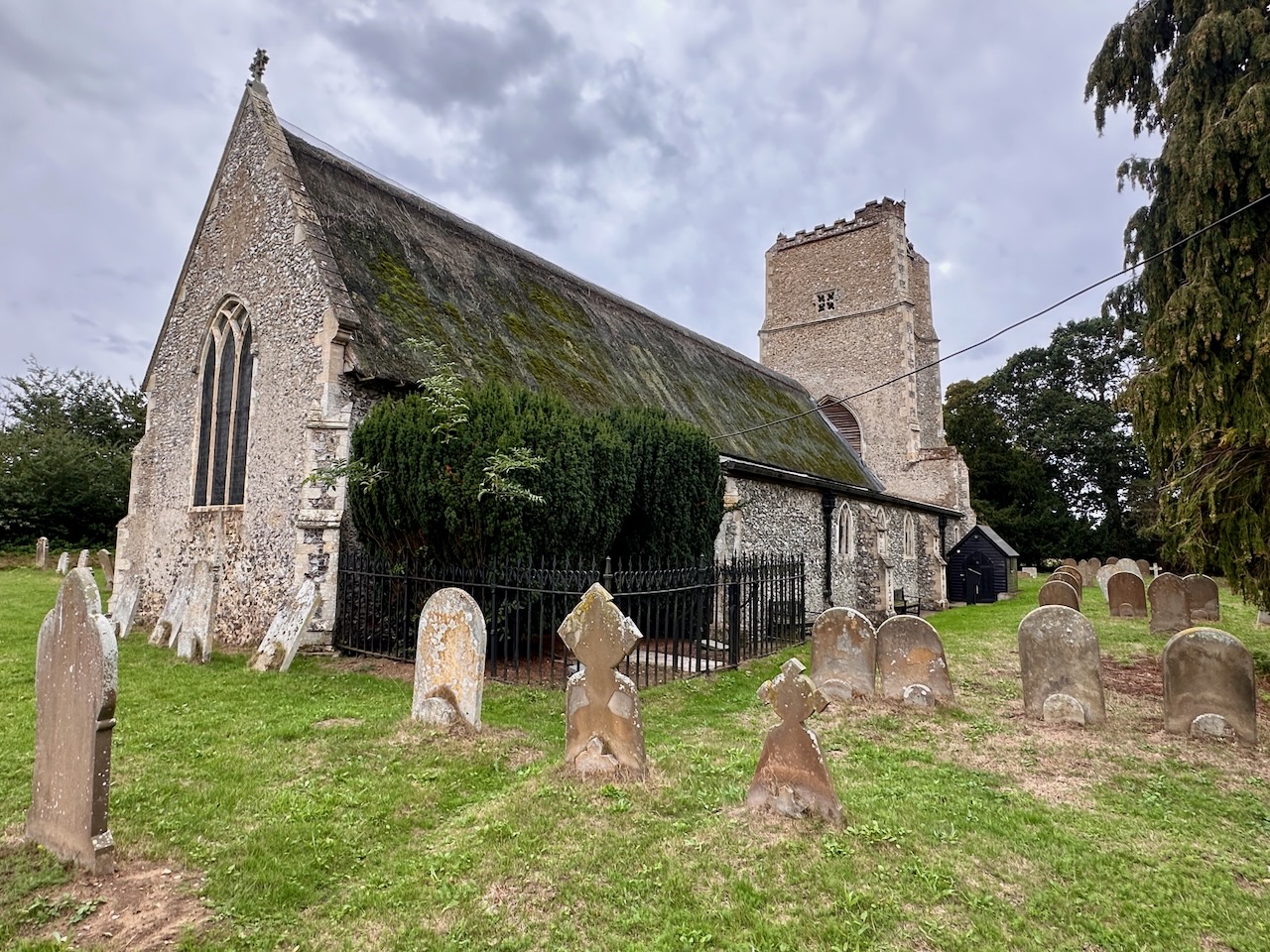
I’ve been doing that quite a lot recently. All Saints Church in Salhouse is only a short walk from my house, and has become one of those places I go when I need some peace. Which I seem to need rather a lot at the moment.
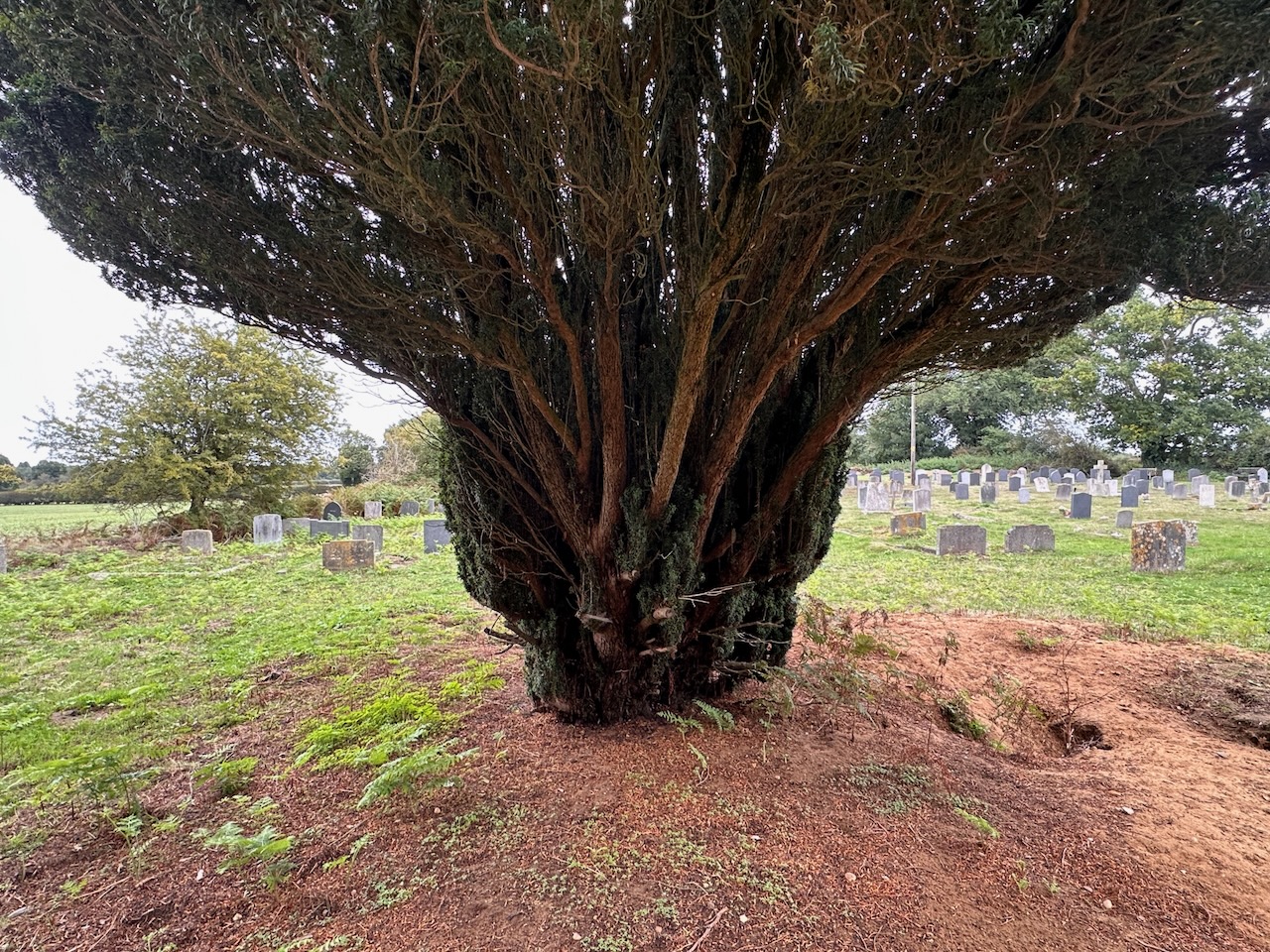
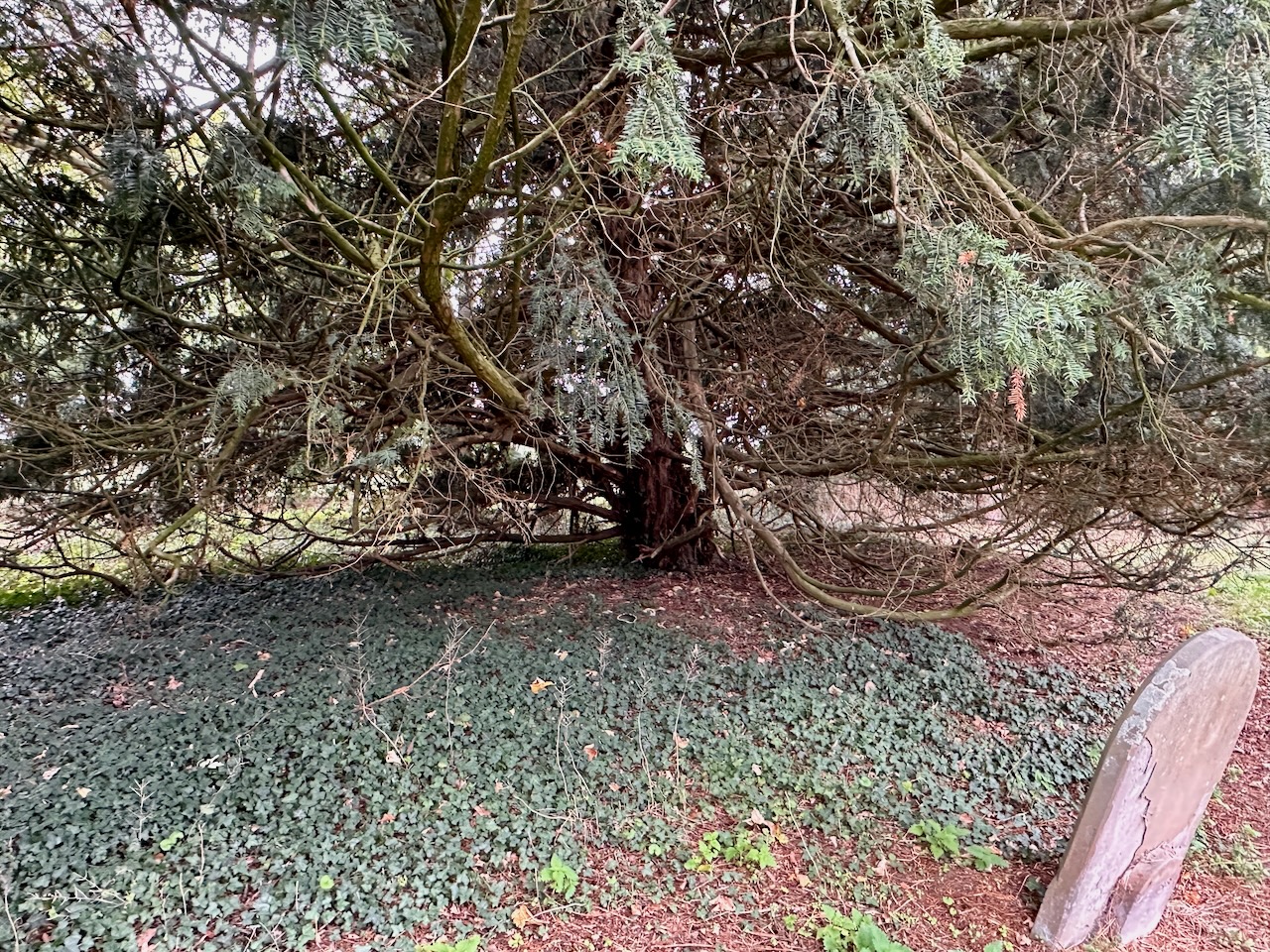
It’s an old Norfolk church, sitting slightly apart from the village on higher ground, surrounded by fields. Flint walls, thatched roof, old gravestones and a surprising number of large yew trees. It’s quiet. Usually. There are birds. Occasionally someone walks through. The rest of the world feels a little further away.
Salhouse Church – All Saints
Apparently I’ve been doing this for longer than I remembered. I looked back through this blog and found a post I wrote in April 2020, during lockdown. I’d gone for a walk “to ease the stress of strangest days”, ended up at exactly the same church and sat under a yew tree. I even wrote a slightly dubious poem about it, involving ancient rites, strange dreams and the poisonous nature of yew trees. Six years later I’m back under the same trees trying to ease the stress of another set of strange days.
Kempt yewUnkempt yew
There might be a pattern here.
This time I started wondering how old the trees actually were. That led to wondering how old the church was. Then why the church was there, on that particular bit of higher ground. Was there an earlier church? What was there before Christianity? Were the yews older than the church? Had people been coming to this particular patch of land for hundreds, perhaps thousands, of years?
Down the rabbit hole I went.
I should make clear that I wasn’t searching for a pagan sacred site. I hadn’t gone there hoping to discover that druids once sacrificed unfortunate Roman tax collectors beneath the Yews, perhaps opening portals to ‘deathly halls’. I went there because I wanted sanctuary. The questions came afterwards.
The surviving church is medieval, mostly dating from the 13th and 14th centuries, although there are questions about whether there was an earlier Christian building. The yews are harder. Yews are wonderfully uncooperative trees when it comes to working out their age. They hollow, split, regenerate, layer and generally mess around with their own trunks until conventional ways of ageing trees become rather unreliable. Several of the Salhouse yews have complicated multi-stemmed forms that make them particularly tricksy. In general I think of Taxus baccata as being tricksy, maybe slightly mischievous, or even malevolent if you cross one.
I haven’t measured them yet, which can help with ageing them. That’s a job for another visit involving a tape measure and me crawling around trees looking suspicious.
There is certainly no evidence I’ve found that proves All Saints was built on a pre-Christian sacred site. An old yew in a churchyard doesn’t prove that druids were there first either, despite what quite a lot of stuff on the internet would have you believe.
And the funny thing is, I realised I don’t need it to. The more interesting question is why I wanted to know in the first place. I’m not really a Christian. I’m definitely not an atheist either. I don’t know what I am, which is perhaps an inconvenient position when it comes to religion, but probably an honest one.
A lot of Christian values make complete sense to me. Compassion. Looking after people who have less than you. Welcoming strangers. Forgiveness. Not worshipping wealth. The same is true of many Islamic values and those found in other religious traditions.
Organised religion is another matter. Centuries of patriarchy, hierarchy, corruption, abuse of women, horrific abuse of children, accumulation of wealth and the use of religion to legitimise power have left me deeply suspicious of institutions claiming to speak for God. If there is a God, I’m not convinced they require quite so many men in elaborate hats telling everyone else what to do.
I am probably an anarchist. Although I don’t really know, and I’m not sure it matters, or we need labels. Actually, there seems to be an obsession with having a label these days, however I’m not sure it’s helpful, being categorised, put in a box. We can be lots of different things at once.
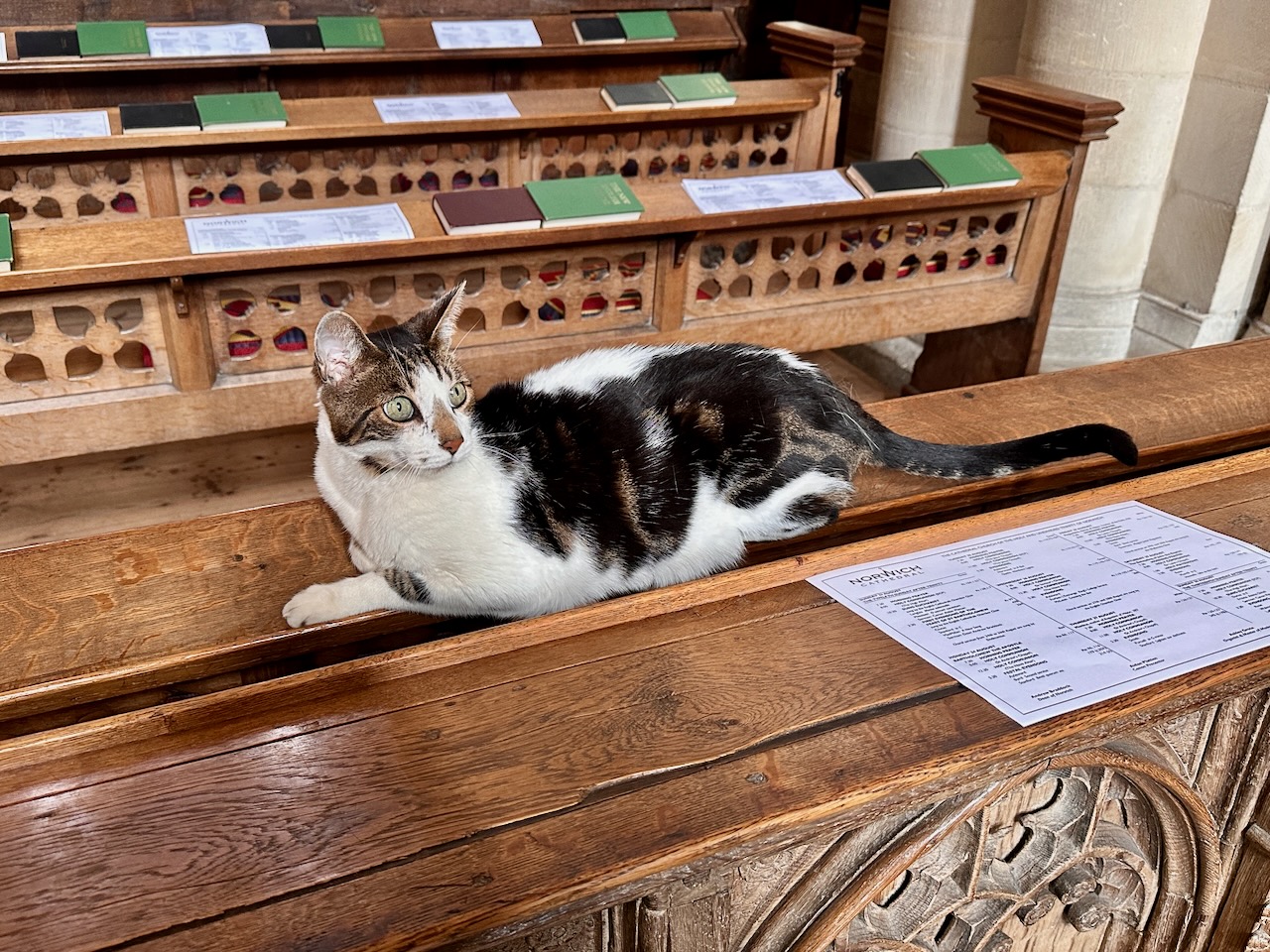
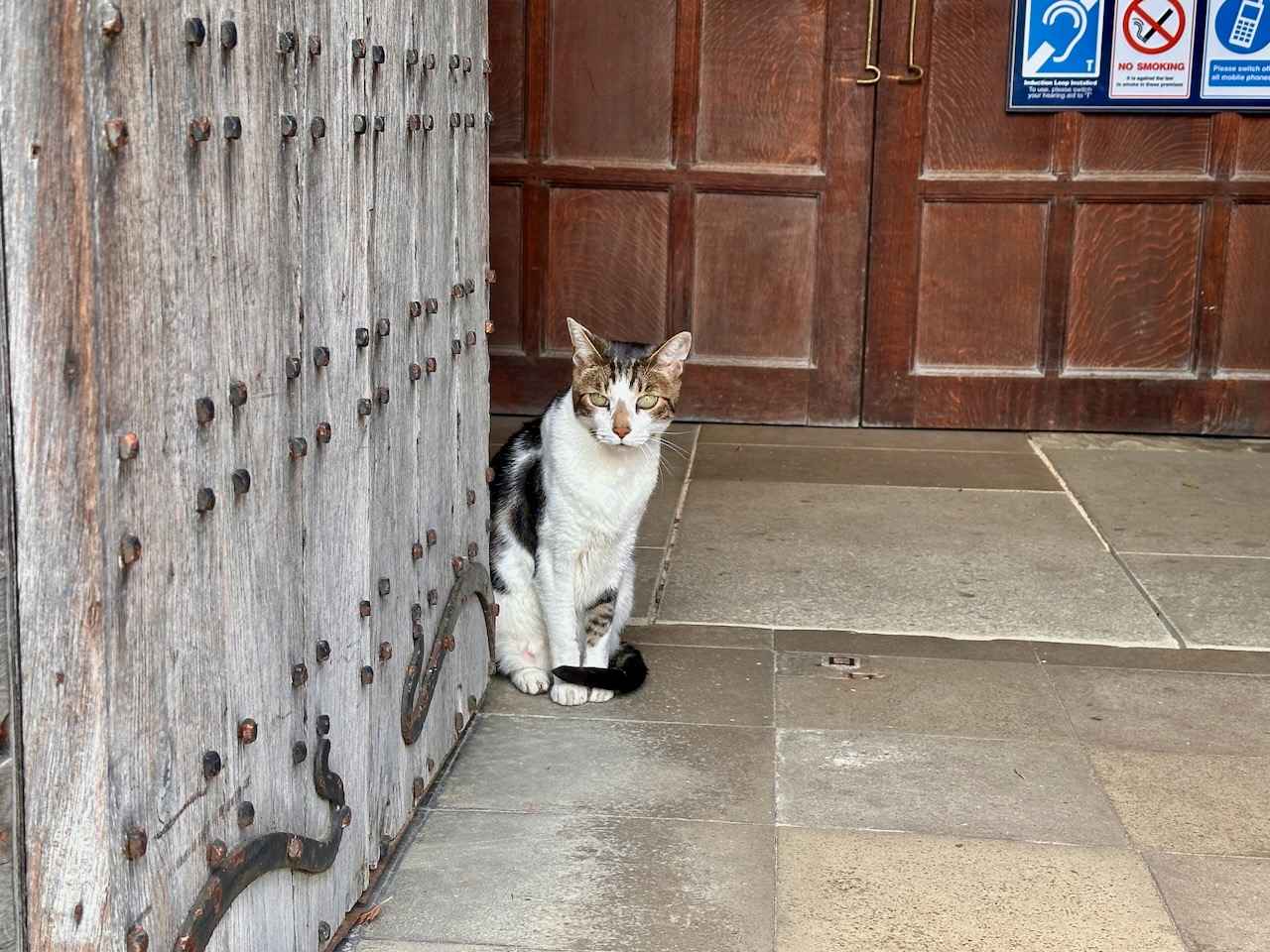
And yet old churches affect me. Norwich Cathedral certainly does – and I like visiting Budge, the cathedral cat. So does an ancient woodland. A hillfort. A cairn. An old tree. Walking the old ways. There is something about places with depth that resonates with me.
Budge, keeping an eye on visitorsBudge, on door duty – Norwich Cathedral
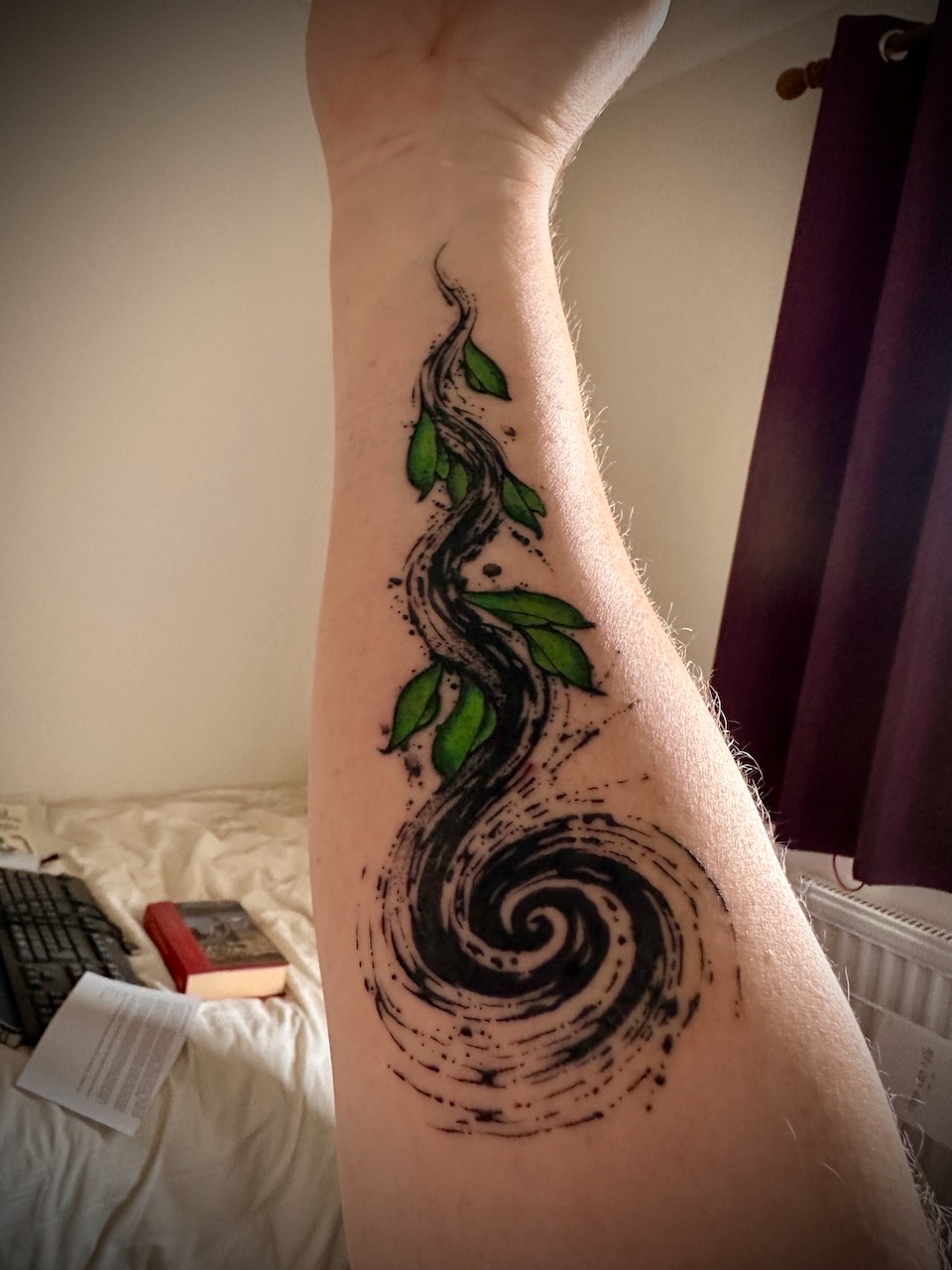
I’ve been thinking about ancestry recently too, partly whilst designing my latest tattoo. Not ancestry in some ridiculous racial purity sense. Quite the opposite. Go back far enough and identity becomes wonderfully messy. People move. Cultures mix. Borders change. Beliefs change. We are all the products of journeys, relationships, accidents and countless people whose names we’ll never know.
My tattoo
Britain is like that too. Prehistoric peoples whose beliefs we understand only in fragments. Brittonic cultures. Romans. Anglo-Saxons. Norse influence. More than a thousand years of Christianity. Migration before, during and after all of it.
Maybe I don’t need to dig down through all those layers until I find the “correct” one. Perhaps the layers are the point.
This has also brought me back to The Children’s Fire by Mac Macartney, a book I read a while ago and loved. Amongst many things, it explores our relationship with the living world, community, responsibility and what we owe future generations.
“No law, no decision, no action, nothing of any kind will be permitted to go out from this council… that will harm the children.”
I’ve sometimes felt uncomfortable when people in Western societies try to adopt the spiritual practices and traditions of Indigenous cultures elsewhere. Learning from them is one thing, and Lord knows our civilisation has a lot to learn. But taking somebody else’s ceremonies, clothes or spiritual identity and adopting them as our own can feel uncomfortably like another form of extraction. Especially when many of those same cultures have endured centuries of colonial attempts to destroy precisely those traditions.
There’s a strange contradiction in trying to reconnect with the land by importing somebody else’s relationship with their land. Maybe we need to rediscover our own. I use that word carefully. “Indigenous peoples” has an important contemporary meaning connected with particular cultures, histories, colonisation and dispossession. I’m not suggesting I declare myself an Indigenous Norfolk person and start inventing ceremonies involving flint and mustard – it’s quite tempting though.
I mean something simpler. What would it mean to really belong to a place again? To know its rivers and streams. Its old trees. Old ways. Where the ground rises and where it floods. To recognise more of the plants growing beside the footpath rather than walking past an anonymous mass of “green”. To know when the swifts return. Where the old hedges run. Where a stream used to flow. What species have disappeared.
To know where people lived before us and where they buried their dead. To understand the archaeology beneath our feet. To know the old stories attached to places whilst also being prepared to discover that some of them are complete bollocks invented by a Victorian antiquarian.
To know what we’ve lost.
And what remains.
I already do some of this. The Wensum means something to me beyond being a blue line on a map. So does Mousehold Heath. Salhouse Broad. The Bure. The woods, fields, hedges and footpaths around where I live. The blackthorn blossom appearing in spring. The blackbirds that temporarily interrupt my climate-induced existential crises.
But there is so much I don’t know. And this is where I think something deeper has been stirring in me. I’ve believed in the principles of deep ecology for a long time. At its heart is an idea that seems both radical and blindingly obvious: we are part of nature, not apart from it.
We’re animals. We depend on soil, plants, fungi, insects, water, oceans and atmosphere. We exist inside ecological systems, not above them. Other species don’t need to justify their existence by demonstrating their economic usefulness to us.
And perhaps connection is the wrong word sometimes, because it still implies two separate things that need connecting: us and nature. But there aren’t two things. We are already in it.
The water that falls on these fields, moves through the soil and rivers and eventually comes out of my tap becomes part of me. The plants capture energy from the sun. Insects pollinate them. Fungi and bacteria break down the dead and return nutrients to the soil. Trees move water into the atmosphere. Birds eat insects and seeds and spread them somewhere else. We breathe oxygen produced by other living things and return carbon dioxide. We eat, breathe, shit, die and eventually become food for something else. However sophisticated we think we are, we haven’t escaped any of this.
Perhaps what we’ve lost isn’t our connection to nature. We couldn’t lose that if we tried. What we’ve lost is our awareness of the relationship. We’ve constructed an extraordinary civilisation that allows many of us to go through life barely noticing what actually keeps us alive – nature and the ecosystems we’re part of.
Mac Macartney, again in The Children’s Fire, writes about our forgetting of our ancestral past, and the trauma, grief and disconnection that have helped sever our relationship with the living world. Cultures change, populations move, religions replace or absorb earlier traditions, land is enclosed and industrialised, and knowledge that once passed between generations disappears. We have forgotten a great deal. But perhaps forgetting doesn’t mean we can’t remember, rediscover and reconnect.
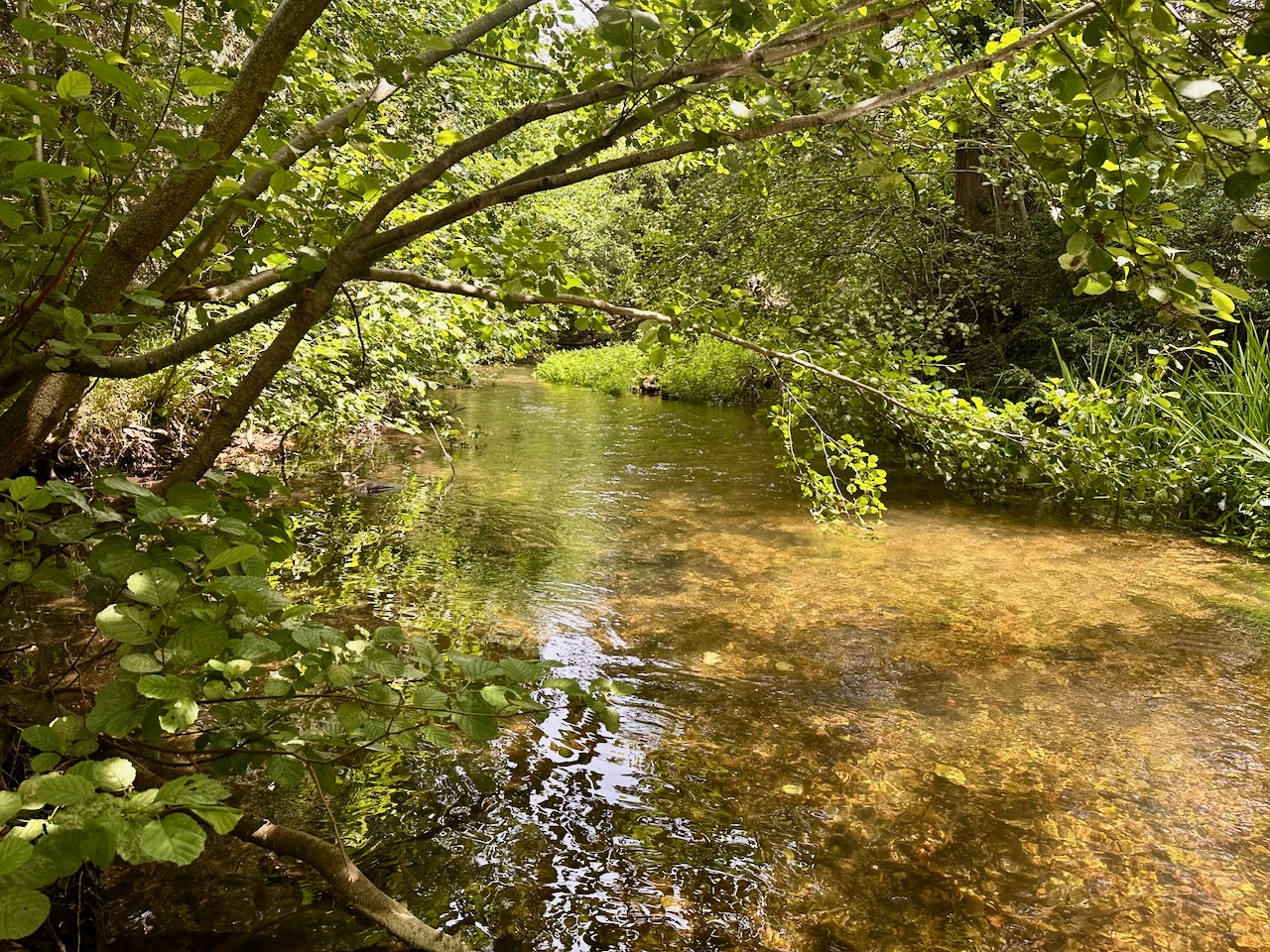
River Nar – West Norfolk
Recently I’ve been reading a little about animism too. I’m not about to announce that I’ve become an animist. I don’t know enough about it, for starters, and I’m wary of grabbing another label to fill the space left by organised religion. But something about it resonates. Not necessarily the idea that every tree contains a supernatural spirit. I don’t know whether spirits exist. I don’t know whether anything supernatural exists. It’s the idea of relationship that gets me.
A tree doesn’t need to contain a tree spirit before I can feel something approaching reverence for an organism that was alive before I was born and may still be alive long after I’m dead.
A river doesn’t have to be a deity before poisoning it feels like something more profound than exceeding an Environment Agency pollution threshold.
A woodland doesn’t need to have been a sacred grove before bulldozing it feels fundamentally wrong.
Perhaps we’ve been asking the wrong question. Instead of endlessly asking, “How much can we sustainably take from nature?” What happens if we ask, “What do we owe the living world of which we are part?” That feels very different.
Modern life makes this relationship difficult. I can live in Norfolk whilst eating food grown thousands of miles away, buying things manufactured on another continent, spending my working day staring at a screen and then spending the evening staring at another screen containing Donald Trump, Vladimir Putin, Gaza, Ukraine, wildfires, floods, collapsing ecosystems and whatever fresh horror the algorithm has decided I need to know about immediately.
Physically I am here. My attention is everywhere. Perhaps that leaves us rooted nowhere.
I don’t want to romanticise the past. Our ancestors weren’t living in some harmonious woodland utopia, like Ewoks, until somebody unfortunately invented the steam engine. Humans have been violent, hierarchical, patriarchal and environmentally destructive for a very long time. I have no desire to die from an infected tooth at 51 whilst being oppressed by the local feudal landowner.
The modern world has brought extraordinary things. But perhaps we lost something as well. I’ve spent a lot of time recently writing about climate breakdown, ecological collapse, politics, corruption, billionaires, fossil fuels and the increasingly impressive ability of supposedly intelligent people to ignore what is happening directly in front of them.
I was going to write about politics and corruption again today. I couldn’t face it. Not because those things don’t matter. They matter enormously. Climate breakdown requires rapid decarbonisation. Nature restoration requires money, policy and land. Governments need challenging. Corporations need regulating. Power needs redistributing. None of this gets fixed by sitting under a tree thinking nice thoughts.
But perhaps ecological restoration also requires something cultural. Maybe even something spiritual. Because I wonder how we expect people to protect a living world from which they have become profoundly disconnected.
If a woodland is just a collection of trees, it can be replaced. If a river is a resource, we can calculate an acceptable amount of pollution. If land is an asset, we can put a price on it. If everything has a price, somebody with enough money can buy permission to destroy it.
But what if it’s home?
Once you know somewhere – really know it – perhaps damaging it becomes harder. Once you’ve watched the same trees through the seasons, noticed when the swifts arrive, walked beside the same river, learned what lives there and discovered the lives of people who walked the same ground centuries before you, your relationship changes.
That’s it. We’re participants. Not observers of an ecosystem, but organisms within it. It’s a kind of symbiosis.
And belonging can’t just mean knowing the names of things. There’s a danger even there of becoming a sort of ecological stamp collector: I can identify twenty species of bird, therefore I am connected to nature. Relationship implies a two-way connection. Being present, in the moment, participating. The soil, river, insects, trees and other animals are doing things that make my life possible. What am I doing in return?
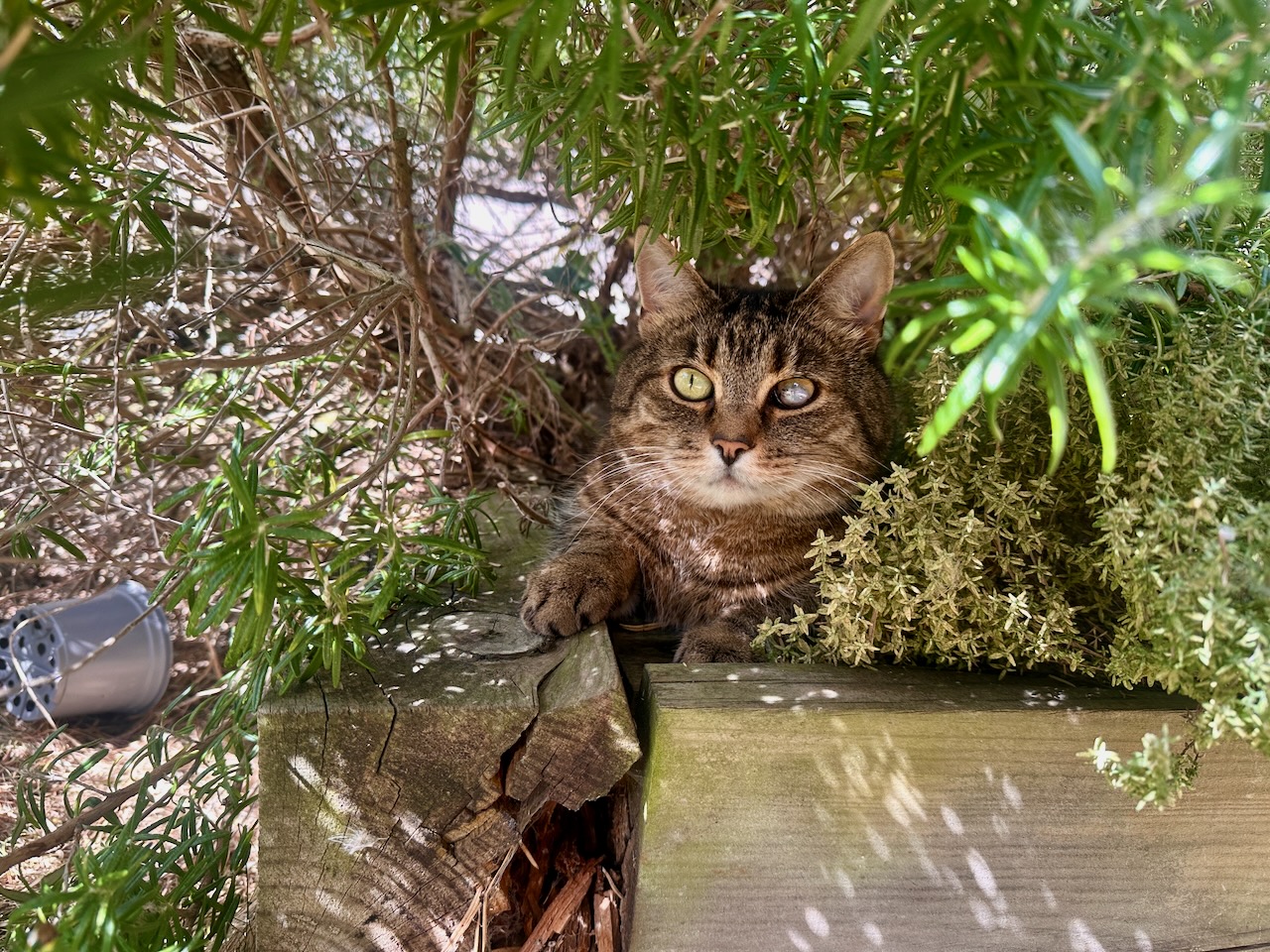
Gideon participatingGideon not participating
Maybe that’s where restoration starts to become something more than environmental management. Planting a hedge, restoring a wetland, allowing a river to move naturally, making space for other species, or simply not fucking interfering with something doesn’t have to be an act of human generosity. It can be reciprocity. Giving something back to a living system that gives us everything.
Protection stops being an act of charity towards something called “the environment”. You’re looking after home. Restoration starts to look like reciprocity. The living world sustains us. What do we give back? Protection, perhaps. Restoration. Restraint. Attention.
Sometimes just leaving things the fuck alone.
I’ve been wondering for a while, whether, to save ourselves physically, mentally and perhaps spiritually, we need to recover our relationship with the land – its history, plants, animals, trees, hills, earth, lakes, rivers and shorelines.
Physically is straightforward. Without functioning ecosystems, a stable climate, fertile soil and clean water, we’re screwed. Mentally is more complicated. I’m certainly not suggesting that going for a walk cures mental illness. But I know what endless exposure to planetary crisis does to me. I know the grief and rage. I wrote about it only last week.
I also know what happens when I go outside. A blackbird interrupts it. A tree interrupts it. Sometimes sitting quietly in a churchyard interrupts it. Perhaps that’s partly because here is something I can actually have a relationship with. I cannot form a meaningful relationship with “global biodiversity”. I can form one with a wood. A river. A tree.
And spiritually? I really don’t know. Maybe that’s okay. I don’t know if there is a God. I don’t know whether consciousness survives death. I don’t know whether places can be sacred in any objective sense – some places do seem to resonate though, as if carrying memories. I’m not a Christian, not an atheist, attracted to deep ecology, intrigued by animism and apparently still an anarchist.
That’ll look good on the census. I don’t think I need another label.
Perhaps spirituality can begin with attention. With curiosity. With relationship and care. With understanding that I am a temporary participant in something enormously older and larger than myself. That thought also fits with the tattoo on my arm. When I was working through what I wanted it to represent, I kept coming back to becoming rather than being. Movement, ancestry, nature, resistance, curiosity, connection. Not a completed identity.
A spiral that hasn’t finished.
Which brings me back to the yew tree. I still don’t know how old it is. Next time I go I’m taking a tape measure, although even that probably won’t give me an answer. I don’t know whether there was a church on that hill before the surviving medieval building. I don’t know whether people considered the place sacred before Christianity arrived. I don’t know what I believe.
And perhaps, for once, I don’t need to know.
I went to All Saints looking for some peace. I sat beneath an old tree, amongst people who have been dead for centuries, on a little patch of Norfolk earth where generations have lived, worshipped, grieved, buried their dead and carried on.
It calmed the maelstrom of thoughts in my head. It made me curious. Curiosity made me look more closely. Looking more closely made me care more. Perhaps that’s where reconnection starts. Not by inventing a religion, borrowing somebody else’s spirituality or pretending we know what our distant ancestors believed. Just by paying attention to the place where we already are.