I went and sat under a yew tree today.
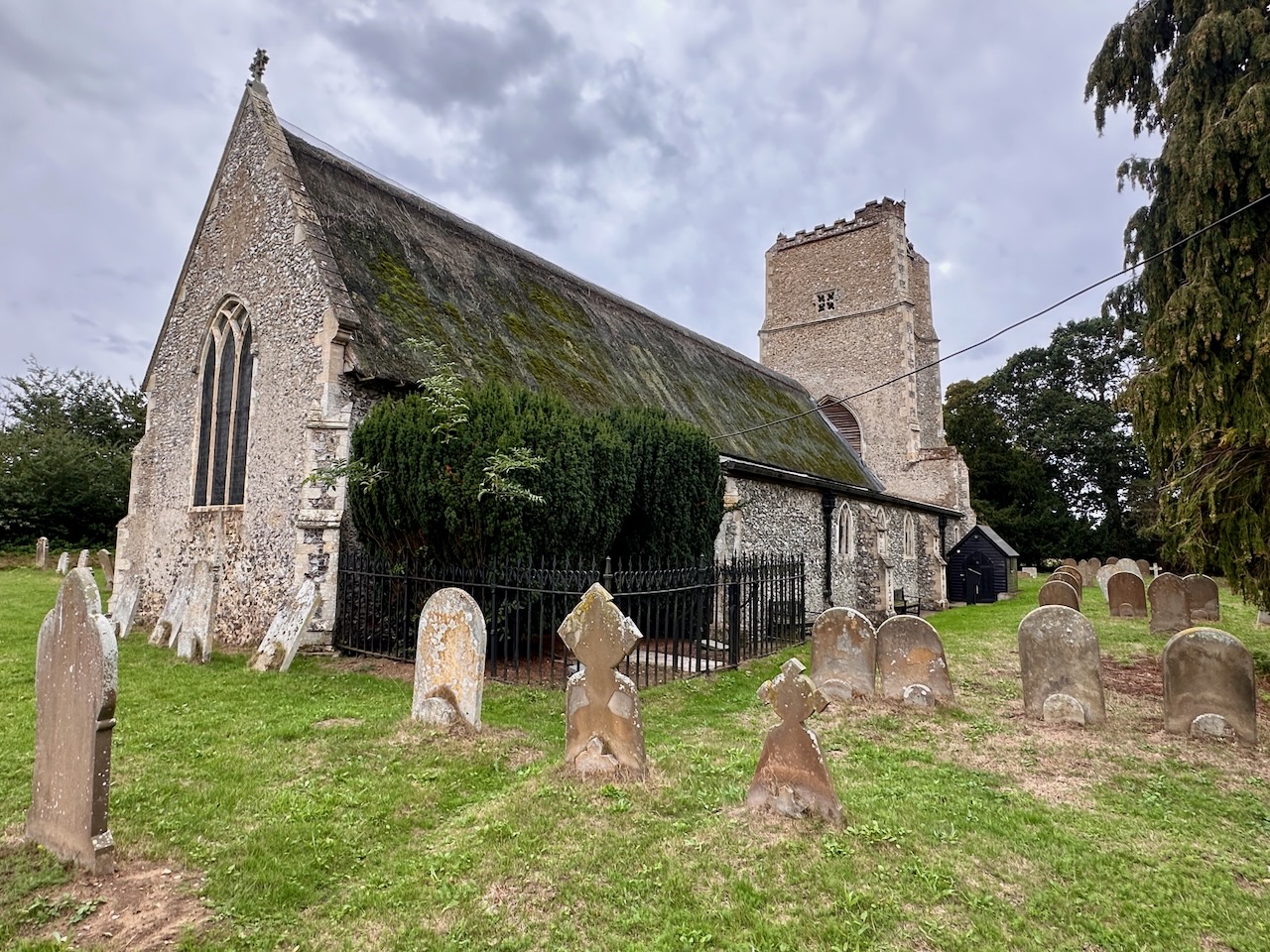
I’ve been doing that quite a lot recently. All Saints Church in Salhouse is only a short walk from my house, and has become one of those places I go when I need some peace. Which I seem to need rather a lot at the moment.
It’s an old Norfolk church, sitting slightly apart from the village on higher ground, surrounded by fields. Flint walls, thatched roof, old gravestones and a surprising number of large yew trees. It’s quiet. Usually. There are birds. Occasionally someone walks through. The rest of the world feels a little further away.
Apparently I’ve been doing this for longer than I remembered. I looked back through this blog and found a post I wrote in April 2020, during lockdown. I’d gone for a walk “to ease the stress of strangest days”, ended up at exactly the same church and sat under a yew tree. I even wrote a slightly dubious poem about it, involving ancient rites, strange dreams and the poisonous nature of yew trees. Six years later I’m back under the same trees trying to ease the stress of another set of strange days.
There might be a pattern here.
This time I started wondering how old the trees actually were. That led to wondering how old the church was. Then why the church was there, on that particular bit of higher ground. Was there an earlier church? What was there before Christianity? Were the yews older than the church? Had people been coming to this particular patch of land for hundreds, perhaps thousands, of years?
Down the rabbit hole I went.
I should make clear that I wasn’t searching for a pagan sacred site. I hadn’t gone there hoping to discover that druids once sacrificed unfortunate Roman tax collectors beneath the Yews, perhaps opening portals to ‘deathly halls’. I went there because I wanted sanctuary. The questions came afterwards.
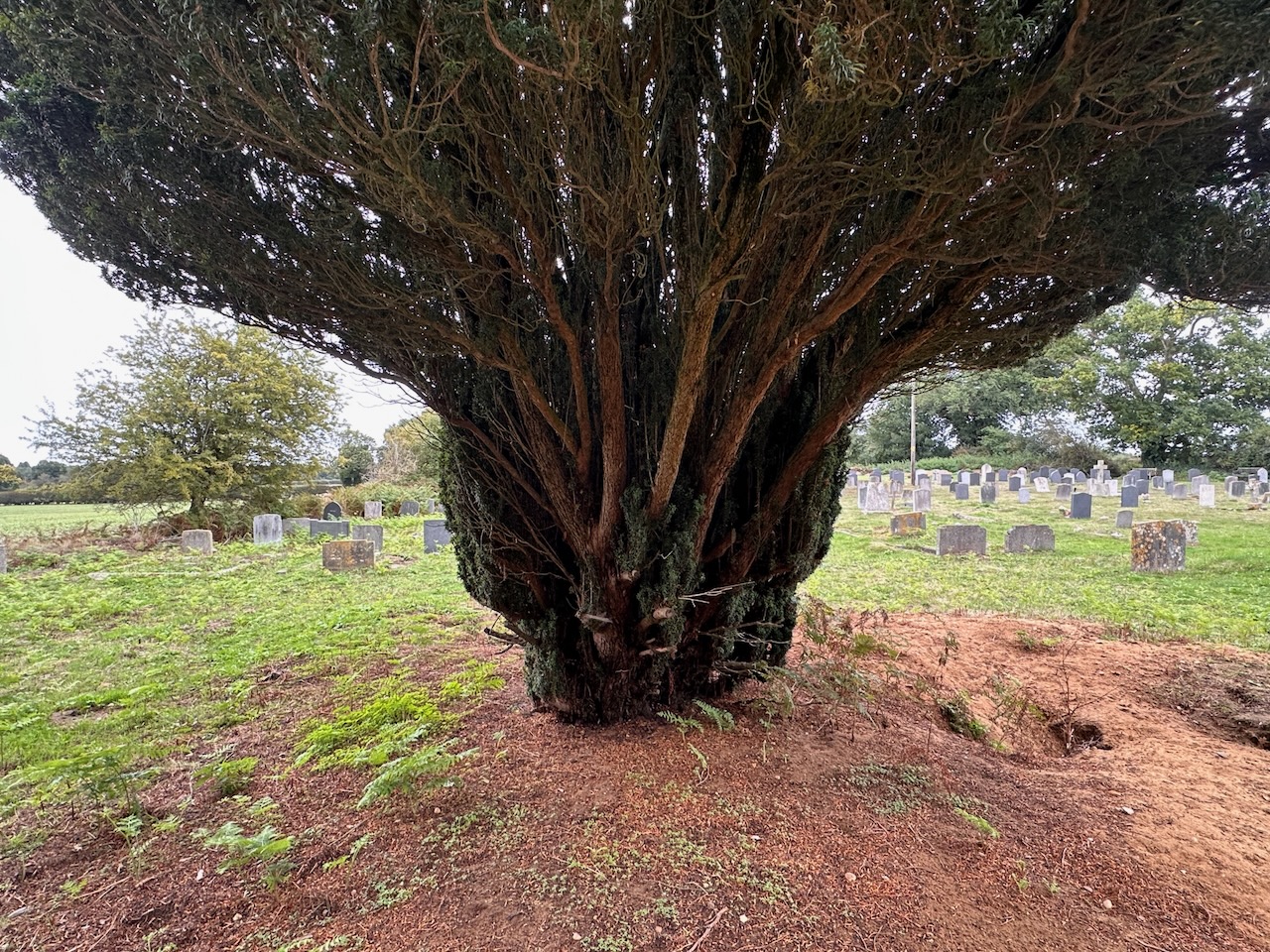
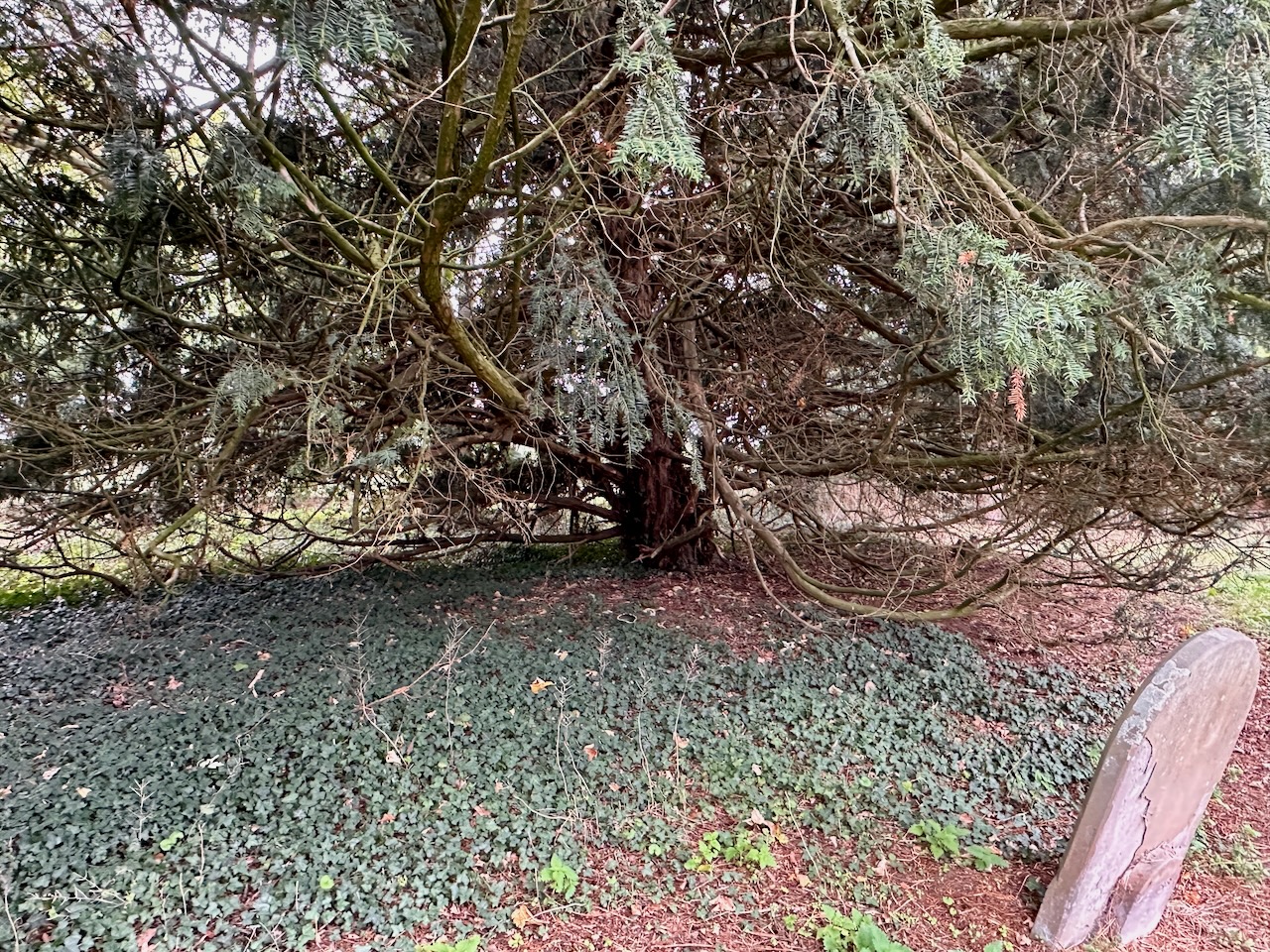
The surviving church is medieval, mostly dating from the 13th and 14th centuries, although there are questions about whether there was an earlier Christian building. The yews are harder. Yews are wonderfully uncooperative trees when it comes to working out their age. They hollow, split, regenerate, layer and generally mess around with their own trunks until conventional ways of ageing trees become rather unreliable. Several of the Salhouse yews have complicated multi-stemmed forms that make them particularly tricksy. In general I think of Taxus baccata as being tricksy, maybe slightly mischievous, or even malevolent if you cross one.
I haven’t measured them yet, which can help with ageing them. That’s a job for another visit involving a tape measure and me crawling around trees looking suspicious.
There is certainly no evidence I’ve found that proves All Saints was built on a pre-Christian sacred site. An old yew in a churchyard doesn’t prove that druids were there first either, despite what quite a lot of stuff on the internet would have you believe.
And the funny thing is, I realised I don’t need it to. The more interesting question is why I wanted to know in the first place. I’m not really a Christian. I’m definitely not an atheist either. I don’t know what I am, which is perhaps an inconvenient position when it comes to religion, but probably an honest one.
A lot of Christian values make complete sense to me. Compassion. Looking after people who have less than you. Welcoming strangers. Forgiveness. Not worshipping wealth. The same is true of many Islamic values and those found in other religious traditions.
Organised religion is another matter. Centuries of patriarchy, hierarchy, corruption, abuse of women, horrific abuse of children, accumulation of wealth and the use of religion to legitimise power have left me deeply suspicious of institutions claiming to speak for God. If there is a God, I’m not convinced they require quite so many men in elaborate hats telling everyone else what to do.
I am probably an anarchist. Although I don’t really know, and I’m not sure it matters, or we need labels. Actually, there seems to be an obsession with having a label these days, however I’m not sure it’s helpful, being categorised, put in a box. We can be lots of different things at once.
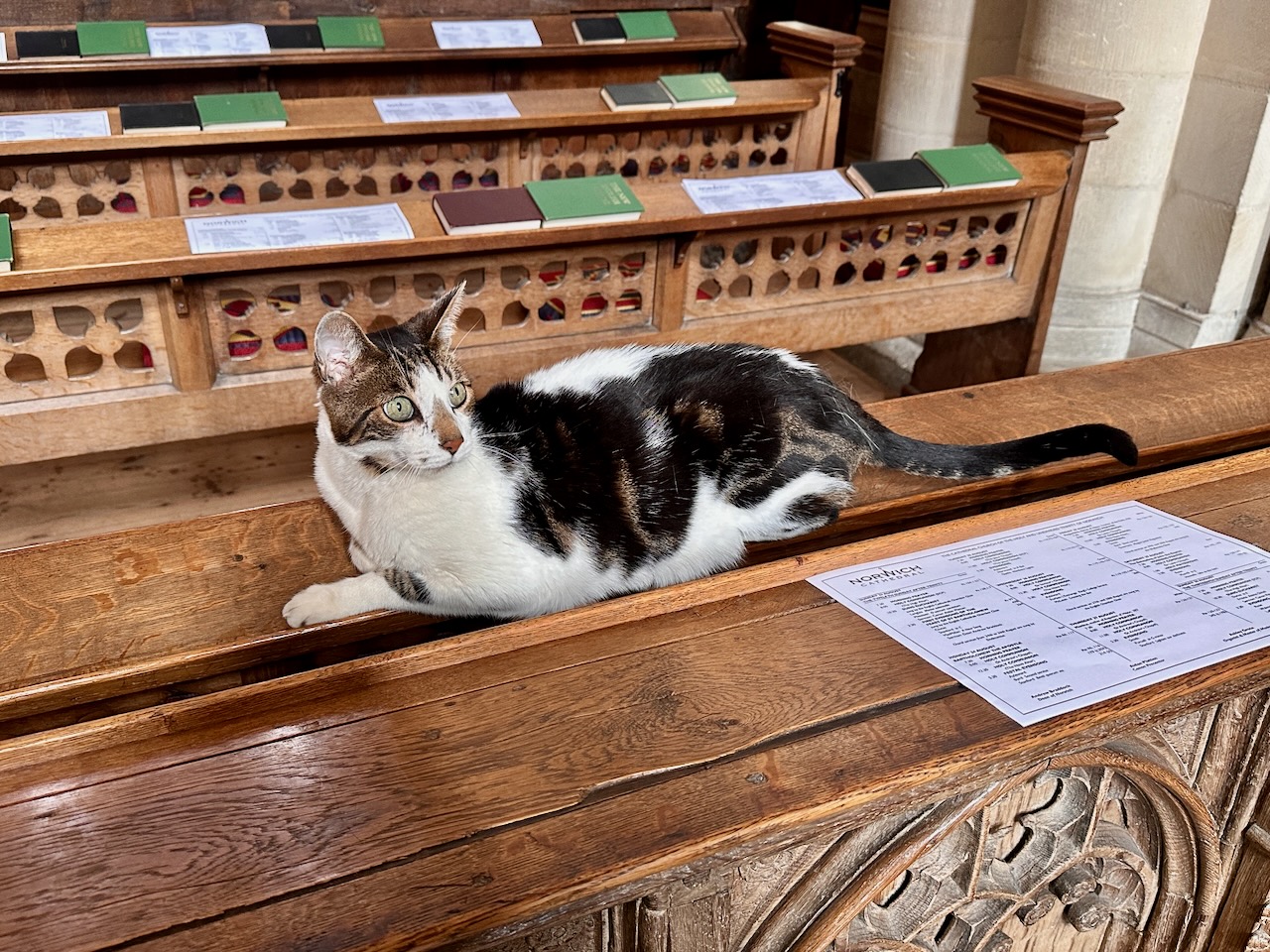
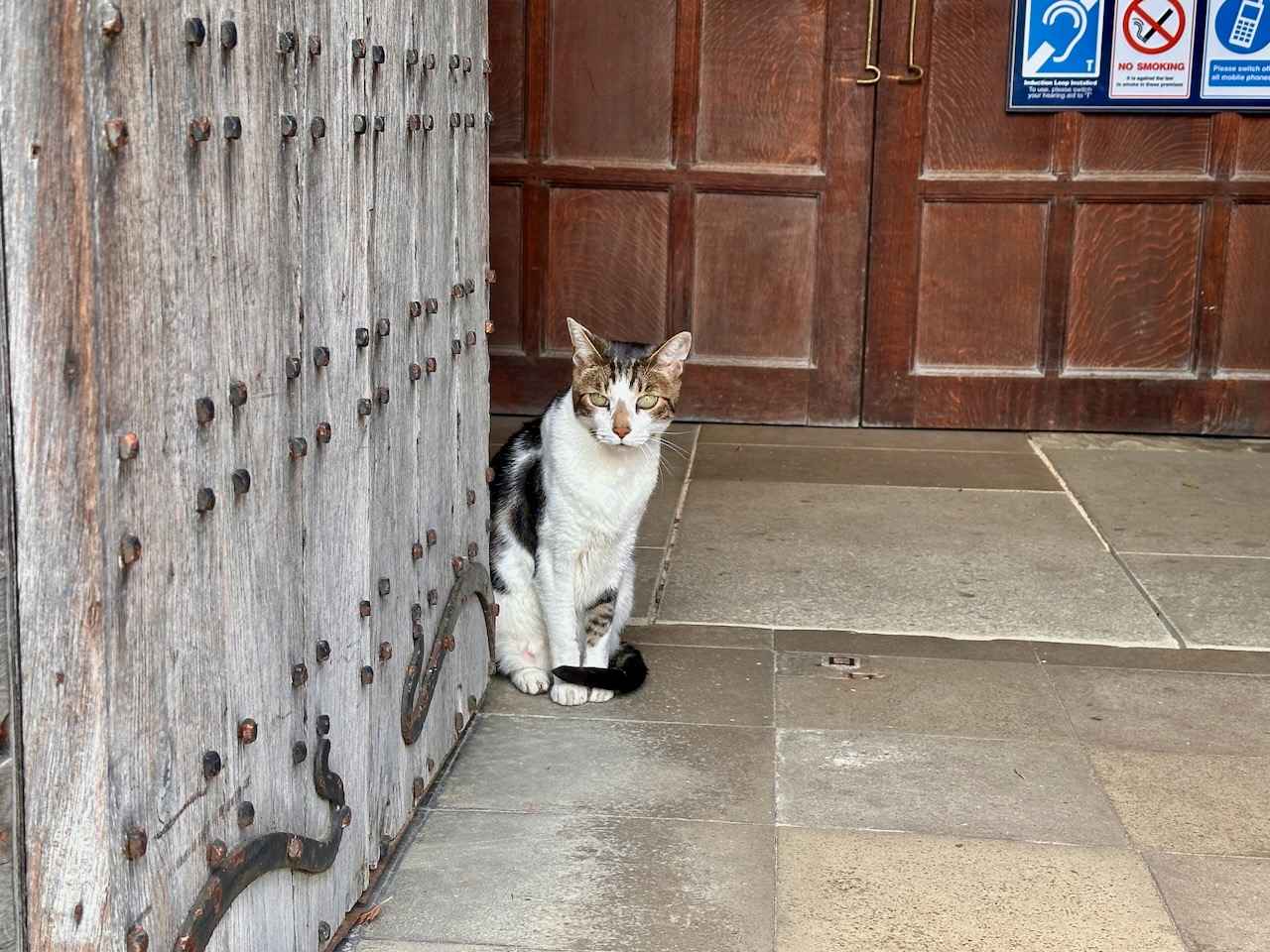
And yet old churches affect me. Norwich Cathedral certainly does – and I like visiting Budge, the cathedral cat. So does an ancient woodland. A hillfort. A cairn. An old tree. Walking the old ways. There is something about places with depth that resonates with me.
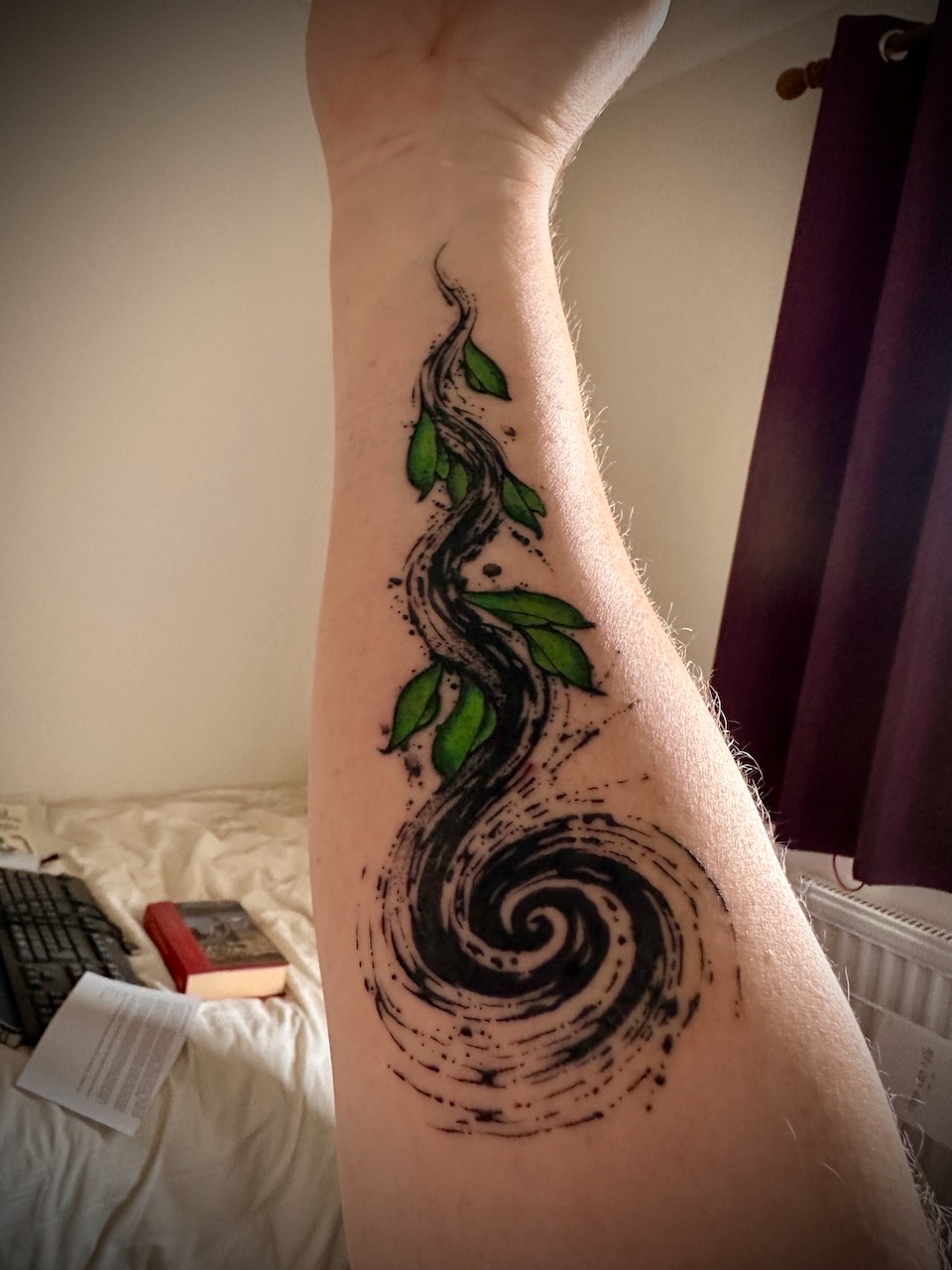
I’ve been thinking about ancestry recently too, partly whilst designing my latest tattoo. Not ancestry in some ridiculous racial purity sense. Quite the opposite. Go back far enough and identity becomes wonderfully messy. People move. Cultures mix. Borders change. Beliefs change. We are all the products of journeys, relationships, accidents and countless people whose names we’ll never know.
Britain is like that too. Prehistoric peoples whose beliefs we understand only in fragments. Brittonic cultures. Romans. Anglo-Saxons. Norse influence. More than a thousand years of Christianity. Migration before, during and after all of it.
Maybe I don’t need to dig down through all those layers until I find the “correct” one. Perhaps the layers are the point.
This has also brought me back to The Children’s Fire by Mac Macartney, a book I read a while ago and loved. Amongst many things, it explores our relationship with the living world, community, responsibility and what we owe future generations.
“No law, no decision, no action, nothing of any kind will be permitted to go out from this council… that will harm the children.”
I’ve sometimes felt uncomfortable when people in Western societies try to adopt the spiritual practices and traditions of Indigenous cultures elsewhere. Learning from them is one thing, and Lord knows our civilisation has a lot to learn. But taking somebody else’s ceremonies, clothes or spiritual identity and adopting them as our own can feel uncomfortably like another form of extraction. Especially when many of those same cultures have endured centuries of colonial attempts to destroy precisely those traditions.
There’s a strange contradiction in trying to reconnect with the land by importing somebody else’s relationship with their land. Maybe we need to rediscover our own. I use that word carefully. “Indigenous peoples” has an important contemporary meaning connected with particular cultures, histories, colonisation and dispossession. I’m not suggesting I declare myself an Indigenous Norfolk person and start inventing ceremonies involving flint and mustard – it’s quite tempting though.
I mean something simpler. What would it mean to really belong to a place again? To know its rivers and streams. Its old trees. Old ways. Where the ground rises and where it floods. To recognise more of the plants growing beside the footpath rather than walking past an anonymous mass of “green”. To know when the swifts return. Where the old hedges run. Where a stream used to flow. What species have disappeared.
To know where people lived before us and where they buried their dead. To understand the archaeology beneath our feet. To know the old stories attached to places whilst also being prepared to discover that some of them are complete bollocks invented by a Victorian antiquarian.
To know what we’ve lost.
And what remains.
I already do some of this. The Wensum means something to me beyond being a blue line on a map. So does Mousehold Heath. Salhouse Broad. The Bure. The woods, fields, hedges and footpaths around where I live. The blackthorn blossom appearing in spring. The blackbirds that temporarily interrupt my climate-induced existential crises.
But there is so much I don’t know. And this is where I think something deeper has been stirring in me. I’ve believed in the principles of deep ecology for a long time. At its heart is an idea that seems both radical and blindingly obvious: we are part of nature, not apart from it.
We’re animals. We depend on soil, plants, fungi, insects, water, oceans and atmosphere. We exist inside ecological systems, not above them. Other species don’t need to justify their existence by demonstrating their economic usefulness to us.
And perhaps connection is the wrong word sometimes, because it still implies two separate things that need connecting: us and nature. But there aren’t two things. We are already in it.
The water that falls on these fields, moves through the soil and rivers and eventually comes out of my tap becomes part of me. The plants capture energy from the sun. Insects pollinate them. Fungi and bacteria break down the dead and return nutrients to the soil. Trees move water into the atmosphere. Birds eat insects and seeds and spread them somewhere else. We breathe oxygen produced by other living things and return carbon dioxide. We eat, breathe, shit, die and eventually become food for something else. However sophisticated we think we are, we haven’t escaped any of this.
Perhaps what we’ve lost isn’t our connection to nature. We couldn’t lose that if we tried. What we’ve lost is our awareness of the relationship. We’ve constructed an extraordinary civilisation that allows many of us to go through life barely noticing what actually keeps us alive – nature and the ecosystems we’re part of.
Mac Macartney, again in The Children’s Fire, writes about our forgetting of our ancestral past, and the trauma, grief and disconnection that have helped sever our relationship with the living world. Cultures change, populations move, religions replace or absorb earlier traditions, land is enclosed and industrialised, and knowledge that once passed between generations disappears. We have forgotten a great deal. But perhaps forgetting doesn’t mean we can’t remember, rediscover and reconnect.
Recently I’ve been reading a little about animism too. I’m not about to announce that I’ve become an animist. I don’t know enough about it, for starters, and I’m wary of grabbing another label to fill the space left by organised religion. But something about it resonates. Not necessarily the idea that every tree contains a supernatural spirit. I don’t know whether spirits exist. I don’t know whether anything supernatural exists. It’s the idea of relationship that gets me.
A tree doesn’t need to contain a tree spirit before I can feel something approaching reverence for an organism that was alive before I was born and may still be alive long after I’m dead.
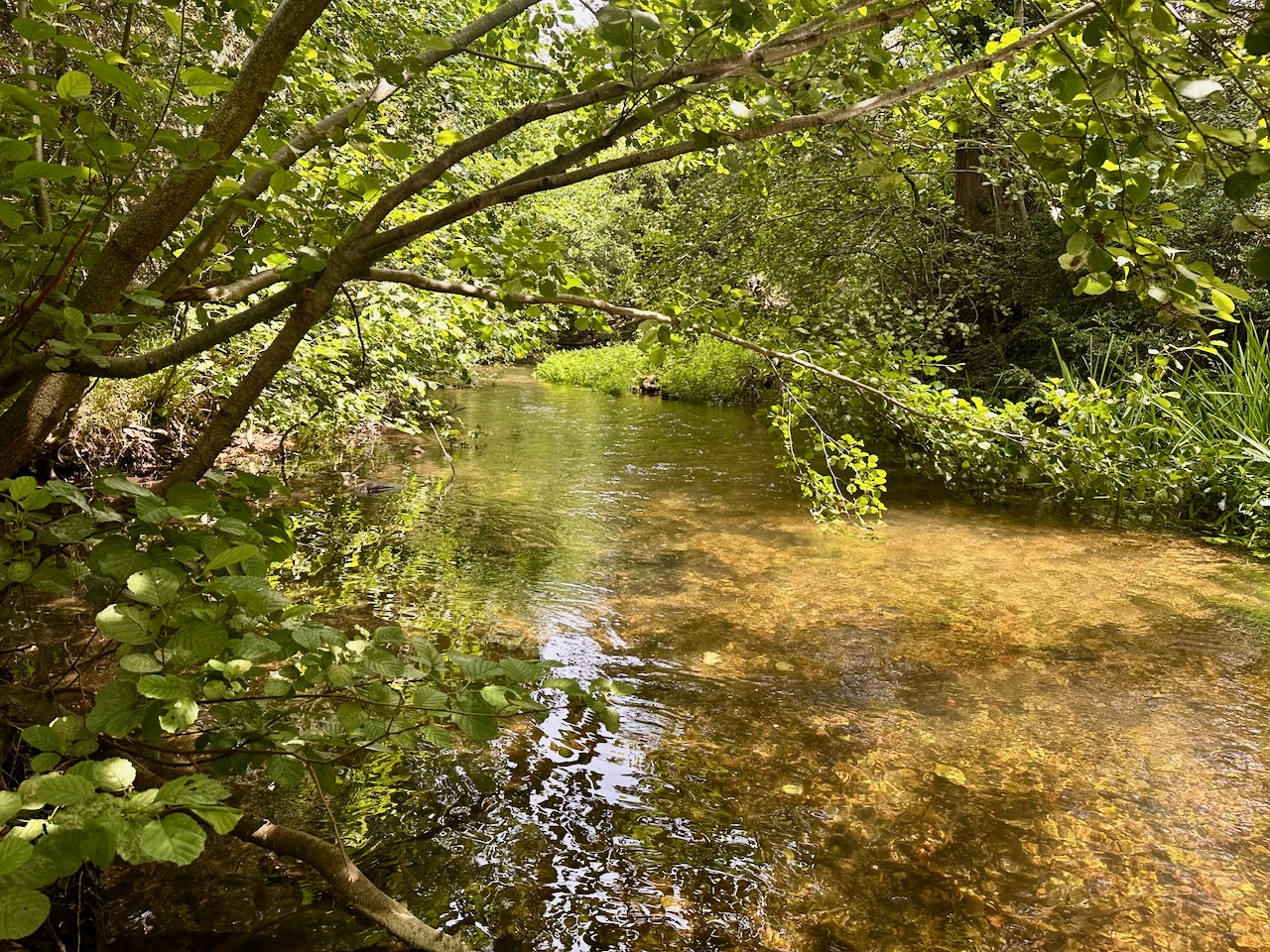
A river doesn’t have to be a deity before poisoning it feels like something more profound than exceeding an Environment Agency pollution threshold.
A woodland doesn’t need to have been a sacred grove before bulldozing it feels fundamentally wrong.
Perhaps we’ve been asking the wrong question. Instead of endlessly asking, “How much can we sustainably take from nature?” What happens if we ask, “What do we owe the living world of which we are part?” That feels very different.
Modern life makes this relationship difficult. I can live in Norfolk whilst eating food grown thousands of miles away, buying things manufactured on another continent, spending my working day staring at a screen and then spending the evening staring at another screen containing Donald Trump, Vladimir Putin, Gaza, Ukraine, wildfires, floods, collapsing ecosystems and whatever fresh horror the algorithm has decided I need to know about immediately.
Physically I am here. My attention is everywhere. Perhaps that leaves us rooted nowhere.
I don’t want to romanticise the past. Our ancestors weren’t living in some harmonious woodland utopia, like Ewoks, until somebody unfortunately invented the steam engine. Humans have been violent, hierarchical, patriarchal and environmentally destructive for a very long time. I have no desire to die from an infected tooth at 51 whilst being oppressed by the local feudal landowner.
The modern world has brought extraordinary things. But perhaps we lost something as well. I’ve spent a lot of time recently writing about climate breakdown, ecological collapse, politics, corruption, billionaires, fossil fuels and the increasingly impressive ability of supposedly intelligent people to ignore what is happening directly in front of them.
I was going to write about politics and corruption again today. I couldn’t face it. Not because those things don’t matter. They matter enormously. Climate breakdown requires rapid decarbonisation. Nature restoration requires money, policy and land. Governments need challenging. Corporations need regulating. Power needs redistributing. None of this gets fixed by sitting under a tree thinking nice thoughts.
But perhaps ecological restoration also requires something cultural. Maybe even something spiritual. Because I wonder how we expect people to protect a living world from which they have become profoundly disconnected.
If a woodland is just a collection of trees, it can be replaced. If a river is a resource, we can calculate an acceptable amount of pollution. If land is an asset, we can put a price on it. If everything has a price, somebody with enough money can buy permission to destroy it.
But what if it’s home?
Once you know somewhere – really know it – perhaps damaging it becomes harder. Once you’ve watched the same trees through the seasons, noticed when the swifts arrive, walked beside the same river, learned what lives there and discovered the lives of people who walked the same ground centuries before you, your relationship changes.
That’s it. We’re participants. Not observers of an ecosystem, but organisms within it. It’s a kind of symbiosis.
And belonging can’t just mean knowing the names of things. There’s a danger even there of becoming a sort of ecological stamp collector: I can identify twenty species of bird, therefore I am connected to nature. Relationship implies a two-way connection. Being present, in the moment, participating. The soil, river, insects, trees and other animals are doing things that make my life possible. What am I doing in return?
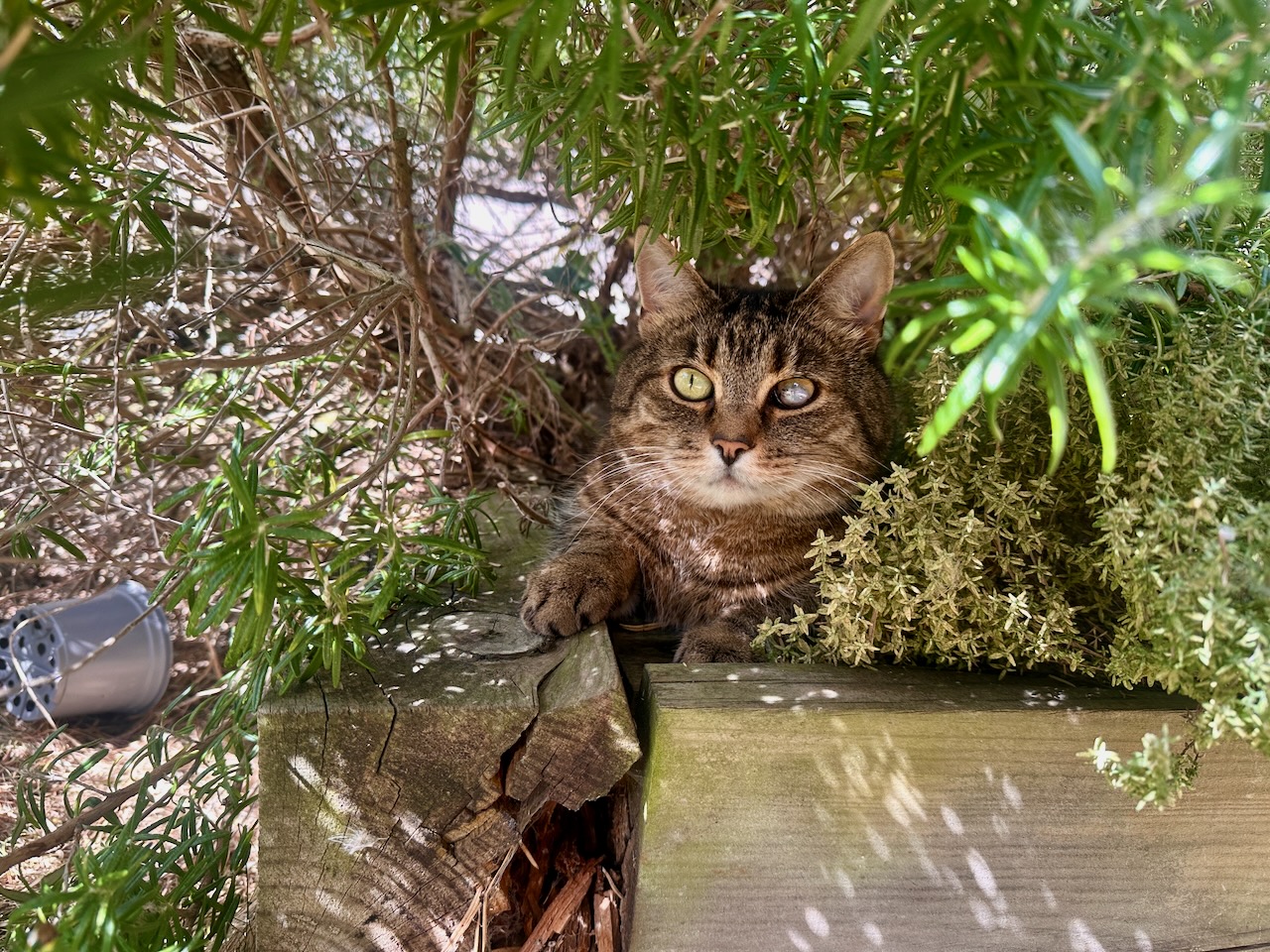
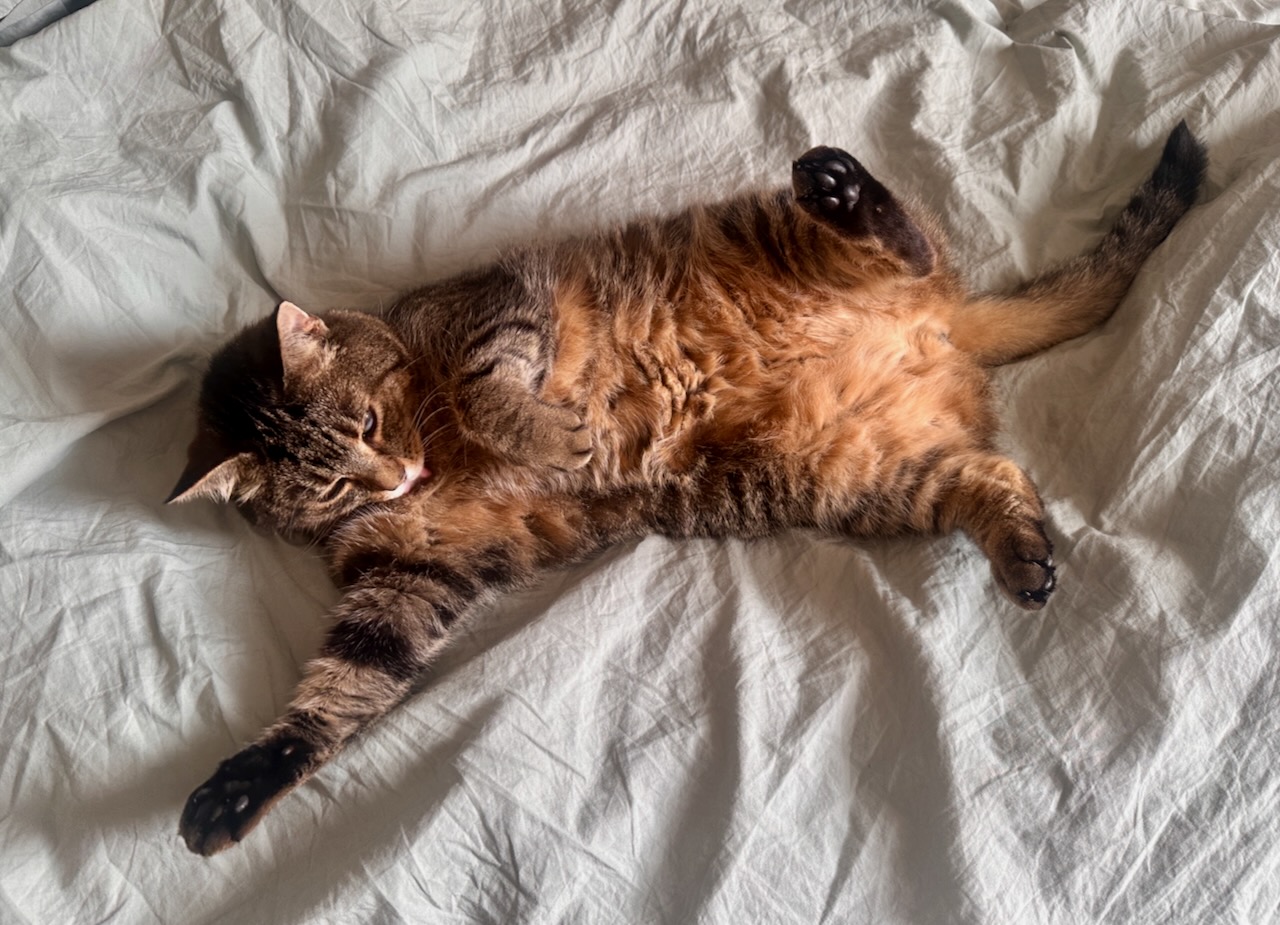
Maybe that’s where restoration starts to become something more than environmental management. Planting a hedge, restoring a wetland, allowing a river to move naturally, making space for other species, or simply not fucking interfering with something doesn’t have to be an act of human generosity. It can be reciprocity. Giving something back to a living system that gives us everything.
Protection stops being an act of charity towards something called “the environment”. You’re looking after home. Restoration starts to look like reciprocity. The living world sustains us. What do we give back? Protection, perhaps. Restoration. Restraint. Attention.
Sometimes just leaving things the fuck alone.
I’ve been wondering for a while, whether, to save ourselves physically, mentally and perhaps spiritually, we need to recover our relationship with the land – its history, plants, animals, trees, hills, earth, lakes, rivers and shorelines.
Physically is straightforward. Without functioning ecosystems, a stable climate, fertile soil and clean water, we’re screwed. Mentally is more complicated. I’m certainly not suggesting that going for a walk cures mental illness. But I know what endless exposure to planetary crisis does to me. I know the grief and rage. I wrote about it only last week.
I also know what happens when I go outside. A blackbird interrupts it. A tree interrupts it. Sometimes sitting quietly in a churchyard interrupts it. Perhaps that’s partly because here is something I can actually have a relationship with. I cannot form a meaningful relationship with “global biodiversity”. I can form one with a wood. A river. A tree.
And spiritually? I really don’t know. Maybe that’s okay. I don’t know if there is a God. I don’t know whether consciousness survives death. I don’t know whether places can be sacred in any objective sense – some places do seem to resonate though, as if carrying memories. I’m not a Christian, not an atheist, attracted to deep ecology, intrigued by animism and apparently still an anarchist.
That’ll look good on the census. I don’t think I need another label.
Perhaps spirituality can begin with attention. With curiosity. With relationship and care. With understanding that I am a temporary participant in something enormously older and larger than myself. That thought also fits with the tattoo on my arm. When I was working through what I wanted it to represent, I kept coming back to becoming rather than being. Movement, ancestry, nature, resistance, curiosity, connection. Not a completed identity.
A spiral that hasn’t finished.
Which brings me back to the yew tree. I still don’t know how old it is. Next time I go I’m taking a tape measure, although even that probably won’t give me an answer. I don’t know whether there was a church on that hill before the surviving medieval building. I don’t know whether people considered the place sacred before Christianity arrived. I don’t know what I believe.
And perhaps, for once, I don’t need to know.
I went to All Saints looking for some peace. I sat beneath an old tree, amongst people who have been dead for centuries, on a little patch of Norfolk earth where generations have lived, worshipped, grieved, buried their dead and carried on.
It calmed the maelstrom of thoughts in my head. It made me curious. Curiosity made me look more closely. Looking more closely made me care more. Perhaps that’s where reconnection starts. Not by inventing a religion, borrowing somebody else’s spirituality or pretending we know what our distant ancestors believed. Just by paying attention to the place where we already are.
And remembering that we belong to it.

