Tag Archives: Politics

Andy Burnham’s speech: Radical? I don’t think so.

Andy Burnham’s speech. I listened to it. I thought it was probably one of the best oratorical performances from a Prime Minister I’ve heard in the last 20 years. He actually made it seem like he cares, I think he probably does. He actually showed empathy which the right keep telling us is weak and should be discarded. He actually came out with some decent ideas although the devil will be in the detail.

Electoral reform; will that mean proportional representation?  Looks like it. Marvellous.

Delinking electricity prices from wholesale gas prices; great that should genuinely reduce electricity bills by benefiting from cheaper renewable energy. 

A National Care System; brilliant, we have an ageing population and don’t seem to want to welcome migrant workers to help with that or many other workforce challenges. 

Rejoining the EU; or some positive moves in that direction, maybe a referendum, super, about time, Brexit has and will continue to be a disaster. 

Reform the State Pension; probably needed at this stage, but going to be a hot potato. 

Housing reform; brill, let’s tackle greedy developers and get more affordable and social housing.

Take water companies into public ownership and create a publicly owned Great British Grid to challenge the private network operators; can we do this very quickly please, especially with the water companies. Privatisation, Thatcher’s legacy, has been another disaster.

A more rapid transition to renewable energy; great, get on with it, and whilst you’re at it stop subsidising oil and gas companies and make them pay for a just transition in terms of energy generation and jobs, and make them pay compensation for the damage they’ve done, deaths caused, and clean up operations.

But…

What about taxing the super rich, a wealth tax, nothing on that meanwhile the poverty divide is growing, we’re getting more multimillionaires and billionaires, and society is sick because of them.

What about the climate and nature crises and the threats these present to our national security, food supplies, flood resilience and wellbeing. And you’re allowing homes to be built on floodplains, madness. We’re facing growing risks to food supplies and prices from El Niño, extreme heat, drought, floods and harvest failures. What are you going to do about that? If people don’t have food to feed themselves and their families then law and order quickly breaks down.

What about oceans accumulating extraordinary amounts of heat, with vast areas experiencing marine heatwaves and some regions releasing stored heat back into the atmosphere? Oceans are acidifying, rivers are polluted, fish stocks are declining, and sea levels rising.

Meanwhile, on land wildfires are raging, the Amazon rainforest is at a tipping point and at risk of  turning into savannah then potentially desert, along with the world’s other major rainforests such as the Congo. The Boreal forests that stretch across land masses in the Northern hemisphere aren’t faring much better. We’re in an insect apocalypse – there go our pollinators. And if we’re talking about the UK we’re one of the most nature-depleted countries in the world.

I created a Global Risk Register for a blog a couple of weeks ago, you can view it here – https://selfpropelled.life/2026/09/17/mad-world/

What about the war crimes Israel are perpetrating in Gaza and the West Bank? Trivial sanctions on goods from the West Bank aren’t going to do much. Many genocide scholars, including several from Israel, and Amnesty are calling it genocide. Israel’s actions meet the criteria for genocide. Here’s a reminder from the UN website:

Convention on the Prevention and Punishment of the Crime of Genocide

Article II

In the present Convention, genocide means any of the following acts committed with intent to destroy, in whole or in part, a national, ethnical, racial or religious group, as such:

  • Killing members of the group;
  • Causing serious bodily or mental harm to members of the group;
  • Deliberately inflicting on the group conditions of life calculated to bring about its physical destruction in whole or in part;
  • Imposing measures intended to prevent births within the group;
  • Forcibly transferring children of the group to another group.

Source: https://www.un.org/en/genocide-prevention/definition

Several of those acts have been extensively documented. The crucial legal question is whether they are being committed with the required intent to destroy Palestinians in Gaza, in whole or in part. In my view, the evidence of that intent is overwhelming.

We just need the International Court of Justice to catch up and the International Criminal Court to arrest the perpetrators. There is no doubt in my mind that history, if there is anyone alive to read it, will show a genocide is taking place. The first live-streamed genocide in human history.

And the UK government is, in my view and the view of many others, complicit because we are selling them arms, giving them intelligence, and haven’t imposed proper sanctions on Israel. Andy Burnham won’t even accuse them of war crimes, no doubt because then legally he would have to do something about it. Meanwhile, over 75k dead, including over 20k children. 

We have lost our humanity to the greed and whims of billionaires and their lackeys – on war, climate, nature, energy, the media, even the judiciary. Burnham’s government is still arresting hundreds of people for holding up cardboard signs opposing genocide. The average age and gender of a ‘terrorist’ in the UK must be female, early 60s. Brilliant. Something to be very proud of Labour and Tory MPs.

What about banning politicians from lying in Parliament? What about holding the media to account and demanding they tell the truth? What about getting the BBC to actually do its job and be journalists, not commentators failing to challenge politicians and business leaders on their falsehoods? What about standing up to the far right and fascism in the 21st century?

What about being honest with the public about the challenges we’re facing, why things are going to have to change – for everyone – and bringing us on that journey. If you explain why there are certain things we can’t do or have anymore, because to do so increases the risk of your children dying, people will probably get it. 

Do what is right, not what you think will get you votes, and if you can’t do that hand over decision making to Citizens’ Assemblies – the subject of my blog last week – https://selfpropelled.life/2026/09/22/what-if-politicians-didnt-make-the-decisions/

Was Andy Burnham’s speech good? Sure, it sounded cool. Was it radical, ending neoliberalism and forming a National Care Service? Nah, I don’t think so. Maybe 30 years ago. But now the things he’s proposing should have already been done, or are just what we should be doing as business as usual, not radical.

As it is we are facing multiple concurrent risks and issues that could lead, are already leading in some instances, or will lead to:

  • Food and water insecurity
  • Health impacts and increased mass mortality events
  • Homes and infrastructure damage and destruction
  • Supply chain disruption
  • Insurance and property risk
  • Price and livelihood shocks
  • Inequality and vulnerability
  • Displacement and increased migration across borders
  • Economic and financial stress

These lead to systemic risks, and potentially societal collapse. 

I’d say the latter is looking more and more likely. Yesterday, Burnham should have declared a state of emergency to tackle these issues, and encouraged other world leaders to do the same.

Who knows, trying to stop societal collapse and provide a future for children might be something everyone, aside from perhaps sociopathic billionaires, can get behind.

Here’s a picture of a recent Norfolk sunset, because red sky at night, shepherd’s delight.
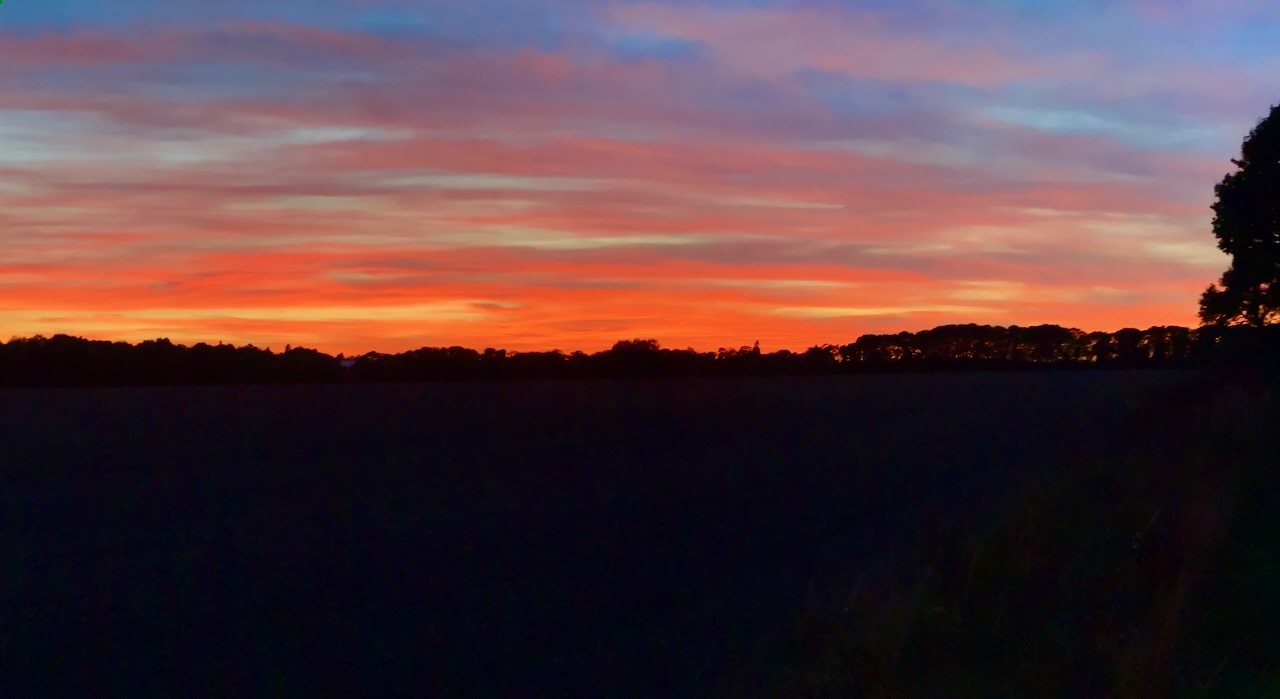
Red sky at night, shepherd's delight.
Red sky at night, shepherd’s delight.

What if politicians didn’t make the decisions?

I keep thinking about something. Please don’t groan, I can hear you.

Why are politicians constantly trying to work out what they need to do to get people to vote for them?

We have focus groups, opinion polls, electoral strategies, carefully tested messages and policies designed to appeal to particular groups of voters. Governments worry about what something will do to their polling. Opposition parties worry about whether saying what they actually think will cost them seats. Lobbyists, corporations, wealthy donors and organised interests all compete for access and influence, far beyond the ken of the ordinary public.

Then politicians go out and try to convince us that the resulting policies are the right thing to do.

It seems completely backwards.

Why don’t we start by asking what the right thing to do actually is, based on the best evidence we have, and then explain honestly and straightforwardly why we need to do it? No lies, misdirection, half truths or bullshit.

Some of the answers will be unpopular. Almost certainly. Dealing seriously with climate breakdown, inequality, defence, housing, taxation, migration, social care or the collapse of nature isn’t going to produce answers which everybody likes.

But perhaps that is what politics is supposed to be for.

I’ve increasingly started wondering whether I’m asking the wrong question. Perhaps the problem isn’t that we need politicians who are courageous enough to make better decisions.

Perhaps politicians shouldn’t be making most of these decisions in the first place. Given the current state of affairs, that seems like, perhaps, a no-brainer.

What if we did politics differently?

I’ve been reading more about anarchism recently, including Rebel City’s excellent little book For a Future Made by Us All. Anarchism isn’t the chaos and disorder that the word usually conjures up. My Mum often used to say something along the lines of “If we don’t fix this now, we’re going to slide into total anarchy.” I don’t think she really understood the principles of anarchism. At its heart are some quite simple ideas about freedom, equality, solidarity and mutual aid, and a profound suspicion of unnecessary hierarchy.

One idea particularly interests me: decisions flowing from the bottom upwards, rather than power flowing from the top downwards. Rebel City describes assemblies as a basic unit of non-hierarchical organisation, with people collectively participating in decisions affecting them.

That raises some interesting questions.

Why do we elect a few hundred people, many of whom change every few years, and then give them enormous power to make decisions for tens of millions of us?

What if we separated political decision-making from political administration?

Imagine that we identified a major issue and convened a Citizens’ Assembly: a randomly selected, demographically representative group of ordinary people. Not people who have spent their lives climbing through political parties, and not done a lot else. Not people who can afford £50,000 dinners with ministers. People like us.

Give them time. Give them access to information. Pay them properly for participating. Let them hear from scientists, economists, engineers, public servants, charities, religious/community leaders, businesses, campaigners and, importantly, people directly affected by whatever they are considering.

Let them question those people. Let them demand more evidence. Let them hear opposing arguments.

And then let them decide.

The process might look something like this:

Issue
↓
Independent evidence gathering
↓
Citizens’ Assembly
↓
Recommendation or decision
↓
Government publishes an implementation plan
↓
Politicians explain the decision and the reasoning behind it
↓
Civil service implements it
↓
Outcomes independently measured
↓
Results return to citizens

Then, if it doesn’t work, we change it.

That last bit seems important.

Our existing political system makes admitting failure incredibly difficult. If a government admits that one of its flagship policies hasn’t worked, the opposition attacks it. The media calls it a U-turn. Ministers become frightened of admitting mistakes, so enormous effort goes into proving that whatever they previously decided was right all along.

That’s a terrible way to learn. A terrible waste of time, money, resources and public faith.

Who chooses the experts?

There is an obvious problem with my imagined system. Who decides what evidence the assembly hears?

If the government chooses the experts, we have simply moved political control one step further away. If corporations can dominate the evidence because they have vastly greater resources than everyone else, we’ve recreated lobbying. If campaign groups can pack the process with people who agree with them, we’ve created another problem.

The evidence process would have to be genuinely independent, transparent and accountable. Assembly members themselves should be able to request additional witnesses, challenge evidence and ask to hear from somebody who disagrees.

And there should be a simple, key rule:

No privileged access for vested interests or lobbyists.

That doesn’t mean excluding them.

A renewable energy company will know something important about renewable energy. A trade union knows things about its members’ working conditions. An environmental organisation may have decades of specialist knowledge. Businesses, charities, campaigners and community organisations should all be able to contribute.

But they contribute in the room, transparently, alongside everybody else.

Nobody gets greater access because they donated £500,000 to a political party. Nobody gets a private dinner with the decision-maker. Nobody gets heard because they employ a former minister. Nobody gets to quietly wander around Westminster whispering into the right ears whilst offering free drinks.

Money shouldn’t buy political access.

Experts shouldn’t rule either

There is another distinction I think matters. Albeit, it’s tricky.

Experts provide knowledge. They don’t provide moral authority.

A climate scientist can explain what increasing atmospheric carbon dioxide is likely to do. An economist can model the economic consequences of different choices. An engineer can tell us what is technically possible. But none of them can tell us what kind of society we want to live in. Those are value judgements. They belong to all of us. And Citizens’ Assemblies will sometimes get those judgements wrong. Of course they will. Ordinary people aren’t infallible.

Neither experts nor Citizens’ Assemblies are infallible. Neither are politicians.

I’m increasingly baffled by the assumption that selecting somebody because they were good at winning an election somehow makes them particularly qualified to make enormously complicated decisions about energy systems, artificial intelligence, healthcare, agriculture, economics or climate breakdown.

A small real-world example: as a councillor I sit on a planning committee, and sometimes we are called upon to make decisions on Tree Preservation Orders. Hardly anyone there, aside from the Arborist, is an expert, yet I see subjective conclusions, and thus decisions, being made about trees that could be incorrect. Scale that up to decisions about the economy, climate, welfare, defence, the NHS and all sorts of other things.

Perhaps we shouldn’t be looking for infallibility. Perhaps we should be designing a system that produces decisions that are informed, representative, transparent, difficult to corrupt and capable of correcting themselves.

So what are politicians for?

We’d still need them. Probably. But their job would be very different.

Politicians would become managers, coordinators, facilitators, communicators and scrutineers. They would make sure decisions were implemented properly, coordinate institutions, allocate resources and hold the machinery of government to account.

Their job might be to tell us:

We asked citizens to consider this problem. They spent time understanding it. They heard the evidence, challenged it and deliberated together. This is what they decided. This is why they decided it. This is how we’re going to make it happen. And this is how we’ll find out whether it worked.

And power shouldn’t all sit in Westminster.

If something can sensibly be decided by a community, let the community decide it. If it needs coordination across a region, move it up a level. Some things inevitably require national coordination, and some problems cross national borders.

But power should move upwards only when it needs to.

That feels much closer to the bottom-up organisation described by anarchist thinkers than our extraordinary concentration of political power at the centre. 

There are, obviously, enormous unanswered questions. How do we protect minority rights? Who decides which questions go to assemblies? What happens in an emergency? What constitutional safeguards do we need? What happens when different assemblies reach contradictory decisions? How do we prevent somebody capturing the supposedly independent evidence system?

I don’t know. But I don’t think what we have is working. And I keep going back to the criticism of democracy attributed to Socrates, particularly through Plato: that political decisions can end up being made by people who have won popular support but don’t necessarily understand the things they are deciding. The argument is more complicated than that, but perhaps one answer to it is a properly constituted Citizens’ Assembly; ordinary people given the time, evidence and access to expertise needed to make informed decisions.

This isn’t a constitutional blueprint. It’s a question. Because perhaps we’ve been trying to solve the wrong problem.

I keep hoping that better people will become politicians. That somehow the next collection of people entering Westminster will resist the machinery of parties, elections, donors, lobbyists, opinion polls, newspapers, social media and the relentless need to win the next election.

They almost certainly won’t.

Perhaps instead of endlessly trying to find better people to give enormous amounts of political power, we should build a society in which politicians have much less power to exercise.

Democracy shouldn’t just mean choosing, every four or five years, which small group of people gets to make decisions for everybody else. Maybe it could mean ordinary people, given the information and time necessary to understand difficult questions, making those decisions together.

From the bottom up.

With politicians working for us, rather than ruling over us.

Or we could go for a dictatorship. All hail our Lord and Master Gideon, who will make decisions based on tribute, warm spots and head scratches. Actually, I’m not convinced that isn’t what is happening at the moment. But Gideon recommends we give him a shot anyway.

Gideon, urr, yeah, sorry, your Lord and Master

Civilisation Runs on Electricity, Water and Cat Pictures

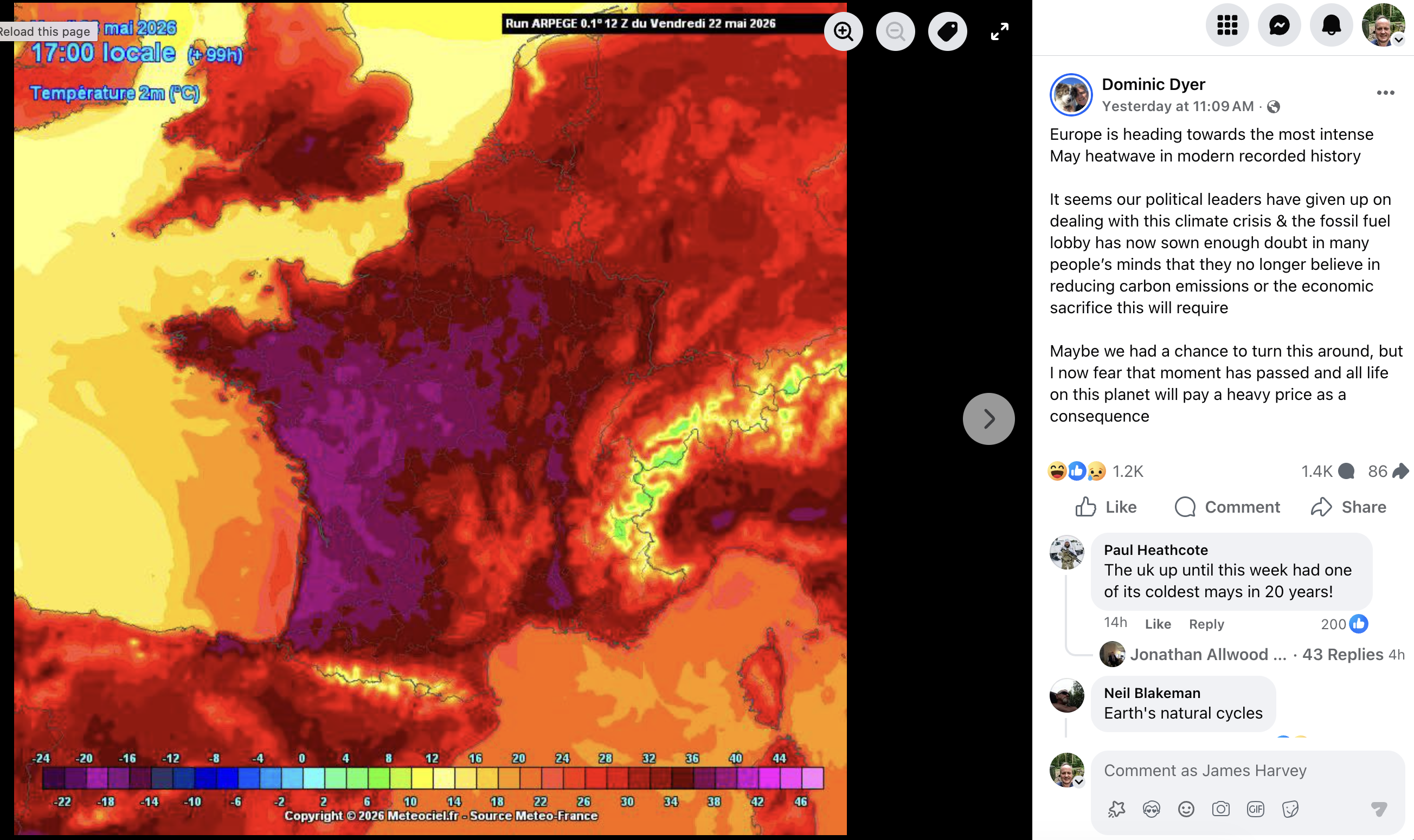
Heat map of Europe, with comments about climate crisis and emissions.
Europe is heating up, and so is the battle for a stable climate

Yes, I am enjoying the brighter and warmer weather, although I must admit the heat is a bit harder to deal with since the wonderful NHS fitted a stent to my Left Anterior Descending artery – the so-called “widow maker” – alongside my current medication. I went for a walk today, but had to stop several times to re-hydrate and recover.

Bank Holiday Blossom Fair and Blackbarn Farm

But I am also increasingly concerned about what the rest of this year, and the years ahead, might hold given this heatwave, the wider warming trend, and the super El Niño now developing in the Pacific. It will definitely mean me moving more slowly, and needing more hydration stops.

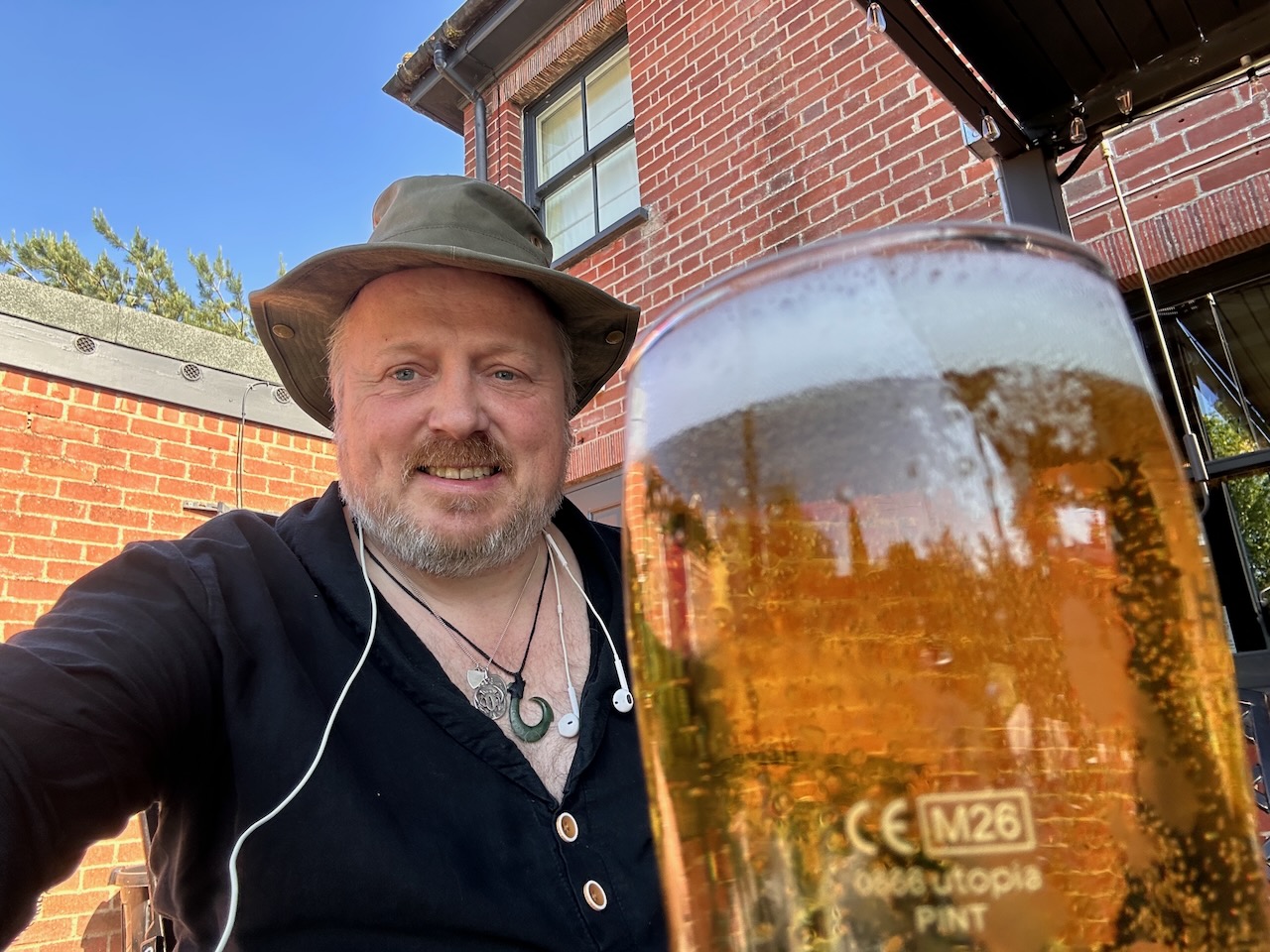
Re-hydrating at The Stag pub, Salhouse

Looking at some of the comments on the post I copied in from Facebook above, I understand why people react the way they do. The UK has just had a relatively cool April and May by recent standards – although that is debatable. Weather fluctuates. People naturally compare what they see outside their window with warnings about global heating.

But I still don’t think most people fully grasp the scale of the unfolding climate and nature crises, or the level of existential threat parts of the world already face right now and that we could within our life-times. Our children will definitely be living in a more unstable, violent and resource strapped world.

Floods. Fires. Crop failures. Water shortages. Rising food insecurity. Conflict over resources. Economic instability. Mass displacement. Refugees risking their lives crossing seas because the places they once called home are becoming unliveable. Yes, that means more small boat crossings. And if AMOC collapse we could be the ones needing the boats, becoming climate refugees ourselves.

And many of those suffering first and hardest are in the global south – countries which contributed far less to historic emissions than wealthy industrialised nations like ours.

We also still massively understate our own contribution. The often-repeated claim that the UK produces “less than 1% of global emissions” ignores the emissions embedded in imported goods, international aviation, shipping, finance and supply chains which support our standard of living, which despite a cost of living crisis and hardship in the home front, is still far above many other parts of the world.

I genuinely think if people fully understood the scale and interconnected nature of these crises, they would support a far faster transition to renewable energy, insulation, public transport and decarbonisation.

Especially because renewable energy is now cheaper than fossil fuels, and because electricity demand is rising not falling. We cannot pretend modern economies will function without large amounts of energy.

Unless we collectively decide we want a simpler existence in the UK, without a lot of the things we take for granted now, we will need more electricity. Unfortunately civilisation now runs on electricity, Wi-Fi and people asking AI to draw anime versions of their cats – guilty as charged.

Gideon hanging out in the porch with his mate Ginge. Gideon is not sharing his dreamies.

Gideon hanging out in the porch with his mate Ginge


We will have to try to keep up with the rest of the world and build the data centres which in turn can be taxed, replacing income tax, to maintain public services, roads, pensions, NHS, and the welfare state. But maybe it would be better to opt out – some people argue we should simply consume less and live more simply. There is truth in that. A slower, less materialistic society might even be healthier and happier in many ways. But achieving that transition fairly, democratically and globally is an enormous challenge in itself.

The challenge is whether we generate that energy in ways that accelerate collapse, or help stabilise the climate while reducing bills and improving energy security. This comes back to the solar farms argument I’ve previously reviewed – we have to have both roof-top solar and solar farms if we want to survive and thrive.

The first few comments on the original post demonstrate the educational and political challenge we are up against. This is why initiatives like the People’s Emergency Briefing matter so much.

I also increasingly think many politicians are trapped inside a Westminster system built for short-term headlines, election cycles and lobbying pressure rather than long-term planetary stability and our wellbeing.

That frustration is one reason anti-establishment parties are gaining support across Europe and the UK. People feel unheard. They feel politics is performative. And frankly, much of the media ecosystem makes this worse by rewarding outrage, tribalism and simplistic narratives over honesty and systems thinking. We need more authentic and capabable journalism and meda – check out the Media Sovereignty Act:

I do believe many MPs and councillors are decent people trying to do the right thing. But systems shape behaviour. Westminster rewards caution, short-termism and protecting existing power structures. Funny how those power structures always seem to include oil companies, hedge funds and billionaires who own newspapers.

Perhaps that is one reason so many civilisations eventually struggle or collapse: their institutions become unable to adapt quickly enough to the crises they helped create.

I hope the Green Party wins more MPs and councillors. I hope more people engage with politics locally and nationally. But I also suspect deeper democratic reform is needed – including citizens’ assemblies and more participatory forms of decision-making that are harder for vested interests, and frankly the patriarchy, to dominate.

Because ultimately this is not just about carbon emissions.

It is about whether humanity can redesign its political and economic systems quickly enough to remain a stable, compassionate and functioning civilisation in the century ahead.

Meanwhile, Gideon says he needs aid packages because he is worried about food shortages, especially where Dreamies are concerned. Look, he’s on his last legs, well, his legs are in the air anyway, because he’s so weak, allegedly.

Gideon suffering from severe lack of treats, send aid

Politics is killing us

I am angry. I think I’ve been full of rage for a long time now. But it’s not because I hate people, it’s because I love them – well a lot of them, there are some notable exceptions, let’s not get carried away. It’s the activist mindset of ‘love and rage’, and it keeps me going.

I look around and see a political system visibly failing to respond to the greatest crises humanity has ever faced: climate breakdown, ecological collapse, grotesque inequality, democratic erosion, war, disinformation and the looming disruption of AI and automation.

And yet our politics still feels trapped in short-termism, battling for ratings in a media theatre that ignores truth, whilst our leaders are too cowardly and beholden to the system to do what is desperately needed.

Governments announce climate emergencies whilst approving fossil fuel expansion. Scientists warn of escalating risks whilst billionaires and media barons dominate public discourse. Peaceful protest is criminalised whilst corruption and environmental destruction are treated as normal, even rewarded. Immigrants are blamed for all our problems, rather than inequality and the super-rich exploiting us and the natural world. People are told there is “no money” for welfare, housing or public services – but somehow there is always money for war, subsidies for fossil fuels, or corporate bailouts.

We feel the disconnect. We feel betrayed. Trust in politics is collapsing – it’s already disintegrating. When democratic systems fail to respond to real suffering, people begin searching for alternatives, and as history has shown us they aren’t always good ones. If democracy is perceived as incapable of solving problems, authoritarianism begins to market itself as the solution.

Winston Churchill once said democracy is the least worst form of governance. Socrates was pretty sure democracy was a mistake even though the ancient Greeks invented it. I don’t think the answer is less democracy. It is more democracy – real democracy.

We can’t go on with the current system if we want to survive and thrive. We can’t be reduced to a battle between professionalised parties and politicians every few years, filtered through billionaire-owned media and social media algorithms designed to maximise outrage. We need democratic systems capable of long-term thinking, collective intelligence and genuine public participation.

I increasingly believe citizens’ assemblies must become central to political decision-making. Not just public consultations, but carefully managed exercises that governments are legally bound to act on, and which they can’t ignore. There have been lots of examples of these working, for instance with the abortion debate in Ireland.

We need real citizens’ assemblies:

  • selected by sortition,
  • representative of society,
  • informed by expert evidence,
  • independently facilitated,
  • transparent,
  • protected from lobbying and party control,
  • and crucially, given real power.

Political theorist Hélène Landemore argues that wider participation often produces better outcomes than narrow elite decision-making. Diversity of experience and perspective matters. Collective intelligence matters. She talks about this in her book, Politics Without Politicians – I find the title somewhat appealing.

https://www.penguin.co.uk/books/456838/politics-without-politicians-by-landemore-helene/9780241649169

Frankly, looking at the state of modern politics, it is difficult to argue elite governance is working well. Westminster has produced a catalogue of failures over the last two decades. The same has and is happening in the USA where one could argue matters are even worse.

Citizens’ assemblies have already shown promise in many countries helping unlock progress on issues traditional politics struggled to resolve. Imagine if they were used seriously in the UK on issues such as:

  • climate and energy transition,
  • AI and automation,
  • housing,
  • social care,
  • media reform,
  • constitutional reform,
  • immigration,
  • nature restoration.

Imagine ordinary people being trusted with complexity instead of manipulated with fear – unfettered by corporate interests and not influenced by lobbyists. Most people, when given time, evidence and the chance to deliberate together, are capable of empathy, nuance and compromise. Most people, when told the truth, with options outlined clearly, will choose what will benefit society most. Far more capable, perhaps, than the current political and media class.

Our present system rewards tribalism, outrage, short termism and even narcissism as we’ve seen across the pond. It concentrates wealth and power – there are now 177 billionaires in the UK, up six since 2021. They have a combined wealth of £653bn, roughly 22% of GDP. I found these stats on the net, which I found, frankly, shocking:

  • The Top 1%: The wealthiest 1% of UK adults control 21.3% of the nation’s total wealth, which equates to a collective value in the trillions.
  • Bottom 50% Comparison: By contrast, the poorest 50% of the UK population hold only about 4.6% of the country’s total wealth.
  • The Richest Families: The 50 richest families in the UK hold more wealth combined than the poorest 50% of the population (roughly 34 million people)

    I mean, how is this morally justifiable?

The system actively selects against honesty and long-term thinking. This simply won’t work with the number of crises, many of them accelerating, that we’re facing. We need cooperation on a scale humanity has rarely achieved before and if democratic systems cannot evolve to meet that challenge, darker forces absolutely will fill the vacuum. History will repeat itself.

Given recent political events in the UK, I’ve been pondering the best, median and worst case scenarios for the next few years.

Best case scenario — “Green renewal and democratic repair”

  • The Labour leadership crisis is resolved relatively quickly after a change in direction rather than descending into factional warfare, like we saw with the Tory party. Andy Burnham or a similar figure successfully reframes politics around competence, fairness, infrastructure and hope rather than managerial decline.
  • Labour forms a broader coalition inside the party with stronger voices on climate, welfare, housing, democratic reform, industrial and economic strategy, immigration and public services.
  • Investment in renewables, grid upgrades, home insulation, battery storage, public transport and emerging technologies accelerates. Planning reform and grid connection reform finally unblock stalled projects – without compromising nature protections.
  • Electricity prices fall as the UK becomes less dependent on volatile international gas prices. Energy security improves through domestic renewable generation rather than new fossil fuel dependency.
  • National infrastructure projects begin to show visible benefits – warmer homes, better rail and bus links, cleaner rivers, new jobs in retrofit and energy, more resilient local economies.
  • The NHS stabilises through workforce investment, prevention, social care reform and better pay/conditions, reducing burnout and waiting lists.
  • A more honest public conversation develops around immigration – explaining demographic pressures, NHS staffing needs, agriculture, care work, universities and the economic contribution of migrants. Dehumanising rhetoric loses traction.
  • Public education, media literacy and local community investment help reduce support for far-right politics and conspiracy movements.
  • Protest rights are partially restored. Some authoritarian legislation from recent years is rolled back. Peaceful protest and civil liberties are treated as democratic necessities rather than threats and charges are dropped against the 1000’s currently facing prosecution under anti-terrorism laws for holding cardboard placards.
  • The UK adopts a more balanced and lawful international stance, including stronger pressure for ceasefires, adherence to international law and reduced political tolerance for war crimes or collective punishment. Yes, I’m referring to Israel mostly, but also in Sudan, China, Iran, Venezuela, and other parts of the world.
  • New North Sea oil and gas expansion remains cancelled as renewables become economically dominant, and the UK becomes energy independent.
  • Super El-Nino hits with devastating consequences.
  • Farming policy shifts toward resilience – soil restoration, flood mitigation, regenerative agriculture, food security and partial dietary transition toward lower-emission food systems – plant based diet.
  • AI and data-centre expansion are regulated and taxed effectively enough that some of the economic gains are recycled into public services, training and eventually forms of income support as automation increases. This could include a Universal Basic Income – we have to tax data centres as income tax revenue falls, due to job losses to AI.
  • The Green Party of England and Wales continues making gains in local government and Parliament, helping keep climate and nature breakdown politically unavoidable even if not in government.
  • Media reform begins to address ownership concentration, misinformation, transparency and platform accountability are addressed more seriously – see the Media Sovereignty Act.
  • Despite worsening climate impacts globally, the UK becomes somewhat more resilient through adaptation planning, flood defence, insulation, energy security and social cohesion.

If Labour could manage that, I’d be both amazed and amazingly grateful.


Median case scenario — “Managed decline with partial progress”

  • Labour remains in power or remains the largest poltiical force, but internal divisions and fear of media backlash limit ambition – what we have now.
  • Some green infrastructure succeeds – especially renewables and grid investment (NSIPs) – but projects are slowed by planning disputes, local opposition (NIMBYs), underinvestment and institutional inertia.
  • Electricity becomes somewhat cleaner, but bills remain high because housing inefficiency, the link to gas prices and infrastructure costs are not fully addressed.
  • NHS pressures ease slightly in some areas but remain severe overall due to ageing demographics, staff shortages and chronic underfunding.
  • Climate policy survives but is inconsistent – progress on renewable power exists alongside airport expansion (on the agenda again), road building and continued support for some fossil fuel extraction. Global emissions continue rising.
  • AI expansion and automation increase inequality faster than political systems adapt to it. Productivity gains mostly flow upward into large corporations and asset owners.
  • Immigration remains a toxic political issue. Neither side fully wins the argument. Public frustration continues to be channelled toward migrants rather than structural economic problems.
  • Reform UK and other populist-right forces continue growing but do not fully take power. Their rhetoric shifts mainstream politics further right on migration, protest and culture-war issues.
  • Protest rights remain restricted compared to previous decades, though not completely dismantled.
  • Media sensationalism, billionaire influence and algorithm-driven outrage continue dominating public discourse. Trust in institutions remains low.
  • Climate impacts worsen globally: crop failures, migration pressures, insurance instability and extreme weather increasingly affect everyday life and public finances. Super El-Nino hits with devastating consequences.
  • The public becomes more politically cynical and emotionally exhausted rather than mobilised – stagnation.
  • Living standards stagnate for many people, but outright collapse is avoided through continued state borrowing, technological adaptation and institutional resilience.
  • The Greens continue gradual growth but remain structurally constrained by the electoral system – proportional representation neeeded.

Side note on data centres and AI: Politicians are failing to keep up with the pace of AI advancement, and the need for data centres to provide a viable economic model – if we don’t want to reject that model completely. In order to be competitive and fund the standards of living, welfare, healthcare, and even military resources we’re used to, then we have to move very quickly, increasing electricity production massively and quickly – which nuclear can’t do but renewables could – as well as the number of UK data centres. The alternative, which actually might be healthier and happier but fraught with peril, is to regress, become far more subsistence based, with communities really supporting one another but without luxuries, holidays and many of the privileges we’ve become used to – maybe that would be a good thing, given we have had our fair share of the carbon budget.


Worst case scenario — “Authoritarian fossil-fuel populism”

  • Labour fractures after electoral defeats, leadership crises or economic shocks. Progressive politics becomes divided and demoralised.
  • Reform UK or a broader right-populist coalition wins power during a period of economic stress, migration panic and institutional distrust – this could happen quite quickly.
  • Net zero policies are heavily weakened or more likely abandoned. New North Sea oil and gas extraction expands while renewable deployment slows through planning obstruction and political hostility.
  • Energy prices remain volatile due to continued fossil fuel dependence and international instability. More people die from the cold.
  • Protest laws become significantly harsher. Direct action, climate protest and some forms of dissent are increasingly criminalised or surveilled. More prisons and detention camps are built.
  • Public broadcasters and regulators face increasing political pressure. Media ecosystems become even more dominated by outrage, disinformation and billionaire influence.
  • Migrants, refugees, Muslims, LGBTQ+ people and other minorities become central political scapegoats. Hate crimes and political intimidation increase.
  • Democratic norms erode, but won’t collapse overnight – attacks on courts, civil society, universities, journalists and human rights frameworks become normalised. This is what happened in the 1930s.
  • Economic inequality worsens sharply. Public services including the NHS deteriorate further through privatisation and austerity-style policies.
  • AI-driven job losses accelerate without meaningful redistribution, retraining or welfare reform, fuelling anger and instability.
  • Climate impacts intensify globally while adaptation remains inadequate – flooding, food inflation, insurance withdrawal, water stress and migration pressures become increasingly destabilising.
  • International instability increases through resource conflicts, wars and geopolitical fragmentation – it’s happening now.
  • More extreme far-right movements emerge claiming even right-populist governments are “too weak”, driving a further cycle of radicalisation and authoritarianism.
  • Civil unrest becomes increasingly common – riots, political violence, strikes and heavy-handed policing become part of normal political life.
  • Institutional trust collapses further as large parts of the public conclude the political system no longer works for them.
  • Local resistance movements, trade unions, community groups, environmental organisations and some councils continue resisting and building alternative structures of solidarity and resilience – we will not be silenced, and we will not give in to fascism and hate.
  • Super El-Nino hits with devastating consequences.

Did you spot the bullet point that happens in all the scenarios. It’s my example, and in the case of Super El-Nino probably inevitable, of the impacts of climate breakdown that will happen whatever we do, like sea level rise and coastal cities eventually being swamped.

These scenarios can sound pretty bleak, but the latter has too high a probability for my liking, on our current trajectory. Personally, I have lost faith in our political system, despite being a district councillor and member of the Green Party. Even in the Green Party I’ve seen the desperation to win votes mean people don’t do what is right, and that appears to be getting worse as we get bigger. I will continue to work to the best of my ability within the system, for the moment, but truly believe we need Citizens’ Assemblies to get us out of the mess we’re in.

I do not want a future built on authoritarianism, scapegoating and fear. I want one built on participation, compassion, truth and shared responsibility.

We need to rebuild democracy itself to give long term resilience, community, wellbeing and equality.

We can’t afford to give up, see you on the streets ✊

Useful links:

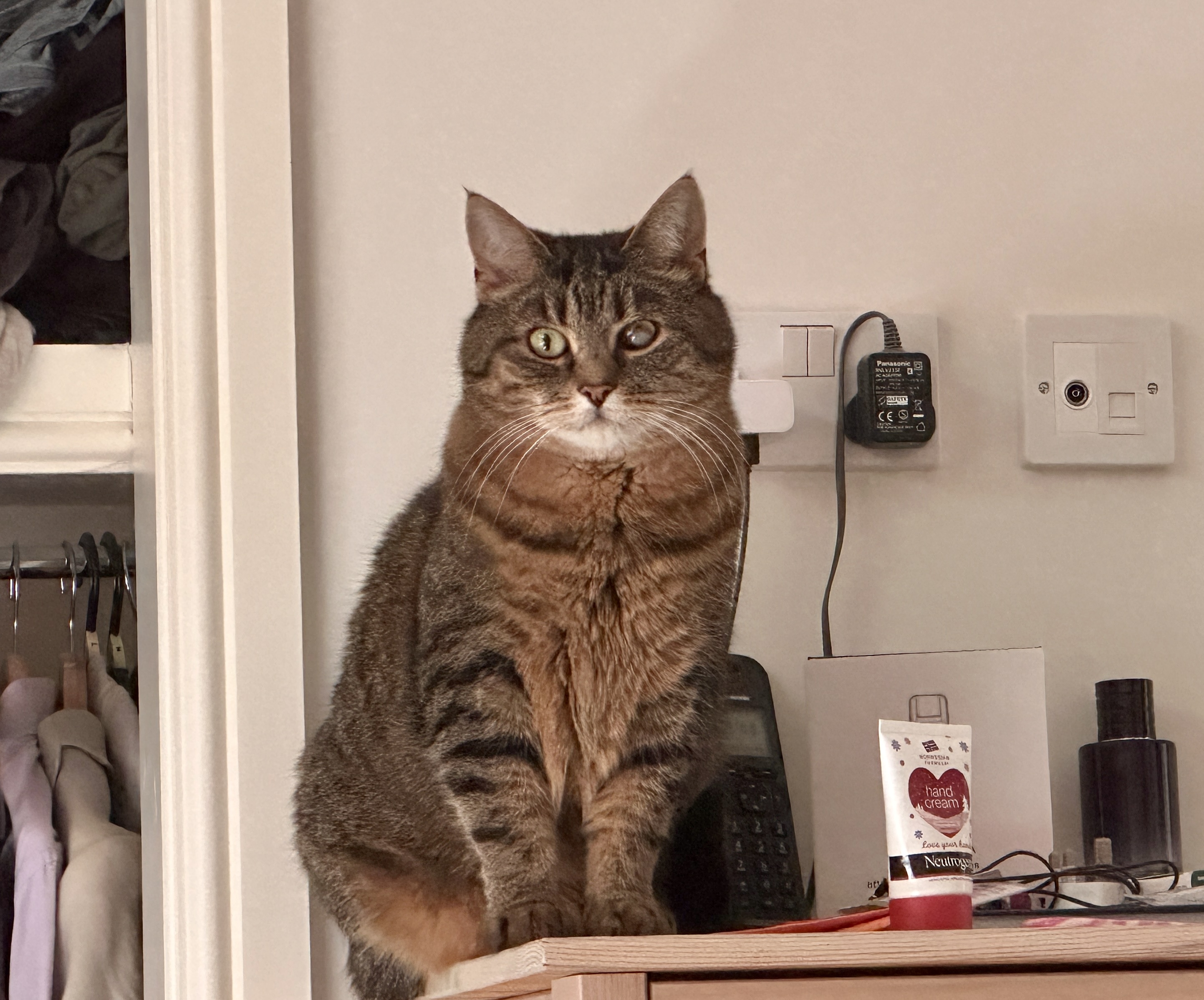
And here is a picture of my cat, being judgemental, because he wanted to be involved and frankly is better at governance than me.

UK Complicity in Potential War Crimes and Breaches of International Law

I really want to get back to writing about bicycle adventures, nature, as well as to focus more on the climate crisis. The latter seems to be taking a back seat despite record levels of CO2 in the atmosphere and global heating. However, this evening I have writtten the below to the Foreign Secretary in the hope of eliciting some response, and because every bit of pressure to stop the killing as got to help. I hope, therefore I am.

Dear Foreign Secretary,

I will try to keep this letter brief, despite the scale of what is happening, and despite the lives of many in the Middle East – including those of thousands of children – being cut brutally short.

I am writing to raise a formal complaint regarding the United Kingdom’s potential complicity in grave violations of international law linked to the actions UK Complicity in Potential War Crimes and Breaches of International Law the State of Israel and the United States in Gaza, Lebanon and Iran – a complicity enabled by this Government, and supported by politicians across parties.

By continuing to supply arms, logistics and intelligence, the UK risks aiding and abetting actions which many genocide scholars and legal experts have warned may constitute genocide. Since the horrific atrocities committed by Hamas on 7 October – atrocities which cannot and must not be excused – the response has been catastrophic in scale. Tens of thousands of children are reported to have been killed in Gaza alone.

Israel has also launched devastating attacks in Lebanon. Prior to the latest escalation, over 1.1 million people, including 400,000 children, had already been displaced, with around 1,500 killed, including at least 125 children.

In Gaza, Lebanon and beyond, civilians are not being spared. Doctors, healthcare workers, teachers and journalists are among those repeatedly killed. In the West Bank, illegal settlements continue to expand, accompanied by the destruction of homes, farms and olive groves, and violence against Palestinian families.

The International Criminal Court has issued arrest warrants for Benjamin Netanyahu and Yoav Gallant for alleged war crimes and crimes against humanity, including the use of starvation as a weapon. Allegations of unlawful attacks and targeting of civilian infrastructure extend beyond Gaza. The continued use of UK bases in support of military actions against Iran raises serious questions about the UK’s own compliance with international law.

My complaint centres on the following:

  1. Why is the UK continuing to act in ways that risk complicity in war crimes and potential genocide?
  2. Why has the UK not imposed meaningful sanctions on Israel, as it did on Russia following the illegal invasion of Ukraine?
  3. Why are peaceful protesters – ordinary people speaking out against genocide and in support of Palestinian people – being arrested and, in some cases, labelled as extremists or terrorists?
  4. What assessment has been made of the legal risk to UK ministers and officials of complicity in international crimes?

The UK should be upholding international law, not finding ways around it. Continuing on this path does not represent me, nor, I believe, the majority of people in this country.

Please cease support for actions that violate international law, and take immediate steps to ensure the UK is not complicit in further harm. At what point do we stop telling ourselves we are upholding international law – and start asking, honestly, whether we are helping to break it?

Yours sincerely,

James Harvey
Councillor, Broadland District Council

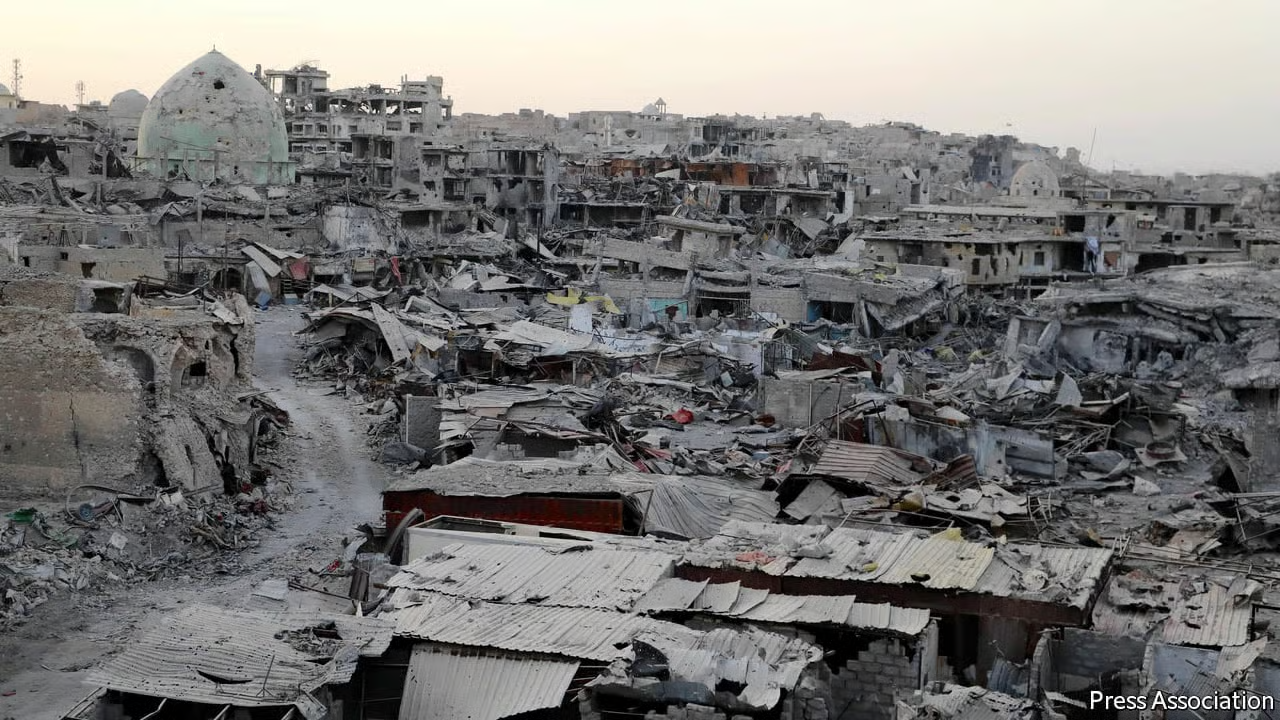
Ruins in the MIddle East

Are We the Baddies? Gaza, Power, and Complicity

Warning: this blog post contains images and descriptions some people may find upsetting – not just pensioners holding provocative cardboard signs, but also reports involving a child allegedly tortured by Israeli forces.

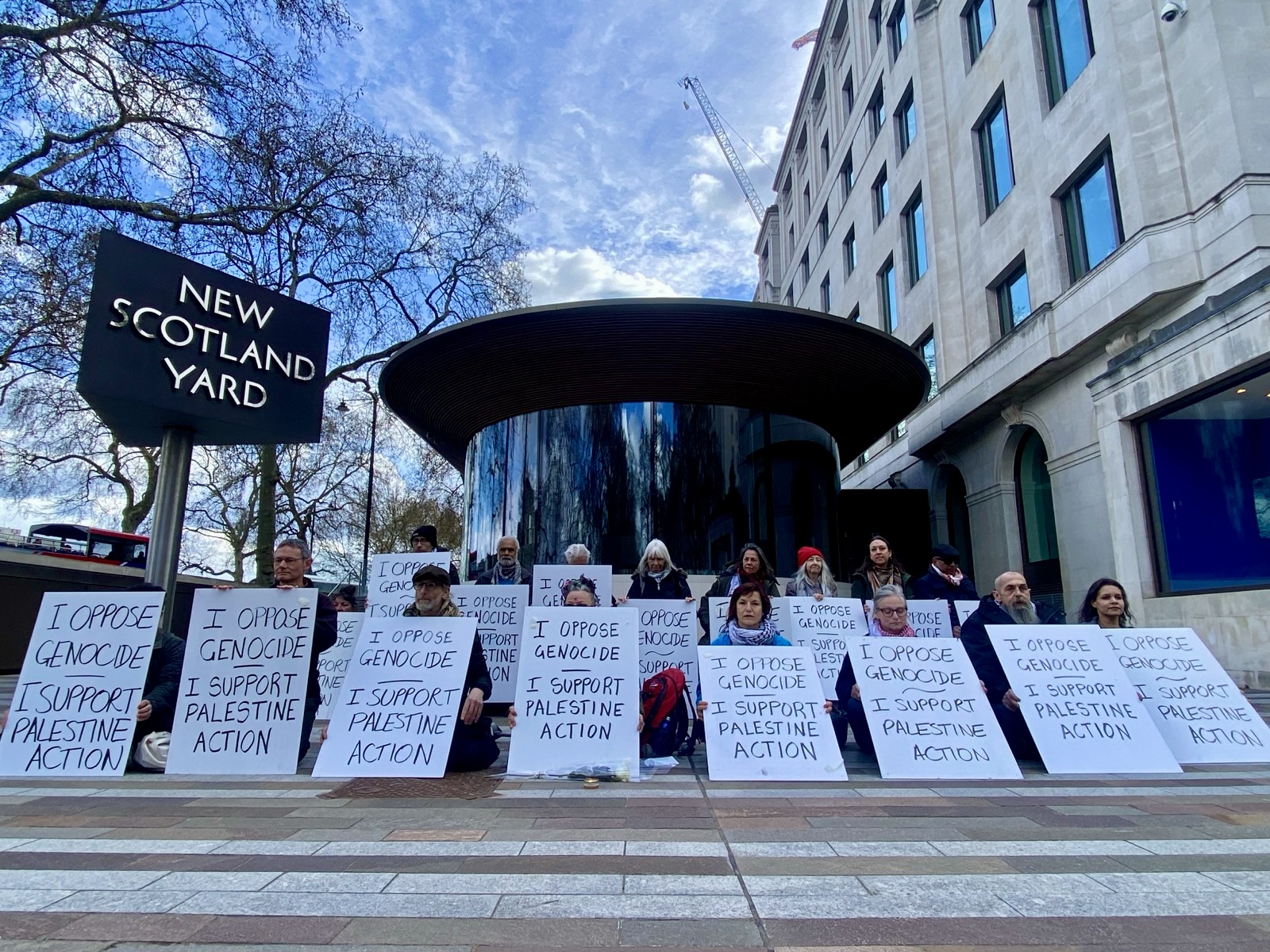
Yesterday 19 people were arrested for holding signs saying “I oppose genocide, and support Palestine Action”, outside New Scotland Yard in London. The MET police made the arrests despite the High Court ruling the proscription of Palestine Action as a terrorist organisation was unlawful, and ordering the proscription be quashed.

I oppose genocide. I support Palestine Action.
Protestors outside Scotland Yard 28 March 2026

Our Government is appealing against the High Court decision, meaning the proscription may stay in place for many more months pending a decision.

Meanwhile, the people of Gaza, Lebanon, the West Bank and many other areas of the Middle East continue to suffer and die at the hands of Israel and the United States. The Labour Government and many politicians from other parties are complicit in this, in the genocide in Gaza, in Israel’s colonialist expansionist policies, in the bombing and shooting, the starvation, rape, torture and countless human rights abuses and war crimes. The Palestinian people continue to suffer and die, whilst we continue to supply arms and intelligence to the State of Israel.

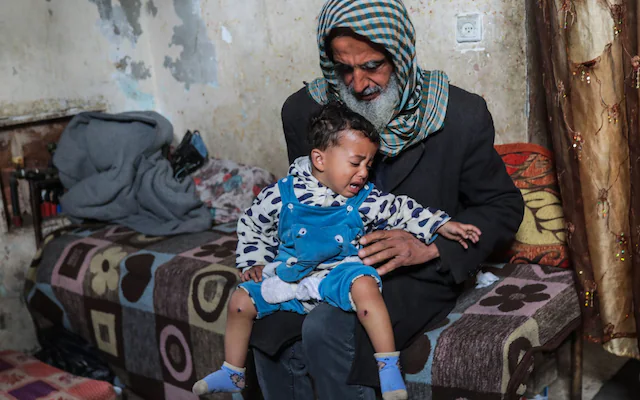
A few days ago, Jawad Abu Nassar, a 22 month old toddler, was returned to his family allegedly bearing the marks of torture – as reported by Sky News and other news outlets (https://news.sky.com/story/gaza-toddler-released-from-israeli-custody-with-suspected-torture-wounds-13525011). Israeli soldiers allegedly burnt him with cigarettes and inserted a sharp object into his leg, when they took his father into custody accusing him of being a Hamas operative. Whether the father was a Hamas operative or not, the torture of anyone, especially young children is abhorrent and a war crime.

Jawad Abu Nassar retured to his family bearing marks of torture
Jawad Abu Nassar returned to his family

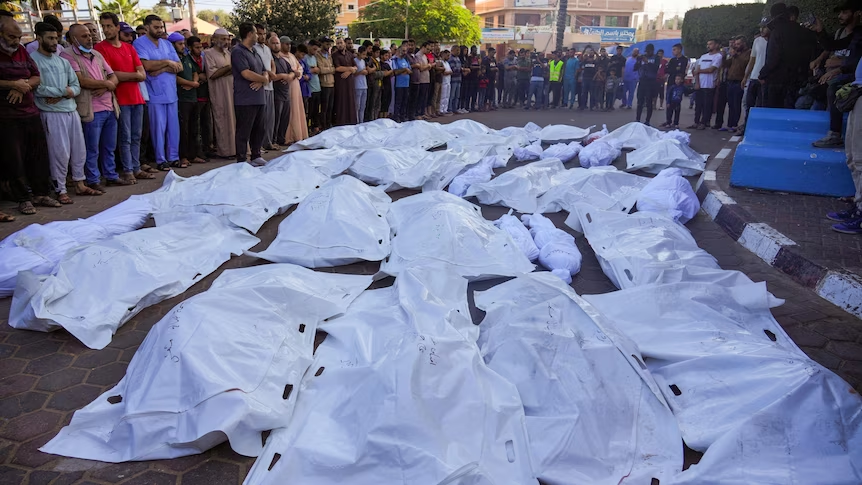
Since the horrific atrocities committed by Hamas on October 7th, which can in no way be excused, the State of Israel has murdered an estimated 20,000 children in Gaza according to various sources. Two days ago Unicef reported 121 children have been killed in Lebanon since Israel invaded, with another 370,000 children displaced. These are just the figures for children.

Bodies of murdered Palestinians, including children, in Gaza. Source: ABC News

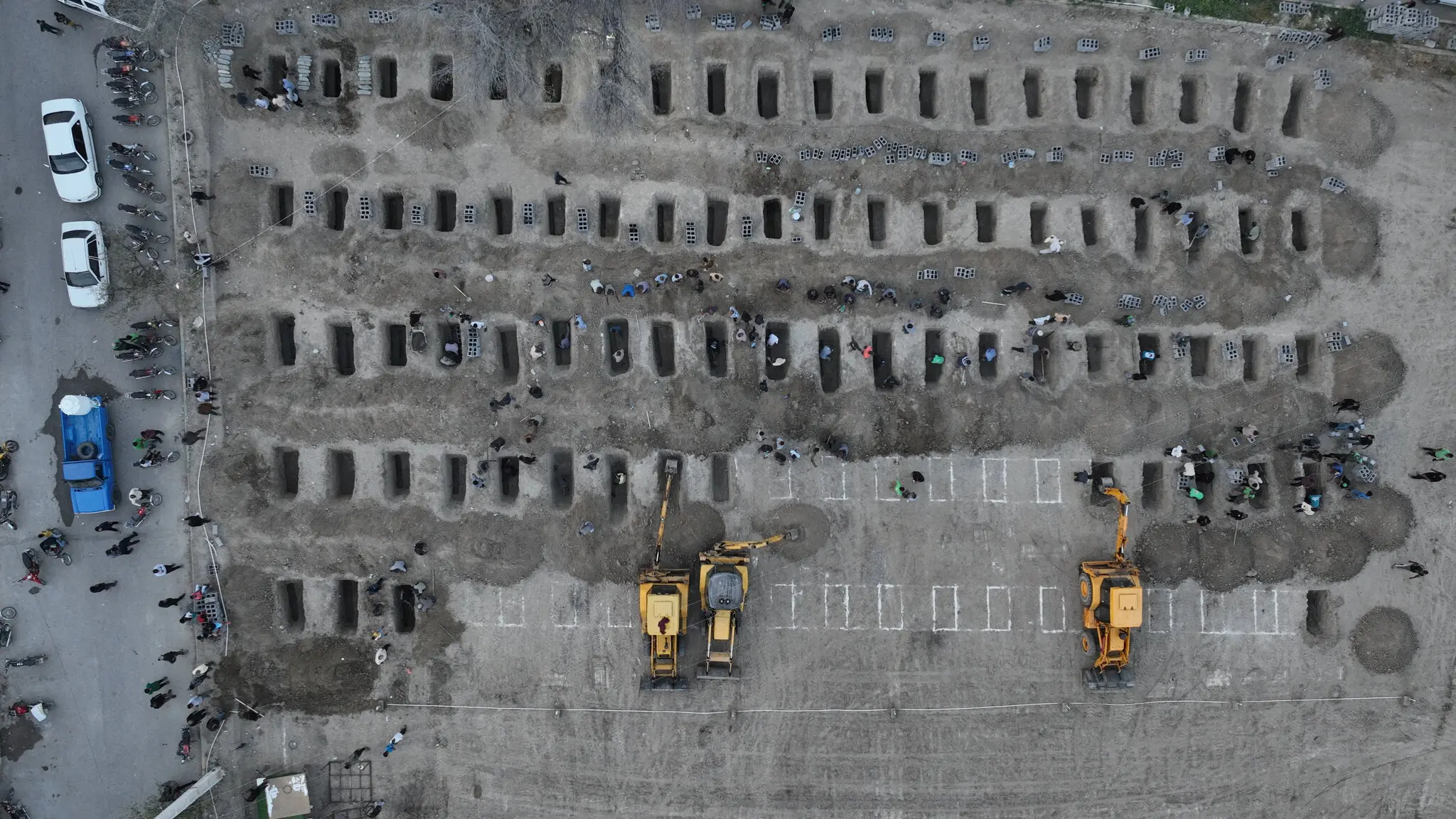
Meanwhile, in Iran, an alleged American missile hit Shajareh Tayyebeh school killing at least 168 people, including about 110 children according to Iranian officials and early reports. The girls’ school was hit by a Tomahawk missile, according to military experts. At time of writing this remains under investigation, but if the US did bomb this school, after using AI to identify targets, then it must constitute a war crime.

A handout picture released by the Iranian foreign media department of graves getting dug for the victims of a strike on an elementary school.Credit...Iranian Foreign Media Department, via Reuters
A handout picture released by the Iranian foreign media department of graves getting dug for the victims of a strike on an elementary school.Credit…Iranian Foreign Media Department, via Reuters

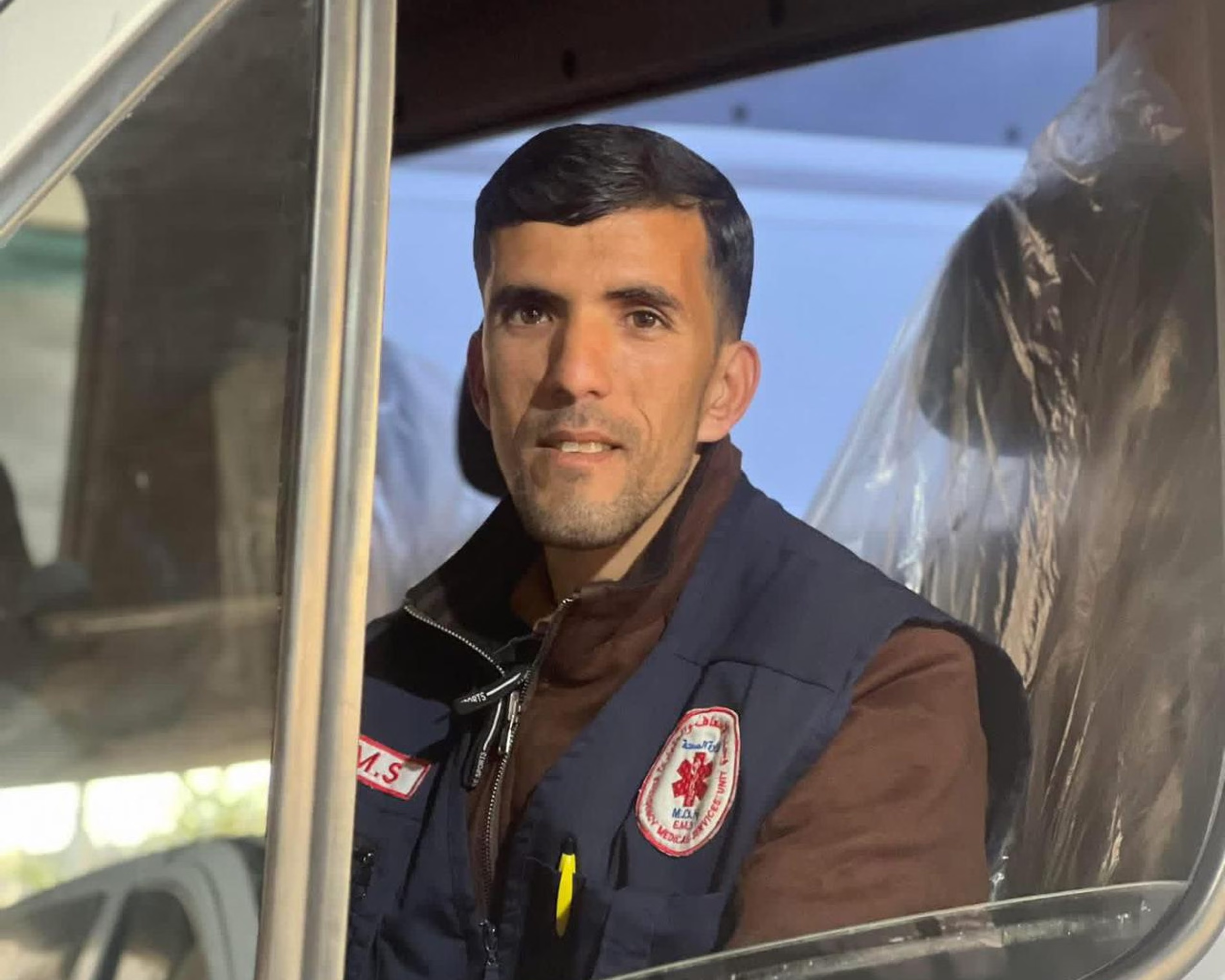
Since 07 Oct 2023 over 1500 healthcare workers, that’s doctors, nurses, paramedics and other staff, have been killed in Gaza, according to UN and humanitarian reporting. They are still being killed, detained and in some cases allegedly tortured by the IDF. On 23 March the Guardian reported the killing of a volunteer ambulance driver, Abed Elrahman Hamdouna, a father of seven. Since the alleged ceasefire in October 2025 at least 677 Palestinians have been killed by the IDF, and a further 1,800 injured, with Israeli strikes continuing to average around 10 strikes a day, and continuing to shrink the territory Palestinians are allowed in.

Abed Elrahman Hamdouna, a volunteer ambulance driver in northern Gaza, killed in a drone strike

https://www.theguardian.com/global-development/2026/mar/23/gaza-ceasefire-paramedic-father-killed-civilian-death-toll

This is not a ceasefire. This is the continuing destruction of Gaza. The systemic eradication of Palestinian lives, culture, infrastructure, history and way of life. This is what many experts, legal scholars and human rights organisations have described as genocide, and it is now the subject of international legal proceedings..

Reporters are not safe either. Israel very nearly killed a British Journalist, Steve Sweeney, and his camera man in southern Lebanon a couple of weeks ago. He was reporting on the displacement of over 1 million people due to the Israel invasion, bombing, and drone attacks. He claims the IDF are trying to silence any journalists reporting Israeli war crimes.

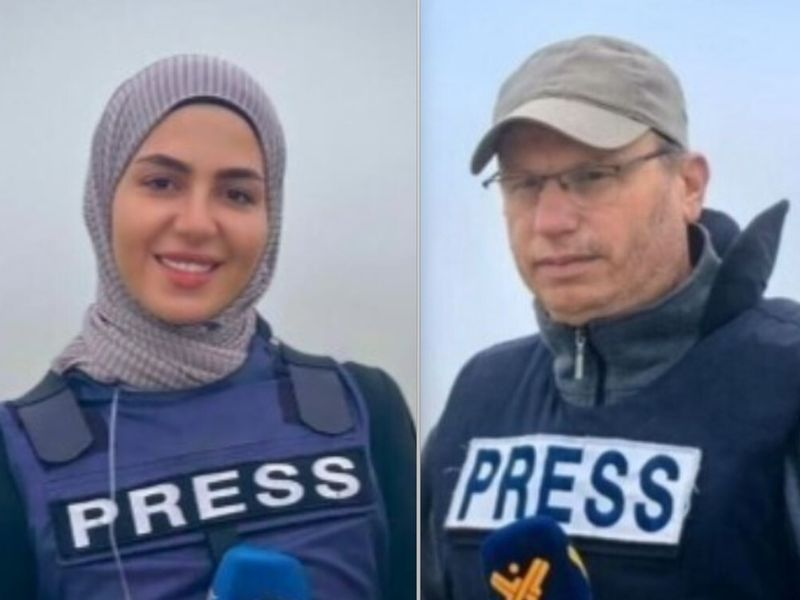
Israel was successful in killing three journalists, one of whom they state, with no evidence, was a member of Hezbollah. Ali Shoeib, a well known reporter, was killed in the town of Jezzine alongside reporter Fatima Ftouni and her brother, cameraman Mohamed Ftouni. According to the Committee to Protect Journalists 129 journalists were killed in 2025, a record high. Israel is responsible for two-thirds of these deaths.

Fatima Ftouni and her brother Mohamed Ftouni, killed in an Israeli Strike
Fatima Ftouni and her brother Mohamed Ftouni

Meanwhile, in the West Bank Israeli settlers continue to illegally take Palestinian land, burn their farms and olive groves, to intimidate and murder families. One family, travelling in their car in the town of Tammun were shot at by Israeli forces. The mother, father and two of their children were killed. Two other children survived with minor injuries and no doubt life long trauma. Palestinians report that settler violence is increasing, with more homes being burnt and people killed, whilst soldiers do nothing or actively support settlers. The BBC recently reported on the increasing violence:

https://www.bbc.co.uk/news/articles/c747x00m83vo

The stealing of land from Palestinians, the continuous harassment and murder, is illegal under international law and has been equated to ethnic cleansing. International Genocide scholars have largely agreed what is happening in Gaza equates to genocide. The International Criminal Court has issued arrest warrants for Benjamin Netanyahu, the Israeli Prime Minister, and Yoav Galllant, the Minister for Defence, for war crimes including using starvation as a weapon, and the crimes against humanity of murder and persecution.

Many Jewish people around the world are appalled at what the State of Israel is doing, and yet, calling it out, criticising the regime, gets you labelled as being anti-semitic. The conflation of anti-semitism with being against the what the State of Israel is doing to Palestinians, and now Lebanese and Iranian civilians, is a problem. One should be able to criticise a government for war crimes, for genocide, without being labelled a racist or anti-semite.

The issue appears to stem from zionism, the Oxford dictionary definition for which I’ve included below:

1) a movement for (originally) the re-establishment of a Jewish nation in Palestine and (now) the development and protection of Israel. It was established as a political organization in 1897 under Theodor Herzl, and was later led by Chaim Weizmann.

Zionism seems to have morphed from what was originally a valid objective for a Jewish State, into an ideology that now refuses to accept any criticism, and countenances the murder of innocent men, women and children and the theft of their land. From the very beginning the creation of the State of Israel in 1948 by colonial powers was fraught with peril, as it had to involve taking land from Palestinians.

Given historical events and the persecution and murder of Jewish people for centuries it is little wonder that many Israelis feel threatened, however to react with ever increasing levels of violence, and to commit genocide, cannot, in my opinion, be excused. And to criticise their actions in Gaza, Lebanon and Iran is not, in my opinion, anti-semitic. It has been argued that Israel’s actions have increased anti-semitism globally, with more Jewish people being persecuted as a result. Any true anti-semitism, as with any forms of racism, is completely unacceptable and should be called out and resisted at all times. However, are we seeing the classic case of the horrifically abused becoming the abuser, and as a result the endless cycle of violence in the Middle East will continue?

At the Green Party conference this weekend Lubna Speitan, a British-Palestinian artist and activist, raised a motion to class zionism as racism. Due to the actions of a minority taking part in the online conference the motion did not have time for discussion, despite a heart-wrenching speech from Lubna – filibustering and protocols I don’t understand meant this important issue was sidelined.

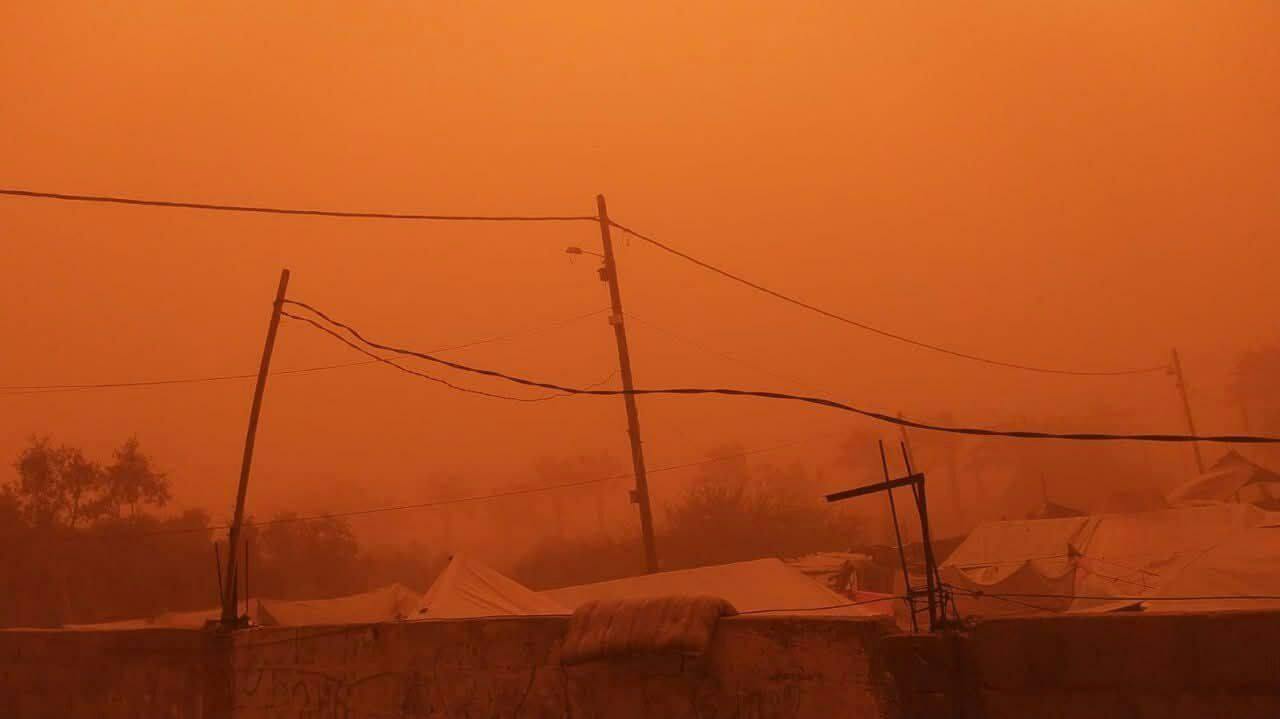
I am writing this from the comfort of my kitchen, acutely aware of my privilege as a white middle-class male in one of the richest and safest countries in the world. Yet even in the UK we are at risk of being dragged further into conflicts in the Middle East, as Starmer seeks to placate the child-like Trump and his urges. Our right to protest continues to be eroded by this Labour government, as they carry on where the Tories left off making it more and more difficult to protest against genocide without being arrested. And the Palestinians continue to suffer and die, forced into massive tent camps in Gaza which are regularly flooded or afflicted by dust storms – some children, those that have survived to date, may not remember it ever being any different.

Dust storm hits tent camp in Gaza, source Ibrahim A Qudeih

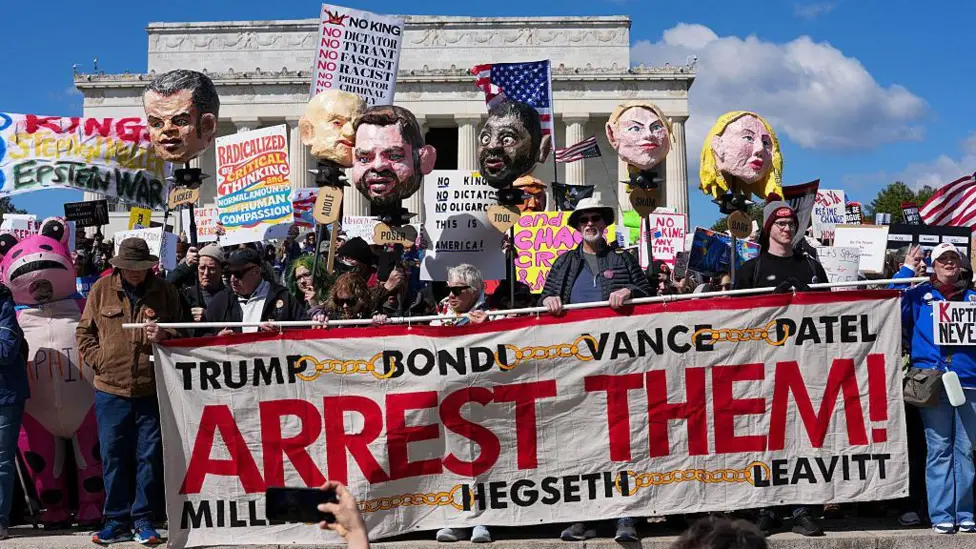
There is resistance, from ordinary people like the 19 who were arrested for holding signs opposing genocide outside New Scotland Yard, from the Green Party and other politicians with morals such as Clive Lewis. Around 500,000 people are reported to have marched in London this weekend versus the far right and supporting Palestines right to exist. People around the world, including in the US are demanding change and an end to war and the killing – No Kings rallies across the US this weekend saw around 8 million people protesting versus Trump.

“Trump wants to rule over us as a tyrant. But this is America, and power belongs to the people – not to wannabe kings or their billionaire cronies,” organisers said.

No Kings rally in US - Source: BBC
No Kings rally in US – Source: BBC

Groups like Draw a Smile are raising funds to buy food and supplies for children in the camps in Gaza, working with IIbrahim A Qudeih and his family to bring much needed relief, and a bit of hope and joy. Please consider donating to Draw A Smile via the links below, and following them on social media:

Facebook – https://www.facebook.com/profile.php?id=61569809867457
Go Fund Me – https://www.gofundme.com/f/7nryrd-draw-a-smile

As I sit here, I wonder how Starmer and his cabinet can continue to support Israel and the US in what they are doing – and have done – in Gaza. I want to know why our foreign secretary, Yvette Cooper, thinks it’s right to continue supplying arms and intelligence, and to allow the use of UK bases for actions that result in civilian deaths.

I know Labour and other political parties receive donations from individuals and groups who support Israel. But where is the line? When did they lose their sense of right and wrong? Why do they think it is acceptable to support a regime accused of killing and mistreating children?

I do not excuse the actions of Hamas, nor the Iranian regime, nor any group responsible for violence against civilians. But holding your enemies to account is easy. Holding your allies to account is what actually matters.

I thought Israel was supposed to be better than that. An ally. A “civilised” country.

But then again, perhaps that’s the point.

There’s a famous sketch where two soldiers slowly realise something is wrong. They look at their uniforms, their symbols – the skulls – and one of them finally asks:

“Are we the baddies?”

It’s funny because it’s absurd.
It’s uncomfortable because it isn’t.

Because no one ever thinks they are the villain.
Not governments. Not armies. Not the people who support them.

And yet here we are.

So maybe the question isn’t rhetorical anymore.

Are we?

If you want to join the resistance, check out these pages:

Lift the Ban – https://actionnetwork.org/forms/everyone-day-lift-the-ban-april-11th-2026/

Defend our Juries – https://defendourjuries.net/

Take Back Power: https://takebackpower.net/

Rage Is a Rational Response

It’s February, and I’m still consumed by rage – with a generous side-order of despair – at our direction of travel. Are we really this stupid? Are we genuinely going to let a tiny proportion of the world’s population completely screw the rest of us over?

Last week I wrote about the government report on the risks of ecosystem collapse to national security. The report was finally released in January, but accusations abound, including from The Times, that this is not the full version. Some of the most worrying conclusions, particularly around food supply chains and geopolitical instability, appear to have been quietly redacted. Hardly in the public interest. And, as mentioned last week, all very Don’t Look Up.

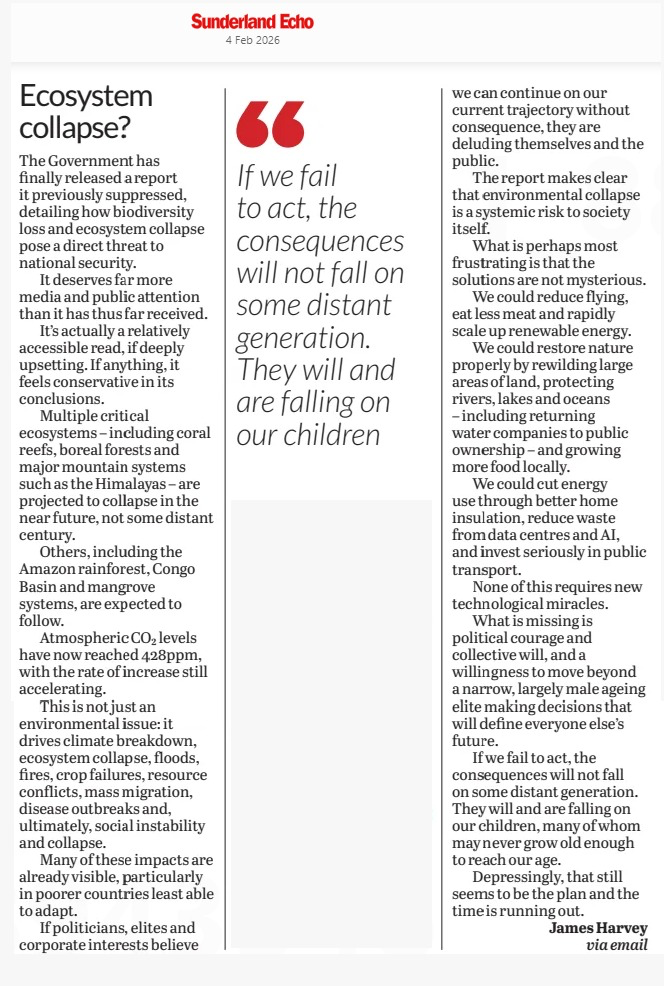
I also wrote a letter to several regional newspapers on the subject, which was published today in the heady heights of the Sunderland Echo.

It’s also appeared in the Eastern Daily Press, Derby Telegraph, Leicester Mercury, and a few others – and, unlike the government report, it hasn’t been redacted. For some reason the Daily Mail hasn’t picked it up yet, but I’m sure it’s only a matter of time.

Our excessive lifestyles are driving global heating. Greenhouse gas emissions are still rising, and the climate and nature crises are accelerating, catalysed by feedback loops that are pushing us over, towards – or dangerously close to – irreversible tipping points. When I say “our excessive lifestyles”, I mostly mean the richest 1% of the global population, who are responsible for a grotesquely disproportionate share of emissions and pollution. According to Oxfam, they emit as much as the poorest 66% — around five billion people.

And even within that 1%, things get worse. A tiny subset – the top 0.1% – is responsible for a massive share of those emissions again, thanks to private jets, yachts, multiple mansions, and lifestyles so carbon-intensive they should probably come with a health warning for the planet.

In other words, a microscopic number of people are wrecking the climate for everyone else.

GroupApprox % of Global PopulationApprox % of Global Emissions
Bottom 99%~99%~(~84% total, much of it very low per person)
Top 1%~1%~16–17% total emissions (Oxfam International)
Top 0.1% (subset of 1%)~0.1%A very large share of that 16% — maybe several % of total emissions just from this tiny slice (per high-emitting daily footprints) (Oxfam International)
Top ultra-rich / Billionaires<<0.1%Extremely high emissions share per capita (data vary) (Oxfam America)

What makes this even more obscene is that while countries like the UK are somewhat insulated from the worst impacts of climate breakdown, it’s poorer countries that are already bearing the brunt: floods, fires, crop failures, heatwaves, and displacement. I say “somewhat insulated” deliberately. We’ve already felt the impacts here over the past few years, and they’re accelerating.

If the AMOC (Atlantic Meridional Overturning Circulation) slows down and stops, as recent research warns it might, the UK will experience far colder conditions alongside extreme weather, making food production incredibly difficult. This is not something we should be sitting comfortably about. It could happen within our lifetimes.

So yes, a small percentage of the world’s elite – the super-rich who control the media, politics, economies, and militaries – are conning us. For years they tried to hide it. Corporations shifted responsibility onto individuals: BP invented the personal carbon footprint calculator; airlines peddled dubious offsetting schemes. But now many of the conmen aren’t even pretending anymore, openly lusting for more power and levels of wealth I can’t even comprehend.

Trump openly told us Venezuela is “about the oil”. An increasingly likely conflict with Iran would be too. Greenland? Rare earth minerals. Netanyahu and Trump have both fantasised about turning Gaza into the “Riviera of the Middle East” – built on the blood, bones, and bodies of Palestinians, thousands of them children. It’s immoral. It’s grotesque.

We’re in the middle of a pandemic, but not COVID, Ebola, or anything biological in the usual sense. This one often presents as a middle-aged or elderly white man with obscene wealth and a messiah complex. A tiny clique with so much money and influence they can bend even well-meaning politicians to their will through donations, threats, blackmail, litigation, and lies.

You see it constantly with oil and gas giants. Their lobbyists meet ministers hundreds of times a year – a level of access completely unavailable to ordinary people. And that access isn’t accidental: it’s transactional.

It’s not just oil and gas. It’s billionaire media barons like Murdoch, pulling the public’s strings while extracting enormous political power. No UK government in recent history has been elected without Murdoch’s blessing. It’s arms manufacturers profiting from wars they often help create through political and media influence. And behind it all sit the financiers and investment firms, funding corruption, death, division, and lies – all to keep shareholder payouts flowing and the illusion alive that they’re “on our side”.

They’re not.

Epstein is one of the most flagrant examples of how far this rot goes. How deep does the abuse run? How far does the money trail stretch? Andrew Mountbatten-Windsor has been outed. Peter Mandelson has been exposed for accepting money and handing over state secrets. Elon Musk, Bill Gates, Bill Clinton, Richard Branson, Steve Bannon, Howard Lutnick, Larry Summers, Brett Ratner, Ehud Barak — all appear in the files, with more names emerging all the time.

Epstein’s links to Putin, the Kremlin, and other authoritarian regimes are well documented. And then there’s Trump – already a convicted sex offender – whose Department of Justice has redacted anything remotely incriminating about him. Yet he’s corrupted the US political system to enrich himself while his brown shirts ICE agents round up and deport thousands, or shoot and kill innocent US citizens.

I’m not saying everyone named in the Epstein files is guilty of a crime. Some will be innocent. But there is a common thread: wealth, power, and overwhelmingly white men. And it’s telling that the only person imprisoned for what Epstein enabled is a woman – Ghislaine Maxwell – while powerful men hide behind redactions. Meanwhile, victims’ names and images are dumped online.

This isn’t justice. It’s a parody of it.

The corrupt, immoral patriarchy rules. A small cabal of the super-rich manipulates political, economic, and social systems to maintain power, controlling much of the media and warping public perception via algorithms and social platforms. The introduction of Palantir will make this worse, but that’s a topic for another day.

In the UK we now live in a surveillance state, with increasingly repressive anti-protest laws, restrictions on freedom of speech, and even the right to trial by jury – enshrined in Magna Carta – under threat. Can we really make the changes needed to safeguard liberty, wellbeing, and democracy in the face of climate breakdown, resource wars, economic collapse, and rising fascism and authoritarianism?

I see no hope in the traditional parties. Labour has reneged on promise after promise and looks set to lose badly next time around. The Conservatives have learned nothing and are racing Reform to the far right. Reform, despite its “anti-establishment” cosplay, is stuffed with millionaire MPs who broke the country, most of them ex-Tories, and now want to privatise what remains — including the NHS.

I do feel hope with the Green Party – of which I’m a member and a District Councillor. Membership is growing. Good, honest candidates are winning. Hannah Spencer stands a strong chance in the Gorton and Denton by-election. Parliamentary gains don’t feel impossible anymore. Coalition power doesn’t feel impossible. Nothing does, not with Labour and the Conservatives floundering and Reform slowly being found out.

But will it be enough?

Will it take back power from billionaires, patriarchy, and the men pulling global strings? Will it stop fascism, protect children, dismantle elite abuse networks? I don’t think it will, not on its own. The systems are too entrenched, too corrupt. Any new party entering power risks being absorbed, neutralised, or corrupted by Westminster and the global elite.

These systems aren’t reformable. They’re fundamentally broken.

Which leaves one conclusion.

We need a revolution – preferably a peaceful one, because history shows violent revolutions rarely deliver lasting justice.

Revolution is the only way to make the radical changes required for a survivable, fair, and just future: tackling the climate and nature crises, redistributing wealth, ending wars of greed, dismantling elite impunity and stopping the rise of fascism. You can already see it beginning: resistance campaigns, mutual aid, community organising, people growing food, fixing things, giving time, showing kindness under adversity.

Resistance is alive. But oppression and repression are fighting back, and the sparks of revolution must be fanned – through non-violent direct action, communication, campaigning, and community – if they are to survive and grow into a blaze that not even the billionaires can extinguish 🔥

If you want to see one example, look at https://takebackpower.net/. There are many others. And yes, consider joining the Green Party. We’ll need its people, ideas, and values for whatever comes next.

That’s all for today.

Simple, really.

We just need a revolution. ✊

For some light relief here are two pictures of Budge, the Norwich Cathedral cat who I like to visit, and one of Gideon, who runs my house. Who do you think is the most dignified?

The Trio of Tyranny

I just listened to Trump justify the US invasion of Venezuela, and the kidnapping of President Maduro and his wife, Cilia Flores. To give him credit, at least he didn’t bother hiding his intentions: stealing the largest remaining proven oil reserves in the world. He stood there, flanked by sycophants Hegseth and Rubio, and brazenly told the world how the US will run the country “until such a time as we can do a safe, proper and judicious transition.”

I don’t know how true the accusations are that Maduro is involved in drug trafficking, money laundering, embezzlement, and election fraud. It seems entirely possible there’s a case to be made. But is it really right for “Team America: World Police” to invade another sovereign nation, kidnap its elected leader and their spouse, and kill an unknown number of Venezuelan soldiers – and possibly civilians – in the process?

I wrote this in my blog the other day:

“Fight the narcissistic, misogynist, arrogant old white men who have clawed their way to the top of the fetid political pile, treating truth, human lives, welfare, and civil rights as expendable commodities — traded for votes or simply discarded as democracy and the right to protest are eroded.”

The US actions against Venezuela — the power-gaming, the enormous armada sitting off the Caribbean coast, the overwhelming military might, including supposedly unrivalled “American Warriors” from the Department of “War” — are a very clear signal of US foreign policy going forward. And Trump isn’t even pretending otherwise. He wants to boast about it, wrapping naked imperialism in hollow words like “Peace, Liberty and Justice” — three concepts I’m not convinced he understands at all.

Referring to Venezuela, Trump said::

“Run the country til such a time as we can do a safe, proper and judicious transition.”

And referring to other dictators – or, more accurately, any foreign leader he and his administration don’t like – he added:

“What happened to Maduro can happen to them”

Trump has just seized control of the world’s largest remaining proven oil reserves and openly stated he’s sending in US oil companies to manage them — securing vast new fossil fuel supplies and obscene amounts of cash for Chevron and friends. We can’t afford to burn the oil we already have; the climate crisis is spiralling out of control. But of course, Trump doesn’t believe in that. It’s all a hoax, apparently.

He also made it very clear that the US is:

“Ready to stage second and much larger attack if needed.”

So yes — the gloves are well and truly off. If they were ever on to begin with. He’s not even trying to disguise the threats of violence anymore.

Meanwhile, Netanyahu continues slaughtering Palestinians and stealing their land, despite an arrest warrant from the International Criminal Court for war crimes. Putin continues his illegal invasion of Ukraine, with a similar ICC warrant hanging over him. At what point do we stop pretending this is normal? Are we living in some dystopian fever dream? Who, exactly, are the real criminals here?

Wanted, the Trio of Tyranny - Trump, Netanyahu, Putin, for war crimes, corruption, election fraud.
Wanted – The Trio of Tyranny

I could have limited the poster to Trump alongside Hegseth and Rubio. But it feels more honest to include his international war-criminal allies: Netanyahu and Putin. What a tight little club of ageing, authoritarian strongmen. Xi Jinping could arguably be added too, but somehow his crimes feel almost restrained by comparison. The patriarchy is alive and well.

It seems Team America: World Police is here to stay – with US foreign policy openly embracing the right to take whatever it wants, from whoever it wants, whenever it wants. The question is whether Europe will finally find the backbone to stand up to Trump, or whether we’ll continue playing the role of obedient lickspittles and sycophants.

“America, fuck yeah,

Comin′ again to save the motherfuckin’ day, yeah,

America, fuck yeah,

Freedom is the only way, yeah”

And of course, none of this would be possible without the loyal supporting cast: the allies who nod gravely, issue “deeply concerned” statements, and then quietly sign the arms deals anyway. The UK and Europe will huff, puff, and clutch their pearls – right up until Washington snaps its fingers, at which point we’ll rediscover the ancient art of obedience. It’ll all be waved away as “pragmatism”, “security interests”, or the timeless classic “we had no choice”. History, however, has an annoying habit of remembering who spoke out – and who smiled politely while the bombs fell.

Happy New Year


Here’s to hoping 2026 is full of more kindness, empathy, and positive change than 2025 ever managed.

Yeah. A likely fucking story. Fuck this shit.

The Labour government in the UK has been a betrayal — yes, even accounting for media bias and the usual right-wing bullshit. With a mandate that large (even if not proportionally representative), they could have done so much better. Instead, we get this hollow, managerial nothingness. So what the hell has happened to Labour? What’s happened to democracy? To the right to protest? To freedom of speech? To simply being a decent human being?

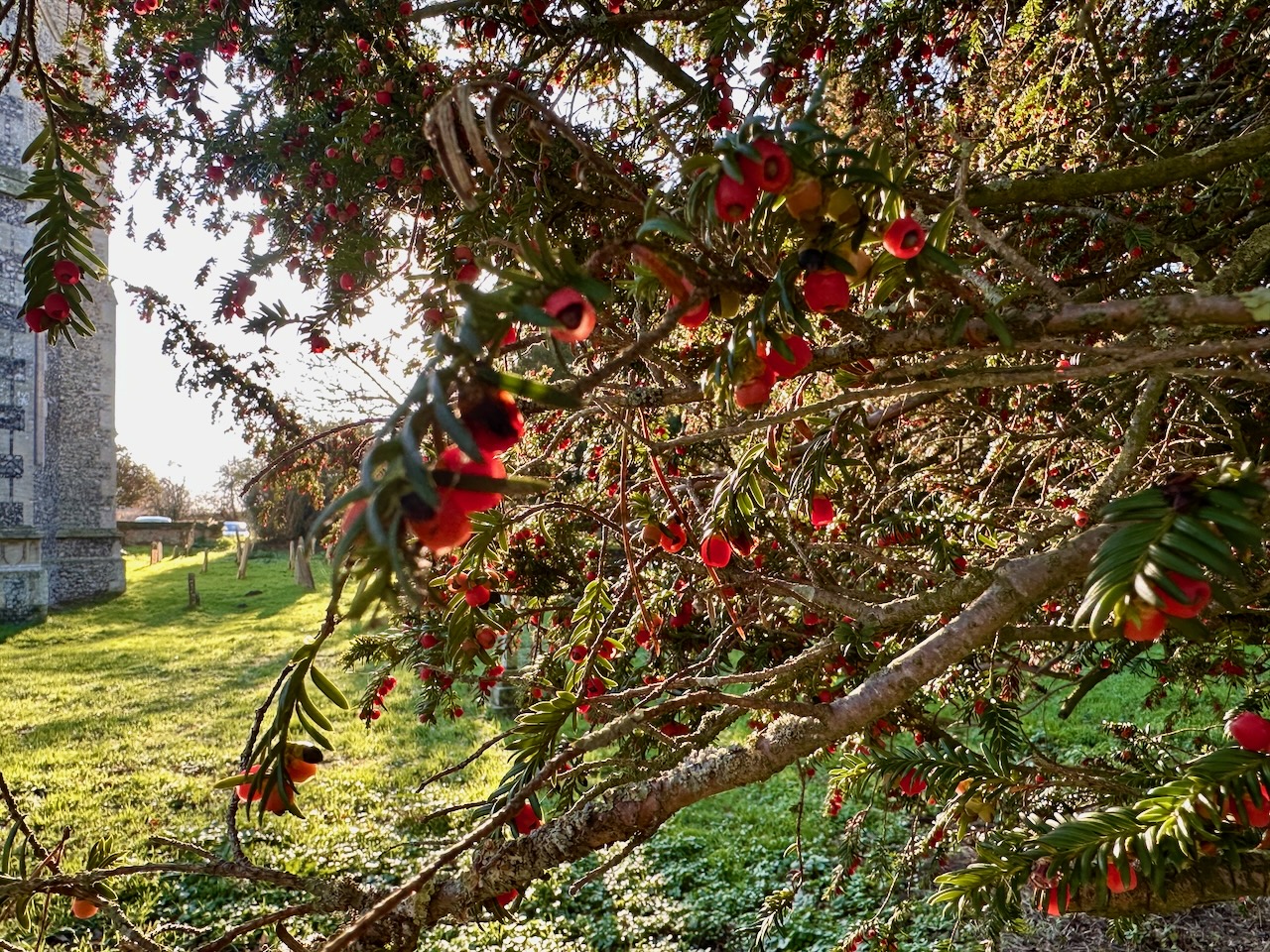
I went for a brief walk around the local church graveyard today, on my way back from the doctors — I’ve succumbed to the traditional Christmas viral cold / bronchitis combo. The gift that keeps on fucking giving.

I love Yew trees (Taxus baccata). The berries are magnificent right now — just don’t eat them. If you do, spit out the kernels very quickly, or you’ll get very sick. Possibly dead. Nature doesn’t fuck about.

There are several Yews around Salhouse Church. I often wonder whether they were there before the main church was built in the 14th century. The site certainly has older origins. Maybe it was sacred long before Christianity turned up — first to the Norse who occupied East Anglia, before them the Saxons, before them the Celts, and before that the people who left those astonishing footprints on the Norfolk coast nearly a million years ago.

Who knows what kind of religion or leadership that hominid family followed. Hopefully not the same patriarchal bullshit we’re still trapped in today.

The Yews got me thinking about rebirth as the year turns. About how they grow — sending out looping branches that strike the ground, take root, and become new trees. That process repeats over centuries, meaning that over thousands of years Yews effectively walk across the landscape, if left alone. They’re said to have walked across from America when the continents were joined. Allegedly that’s where Tolkien got the idea for Ents (thanks, Bushcraft instructor Phil – check out https://www.philbrookelongbows.co.uk/).

That ties neatly to my personal motto: Keep On Keeping On.
Be like a Yew.

We have to keep trying to make things better — not just for younger generations, who are utterly screwed as things stand, but for ourselves too. And for the climate. And for other animals, plants, birds, sea life.

What’s happening to the oceans right now is devastating: coral reefs dying, overfishing continuing, grotesque bycatch, ghost nets trapping, suffocating, killing. It’s heart-breaking.

So yes — we need to fight. Non-violently, but relentlessly. Fight for everything:

Fight the far right and hateful extremism in all its poisonous forms.

Fight the oil and gas companies making obscene profits at the expense of climate stability, nature, and human lives.

Fight corrupt governments and politicians who lie, profiteer, and mostly serve themselves. There are notable exceptions — but our own government, and much of UK politics, seems firmly lodged in the corrupt category rather than the redeemable one.

Fight media companies run by billionaire owners desperate to preserve the status quo and their hoarded wealth — whether social media giants or legacy press — pulling political strings while brainwashing us with consumerist advertising and clickbait bullshit.

Fight the narcissistic, misogynist, arrogant old white men (yes, there are women too, but far fewer) who have clawed their way to the top of the fetid political pile, treating truth, human lives, welfare, and civil rights as expendable commodities — traded for votes or simply discarded as democracy and the right to protest are eroded.

Fight banks and insurance companies that prioritise mega-corporations and polluting industries over ordinary people, worshipping shareholder profit while morality gets flushed down the toilet.

Fight the ultra-rich — the billionaires — who hold more wealth and power than any individual should, often avoiding tax while amplifying extremist views from inside their tiny, self-reinforcing echo chambers.

Fight fascism. It’s rising. The warning signs are everywhere. Thanks to my GCSE history teacher — and many books about the 1920s and 30s — for making that painfully obvious. Books are good.

Fight for those worst off: people suffering under neo-colonialism or living on the front lines of climate breakdown. They are dying because of our emissions, our lifestyles, our privilege, entitlement, arrogance, and ignorance — perpetuated by media propaganda, poor education, and comfortable denial.

Fight for Palestinians still being killed in Gaza, and in the West Bank where illegal settlements continue, aid agencies and journalists are blocked, tents sit on rubble, children starve or freeze to death.

Israel is, right now, acting as a terrorist state — and our government still supports it with arms, intelligence, and foreign policy cover. It is heartening to see so many Jewish people worldwide, including within Israel, opposing these war crimes — and to see young Israelis resisting the draft. Please support the UK hunger strikers.

Fight for the people of Sudan, where genocide continues. And for people everywhere —men, women, children — being injured, raped, displaced, and killed. Men use religion as justification, or don’t bother with excuses at all, to dominate, profit, rape, and murder as climate collapse accelerates and wars over finite resources intensify.

We do have abundant resources: sun, soil, ecosystems — if we care for them. But they don’t generate exponential profit for the already-rich, so they’re ignored. They just allow us to live.

You can’t eat money.
We could eat the super-rich, but it wouldn’t be very nutritious. Or sustainable.

Fight for refugees fleeing war, climate catastrophe, and persecution — much of which we helped create. And if you don’t like refugees coming to the UK, then fight for foreign aid instead of cutting it. Cut aid, increase refugees. It’s not fucking complicated.

Fight those putting up flags to spread hate, lies, and division — marking territory for the far right. They target migrants, refugees, LGBTQ+ people, neurodivergent people, black and brown communities — anyone they can scapegoat instead of confronting those actually responsible. They’re manipulated by toxic media and lying politicians. I do wonder how many of those politicians are sponsored by Russia, the US, or both.

Fight for women’s rights — which after decades of struggle are now sliding backwards. And honestly, given the shit job men have done for the last 2,000+ years, maybe it’s time to let women run the show properly. The Abrahamic religions certainly haven’t covered themselves in glory.

Fight for the homeless, the mentally ill, disabled people abandoned by the state while funding is slashed to build obsolete aircraft carriers and weapons of mass destruction. Fuck that shit.

Fight the cult of eternal economic growth on a finite planet. Fight airport expansion. Fight the destruction of our remaining wild spaces, waterways, and seas. Fight pesticides killing insects, herbicides and fertilisers poisoning the land. Fight unnecessary new roads — we need public transport, not more cars. Fight single-use plastic; it’s just oil-industry brainwashing again. Screw Shell, BP, Exxon, Total, and the rest of them.

There is so much to fight for. So many injustices. How the hell do people just ignore it all?

Fight “the man.”
Stand up for kindness, empathy, community, and solidarity. Grow things. Get soaked in the rain and dance anyway. Play music. Just… play.

We can resist this seemingly inevitable slide toward corporate rule, billionaire oligarchy, and societal collapse—but only if we stand up and take back power.

Resist.

People love to say they wouldn’t have stood by while books were burned, neighbours interrogated, friends dragged off to camps. Well, we’re edging frighteningly close to that shit now. Peaceful protesters in the UK are already being arrested in their homes, surveilled, raided.

Democracy, free speech, and the right to protest are being stripped away across the UK and Europe—and it’s far worse elsewhere, including the US, where armed forces are deployed against citizens by a deranged, orange, wannabe strongman and his boot-licking entourage.

So what am I trying to say?

I dunno. Be like a Yew.

Keep on keeping on.
Relentless.
Sheltering.
Regenerative.
Toxic to immoral, illegitimate power.

Work with your neighbours. Trees always do.

So yeah. Happy New Year. Roll on 2026.

And for fuck’s sake—resist before it’s too late.

Or just have a snooze as it all collpases, like Gideon.

Let’s Make Hope Normal Again

I find it increasingly strange, and frankly disturbing, how we’re being conned by politicians, much of the media, and mega-corporations. From birth, we’re bombarded by advertising designed to shape our thinking; by MPs who chase votes with half-truths, misdirection, or outright lies; and now by social media echo chambers that trap us in a cycle of misinformation.

As a Green Party member, I find it refreshing to have leadership that isn’t afraid to tell the truth. As a district councillor, I can vote in the best interests of my constituents – and with my conscience – rather than following the orders of a party whip. Zack Polanski’s election as Green Party leader, by a huge majority, has brought articulate and intelligent debate to the forefront again – on immigration, the climate crisis, renewable energy, and human rights. His policies on taxing the super-rich (the top 1%), reforming the private rental sector, renationalising water companies, and providing universal free childcare are resonating deeply with people across the country.

Green Party membership is now over 140,000, making us the UK’s third-largest political party. Polls put us around 15% of the vote, level with the Lib Dems and closing in on Labour and the Conservatives. Reform UK may be polling slightly higher, but perhaps that’s unsurprising when they’re not bound by things like telling the truth, or avoiding donations from dubious sources. People are joining the Greens in their thousands because we’re the only party that speaks plainly, answers questions directly, and puts people before profit.

Why don’t other political parties do the same? Surely an MP’s job is to represent their constituents – and by acting in their best interests, you’d think re-election would follow naturally. But that’s not how it works. Other parties are deeply influenced by corporate lobbying. Labour, for instance, met oil and gas company representatives over 500 times in their first year of power – that’s an average of two meetings every working day between ministers and fossil fuel lobbyists. Meanwhile, the Conservatives, Labour, and Reform continue to accept large donations from oil and gas interests, climate denial think tanks, and polluting industries. Is it any wonder, then, that their policies serve those industries – while the public is distracted with talk of immigration and welfare spending?

There’s a growing frustration with politicians who dodge questions or distort the truth. Brexit was, in part, a reaction to this. Westminster has become synonymous with elitism, corruption, and detachment from reality. It’s not even a criminal offence to lie in the House of Commons. Again and again, politicians mislead the public with impunity, aided by a media that too often fails to hold them accountable—especially those on the right.

Why isn’t Nigel Farage grilled about the £350 million-a-week NHS pledge that vanished after Brexit? Or challenged on the fact that immigration is essential to sustain our NHS, care sector, farms, and schools, as well as to support an ageing population and pensions system? Why aren’t we hearing that renewable energy is cheaper, faster to build, and infinitely safer than oil and gas?

In 2008, I was fortunate enough to visit the Great Barrier Reef on my honeymoon and swam among the coral and turtles – a breathtaking experience. Last week, I read that we’ve passed the planet’s first major climate tipping point: warm-water coral reefs are dying and will soon disappear. Hundreds of millions of people depend on them for food and livelihoods. Other tipping points – Amazon rainforest dieback, ocean current collapse, permafrost melt, and ice sheet loss – are not far behind. Each accelerates the next, creating feedback loops that speed up climate breakdown.

Then, this morning, I received an email from the Government responding to a petition to halt airport expansion. Part of it read:

“The Government therefore supports airport expansion where proposals contribute to economic growth, can be delivered in line with the UK’s legally binding climate change commitments, and meet strict environmental requirements on air quality and noise pollution.”

The list of planned expansions – Gatwick, Luton, Stansted, and beyond – was all about “economic growth” and maintaining the status quo. But if we don’t act decisively to cut emissions, climate breakdown will destroy any chance of growth – and in some regions, any chance of survival.

Carbon dioxide levels are still rising. Meanwhile, the fossil fuel industry funds anti–net zero campaigns and uses politicians as mouthpieces to protect their profits. Green energy offers a massive opportunity: it can create jobs, cut bills, and reduce emissions. We could lower bills immediately by cutting the link between electricity and gas prices, but that would hurt oil and gas profits, so it doesn’t happen. These same companies continue to receive huge public subsidies that dwarf support for renewables.

Airport expansion is simply incompatible with our climate goals. No amount of greenwashing through “sustainable aviation fuel” or dodgy carbon offsetting schemes will change that.

If we’re serious about telling the truth, we need to be honest about green energy too: why we need to decarbonise, why solar panels (covering just 0.7% of UK land – less than golf courses) can help power our future, and why upgrading the grid and installing battery storage is essential – even if that sometimes means projects are built near where we live. Time and money are tight, and we don’t have time to always wait for the perfect solution.

The clock is ticking. Hundreds of millions in the Global South are already dying from floods, fires, famine, and disease linked to climate breakdown. We’re not immune here either: UK farmers face failing harvests, rising food prices, and more frequent flooding. Some truths will be uncomfortable and require lifestyle changes – but that’s a small price to pay compared with a world of famine, fire, and forced migration.

Scientists and even insurance companies are warning us. The Institute and Faculty of Actuaries (IFoA) recently projected global GDP losses of up to 50% between 2070 and 2090 and warned that a +3°C world – possible as soon as 2050 – could cause over four billion deaths, social collapse, and mass extinction events. GDP loss seems almost trivial in comparison.

The Green Party tells it like it is – guided by science, compassion, and a commitment to act in the best interests of the majority, not a privileged few. Our membership continues to grow rapidly. We’re out on the streets, talking to people, telling the truth, and offering real solutions not tainted by corruption or corporate influence.

The good news? If we act now, we can still build a fairer, healthier, and more hopeful future – for ourselves, our children, and the countless other species we share this planet with.

Come join us – and let’s make hope normal again.

Promoted by James Harvey on behalf of Broadland Green Party, a constituent party of the Green Party of England & Wales PO Box 78066, London, SE16 9GQ

Green Party