Andy Burnham’s speech. I listened to it. I thought it was probably one of the best oratorical performances from a Prime Minister I’ve heard in the last 20 years. He actually made it seem like he cares, I think he probably does. He actually showed empathy which the right keep telling us is weak and should be discarded. He actually came out with some decent ideas although the devil will be in the detail.
Electoral reform; will that mean proportional representation? Looks like it. Marvellous.
Delinking electricity prices from wholesale gas prices; great that should genuinely reduce electricity bills by benefiting from cheaper renewable energy.
A National Care System; brilliant, we have an ageing population and don’t seem to want to welcome migrant workers to help with that or many other workforce challenges.
Rejoining the EU; or some positive moves in that direction, maybe a referendum, super, about time, Brexit has and will continue to be a disaster.
Reform the State Pension; probably needed at this stage, but going to be a hot potato.
Housing reform; brill, let’s tackle greedy developers and get more affordable and social housing.
Take water companies into public ownership and create a publicly owned Great British Grid to challenge the private network operators; can we do this very quickly please, especially with the water companies. Privatisation, Thatcher’s legacy, has been another disaster.
A more rapid transition to renewable energy; great, get on with it, and whilst you’re at it stop subsidising oil and gas companies and make them pay for a just transition in terms of energy generation and jobs, and make them pay compensation for the damage they’ve done, deaths caused, and clean up operations.
But…
What about taxing the super rich, a wealth tax, nothing on that meanwhile the poverty divide is growing, we’re getting more multimillionaires and billionaires, and society is sick because of them.
What about the climate and nature crises and the threats these present to our national security, food supplies, flood resilience and wellbeing. And you’re allowing homes to be built on floodplains, madness. We’re facing growing risks to food supplies and prices from El Niño, extreme heat, drought, floods and harvest failures. What are you going to do about that? If people don’t have food to feed themselves and their families then law and order quickly breaks down.
What about oceans accumulating extraordinary amounts of heat, with vast areas experiencing marine heatwaves and some regions releasing stored heat back into the atmosphere? Oceans are acidifying, rivers are polluted, fish stocks are declining, and sea levels rising.
Meanwhile, on land wildfires are raging, the Amazon rainforest is at a tipping point and at risk of turning into savannah then potentially desert, along with the world’s other major rainforests such as the Congo. The Boreal forests that stretch across land masses in the Northern hemisphere aren’t faring much better. We’re in an insect apocalypse – there go our pollinators. And if we’re talking about the UK we’re one of the most nature-depleted countries in the world.
What about the war crimes Israel are perpetrating in Gaza and the West Bank? Trivial sanctions on goods from the West Bank aren’t going to do much. Many genocide scholars, including several from Israel, and Amnesty are calling it genocide. Israel’s actions meet the criteria for genocide. Here’s a reminder from the UN website:
Convention on the Prevention and Punishment of the Crime of Genocide
Article II
In the present Convention, genocide means any of the following acts committed with intent to destroy, in whole or in part, a national, ethnical, racial or religious group, as such:
Killing members of the group;
Causing serious bodily or mental harm to members of the group;
Deliberately inflicting on the group conditions of life calculated to bring about its physical destruction in whole or in part;
Imposing measures intended to prevent births within the group;
Forcibly transferring children of the group to another group.
Several of those acts have been extensively documented. The crucial legal question is whether they are being committed with the required intent to destroy Palestinians in Gaza, in whole or in part. In my view, the evidence of that intent is overwhelming.
We just need the International Court of Justice to catch up and the International Criminal Court to arrest the perpetrators. There is no doubt in my mind that history, if there is anyone alive to read it, will show a genocide is taking place. The first live-streamed genocide in human history.
And the UK government is, in my view and the view of many others, complicit because we are selling them arms, giving them intelligence, and haven’t imposed proper sanctions on Israel. Andy Burnham won’t even accuse them of war crimes, no doubt because then legally he would have to do something about it. Meanwhile, over 75k dead, including over 20k children.
We have lost our humanity to the greed and whims of billionaires and their lackeys – on war, climate, nature, energy, the media, even the judiciary. Burnham’s government is still arresting hundreds of people for holding up cardboard signs opposing genocide. The average age and gender of a ‘terrorist’ in the UK must be female, early 60s. Brilliant. Something to be very proud of Labour and Tory MPs.
What about banning politicians from lying in Parliament? What about holding the media to account and demanding they tell the truth? What about getting the BBC to actually do its job and be journalists, not commentators failing to challenge politicians and business leaders on their falsehoods? What about standing up to the far right and fascism in the 21st century?
What about being honest with the public about the challenges we’re facing, why things are going to have to change – for everyone – and bringing us on that journey. If you explain why there are certain things we can’t do or have anymore, because to do so increases the risk of your children dying, people will probably get it.
Was Andy Burnham’s speech good? Sure, it sounded cool. Was it radical, ending neoliberalism and forming a National Care Service? Nah, I don’t think so. Maybe 30 years ago. But now the things he’s proposing should have already been done, or are just what we should be doing as business as usual, not radical.
As it is we are facing multiple concurrent risks and issues that could lead, are already leading in some instances, or will lead to:
Food and water insecurity
Health impacts and increased mass mortality events
Homes and infrastructure damage and destruction
Supply chain disruption
Insurance and property risk
Price and livelihood shocks
Inequality and vulnerability
Displacement and increased migration across borders
Economic and financial stress
These lead to systemic risks, and potentially societal collapse.
I’d say the latter is looking more and more likely. Yesterday, Burnham should have declared a state of emergency to tackle these issues, and encouraged other world leaders to do the same.
Who knows, trying to stop societal collapse and provide a future for children might be something everyone, aside from perhaps sociopathic billionaires, can get behind.
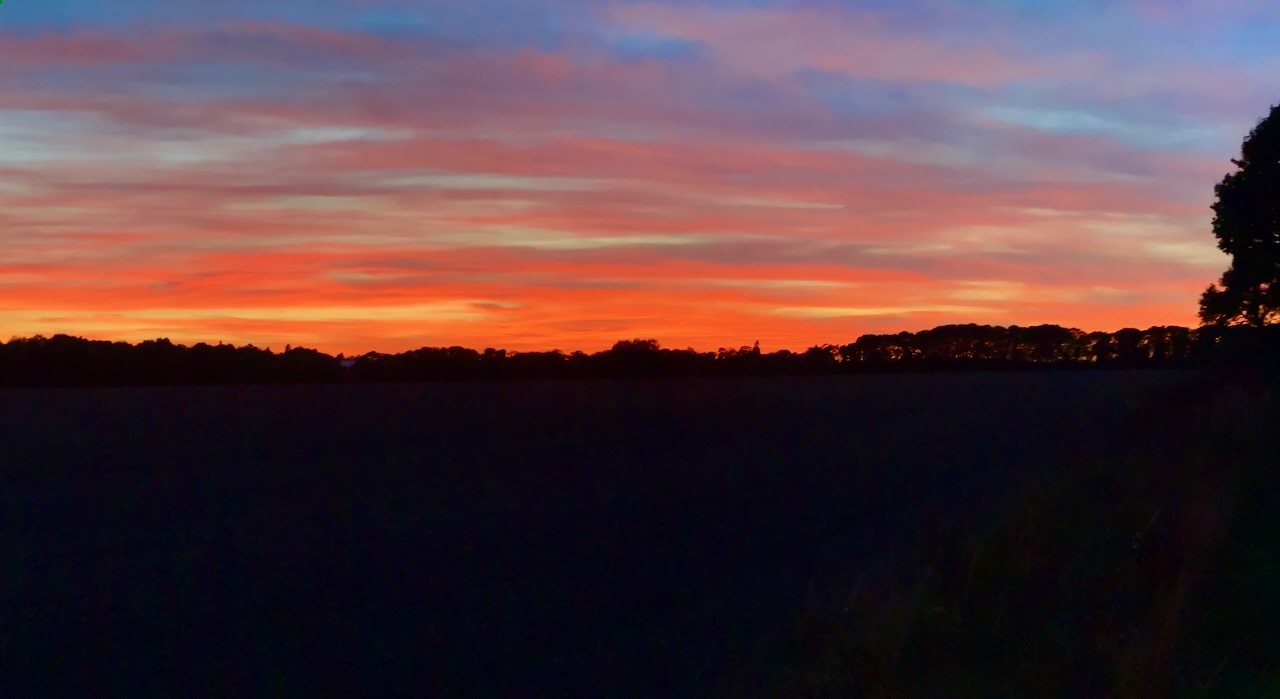
Here’s a picture of a recent Norfolk sunset, because red sky at night, shepherd’s delight.
All around me are familiar faces Worn-out places, worn-out faces Bright and early for their daily races Going nowhere, going nowhere
Their tears are fillin’ up their glasses No expression, no expression Hide my head, I wanna drown my sorrow No tomorrow, no tomorrow
….the Gary Jules version
Over the last couple of weeks I’ve been thinking a lot about risks. Actually, that’s a lie, I’ve been thinking about these sorts of risks for years. It’s quite tiring. Regard that last sentence as British reservedness.
As a project manager, I’m trained to identify what could go wrong, how likely it is, how serious the consequences would be, how risks interact, and what you can do to mitigate, resolve, or in some cases review if we should accept them.
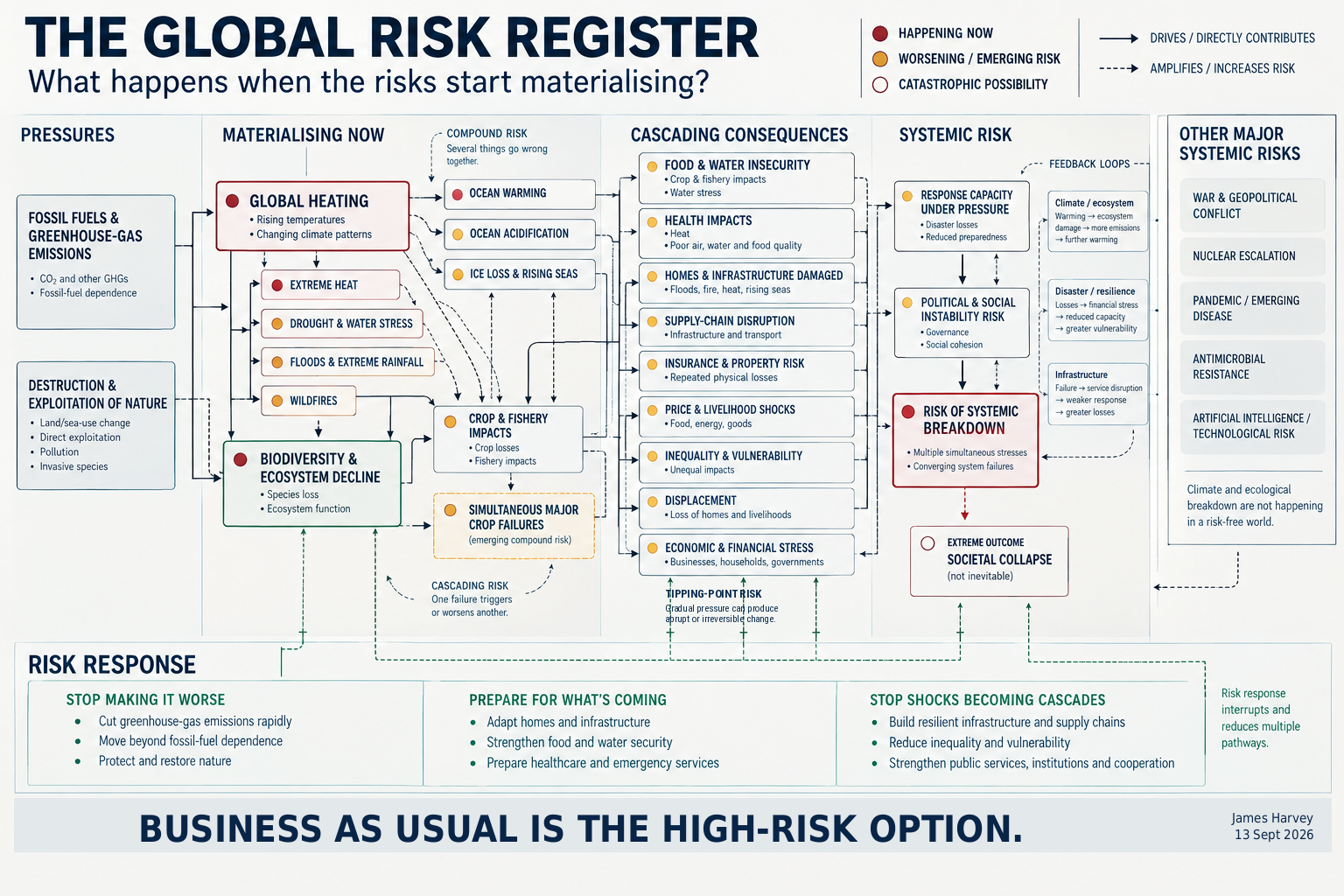
I’ve been wondering what a global risk register would look like, and what the consequences are when you pull them all together.
I’ve stared at this a lot since finishing it. Wondering if I missed anything, or if I’ve exaggerated any of the risks or consequences. If anything it’s probably conservative, as I’ve tried to stick to peer-reviewed science and analysis. One could argue that matters are, in fact, a lot worse. Talk to climate scientists away from the careful language of papers and reports and, in my experience at least, some will tell you just how frightened they really are.
I’ve not put a particular timeline against this, other than some of the boxes are already happening. Personally, I find it increasingly difficult to see how we avoid the systemic breakdown box on our current trajectory. I don’t know when, and I still think we have options. Options are important.
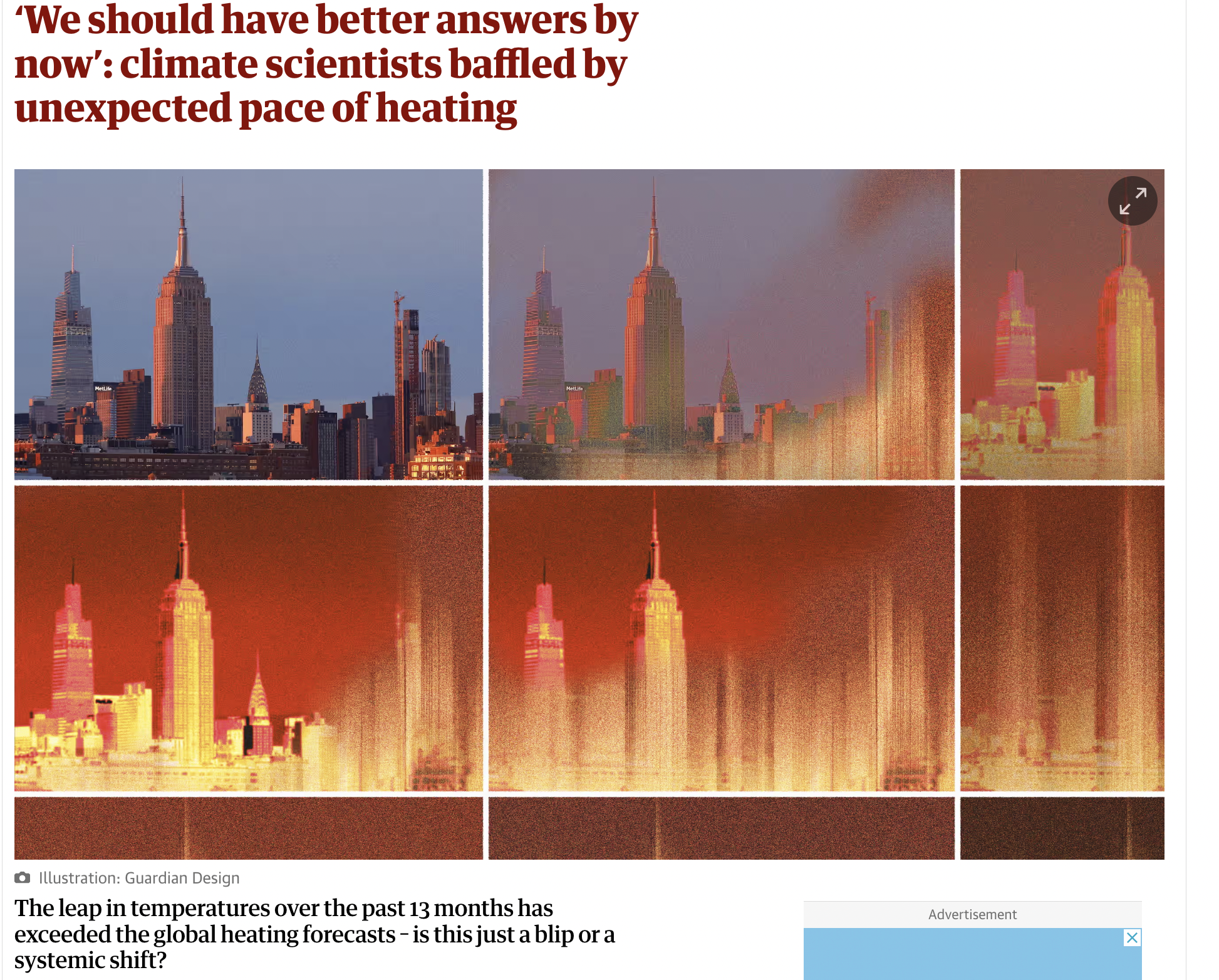
It’s not a very pleasant diagram. Not because every risk shown here will materialise at its worst. They won’t, probably. But some already have. Others are becoming more likely or more severe. And, crucially, they are not independent. Heat affects food. Floods affect infrastructure. Infrastructure affects supply chains. Disasters affect insurance and public finances. Food and housing costs affect poverty and inequality. Those stresses affect societies’ ability to cope with the next crisis.
I added a box on the right hand side too. Other major systemic risks. Because we are facing a multitude of potential catastrophes – I am sure I’ve missed some, feel free to add to the list – we also face war, nuclear escalation, pandemics, antimicrobial resistance and rapidly developing artificial intelligence. I felt like I should add patriarchy, but that’s more a cause than a symptom.
This is the worst risk register I’ve ever looked at. I don’t know how we can start to manage it. If this were any other project, would we really look at it and conclude that business as usual was the safe option? But that’s often the funny thing about risk registers, project managers wave them in front of their sponsors, and they often don’t really look at them, don’t really register or feel what they could mean in terms of successful outcomes. Then, unsurprisingly, projects are often delayed, collapse, or change far beyond their initial remit – I am sure many project managers can empathise.
I should add – I’ve seen many excellently run and delivered projects, at least a couple of them by my good self. They work really well when stakeholders and the project team are engaged and understand what is happening, what the risks and issues are, and what they need to do to help ensure delivery is a success. I maintain that project management, really, is about making lists, effective communication, and nagging.
Back to the diagram. I can create a risk register. Put it in colourful boxes. Draw arrows between the boxes. Find sources for every claim. Make sure every arrow can be defended.
But I can’t put on the diagram what knowing all this makes me feel.
That is, perhaps, the most important bit. People can be good at reading stuff, analysis, reaching conclusions, and they can also be rubbish at it. They can also forget facts and stuff they’ve read quite quickly. I do it all the time as a project manager – I move from one delivery to another, and once one is done I file it in my mind, find myself remembering the high level bits, but the detail is gone after around 3 months because I’ve had to move on something else.
Facts are capricious. Easily forgotten or laid aside in favour of something more current. Like Harry and Meghan. Or Farage. Or Eastenders. We are a wonderfully distractable species and our media and politicians know it.
What aren’t so forgettable, or deletable, are feelings, emotions. A diagram doesn’t necessarily invoke feelings, although this one did for me. A song, a smell, a picture, can all invoke powerful memories that are retained for a lifetime. A diagram doesn’t do that. Strong emotions, felt at a particular event, tied to sensory inputs, have, I think, a far greater chance of being retained.
I think people need to feel these risks. Sadly, many already have as they materialise into regional issues – smoke from fires, hunger in the belly, a parched throat, being engulfed by flood waters, mud, or rockslides, grief at a lake or river dying, a forest or a glacier disappearing, or another animal going extinct.
Feeling is so important. I think only when we really feel what is happening are we motivated to change course. I am talking about when things really matter – health, survival, future generations, survival – food, shelter, warmth.
It makes me frightened. It makes me angry. Often it makes me despair. Because we know what is happening. We know what we need to do. And still we carry on. We let our elected leaders, corporation bosses, billionaires, carry on. ‘Keep calm and carry on’ …screw that.
Can you feel the rage, the grief? Born out of love, but also just, fucking, rage, that we are and have been led to this place. A place where nature is dying – I saw thousands of dead fish floating in the Wensum the other day but it’s alright as Anglian Water shareholders are doing okay – people are dying, especially in the Global South – see Nepal, India, Pakistan, Bangladesh, Tanzania, Zambia, Libya, Zimbabwe, even the USA, although it is better endowed to cope with such events. Is this alright? I guess it is if you just see it on TV or in a newspaper, but what if you actually feel it, and what it could mean for you and people you care about?
I feel it. Every single day. My activist friends – and I hate calling them activist friends, they’re people that just deeply care and can’t stand by – they feel it. Every. Single. Day.
Actually, a lot of religious leaders feel it and have called out that we need to do something, urgently, including the Pope I think. I am sure a lot of charities feel it, as demands on their dwindling resources grow. And some political leaders do, including António Guterres, and a few others. Not many, sadly.
One can present a table of risks, or consequences. One can publish such a thing in countless scientific journals, newspapers, books. But unless people emotionally connect with what is happening, and aren’t anaesthetised by the drugs of social media and TV, we aren’t going to have the revolution – preferably non-violent and accountable – that is needed.
I take action because action gives me hope. XR and Just Stop Oil gave me hope. Defend Our Juries gives me hope. Seeing people sitting in a road with other ordinary people and refusing to cooperate with something profoundly wrong gives me hope. But increasingly I find myself asking whether actions involving tens, hundreds, even thousands of us can possibly force change on the scale now required.
Perhaps we need millions. Not just in the UK. Globally.
It is, after all, a minority of the super rich and powerful, and the vested interests they benefit from and protect, that are disproportionately driving so much of this – climate breakdown, biodiversity collapse, grotesque inequality, hunger, thirst, the sixth mass extinction…I could go on.
Perhaps we need to stop.
Actually stop.
Not a march on a Saturday afternoon. Not another pointless petition. Not another consultation. Not another promise that if we vote differently in four years’ time things might get better.
Workers stop working. Offices empty. Trains stop. Deliveries stop. Shops close. Production stops. The machinery of business as usual stops. Just Stop.
Hospitals keep caring for people. Carers keep caring. Firefighters respond to fires. Essential services necessary to protect life continue.
But everything else?
A general strike, on a scale that cannot be ignored.
Because political and economic power ultimately depends upon millions of ordinary people continuing to cooperate with it. We work. We produce. We buy. We move things. We keep institutions functioning. We make other people rich.
What happens if, together, we withdraw that cooperation? Perhaps it could start in the UK. Perhaps elsewhere. Perhaps everywhere. Because ordinary people across the world mostly want the same basic things: safety, food, shelter, family, friendship, love, a future.
And yes, this will likely mean lifestyle changes. It will mean accepting that we can’t have all the things we wanted, and that our futures are going to be quite different from what we anticipated. But at least we’ll be alive, and our children will have a chance of a future.
We could even be happier and healthier, with better communities and greater connection.
Surely survival is the priority? Not war. Not greed. Not GDP. Not AI. Not the space race.
What happens if we say: not again until you deal with this?
No more HARM.
Options are important. We still have them. We can stop making things worse. We can prepare for what is already coming. We can protect each other. Restore nature. Build stronger communities. Stop cooperating with systems that are causing so much harm.
None of that guarantees everything will be okay. It won’t be. That’s not how risk works.
But business as usual is an option too.
It’s the high-risk option.
Just. Fucking. Stop.
And sorry, project manager mode, here’s the table I pulled together to inform the risk diagram that people will forget, but hopefully they’ll remember the rage, grief, and love.
Risk / issue
Status
Direction
Potential severity
What it can lead to / amplify
Evidence and current assessment
Greenhouse-gas emissions / fossil-fuel dependence
HAPPENING NOW
↑
Very high
Further heating; ocean warming; sea-level rise; extremes; tipping risks
UNEP’s 2025 assessment puts current-policy warming at about 2.8°C this century, with full implementation of current Nationally Determined Contributions at about 2.3–2.5°C. (UNEP – UN Environment Programme)
Global heating
HAPPENING NOW
↑
Very high
Heat; drought; heavy rainfall; fire; ecosystem damage; food/water stress
WMO reports 2015–2025 were the hottest 11 years observed and 2025 was about 1.43°C above 1850–1900. (World Meteorological Organization)
Extreme heat
HAPPENING NOW
↑
Very high
Mortality; illness; labour losses; crop stress; infrastructure/energy pressure
WHO says exposure is growing in every region; mortality among over-65s increased about 85% between 2000–04 and 2017–21, with studies estimating about 489,000 heat-related deaths annually during 2000–19. (World Health Organization)
Drought & water stress
HAPPENING NOW
↑
Very high
Crop loss; ecosystem damage; water insecurity; livelihood losses; displacement
IPCC finds concurrent heat and drought already causing crop-production losses and tree mortality, with compound risks increasing as warming rises. (IPCC)
IPCC finds concurrent and repeated hazards are already increasing impacts on infrastructure, health, livelihoods and food, with risks cascading across sectors. (IPCC)
WMO reports continuing ocean warming and a growing planetary energy imbalance; the ocean also continues absorbing carbon dioxide. (World Meteorological Organization)
Ocean acidification is a direct consequence of additional atmospheric carbon dioxide absorbed by the ocean, and interacts with warming and other marine pressures. WMO continues to track it as a major global climate indicator. (World Meteorological Organization)
IPCC finds continuing substantial glacier loss; Greenland and Antarctic ice sheets are losing mass and long-term loss increases strongly with sustained warming. (IPCC)
Sea-level rise
HAPPENING NOW
↑
Very high
Coastal flooding; erosion; salinisation; displacement; infrastructure/property loss
IPCC assesses sea-level rise as effectively irreversible on centennial timescales, with ice-sheet behaviour creating additional long-term risk. (IPCC)
Biodiversity & ecosystem decline
HAPPENING NOW
↑
Very high
Loss of pollination, fisheries, carbon storage, water regulation and ecosystem resilience
IPBES’s Nexus Assessment explicitly treats biodiversity, water, food and health as interconnected systems rather than isolated environmental issues. (IPBES ICT)
IPCC defines tipping points as critical thresholds beyond which systems reorganise, often abruptly and/or irreversibly, and finds their likelihood and impacts increase with warming. Large-scale singular risks move into high risk around 1.5–2.5°C in AR6. (IPCC)
The 2025 Global Tipping Points assessment, involving 160+ researchers, concluded widespread warm-water coral mortality is underway and characterised this as the first Earth-system tipping point reached. This is a post-AR6 expert assessment, not an IPCC finding, so I would retain that qualification. (National Oceanography Centre)
FAO’s 2025 assessment finds disasters increasingly disrupting crops, livestock, fisheries and aquaculture, with $3.26 trillion in agricultural losses estimated over 1991–2023. (FAOHome)
Simultaneous major crop failures / multi-breadbasket shock
WORSENING / EMERGING RISK
↑
Potentially catastrophic
Major price shocks; shortages; export restrictions; severe food insecurity
IPCC specifically finds that above 1.5°C, increasing concurrent extremes raise the risk of simultaneous maize losses in major producing regions, with risk rising further with warming. This supports an increasing risk, not a prediction of imminent global crop failure. (IPCC)
FAO reports climate extremes are already major drivers of agrifood crises; conflict and economic shocks remain major independent drivers. Acute hunger affected more than 295 million people in 53 countries/territories in 2024. (FAOHome)
Health impacts
HAPPENING NOW
↑
Very high
Mortality; morbidity; health-system pressure; lost productivity
Heat already causes substantial mortality and illness, while climate-related food, water and livelihood impacts create secondary health burdens. (World Health Organization)
Homes & infrastructure damage / failure
HAPPENING NOW
↑
Very high
Power, water, transport and communications disruption; connected service failures
IPCC finds infrastructure impacts can propagate into economic activity and essential services; compound hazards make these risks increasingly difficult to manage. (IPCC)
IPCC finds climate impacts already cross borders through supply chains, markets and resource flows, making climate risk transboundary as well as local. (IPCC)
UNDRR identifies an emerging disaster–uninsurability spiral. The Bank of England says physical climate losses can reduce property values, increase insurer/lender losses and reduce insurance availability and affordability. (UNDRR)
Agricultural losses, disrupted supply chains and disaster impacts transmit through markets and livelihoods. FAO explicitly describes cascading effects through markets, finance and infrastructure. (FAOHome)
Exposure and adaptive capacity strongly mediate disaster outcomes. The same hazard can therefore create radically different consequences depending on poverty, institutions and access to resources. (IPCC)
Displacement & involuntary mobility
HAPPENING NOW
↑
High–very high
Loss of homes/livelihoods; pressure on receiving communities; additional vulnerability
IPCC finds high confidence that anthropogenic climate forcing has affected internal displacement through weather extremes, while stressing that migration is multi-causal. It specifically says climate-driven mobility generally does not increase risks to peace. (IPCC)
UNDRR estimates direct disaster losses at roughly $202bn annually but over $2.3tn annually when indirect, cascading and ecosystem costs are included, describing debt, uninsurability and humanitarian-need spirals. (UNDRR)
Response / institutional capacity under pressure
MATERIALISING LOCALLY
?
Very high
Reduced preparedness; service failure; slower recovery; greater losses from subsequent shocks
UNDRR describes a reinforcing process in which disasters destroy assets and income, reduce tax revenues, increase borrowing costs and consume resources required for recovery and resilience. (UNDRR)
Evidence requires care. IPCC finds climate variability can influence conflict dynamics, but its historical effect is small relative to dominant socioeconomic and political drivers and there is insufficient evidence to attribute armed conflict directly to climate change. (IPCC)
IPCC gives high confidence that climatic and non-climatic risks increasingly interact, compound and cascade across sectors and regions. This is one of the strongest foundations for the whole register. (IPCC)
Risk of systemic breakdown
CATASTROPHIC POSSIBILITY
?
Potentially catastrophic
Multiple essential systems failing faster than societies can compensate or recover
This is a systems inference, not an IPCC prediction. UNDRR nevertheless explicitly describes interacting disaster spirals that can deepen crises into systemic collapse, providing evidence for treating this as a legitimate aggregate risk. (UNDRR)
Extreme outcome: societal collapse
CATASTROPHIC POSSIBILITY
?
Potentially catastrophic
Sustained inability of institutions and essential systems to meet basic needs
Retain only as an extreme aggregate risk, not a predicted climate outcome. Evidence supports systemic crisis pathways, but there is no authoritative basis for assigning a reliable probability to global societal collapse. (UNDRR)
Pandemic / emerging disease
PERSISTENT SYSTEMIC RISK
?
Potentially catastrophic
Mortality; health-system overload; supply-chain and economic disruption
WHO says preparedness has improved since COVID-19 but remains fragile and uneven. The 2025 Pandemic Agreement exists specifically to strengthen prevention and response to future pandemic threats. (World Health Organization)
Antimicrobial resistance
HAPPENING NOW
↑
Very high
Treatment failure; mortality; pressure on health systems and economies
WHO reports about one in six laboratory-confirmed common bacterial infections worldwide in 2023 were antibiotic-resistant; resistance increased in more than 40% of monitored pathogen-antibiotic combinations during 2018–23. (World Health Organization)
Treat as an independent systemic risk and amplifier. Climate can interact with existing vulnerabilities, but IPCC does not support a simple climate → war causal relationship. (IPCC)
Nuclear escalation
PERSISTENT / HEIGHTENED SYSTEMIC RISK
↑
Potentially catastrophic
Mass destruction; radioactive contamination; global economic/food/systemic consequences
SIPRI’s 2026 assessment says all nine nuclear-armed states continued modernisation in 2025 and that reliance on nuclear weapons is increasing while risks of miscalculation and escalation are rising. (SIPRI)
The 2026 International AI Safety Report documents real harms while emphasising substantial uncertainty about severe future risks. It separates misuse, malfunction and systemic risks. (International AI Safety Report)
Misinformation & manipulation
HAPPENING NOW / AMPLIFIER
↑
High amplifier
Reduced trust; polarisation; impaired collective decision-making and crisis response
AI-enabled deception and manipulation are documented, but reliable evidence about prevalence and aggregate societal severity remains limited. I would therefore retain this as an amplifier, not a route directly to systemic breakdown. (International AI Safety Report)
I seem to have fallen into a pattern, that repeats. Wake up. Feel alright. Get on with work. The day. Check the news. Catch up on messages. Work meeting. Activist meeting. Cognitive dissonance EXPLOSION.
Try again. To engage with people. At work – they don’t get it. Grief builds. Rage builds. Go for a walk. Sit in the church yard. Wonder when the fields. Will burn. Or flood. Or freeze.
A blackbird brings temporary reprieve. Temporary solace in nature. The trees. Birds. Insects. Deer. Then more grief. For them. For the dog walker. For kids. In the playground. For us.
Back to work. More meetings. More dissonance. Try again. Mostly silence. Or embarrassment. No realisation of what their kids. Are facing. What they. Are facing. The game. Is up.
They admit. It’s bad. Then back to holidays. Flights. AI. TV shows. Shoes. Buying stuff they want. But don’t need. Maybe they can’t connect. Emotionally. Maybe to do so. Would crumple something. Their raison d’etre. Their fragile purpose. Their faith in systems. Order. Continuity. In the future. All fucked. Collapsed.
Keep on. Keeping on. Try to conform. To work hard. To deliver. To help colleagues. Friends. Work is, after all, a community. We lack community. We need community. We have destroyed. Community. Lockdown. The Internet. Nuclear families. Social Media. The Media. Politicians. Billionaires. Marketing. Us. They have destroyed. Community. We let them.
Finish work. Although it still goes on. In my head. The list. The to do’s. I’ve not done. Next up. Planning meeting. Action. People that get it. That are awake. The tired eyes. The Grief. The Rage. The Hope. That we can still make a difference. But even if we can’t. We’ll try. Because that’s all that’s left. Trying. In that we find. Sanity.
More plans. Ideas. Analysis. Sizzling vibes. Maybe this could work. Make a difference. Wake them up. Make them see. Connect. With all their being. Make them feel. What we feel. Break the pattern. The mould. Maybe. They are ready now. After the heat. The drought. The fires. The floods. The harvest gone bad. The deaths. After. Nepal. The flash flood. The carnage.
Again. I underestimate. The establishment. The vested. Interests. Fossil fuel. Lobbyists. The media, the billionaires. The politicians, drunk in Westminster. The corporations. The money. The power. Corruption. Greed. Hate. Lady Justice. Has been blinded. Gagged. Violated.
A council meeting. I go along. Hopeful. Maybe they’ll listen. This time. I tried the system. Elected. Councillor. Tried. To make a difference. Barriers. Bureaucracy. Semantics. POLITICS. Pettiness. Sniping. Divisiveness. Nothing the public. Would care about. But stopping anything. Radical. Anything. Not normal. Anything needed. That would rock. The boat. Which is sinking.
Home. My cat. Unconditional. Unless I withhold. Treats. They see, in the dark. But. Can stand on your face. While you sleep. Sofa. Wine. TV. Anaesthetic. To a failing world. To the grief. The anger. The ignorance. The arrogance. The patriarchy. The old men. Who greedily grasp power. Whilst we burn. Suffocate. Starve.
I am hungry. For unity. For love. For nature. For water. For soil. For plants. For people. For community. For care. For change that means something. For action that does something. For systems that work. For people. Not power. For a future. For children. And. For me. For us. For all life.
Sleep comes. Sometimes in bed. Sometimes the sofa. Broken dreams. Conflict. Anxiety expressed. Lost. Burdened by luggage. Whilst fleeing. Mountain passes. Fields. Tents. Many people I know. Fighting. I evade. But have nothing. No weapon. No strength left. In my legs. I just exist. Hide. Try to help. Whilst it all. Dies. Guilt.
I awake. A new day. The pattern repeats. More grief. More rage. More sparks. Of hope. More news. More lies. Corruption. Greed. Fallacies. More worship. Of false idols. We sacrifice. Ourselves. Our children. The future. On the altar of capitalism. Of unfettered growth. Of Trump. Putin. Netanyahu. Modi. Farage. Musk. Zuckerberg. Bezos. Murdoch. Thiel. Altman. bin Salman. Oh. Look. All men.
More news. More floods. More drought. More fire. More war. More death. More atrocity. More genocide. In Gaza. In Sudan. In Myanmar. In China – Xinjiang. In Ukraine.
More. More More. We push back. We try. More solar. More wind. More tidal. More clean. Grid upgrades. Storage. But. No. Self interest. Privilege. Status quo. They stop us. Surviving. Stop us. Changing. It will be too late. Too soon. Then. Their fields. Will be burnt. Frozen. Flooded. We will be. Climate refugees. With no refuge.
Somehow. Still. I. And many others. Carry on. With the burden. Of grief. Of guilt. Of rage. Of knowing. Of being awake. Of connecting. With where we are. And where we will be.
Some things. Locked in. Others. Still preventable. If we try. If we Rebel. For Life. If we say. No more. No more patriarchy. No more media platforms for billionaires. No more Oil. Gas. Fossil fuels. No more profit. Whilst Earth burns. No more drunk MPs. In Westminster. No more lies.
Tell the Truth. Rewild. Restore. Ungag Lady Justice. Let her see. Act. Build communities. Grow connections, not wealth. Live within. Our limits. Not taking. From others. Food. Water. Shelter. Warmth. Companionship. Happiness. Joy. Health. A future.
NOT A BURNING PLANET. Wracked by storms. Fires. Floods. War. And collapse. Extinction.
We can do this. We can wake up. We can change our path. We can save ourselves. Future generations. The living world we belong to. If we act. If we step up. If we take risks. If we connect. HOPE IS ACTIVE
This morning I am grateful for last night’s rain, bringing relief to the countryside, plants and animals, humans included. Because we are animals, with the same fundamental needs all animals have – shelter, water and food. We seem to have forgotten that.
We’ve forgotten that without a stable ecosystem and environment to live in, our existence is compromised. Instead, at least in wealthier countries, we often prioritise non-essentials, things we want but don’t actually need – new tech, expensive clothes and cars, holidays abroad, subscriptions to TV and other digital services – all stuff that are nice to haves but not essential to being alive, being happy, or being healthy.
We are a part of nature, not apart from it. Our lifestyles, driven by the media, advertising and mega-corporations harvesting our earnings to get even richer, are not compatible with a sustainable present, let alone future. We are trained from a young age to be good little consumers, that one’s success is measured by how much stuff you have, how much money, not by the community you are in and shared experiences, support for one another, connections, kindness and empathy.
Indeed, the latest attack by some right wing figures is on empathy. Apparently it’s a bad thing – caring is bad, don’t care about other people or nature, that’s weak. Much better to live a hedonistic, selfish lifestyle, if you are following the parables of Musk. What an absolute bell-end.
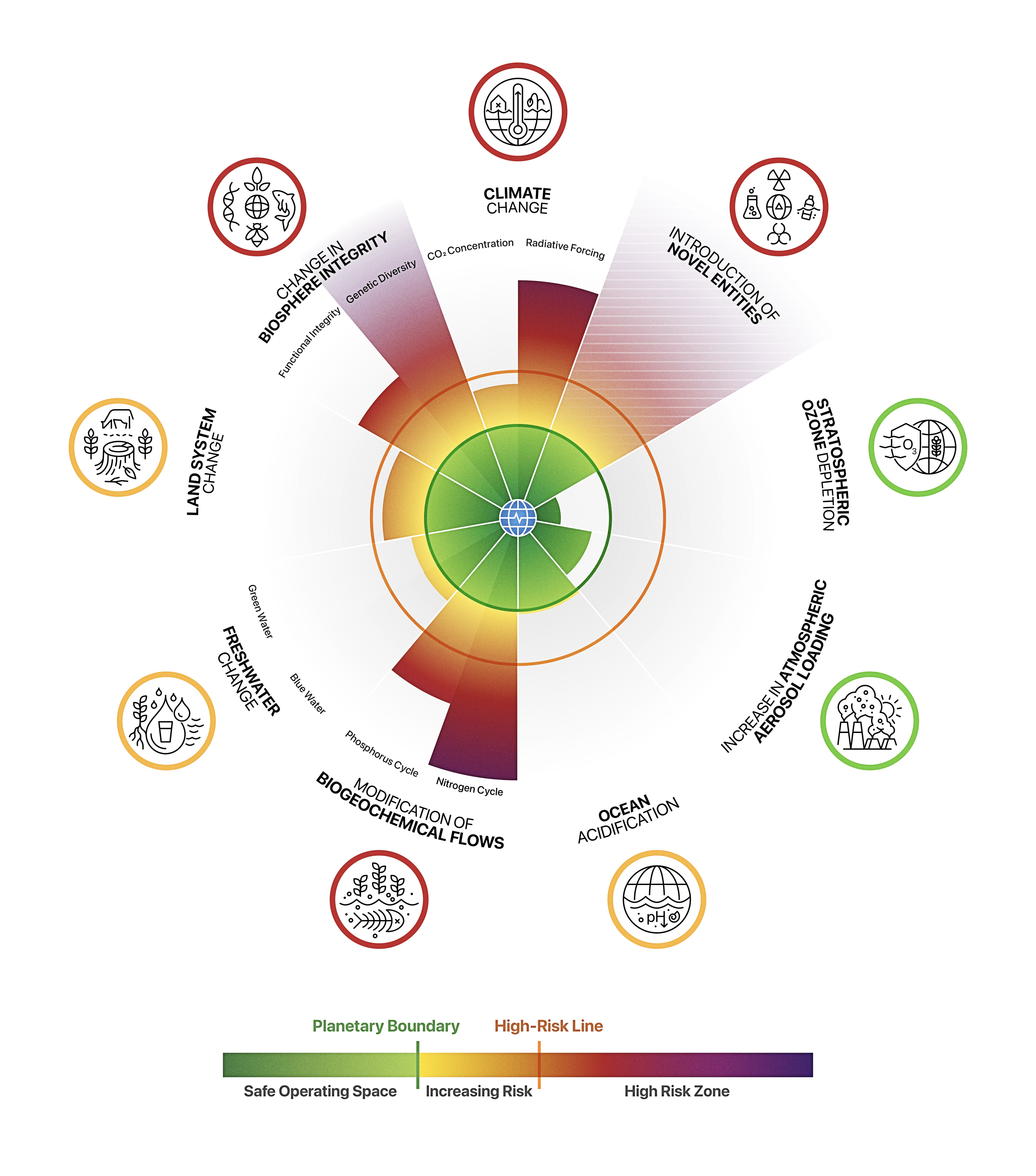
According to the Potsdam Institute for Climate Impact Research we have breached 7 of the 9 critical Earth system boundaries. There are only two that remain in safe zones – the Ozone Layer and Atmospheric Aerosol Loading. Human civilisation developed within an unusually stable Earth system. If we’ve pushed 7 of its 9 major life-support systems outside their scientifically assessed safe boundaries, we are progressively weakening the resilience of the planet we depend upon.
This means increasing the risk of cascading, potentially irreversible changes to climate, water, food systems and ecosystems. We’re back to global heating → drought → floods → failing harvests → food insecurity → displacement → conflict → mass extinction.
Source: Potsdam Institute – The Planetary Boundaries Science Lab at PIK finds that seven of nine critical Earth system boundaries have been breached, leaving only ozone depletion and aerosol loading within safe limits. (PIK, 2025)
We’re also experiencing ecological overshoot every year. We are constantly using more resources, more energy, producing and using more stuff. We are cannibalising the planet, using 1.73 times the resources the Earth can regenerate every year. This is not sustainable. The UK national ecological overshoot day this year was 22 May 2026.
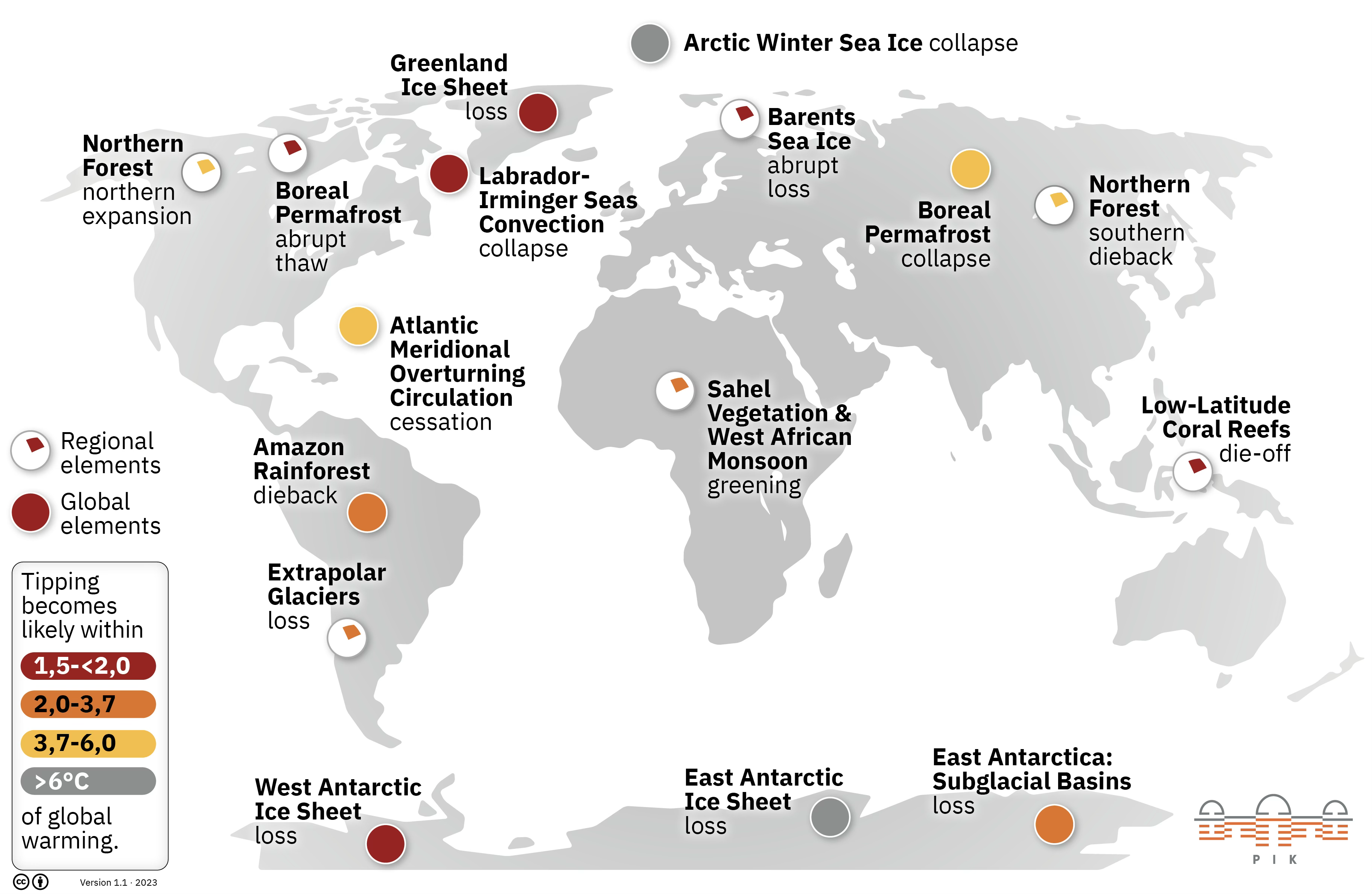
We are approaching, and in some cases may already be passing, critical tipping points. Coral reefs bleaching and dying. Albedos that reflect sunlight back into space are disappearing as ice melts. Permafrost is melting releasing methane into the atmosphere, a far more potent greenhouse gas than carbon dioxide. Parts of the Amazon rainforest are dying and becoming source of emissions rather than soak for carbon emissions. The oceans are hot, and as they heat up they absorb less carbon dioxide, becoming less effective as a carbon sink whilst they also acidify and become less sustainable for life. And of course wildfires are raging, destroying nature and carbon sinks, whilst emitting even more carbon dioxide into the atmosphere.
For all practical purposes, we’ve blown any realistic prospect of keeping long-term warming below 1.5°C without substantial overshoot. We are firmly on track for + 2°C, then potentially +3°C, even +4°C in more extreme modelling. The Paris Agreement didn’t define 2°C as safe. It tried to commit governments to keeping warming “well below 2°C” and pursuing 1.5°C because this would significantly reduce climate risks. The IPCC subsequently found that at 2°C the risks to food, water, health, livelihoods and human security rise substantially, with some impacts becoming widespread, severe and potentially irreversible.
Source: Potsdam Institute. The geographical distribution of global and regional tipping elements, color-coded according to the best estimate for their temperature thresholds, beyond which the element would likely be ‘tipped’. Figure designed at PIK (under cc-by licence), based on Armstrong McKay et al., Science (2022).
We’re already seeing more fires, droughts, and harvest failures. These are hitting especially hard where I live in Norfolk, UK. It’s going to get a lot worse, with more heat injuries and deaths, food and water shortages, floods, sea level rise, poverty, economic damage, rising inequality, war for remaining resources, and ecosystem collapse. We aren’t doing nearly enough to adapt as it is, and simply won’t be able to adapt to what is coming.
We have to stop greenhouse gas emissions, whilst also implementing adaption measures. And we need to do it now. This rhetoric from the government and fossil fuel industry we’re being programmed with, that we have to be pragmatic, that fossil fuels need to be in the energy mix for a long time yet – it’s a death sentence for billions.
The Institute and Faculty of Actuaries (IFoA), the people that inform the insurance industry, have warned there is a severe risk of a global death toll of billions of people. They have modelled a severe risk of 4 billion deaths at +3°C. This is them doing catastrophic-risk modelling, but we keep passing worst case scenarios. By the way, this model is scaled up for +2°C which predicts 2 billion dead. As things stand we have very little chance of staying under +2°C as emissions are still going up, and those emissions will impact temperatures for decades, centuries, locking in global heating to +2°C and beyond.
Politicians and oil and gas companies tout carbon capture and storage as the panacea. But it has not been built and therefore proven at scale, and will cost a fortune to build. It is not a get-out-of-jail-free card for continued oil and gas use. Why not spend that money on renewables, energy storage and grid upgrades. At the same time this would create thousands of jobs and give the economy a boost, whilst reducing emissions, lowering bills, and improving our energy security. What’s not to like?
The truth is still being hidden, by Governments – who have both their heads in the sand whilst hiding the facts. By large proportions of the billionaire owned press. By oil and gas companies who are doing the same as the tobacco industry, and have done for decades – hiding the science and truth in order to make sick amounts of money, at the expense of our health, of the Earth’s life support systems. And by banks and hedge funds who are funding it all.
Business as usual is killing us, and making a few people, an absolute minority, absurdly rich and powerful. But they won’t be able to buy their way out of the multiple crises that are both here right now or approaching fast. We cannot adapt our way out of some scenarios, it doesn’t matter how much money you have if the opposition keep putting more players on the pitch.
Here we are then. Our life support systems are failing, yet we are trying to keep calm and carry on. We are being betrayed, totally failed, by governments whose primary responsibility is to protect and serve their citizens. They in turn are being manipulated by lobbyists, oil and gas companies whose employees meet with ministers every day, by billionaires with no empathy and the media and corporations they control. Our political, economic, financial, industrial, legal, food and water, systems, and many more, are broken, not fit for purpose in the world we now live in.
We talk endlessly about national security and defence budgets – buying more bullets and bombs. But security also means flood defences, reservoirs, resilient food production and storage, secure clean energy, functioning ecosystems and homes for people displaced by climate impacts.
We won’t get these changes under the current system of government. It just can’t do it with the vested interests involved, and the governance processes it is bound by.
We have to act, for our own sakes as well as future generations. We need a peaceful revolution to make changes to all those systems.
Or we’re fucked.
I’ll leave you with this poem, which has been resonating with me a lot today.
Do not go gentle into that good night, Old age should burn and rave at close of day; Rage, rage against the dying of the light.
Though wise men at their end know dark is right, Because their words had forked no lightning they Do not go gentle into that good night.
Good men, the last wave by, crying how bright Their frail deeds might have danced in a green bay, Rage, rage against the dying of the light.
Wild men who caught and sang the sun in flight, And learn, too late, they grieved it on its way, Do not go gentle into that good night.
Grave men, near death, who see with blinding sight Blind eyes could blaze like meteors and be gay, Rage, rage against the dying of the light.
And you, my father, there on the sad height, Curse, bless, me now with your fierce tears, I pray. Do not go gentle into that good night. Rage, rage against the dying of the light.
And somewhere amongst all that prosperity was something nobody could see.
GREENHOUSE GASES
Carbon dioxide. Methane. And others.
More and more of it. The scientists noticed. They warned us. We carried on. Then the consequences started coming out of the box.
GLOBAL HEATING
Then.
HEATWAVES. FLOODS. WILDFIRES. DROUGHT.
DYING RIVERS AND FORESTS. FAILING HARVESTS. RISING SEAS. COLLAPSING ECOSYSTEMS.
And behind them.
FOOD INSECURITY. FAMINE. DISPLACEMENT. CONFLICT.
MASS EXTINCTION.
Still we carried on. We were told changing course would be too expensive. We were told we couldn’t afford Net Zero. We were told another oil field wouldn’t make much difference.
Another airport. Another pipeline. Another year.
Another delay.
We demanded to know the price of acting, but rarely asked the price of doing nothing.
But, the box had given us something else.
KNOWLEDGE. INGENUITY. COOPERATION. CONNECTION.
We understood what was happening. We had many of the tools to change direction. What we lacked was the collective will to use them.
Until eventually there was almost nothing left in Pandora’s box. Almost.
Because the ancient story says that one thing remained.
HOPE
But hope isn’t sitting at home believing somebody will eventually sort this out. Hope is something youdo.
It is the scientist who keeps warning.
The farmer restoring their soil.
The community protecting its river.
The engineer building something better.
The person standing for election.
The neighbour helping a neighbour.
The activist refusing to look away.
The ordinary person deciding that…
ENOUGH IS ENOUGH
Hope becomes:
ACTIVE HOPE
And when enough people act on it, hope becomes something else.
RESISTANCE
Not because we know we will win.
Because the box is open.
Because the consequences are still escaping.
Because every fraction of a degree matters. Every species matters. Every harvest matters. Every home matters. Every life matters.
Because every action matters. And action sustains us.
And because the ending of this story has not yet been written.
The Government has finally published a report it previously suppressed, calmly explaining that biodiversity loss and ecosystem collapse pose a direct threat to national security. Which is nice of them. Always good to know when the house is on fire, even if the alarm only goes off after the roof has already collapsed.
The report itself is actually quite readable. That’s part of what makes it so disturbing. It doesn’t scream. It doesn’t rant. It doesn’t glue itself to the road or throw soup at a painting. It just politely lays out, in civil-service prose, how the life-support systems of the planet are failing, and how that might be a bit of a problem for economies, borders, food supplies, public health, and, you know, civilisation.
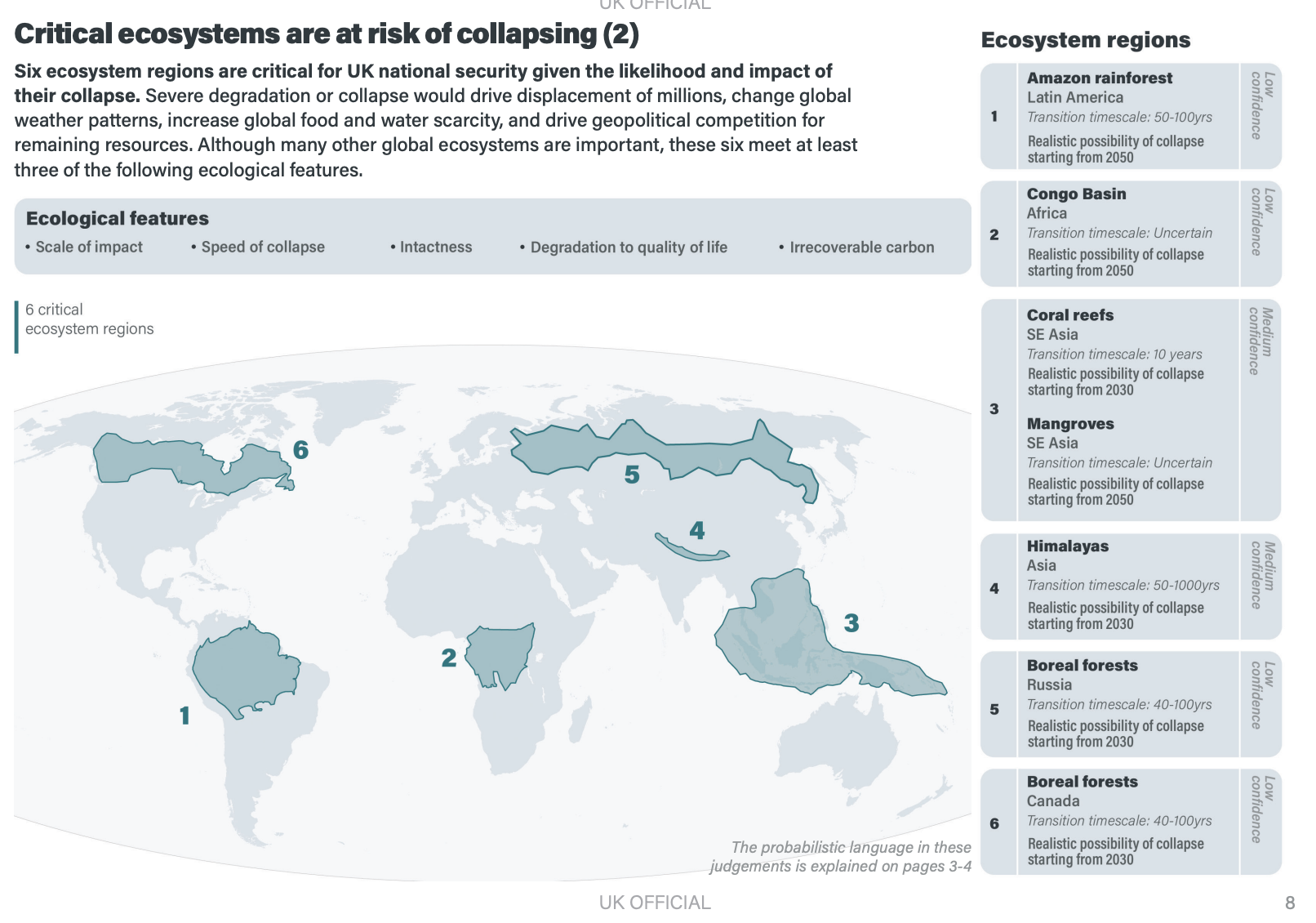
Critical ecosystems are at risk of collapsing
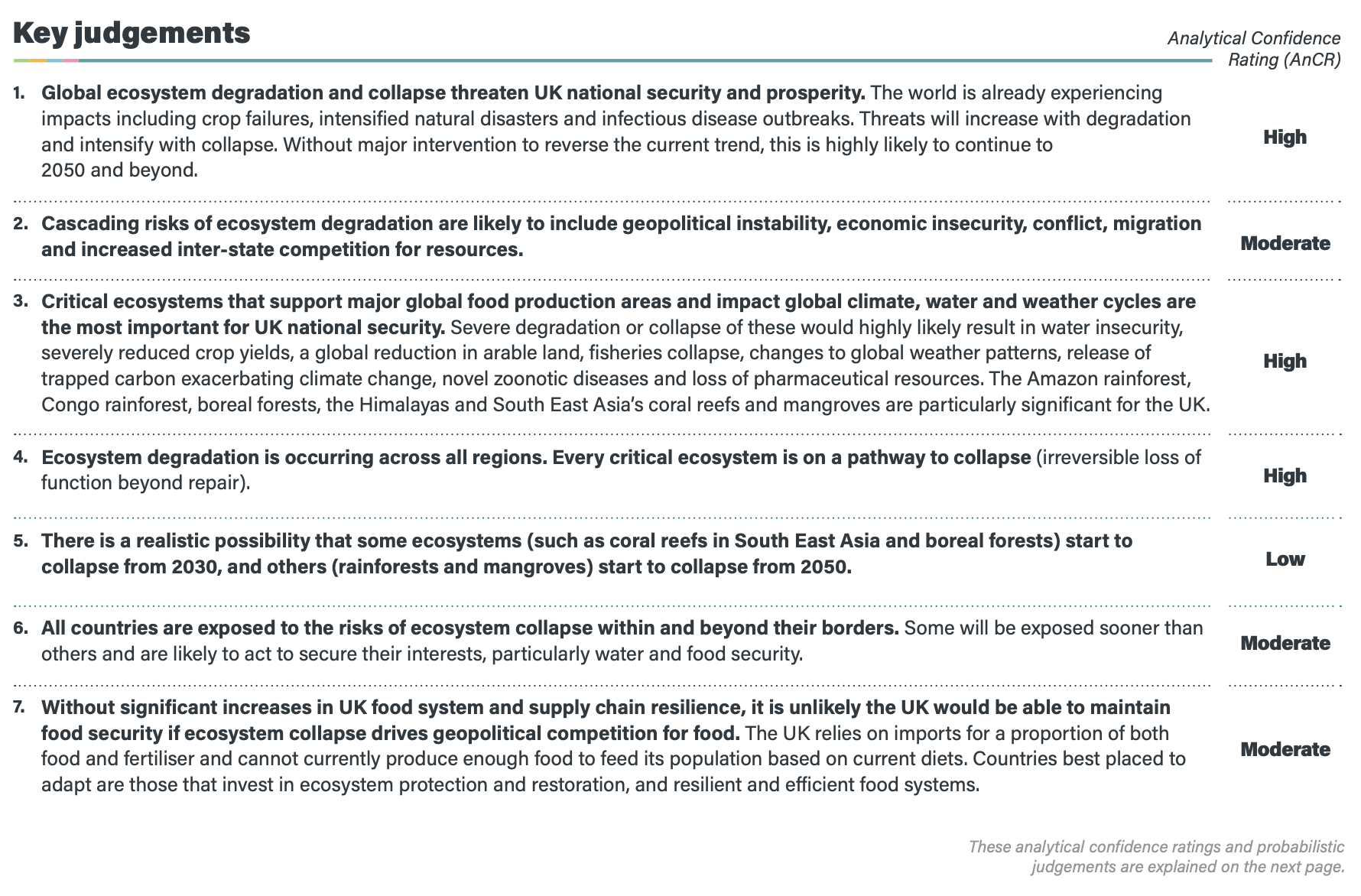
If anything, it feels conservative, which is fairly typical of government or scientific reports on the climate and nature crises. Multiple critical ecosystems – coral reefs, boreal forests, major mountain systems like the Himalayas – are expected to collapse soon. Not in 2100. Not for our grandchildren to worry about. Soon soon. Others, including the Amazon rainforest, the Congo Basin and mangrove systems, are likely to follow. Dominoes, but with forests and oceans instead of plastic rectangles.
Key judgements
Meanwhile, atmospheric CO₂ has reached 428 parts per million, and the line on the graph is still curving upward. That single number underpins a whole cascade of consequences: climate breakdown, ecosystem collapse, floods, fires, crop failures, water stress, resource conflicts, mass migration, disease outbreaks, and increasing parts of the planet becoming uninhabitable. From there, social instability and collapse aren’t radical ideas — they’re logical outcomes.
Much of this is already happening, of course, especially in poorer countries that did the least to cause the problem and are least able to adapt. But don’t worry – I’m sure the market will fix it. Any day now.
What’s particularly maddening is that this isn’t some unsolvable mystery. There is no missing equation. No magical technology yet to be invented by a mega-corporation keen to make an even more obscene profit. We already know what to do.
We could fly less. Eat less meat. Scale up renewable energy at speed — the way China is doing while we argue about whether onshore wind or solar is “a bit unsightly”. We could rewild vast areas of land instead of treating nature like a decorative afterthought. We could protect rivers, lakes and oceans – which might help if water companies weren’t allowed to behave like extraction businesses with a sewage fetish. Public ownership, anyone?
We could grow more food locally. Insulate our homes properly. Use public transport that actually works. Stop pouring obscene amounts of energy into data centres and AI so that a chatbot can write slightly worse emails than a human already can. None of this is revolutionary. It’s just unfashionable — and it directly contradicts the Government’s growth mantra.
There will be no growth, of money or nature, on a planet stricken by floods, fires and water shortages, or on one with finite resources that will inevitably run out, despite billionaires’ protestations to the contrary. It’s all a bit King Cnut — in fact, with a little rearrangement, that surname could apply to many world leaders and tech bros.
History remembers King Cnut kindly; he was making a point — today’s leaders genuinely expect the tide to obey.
What really blocks progress isn’t technology — it’s power. Decisions about the future of the planet are still overwhelmingly made by a small group of ageing men, many of them white, some of them inexplicably orange, who will be comfortably dead before the worst consequences arrive. They continue to gamble everyone else’s future while telling us to be realistic. At times, I genuinely wonder whether Trump’s plan is simply to burn everything down, unable to tolerate the idea of a world continuing without him.
And here’s the thing: if we fail to act, the consequences won’t land on some distant, hypothetical generation. They’re already landing. They will fall hardest on our children – many of whom may never grow old enough to reach our age, let alone retire.
But don’t worry. The plan still seems to be: carry on, extract more, emit more, suppress awkward reports, and hope no one joins the dots.
I just listened to Trump justify the US invasion of Venezuela, and the kidnapping of President Maduro and his wife, Cilia Flores. To give him credit, at least he didn’t bother hiding his intentions: stealing the largest remaining proven oil reserves in the world. He stood there, flanked by sycophants Hegseth and Rubio, and brazenly told the world how the US will run the country “until such a time as we can do a safe, proper and judicious transition.”
I don’t know how true the accusations are that Maduro is involved in drug trafficking, money laundering, embezzlement, and election fraud. It seems entirely possible there’s a case to be made. But is it really right for “Team America: World Police” to invade another sovereign nation, kidnap its elected leader and their spouse, and kill an unknown number of Venezuelan soldiers – and possibly civilians – in the process?
I wrote this in my blog the other day:
“Fight the narcissistic, misogynist, arrogant old white men who have clawed their way to the top of the fetid political pile, treating truth, human lives, welfare, and civil rights as expendable commodities — traded for votes or simply discarded as democracy and the right to protest are eroded.”
The US actions against Venezuela — the power-gaming, the enormous armada sitting off the Caribbean coast, the overwhelming military might, including supposedly unrivalled “American Warriors” from the Department of “War” — are a very clear signal of US foreign policy going forward. And Trump isn’t even pretending otherwise. He wants to boast about it, wrapping naked imperialism in hollow words like “Peace, Liberty and Justice” — three concepts I’m not convinced he understands at all.
Referring to Venezuela, Trump said::
“Run the country til such a time as we can do a safe, proper and judicious transition.”
And referring to other dictators – or, more accurately, any foreign leader he and his administration don’t like – he added:
“What happened to Maduro can happen to them”
Trump has just seized control of the world’s largest remaining proven oil reserves and openly stated he’s sending in US oil companies to manage them — securing vast new fossil fuel supplies and obscene amounts of cash for Chevron and friends. We can’t afford to burn the oil we already have; the climate crisis is spiralling out of control. But of course, Trump doesn’t believe in that. It’s all a hoax, apparently.
He also made it very clear that the US is:
“Ready to stage second and much larger attack if needed.”
So yes — the gloves are well and truly off. If they were ever on to begin with. He’s not even trying to disguise the threats of violence anymore.
Meanwhile, Netanyahu continues slaughtering Palestinians and stealing their land, despite an arrest warrant from the International Criminal Court for war crimes. Putin continues his illegal invasion of Ukraine, with a similar ICC warrant hanging over him. At what point do we stop pretending this is normal? Are we living in some dystopian fever dream? Who, exactly, are the real criminals here?
Wanted – The Trio of Tyranny
I could have limited the poster to Trump alongside Hegseth and Rubio. But it feels more honest to include his international war-criminal allies: Netanyahu and Putin. What a tight little club of ageing, authoritarian strongmen. Xi Jinping could arguably be added too, but somehow his crimes feel almost restrained by comparison. The patriarchy is alive and well.
It seems Team America: World Police is here to stay – with US foreign policy openly embracing the right to take whatever it wants, from whoever it wants, whenever it wants. The question is whether Europe will finally find the backbone to stand up to Trump, or whether we’ll continue playing the role of obedient lickspittles and sycophants.
“America, fuck yeah,
Comin′ again to save the motherfuckin’ day, yeah,
America, fuck yeah,
Freedom is the only way, yeah”
And of course, none of this would be possible without the loyal supporting cast: the allies who nod gravely, issue “deeply concerned” statements, and then quietly sign the arms deals anyway. The UK and Europe will huff, puff, and clutch their pearls – right up until Washington snaps its fingers, at which point we’ll rediscover the ancient art of obedience. It’ll all be waved away as “pragmatism”, “security interests”, or the timeless classic “we had no choice”. History, however, has an annoying habit of remembering who spoke out – and who smiled politely while the bombs fell.
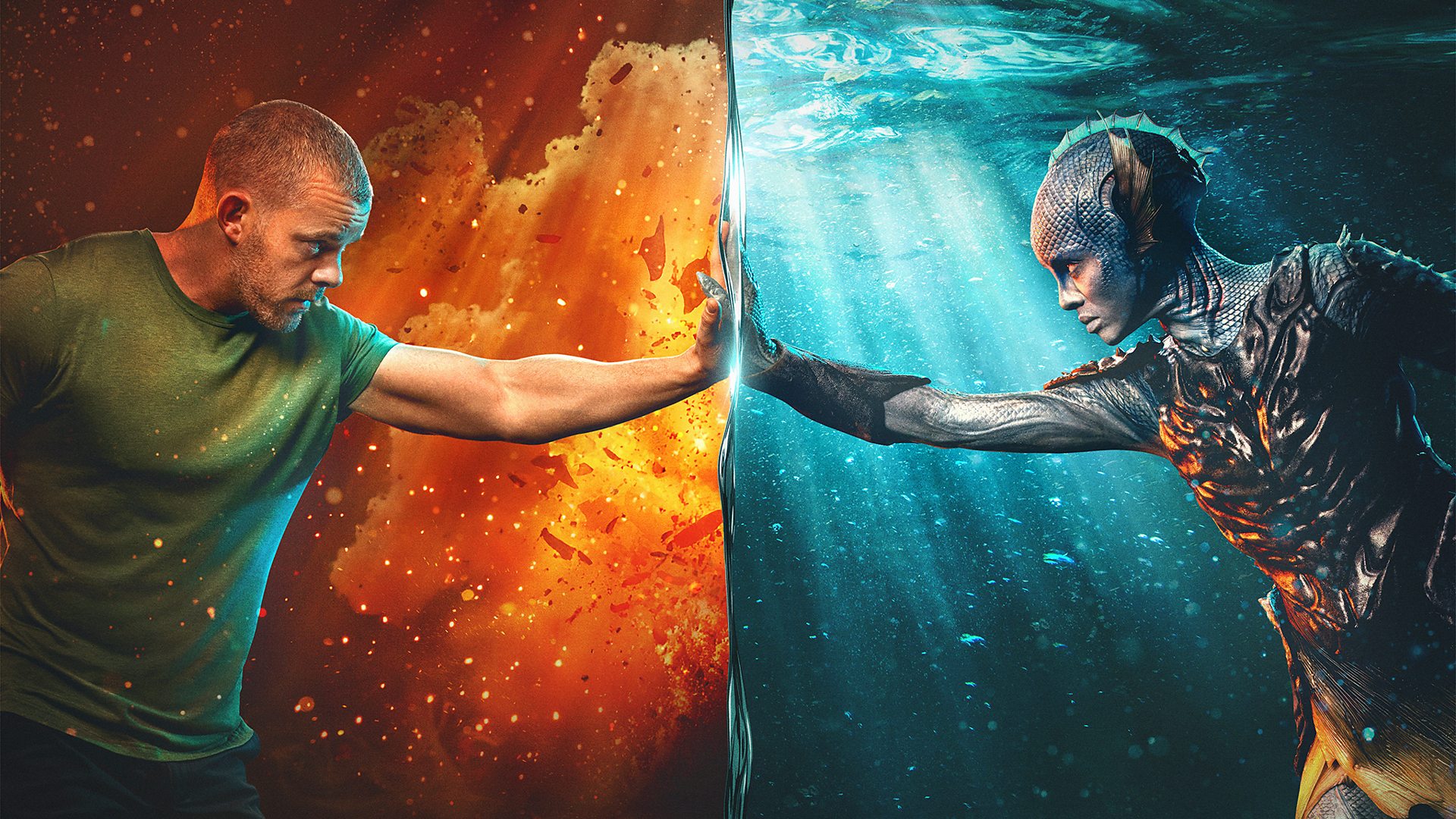
Salt, Sea Devil ambassador: “These are the words of a politician, vetted and craven and hollow. You would answer.”
Barclay, Ambassador for human-kind: “Because we were stupid. That’s the truth of it. And the whole planet is going to hell right now because we didn’t understand the consequences.”
Salt, Sea Devil ambassador: “But now, you do?”
Barclay, Ambassador for human-kind: “Yeah, now we do. Still every day water companies are pumping poison and sewage into our rivers and oceans, all the while dishing out bonuses to their bosses. And the thing is, we are letting them get away with it! We’re just sat at home, flicking through our phones, making tea, thinking it’s someone else’s problem! But it’s not. This is my fault. We all played our part. Now we have to help fix it. And the thing is, our kids know this! Our kids. They’re way ahead of us! Why aren’t we listening? Well, today’s the day we start.”
Salt, Sea Devil ambassador: “I think you are my favourite human.”
This exchange from the new BBC/Disney+ series The War Between the Land and the Sea stayed with me long after the episode finished. The sets, costumes and visuals are impressive — but it was Barclay, the unlikely ambassador thrust into responsibility, who delivers the most piercing truth:
“And the thing is, we are letting them get away with it!”
“Why aren’t we listening?”
Two lines that feel painfully relevant.
Water companies, oil and gas giants, the media, the banks, and the politicians who prop them up have been getting away with it for decades — and we’ve let them.
Where am I going with this?
This post is about why we must accelerate the transition to renewable energy, whilst also bringing essential services like water back into public ownership. For decades, executives have prioritised profit, bonuses and shareholders over public good. Since privatisation in 1989, it’s been yet another “victory” for neoliberal capitalism — one that has spectacularly screwed us over.
We’ve Been Betrayed
The science on greenhouse gases has been clear for almost two centuries.
In 1824, Joseph Fourier described the greenhouse effect.
In 1861, John Tyndall identified the gases responsible. The Tyndall Centre for Climate Change Research — named after Tyndall — is just down the road from me in Norwich.
In 1900, Knut Angstrom, discovers CO2 strongly absorbs parts of the infrared spectrum.
In 1938, Guy Callendar showed that temperatures rose over the previous century. He demonstrated that CO2 concentrations had increased over the same period, and suggested this caused the warming. His claims were dismissed.
In 1968, US President’s Advisory Committee panel warned that the greenhouse effect is a matter of “real concern”.
In 1975, scientist Wallace Broecker put the term “global warming” into the public domain.
The above has been followed by countless IPCC (Intergovernmental Panel on Climate Change) assessments, and COPs (Conference of the Parties) to try to solve the challenge of climate breakdown. Some progress has been made, but not nearly enough.
We’ve known the facts. We’ve proven them. And yet oil and gas companies hid their own research, just as tobacco companies once hid the link between smoking and cancer. Billionaire-owned media outlets are defending them. Politicians were and are being lobbied into paralysis – just look at COP30. And so we are being lied to, misdirected and exploited whilst the planet is burning.
We have been failed time and time again by successive Governments who have put the interests of mega-corporations, profit and power, ahead of ordinary people. They have betrayed us to the altar of profit, lied, misdirected, and in some cases filled their pockets with blood money.
We didn’t “fail to understand” — we are being denied the truth.
We’re Not Stupid
Barclay says, “Because we were stupid.”
But we weren’t. We were and are being deliberately misled.
Instead of honesty, we got greenwashing, smokescreens, and faux responsibility — like BP inventing the personal carbon footprint calculator to shift the blame from corporations onto individuals.
Imagine if the public could be given the same clarity scientists shared recently at the National Emergency Briefing. The shift in understanding — and action — might come rapidly and radically.
You can find recordings of the various segments of the National Emergency Briefing on YouTube.
How Fast Can We Decarbonise?
In the UK, we’ve reduced emissions — but we still emit far more per person than many countries with less wealth and fewer resources. And we should have made the major cuts twenty years ago. We’re now out of time for a gentle transition. We must act rapidly, even if it’s uncomfortable.
This will upset people, especially in a country used to convenience and abundance. But climate physics does not negotiate. Deaths, harm, migration, are all being caused right now by our carbon emissions.
Our Obligations
We are privileged — often without realising it. Given our historic emissions, the UK has a moral obligation to move first and fast.
The alternative? Pull up the drawbridge, protect ourselves for a few extra years, and ignore suffering elsewhere. But our food imports, supply chains and future mass migration make that fantasy laughable.
Billions will be on the move. The question is whether we meet that future prepared — or panicked.
Tell the Truth
People are not being told the truth by politicians or the media. If they were, they’d understand what we are facing:
As laid out at the National Emergency Briefing, the collapse of AMOC (the Atlantic Meridional Overturning Circulation – a crucial system of Atlantic Ocean currents acting as a giant conveyor belt) could mean:
–30°C winters
extreme summer heat
chronic water shortages
the UK unable to grow food
the British becoming climate refugees
The irony isn’t lost on me; one wonders whether we’ll have enough small boats.
Extinction Rebellion warned we needed major emissions cuts in 2018. Oil and gas companies and wealthy governments around the world denied it, buried it, or have since waved around Carbon Capture and Storage — a technology unproven at meaningful scale, and one that conveniently ignores the huge emissions from extraction and transport of natural gas in the first place. Profit over life, again.
So, What Can We Do?
We need rapid, large-scale deployment of renewables:
Wind
Solar
Tidal
Geothermal – there’s some exciting stuff going on with old coal mines
Fusion power would be ideal, but remains underfunded and decades away. We also need to upgrade the grid and to build massive battery storage facilities. This is all doable and exciting, and will create huge potential in terms of sustainable economic growth, jobs and wellbeing, we just need the politicians in power to stop dragging their heels.
But there are obstacles. Solar is a prime example.
Solar Energy: What’s The Problem? Rooftop solar is brilliant — low impact, popular, and efficient. But we no longer have the luxury of time. Large solar farms are faster to deliver and much cheaper per megawatt.
Using ChatGPT for initial comparisons (yes, with a pinch of salt but it saves me hours of trawling through websites and research papers), I asked, when looking at the electricity 4,000 acres solar panels could generate, what is cheaper and quicker to build – a large solar farm or rooftop mounted solar:
Large Solar Farms
400MW: ~£400–600m plus land/grid costs
800MW: ~£800m–1.2bn
Build time: 12–24 months after permitting
Distributed Rooftop Solar
400MW: ~£600–800m (likely more)
800MW: ~£1.2bn–1.6bn+
Rollout time: 5–10+ years
Planning times for solar farms could be slashed if government finally treated the climate emergency like an emergency.
And then there’s capitalism: energy companies don’t want millions of small producers cutting into profits. Legislation could fix this — but it requires political will. We already know neoliberal capitalism needs serious reform.
As for the criticism that solar farms use agricultural land:
They would occupy only 0.45%–0.82% of agricultural land, some of which is fallow at the moment anyway.
We already face food insecurity. Solar barely dents agriculture.
Meanwhile, golf courses consume five times more land than solar would — and I know which I’d rather repurpose.
You can’t tee off on a golf course that’s underwater.
Unfortunately, there is significant opposition to solar farms, largely from people living near proposed sites — which is understandable
Grid Upgrades: The Unavoidable Backbone
We need new pylons, underground cables, or subsea routes — plus battery storage. None of this is optional, and the arguments are similar to the above. All options have ecological impacts, but we’re out of time for perfect solutions.
Pylons may be ugly, but they’re cheaper, faster, and even capable of creating wildlife corridors. France has even turned some into public art. If only imagination were a UK policy priority.
Large Scale Renewables Are the Clear Winner
Solar farms and other renewable energy sources are the clear winner if our priority is rapid decarbonisation. They are cheaper, quicker to build, will create new jobs and provide clean energy. They are our future proofing.
We face a choice: continue failing, continue betraying younger generations, retreat into selfishness and isolation—or respond to the climate and ecological emergencies with the urgency they demand, adopting something akin to a wartime mobilisation.
It may already be too late to avoid severe impacts. But every fraction of a degree of avoided warming saves lives, ecosystems and stability.
CO₂ rises → temperature rises → runaway climate impacts:
floods, fires, drought, famine, harvest failure, extreme weather, mass migration, ocean collapse, extinction events… and then societal collapse.
The stakes could not be higher.
The Path Ahead
We change — or we face the consequences.
The graph below shows how CO2 concentrations in the atmosphere have changed over the millennia, using data from ice core samples.
Renewables give us a fighting chance of reducing emissions and avoiding societal collapse. Oil, gas and nuclear leave only waste and devastation. Renewables can coexist with nature and even help restore it when designed well.
It comes down to communicating honestly, successive governments, oil and gas companies, supported and controlled by billionaire media magnates, have denied people that honesty: change now, or our children will not live to the same age we do.
We don’t have to let them make us stupid, but they won’t change on their own. We have to force it.
From billionaires. From fossil fuel companies. From media moguls. From corrupted politicians who may not even realise how compromised they are. Let’s stop them getting away with it.
They’ve been getting away with it for decades. They are “craven and hollow.” We can stop them.
And yes — I’m going to say it:
Vote Green. Let’s make hope normal again
Promoted by James Harvey on behalf of Broadland Green Party, a constituent party of the Green Party of England & Wales PO Box 78066, London, SE16 9GQ
What’s published in the media on climate collapse isn’t usually the full view of scientists, not as bad as they think the situation really is. If you talk to climate scientists you’ll largely find them depressed, sick of not being heard, of being ignored by politicians. They have to ensure the information they publish is backed by facts, by peer reviews, but in private they’ll tell you it’s probably a lot worse than that, we just can’t prove it yet.
It is hard to compute. Our brains don’t want to think about it. We are averse to thinking about our own demise. It has got me thinking about it all again this evening.
The Mediterranean Sea is apparently 28oC in some places. It’s like walking into a hot bath. This is incredibly bad for habitats and wildlife.
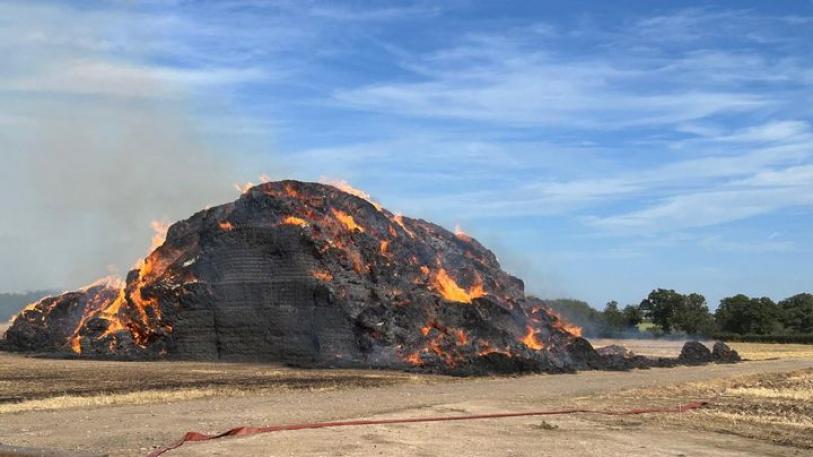
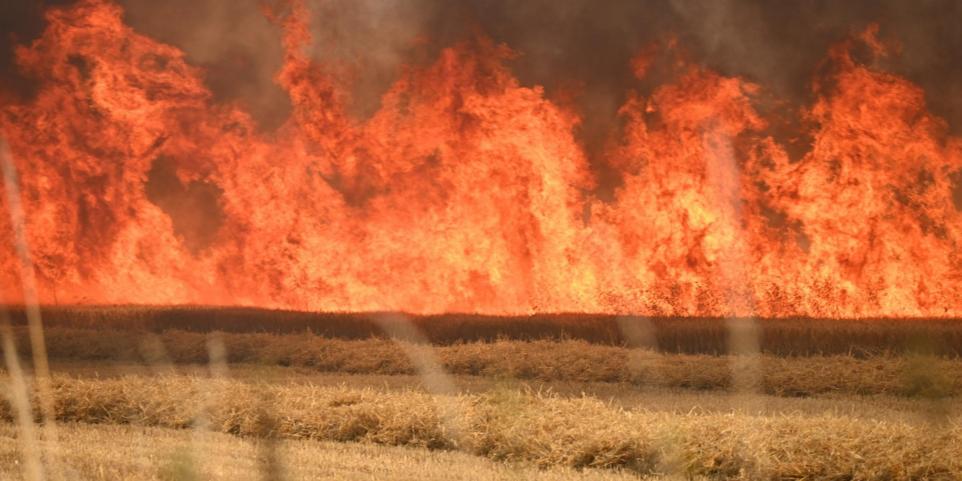
Temperatures records are being broken year on year, month on month, and sometimes day on day. We’ve just seen the wettest 18 months on record. Wildfires have burnt down half of Jasper in Canada and threaten Athens, California ablaze, similar in parts of Russia and South America: Patagonia, the Patanal in Brazil which is the world’s largest wetland, Venezuela and Chile. And in Australia, South Africa, Turkey, Cyprus, the list goes on, hardly anywhere is left untouched. We have field fires in Norfolk too, where I live.
Norfolk straw fire 15 August (source EDP)Norfolk field fire 15 August (source EDP)
Heatwaves in India approaching wet bulb mass mortality range. Tasmanian and Boreal (northern) forests dying. Harvests failing; Norfolk farmers had a hell of a time of it earlier this year, due to flooding, when they couldn’t plant crops or graze livestock. Italian and Swiss villages destroyed by floods, similar in Germany. 20,000 washed out to sea in Libya. 2022 floods in Pakistan impacting 33 million people. Sea level rise threatening low lying island states already. Amazon not absorbing carbon dioxide anymore and at risk of turning into desert. Bats and birds dropping out of the sky due to heat stroke. Caribbean islands being hit by record hurricanes which have destroyed all the buildings in some places, leaving women to give birth in the dirt. Devastating famine and water shortages in Africa. Water is now monetised, it’s being bought and sold to the highest bidders, traded on the stock market.
We’re on track for +2.7oC global heating, above pre-industrial averages, by end of century. It’ll probably be more than that due to the acceleration we’re seeing and tipping points being crossed such as the loss of albedo, meaning less of the sun’s radiation is reflected back into space, and methane being released from the permafrost. And the concentration of carbon dioxide in the atmosphere is still going up.
What does this mean? It equals food shortages, the mass migration of 1 billion people by 2050, if not earlier as it’s happening now, more wars for remaining resources which means more emissions, pollution and death. More holidays to places that are too hot to live in, or on fire, or flooding, or where the native populations are being made homeless or starving. It means economies will crash, people will lose their jobs, their pensions, their savings, their houses. There will be more civil unrest as people feel failed by the system. It means the rise of the far right, again already happening, which occurs when people are scared and need someone to blame; we know this from history. The breakdown of law and order follows, disease, pandemics and health service failure. Then, eventual societal collapse and the death of billions.
It’s not me saying this, it’s not my cause, it’s not Just Stop Oil or Extinction Rebellion’s cause either. It’s what climate scientists are stating, 99.9% of whom say we’re in big trouble due to global heating caused by our carbon emissions.
It’s what the UN Secretary General, Antonio Guterres, who is advised by climate scientists and the Intergovernmental Panel of Climate Change (IPCC) is saying; “we’re on the highway to climate hell with our foot on the accelerator“. The IPCC itself has said “the world is facing a “rapidly closing window of opportunity” to secure a sustainable future.” This window of opportunity is only a few years long, perhaps by the end of this decade, if not sooner.
And if you don’t believe them, or the International Energy Agency, Greenpeace, Friends of the Earth or the Red Cross, maybe you’ll believe Sir David Attenborough who said, amongst many other powerful things:
“Climate change is also really important. You can wreck one rainforest then move, drain one area of resources and move onto another, but climate change is global. If my grandchildren were to look at me and say, ‘You were aware species were disappearing and you did nothing, you said nothing’, that I think is culpable.“
Small communities might survive by the end of the century, in Northern territories, but they could all be screwed too if AMOC (Atlantic Meridian Overturning Circlation) stops. If that stops all bets are off, people could be squeezed into a very narrow habitation zone, where they’ll no doubt fight to survive. Here’s what Laura Jackson, a scientist from the MET office had to say on it. Her view is perhaps a moderate one, with other scientists saying the collapse of AMOC could come a lot quicker. We just don’t know for sure.
Some, if not all of this, is locked in. But we can still try to stop making it worse. We can come together, stop emissions that are causing global heating, stop burning oil and gas for energy, change the way we live (recycling just doesn’t cut it), grow food locally, stop eating so much meat, build resilient and well connected communities, reject consumerism and infinite growth, adopt doughnut economics. We can accelerate the transition to renewable energy, equitably across the globe, stick solar panels on every roof, paint stuff white to reflect solar radiation back into the atmosphere. We can stop building new roads, stop building houses in areas at risk of flooding or which include important wildlife habitats, preserve and restore nature, reuse and yes, recycle.
We could tax the super rich and use funds to build renewables and for adaptation. Tax the fossil fuel companies and put their execs on trial for genocide by oblique intent (see Rome statutes). Prosecute the media for spreading lies and half truths which have led so many astray. Prosecute corrupt politicians and business persons who have done the same and profited from it. Set up legally binding Citizens’ Assemblies to decide what we need to do. Change the whole system. If we do all this we might stand a fraction of a chance. We might not die.
At the moment though governments, the oil and gas industry, some banks and a lot of the media seem intent on waging war on humanity. We are being led astray by people we are told we should trust. I find it devastating when I hear people planning for 10, 20, 30 years in the future, for their kids futures, when the world is already on fire or flooding. What do you think our children are going to face in 10 years time, let alone by the time they are 50?
I’m not doom-mongering, I refuse to be complicit, even though we’re all trapped by the system we’re in and hypocrites to one degree or another. I refuse to stick my head in the sand and wait for someone else to sort it out. I refuse to be a bystander whilst millions die; that’s happening right now. I’m not being self righteous, or virtue signally, I’m panicking, I’m scared, I’m raging at a system which thinks we can just carry on as normal, and spends billions of dollars trying to convince everyone we can. More recently I’m massively saddened to see rampant racism and hate out on the UK streets, with young kids being swept up by it, I’m anxious due to receiving telephone threats from far right thugs after I attended counter protests. But I have to carry on, taking action is the only thing that gives me hope when I lie awake thinking how the lives of my niece and nephew, my godchildren, all children can and are being cut short. And that’s hard to write.
I will no doubt perish far sooner than my Mum. She lived to 83. I won’t.
But, I, along with thousands of other ordinary people will try to make a difference by taking non-violent direct action. I hope you do too.
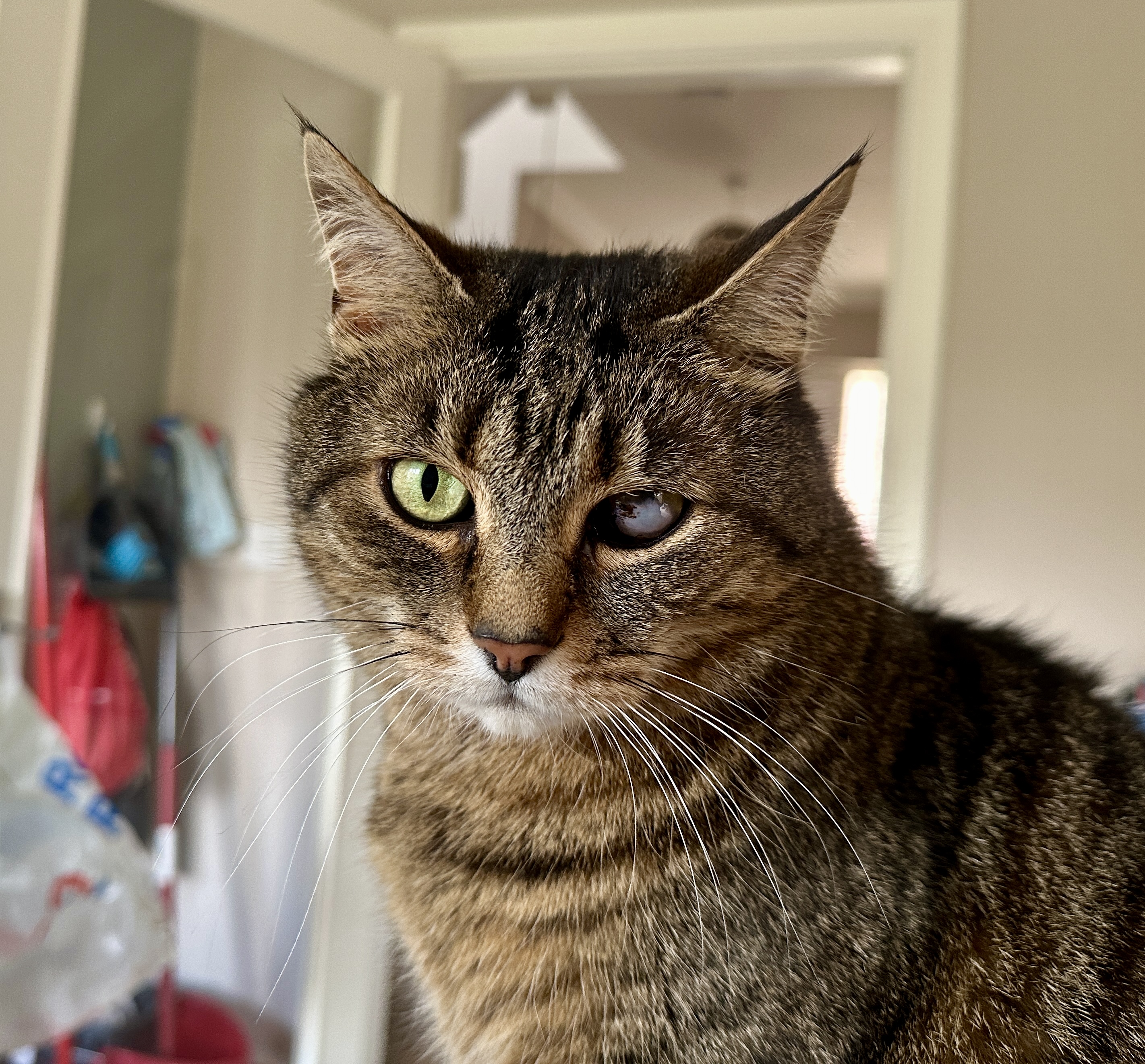
Couldn’t leave without a picture of Gideon, he is judging you, are you culpable?
Judgemental Cat
Feel free to message me if you would like further information on how to take action with Just Stop Oil or Extinction Rebellion, or with local ’causes’ in Norwich and Norfolk. I am growing to hate that word…’causes’.
It feels to me like we’re stuck. The current political system and western society we live in isn’t fit for purpose in terms of making the difficult decisions needed to secure a liveable future. We are too trapped by corrupt politicians, climate change denying corporations, and a way of life we don’t want to compromise.
We may go down in history as the first civilisation to end itself because it wasn’t deemed economically viable or politically popular to make the changes needed to survive. We won’t save ourselves or most of the species we share the planet with because it’s too expensive, and politicians are worried they might lose an election over it. Sounds crazy, but that’s what seems to be happening. Sunak announced approval of over 100 new oil and gas projects in the North Sea last week, which flies in the face of what climate scientists, the UN, the Government’s own Climate Change Committee, the Intergovernmental Panel of Climate Change, the International Energy Association and many other organisations are saying.
Economically, socially, and politically, are we really set up to deal effectively with the challenges happening now, let alone the challenges that are going to happen next year, in 10 years, in 50 years, due to the climate and ecological crises? Are we emotionally ready for it, or even awake to the fact radical change has to happen if we want our society to survive?
Churchill said “democracy is the worst form of government – except for all the others that have been tried.”
It’s very debatable as to whether we live in a true democracy in this country; we don’t have proportional representation. There are perhaps 2 other countries in Europe that have first past the post systems. I posit this is one of the reasons UK society is increasingly divided, and as to why decisions being made in Westminster make no sense to the majority of the rest of the country and are driving us further towards civilisational collapse.
Would another form of Government be better placed to save us from the mass migration, war, famine, drought, ocean death, food system collapse, economic breakdown, health service demise, panic and societal collapse we’re facing? I don’t know the answer to that question, but the Tory party are really making me start to wonder if we ought to try something else.
And sod the criticism we keep getting about using alarmist language. Have the critics actually looked at what’s happening right now? Wildfires in Canada and across Southern Europe, massive floods in China and the Philippines, harvest failures becoming increasingly frequent, ocean heatwaves killing millions of fish, and temperature records broken on a monthly basis. Let’s not even get started on how species extinction rates are way above the natural baseline. These are not just due to ‘seasonal changes’ or ‘a natural cycle’, this is proven beyond doubt to be down to human caused ‘global boiling’, quoting Antonio Guterres, caused by us burning fossil fuels. Anyone denying this needs to get their heads out of their posteriors, and have motivations thoroughly examined. Criminal charges need to, and no doubt will be made in many cases against politicians, media and journalists deliberately misleading the public, banks like Barclays and JP Morgan financing fossil fuel companies, oil and gas lobbyists and execs, and climate change denying think tanks.
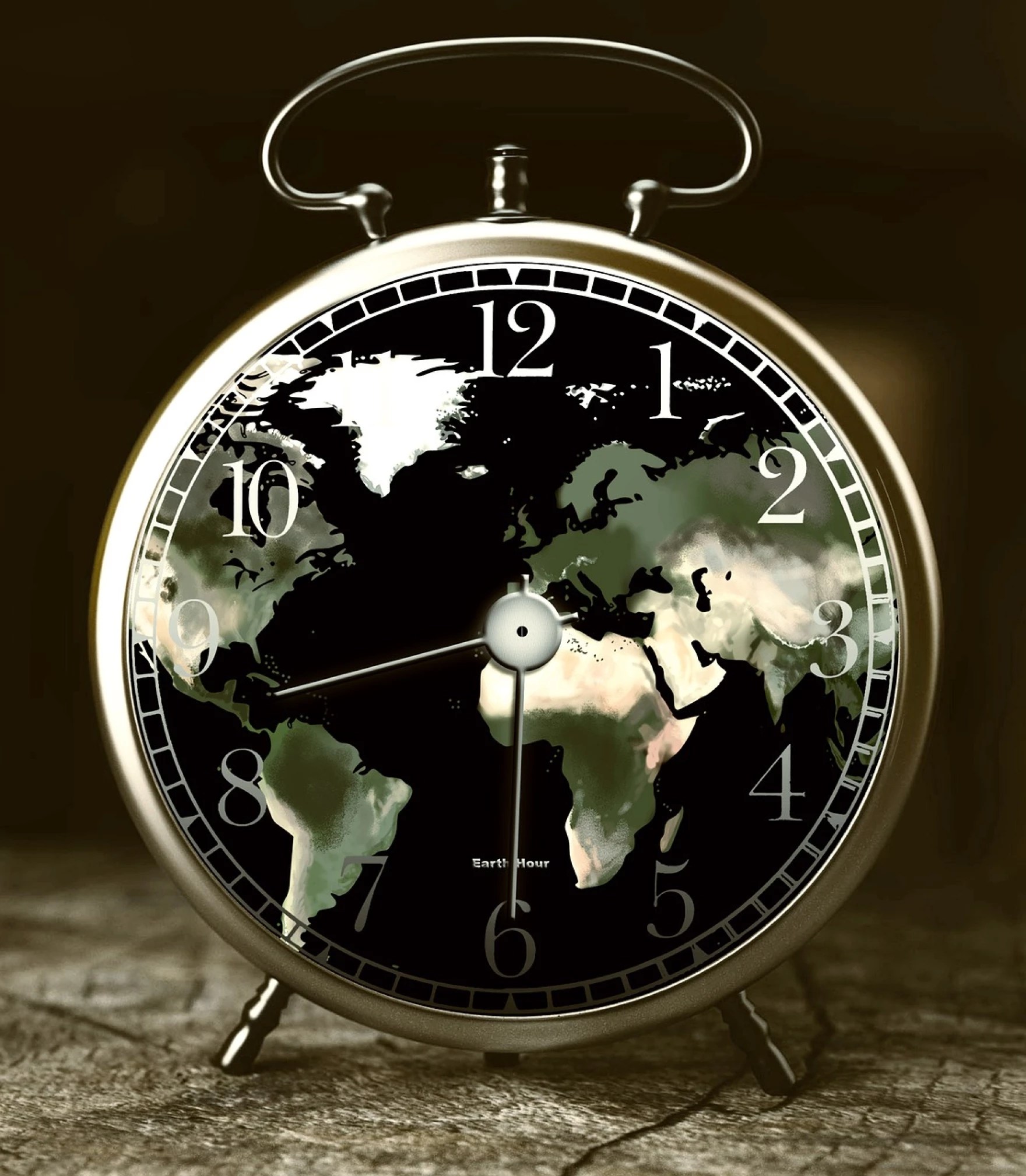
Earth Hour – Texas Public Radio – The Voice
Last week I was interviewed on Texas Public Radio on a show called The Source. I was nervous about being interviewed in my role as a Just Stop Oil spokesperson by the US State built on oil and gas. But…it was a really good experience, with lots of great questions and points from callers. One of the comments made was that the system of Government in the US isn’t fit for purpose either. Generally people get it, they get we’re in a crisis. We turn to our Governments for protection and solutions and they don’t seem to understand, and instead make things worse.
Why did Sunak announce the approval of over 100 new oil and gas projects in the North Sea? Profit? Energy security? Bowing to pressure from the likes of Murdoch and oil and gas companies? By the way this was shortly after his wife’s family business, InfoSys, signed a massive deal worth a reported $1.5bn with BP. I’m sure there is no connection.
It’s worth noting that new North Sea oil and gas:
Won’t come online for decades, in many cases beyond the Government’s net zero target of 2050, which will be blown by these new fields
Does nothing in terms of UK energy security; we don’t own it. BP, Shell etc own it and will sell it to the highest bidder
Is more expensive than renewable energy which is cheaper and quicker to build, but far less profitable for the monsters making billions at our expense
Will increase emissions which can’t be countered by carbon capture and storage; this is unproven at scale and mostly a way of excusing the stranded assets that stopping new oil and gas will cause, funny that
I love this world, the biodiversity, the people, the cultures, the amazing ecosystems we have that are a result of billions of years of evolution. Are we really going to destroy it all, in a matter of a few hundred years, to make the super-rich even richer, and to preserve a completely unsustainable way of life for people who mostly live in the Global North? The super-rich will only be richer for a short period of time, before the pitchforks arrive at their gated communities demanding justice.
We’re being betrayed by our politicians, much of the media, and by huge corporations, all of whom have been told what will happen if we continue on our current trajectory. The Government and politicians in general seem completely unable to face the truth and do something about it, which can only be because they’re afraid it will lose them the next election, as well impact the profits of vested interests, mixed in with a fair dose of denialism. This seems like madness to me, there won’t be elections or economics if society breaks down. As has been the case for too long it’s all about short term politics and short term decisions when in fact the choice is clear: Change or Die, millions are already dying because of the climate crisis.
What are the difficult decisions I’m talking about? Here are some I think about a lot.
Telling the truth: People deserve to know exactly how dire the crises impacting us are. I’d love to see the same amount of money spent on advertising and greenwashing by fossil fuel companies, and on fossil fuel lobbyists, instead spent on educating the public on the latest science and solutions. Did you know that there were more fossil fuel lobbyists than representatives of the ten nations most impacted by the climate crisis registered to attend COP27; around 636 lobbyists in total. And between January and March this year Government ministers met with oil and gas representatives 54 times. Is it any wonder their priorities aren’t in our best interests? Why isn’t the truth a priority? Because it would cut into profits and would be viewed as unpopular without the right education. Politicians don’t dare tell the truth, they’d be called out, hung, drawn and quartered, and lose the backing of their donors.
Stopping new oil, gas and coal projects: We have around 7 years of reserves in existing oil and gas fields to keep the lights on whilst we transition to a more sustainable way of living using renewables. We don’t need to open new fields if we invest in solar, tidal and wind, including onshore wind which is currently effectively banned in England; Ukraine built more onshore wind-farms than we did (we built 2) in the last few years, and they’re at war. Instead of subsidising fossil fuel companies to the tune of £236m a week, why don’t we direct that money towards renewables which are cheaper and quicker to build, and would create thousands of new jobs? Seems like a sensible decision to me, however that would disrupt the status quo and shift power away from those that currently have it.
Invest in the grid: To get the electricity from where it’s produced from renewable sources we need massive investment in our energy grid and storage. This would counter the argument of not having a reliable and resilient baseline power supply. This would be another decision viewed as unpopular by some, because of unsightly pylons, or trenches being dug for power cables. Again I think this comes down to education; what would people rather have, unsightly power lines or societal collapse? We should have started this decades ago, with a joined up plan, but of course that didn’t happen because it was too difficult, and the Tories would lose votes if they built pylons through the countryside. Oil and Gas mega-corporations would also oppose such developments; I heard recently that the objectives of companies like Shell are to survive for as long as possible versus their competitors, and to maximise their profits.
Insulate and retrofit houses: We need to stop poking round the edges and properly commit to insulating our existing housing stock, before retrofitting air source heat pumps to replace gas boilers. It’s not happening fast enough and there isn’t enough investment. If we implemented a proper windfall tax on energy companies, without loopholes they can offset against, we could fund things like this. It needs a big training programme to produce the skilled workers required, which would mean more jobs. We also need to make sure developers do a better job on new builds with insulation, solar panels made mandatory, and phasing away from gas boilers. This is all pretty difficult if you’re a politician worrying about an election in a few years time; no motivation to do the right thing.
Public Transport expansion and Electric Vehicles: I’m really sorry, we’re being sold a lie that swapping your petrol or diesel car for an electric one will make things better. Electric Vehicles are heavier, have a large carbon footprint when they’re constructed, and are not without particulate emissions which increase air pollution. Their weight makes them more dangerous, and could mean some structures such as multi-storey carparks and bridges aren’t suitable anymore. I’m also not entirely sure what’s going to happen to all the batteries when they reach the end of their useful life, although they’re improving all the time. I like electric vehicles, and think electric bikes are brilliant, but we can’t just swap one bad thing for another to keep the car industry and economy afloat; and where are all those rare earth minerals going to come from exactly? Invest instead in better public transport; trains, buses and trams. Invest in more cycle and foot paths (active transport). Introduce more clean air zones which in turn will mean less deaths from air pollution. Another difficult decision for those in power as in the short term it would no doubt be incredibly unpopular to tell people the age of personal car ownership is over. Just look at the reaction to ULEZ.
Consume less and change the economic model: Our emissions per capita (per the average person) are much higher in the UK and other westernised countries (the Global North) compared with the Global South. We consume far more in terms of single use products, meat, fast fashion and goods produced from fossil fuels. We also travel more, especially by plane. This is a massive privilege and not accounted for in UK emissions a lot of the time, as the goods are produced abroad and emission statistics don’t include shipping or aviation. This is one of the reasons the ‘UK is only responsible for 1% of global emissions, go and protest in China’ argument is so infuriating. It’s based on yet another lie. Selling the idea that we need to buy less stuff, eat less meat, and not go on holiday by plane as much is going to be a tough sell for politicians, so let’s strike this one off the list straightaway. It will however happen of its own accord if we don’t make the changes needed; not having a viable society equals lack of shops, food, and holidays.
On the economic model front we need to stop basing success on GDP (Gross Domestic Product = a monetary measure of the market value of all the final goods and services produced in a specific time period by a country or countries). Instead we could move to doughnut economics to ensure that “no one is left falling short on life’s essentials, and an ecological ceiling, to ensure that humanity does not collectively overshoot the planetary boundaries that protect Earth’s life-supporting systems.” Read Kate Raworth’s book for more information. The current economic model seems to rely on the fiction that our planet has infinite resources, which it doesn’t. We’ve got to move to a sustainable model or we’re just going to burn out; countries in the Global South are already quite literally burning out due to our addiction to GDP.
Sadly changing our economy would upset a lot of rich people, and those in power, and wouldn’t be painless for a lot of the population in the short term. But the long term benefits, and the fact it would help us survive seem, to me, to outweigh that. It would take a pretty charismatic and courageous politician to sell that though.
Refugees: You know how angry people are getting about thousands of migrants and refugees trying to get into the UK? It’s going to get a lot worse as parts of the world become uninhabitable, which is already happening. In the meantime the UK is cutting overseas aid budgets and pulling up the drawbridge. Shouldn’t we be doing all we can to help these people? A lot of the impacts being felt in places like Africa and India, and small island nations, are a result of our colonialist policies of the past, and the fact we’ve been burning fossil fuels for centuries. The people least responsible for the climate crisis are suffering the worst, and are the least able to mitigate and adapt to it. I get people have concerns about how much room we have, and our public services and infrastructure being overwhelmed, however surely we have a duty of care due to our past and present actions? The least we could do is increase our aid budget and cut emissions to give these people a chance in their own countries; they don’t want to have to move, we’re forcing them to. This is a political hot topic and it appears those in power, or aspiring to form the next Government, have decided it would be political suicide to help refugees. History will judge us, if we have one.
Protect our remaining wild spaces and seas, and re-wild: I really don’t get why this isn’t happening. Most of the public clearly support it and it would win votes. Yet we consistently cut down woodland to build houses and industry, ignore protected zones in our seas, and continue to pollute our landscapes, persecute wildlife, and destroy rare habitats. The UK is the most nature-denuded country in Europe. Our national parks are ecological wastelands most of the time. Insect populations are plummeting, an estimated decline of 64% between 2004 and 2022 due to the continued overuse of pesticides. Our waterways are full of sewage, and our fields and ground water full of excess fertiliser and animal faeces from agriculture. We’ve been getting it so wrong. Thankfully there are efforts to stop and reverse the destruction and pollution, and to rewild across large parts of the country. There are some brilliant efforts being made by farmers to change their practices, use less chemicals and not just grow monocultures. However they’re up against greedy developers, a Government that still wants to trash our countryside with new roads, and a general public misconception about what nature looks like and how it should be managed; see national parks comment. And of course big-pharma who really don’t want us to stop using all those nice chemicals they make for fertilisers and pesticides, and who rubbish and persecute soil scientists trying to convince us otherwise.
New roads: The Welsh Government has very sensibly said no to new road building, however we’re still ploughing ahead with it in England. New dual carriageways, bypasses and link road plans abound. I could write an entire post just about this, and how new roads equals more traffic (induced traffic demand) and more emissions, not too mention how the emissions from building them will contribute to breaking our net-zero targets. This is a sensitive issue in Norfolk, where I live, where there are several schemes going through at the moment including the Norwich Western Link road. The link road will destroy rare chalk stream habitat, cost a fortune, increase emissions, air, light and water pollution, all for the sake of cutting minutes of a car journey. Again, we need to stop our car-centric view of the world and invest in public and active transport, then we wouldn’t need all these new roads. This is another political hot potato, with pro-road campaigners and politicians accusing anti-road campaigners of being anti-growth, and not being in line with ordinary working class people. It’s a back and forth argument, however most politicians in England are still on the side for new roads for economic growth.
I really wish we had more joined up thinking across all these challenges. Why can’t politicians see we’re shooting ourselves in the foot? There are no doubt more examples of difficult decisions politicians won’t make, however maybe you could suggest some in the comments. I’m starting to feel a bit burned out about it all.
It does indeed feel a bit hopeless when you look at what we’re up against. How can we hope that any politicians that want to get elected are going to make these difficult decisions? But they could do, if they explained why they’re needed truthfully, why it is 100% necessary for survival, and that it could result in a better way of life after perhaps a tough transition period. We really need to move onto a global war footing to start solving these challenges, with daily updates similar to those we had during the COVID pandemic.
The benefits of all these changes will be massive when they happen. I say when they happen, because they have to happen if we want to survive. Better physical and mental health, more joined up communities supporting one another, and an appreciation of what’s really important in life. And the great news, we can still have things like the internet and lots of the stuff we enjoy today, but in a sustainable and balanced fashion with the rest of the world’s inhabitants, without breaking through ecological ceilings. I dream of nature being allowed to regenerate, clean air and water, thriving habitats and healthy soil, and of species currently struggling or nearing extinction making a comeback. I really believe that one of the reasons so many people are ill at the moment, both mentally and physically, is because we’re totally out of balance with nature. At a subconscious level I think we all know it. We’re all fundamentally a part of nature, not apart from it.
The longer we maintain our current destructive way of life the more difficult and expensive it will get to change things, and the more people and animals across the planet are going to suffer and die. I know we’ve locked in a lot of climate change impacts now as greenhouse gas emissions stay in the atmosphere for so long, but we need to fight against every fraction of a degree in temperature rise, and against every ecological tipping point being reached.
Why is Sunak, who appears to be spineless, so willing to go along with this countdown to extinction? I’m pretty sure his daughters don’t agree. Kudos to the Greenpeace supporters that climbed on one of his houses this week to call him out; they knew he and his family weren’t there, and knew how to climb the building safely. Feels like he’s a child trying to survive politics in an aquarium full of sharks, and he’s hiding in the coral which incidentally is dying due to yes, you guessed it, the climate and ecological crises. Sadly I don’t think Starmer will be much better. He’s already said he will keep the new oil and gas licenses the Tories have approved, and he seems pro most other things that will make matters worse, whilst supporting legislation to silence ordinary people protesting about it. We’re up against huge vested interests, worth billions of pounds, whilst activists only have a fraction of the resources.
That was a heavy but I hope informative stream of consciousness, and I’d love to hear what you think about it all. By way of light relief here are some pictures of Gideon being his usual self, and of a hedgehog that’s visiting me each night.
Arrives most nights, about 11pmVisiting hedgehog having a drinkHiding in the brassicasIn the brassicas againHunting butterflies, I tried explaining about insect number declinesApparently rain water in a bucket is bestPropping up sunflower due to high windGideon supervising gardening
Finally, just to acknowledge the passing of Sinead O’Connor. Here’s one of my favourite songs of hers. What a powerful voice, full of emotion and conviction. Such a loss. And such a travesty that she was hounded by so many for speaking the truth.