I keep thinking about something. Please don’t groan, I can hear you.
Why are politicians constantly trying to work out what they need to do to get people to vote for them?
We have focus groups, opinion polls, electoral strategies, carefully tested messages and policies designed to appeal to particular groups of voters. Governments worry about what something will do to their polling. Opposition parties worry about whether saying what they actually think will cost them seats. Lobbyists, corporations, wealthy donors and organised interests all compete for access and influence, far beyond the ken of the ordinary public.
Then politicians go out and try to convince us that the resulting policies are the right thing to do.
It seems completely backwards.
Why don’t we start by asking what the right thing to do actually is, based on the best evidence we have, and then explain honestly and straightforwardly why we need to do it? No lies, misdirection, half truths or bullshit.
Some of the answers will be unpopular. Almost certainly. Dealing seriously with climate breakdown, inequality, defence, housing, taxation, migration, social care or the collapse of nature isn’t going to produce answers which everybody likes.
But perhaps that is what politics is supposed to be for.
I’ve increasingly started wondering whether I’m asking the wrong question. Perhaps the problem isn’t that we need politicians who are courageous enough to make better decisions.
Perhaps politicians shouldn’t be making most of these decisions in the first place. Given the current state of affairs, that seems like, perhaps, a no-brainer.
What if we did politics differently?
I’ve been reading more about anarchism recently, including Rebel City’s excellent little book For a Future Made by Us All. Anarchism isn’t the chaos and disorder that the word usually conjures up. My Mum often used to say something along the lines of “If we don’t fix this now, we’re going to slide into total anarchy.” I don’t think she really understood the principles of anarchism. At its heart are some quite simple ideas about freedom, equality, solidarity and mutual aid, and a profound suspicion of unnecessary hierarchy.
One idea particularly interests me: decisions flowing from the bottom upwards, rather than power flowing from the top downwards. Rebel City describes assemblies as a basic unit of non-hierarchical organisation, with people collectively participating in decisions affecting them.
That raises some interesting questions.
Why do we elect a few hundred people, many of whom change every few years, and then give them enormous power to make decisions for tens of millions of us?
What if we separated political decision-making from political administration?
Imagine that we identified a major issue and convened a Citizens’ Assembly: a randomly selected, demographically representative group of ordinary people. Not people who have spent their lives climbing through political parties, and not done a lot else. Not people who can afford £50,000 dinners with ministers. People like us.
Give them time. Give them access to information. Pay them properly for participating. Let them hear from scientists, economists, engineers, public servants, charities, religious/community leaders, businesses, campaigners and, importantly, people directly affected by whatever they are considering.
Let them question those people. Let them demand more evidence. Let them hear opposing arguments.
And then let them decide.
The process might look something like this:
Issue
↓
Independent evidence gathering
↓
Citizens’ Assembly
↓
Recommendation or decision
↓
Government publishes an implementation plan
↓
Politicians explain the decision and the reasoning behind it
↓
Civil service implements it
↓
Outcomes independently measured
↓
Results return to citizens
Then, if it doesn’t work, we change it.
That last bit seems important.
Our existing political system makes admitting failure incredibly difficult. If a government admits that one of its flagship policies hasn’t worked, the opposition attacks it. The media calls it a U-turn. Ministers become frightened of admitting mistakes, so enormous effort goes into proving that whatever they previously decided was right all along.
That’s a terrible way to learn. A terrible waste of time, money, resources and public faith.
Who chooses the experts?
There is an obvious problem with my imagined system. Who decides what evidence the assembly hears?
If the government chooses the experts, we have simply moved political control one step further away. If corporations can dominate the evidence because they have vastly greater resources than everyone else, we’ve recreated lobbying. If campaign groups can pack the process with people who agree with them, we’ve created another problem.
The evidence process would have to be genuinely independent, transparent and accountable. Assembly members themselves should be able to request additional witnesses, challenge evidence and ask to hear from somebody who disagrees.
And there should be a simple, key rule:
No privileged access for vested interests or lobbyists.
That doesn’t mean excluding them.
A renewable energy company will know something important about renewable energy. A trade union knows things about its members’ working conditions. An environmental organisation may have decades of specialist knowledge. Businesses, charities, campaigners and community organisations should all be able to contribute.
But they contribute in the room, transparently, alongside everybody else.
Nobody gets greater access because they donated £500,000 to a political party. Nobody gets a private dinner with the decision-maker. Nobody gets heard because they employ a former minister. Nobody gets to quietly wander around Westminster whispering into the right ears whilst offering free drinks.
Money shouldn’t buy political access.
Experts shouldn’t rule either
There is another distinction I think matters. Albeit, it’s tricky.
Experts provide knowledge. They don’t provide moral authority.
A climate scientist can explain what increasing atmospheric carbon dioxide is likely to do. An economist can model the economic consequences of different choices. An engineer can tell us what is technically possible. But none of them can tell us what kind of society we want to live in. Those are value judgements. They belong to all of us. And Citizens’ Assemblies will sometimes get those judgements wrong. Of course they will. Ordinary people aren’t infallible.
Neither experts nor Citizens’ Assemblies are infallible. Neither are politicians.
I’m increasingly baffled by the assumption that selecting somebody because they were good at winning an election somehow makes them particularly qualified to make enormously complicated decisions about energy systems, artificial intelligence, healthcare, agriculture, economics or climate breakdown.
A small real-world example: as a councillor I sit on a planning committee, and sometimes we are called upon to make decisions on Tree Preservation Orders. Hardly anyone there, aside from the Arborist, is an expert, yet I see subjective conclusions, and thus decisions, being made about trees that could be incorrect. Scale that up to decisions about the economy, climate, welfare, defence, the NHS and all sorts of other things.
Perhaps we shouldn’t be looking for infallibility. Perhaps we should be designing a system that produces decisions that are informed, representative, transparent, difficult to corrupt and capable of correcting themselves.
So what are politicians for?
We’d still need them. Probably. But their job would be very different.
Politicians would become managers, coordinators, facilitators, communicators and scrutineers. They would make sure decisions were implemented properly, coordinate institutions, allocate resources and hold the machinery of government to account.
Their job might be to tell us:
We asked citizens to consider this problem. They spent time understanding it. They heard the evidence, challenged it and deliberated together. This is what they decided. This is why they decided it. This is how we’re going to make it happen. And this is how we’ll find out whether it worked.
And power shouldn’t all sit in Westminster.
If something can sensibly be decided by a community, let the community decide it. If it needs coordination across a region, move it up a level. Some things inevitably require national coordination, and some problems cross national borders.
But power should move upwards only when it needs to.
That feels much closer to the bottom-up organisation described by anarchist thinkers than our extraordinary concentration of political power at the centre.
There are, obviously, enormous unanswered questions. How do we protect minority rights? Who decides which questions go to assemblies? What happens in an emergency? What constitutional safeguards do we need? What happens when different assemblies reach contradictory decisions? How do we prevent somebody capturing the supposedly independent evidence system?
I don’t know. But I don’t think what we have is working. And I keep going back to the criticism of democracy attributed to Socrates, particularly through Plato: that political decisions can end up being made by people who have won popular support but don’t necessarily understand the things they are deciding. The argument is more complicated than that, but perhaps one answer to it is a properly constituted Citizens’ Assembly; ordinary people given the time, evidence and access to expertise needed to make informed decisions.
This isn’t a constitutional blueprint. It’s a question. Because perhaps we’ve been trying to solve the wrong problem.
I keep hoping that better people will become politicians. That somehow the next collection of people entering Westminster will resist the machinery of parties, elections, donors, lobbyists, opinion polls, newspapers, social media and the relentless need to win the next election.
They almost certainly won’t.
Perhaps instead of endlessly trying to find better people to give enormous amounts of political power, we should build a society in which politicians have much less power to exercise.
Democracy shouldn’t just mean choosing, every four or five years, which small group of people gets to make decisions for everybody else. Maybe it could mean ordinary people, given the information and time necessary to understand difficult questions, making those decisions together.
From the bottom up.
With politicians working for us, rather than ruling over us.
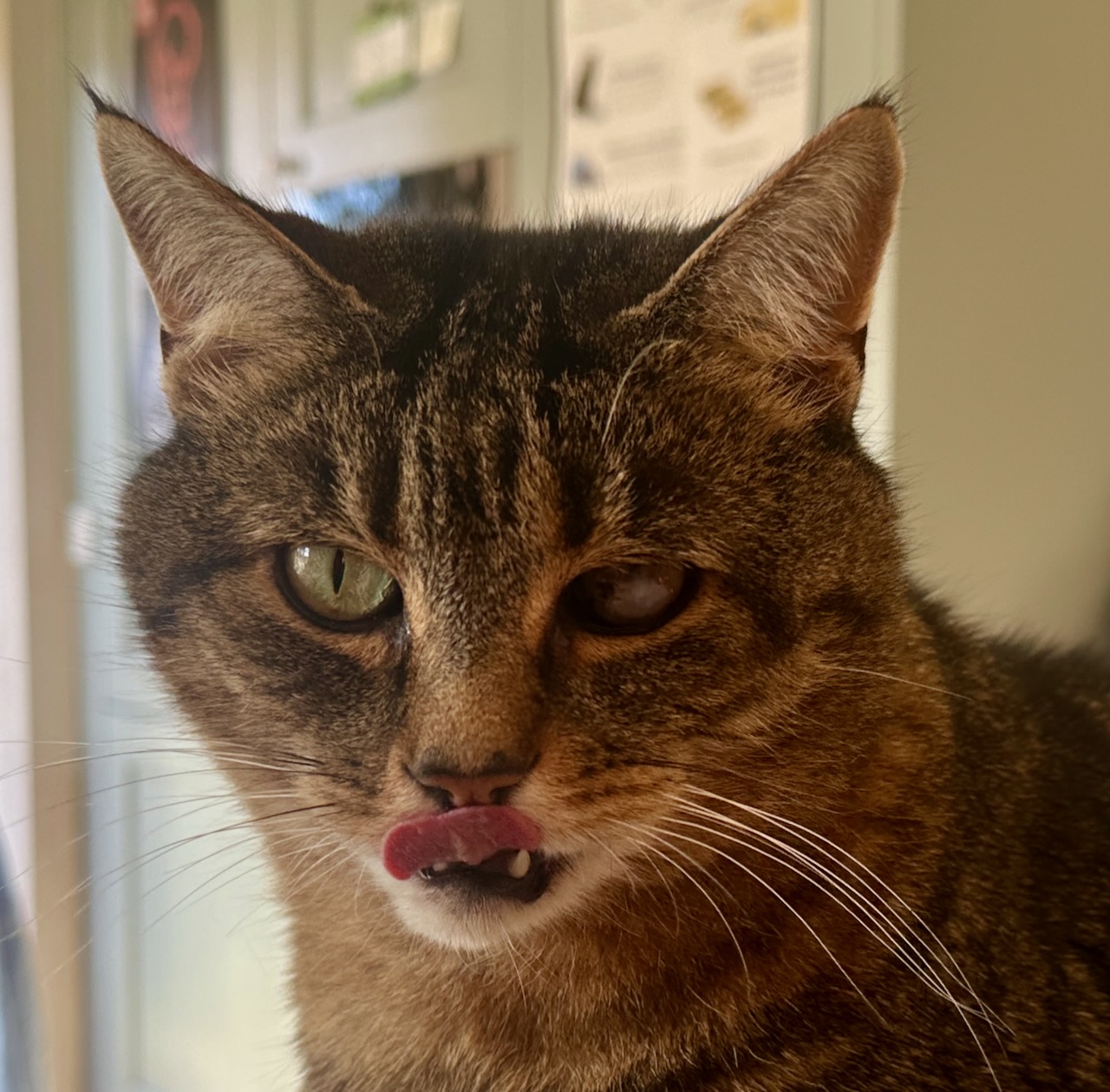
Or we could go for a dictatorship. All hail our Lord and Master Gideon, who will make decisions based on tribute, warm spots and head scratches. Actually, I’m not convinced that isn’t what is happening at the moment. But Gideon recommends we give him a shot anyway.