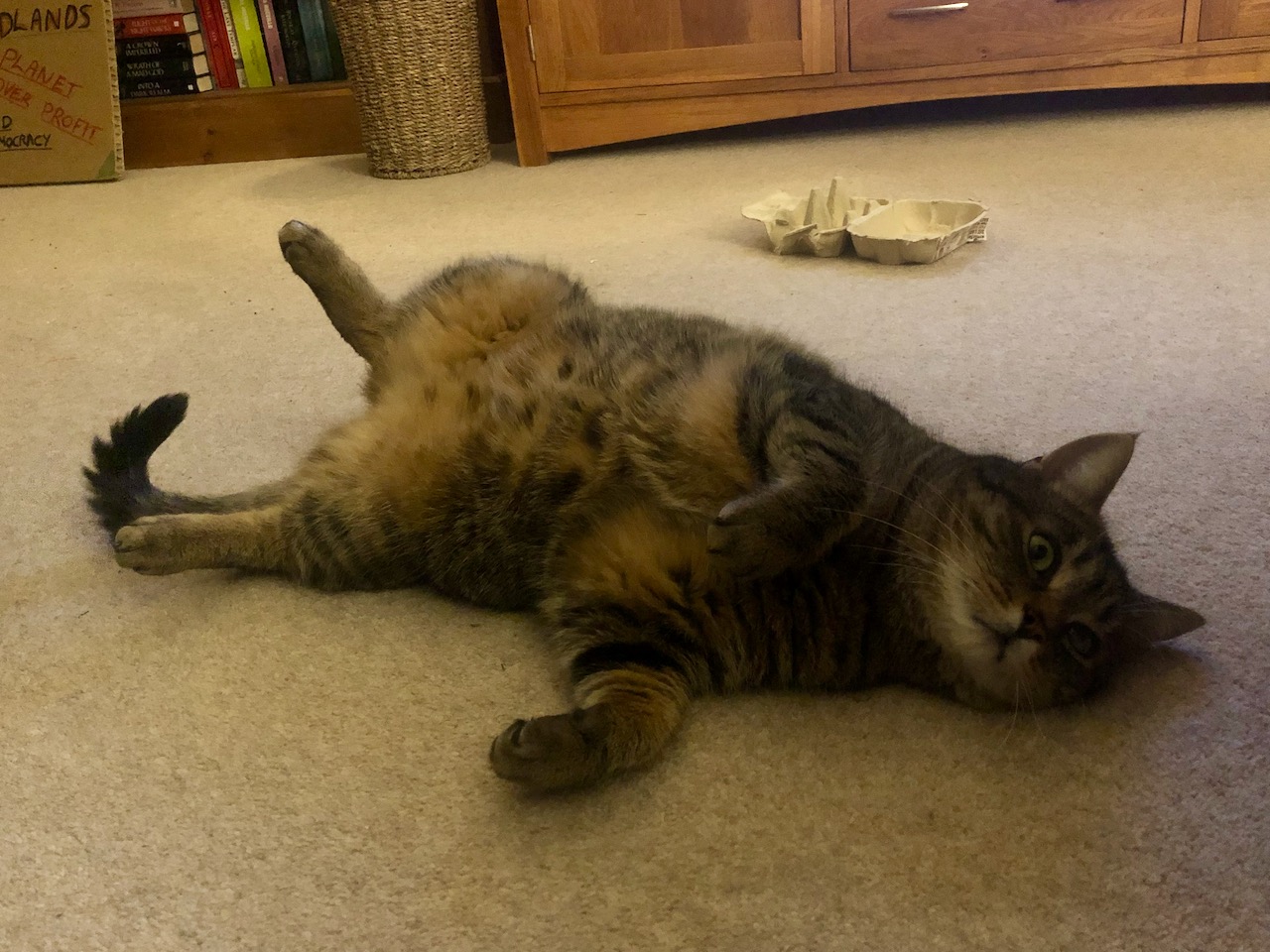
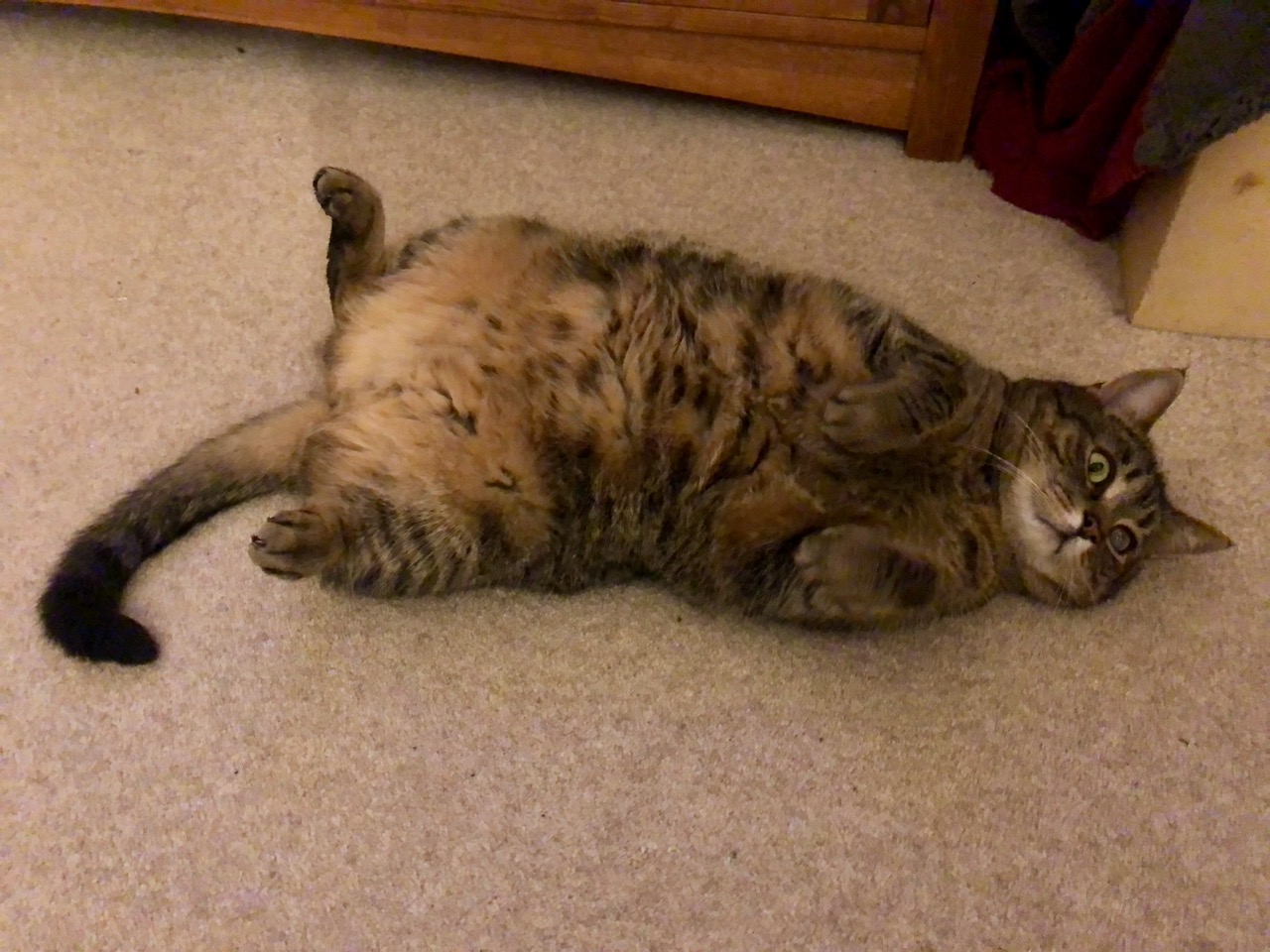
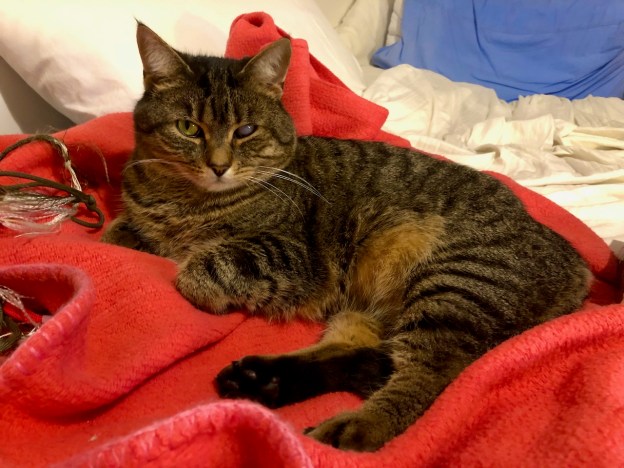
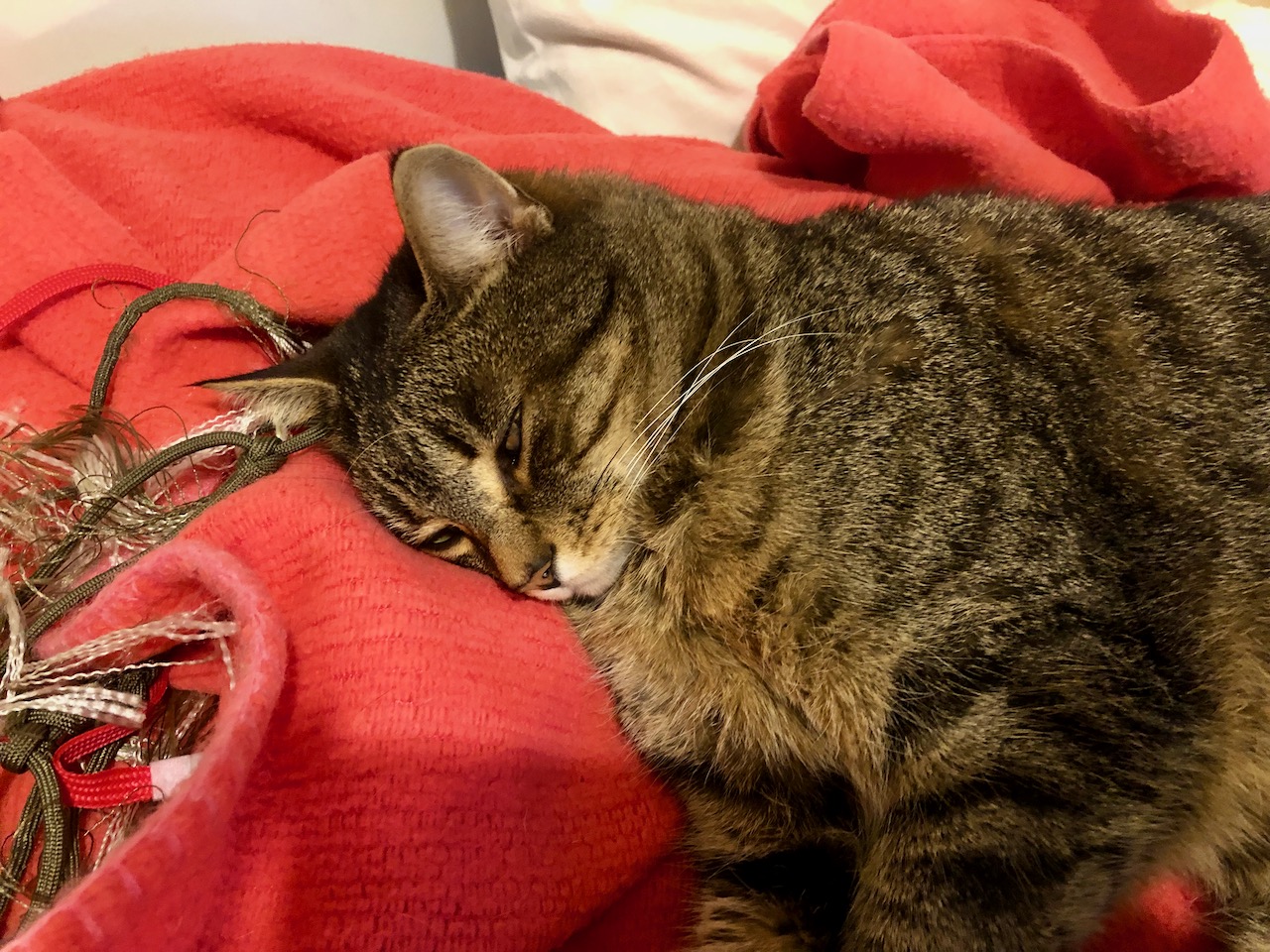
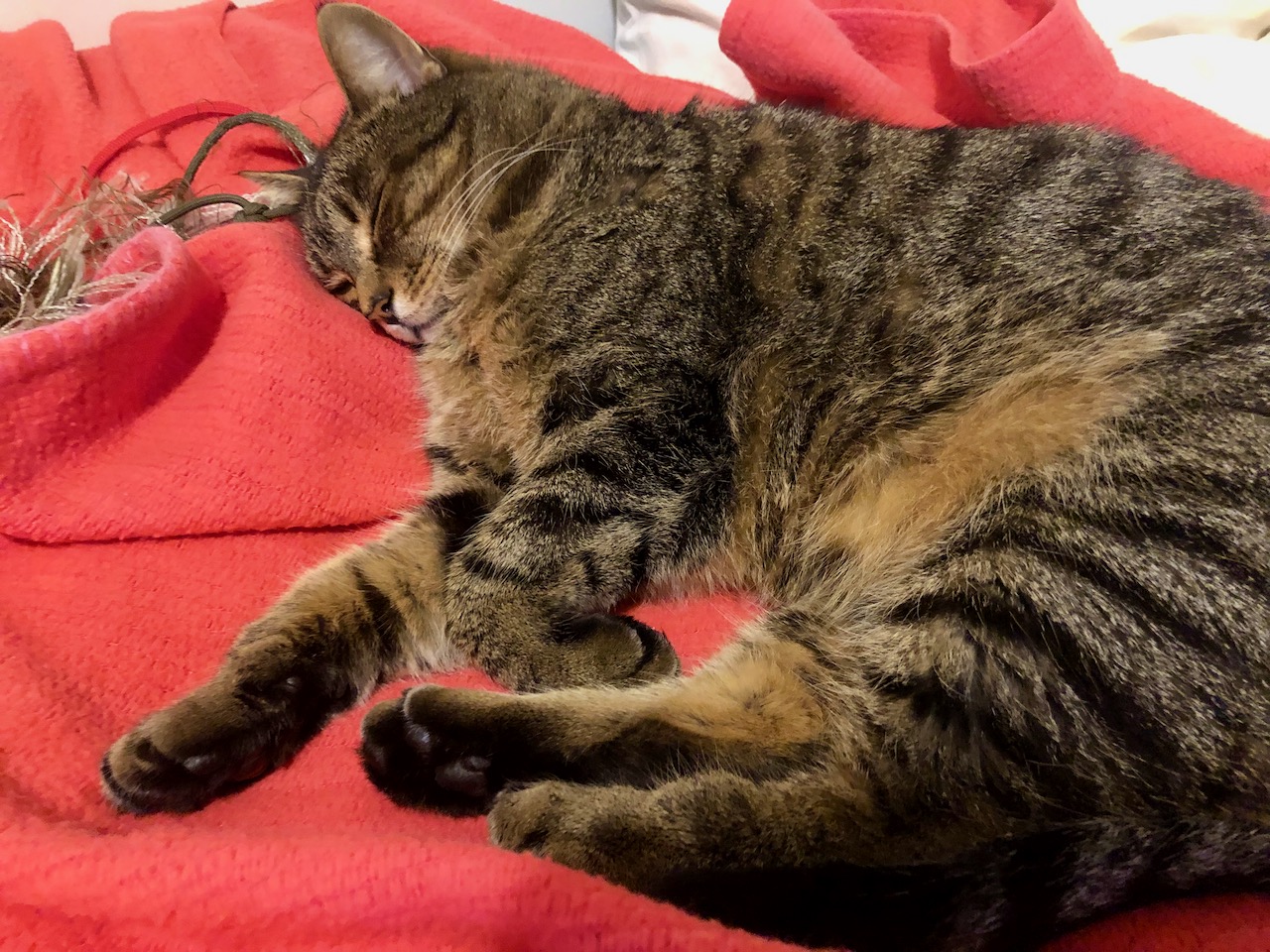
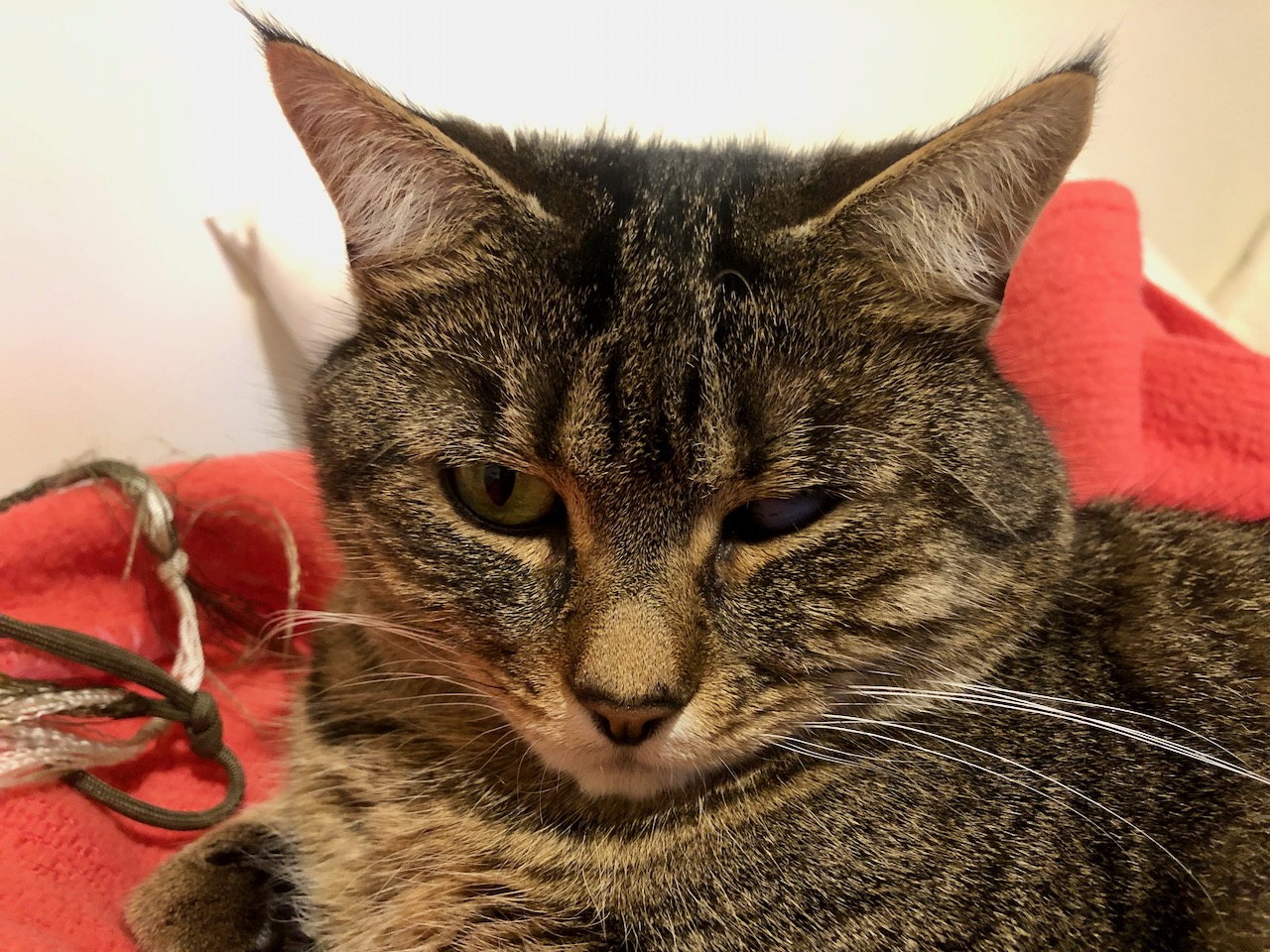
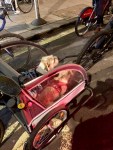
The title of this blog post might end up being slightly misleading, that remains to be seen. I’m not entirely sure where it’s gonna go. Best if I start off with some pictures of Gideon, in reclining mode.
Gideon with egg boxGideon – it’s a Trap!
The egg box is currently one of his favourite things. He sometimes sleeps on it, which looks very uncomfortable if you ask me. He is very ‘playful’ at the moment, just this morning ambushing me from behind the sofa and savaging my leg; note to self, shorts not always a good idea.
Newsflash just in from BBC – ‘Met police chef Cressida Dick to step down’. Earlier today she said she had no intention of stepping down, so the writing was on the wall really. Maybe now they can appoint someone who will really sort out the institutional racism and misogyny within the police force. I did say I didn’t know where this blog post was going to go didn’t I?
There have been some beautiful sunsets in Norfolk recently. It’s been nice taking a break from work to go and watch them. This one was particularly startling, with an amazing sequence of colours over the course of a few minutes.
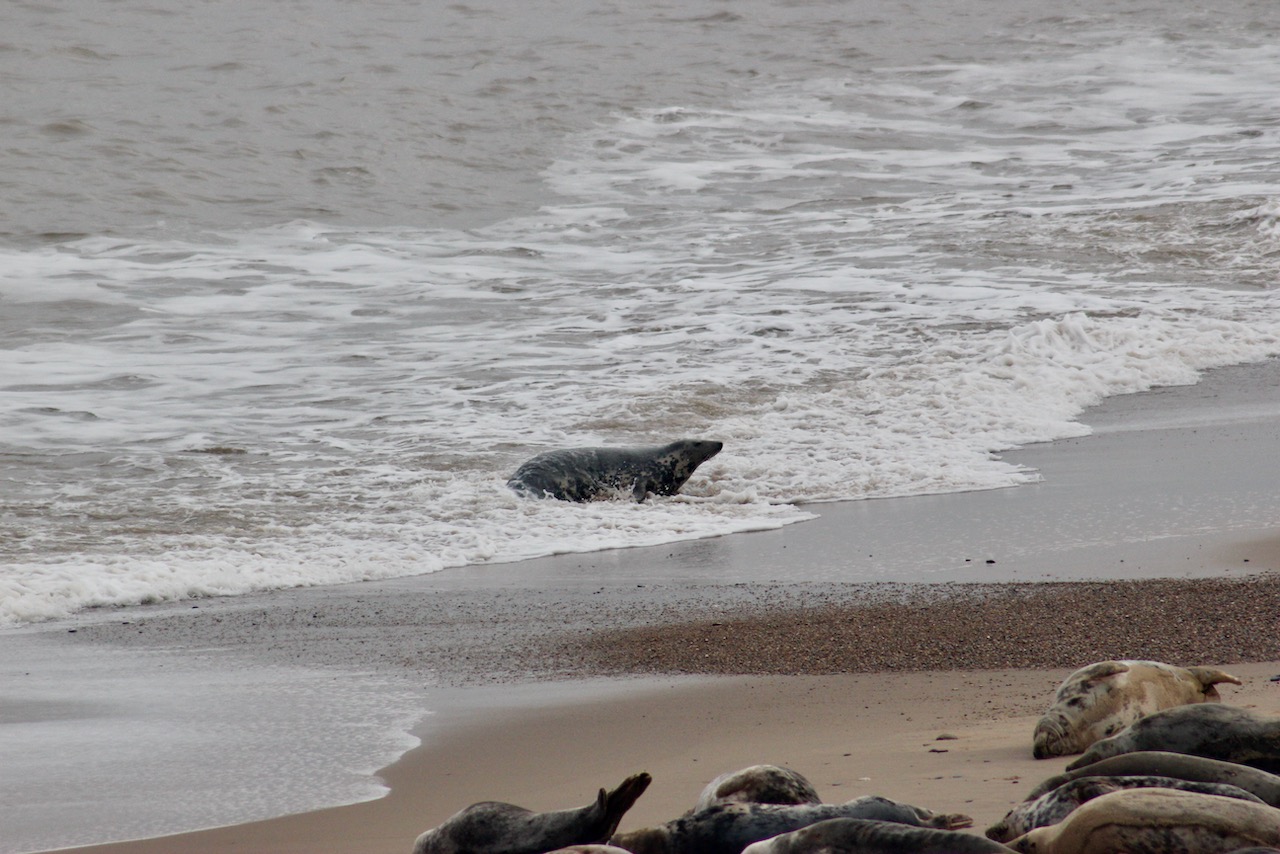
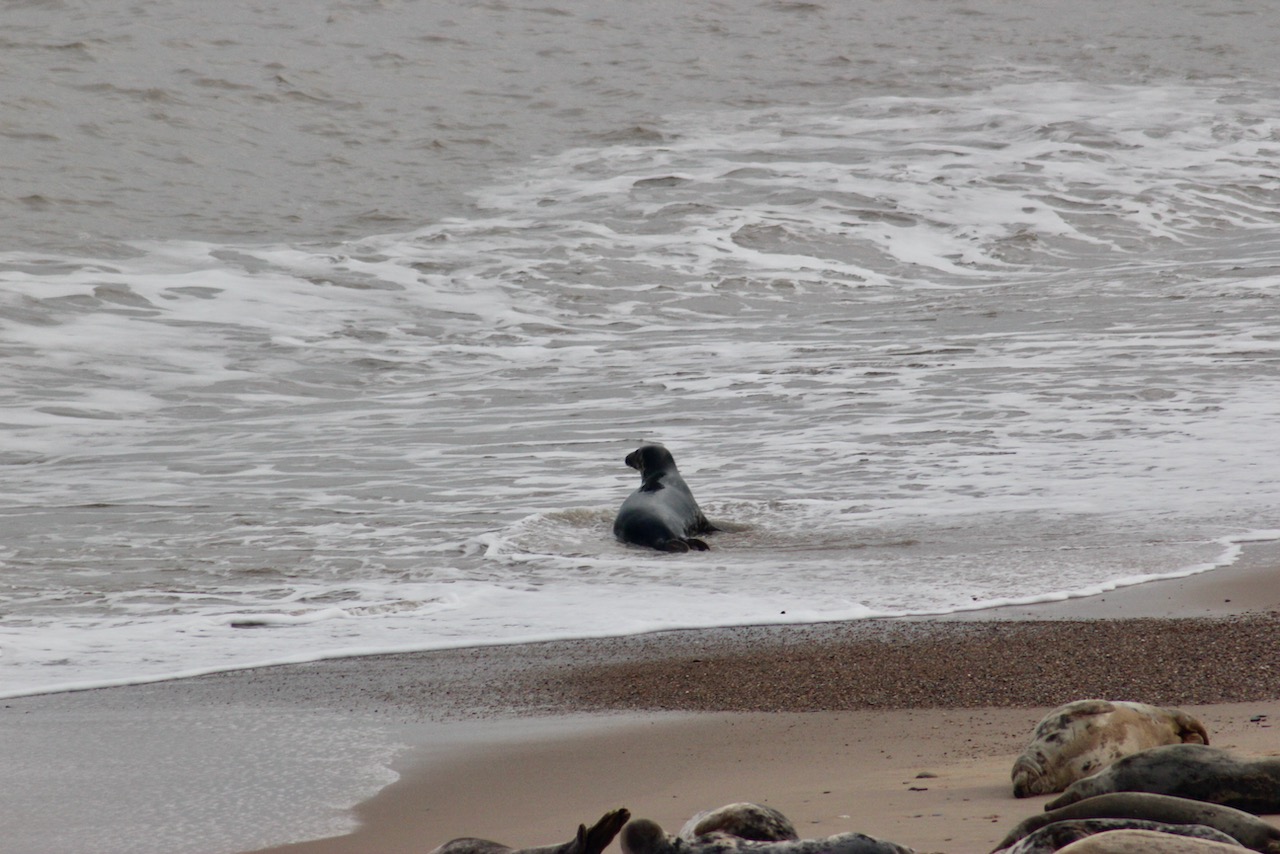
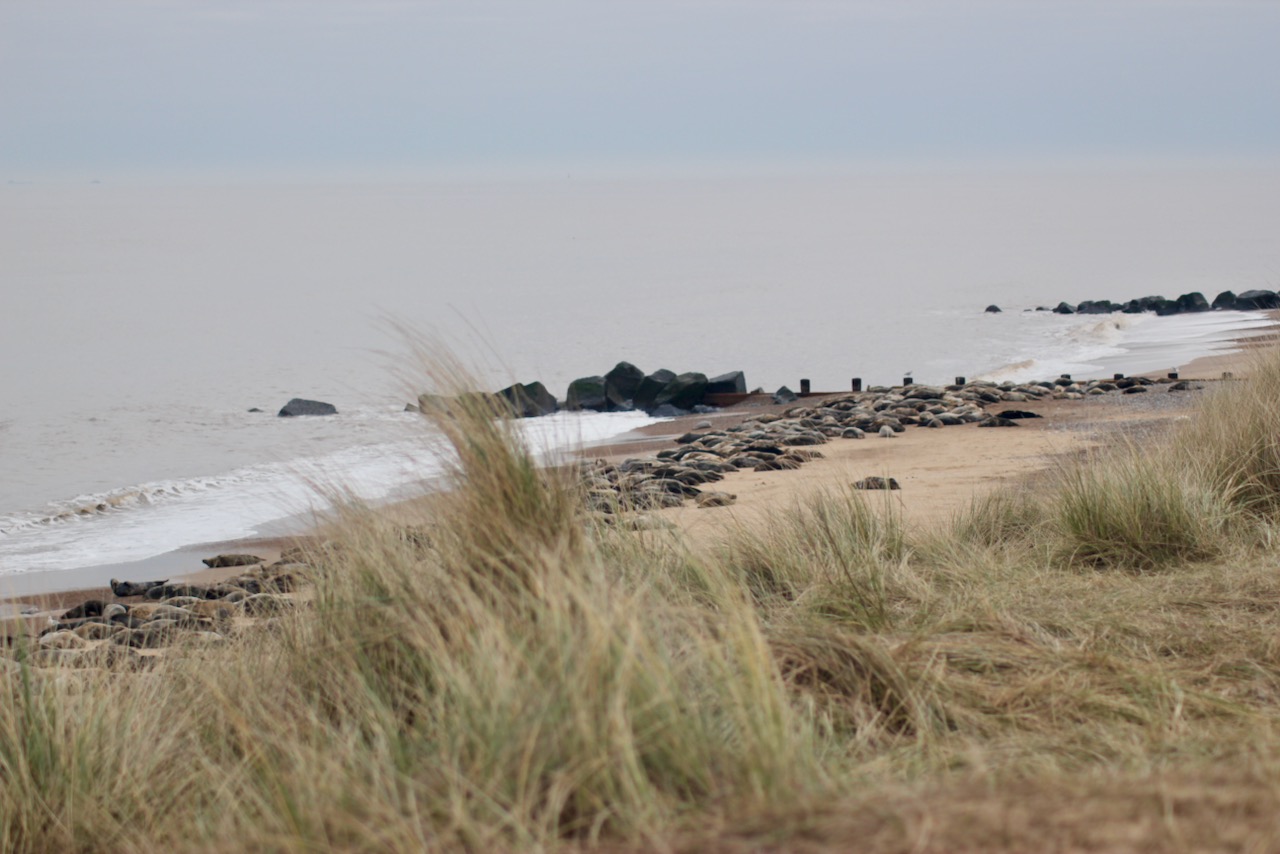
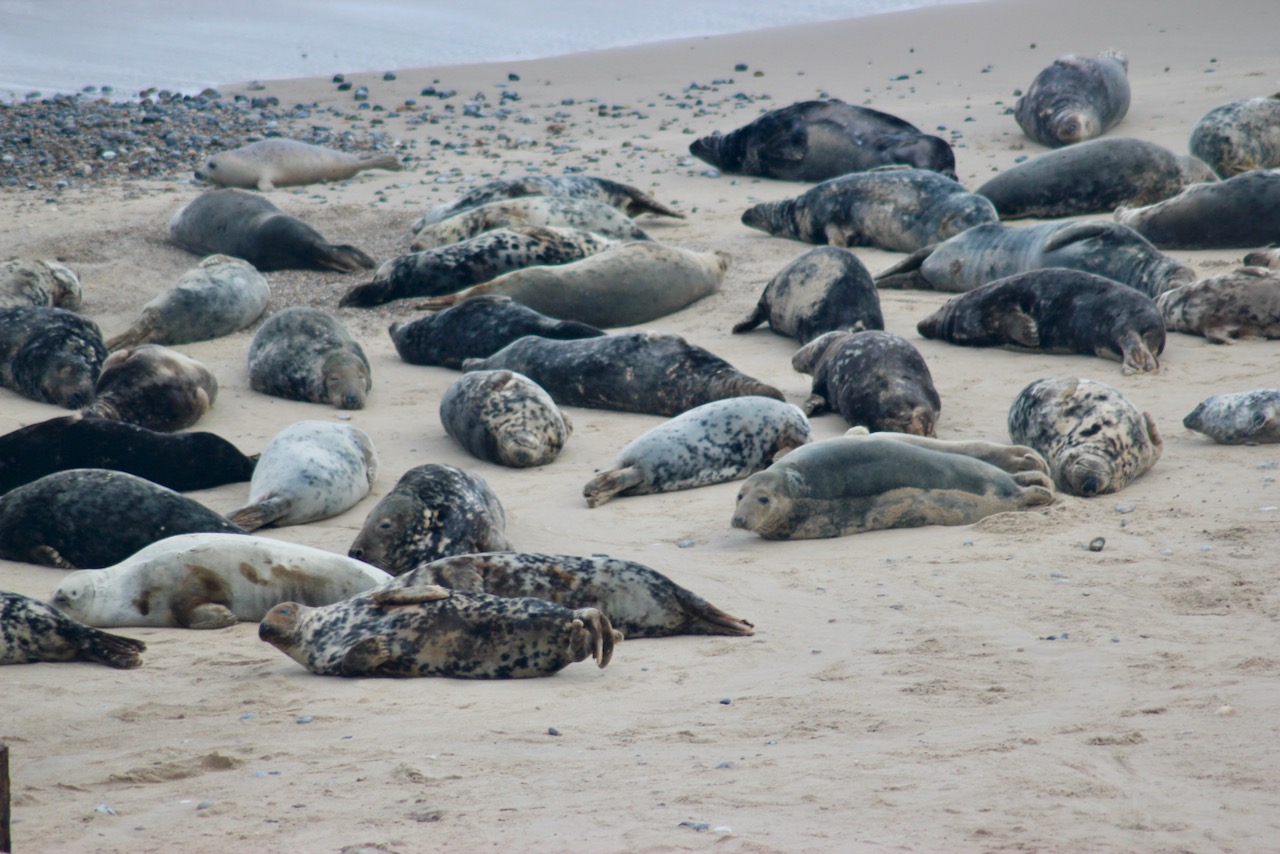
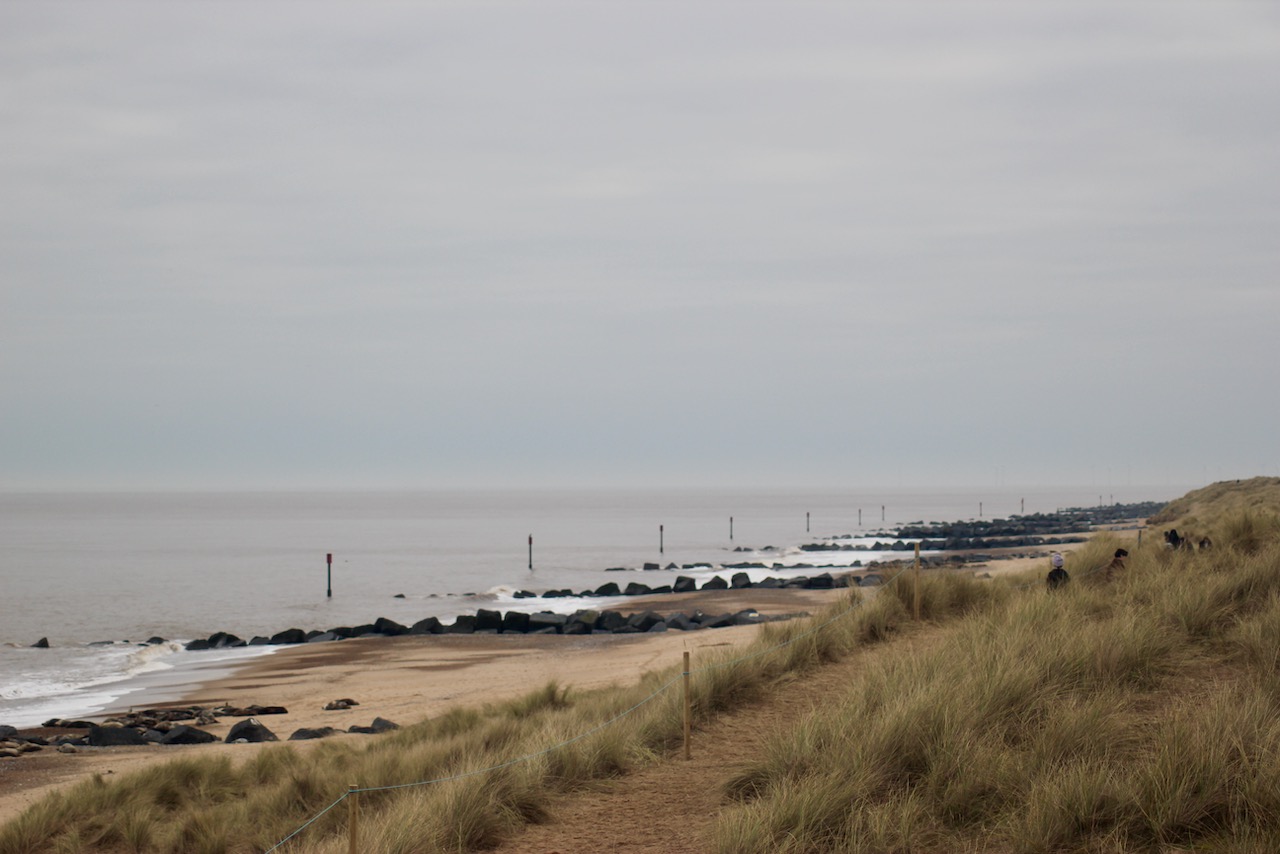
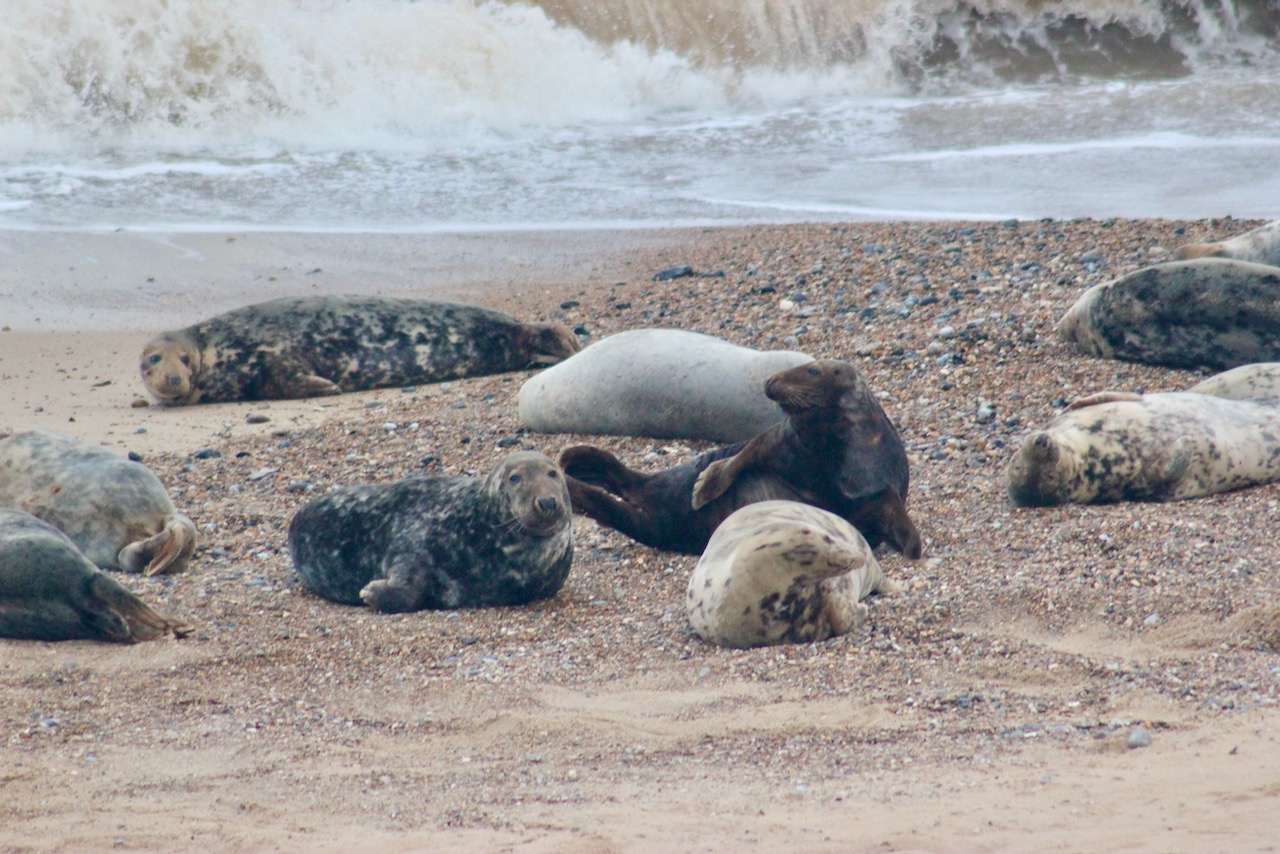
Norfolk really does have big skies, which is especially evident when you visit the coast. I popped up to see the seals recently at Horsey Gap, with a couple of friends. Aside from seals, windswept sand dunes, and endless horizon, I just love the sound of the sea and being next to it. I think that’s one the things I loved so much about my Bike around Britain cycle tour in 2013; being next to the sea everyday.
Horsey Gap – sound of the sea
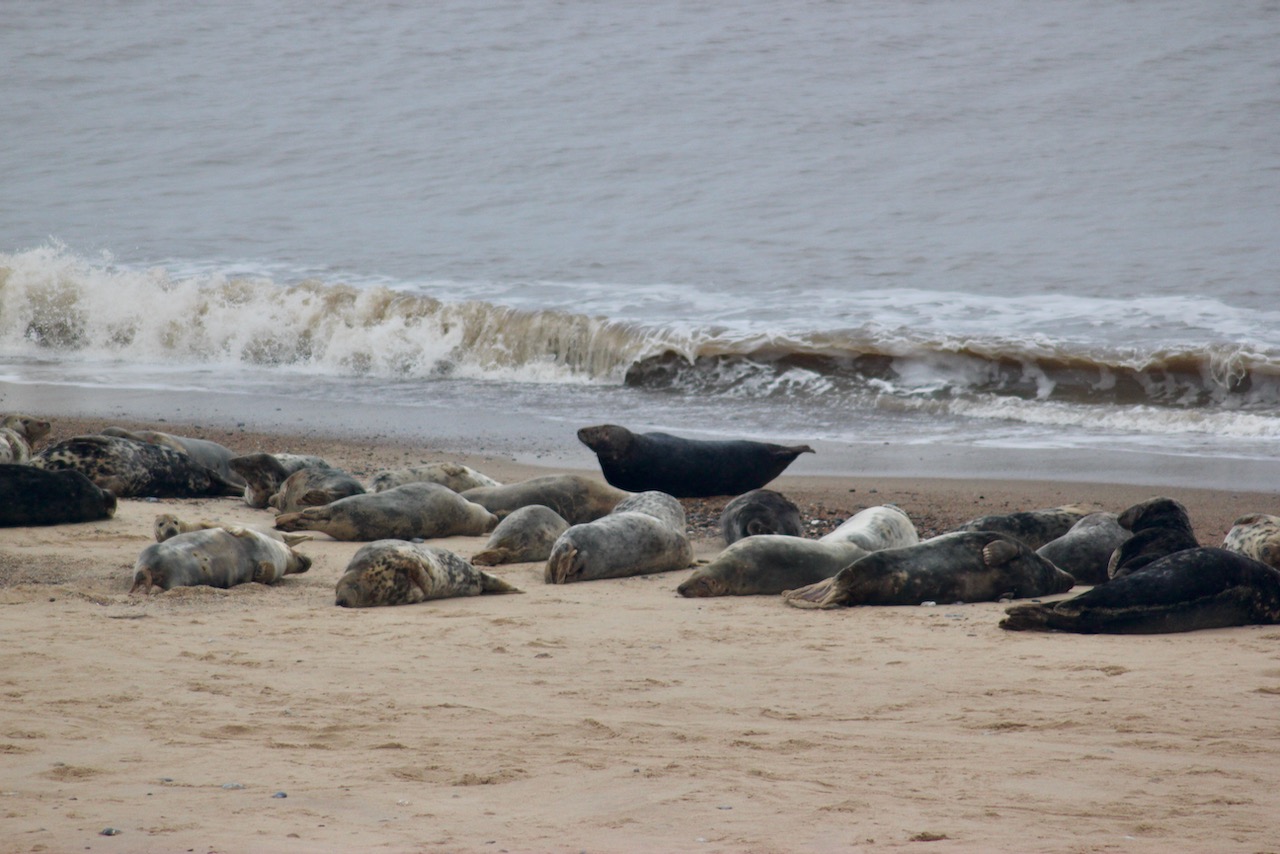
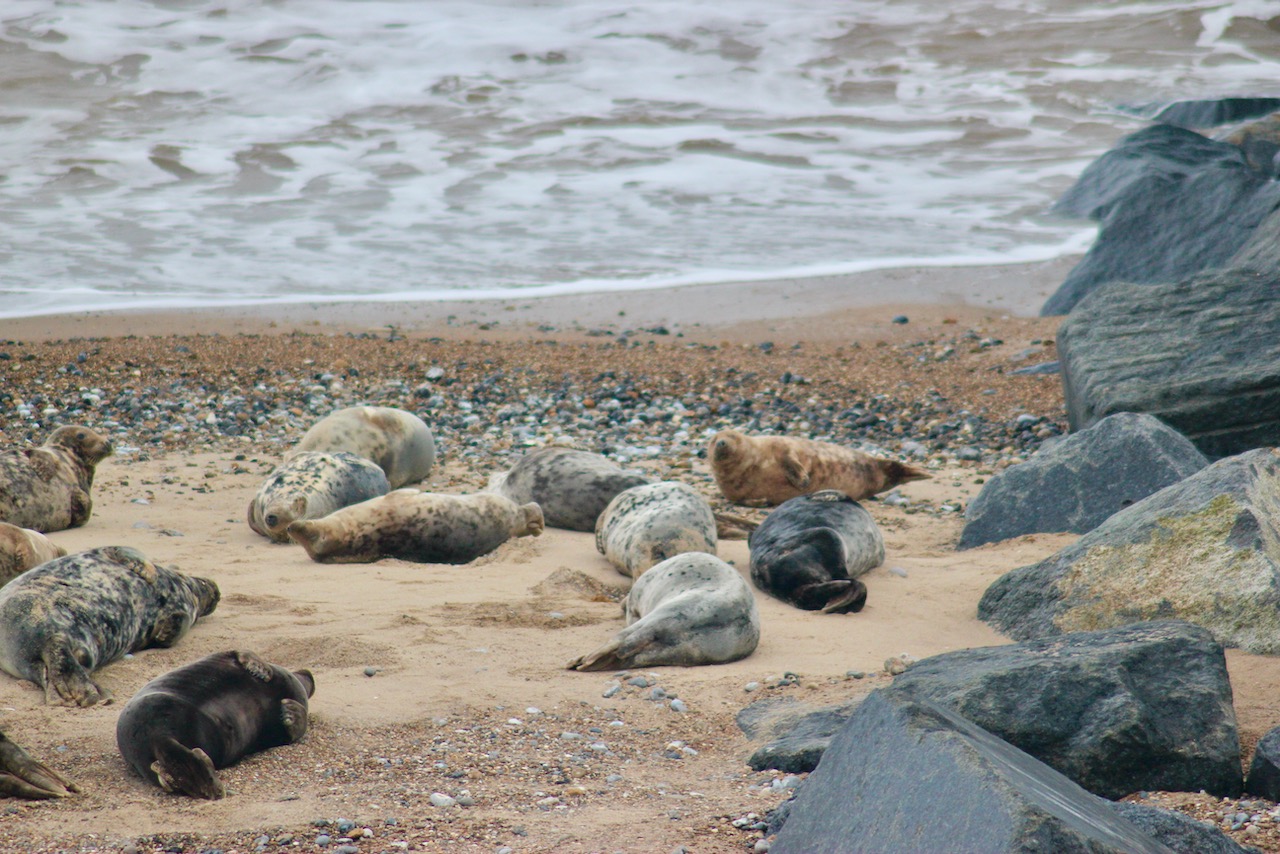
Horsey Gap is home to a massive seal colony, consisting of Atlantic Grey Seals and Common Seals. There must be thousands of them, with thousands of seal pups born every year. Sadly many of them perish before reaching adulthood, but they’re a delight to witness.
Horsey Gap – big horizonsBehind the dines – bit flat and floodable
When walking down the Norfolk East Coast it’s easy to see how just a small sea level rise could result in massive flooding. It’s so flat behind the dunes, which if breached could see sea water covering vast stretches. I guess it was all under-water once, and probably will be again in the not too distant future.
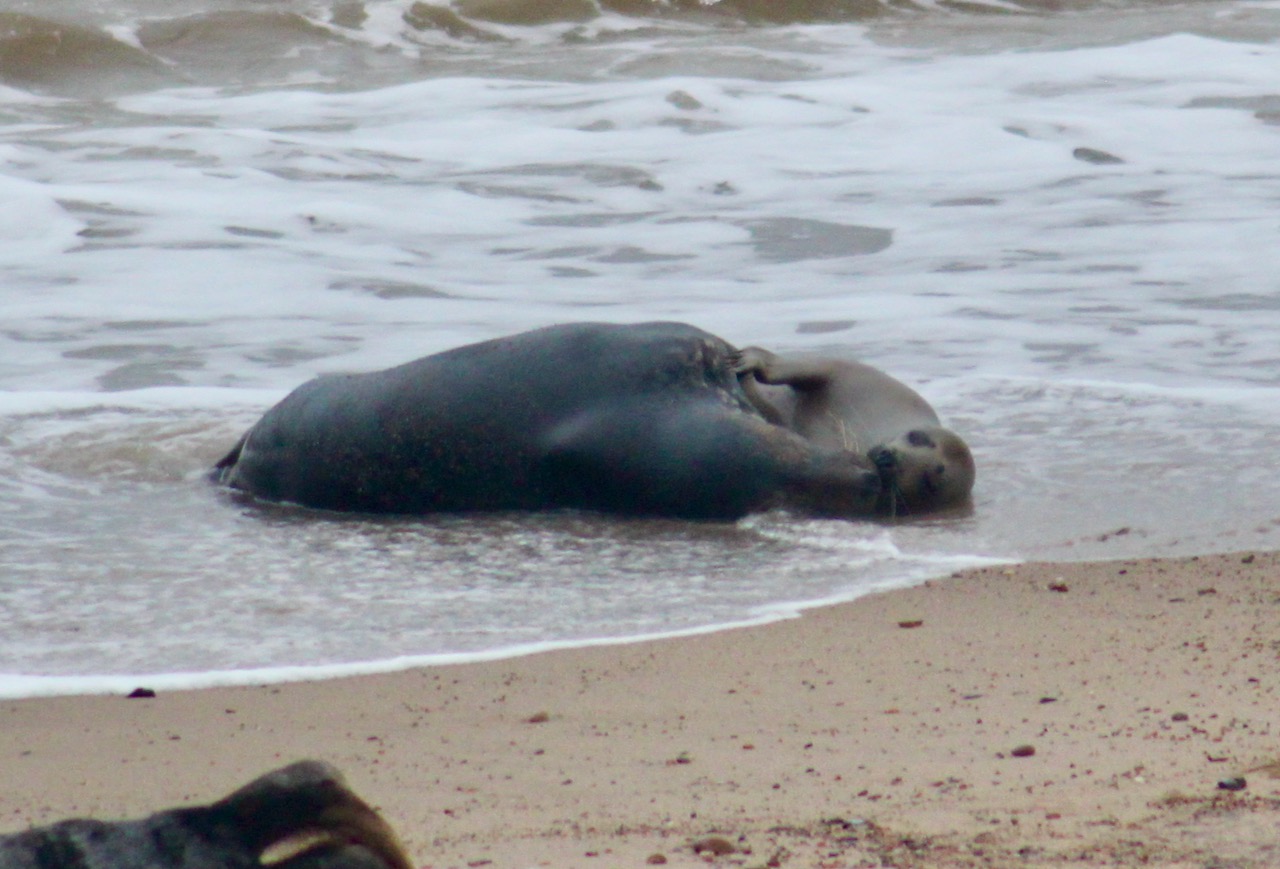
Seals lazy at HorseyBest just to take it easyGroyne number 41Mum and pup embraceMore lazingReally quite a lot of seals
Did I mention there might be quite a lot of pictures of seals? It’s worth it though, they’re so wonderful to see. The wardens are really good too, able to give you loads of information whilst also keeping the seals safe.
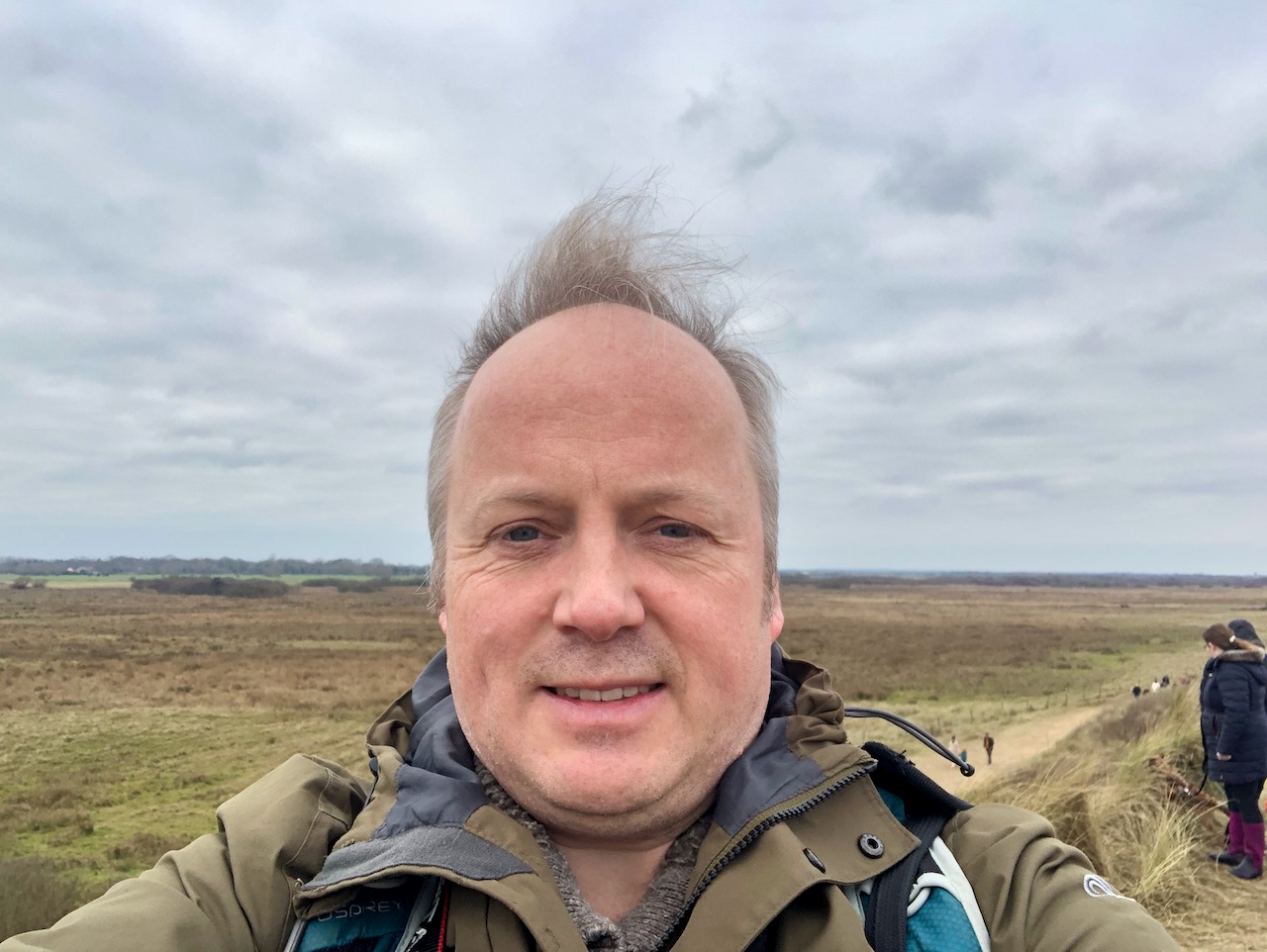
Me at Horsey Gap – interesting hairSeal splashingSeal considering a dipTufty grass…bit like my hairGood to dry offBracken and Blackthorn
The wardens are very good at keeping people away from the seals, especially those who might otherwise think it’s a good idea to try to pet them, or get a selfie. I am told that if the mother can smell a human on her pup, she may well abandon them, so whilst I’d thoroughly recommend going to see them, best not to get too close.
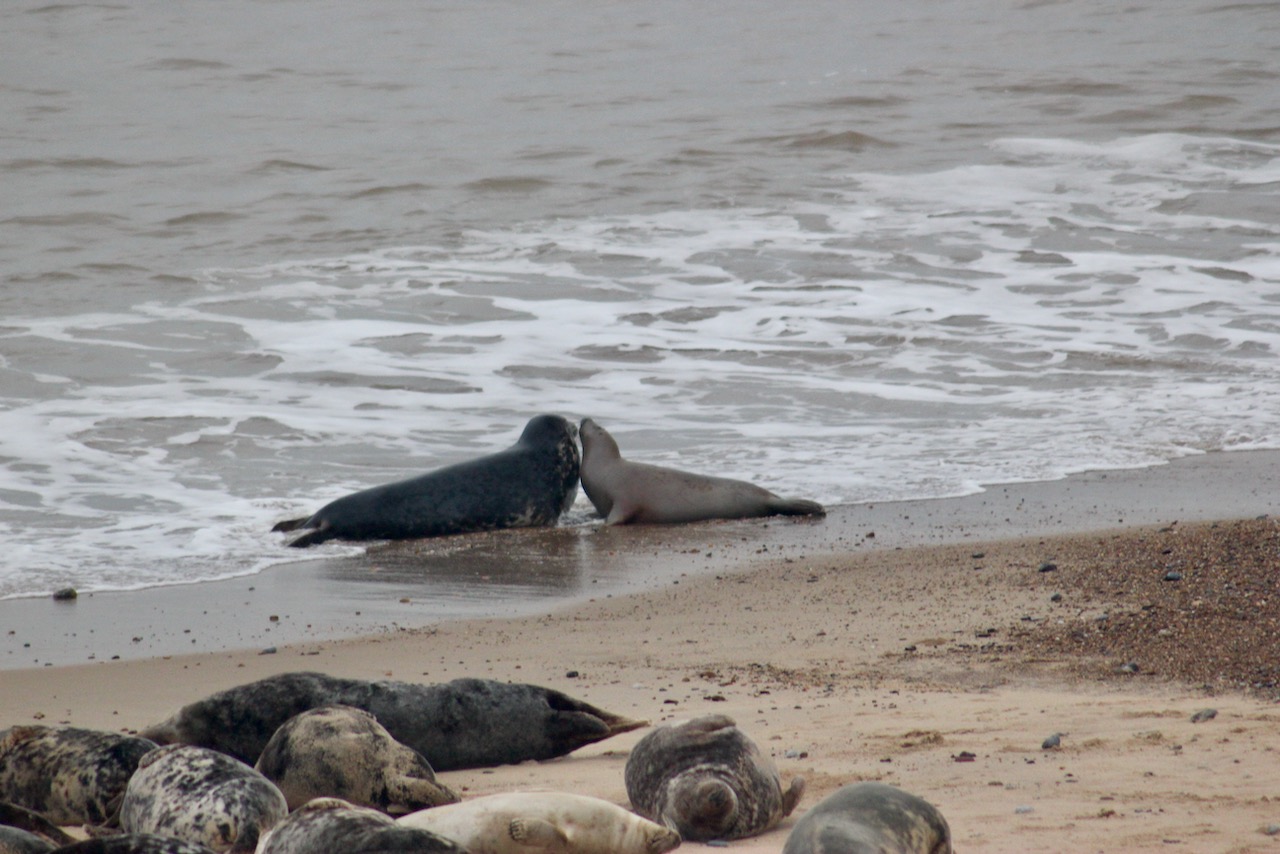
Looking towards WintertonRolling aboutGive us a cuddleOh go onMulti-coloured fluffinessSomebodies eaten well
I took pictures using my old Cannon 550D with a zoom lens, but I think the ones I got on my phone might have actually been better. The Cannon pictures just don’t seem to have picked up the colours as well as the phone. Here are some last ones of mother and pup.
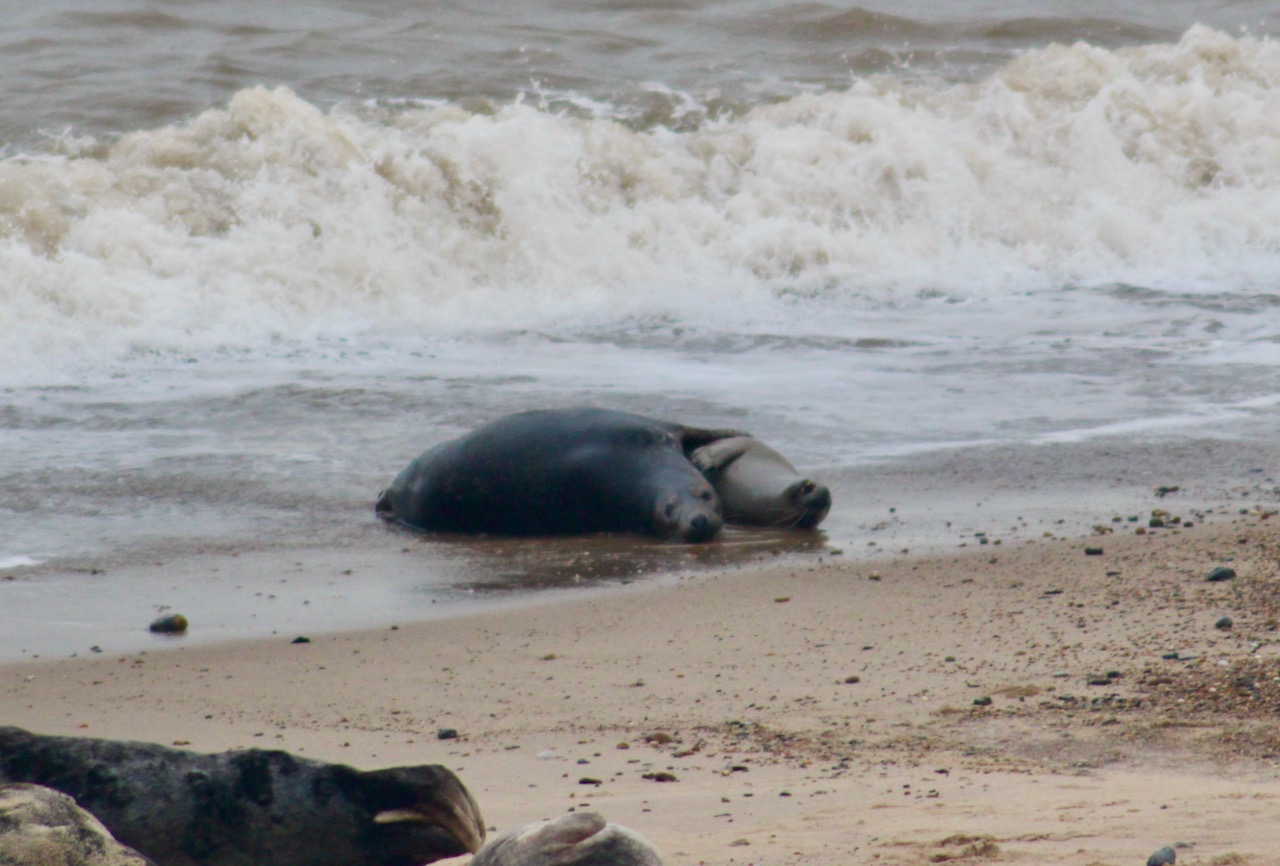
Mum and pup in surfWhat you looking at?Some final fluffiness
We walked all the way down to Winterton, had some chips and a hot chocolate, and then walked back. I was sad to see the cafe at Winterton is no longer there, due to coastal erosion, however there was a very good circle of food vans which met requirements.
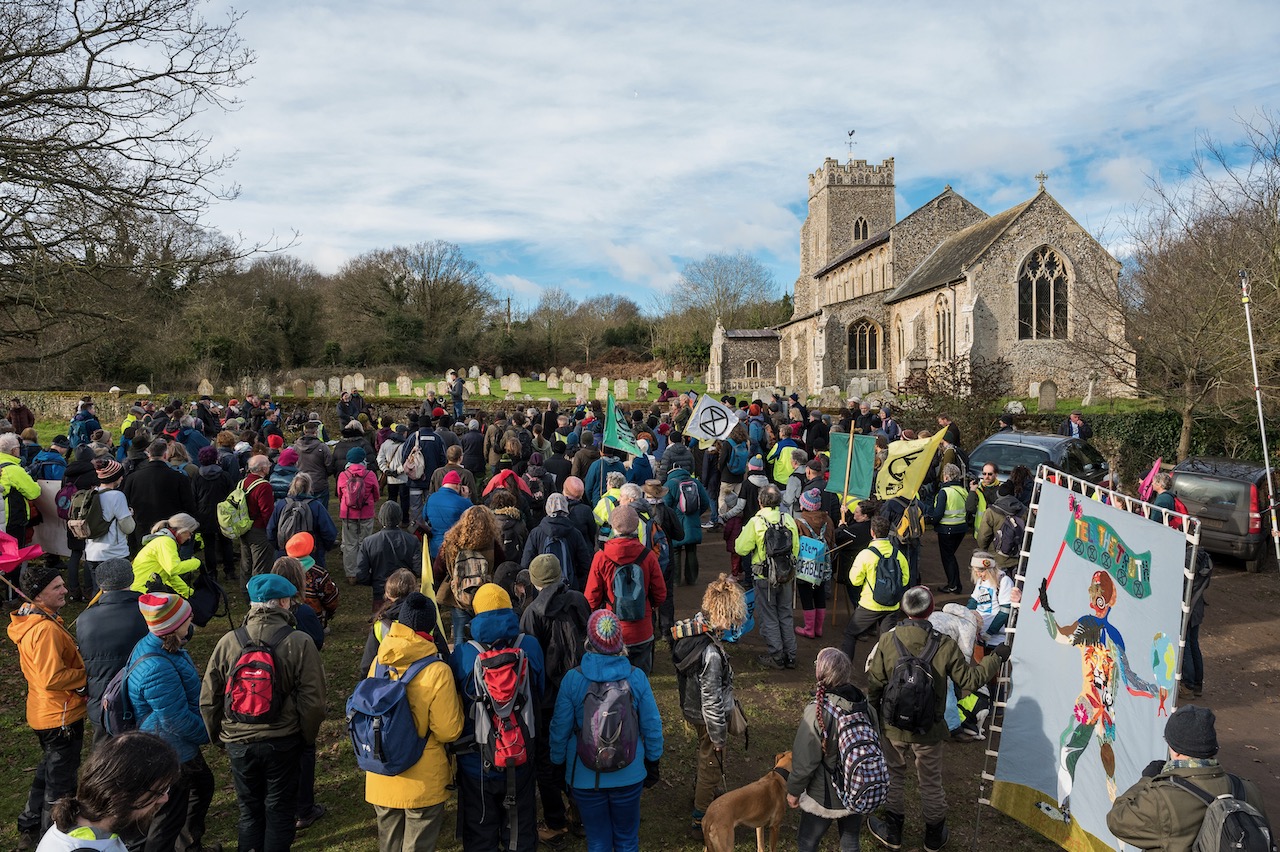
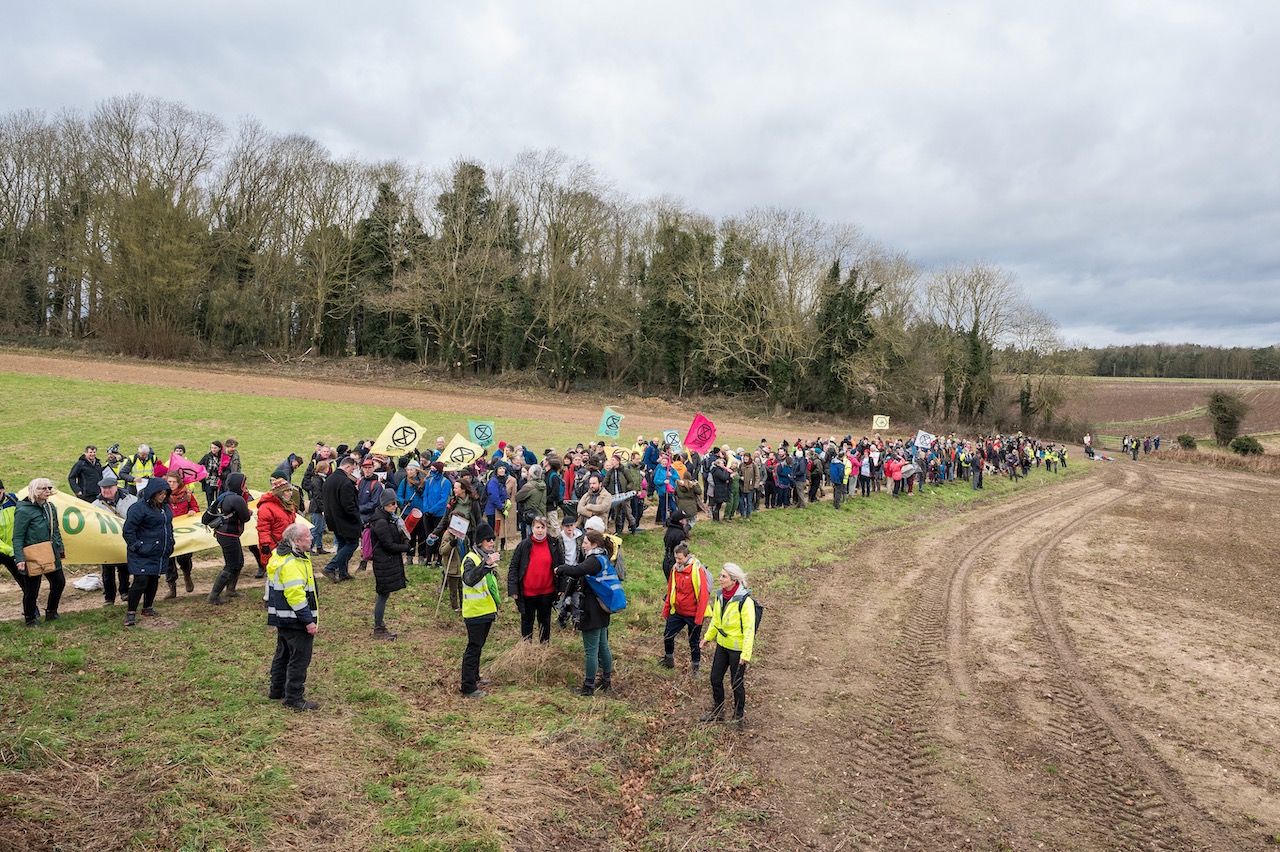
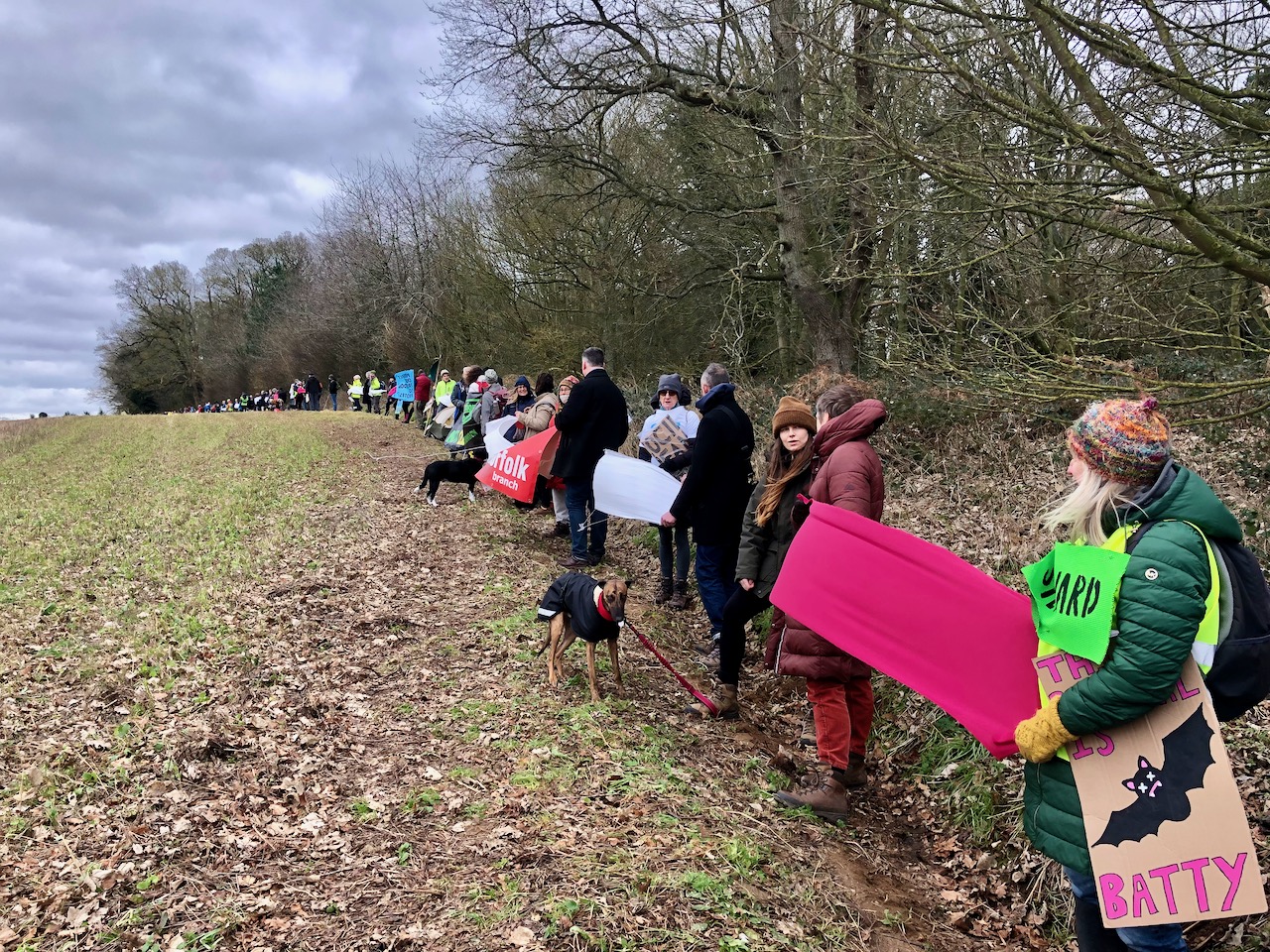
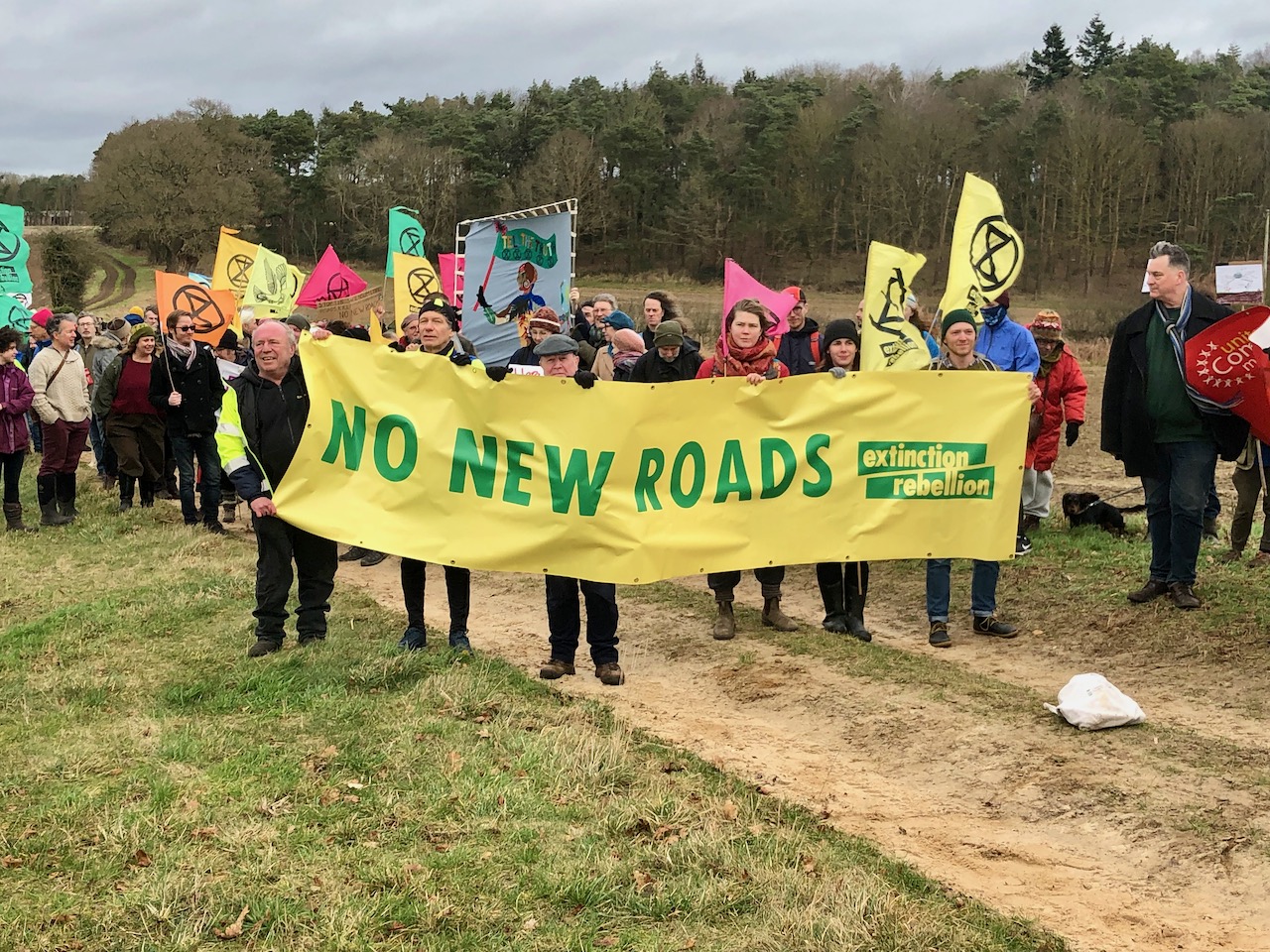
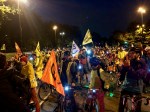
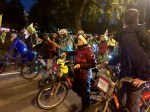
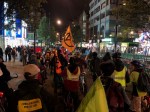
Other stuff that’s been happening. We had a great turnout for the protest versus the proposed Western Link Road. The road will cut through rare chalk stream habitat, endangered Barbastelle bat colonies, and destroy a swathe of precious Norfolk countryside; the last natural corridor into Norwich and its green lungs.
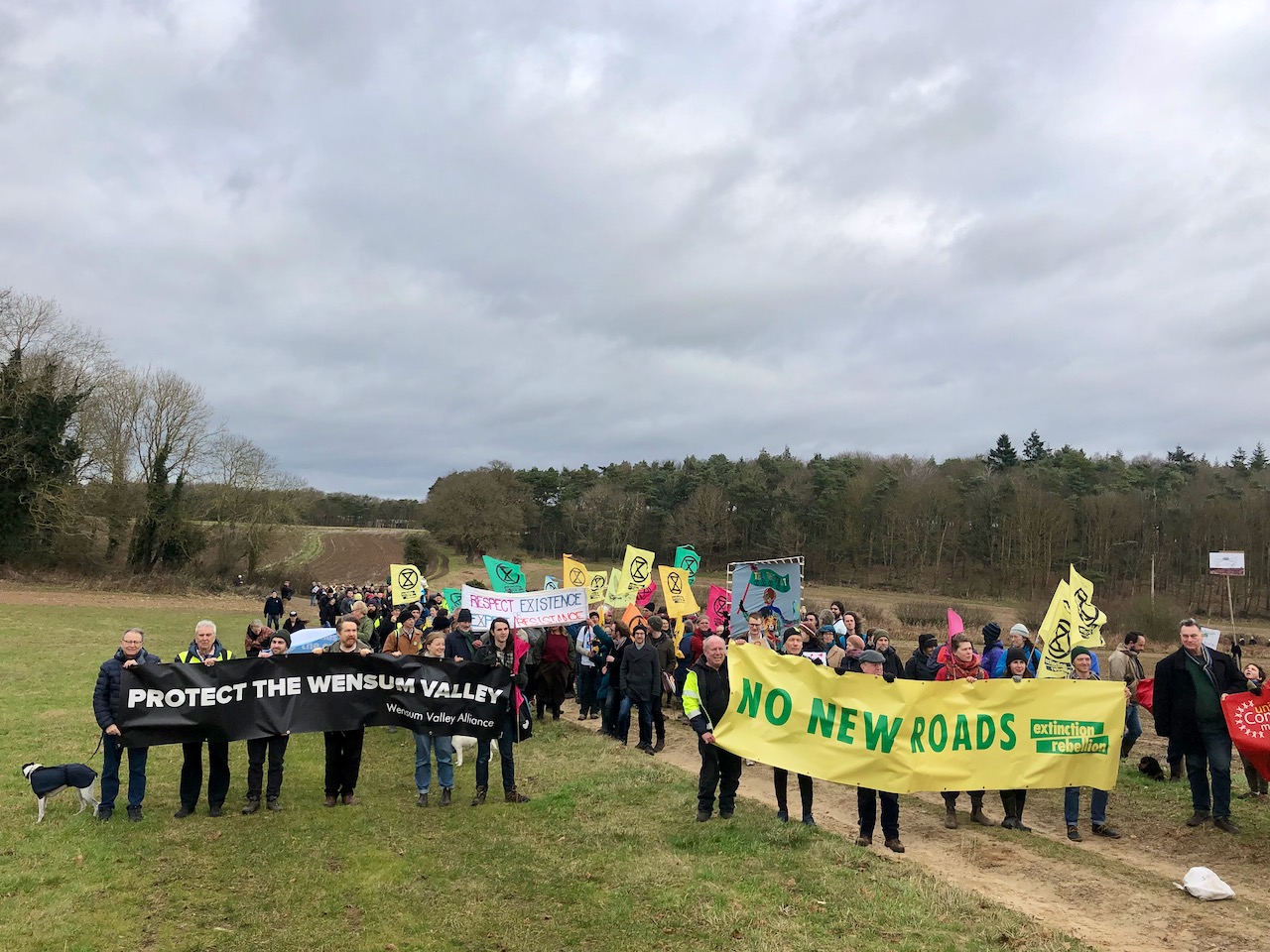
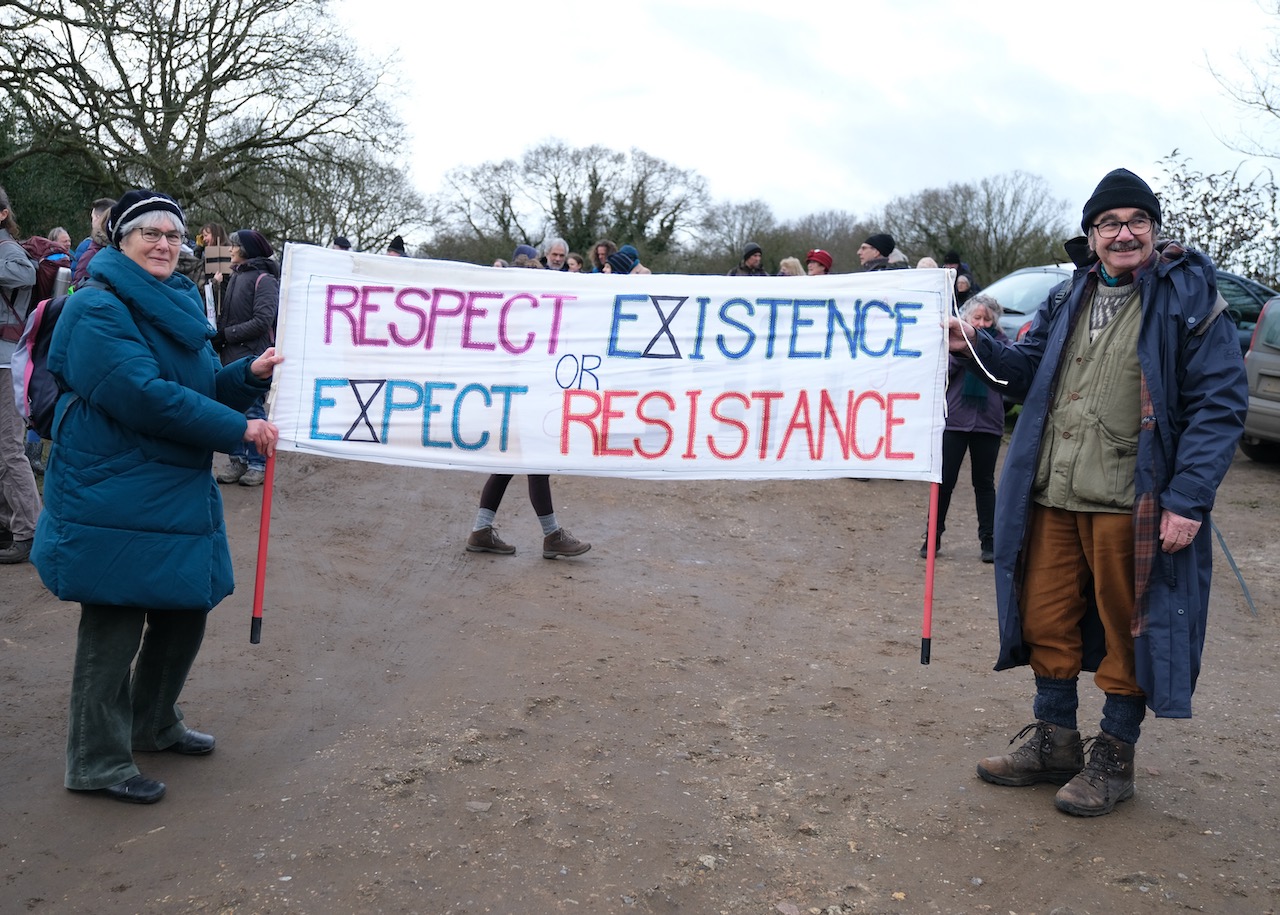
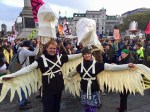
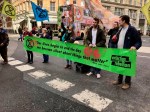
Mustering outside Ringland ChurchOver 300 gathered to oppose the roadMarch down Ringland LaneFlags and banners galoreLining the route to the road will cut throughCrowds gather at demo site
The protest was organised by Norwich Extinction Rebellion, and attended by loads of local groups including Stop the Wensum Link, the Wensum Valley Alliance, Norwich Friends of the Earth, Green New Deal, Green Party and Labour Party councillors and Clive Lewis MP, Trade Union reps and many others. It was so heartening to see so many people come together to oppose an ecocidal road scheme, one that will increase emissions, traffic and pollution, whilst also opening the countryside up to more development. We should be investing the £200m+ it’ll cost for the 4 miles of road into green sustainable transport (buses) and active transport (cycling infrastructure), instead of investing in ultimately our own demise.
Extinction RebellionNo New RoadsProtect the Wensum ValleyRespect Existence or Expect ResistanceToads Not Roads
Great press coverage and opposition is definitely growing versus the road, with Norwich City Council recently coming out against it. Norfolk County Council and institutions like the University of East Anglia just need to catch up a bit.
But why not also get involved in an opposition group too; let me know if you want to learn more.
Ok, nearly there. I really will try to do blog posts more often so I don’t deluge you with updates.
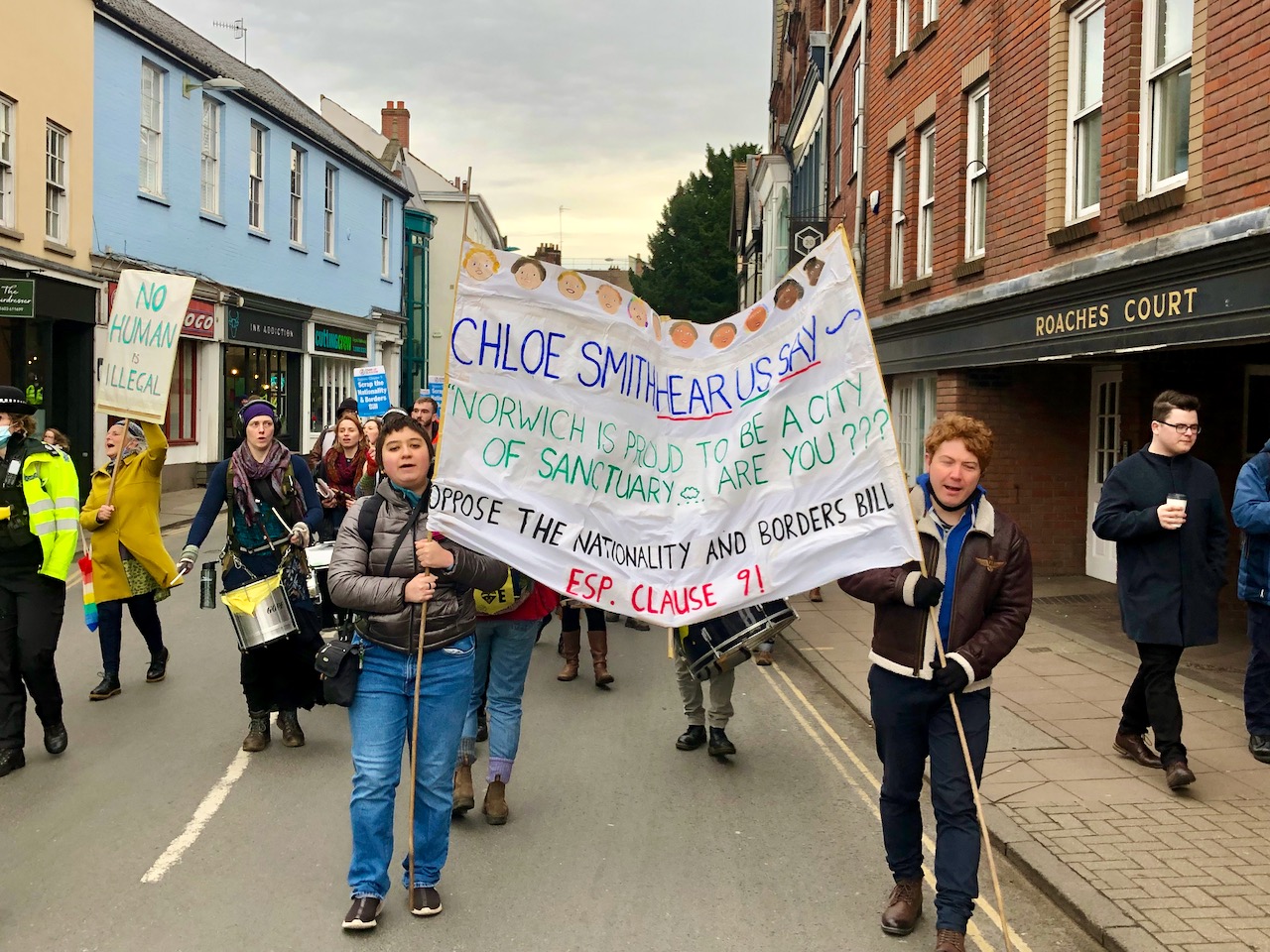
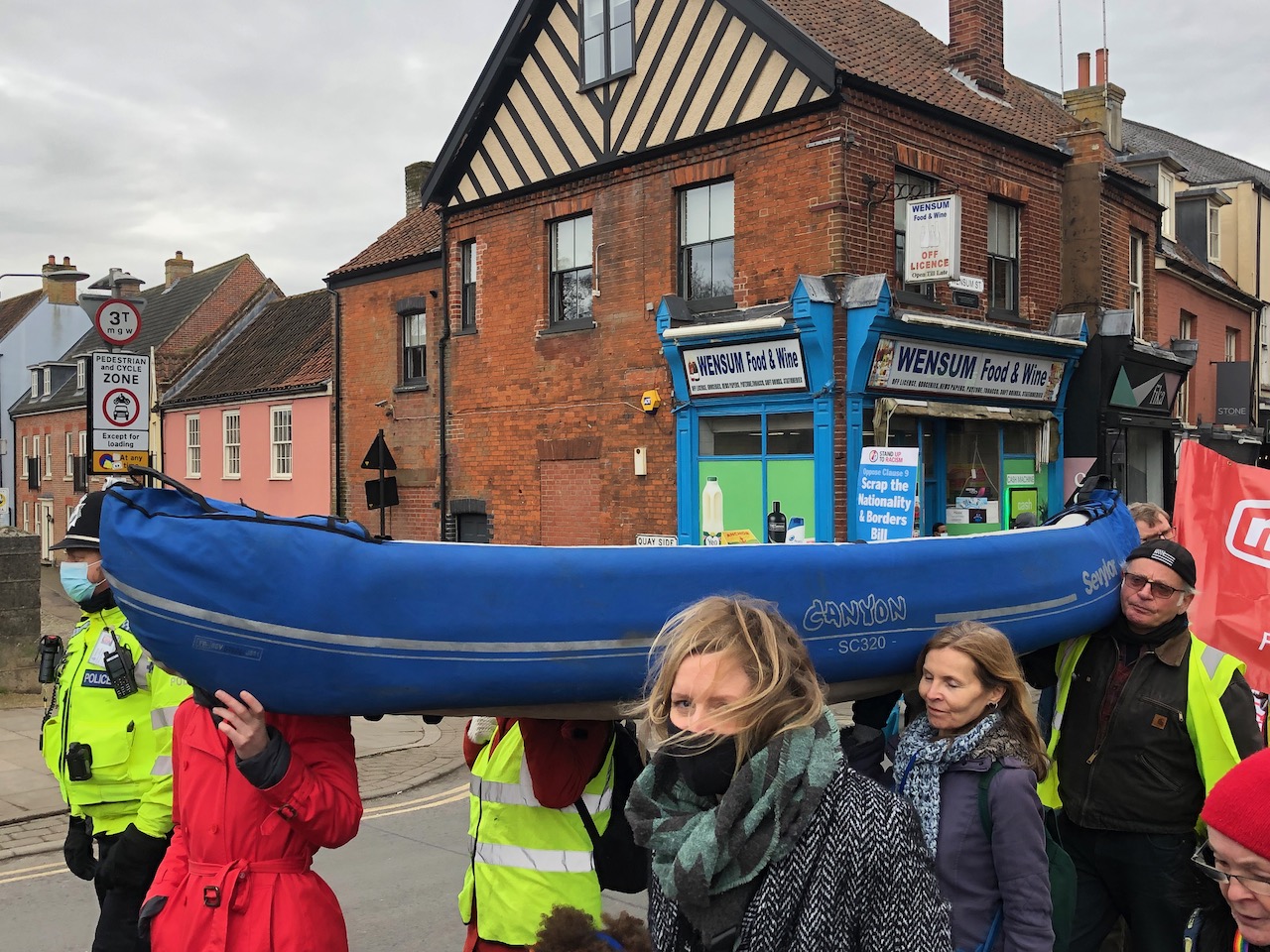
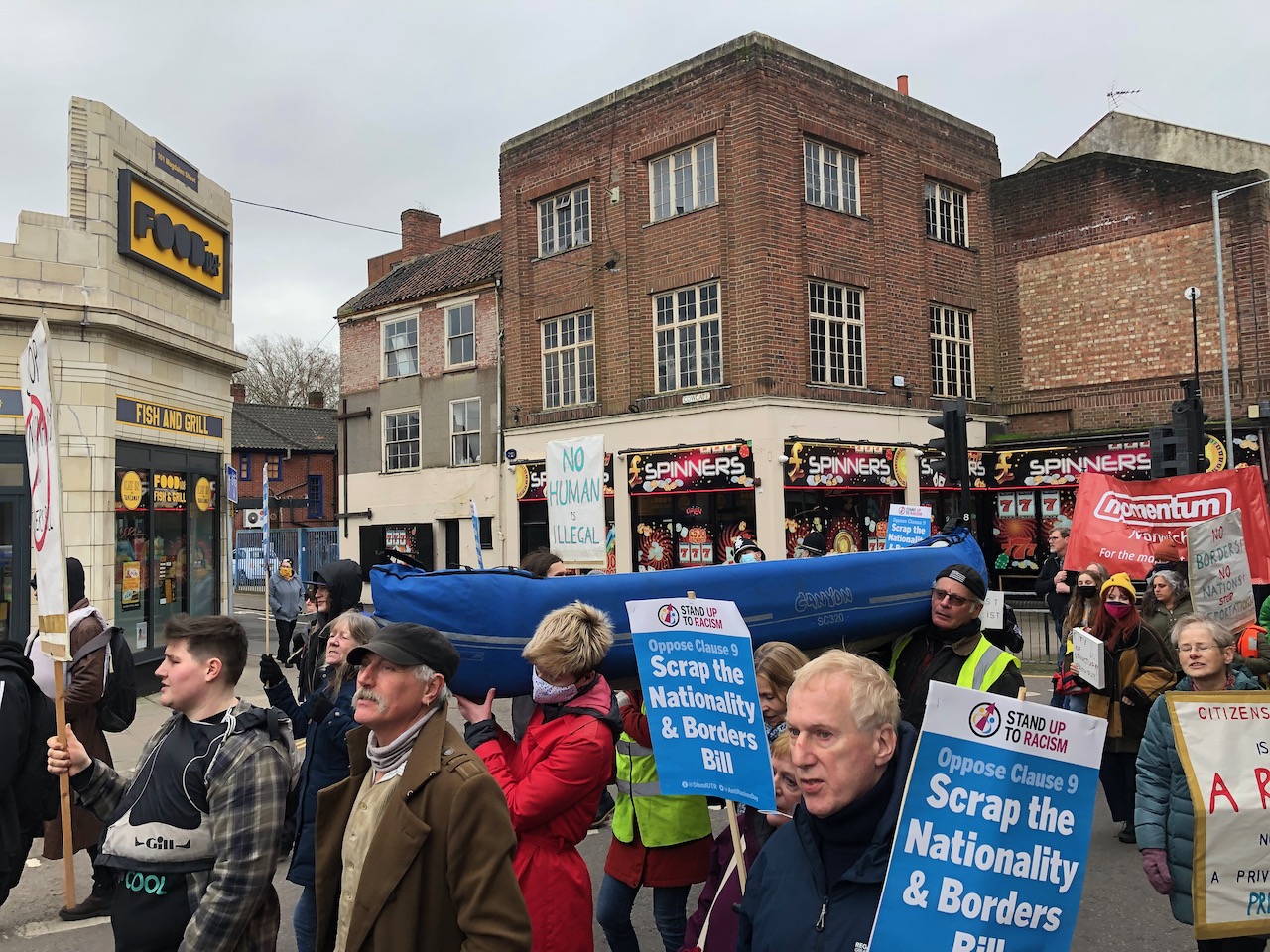
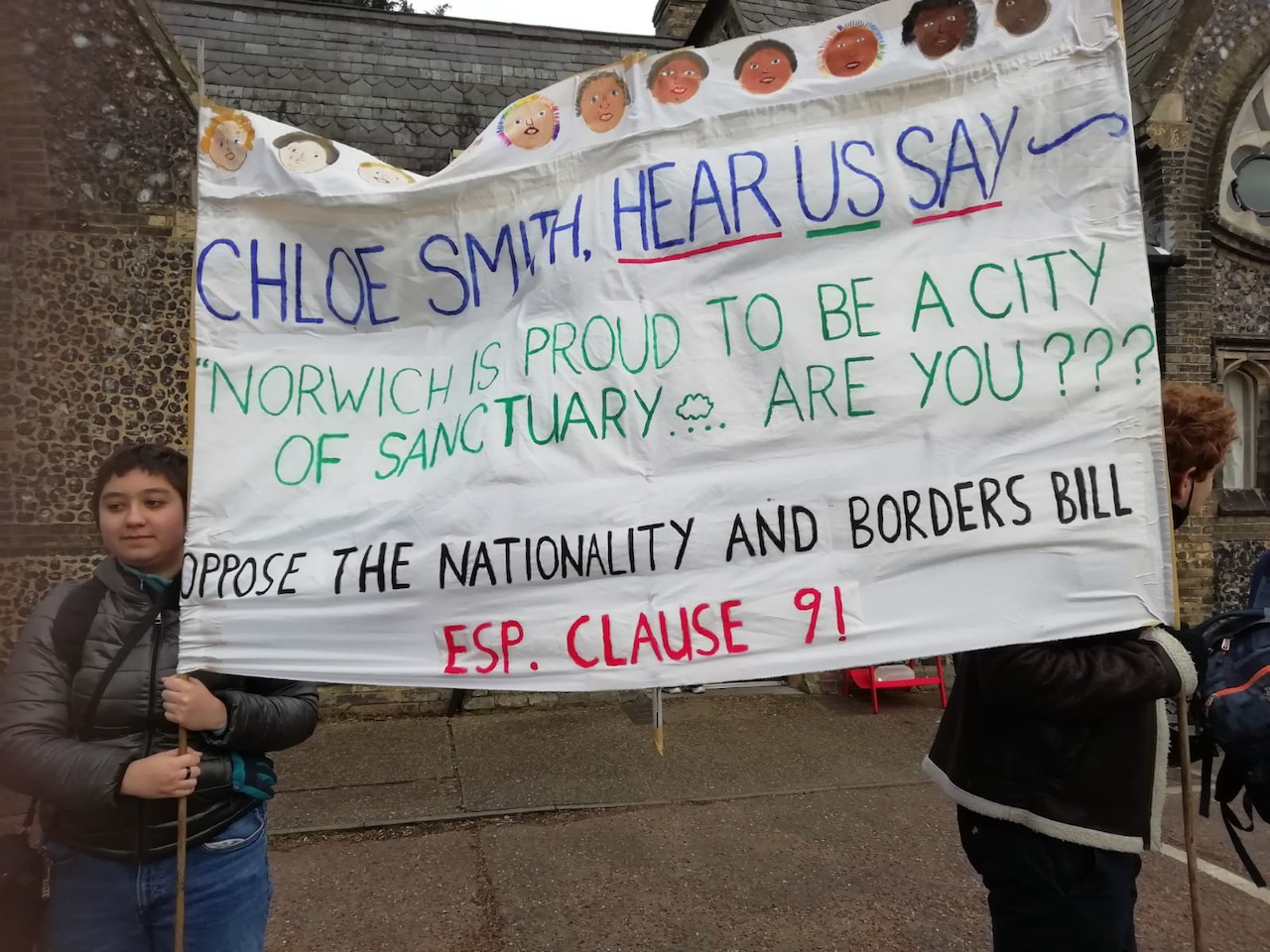
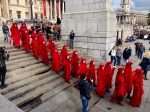
Have you heard to the Nationality and Borders Bill, currently going through Parliament? It will criminalise refugees and asylum seekers, and allow the Government to strip people with dual-nationality of their UK citizenship without warning (clause 9). It’s pretty awful, and another step towards authoritarianism and fascism. I joined a protest in Norwich against it last Saturday, as I don’t want to see more people fleeing for their lives drown in boats crossing the channel, or get persecuted for just wanting a better life for their children. Especially when it comes to climate refugees, of which there are already thousands and will be millions. The UK is historically and currently responsible for this, and we need to help.
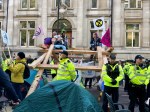
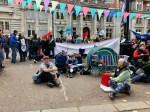
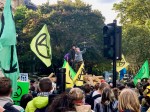
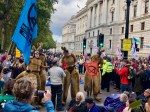
Down Magdalene Street we goXR drummers out in forceCanoe representing cross channel deathsDrummers and placards
It feels like the Government is trying to dehumanise refugees by calling them illegal immigrants, and painting them as a burden and threat. Refugees rebuilt cities like Hamburg after the second world war, and have brought so much to this country already. They deserve a chance like anyone else.
Scrap the Nationality and Borders BillOutside City HallAre you listening Chloe Smith?
I think that brings us about up to date. A few bullet points to round us off:
Still doing physio on my knee after falling off climbing wall in November, and awaiting operation to build new ligaments. Luckily I can still cycle and walking is fine
Planning a cycle tour for later this year – I fancy Cornwall
Also might be going to Scotland for a bit for some walking, will probably get lost
Don’t just think about how wrong things are sometimes, try and do something about it. There are tonnes of groups to get involved with, and Extinction Rebellion are taking to the streets in April on another effort change things
Anxiety and depression are a thing, friends are amazing. Keep on keeping on
Happy New Year, here’s to hopefully a less contagious 2022! Or at least less in the way of lockdowns and bad decisions by the powers that be. Maybe I should just stick with less contagious and hope for the best.
Gideon had a good Christmas despite me having to abandon him for a few days; he was well looked after by a friend whilst I escaped to my parents (thanks Adam). I don’t think he would have got on very well with my brother’s dog, given previous experience of him chasing canines around.
He likes cards with cats on themGideon enjoyed ChristmasToo many treats?Getting colder, blankets important
Now it’s getting colder he’s decided staying inside with blankets is probably for the best. I can’t say I blame him.
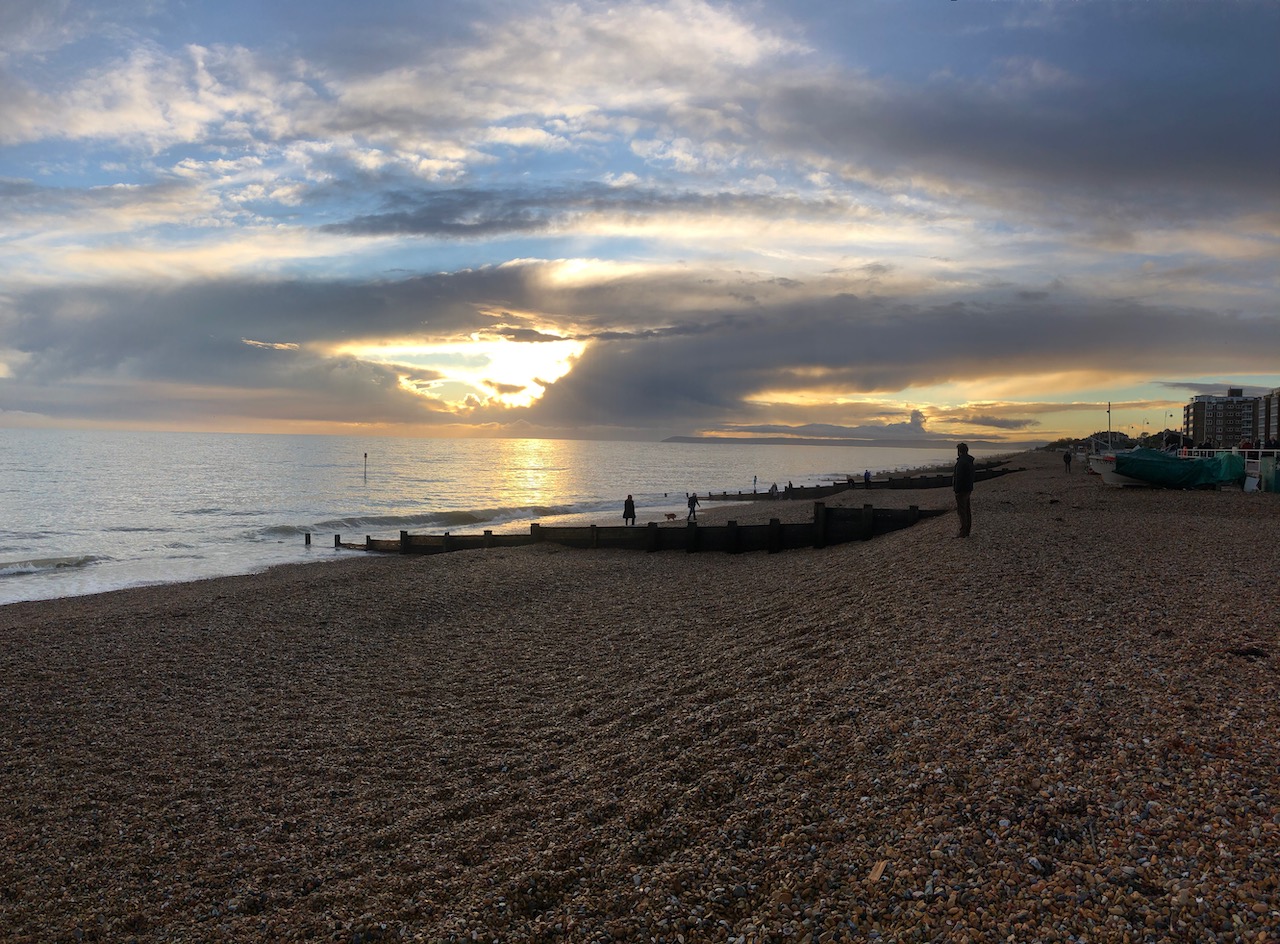
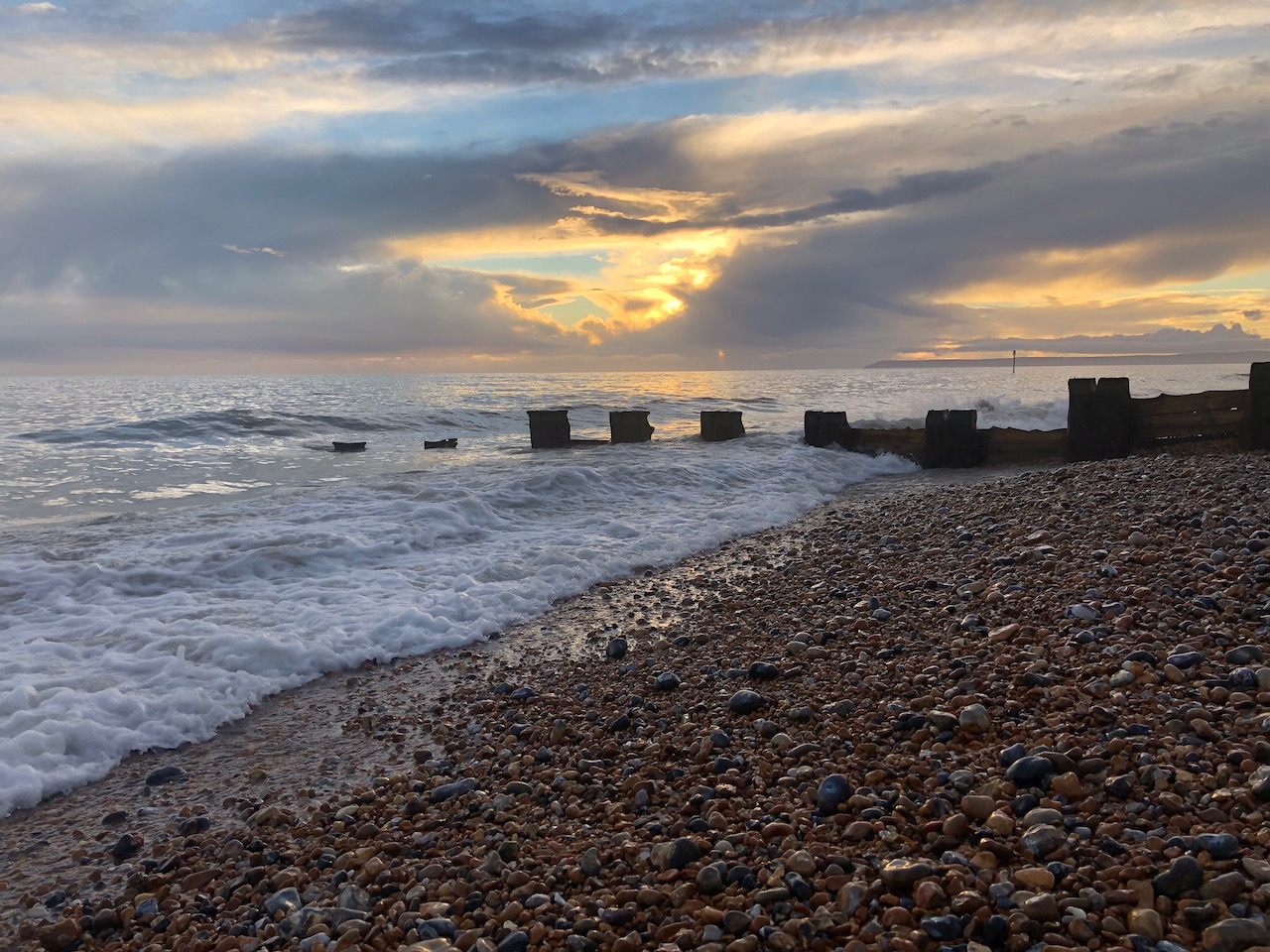
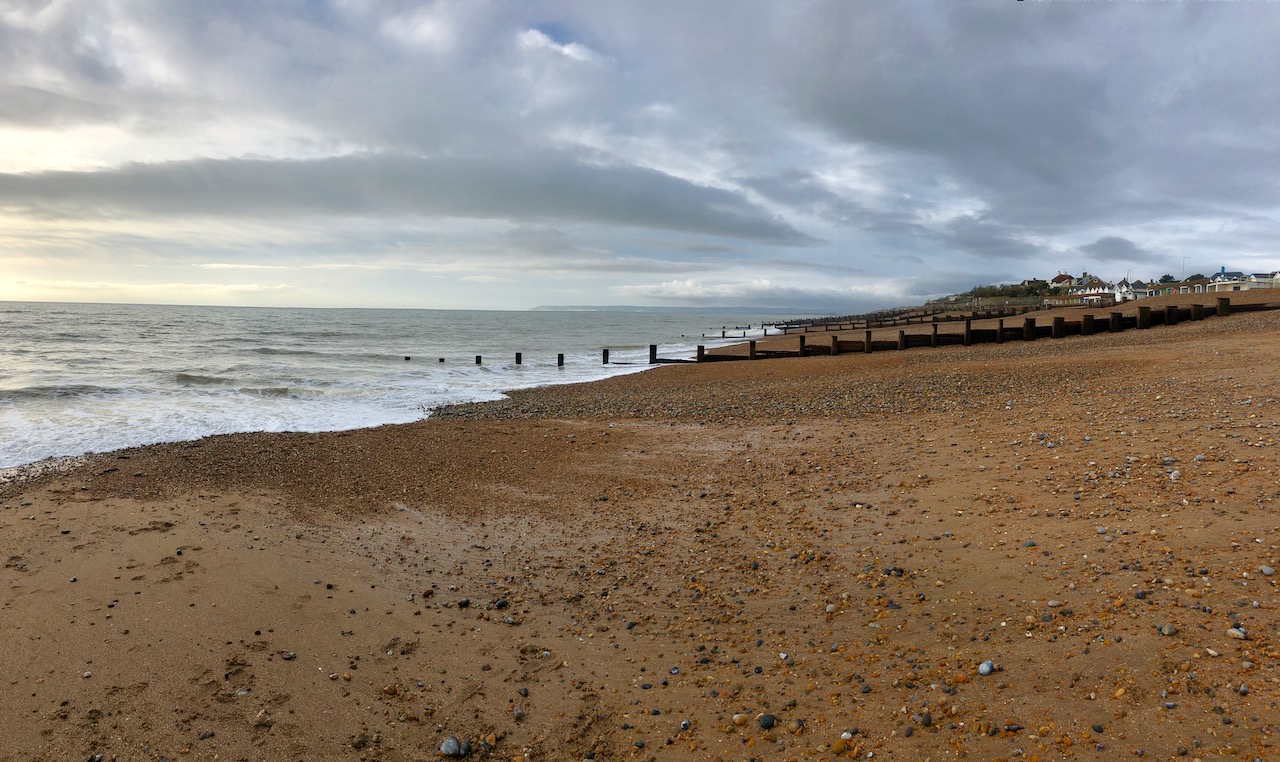
I had a good Christmas break down at my parents’ house in East Sussex, with my brother and sister-in-law’s family too. Great to be able to get together after last year’s shenanigans. Got out for some lovely walks on the beach down in Bexhill, and ate too much.
Beachy Head in the distanceDog thinks it’s brilliantA visit to the beech
I’m generally not a big fan of Christmas. I really hate all the commercialism and pressure to buy stuff. It brings back memories of people no longer with us like Lucy. I can’t believe it’ll be 10 years since she passed away this February. Lots of happy memories of Christmas’ with her but that makes it harder when it comes round again somehow. Still, this was a good one and had lots of fun playing with my niece and nephew; just waiting for reports of what my niece has broken with the catapult I bought her. Naughty presents are what Uncles are for…right? I’m not playing Monopoly against my nephew again though, too many hotels on Mayfair for my liking, and I kept ending up in jail, which as an Extinction Rebellion person does not bode well.
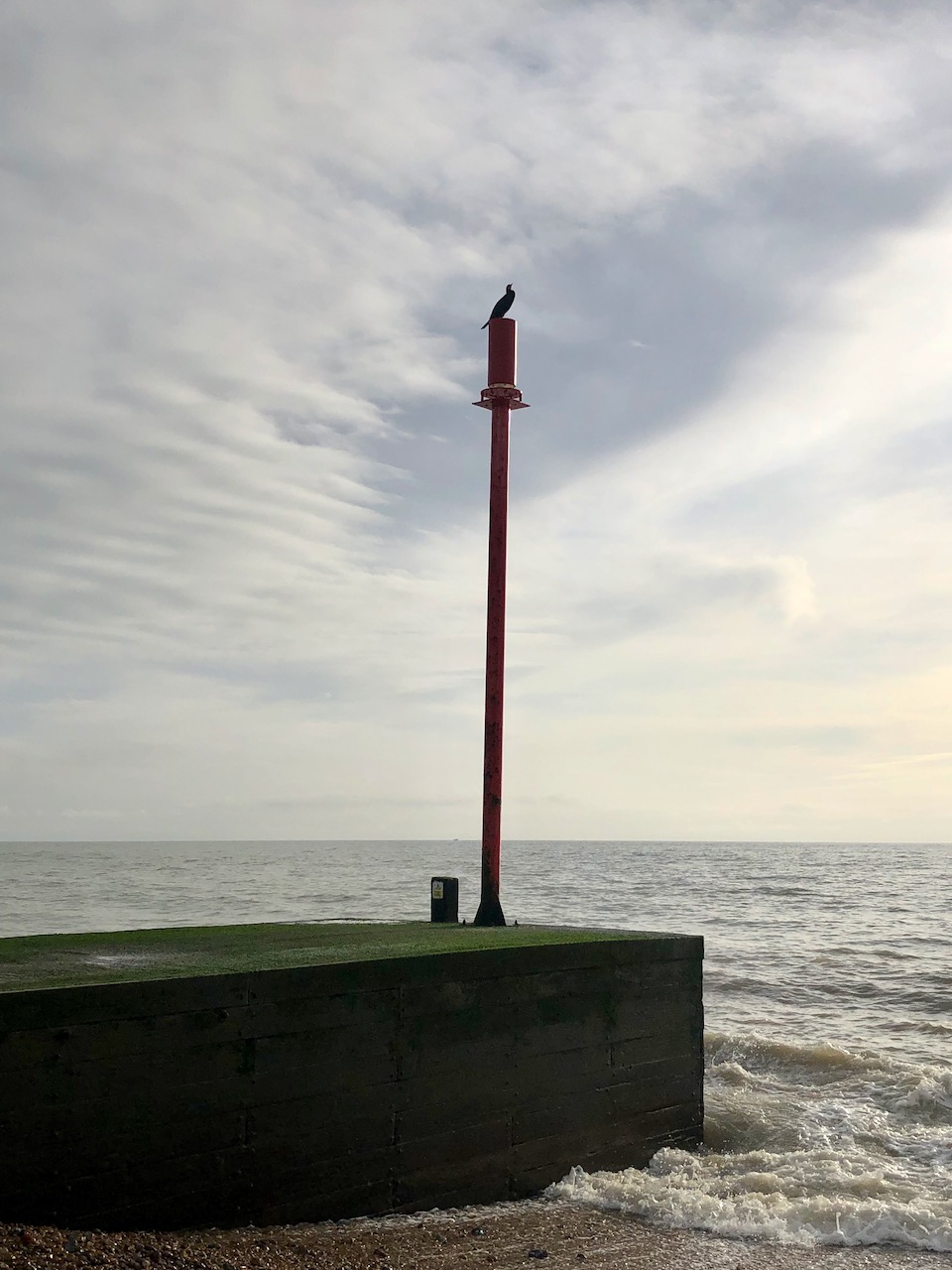
Beach visit again – murky ChannelGood lookout spotCormorant on a poleSouth Coast sunshine
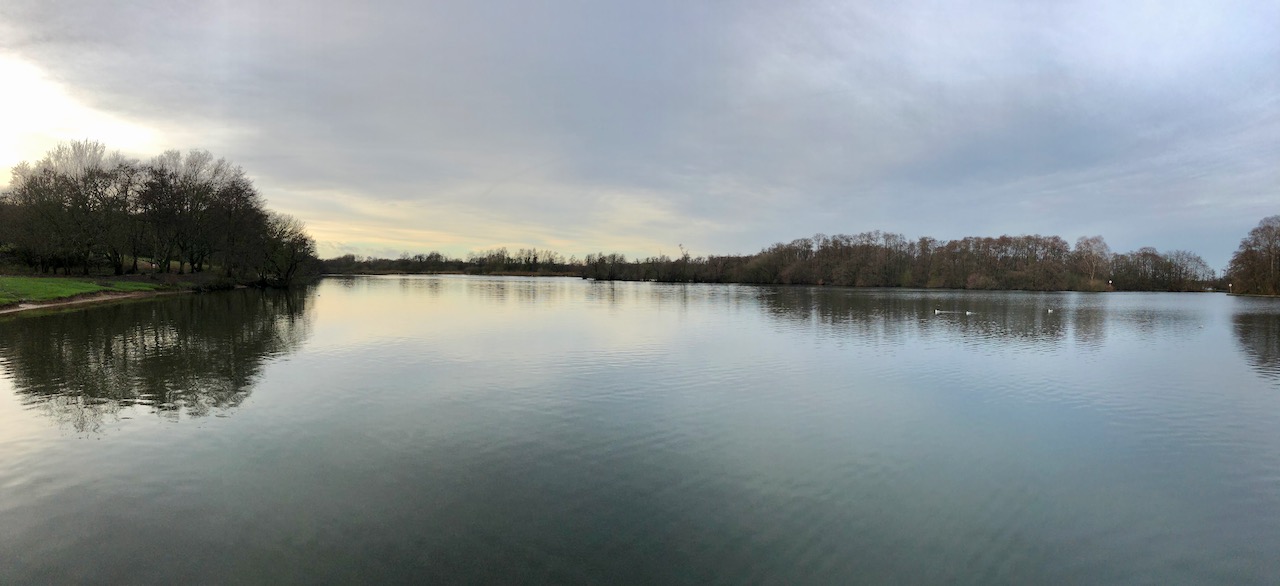
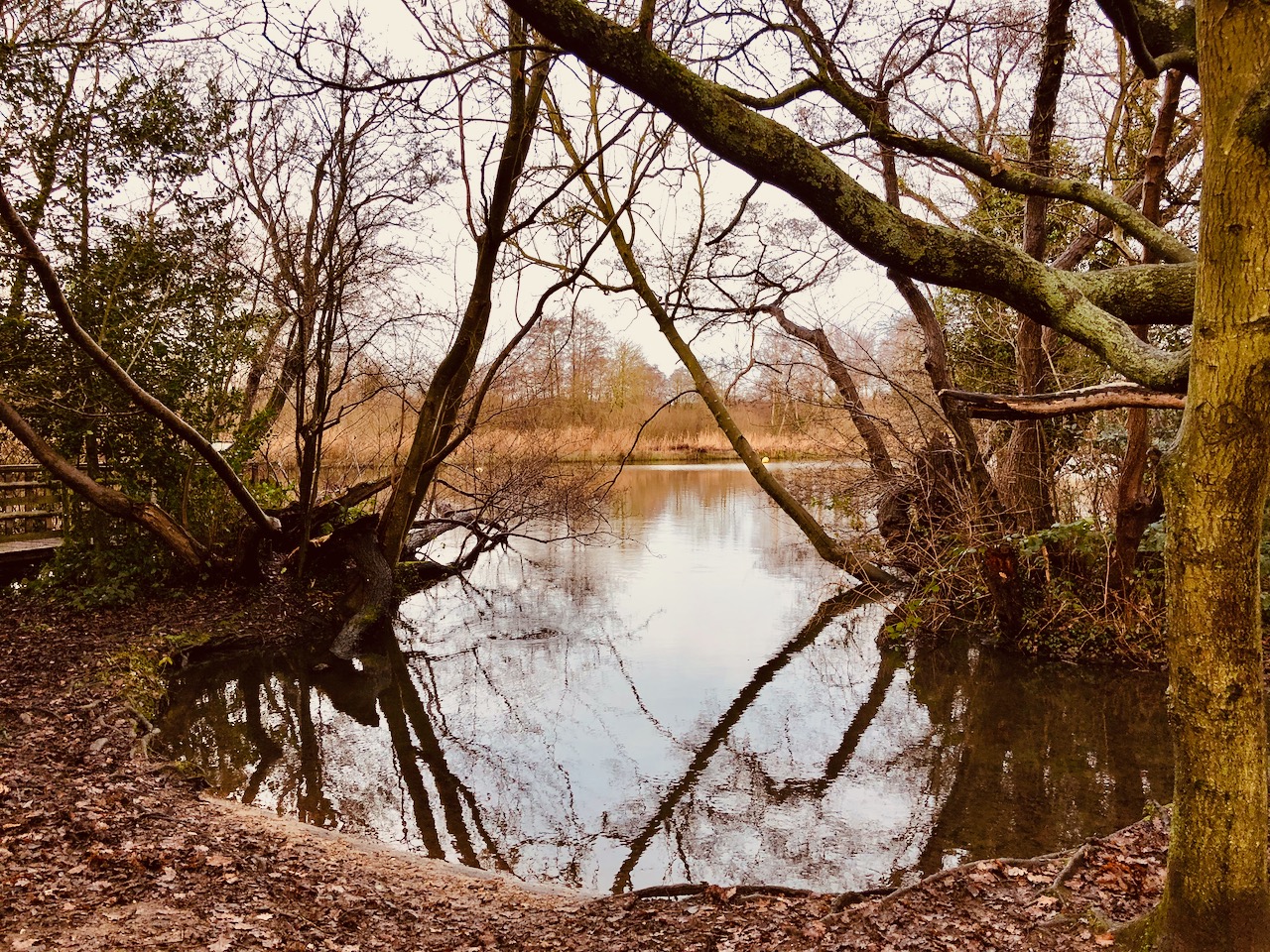
In between Christmas and New Year I managed a few days of not doing very much, aside from more eating, and reading books, pretty good really. Did get out for a few nice walks including down to Salhouse Broad.
It’s really peaceful and regenerative down there at this time of year, without all the boats and bustle. Always seem to bump into someone I know as well – was good to see Nigel, an ex-colleague from work now with longer hair and living the dream playing in bands and whatnot.
ReflectionsHungry swansMajestic swanSalhouse Broad – ducks are a dabbling
I’ve got a bit of a broken knee at the moment due to falling off a climbing wall in November. Some ligaments that are quite important aren’t there anymore, and need to be rebuilt from bits of my hamstring later this year. Means I can’t climb or do Kendo, but can still walk about, albeit with one of those huge knee brace things. I can still cycle. Cycling is in fact encouraged as apparently I need (I was going to do a bad knee pun then but resisted) to have thighs like Chris Hoy’s before the operation. This could be challenging. As always I am thoroughly impressed with the NHS and how hard they work, and enjoyed the MRI scan. They weren’t very complimentary of the Government and how they’ve handled COVID, unsurprisingly.
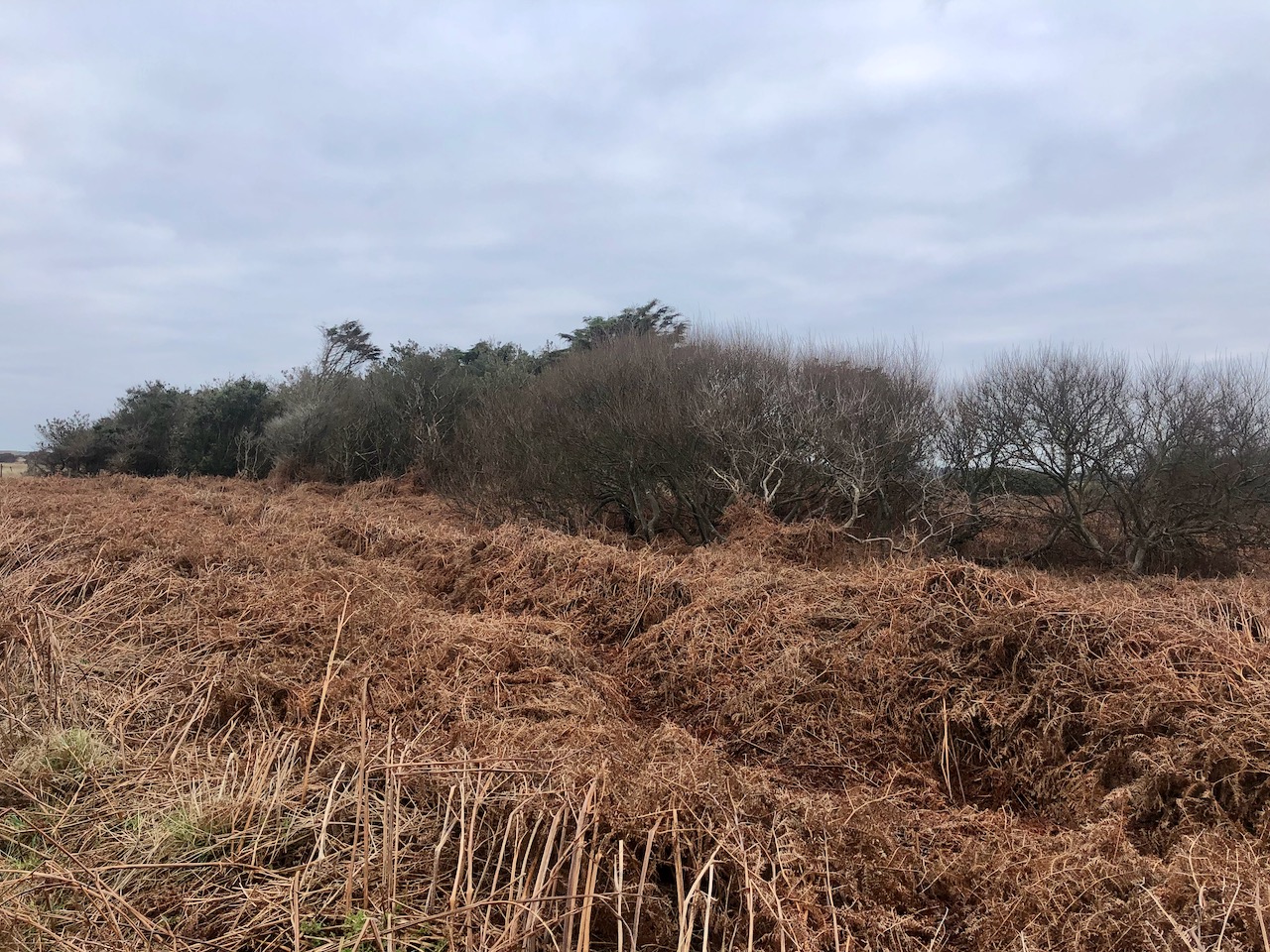
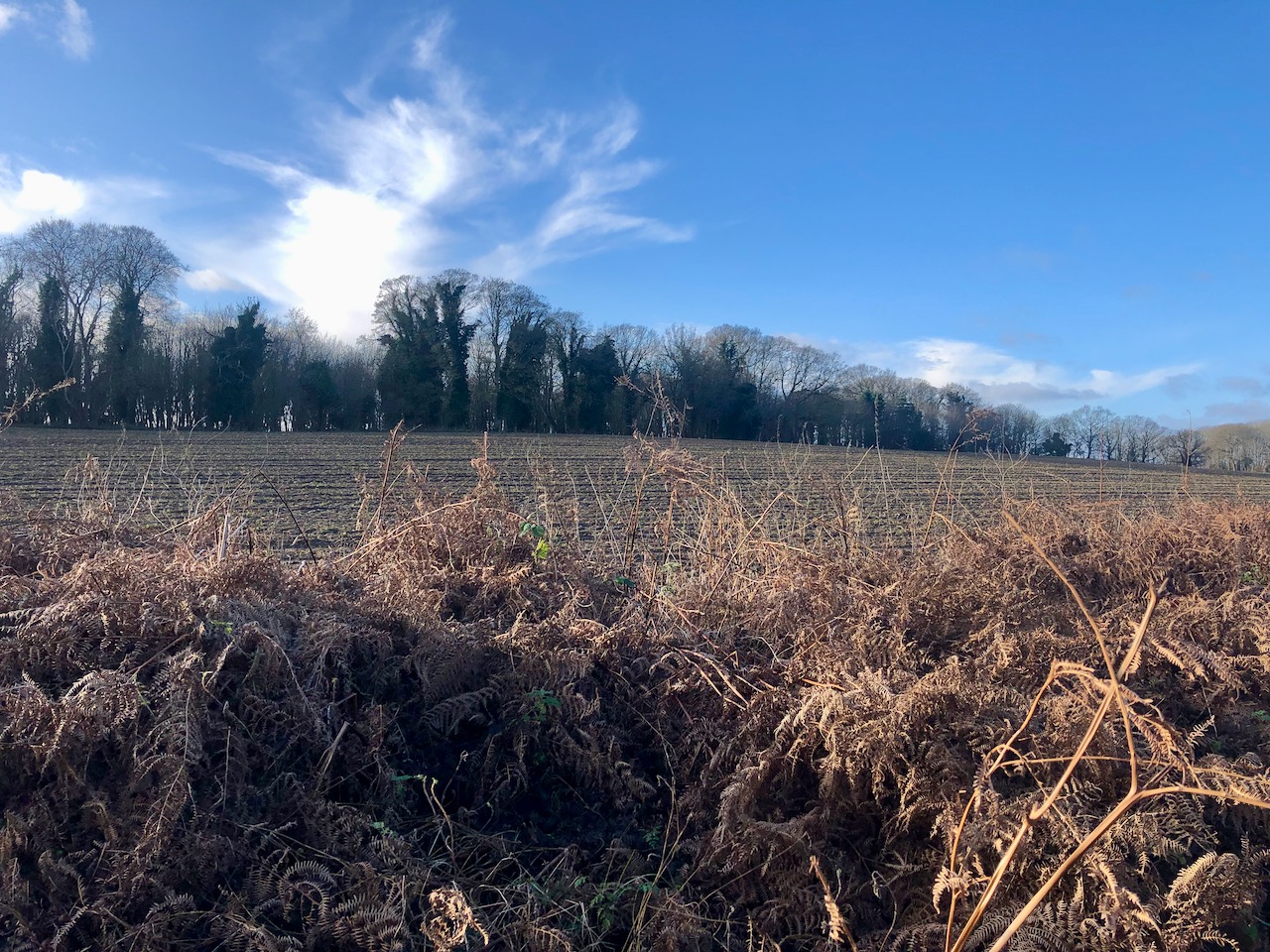
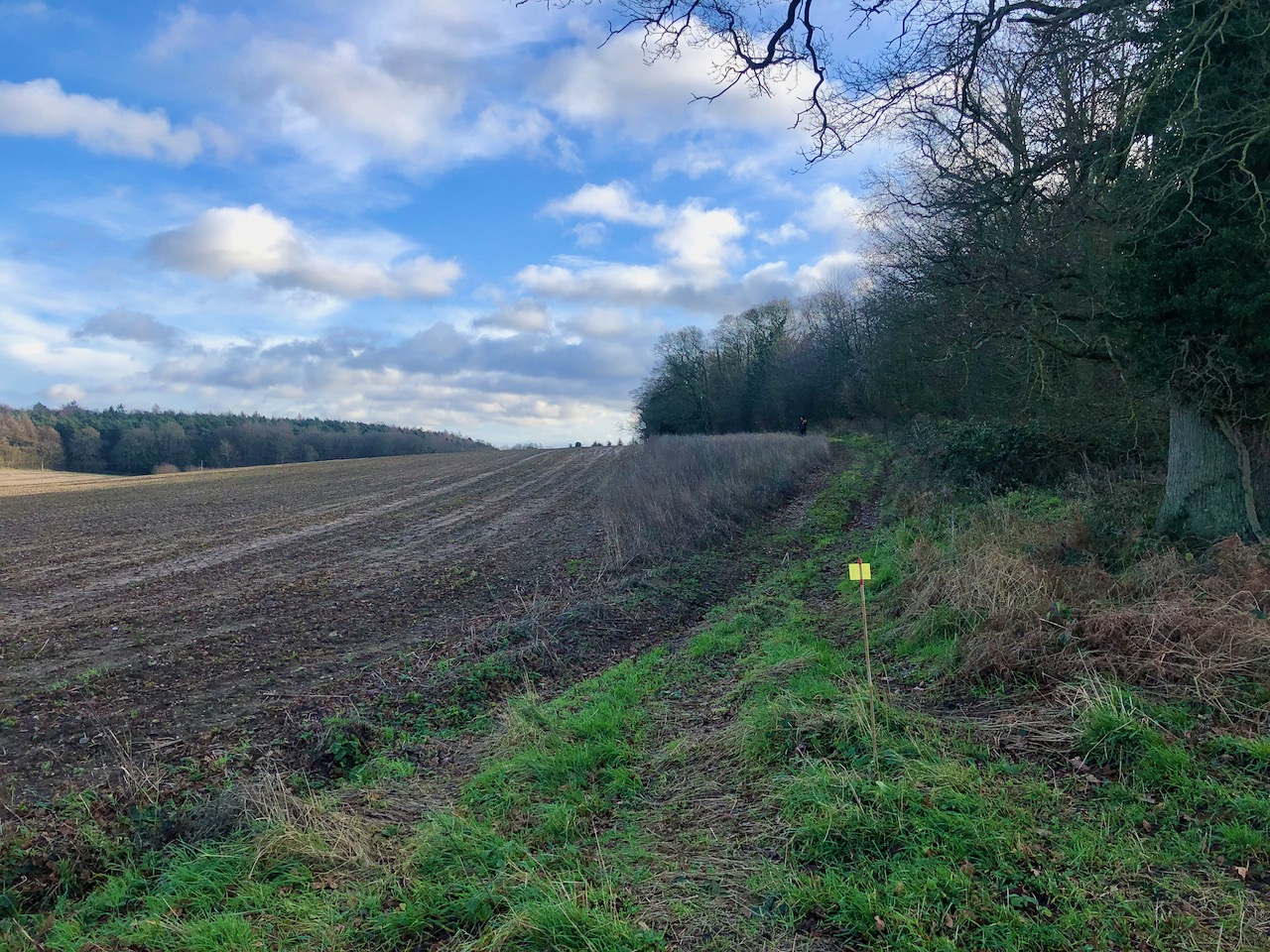
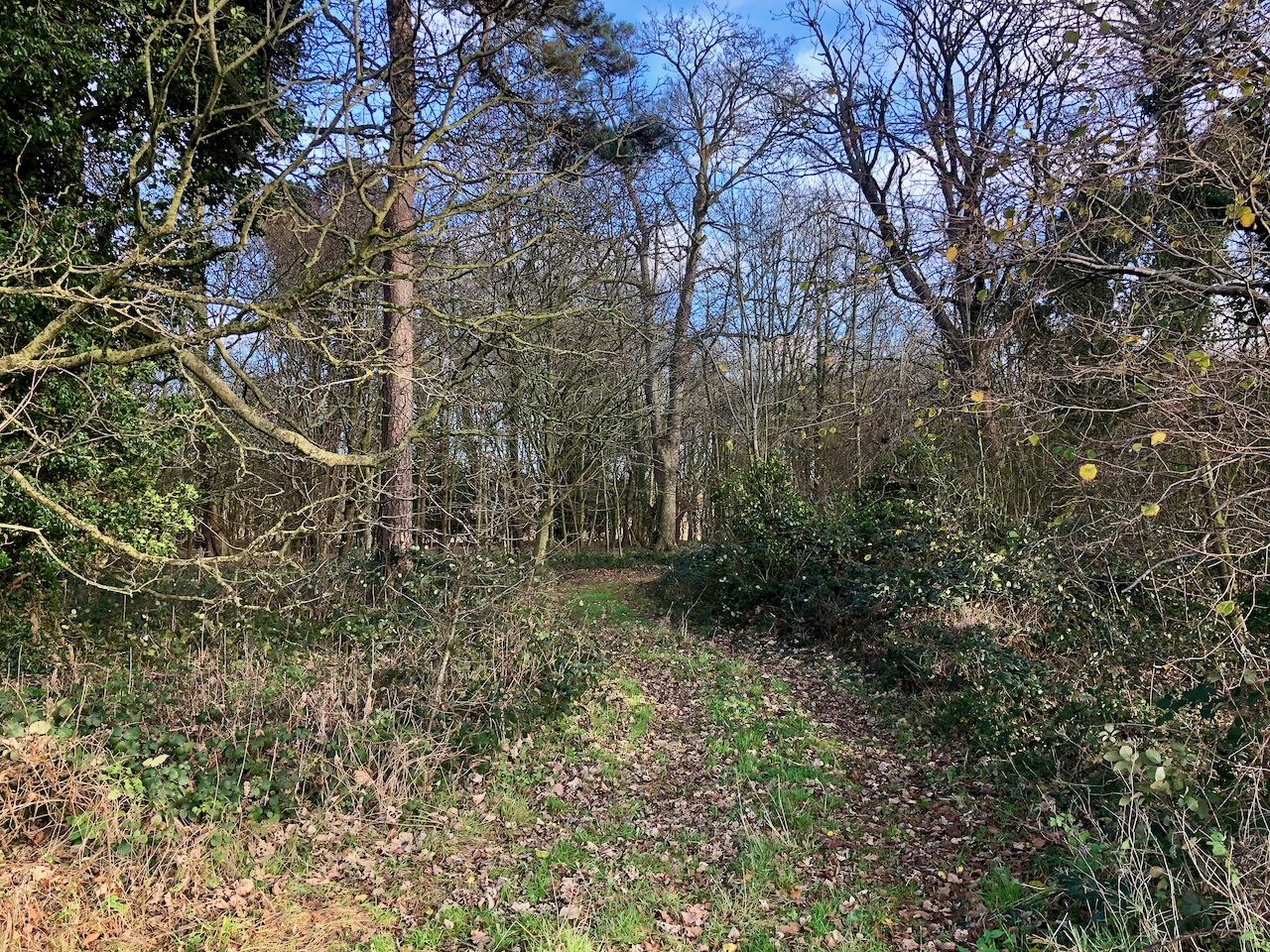
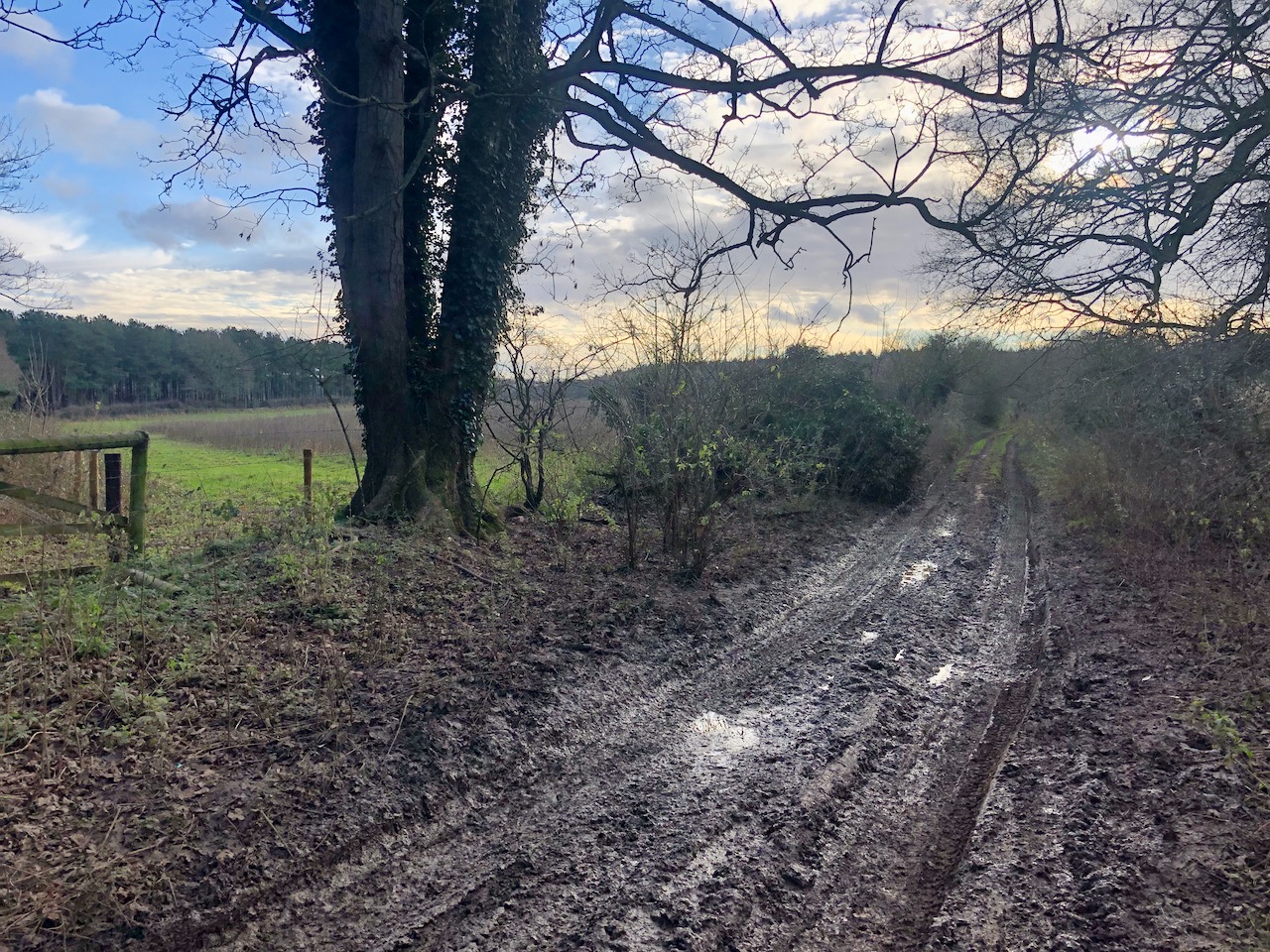
Before going back to work I went for a walk round the Wensum Valley, to look at the proposed route for the Western Link Road. The road will destroy large swathes of beautiful and massively important Norfolk Countryside.
A fine day in the Wensum Valley
The Wensum Valley is a Special Area of Conservation with ancient woodland, rare chalk stream habitat, endangered barbastelle bat colonies and diverse flora and fauna. It would be a travesty if the link road went ahead.
Wetland habitat – Wensum ValleyBracken and birdsongFarmland and Forest
Building the road will devastate rare habitat, plant and animal species, and increase traffic and emissions. We simply can’t afford to carry on with schemes like this whilst we’re in the middle of a climate and ecological emergency. It would be far better if the Council invested in a joined up green public transport plan, including cycling infrastructure, instead of opening up the countryside to more development and cutting 5 or 10 minutes off a journey. The Wensum Valley is the last natural corridor into Norwich, it needs to be saved.
Road will cut through this landscapeWoodland thickets – Wensum ValleyMuddy tracks – Wensum Valley
I really do dream of the day when politicians start taking the climate and ecological emergency seriously. Maybe 2022 will be the year for it after last year’s disappointing COP26. Here’s the proposed route for the link road – if you’re Norfolk based please write to your MP and/or councillor to tell them to oppose it, and you can always join the Stop the Wensum Link campaign (or XR Norwich).
Whilst you’re at it please ask them to oppose the Police, Crime, Sentencing and Courts Bill, which could stop you protesting about anything, and will send this country sliding further info authoritarianism. Have a look at the Netpol site for more info.
What else does 2022 have in store? More Extinction Rebellion stuff for me, it feels more important than ever to be out on the streets demanding change, for ourselves as well as the sake of future generations. With wildfires and floods raging round the planet, Antarctic ice melt getting really scary, emissions still going up and the Global South really suffering we need action now, not by 2050. I know this means big lifestyle changes, but surely that’s better than loads of people dying and society breaking down? Maybe see you out rebelling for life later this year – message me if you want to get involved.
I am also hoping for a bit of a gradual career change in 2022. I passed my level 4 Bushcraft course last year, which took two years due to COVID. I am really proud of the achievement and would love to teach stuff to others. Stay tuned for more on that soon. And I can’t recommend The Woodcraft School enough.
And I want to do more cycle touring again. Formulating plans for that too.
Have you watched ‘Don’t Look Up? And if so what did you think? I thought it was brilliant commentary on how politicians and the media don’t take the climate and eco crisis seriously, and how society reacts to it. This was reinforced by much of the media and critics slating it, cos they really don’t get it.
All the best for 2022, and Happy Birthday to Sheila and Susan who are both very young again imminently.
The week draws to and end, and I’ve even written some Christmas cards and acquired a few gifts. Almost feel semi-organised, with only mild levels of pre-festive stress and worry about stuff I haven’t done. I like Christmas, when it gets to the actual few days of celebration, but not the weeks of build up.
Gideon has been decidedly unstressed. In fact he appears to be doing very little as we approach mid-winter. This was mostly him today.
Reply from Jerome Mayhew below, but if nothing else please watch the film from George Monbiot at the end of this post, it’s really important…beware of the clowns.
Just getting comfortableVery very tiredGame over manWhy do I have to get up?
Now you’ve enjoyed the cat pictures, here’s the response from Jerome Mayhew MP, to the email I sent him earlier this week. To be fair on him, he responded very quickly and comprehensively. The bit about public transport is ok, the rest I mostly find dubious – I’ve inserted a few comments in square brackets and in italics. I shall be replying when I have some time. Let me know what you think…
Dear Mr Harvey,
Thank you for your email. You have raised a number of points with me so please do forgive the length of my reply.
Weston Link Road
Whilst I do not have a constitutional say over whether the Norwich Western Link takes place, as this is a matter devolved away from MPs, I do support the scheme. I agree that none of the potential routes for the WLR is without very considerable costs in terms of impact to an otherwise lovely part of our countryside [If all the proposed routes are bad, then why go ahead?]. So what we are looking for is the least-worst option. The County Council has undertaken extensive consultation on which route to adopt and, on balance, Option C was found to be the best in terms of its impact on local communities, environmental impact, value for money and through the benefits it will provide to local transport links and safety, by removing the rat runs between the A47 and the NDR. Whilst some people, would prefer one of the other options, without there being a significant failing in the process of consultation, I don’t feel able to argue against the outcome that the consultation produced. In addition to those opposed to it Option C has wide-ranging support including Norfolk and Norwich University Hospital, Norwich Airport, Norfolk Constabulary, Norfolk Fire and Rescue and the New Anglia Local Enterprise Partnership. [Using the emergency services to justify more roads doesn’t work for me. More roads equals more traffic, more emissions, and they’ll still get held up. Plus emergency services are going to be under massive pressure due to climate crisis over the coming years]
Having spoken with the Council I understand ecologists have carried out extensive bat surveys over the last three years across a wide area to the west of Norwich, most recently completing further bat radiotracking surveys earlier this month. Consequently, the Council are developing mitigation proposals to take account of the data collected and are planning to put in considerable measures designed to support local bat populations, including green bridges, underpasses, and improving existing habitats and creating new ones. [The Barbastelle Bat colony is one of the biggest if not the biggest in the UK. They are an endangered species and the road would destroy the colony]
The Council have asked Dr Packman several times if she would be happy to share the data behind the conclusions she has drawn about barbastelle bats and the Norwich Western Link, including the locations of any barbastelle bat roosts her surveys have identified. To date the data has not been provided. As I am sure you can appreciate without seeing this data the Council cannot comment on the conclusions Dr Packman has drawn and will continue to base their proposed mitigation and enhancement measures on the evidence they have collected through their surveys. [The research he is referring to is being written up and checked pre-publication – it needs to be fact checked thoroughly to ensure it cannot be disputed, only wish the Government did more of that]
Public Transport
Given the majority of Broadland is not served by rail the only realistic public transport we can talk about are bus services. I fully accept that the current service needs improving as it fails the needs of the majority of residents with infrequent, poorly used and diesel powered buses. The only way I can see the majority of the network being improved is through the adoption of new technology. For example, smaller vehicles which have the right capacity and ride sharing technology which enables on demand door to door service. This is something I have previously raised with Norfolk County Council to see if there is appetite for a trial run in Norfolk.
In addition to this technological solution, earlier this year the Prime Minister announced £5 billion of new funding to overhaul bus and cycle links for every region outside London. This package of investment will boost bus services by focusing on a range of priorities, set to include:
Higher frequency services, including evenings and weekends, to make it easier and less restrictive for people to get around at any time of day
More ‘turn up and go’ routes where, thanks to higher frequency, people won’t have to rely on timetables to plan journeys
New priority schemes will make routes more efficient, so that buses avoid congested routes and can speed passengers through traffic
More affordable, simpler fares
At least 4,000 new Zero Emission Buses to make greener travel the convenient option, driving forward the UK’s progress on its net zero ambitions
Cycle routes will also see a major boost across the country with over 250 miles of new, high-quality separated cycle routes and safe junctions in towns and cities to be constructed across England, as part of this multibillion pound package.
[Ok, so on public transport I think we can agree, to an extent, but it needs even more investment]
Thorpe Wood
Thorpe Woods are a mixture of semi-natural woodland around compartments of commercial planting which was harvested under their FC woodland management plans. Given the encroachment of Norwich on three sides and the increasing informal use of the woods by these residents, together with the small scale of the commercial plantation, it is no longer suitable to continue to use the site for commercial forestry. The area of commercial forestry was planted in the first place because it was poor quality land, and had since developed poor ecological value due to its heavy monoculture [this is really outdated terminology – it’s old Heathland that would regenerate quickly if left alone. As a friend said – Here, in Thorpe, right on the edge of Norwich, we have 200+ acres of prime lowland heath / ancient woodland / wood pasture habitat, containing more rare & scarce plant species than almost any other site outside of SSSIs] . So the Thorpe and Felthorpe Trust decided that the best future use of the land was to supply local housing need and thereby secure the long term future of the wider woodland for public access, biodiversity growth and recreation.
The planning process undertaken by the Thorpe and Felthorpe Trust is a matter of public record, which included the right to appeal to the planning inspector, who spent six days hearing evidence from all interested parties as well as visiting the site, before coming to her decision granting outline planning permission. I agree that we should protect and manage the mature native woodland in Thorpe Woods, work to improve biodiversity and focus on ecological management. As made very clear in the report of the independent Planning Inspector this is exactly what the Trust will be doing; giving for ever and for free c.140 acres of Thorpe Woods as a community woodland for everyone, whilst improving ecological management, biodiversity, public access and recreation. The Planning Inspector found that: “… the development proposals as a whole would protect and enhance the biodiversity of the District.” This is even after the new housing is taken into account. She went on to conclude that the plan, “…constitutes Sustainable Development.” [I, many local ecologists, and the residents of Thorpe are going to have to agree to disgree on this. You can’t improve biodiversity by destroying important habitat]
The development site is now the responsibility of Hill Group, to whom any enquiries about the development should be directed. [Yes, we’re doing that – keeping an eye on their plans after you sold the woods to them for millions]
Planning
We do need to build new homes for younger generations as our local population expands and the size of individual households decreases. That being said, I think any new homes that are being built should be in keeping with the area and should bring with them sufficient infrastructure investment so that the additional population do not impact negatively on local public services. I note from your own address that you live in new build estate, which until a few years ago was a field. [Thanks for that, yes I do live in a new build that was built on old agricultural land I think – ecological deserts most of the time, due to intensive farming, not the same as cutting down woodland]
Police, Crime, Sentencing and Courts Bill
The Police, Crime, Sentencing and Courts Bill contains a huge number of useful additions to our criminal justice system, as the rather unwieldy name implies. Many of these are uncontroversial and I would certainly not want to delay their introduction by voting against this Bill. Many of the provisions are also a direct delivery of Conservative manifesto pledges from the election, so it would also be deeply undemocratic of me to seek to prevent their introduction. The clauses relating to non-violent but highly disruptive protests are there to help the police to manage the new wave of protest direct action, where the aim is not so much to protest as to cause chaos and inconvenience to as many people as possible. We all have a right to protest and to make sure that our voices are heard, but it is a right to protest, not to prevent. Why should one section of the public have an unfettered right to impose massive disruption on the rest of society? What about their right to get on with life? Where competing rights clash, the law must maintain a balance. Modern protest movements, such as Extinction Rebellion, game the system, and disruption, not peaceful protest, is their objective. The law needs to adjust to maintain the balance of competing rights, and I think this Bill helps to achieve that.
Is this new power open to abuse? Yes it is, like every power that the police have, but there is no difference between this power and every other power that we loan to the police. It is open to challenge and review through the press and the courts. As a democracy, we are well used to holding those in power to account. Every single member of the public has the power to become a citizen journalist immediately through their ‘phone. As a result, the police are subject to review and oversight like never before.
The setting up of illegal traveller sites can be a nuisance for local communities and an inappropriate development of open space. Many local residents across the country are concerned about anti-social behaviour, fly-tipping, and noise related to unauthorised sites.
After two consultations on this issue, as part of the Police, Crime, Sentencing & Courts Bill, new laws will be introduced to increase the powers available to the police in England and Wales. The Bill will introduce a new criminal offence where a person resides or intends to reside on any public or private land without permission and has caused, or is likely to cause, significant harm, obstruction, or harassment or distress. In addition, the Bill amends the Criminal Justice and Public Order Act 1994 to broaden the list of harms that can be considered by the police when directing people away from land; and increase the period in which persons directed away from land must not return from three months to 12 months. Amendments to the 1994 Act will in addition allow police to direct trespassers away from land that forms part of a highway.
I can reassure you that the Government has taken steps to ensure that those exercising their rights to enjoy the countryside are not inadvertently impacted by these measures.
These new measures are a proportionate and necessary increase in powers for the police. The Government has made it clear that only a minority of travellers are causing problems, such as through abusive behaviour and extensive litter and waste at illegal sites. The vast majority of the travelling community are decent law-abiding people and we must ensure that there are legal sites available for travellers. As of January 2020, the number of lawful traveller sites increased by 41 per cent from January 2010. The Government has also given £200,000 to support projects working with Gypsy, Traveller and Roma communities to tackle discrimination, improve integration, healthcare and education.
[I don’t know where to start with his commentary around the PCSC Bill. Organisations like Amnesty say it’s bad, very bad. It is going to curtail freedom of speech, and put people in prison for speaking out against the Government. 1930’s Germany anyone? See film fro George Monbiot below for more info]
Norfolk. UK. It can be an odd place. There are the obvious jokes that seem to apply to any county that isn’t close to a huge metropolis, or which is agriculturally focussed. After 25 odd years of living here I still find the lack of serious hills a bit boring at times; having grown up in East Sussex with the South Downs, Norfolk can seem a bit flat until you get to the North coast.
It’s a beautiful county though; huge skies and horizons, the Norfolk Broads, the coastline and endless beaches, the picturesque little villages you stumble upon where time still seems to run more slowly than the rest of the world. The people are friendly and hospitable, and not hesitant about sharing a story or two, in fact it can be hard to get away if you engage them in conversation.
Today I went on a slow bike ride around a bit of the the Norfolk Broads, around Neastishead and Irstead, not far from Wroxham. I was deliberately pedalling slowly, just looking at everything, and pausing frequently. There were children playing in the country lanes, neighbours chatting on village greens and staithes (in a mostly socially distant manner) over a glass of cider (ok, can of scrumpy maybe). Nature was thriving everywhere with birds singing, mice foraging, lambs gambolling and even a glimpse of an Otter. And the plants, mighty Oaks and water loving Alder, hundreds of different wildflowers I can’t even begin to name, all buzzing with insect life.
Rowan berries (Mountain Ash have arrived – Sorbus aucuparia
Rowan berries – I think you can make a jelly from them
Alder Fen Broad
What’s my point? I was just wondering why people feel the such a compulsion to holiday abroad, getting on a plane, flying to a concrete hotel complex somewhere in the world, with a sterile beach and swimming pool, food they ultimately complain about, with accompanying travel stress and carbon footprint. We have all this on our doorstep. Norfolk isn’t unique in having loads of places to explore and things to do. Coming out of lockdown why don’t we all fly less and visit the wonders on our own doorstep? I’m certain local businesses would appreciate it for a start, and connecting with nature in our local area is so good for folks.
Who would live in a hole like this? Maybe a bank vole?
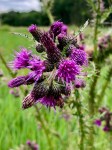
Thistle in bloom
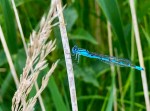
Damsel Fly – so fragile and pretty
I really enjoyed my slow bike ride today, and wander round Alder Fen Broad, then Barton Broad. Highly recommend visiting them; although maybe just leave Alder Fen Broad alone as it’s lovely and quiet, a bit of a hidden gem; so many Dragon Flies!
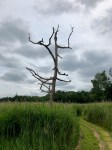
Feels like there should be crows lined up on this tree
Dragon Fly – don’t know what species – amazing wings
Love the Thistles coming into bloom
Exploring hidden pathways is fun, and did anyone else read Swallows and Amazons as a child?
Hidden waterways
Hidden paths amongst the reeds
Arty grass photo
I’ve really got to get myself a canoe. Sometimes paddling beats pedalling.
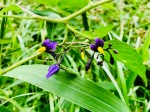
Amazing purple flower with yellow stamens; some sort of vine like plant
Wild raspberries make for a delicious snack
More hidden waterways – I must acquire a canoe
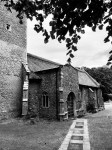
Anyone know the story behind the statue above Irstead Church doorway? Some kind of Broads Serpent maybe? I love how a ride round your local area can inspire your imagination.
Duck weed
Irstead Church and Serpent
Irstead Church
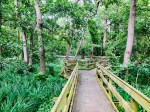
Barton Broad offers another chance to see an example of car woodland; not much of this around anymore.
Barton Broad Boardwalk
Fields of Barley
It’s been fun exploring my local area whilst I’ve been on holiday. I’m back to work next week, but hoping to work a bit less and get out a bit more!
Finally, for my Extinction Rebellion friends: Next Rebellion announced today, 01 September, Parliament Square in London if you’ve not got a local rebellion. Coincides with Parliament reopening. With Boris saying ‘Build Build Build’ (all the wrong ‘builds’ too), and 4C temp rises now predicted, it’s time to Rebel For Life; We want to Live!
Hi – this is a reflective post on Extinction Rebellion, with whom I’ve been involved for about a year and a half now, if not longer; recently time is starting to blur a bit. It will most likely be of interest to active rebels, but I’d invite anyone to read it and comment, as it’s useful to hear other opinions. I originally started writing it in a response to a post on social media, but apparently it’s a bit too long to fit in the comments!
Extinction Rebellion…Oct 2018 to June 2020
It was such a relief to me when Extinction Rebellion (XR) started in Norwich. Turning up at that first meeting in October 2018 to find there were lots of people like me, very concerned about the environment and ecology, and the path that we’re still on; 4oC temp rises, mass extinction, societal breakdown, mass migration and war, famine, drought, ecocide etc.
At the time the above were my main concerns, and still feature right up there on my worry list. Thinking about the future and what’s going to happen to everyone (humans, animals, plants, planet) genuinely does stop me from sleeping, and often makes me think everything pointless, because I’m not sure there’s anything we can do to stop this runaway train (unintentional link to HS2 there). There’s just not the willingness politically, or amongst business leaders, or amongst most of society in the UK to make the drastic changes we so desperately need. People don’t want to give up there comfortable, high-consumption, cosy and safe lifestyles; and by people I do mean most people in the western world. I totally acknowledge this is a challenge for me too!
I still think most people, even if they now know climate change is real, don’t really get the implications, or the impacts already being felt by the Global South and indigenous populations. Yeah, there were those fires in Australia, and didn’t South Africa run out of water, and what about those orang-utans (etc etc), but at the end of the day I can worry about that a bit then go back to my cosy lifestyle, as it’s not on my doorstep.
It’s not on my doorstep yet anyway. It will be soon but people don’t want their bubble broken, or to be taken outside of their comfort zone. It’s damned scary. Blissful ignorance is…well…blissful.
But once you’re properly awake, you can’t go back to sleep. And that’s why it was such a relief to find a group of people in Norwich, and nationally, who wanted to try and do something about an issue that has been on my mind for years and years. I think many of us, even if it’s at an unconscious level, have known something is wrong all our lives. Here was a group of people that really understood the depth of the crisis and changes needed. To us it’s obvious why you shouldn’t build another airport or more roads, damage vital habitats to build a railway or more houses, or push an unfettered economic growth policy. It’s obvious the modern way of life and capitalism is ultimately killing us. It’s now more obvious how this links in with Social Justice. All of this still isn’t obvious to most people though, and I can’t really judge them on that; it’s a hard topic and not widely discussed or accepted.
I’ve was never involved with any kind of activism before XR, and I think that’s pretty representative of a lot of our membership, aside from some of our ‘leaders’ (hesitant about using the word leader, probably mean more founders). We’re just ‘normal’, run of the mill UK people, with ‘normal’ jobs and lifestyles. And yes, a lot of us are middle classed, and very privileged; I for one acknowledge that. Until recently I didn’t know much about other movements and struggles, and for example I still view organisations like Unions with distrust (but trying not to judge).
Sure, I was worried about the NHS, Brexit, human and animal rights, racism, fairness, and a host of other issues, but for me these all paled into insignificance versus the Climate Crisis and Ecocide. In the end these two things have made me an activist, and got me out onto the streets. I think this is still the case for lots of XR members; the climate and ecological crisis is the issue that trumps all other issues, as if we don’t solve that there won’t be anything else left to fix. I still believe that to an extent. And I think a lot of rebels still want us to focus on that, and feel we might be trying to bring too many other issues into scope.
However, since those early XR days, I’ve learnt loads thanks to talking to lots of other rebels; I could reel off a long list of names and talks I’ve been too, but you’ll probably know who I’m referring to if you move in those circles. XR has been a gateway to the world of activism and learning more about the issues we face locally, nationally and globally. One of the biggest areas of learning has been around Global/Social Justice, and how it’s all linked. We can’t fix the climate and eco crisis without addressing Global Justice. And by Global Justice I mean acknowledging and taking action to stop the exploitation of the Global South and indigenous populations, and to support them on the front-line of the climate crisis; they’re already dying in their thousands.
It also means acknowledging and doing more to combat racism and inequality in our own country, for the same reasons, and that includes within XR. We need everyone’s voices (I exclude racist and some other categories from ‘everyone’) and to engage with all communities, not to distance ourselves from them, or say we don’t need them; I have personally seen this happen. We also shouldn’t take actions without understanding the impact it can have on communities which one doesn’t originate from. More empathy, outreach and understanding needed.
What can we do to make XR better? What can we do to fix what could be viewed as a make or break few months? I don’t have all the answers and shouldn’t expect to; we need everyone’s help with that.
What don’t I want to see?
I don’t want to see current rebels, who joined for the same reasons I did, leaving because they think being middle classed and privileged means they’re no longer welcome, or because it means they don’t really have a right to protest. I think I need to acknowledge and use my privilege in a constructive manner, to hopefully to make things better. I also acknowledge the ‘not feeling welcome’ bit is how a lot of BAME/LGBTQ must feel all the time.
I don’t want to see XR paralysed by internal politics, especially at a national level. I don’t want to see us starting to rely on a hierarchy that will stop us from doing anything; we’re a self organising system with demands, principles and shared values. We shouldn’t be held back because suddenly one of our previously key members/leaders is doing something we find is at odds with those principles and values; let’s move on.
There are quite a lot of very self righteous people (I hope I’m not one of them) around at the moment who are getting too judgemental perhaps. Too many egos? Maybe XR is being used as a platform for other causes where it’s not really appropriate to do so?
I also really don’t want to lose the grass-roots rebels we have, that would diminish us. I feel that if you’re part of something you care about, and think it might be broken somewhere, then it’s better to try and at least fix it before leaving; if you think it’s worth your time and effort, and isn’t going to bring you too much stress or ill-health.
What do I want see?
I want to see the 4th demand (Social Justice) put in place as soon as possible, and don’t want to have to wait for months of endless talk and meetings for this to happen. I personally think if the majority approve it in local groups, they can just add it at a local level, and national can catch up.
I want to see our existing rebels get motivated and out on the streets again for the right kinds of actions; targeted actions versus government and corporations. Not actions that are going to adversely impact already stressed communities.
I want to see peaceful mass actions at a local level. Sure, we should go ahead with national actions and large scale well considered, well-messaged, and well-managed Rebellions, but local groups shouldn’t just wait for these to happen, or be reliant on central ‘leadership’.
I want to see more outreach and discussion with working class and BAME communities. I would love XR rebel numbers to grow from their ranks, but if that’s not possible please can we learn from them, act in harmony with them, and support each other? I am certain we can do this with the BLM movement.
I want to see more education and trainings to help people understand how the climate and eco crisis is inextricably linked to Global/Social Justice. This will surely help bring communities together; more integration and learning on both sides. We need more actions specifically on Global Justice, or XR rebels turning out to support actions organised by these movements.
I want middle class XR members to understand why it’s more difficult for working class, LGBTQ, and BAME communities to rebel, and to support them where they can so they feel they are able to, so we can create a united movement across society. I think this is starting to happen, but we have a long way to go still.
I want people not to be afraid to speak what’s on their mind, ask questions, challenge statements, enter in to discussion. It’s the only way we really learn.
I desperately want people to pause more often for self reflection and to think about what they’ve learned, whether they need to learn more, and whether that means they need to alter their trajectory at all. Really – Before you judge a man, walk a mile in his shoes (empathy). We shouldn’t get paralysed by self reflection though; sometimes happens to me.
I want more people helping and doing stuff, rather than just talking about it, or criticising. I want less meetings and more actions.
I am probably wanting too much, and again acknowledge I am speaking from a privileged position, and that I still have lots to learn. Yep, I’m one of those middle aged, white, middle classed white blokes, but I don’t think that means I should just shut up; it does mean I should listen more though.
I move through periods when I think anything is possible, to periods of despair and grief, especially when I move outside my own echo chamber (but even whilst within it).
I’ve just got to carry on believing change is possible, and hoping we can work out how best to bring about that change as time goes on. But time is ticking, and frankly I’m increasingly anxious (or terrified ) about how little of it we have left to make the significant changes needed. Maybe only months, maybe years; those tipping points are looming. I am increasingly tempted to do what some have done, try and buy my own patch of land, somewhere remote, and prepare for the worst.
How do I feel better? By organising and participating in targeted non-violent direct action and positive outreach, centred around the climate and ecological crisis, as well as global justice. It feels right to me, when they’re the right sort of actions/outreach, and when they have some sort of impact. More of those sorts of actions, and I hope with an ever increasing number of Rebels, as well as cross-overs with other movements and communities.
Finally, a plea.
As we come out of lockdown I’m hoping we don’t go back to where we were prior to Coronavirus, and that we don’t let our government and business leaders take us back there by investing in the wrong areas, to drive more profit and growth for the benefit of a very small fraction of society. We new a new baseline to work from.
There are many positives to take from lockdown, such as being able to work from home, not needing to travel so much, consuming less in general, and how local communities have rallied around to help one-another.
I hope we can ‘Build Forward Better’, a green and sustainable future investing in the right things, which doesn’t include projects like HS2 (remember we can work for home), massive new road schemes, or housing developments on endangered biodiverse habitats.
I hope people realise that long term happiness and satisfaction is more about who you have around you, functioning communities, being able to play, being able to enjoy nature, being able to talk to your family and neighbours. It’s not so much about having to go on holiday abroad twice a year, or constantly buying new stuff you don’t really need at the expense of our environment, ecology and the Global South. Let’s stop sleep walking towards our own destruction.
We can be happy without all of that, in fact we can be happier than we are now, with less stress, mental and physical illness. We should be able to support one another across society to make this happen; a transition to a fair, sustainable, resilient, and green world.
Now stop reading my ramblings and go enjoy some nature, dance in the rain, play some music, talk to a neighbour, play a game, or just be in the moment for while.
I haven’t written to the Council for a bit, or to my MP, however after pedalling round my local country lanes over the last few days I felt motivated to write the below. I might also submit this to the local newspaper tomorrow to see if they’d life to print a version of it. I’m sharing it on my blog as I’m sure many of you will feel the same way. Here’s a nice photo before getting into the letter; let me know quick if you spot any typos!
Norfolk waterway with willow trees and cow pasture
03 June 2020
Dear Sir/Madam,
I’m sure like me being able to enjoy Norfolk’s glorious countryside over the last few months has been of great solace during lock-down. We have an amazing variety of habitats, plants, mammals and birds, and I was delighted to see the Swallowtail butterflies when I cycled up to Hickling Broad the other day.
I am currently working from home, as are many people; those fortunate enough not to have been furloughed or made redundant, or our committed key workers who run the risk of catching COVID-19. I try to get out once a day for some exercise, which generally involves a bike ride or a walk around the Salhouse area. At the weekend I go on longer rides taking in many of the county’s country lanes, teeming with wildlife and bird song.
One of the upsides of lock-down is that I’ve been able to get out in my local area a bit more, to appreciate nature in all its glory as Spring turns to Summer. The hundreds of varieties of plants and wildflowers, the insects in their multitudes that feed on them, the birds and mammals eating the insects; a wonderful trophic cascade. A couple of week’s ago I spotted a Stoat bouncing down a lane, hunting along the hedgerow, a sight that filled my heart with joy. It was accompanied by the magnificent sound of Skylark’s song overhead.
In the last two weeks it all seems to have dramatically changed, leaving me very sad, and filled with considerable rage.
Now when I cycle down the same routes the roadside verges, once teeming with life, are quiet, shrunken and lifeless things. They have been shorn down to the bare minimum, often the naked earth, as if Mother Nature herself has been scalped. Gone are the wildflowers and plants, the brightly coloured beetles, the butterflies around the nettles, the birds finding food for their young. There is no sign of the Stoat; there’s nothing for it there anymore.
I don’t understand why this is done. I have checked the information on the Norfolk County Council website on the page linked to below:
It says that roadside verges are only cut for safety reasons and not appearance. They are cut to ensure visibility and safety at junctions. It also extols the virtues of ‘almost 10 miles’ of roadside nature reserves; 10 miles, out of the 1000’s of miles of roadside verges we have in the county.
Now I get the safety and junctions point, and to an extent the visibility bit on some stretches, but the cutting goes far above and beyond this. Most cutting, aside from in the very few designated roadside nature reserves, is extreme, leaving very little cover. I am guessing this is to reduce the frequency of cutting, or is just down to ignorance or lack of care for the habitat being destroyed. I guess it’s also possible the contractors doing this work are assessed and have to make sure it’s clear where they’ve cut, and that the council is getting their money’s worth. I imagine there is a whole governance and sign off process around it that’s miles distant from caring about the safety of the plants, mammals and birds whose homes are being destroyed, or the vitality of the habitat that brings so such joy and relief to walkers and cyclists alike.
It’s not just roadside verges. There are reports of park or common land where wildflower meadows that have been allowed to grow, being dramatically cut back, with nesting birds disturbed or killed. Local residents in those areas have been rightfully devastated and angry to find their little bit of nature gone; it’s really bad for people’s mental health.
It appears the temporary reprieve nature had in many parts of the county, due to lock-down, is over. The stay of execution has expired. Not only are roads getting busier again, packed with traffic with a corresponding increase in roadkill (I passed a beautiful grass snake half squashed near Ranworth the other day, and lets not even get into hedgehog deaths), but we have restarted our relentless pursuit of dominance over nature. It’s got to be controlled, cut, shaped, moulded and turned to our purpose.
I request we change the way we’re looking at this. Roadside verges and hedgerows provide some of the last remaining habitat in the UK for our native flora and fauna. We’ve simply got to realise we’re a part of nature, not apart from nature. By destroying it, and roadside verges are just one simple but effective example, we’re harming ourselves and future generations.
Instead of cutting nearly everything back, which seems to be the case in most places, why can’t we reverse the policy and only cut at real key points, such as at junctions as the Norfolk County Council’s website references. On straight stretches of road, with a clear line of sight, there really can’t be any excuse for cutting down to the bare earth. We’re in a climate and ecological emergency, and desperately need to protect our remaining biodiversity. Instead of just a handful of ‘roadside nature reserves’ why can’t we have just a handful of ‘roadside cutting zones’ with the new normal being verdant habitat for wildlife. Give the plants, mammals and nesting birds a chance.
I’d like to talk about a couple of other things, just to support this.
The UK has been hunted, developed and farmed to within an inch of its life for thousands of years. We have very few wild places left, and a massively reduced diversity of plants and animals. Very few bits of ancient woodland, or habitat that has reached its climax state, remain. We are highly critical of other parts of the world who are destroying their own perhaps more obviously biodiverse habitat, such as rainforest, for example for agricultural purposes. The poorer nations doing this are often doing so to provide goods and services for us. They’re doing now what we’ve done to our own country for centuries, and our own corporations are encouraging them to do so in the name of progress and economic growth.
We’re massively exploiting the Global South for things like food, precious minerals for our mobile phones, palm oil and fossil fuels, with profits mostly going to line the pockets of the elite in the Global North. We’re privileged hypocrites and most of the time we don’t even realise it. Can’t we spare our remaining bits of nature the chop, and try and set a bit of an example for other nations? This also links in with social and environmental justice, but that’s a topic for another day.
The Coronavirus originated in China, and it seems evident that anthropogenic (human based) pressure on natural habitats caused the outbreak. Human incursions (habitat destruction, pollution etc) into natural habitat, stressing natural systems and balances, caused this horrible virus to jump to humans, leaving us with a global pandemic and widespread tragedy and grief. I’m not saying that cutting verges and hedgerows will cause a similar outbreak, but it’s the same principle; destroying nature harms us in the long run, and we’ve got to learn to live alongside it and not try and tame it all the time.
I was really hoping that we could emerge from the pandemic with a new strategy for life, a refreshed system, with no going back to old harmful and destructive practices. I know many people are trying to change the way they live, with working from home becoming the new normal, and perhaps reduced consumption rates and associated emissions. Please can we do all we can to encourage this, including stopping the highly destructive practice of roadside verge and hedge cutting where it’s not needed? It may seem like a little thing, but all these small steps add up to something bigger.
And if we can get a new normal, with more working from home and much less traffic on the roads, we could scrap other environmentally and ecologically destructive projects such as the Wensum Link Road, or housing developments on County Wildlife Sites such as Thorpe Woodlands, or plans to expand Norwich airport. We desperately need to invest in a greener and more sustainable future, and to relieve ourselves of the suicidal notion that unfettered economic growth is either possible, a positive measure of success, or leads to happiness and satisfaction.
I humbly request that as a county we revisit the policy on grass verge cutting, as well as decisions made in a different era on developments that are no longer needed, and which don’t make any sense when we know we need to reduce emissions and protect biodiversity.
If we don’t act now, we wont leave anything for future generations. Please stop scalping Mother Earth.
Yours sincerely,
James Harvey
Salhouse resident
P.S. Photographic evidence of excessive roadside verge cutting available upon request
I was going to get another blog post out on the wild plants and flowers front, however time has been against me this week, so I thought I’d share an experience from January, from my Bushcraft course, when we weren’t in lockdown and I was learning lots. By the way, I didn’t just write this all this evening, it’s from my course log which is 50,000 words long and growing; such a fascinating subject and I’m finding the tuition from The Woodcraft School excellent.
I think it’s fair to say we were all excited, if a little apprehensive, about the January training session down at the Woodcraft School in West Sussex. Not only was it another chance to have a go at the 3 hour bow drill test, something that hadn’t gone too well in the wet conditions to date, it was also our simulated survival weekend. The objective was to recreate a scenario where we were out for a day hike, but something went wrong meaning we were stuck in woodland for 2 nights, or more. This also meant we had minimal kit with us; just enough to deal with emergency situations. Being January it was likely to be cold, and possibly wet, so this wasn’t going to be the same as a pleasant summertime jaunt to a verdant forest full of life. On top of surviving the 2 nights, we also needed to find and purify our own water, something you’d definitely need to do in the event of being stuck somewhere for a while. Given I was likely to get pretty hungry and need a lot energy, I made a huge pile of trail mix to take with me; I may have gone a little excessive on this, having enough to last a couple of weeks, but it tasted so good in the middle of a cold winter’s night.
Trail mix – might have made too much but damned tasty
Given we needed to look after ourselves there were a few key lessons to take on-board, before we were released into the wild. These included learning about what water is used for in the body, symptoms of dehydration and how to fix it, how to source and purify water, as well as how to recognise and deal with hypothermia (too cold) and hyperthermia (to hot), and research into shelter types.
I won’t inflict you with the pages of notes I made on this, however if you’re interested then I’m thinking of a few future blog posts on the subject, so stay tuned.
The brief was to simulate needing to survive after unexpected circumstances forced you to remain in a given location for an extended period of time; in this instance a broad-leaf forest with plenty of water, which was somewhat less challenging, or at least different to, being for example halfway up a mountain in the Alps. I think it’s safe to say we all approached the weekend with a certain amount of trepidation, trying to work out what kit we should take, how we were going to keep warm, and what food was best.
Exploring my woodland block
Given the brief we were only allowed to take a day sack with limited equipment and food, so sleeping bags were right out, as were tents and hammocks and tarps. No sleeping bag, or insulating sleeping mat, in January, oh good. We also needed to be able to source and purify our own water, make fire, build an adequate shelter, and cook basic food.
All the knowledge and skills we’d learned to date would come into play over the course of the weekend, so it was a good opportunity to put everything into practice, and grow in confidence in the outdoors. I hope to be able to lead groups in the wild in future, and this was definitely a stepping stone on that journey.
The aim was to be able to thrive and not just survive, and I like to think that by the end of the weekend, and after lots of learnings, I was getting there; just a shame I sat on the spoon I was carving.
What to take?
With a maximum capacity of 20 to 30 litres we were limited on what we could take. I opted to use an army surplus day/patrol pack to carry everything I needed, which was pretty full by the time I’d finished packing. I must have unpacked and repacked that bag a dozen times whilst deciding what to take, and probably still took too much kit, however if the weather conditions had been different, for example including rain or snow, I’d have perhaps needed the extra change of clothes and waterproof trousers.
Below is a brief summary of what I took with me
Army surplus patrol pack – about 30L
Outdoor trousers (tough) and clothing, plus spare set of clothing in dry sack, mutiple layers and dry socks , hat, buff, shemagh, hat
Waterproof jacket – Craghoppers; I’d have preferred ventile cotton or thick wool with ventile patches, which would be spark resistant, but will need to save up for that
Bushcraft knife and laplander saw
Paracord, sling and carabiner
Fire making kit including some tinder
Water bottle x 2 and collapsible water vessels x 2, Millbank bag (brown bag – expedition sized), puritabs (not used)
Life venture screw capped lid cup, which almost keeps your brew too hot
Zebra billy can, spork, cloth
Headtorch
First Aid Kit – only cut myself once, toothbrush
Food: Pasta and pesto sauce, chocolate, smoked sausage, dried apricots, trail mix – far too much trail mix as it happens, but you never know when you might have guests, couple of apples, tabasco sauce (always goes with me on cycle tours), cereal bars, dried oats and honey
Brew kit – herbal teas
Rab down jacket – in compression sack
Poncho (US army) – I could probably have done without this, but would have been invaluable if it’d rained
Emergency foil blanket (space blanket)
Toilet roll and hand sanitiser (gel)
Mobile phone and battery pack, notebook and pen
Getting started
To simulate a survival situation we were all dropped off, individually, into our own block of woods away from our usual camping area. After a morning of being together with the group I was suddenly alone amongst chestnut and birch trees, with just the sound of birds for company; followed shortly by Sib shouting hello from about 100 metres away, breaking my wilderness reverie.
With several hours of daylight left, and enough drinking water to last me for a bit, my priority was to get a shelter built and gather fire wood; it was going to be a cold night with temperatures forecast to drop below freezing. The area of woods I was in had plenty of standing deadwood to use, in the form of Sweet Chestnut and some Silver Birch, so I set about cutting some down using my laplander, to create both firewood and material to build my shelter from.
Whilst a laplander saw is efficient and easy to carry, I did start to miss using a bow saw after about an hour of processing wood! I guess one wouldn’t usually take a bow saw on a day hike though. I soon had the basis of a shelter built, trying to position the opening away from the prevailing wind. I used forked pieces of wood up against trunks for the two side pieces, with a cross bar running between them. I also pegged the side poles at the end to stop them from slipping backwards. I chose a spot that had a bit of natural shelter due to the lay of the land, with sufficient trees to use for support, and no low overhanging live branches that would get singed by my fire. I was also mindful to remove any dangerous looking standing deadwood from the immediate vicinity lest it fall on me if it got windy.
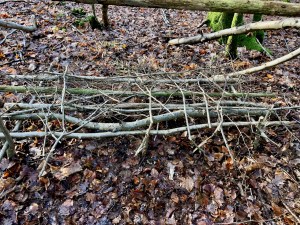
Spot chosen – getting started on shelter
Building my bed
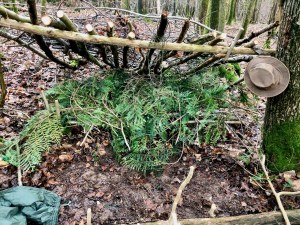
Before building too much of the shelter I decided to build a raised bed, as it’s easier to do that without a roof being present. I constructed the raised bed using forked pieces of wood pushed into the ground, with poles running between the forks to make a platform about a foot off the ground. I needed some greenwood for this so coppiced some Hazel from a nearby ride edge, bringing it back to my camp. As well as making the forks and some of the poles, I also made a mallet and a couple of wedges for splitting wood, and used the brash to create a springy base-layer for my bed.
On reflection I think it might have been easier to use some bigger logs to lay the poles upon for my bed, rather than use forks of Hazel, although it did add to the springiness. I did consider making a V shaped bed, as I often sleep on my side; the V shape of the base creates a comfortable shape to sleep in. However this would have lost be valuable ground clearance and not allowed hot air from my fire to circulate under the bed. It’s nice to have a raised area to sit on next to the fire rather than the ground; a good whittling spot that avoids a wet posterior is essential!
Shelter getting there
Shelter plus building long log fire
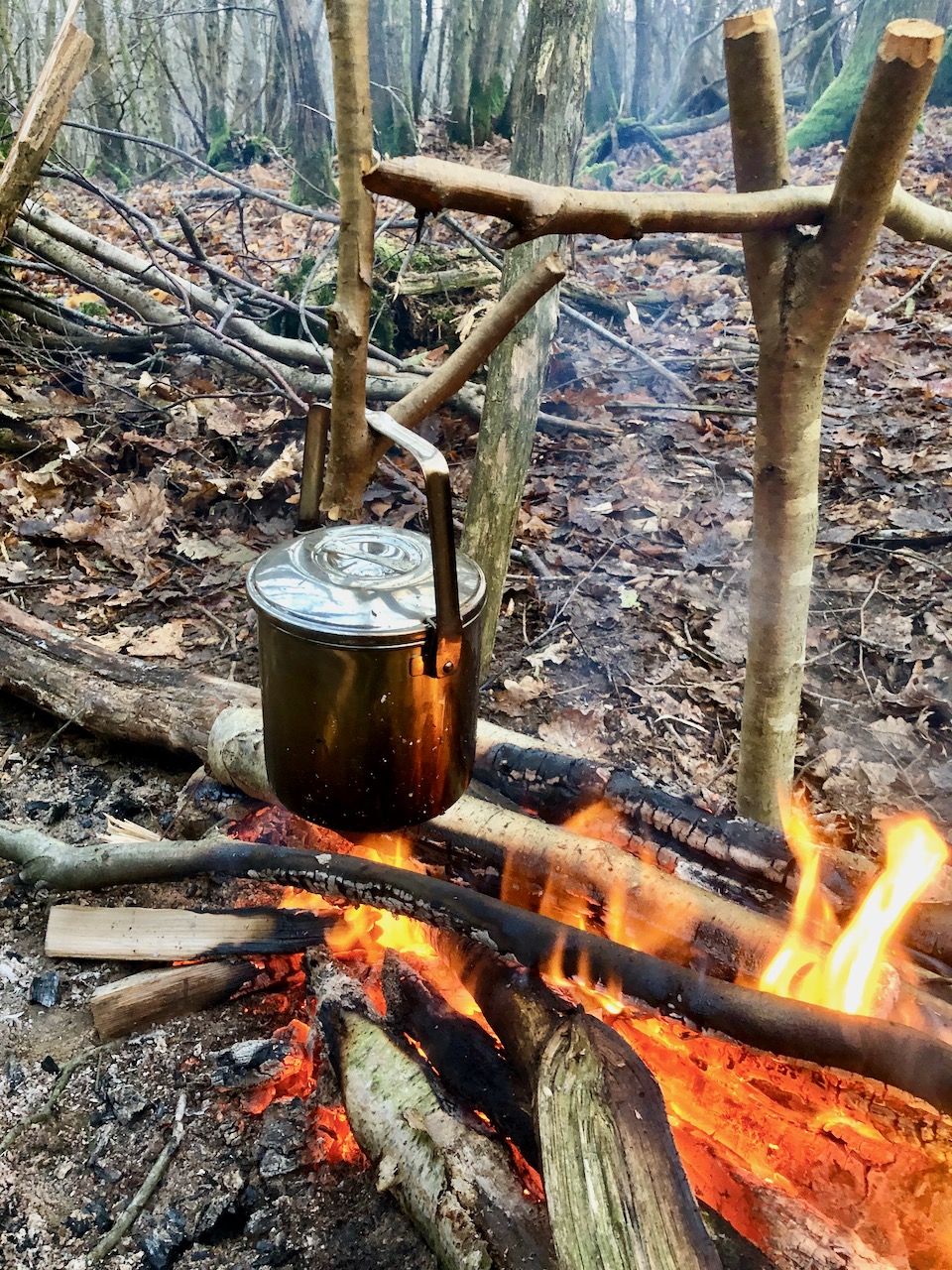
Using the Hazel I also created a Whagon Stick pot hanger, which proved invaluable over the course of the weekend for boiling water and heating food; I was really chuffed with how well it worked.
With bed frame done I got to work finishing my shelter, or at least finishing it as much as I could on day 1. I covered the lean-to roof with more poles, using deadwood, and also wove in some more Hazel brash to create a layer leaves wouldn’t fall through; I needed to pile on about a foot of leaves to act as insulation.
I took a break mid-afternoon to go and source some water, and whilst on my wanderings decided to collect some Western Red Cedar boughs to make a better mattress for my bed. The boughs act as good insulation, especially when woven together so the ends don’t prod you during the night, and they smell nice, which I reckon leads to sweeter dreams.
Important to have a place to hang your hat
Lighting my fire – start with V shape
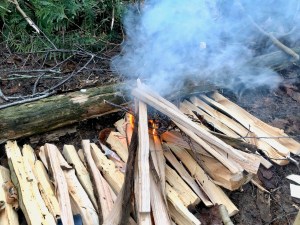
With dusk approaching and plenty of firewood prepared I also though it prudent to get a fire going. I made a base from split chestnut, behind the beginnings of a reflector, and created a V-fire using a few feather sticks I’d prepared earlier and some silver birch bark. I initially positioned the fire about 3 feet from my bed, however by the second night it was considerably closer.
Finding and purifying water
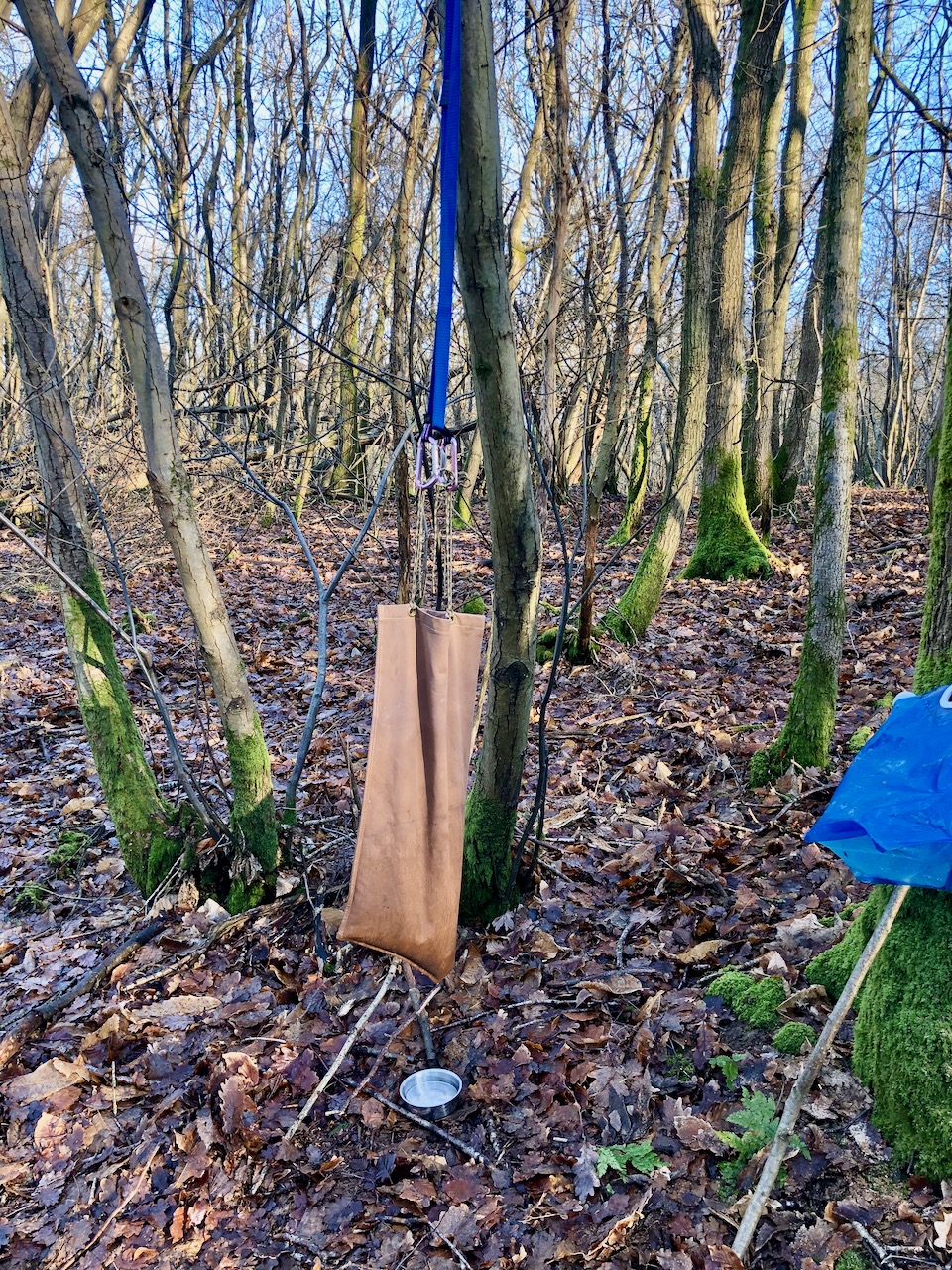
I must admit finding water wasn’t too much of a challenge. It had been raining so much over the previous few months the water table was very high, and I didn’t have far to walk to find a spring. The water from the spring was very clear already, having filtered through sandy soil, however I thought I’d better pass it through my millbank bag to be on the safe side. I hung my millbank bag from the sling and carabiner I’d brought with me; I often carry a sling and carabiner or two with me as they’re useful for so many things, a habit from my more frequent climbing days.
Millbank bag and sling set up for filtering water
Interestingly I did follow the spring up the hill to see if I could find its source, or a better place to collect water from easily, and came upon what looked like old style septic tanks, or the settling tanks anyway, behind a house backing on to the woods. They were however several hundred metres uphill from the spring where I took my water from, so I figured the ground would have done most of the work for me by filtering out any nasties etc.
My millbank bag has a fairly slow flow rate, despite having run it through a rinse cycle in my washing machine at home a few times, however by constantly topping it up and collecting water in the small pan from my zebra billy can kit, I was able to collect a large amount of filtered water in one of my collapsible water vessels; I used the other one to collect unfiltered water. I remembered to let a decent amount of water run through the bag, down to the line, before I started to collect it, to make sure I was only getting filtered water and not drips off the outside.
Billy can and Whagon stick – water purification in progress
It was then just a matter of boiling water over my fire, using the zebra can and pot hanger, and either drinking it straight away as tea, or storing it in a water bottle. I’m pleased to say my system meant I had more that enough clean water throughout the weekend, including enough to wash the essentials with – face, pits and bits; warm water of course.
The First Night
As night fell the temperature dropped, and I hastily made some last adjustments to my shelter, piling more leaves on top as insulation. I reckoned I had enough firewood to see me through the night, intending to widen my fire into a long log fire to provide sufficient warmth. I hadn’t had time to build a large reflector yet, but was warm enough once I put on my down jacket as an additional layer, and lay down on my raised bed.
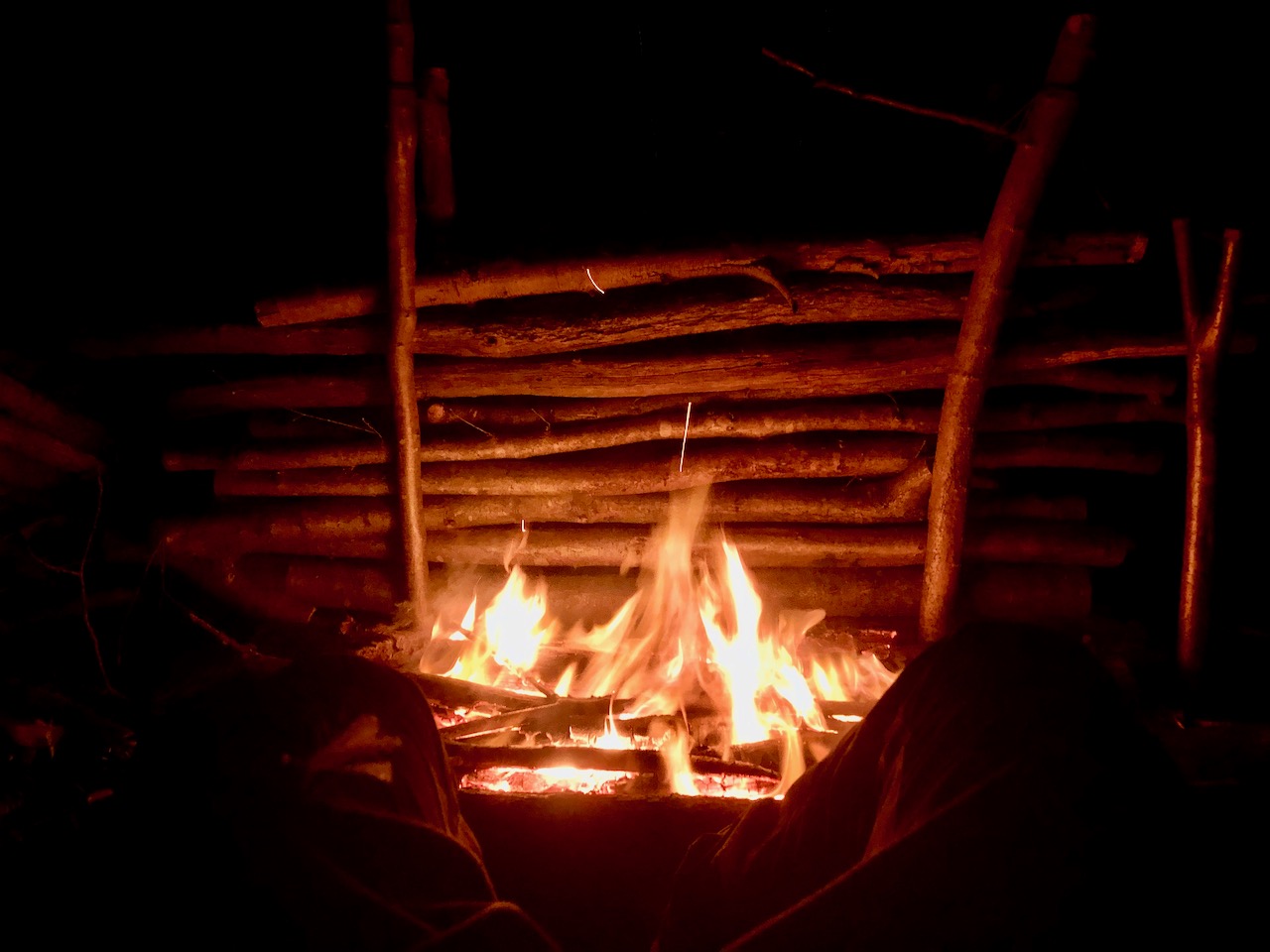
Long log fire lit
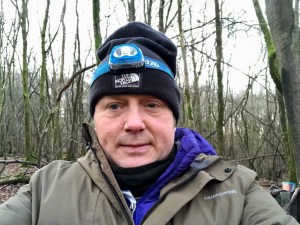
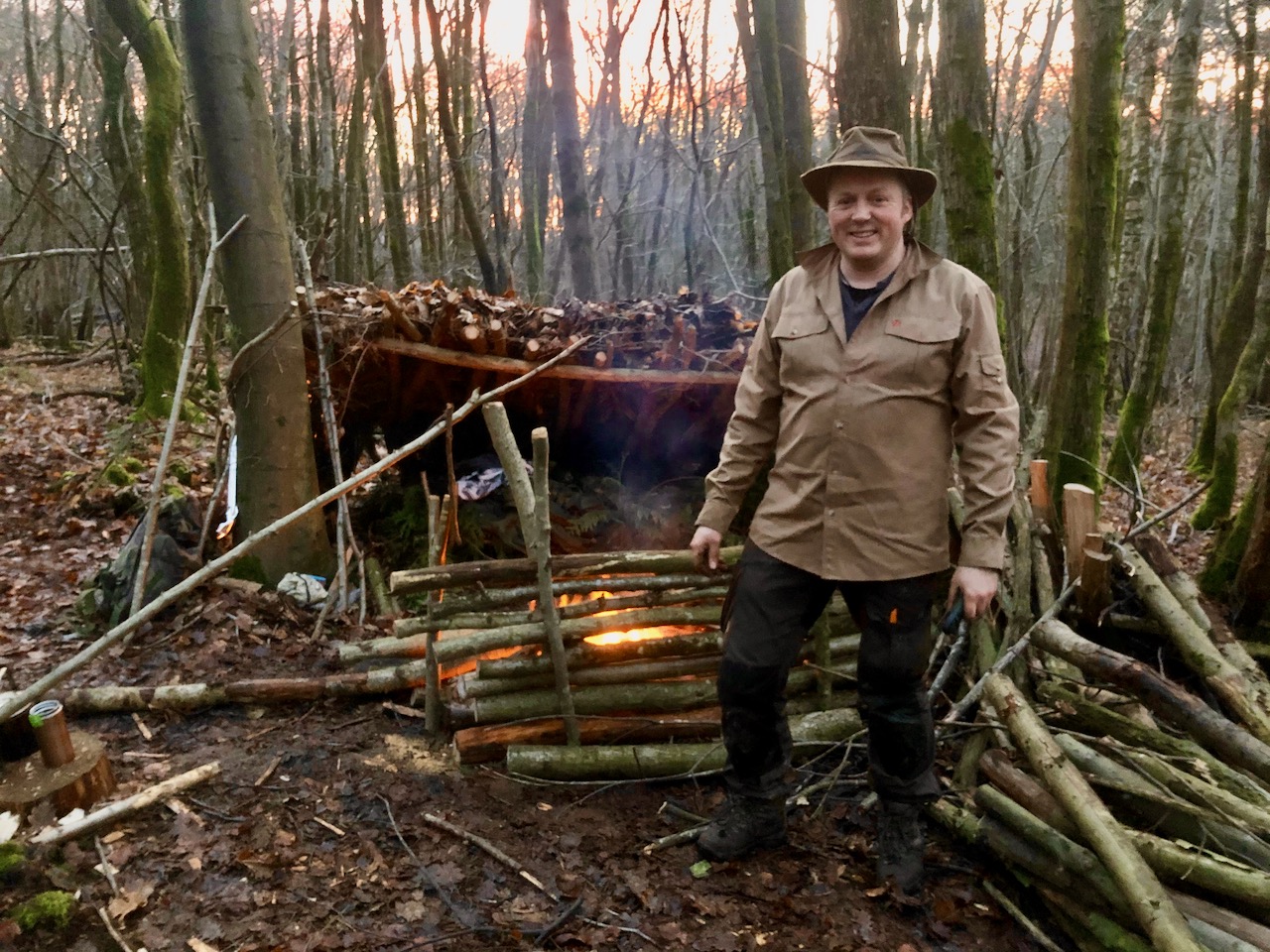
Me at dusk
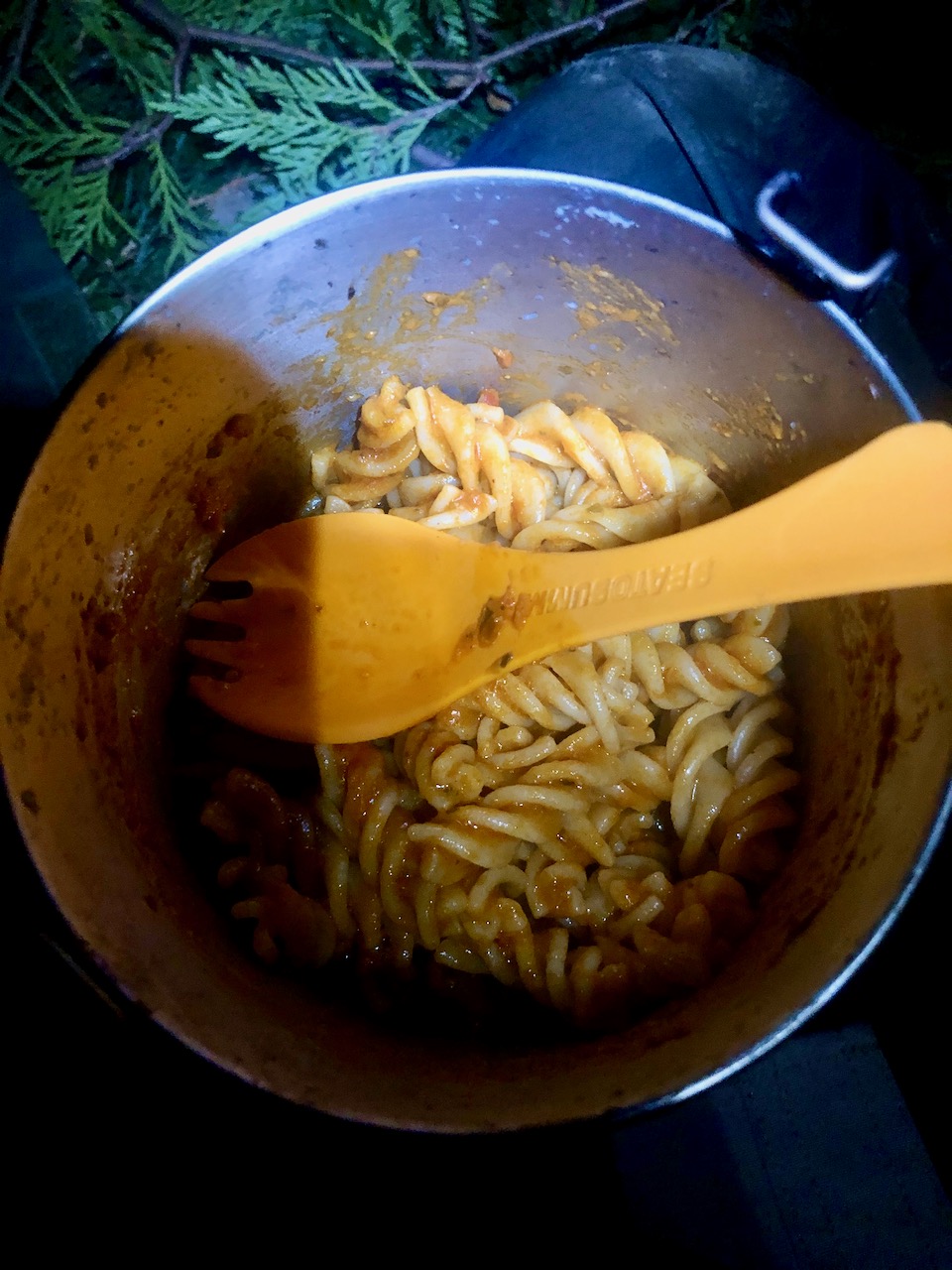
But I’m getting ahead of myself. It was pretty much dark by 17.00, but that was far too early to go to bed, despite which I’d have needed more firewood if I intended to keep a long log fire going from then all the way through to the morning. I had my head torch so kept busy processing a bit more firewood from the dead chestnut and silver birch I’d felled earlier, starting to make some sides for my shelter, and then cooking some food a bit later on; pasta with pesto and a bit of smoked sausage, with tabasco sauce to spice things up a little, and plenty of tea.
Pasta and pesto, with spork
I widened my fire into a long long fire before finally turning in, making sure I had plenty of wood within easy reach to add throughout the night. This included more kindling to get the fire going easily should it go out. I was comfy lying on my bed, electing to keep my shoes on as my feet were mostly warm in my boots. I used my poncho as a bit of a blanket but it didn’t work very well, as moisture built up underneath it. With the fire and shelter I was mostly warm enough.
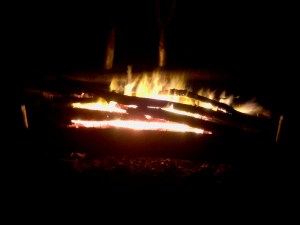
Long log fire burning merrily
Long log fire – essential when close to freezing
I was a little nervous about the fire either going out if I fell asleep too deeply (I can sleep fairly deeply anywhere), or if it sparked and set fire to my shelter or firewood pile; I was burning mostly seasoned chestnut which spits enthusiastically. As a precaution I pegged a large log between me and the fire. As I had plenty of water I boiled a last lot before my first sleep cycle and transferred it to one of my water bottles. I placed this between my thighs to warm the blood in my femoral arteries, which proved a great way of staying warmer for a couple of hours. Had it been colder it would have also meant I’d have had non frozen water in the morning.
Final water boil of the night
Watching the sparks – meditation
It was very peaceful lying in the woods, listening to the owls and gazing up at the stars. After a busy day of non-stop preparation it was great just to stop and switch off for a bit, with a full stomach and a little bit of chocolate as dessert. I considered how privileged I was to be in such a beautiful woodland, sleeping next to a fire in a similar manner to that my ancestors must have done for thousands of years.
I probably initially went to sleep about 22.00, for a couple of hours, then woke up and loaded more wood on to the fire. I then slept again in 1 to 2 hour intervals throughout the night, waking to add more firewood, or nip to the loo because I’d drunk too much tea; it was much colder away from my fire!
Day two – Camp improvements and Learnings
I awoke about 06.30 hours with my fire still glowing, and the woods just about starting to get lighter. I lay still for another 30 minutes, despite realising my feet were now pretty chilly and I needed the loo; my bed was pretty comfy and I was enjoying the dawn chorus.
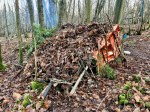
Shelter post night 1
Me – a bit blurry eyed
Eventually the need for a hot drink, breakfast, and to warm my feet up with some activity got me out of bed, up and moving. I was feeling pretty happy about having made it through the first night without too much difficulty, and for having had just about enough firewood. I decided I needed more for tonight though, as it was likely to get a bit colder, and I could have burned more if I’d wanted warmer feet. As I was getting up a roe deer passed through the woods not far from my camp, disappearing up the hill; he or she didn’t seem too alarmed at my presence.
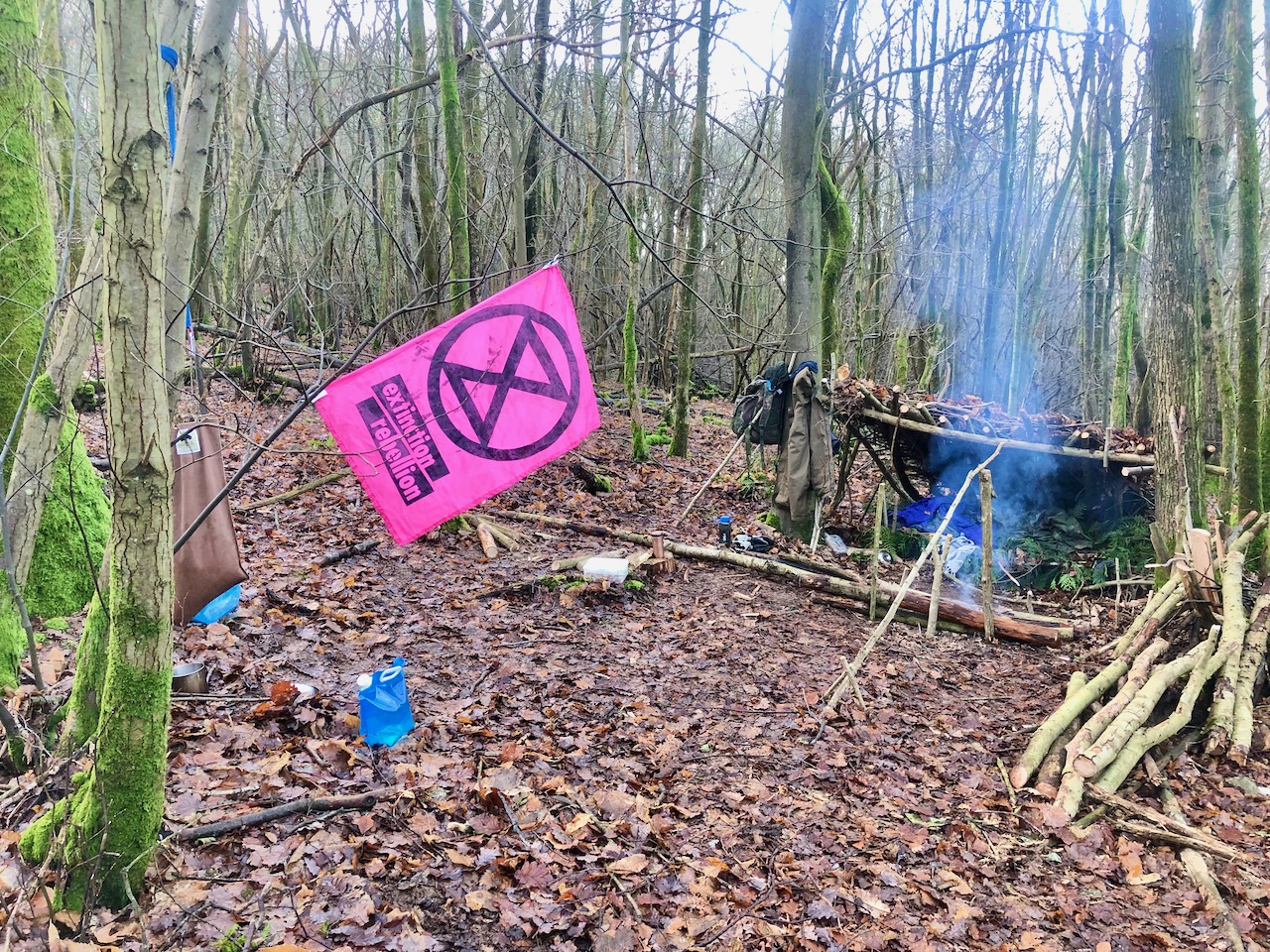
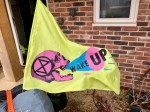
Camp complete with XR flag
We were due to meet up as a group about 11.30, so I spent the morning preparing more firewood and water, as well as putting proper sides on my shelter. I’d forgotten about my space blanket so used that for one side, and started to weave a wall of hazel together on the other.
It was good to meet up with the rest of the group to see how they were doing, and encouraging to learn everyone had made it through the night without having to retreat to tents and sleeping bags. I think we were all fortunate that it hadn’t rained, which would have made things trickier, and meant I’d probably have needed more leaf litter on my roof or to incorporate the poncho. As well as a walk through the woods to learn some winter twig identification, we had a bit of a debrief on what we could do to improve our shelters and well-being. Some points below to remember:
For a long log fire make a big base out of logs to raise it off the ground. This creates a good long lasting bed of embers, and will initially protect any tree roots.
Make sure you have an adequate supply of feather sticks and kindling to get your fire going again if you need to; you don’t want to have to spend an hour doing it during the night when you’re cold and sleepy
Create ‘fire piles’ of wood to manage your long log fire through the night. You can easily pick these up and use the set to get your fire going again for your next sleep cycle. You should be able to sleep well for 3 hours before needing to redo your fire, although it may initially be a little hot to be close to
Think big on the fire, and adequately long to give your whole body warmth. And always get more firewood than you think you’re going to need; in general I think I was okay on this score
Close the ends of your shelter to stop drafts and trap hot air from the fire
Raise your bed so hot air can flow underneath it, and to give you a sit spot
Put a greenwood ‘banksmen’ (large log) in front of your fire to stop it rolling into your bed, and move your fire closer to your bed for warmth; people have died because they were just a couple of metres away from the warm zone of their fire
Use a reflector to reflect/radiate heat back into your shelter. You can just use logs for this, or incorporate a space blanket
Loosen you boots to keep your feet warmer. This traps a layer of air around your toes as heat; top tip and helped me the following night
Lean to shelters need to have a 45 degree angle, and not be too far off the ground
Orientate your shelter to the prevailing wind, and to take advantage of the sun rise
Remember hygiene – wash hands etc
Lip salve and hand moisturiser really are a boon to stop skin cracking; I’d remembered the lip salve
Rotate your sleep and activity through 3 hour blocks
Recognise what is wrong and act on it
Thrive not survive
I’d covered off several of the above points already, however once lessons were over I was keen to get back and perform some more enhancements to my shelter, whilst we still had some daylight. I built up the reflector for my long log fire using greenwood, and made sure it was secure by tying the staked poles together at their tops. I also set a large greenwood banksmen in front of my bed, moving the fire a little closer. I harvested a little more Western Red Cedar for my bed, and finished the sides of my shelter to shut out breezes. I also added some more leaf litter and trimmed down some of my shelter poles to stop them poking through it; prevents water running down them if it rains. By the time it was starting to get dark I was pretty happy with my set up for the night, although I could have kept on enhancing and adding features for days!
Me and my camp
The Second Night
I had more firewood prepared than the previous evening, and wanted to try for a bigger fire throughout the night as it felt like it was going to be colder. This worked well however at one point my reflector did catch fire, and I had to hastily insert a new banksmen between it and the main blaze. I again feasted on pasta, pesto and smoked sausage, and munched my way through large quantities of trail mix.
Long log fire with reflector
It was definitely a colder night so I was glad of the bigger fire, although I did find it got a bit smokey at times, perhaps because some of the wood was a little damp, but also because the wind had slightly changed direction. I think I need to mix up my firewood a bit more in future, and try and use some oak or ash as well as chestnut and birch. The former burn long and hot, the latter bright and more briefly.
As I’d got most things done I settled down to try whittling a spoon for an hour or two, before my first sleep cycle. I also made a few extra hooks for my shelter, and an upright fork to put at the front to support the cross beam, which had more weight on it now.
I slept fairly well again on night two, and was definitely warmer with the improvements I’d made to the shelter; this was fortunate as it was definitely colder. I don’t think I managed a three hour chunk of sleep, but I got close, and my fire stayed alight throughout with regular restocking. I had plenty of wood left in the morning to get some breakfast going, and awoke feeling fairly refreshed to the sunrise and a beautiful dawn chorus.
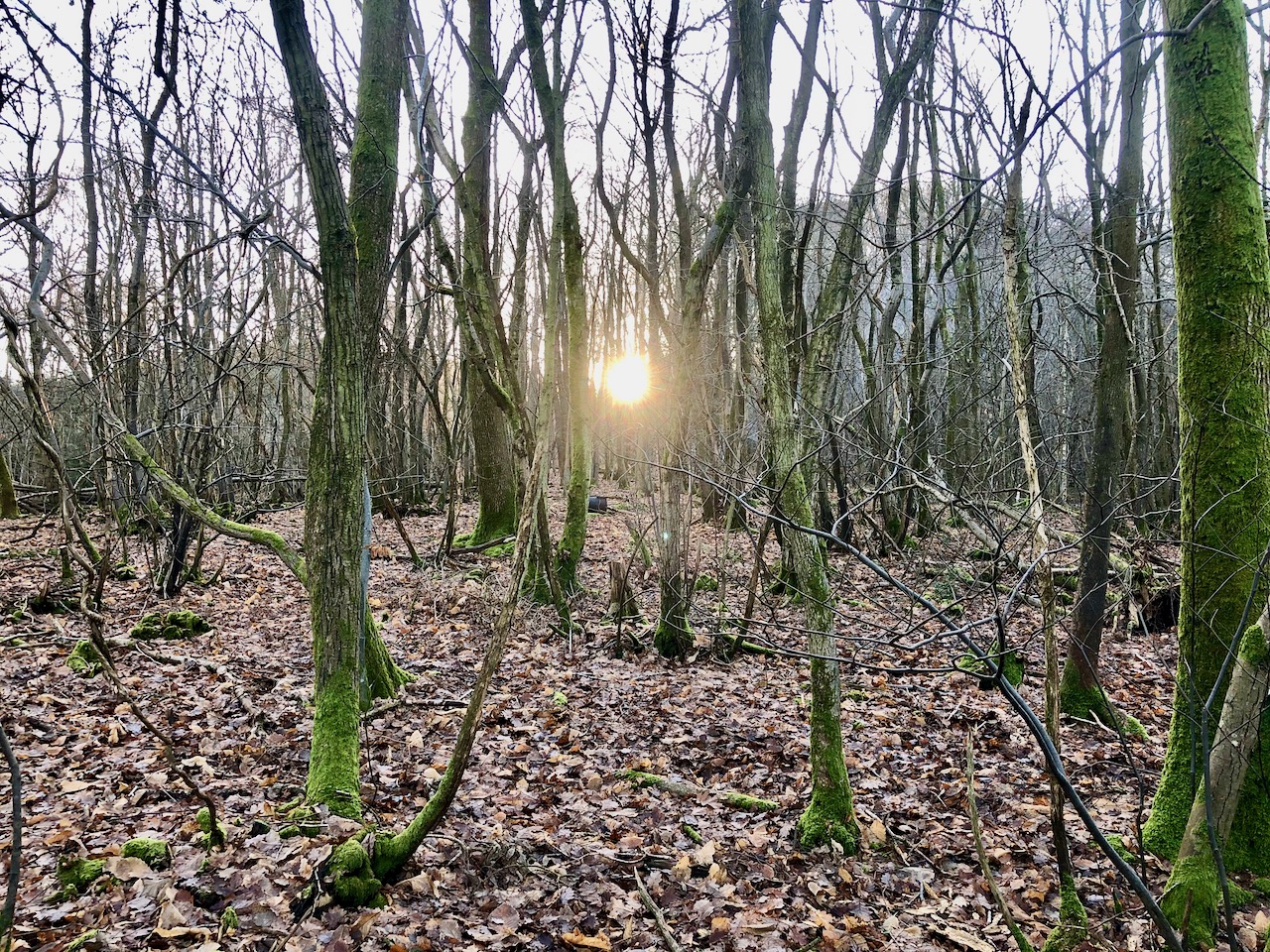
Wintry sunrise – glorious sights, sounds and smells
We made it!
I should mention toilet facilities for the weekend. Going for a wee isn’t really an issue, as long as you go far enough away from a water source; 100 metres or so. For number two’s it was a case of finding somewhere discrete and out of the way, digging a shallow hole, and using that. You don’t want to dig too deep as there won’t be organisms present to break down the faeces, but equally you don’t want anything too shallow that will leave a nasty surprise for someone; a ‘poo mine’. Toilet paper should be burned.
Listening to the birds sing
I’d made it through two nights in the woods without a sleeping bag, and was feeling hale and healthy. My shelter had worked and I’d learned more practical ways to thrive and not just survive. I got some water boiling for tea, and had a a quick wander to stretch my legs, noticing ice on the surface of my water collecting pan; must have been a chilly night away from the fire.
Wander up the hill – frost abounds
Morning brew
Icy water in the morning
We had a few hours in the morning prior to the next dreaded bow drill test attempt, to relax and spend time at our camps. It was hard not to keep tinkering with improvements and thoughts on how to expand, or to start processing more firewood! I did a bit more spoon carving to pass the time.
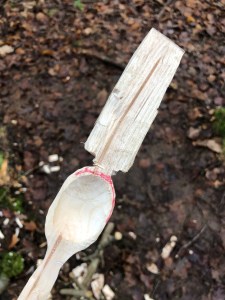
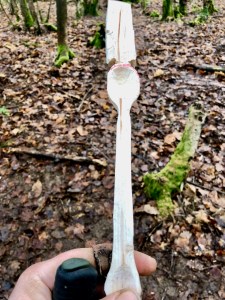
Spoon carving in progress
Spoon carving, getting there
Below are a few final pictures from my camp. Looking at them I could have added more leaf litter to the bottom end of my lean-to, and filled in some gaps, but I’m pleased with out it served me through the weekend.
Me on day 3 – hat not very straight
Side of shelter with Western Red Cedar weaving
Side of shelter with space blanket incorporated
Camp with flag
Before leaving I removed any man made items from my shelter, including my bright Extinction Rebellion flag which had made it very easy to see where my camp was from a distance, and any artificial cordage (paracord); I’d used a couple of withies in other places. I made sure my fire was well and truly out, using my left over water, and packed my bags; I still had lots of trail mix left, and at the time of writing this it’s still going! All natural materials will be turned into habitat piles upon our next visit to the site in February. I’ll be interested to see how my shelter has faired in the meantime, and perhaps tempted for a quick snooze.
I don’t know what day of the lockdown it is, and haven’t really watched the news today. Sometimes I just want a break from all the bad news, anxiety inducing headlines, speculation and frankly at times moronic questions from journalists during the daily press briefings.
I’m getting particularly sick of hearing conspiracy theories about how the virus might have originated. I really don’t believe the Chinese manufactured it in a lab; it’s far more likely this has come from nature due to our continuing destructive practices bringing us closer to infectious diseases. We really need to address the ecological crisis, which of course is tired to the climate emergency. And don’t get me started on 5G nonsense, whether it be how 5G can spread the virus (give me strength) or other unscientific theories. Conspiracy theories don’t do anyone any good, and of course you can’t really argue with people that really believe them as they just claim your counter-arguments are all part of the conspiracy. It would be nice if some people weren’t so credulous, and eager to try and convince others of their lunacy. In severe cases it can really put lives at risk, and cause unnecessary disruption.
I’m pulling together photos from my recent wanderings for a blog post on wild plants you can find growing on your doorstep at the moment, however this is quite a lengthy enterprise. It’s amazing how many species you can find along paths and roadside verges. In lieu of that, here’s a short film from the woods down by Salhouse Broad I took today. Many Bluebells, a lot of Blackthorn blossom, birdsong and the odd beard.
Working from home is giving me many more opportunities to get out into nature in my local area, for my daily bit of exercise. I really hope others are getting the same opportunity, whether that be in the city, where nature can still be found thriving, or out in the countryside. Once we’re out of lockdown I hope that working practices will change for many, allowing more time at home with friends and family, perhaps a slower pace of life, and more time to appreciate the natural wonders we have in the UK.
Vibrant Bluebells
Spring woodland – heady smells
The current crisis also seems to have stimulated a gardening resurgence, both for people growing their own food, as well as planting more nature friendly species to help wildlife. Both these are great things; growing your own food will make us far more sustainable and less environmentally damaging as a nation, and our insects, birds and mammals need all the help they can get at the moment.
Blackthorn blossom abuzz
Blackthorn blossom
We just need to remember to try and plant native species where possible, and ponds don’t need to be sterile ornamental things. The wild pond in my garden has birds visit it everyday, as well as a hedgehog at night; far more entertaining than coy carp, in my opinion.
Bracken emerging
Bearded Dragon exploring the garden
Nature may appear to be thriving in many places in the UK at the moment, but it’s not all good news. On my cycle ride the other day I noticed yet more hedgerows have been torn down alongside a road where I believe new houses are to be built. Hedges provide such vital habitat for nesting birds and shelter for mammals, as well as wildlife corridors. I really don’t know why the hedgerows have been removed, especially during bird nesting season which I think it illegal. There still seems to be flailing (violent machine hedge-cutting technique) going on too, which I hate, not least because it sprays wood splinters all over the road causing me punctures; I’m more worried about the impact on wildlife though. I really wish we could try and live and ‘develop’ in a more harmonious way with the wildlife we have left. At least roadside verges seem to have received some respite this year, with less mowing; it’s amazing seeing all the wild plants and flowers growing.
Perhaps the lockdown will allow people more time to appreciate nature, notice its beauty, and take in the destruction happening. We need to get out of this state of denial and ignorance. We need nature as much as it needs us to protect it. Maybe lockdown will give people the pause and thinking time needed, and once we emerge we can turn the decline in biodiversity around, and put the health of the planet, ourselves, and that of future generations ahead of profit and so-called ‘growth’.
I’ve been delaying writing this ever since getting back from London. I’m still not entirely sure what I’m going to write, or what’s going to come out after spending two weeks on the streets of our capital. Along with thousands of other activists I was trying to bring more attention to the climate crisis, and to catalyse the changes we need to make to avert catastrophe. Climate Breakdown is a very real and present threat, and I still don’t think the majority realise this, or have properly processed the fact that we can’t go on as we are. Business as usual just ploughs on like a runaway train, air travel keeps going up, we’re chopping down forests at even faster rates all around the globe, or they’re on fire, the oceans are dying from over-fishing, and CO2 emissions continue to go up year on year. We have so little time left to alter our trajectory I often feel we’ve left it too late, and the task is impossible. It comes back to the same thing though; we’ve got to try, haven’t we?
Red Brigade at Vauxhall Gardens
I joined Extinction Rebellion (XR) a year ago when it first started up as a chapter in Norwich, and remain convinced that its motives and methods, along with other similarly aligned organisations, offer the best chance for bringing about change. I go through periods of doubt, questioning myself and XR’s tactics, after all I’ve only been an activist for a year. What do I know compared to people who have been doing this for decades? Without doubt we need to learn from our mistakes, reflect on our successes, and come up with new ideas, methods, and ways of reaching beyond our current member base and boundaries. In the space of a year we’ve achieved so much in terms of raising the profile of the climate and ecological emergency. In a year, in tandem with other movements such as the Youth Climate Strikes, Greenpeace and Friends of the Earth, as well as the phenomenal efforts of Greta Thunberg, we’ve seen more happen than in the last 30 or 40 years of waiting for politicians to do something. Following traditional tactics such as writing to your MP just hasn’t worked; politicians continue to fail us.
There can be no doubt that non-violent civil disobedience has been successful up until now, but is that and mass arrests the be and end all of Extinction Rebellion, or do we have more in our repertoire? I think we do and we will learn, evolve and adapt in the same way wider society, government and business need to in order to survive.
Touring bike roadworthy once more
Overnight stop in Cambourne
Wake up! I wish more people would
So what to write in this blog? It might be a long one, just to warn you. I’ve already restarted it 3 times and that’s after only 2 paragraphs. I’ll try and give you a bit of a record of my journey through the October Rebellion, combined with my thoughts on what we’ve learned, and what we might do next. Writing this is as much about me processing my own thoughts as it is about relating things to readers. My opinions and conclusions are my own, and I welcome any constructive comments and criticism that will further develop my thinking. XR tries to be an inclusive movement welcoming everyone and all parts of everyone, but if you’re in the mood for trolling please look elsewhere.
As you may have gathered from the above photos I decided to cycle down to London. It’s been a while since I did a long ride, and I needed some head space between finishing work and joining the Rebellion. My touring bike needed quite a lot of work, and given I seem to have no spare time I employed the services of the Norwich Cycle Medic (http://www.cyclemedicnorwich.co.uk) to build new wheels and give everything an overhaul; very satisfied with the work done.
XR members receive lots of criticism from people for using cars, buses or even trains to get to London to join the protests. Frankly this criticism is tiring and nonsense most of the time, made by people who really don’t understand the relative scale of the problem. We have to work with what we’ve got, and at the moment that’s an infrastructure and transport system that is largely carbon based. Should we all just do nothing and wait at home for the axe to fall? One has to use the tools that are available, and until we can bring about the changes needed that involves fossil fuelled transport. The emissions generated from the relatively small number of people travelling to London, or from the traffic delays caused by the protests, are negligible when compared to everything else, and I feel are completely justified. Many of us, including me, don’t fly anymore, and try and minimise car use wherever possible, therefore a bus trip to London to protest really is minimal in the grander scheme of things. Focus should instead be on frequent flyers, especially on people who have to fly excessively for business, when meetings can be held effectively by virtual means these days.
Taking the canal path into central London – traffic free!
Arriving at Marble Arch
Travelling Lobster – he’s excited…honest
Crowds gather for the opening ceremony
Red Brigade at Marble Arch
Night spent in Hyde Park
On that note one of the best realisations, for me, from the October Rebellion, is that ‘we are all hypocrites‘. I loved this when I heard it. We are all part of the system, and all contribute to the problem. We need to accept this and move on. It can’t be any other way given what we have available to us. As someone who is acutely aware of the challenges we face I try to minimise my carbon footprint, alongside my ecological impact from other factors, but I still very much contribute to the problem. Until we have systemic change this will continue to be the case. And we need to be aware that our footprint in the UK is huge compared with that in many other countries; our rate of CO2 emissions massively outweigh that of poorer countries.
Global CO2 emissions by wealth
So when we attract the inevitable criticism telling us to go and protest in China, or the US, as ‘their emissions are so much higher and our’s are a drop in the ocean in comparison’, one needs to remember the above chart; we’re in that top 10%. Sure, China’s emissions might be high, but they manufacture a lot of the goods we feel the need to constantly buy, and then there’s the transport impact of those goods, our holidays, throw-away lifestyles etc. Our emissions are still huge compared with poorer countries, due to our lifestyles and the system we have to work within; throwaway culture, fast fashion, diet, habits and hobbies, excessive consumption in buying things we want but don’t need, marketing driving all this. Again, it comes down to needing systemic change, and for everyone to realise this. There’s also the fact that historically the UK, ever since the agricultural and industrial revolutions (which we led), has had centuries of high emissions to build our infrastructure, business, and lifestyles. Other countries are still trying to catch up, so given our historic footprint shouldn’t we do even more to curb our emissions, and limit our expenditure of the remaining carbon budget? I could go on, but let’s get back to London.
It took me two days to pedal to London, covering about 155 miles. It could have been about 10 miles shorter but I forgot about the MOD firing ranges in Thetford Forest and had to backtrack a bit, plus take a few unintended off-road routes. I only fell off my bike once, into a Hawthorn hedge – bit prickly. I overnighted in Cambourne with my brother and his family, before the final leg to Marble Arch, getting drenched as showers hit on Sunday morning. It was pleasant using canal paths for the final stretches, thus avoiding most of the traffic and air pollution. My heart leapt upon arriving at Marble Arch, where I’d camped for the April Rebellion, and upon seeing all the Rebels gathered for the opening ceremony; good to meet up with Ben too, an old friend I hadn’t seen for some time – really appreciated the catch-up. I rendezvous’d with the rest of the Norwich and Norfolk team, who came down in two coaches (excellent turnout), before spending the night in my bivvy bag in Hyde Park.
Sunrise in Hyde Park
Road block next to St. James’ Park
Taking the road at Horse Guards
I should probably explain what we had planned, and the roles I’d volunteered for the October Rebellion. Groups came from all over the country, and we split up by region to occupy several different sites around Westminster. The aim was to bring the City to a halt by blocking the key routes in and out, and to a degree we were successful, at least initially. We wanted to target government, business and institutions, those that need to lead on systemic change. I took on the role of affinity group coordinator (we had several affinity groups formed of Norwich and Norfolk Rebels), and was one of the Reactive point people for our location, which mainly involved comms between the site and rebel support functions. I dabbled in a bit of media and messaging, including a lot of live-streaming and social media updates, and was one of the facilitators for site meetings; I do like some of the XR techniques for managing large meetings, and would like to use them in my day job!
Following the first night in Hyde Park we assembled and made our way to St. James’ Park (only got slightly lost) to take our objective; the ‘Love Rebellion’ site, named with the aim of providing space for regeneration, music and outreach. There were a few hundred of us, all East of England and Midlands groups. We stepped off the road. We rebelled for life. We took our site.
Rebels gather at St. James’ Park
Night falls – tents on Birdcage Walk
Swallowtails forever
Pulling a nightshift – it rained, a lot
Norwich Rebel on duty in the early hours – thank you Hayley for reading No.1 Ladies Detective agency to us!
It was cold and wet
What happened next? It would take several blogs to relate events from the two weeks. I’ll try to be succinct (hah). As well as holding our respective sites around the City of Westminster there were lots of actions planned, with aim of putting pressure on the Government, financial sector, big business, defence industry, oil and gas industry, judicial system etc to highlight the Climate Crisis and bring about change. We always knew it was going to be tough, with the police having been briefed to take a harder stance against us after the April Rebellion. I think they must have been specifically briefed to not be as friendly, not to smile, intimidate us where possible, and keep interaction to a minimum aside from when trying to move us on our make arrests. They are however, only human, and being constantly around us were constantly in receipt of messages on the Climate Crisis. So many of them support us, but also have to do their job. We know a few have quit and since joined us, and several retired officers, some senior ranking, are now amongst our number. Policing us is an almost impossible task given cuts and the numbers involved. Officers were drafted in from all over the country; we had conversations with individuals from Wales, Manchester, East Anglia and beyond, and when they had the chance many expressed support. A few were in tears during some of our actions, after observing the numbers willing to be arrested, hearing the messages, and witnessing the Red Brigade.
Being in St. James’ Park we weren’t far from several other sites, including Trafalgar Square which became a focal point after several other locations fell. The ‘Burning Earth’ site was a wonder to behold, from the Hearse that blocked the road, to all the artwork, tents, assemblies and rebels.
Hearse blocking road in Trafalgar Square
Nelson’s Column looking resplendent
Everything Will Change
Lots of structures built
Humility Empathy Frugality
Trafalgar Square – Burning Earth Site
Reflect Rebel Restore
Norwich Birds in action in Trafalgar Square
Ka ka
I should mention the kitchens that fed us for much of the two weeks. They were amazing, and alongside the efforts of Hare Krishna kept our energy levels and morale up. The police were constantly trying to confiscate our infrastructure, however the kitchens kept going, springing up at new sites when we were forced to move, and churning out thousands of vegetarian and vegan meals over the two weeks; some tireless efforts by certain individuals, with much gratitude. Thanks should also be given to all the food donations made both my locals, but also from afar. It’s amazing when a Deliveroo rider turns up at a roadblock with 3 vegan pizzas, ordered by someone from the other side of the country with instructions to deliver them to hungry rebels; not specific individuals, just deliver to whoever is on the roadblock. Also, thanks to Ian who turned up post work and brought me a delicious Vegan burger – much appreciated. I also mentioned Hare Krishna; they fed us loads in April, and did the same in October, pedalling vast amounts of food around London – and it tasted great! Saying that I still managed to lose half a stone on the ‘Extinction Rebellion Diet Plan’, amazing what two weeks of rebelling will do for your waistline.
One learning about kit. We need to be cleverer about delivering kit to locations. It was too easy for the police to identify our vans, stop them, and confiscate items and infrastructure. We could drop kit at other points and walk it in, or split the loads more. The police confiscating stuff did backfire on them at one point when they took possession of much of the disabled infrastructure; ramps, toilets etc. Not their best PR moment, and putting at risk many of our disabled members.
In case it’s not clear many of the rebels present, especially those who travelled, opted to camp in London. This meant tent villages sprang up at our various sites, including on roads, alongside the bigger infrastructure. This got tricky when we had to move stuff quickly or the police started to confiscate items, with people losing or misplacing belongings, and some cold and uncomfortable nights for some; although we did bring in spare tents and sleeping bags. We still have a massive pile of lost property!
A moment of calm as arrest continue on Whitehall
Our Da Vinci bridge that appeared overnight – thanks to world building team
Da Vinci Bridge wasn’t popular with the police
Police move in, time to sit down
Singing, dance and performance art
More birds join the protest
Police move in on Da Vinci Bridge
Antipodien kangaroo reinforcements
Red Brigade make an appearance as the roadblocks fall (again)
St. James’ Park was a brilliant site, and hub for so much activity, especially as we were joined by the Global Justice crew bringing with them more diversity and education on the challenges faced by populations around the world in the face of climate breakdown. I learned a lot about Global South versus the Global North, and again how privileged we are in the country. Privilege is something we all need to acknowledge to one degree or another. I’m grateful that I have the right to protest in this country, and to not be beaten up and imprisoned for it. I also acknowledge that I’m a middle-classed white male, with money in the bank and access to free healthcare, as well as a host of other benefits not available to others which I often take for granted. I’m not a victim of the institutional racism that impacts many people and other protest movements. I’m far less likely to be stopped and searched than a black or brown person. At the moment I’m unlikely to ever go hungry, lack water, suffer disease, or face the threat of violence motivated by competition for resources becoming more scarce due to climate breakdown; war will become increasingly driven by the climate crisis.
That’s not to say the latter points won’t happen in this country during my lifetime. I think think there’s a high risk they will as the impacts of the climate crisis escalate and are felt closer to home. At the moment if a harvest fails in one part of the world, which happens all the time, we can afford to buy food from somewhere else, but what happens when harvests fail across multiple locations at the same time, and we can’t buy our way out of the problem? The ‘Just in Time’ supply and demand chain will come unstuck at some point, and we will be impacted. I think this will happen a lot sooner that we think, and with terrifying consequences. What wouldn’t you do to provide food for your family when the supermarket shelves are empty and your children are hungry? We’re ill-prepared for such an eventuality, and it will hit us hard, with social contracts and community bonds breaking down. It’s one of the reasons I increasingly take a prepping approach to life.
But back to the privilege point; yes, I’m privileged, but should that mean I shouldn’t protest, absolutely not, I just need to learn and have my eyes opened to it. In fact wouldn’t it be selfish and neglectful not to use my privileged status and influence to protest? I need to think about this more and speak with people wiser than I.
At this point I’ll include a short film of the ‘Roo Rebellion’ turning up at one of the roadblocks next to St. James’ Park. Needless to say the sight and sound of a group of antipodeans dressed in kangaroo costumes, bouncing round the street, did a lot to lift and relax the mood. The police present couldn’t keep straight faces, despite their orders.
Despite all our efforts Love Rebellion site fell at the end of week 1, and we were forced to relocate. The police had orders to evict us ahead of the Queen’s Speech in Parliament, and apparently couldn’t let us remain due to the bomb threat risk. They needed to search the site, not because they thought XR had bombs, more that others might do and be using XR as cover.
Rebels link arms to protect kitchen tents
Transport mobilising to move kit
A lot of police for one little tent
There was so much colour and vibrancy at our site, from the artwork to the music and samba bands, the rebels themselves and the structures we built. We had a shift system set up to cover the roadblocks and actions, with the Swallowtails Affinity Group I was in covering the first night; that was a long night, rewarded by the appearance of an urban fox in the early hours of the morning. The camaraderie was outstanding, despite the rain and constant attention from police helicopters; the search lights irritated one lady to such an extent she took her clothes off and lay in the road. The police were trying to intimidate and stress us out.
We also had an excellent organisational and decision making system set up, with a council formed of point people from each team, as well as ‘random rebels’. The council was fed information, questions and requests from the Peoples’ Assemblies which took place on a daily basis. I wish we’d had more time to get it all up and running properly and really bed in but alas, we had to move. One learning is to do more prior to a large scale Rebellions to ensure rebels are aware of the structure, site groups, decision making processes etc. There were perhaps too many comms prior to October and key messages were lost.
We evacuated St. James’ Park over the course of an afternoon, trying to get our tents and kit out without it being confiscated, and over to Vauxhall Pleasure Gardens in the London Borough of Lambeth. There were stirring scenes as Rebels linked arms to protect the kitchen, singing songs in defiance or instructions to move on or face arrest. We quickly hired vans, packed up, and prepared to move; my bike ended up with a lot on it! It was quite an exciting walk/ride over to Vauxhall Pleasure Gardens, with the police refusing to allow Rebels to cross the bridge. I merged in with a larger group of cyclists commuting from work, and made it across. Lambeth Council had said we could stay in their park as long as we didn’t cause any local disruption, and were respectful to residents etc. We were and are very grateful to them and residents for accommodating us, and also to the local cafes which we took advantage of several times; it rained, a lot. The gardens also had a piece of work planned to plant insect friendly bulbs towards the end of our stay, so we made sure we cleared the areas they needed to get to. It was nice to see a message thanking us for leaving the site clean and litter free – they said they wished all their visitors were like us.
Arrival at Vauxhall Pleasure Gardens
If not us? Who? If not now? When?
Tents up and ready
Murmurations Affinity Group members going strong
Sunshine at Vauxhall Gardens finally
Norwich crew in Vegan Pie fest
Where am I up to? So much happened and I’m missing lots out, especially around the sense of camaraderie and the emotions that run through you as you see friends getting arrested, or when support turns up in the form of a samba band at an action that was looking flakey. We were in Vauxhall Pleasure Gardens for several days, during which time I also spent a couple of nights with a friend from school and his family (thanks John and Emma). It was great to take a break, grab a shower, and spend a bit of time playing with their kids; it is after all their future which is in jeopardy. The Vauxhall base gave us somewhere to launch actions from, combined with the other remaining sites still holding out around London; mostly Trafalgar Square at this point.
As with April the Norwich and Norfolk groups were active throughout the two weeks. We took part in several actions, including a protest outside a Government Oil and Gas summit – they were discussing how to encourage investment into an industry that is killing out planet. Perhaps the Andaz Hotel should reconsider hosting such events?
Norwich Rebels block Andaz hotel entrance
Road block swarming progress
Protest outside the oil and gas summit – Andaz Hotel
An innovative lock on – this one really had the police scratching their heads – I think they enjoyed the challenge
Climate Emergency – Westminster Wake Up
Protestors get on top of lorry
On the people being arrested front. It’s quite hard seeing your friends being taken away by police, especially when you’re not willing to be arrested yourself, as was the case for me; too many complications with my job at present. You’re left with feelings of guilt for not being with them and not putting your freedom on the line, and also concern for their wellbeing. I do worry that some people put themselves forward to be arrested without fully understanding the consequences; this could really impact their future career prospects, affect their mental health, affect relationships, and have repercussions they aren’t aware of. There is also a risk of glamourising being arrested, or making it seem like it’s expected of you, will boost your credibility or is cool. Whatever anyone says I don’t believe it’s a pleasant experience, comfortable, risk free, or something to aspire to. Most people do really think before putting themselves forward to be arrested though, it’s not a decision taken lightly.
The Climate Crisis will however impact us all, and being arrested now for causing minor disruption has got to be worth it if it has a chance of stopping the major disruption and societal collapse, which seems almost inevitable at this stage.
We’re in the midst of the 6th Mass Extinction event. Extreme weather events are happening all the time. Conflict due to climate breakdown is happening now. Drought and famine are on the increase. Fires are burning out of control all around the world. People are dying now due to this crisis. We’re not changing course quickly enough, or at all in many cases, from the business as usual model that is destroying our world. Some relatively minor disruption and being arrested has got to be worth it in the face of all that. Surely people impacted by our actions can reflect on why we’re doing it, and conclude that being late one day, or not getting home when you expected, is nothing compared to what is coming.
Be the voice of the World when she is screaming
On that note I experienced some interesting and varied reactions from people during the protests. There was an incredible amount of support from many, even from those stuck in traffic jams, but also some less agreeable and aggressive reactions from some. I can understand and empathise with those who we’ve irritated or delayed from something important. I’d hate to be responsible for delaying someone getting to a hospital appointment. Some just want to get to work, or get home, and we’re seen as targeting normal people just trying to get on with their lives; I will talk about the Canning Town tube disruption in a bit, just not yet or relation to this point. It still however comes back to it being, the majority of the time, relatively minor disruption for a very good reason (see above). I experienced first hand some very abusive comments, coffee cups being thrown, and the threat of violence; this was mostly during rush hour in the financial district. It’s interesting and perhaps not unexpected that the majority of this behaviour originated from middle aged and older white blokes, with no inclination to try and understand why we’re there, or the Climate Crisis. They’re often red faced, stressed looking, heart attack victim waiting to happen. You can also almost feel the waves of self-entitlement, elitism, and testosterone fuelled anger rolling off them. I’ve been trying to think why they’re so angry and I’m wondering if it’s because they feel threatened by us. Are we threatening their status and masculinity? Are we challenging them at some subconscious primal level? I don’t think it would matter if we were protesting about the climate or beer prices, I think think they’d still be aggressive and unwilling to interact reasonably. I reckon it’s often alpha males feeling threatened and reacting according to their evolutionary DNA. Perhaps it’s a competition thing, like two strutting peacocks facing off. Thankfully these sorts of responses are in the minority; most middle aged blokes were fine!
I wasn’t willing to be arrested, but that didn’t mean I wasn’t busy. I often ended up with various people’s mobile phones in my pockets that they didn’t want the police to confiscate! I spent a lot of time live-streaming actions to our Facebook account, or helping with comms to Norwich and Norfolk folks and between Affinity Groups; we ended up super-grouping our Affinity Groups in week 2 for the sake of efficiency. Another learning is around Affinity Group membership and structure – we probably need less groups for future large Rebellions, to ensure sustainability, resilience and support.
On the live-streaming front I used up far too much of my data allowance filming the Grief Funeral march processing from Marble Arch down Oxford Street, which I think took place on the Saturday; the film is on the Norwich FB page somewhere. Around 30,000 people marched through London in an array of costumes and props, however it was barely reported by the press; we suspect the BBC may have had instructions not to report on us, and I’m considering submitting a Freedom of Information request to learn if there’s any truth behind that. The Grief March was impactful and emotional, with a lot of support from the pavements. The Red Brigade brought a whole tube station to silence as they made their way through the city, remaining in character the whole time; they also provoked tears from many, such is power or iconography and silence.
Some familiar faces xx
Grief March down Oxford Street
Dramatis Personae
Some amazing costumes
Red Brigade leading the procession
Which world would you prefer?
I wasn’t involved in the action at London City Airport, however several Norwich and Norfolk XR members were, and were arrested as a result; they blocked an access point to the airport, on bikes. I did watch on the live stream as the partially-sighted former Paralympian James Brown climbed on top of a plane, despite being scared of heights. Another activist boarded a plane and refused to get off. Air travel is a major contributor to fossil fuel emissions, more than any other transport sector, yet the number of plane flights continues to grow. Another example of the seemingly unstoppable runaway business as usual train which needs to be slowed down and stopped somehow, or at least adapted and evolved to something less damaging. I think this was a good example of an action targeting the right place and people; high impact on the environment from plane travel, and the relatively small % of the population who can afford to fly for business and pleasure to an excessive degree.
The airport action also saw disturbing scenes of the police using ‘pain and compliance’ to restrain activists. There is film footage of this, and it’s not very pleasant with the activist in question gasping in pain whilst not, to my eyes, putting up any resistance. It reminds me that whilst we’d like the police to be on side, whilst they are ‘just doing their job’, and whilst we’re often very friendly and want interact positively with them it’s not always the right thing to do.
Many protest groups and individuals from black, brown, indigenous, ethnic or minority communities, have not been treated well by the police. Their experience of being stopped and searched or arrested, often unjustly, has not been good at all. Statistically they are much more likely to be stopped and searched, or arrested. Institutional racism is still thought to be prevalent in the police force, despite efforts to eradicate it. XR members chanting ‘we love you’ whilst rebels are being arrested can be counterproductive, even when it’s not actually directed at the police, but towards the activists being taken away; it can be perceived as being directed at the police and in the past has been. In addition gestures of love or kindness towards the police can alienate groups we want to be onboard with. Flowers sent to Brixton police station by an activist, with good intentions, to thank them for their kindness and care can have a very negative reaction in communities which have seen friends and family hurt or even die in police custody, in that station. I’m still learning about this, and might use the wrong words, however it’s clear we (XR) need to learn and change our approach in some areas to ensure we become more diverse and inclusive. We need to acknowledge the challenges faced by the non-white and the non-middle classed, people we’d love have in our organisation. We need them.
Road blocks in place at the start of the ‘Banking on Breakdown’ day of action
Bank Junction occupied by Rebels
Climate Struggle = Class Struggle
We’re scared, that’s why we’re here
Fossil Fuels = Extinction
Setting our sights on Canary Wharf
Into week 2. It was an early start on Monday for the ‘Banking on Breakdown’ day of action, targeting banks and financial institutions contributing to the climate crisis and ecocide; most of them one way or another. It’s that system change thing again, with capitalism and neoliberalism driving all the wrong behaviours. We rolled out of our tents in the early hours, after much planning over the weekend, and headed for the rendezvous at St. Pauls.
Initially we teamed up with a few other East of England affinity groups to put in road blocks in the financial sector of the City of London. It was a very wet start to the day, and our first roadblock was cleared after about an hour culminating in several arrests; some downtime in the cells for several friends. We regrouped at Bank Junction, outside the Bank of England, where the bulk of rebels were gathered for the day blocking the roads. I had a few good conversations with journalists and workers, who all got it at one level or another. After a quick discussion we decided to get together the Norwich and Norfolk Rebels we could find, along with several from Cambridge, and head to Canary Wharf to bring some direct action to a bank heavily invested in the fossil fuel industry. I cycled there on one of London’s cycle super-highways; they’re ace, and I didn’t get lost for once.
Barclays – Stop Funding Death
Barclays – Leads Europe in financing fossil fuels
Rebels glued on outside Barclays Office in Canary Wharf
Rebels arrived in dribs and drabs via the Tube, or like me by bike, and a game of cat and mouse ensued with undercover police or private security teams (not sure which) as we moved around Canary Wharf trying to work out where we were going. It’s quite a disorientating place, and feels completely disconnected from nature. I think the security teams are quite used to protestors turning up, with actions regularly taking place outside Barclays.
Megaphone outreach activity with sleepy dog
Conscientious Protector
More door blocking – cold on the ground!
Barclays invests billions in the fossil fuel industry, and is up there in the top world rankings for financing activity killing us and the planet; tar sands projects in the US and Canada are not a good thing. We blocked the main doorway for several hours, read the Declaration of Rebellion, and performed outreach activity with workers and passers-by explaining why we were there. It was very cold and windy at Canary Wharf, but numbers grew until we had a sizeable crowd involved. We asked if we could speak to members of the Barclay’s Exec Team to explain our activity, ask them to divest from fossil fuel based funds, and get some answers, but no-one was forthcoming. The one manager who did appear was only interested in how many of us were being arrested, and what for, and smirked the whole way through any conversations; really dispiriting. They’re more interested in driving excessive profits for a small number of very rich people, at the expense of everyone else and the planet.
Tell the Truth Barclays
Rebels outside Barclay’s Bank, Canary Wharf
Time is running out, be a force for change
It should be noted that many of the normal workers we spoke to were pleasant and interested in our message. Most of them very much get it, but are trapped by needing to earn money to support families, pay mortgages, conform to what society expects of us, and by a toxic system that doesn’t offer any other options. They don’t necessarily have another path open to them which is accessible or offers sufficient financial recompense to support their current lifestyle choices. The whole system needs to change, and we need to realise that means we can’t go on the way we are. It will mean big changes to the way we live and operate, and some of these changes won’t be comfortable at all, at least to begin with. I believe however that we can transition to a better method of living, with tighter knit better connected communities, working with nature and not against it, increased equality, more produced locally, and eventually a healthier and happier society; but different, very different. A topic for another blog, but if we don’t start making these changes soon, globally, we’re screwed.
The Barclays’ action culminated with the police arresting eight of our number, using solvent to remove superglue, or cutting tools to breakthrough lock-on tubes. I was on camera duty for most of the day, live-streaming footage, or doing a bit of outreach activity, or supporting the Rebels blocking the doorways. There was a bit of a wait for police vans due to everything else going on round the City, however eventually our comrades were carted off to Sutton Police Station; it was a fairly emotional end to the action, with more than a few tears and shouts of support to those under arrest for aggravated tress-pass and obstruction. The police were gentle, polite and respectful throughout, but we could tell they were getting tired and stressed by long shifts, relentless XR actions, and lack of resources their side. There were several occasions during the course of the October Rebellion where Rebels were de-arrested by the police, as they ran out of police vans or cell space, however this was not one of those times. The Barclays’ high ups obviously wanted to make a point, and made sure the police kept the arrestees in cells for the full 24 hours; money and influence talks. It felt good to have targeted what can be regarded, at least in part, as climate criminals. We targeted the right people, with 8 arrested for crimes incomparable to the destruction, climate breakdown and ecocide caused by investment into an industry we are all forced to use to one extent or another.
Our diminished group retreated from Canary Wharf to regroup at Bank Junction, which was still being held as part of the Banking on Breakdown day of action. We were all pretty tired so retreated for a round of vegetarian burgers.
Reduced in number but still going strong – Norwich Rebels regen time
We joined the end of the Bank Junction protest in a big march down to St. Pauls; lots of drumming, dancing and singing, with some lovely support from drivers and passers-by. It was, however, very wet!
The next day we had to leave Vauxhall Pleasure Gardens, a sad departure. I’m not entirely sure why the police decided to move us on, especially as Lambeth Town Council had given us permission to be there. I suspect they just didn’t want us to have a big base to operate and launch actions from.
Final day in Vauxhall Pleasure Gardens – police issuing what we now know were unlawful section 14 notices
Rebel refusing to move from tent
Red Rebels turn up to support
We now know that the Section 14 order placed over London was unlawful, but at the time the police were using it to disperse us, confiscating tents and arresting those refusing to move. The Red Brigade turned up to support us on the final day.
Murmuration talking to the police
That’s a lot of police for one tent
Protesters carried off
We left the gardens in a good state, making sure we cleared up all litter. Clearing the site took several hours, during which we talked to the police, shifted kit into vans, and had a chance for a bit of a sing-song with the Norwich XR choir.
Some of the final Rebels to hold out
Light green patches where tents had been, but park generally in good state
Sun breaks through the clouds
So that was it, all the main October Rebellion sites cleared despite our best efforts, however we’d lasted longer than I thought we might. Maybe we need to re-think out tactic of taking and using large sites during these big rebellions. They can be counter-productive, with people getting attached to them and not focussing on actions that can have more impact. Maybe we should do more to ‘move like water’, popping up in one place for an action before dispersing only to arise again in another. However having everyone together does build a sense of community and solidarity, allows for mass Peoples’ Assemblies and planning, and helps with our regenerative culture.
Another point on the sites front was that much of our organisation and decision making structure was tied to a physical location, in terms of people and roles. When sites fell, or merged with others, these structures seemed to partially breakdown. Maybe we need a more virtual network and structure next time, or processes to better integrate multiple sites into one. Things still worked, but they could work better, and we perhaps need better communication channels with the Rebel Support Office.
On the comms front we were using both the Signal and Telegram Apps, as well as WhatsApp and Facebook. This became quite confusing and overwhelming at times. It also starts to break down when peoples’ mobile phones run out of charge and there isn’t the infrastructure in place to recharge them, if for example the police have confiscated items. We might need to rationalise our comms channels, and work on the ‘less is more’ principle. We also need to continue using public facing channels such as Facebook to recruit more people to actions as a Rebellion progresses, and individuals decide to join us; they won’t have access to our more private channels. Lots to think about before next time.
After leaving Vauxhall Pleasure Gardens the remaining Norwich and Norfolk rebels dispersed across London, with me and several others moving to a sanctuary site; a church hall in Islington, for a few nights. They and several other organisations, mostly churches, opened their doors to welcome us, providing much needed floorspace, and even a kitchen to use in this instance. A few of our comrades, those arrested at the Barclay’s action, had to leave London for home or break their bail conditions; very sad to see them go. We met up the next day to regroup and head to Trafalgar Square to join rebels in defying the Section 14 ban on us gathering.
On the move from Islington to Trafalgar Square
Communing with the relatives
Yoda out in support
Hundreds gathered in defiance of the unjust Section 14 order, to listen to various speakers including George Monbiot, a representative from Friends of the Earth, religious and spiritual leaders, and environmentalists from all over the UK and beyond.
The ghosts of climate breakdown
That section 14 ban didn’t really work
Talks and Peoples’ Assembly in Trafalgar Square
Norwich Rebels on the mic
George Monbiot being arrested
Peoples’ Assembly concluding
There were several arrests, including that of George Monbiot, as rebels occupied parts of the road around Trafalgar Square and Whitehall; this went on for hours.
Two Norwich Rebels survey the scene in Trafalgar Square
Be the voice of the Earth when she is Screaming
Red Brigade at Trafalgar Square
In the evening we headed to the Shard, to bring attention to the role the media plays in the Climate Crisis.
The Shard – site of Rupert Murdoch’s media empire
Time for the news corporations to Tell The Truth
Today’s headlines are out
The mass media often seem to either not report on the Climate Crisis, under-report it, or falsely report on it. It’s time they told the truth and gave these issues the prominence they need to wake up wider society to the challenges we face. On top of that they need to stop giving any media-space to climate change deniers, surely we’re past that now.
Numbers gather, with drumming and banners
Candle lit vigil
Travelling Lobster still going strong after nearly two weeks
Another long day, but successful in demonstrating we will not be silenced, and again targeting organisations that need to up their game.
I think it was the following day we awoke to news of the Canning Town tube action, a protest most of us had voted against, and which I feel was badly timed, targeted the wrong people, and the wrong infrastructure; public transport that is at least part ‘green’. I wrote about it at the time, saying how it broke some of the media blackout we’d been experiencing, but sadly for the wrong reasons. Many of us have reflected long and hard on it in the weeks since. We know the theory behind XR and civil disobedience; that 3.5% of the population thing. We know we can’t be friends with everyone and that inevitably we will make mistakes, this action, in my opinion, being one of them. But we know we have to do do something to try and wake people up, and bring about change. Or should we just sit around, watch the world burn, and wait for our inevitable demise?
This was another learning for me from the October Rebellion, from some of the messaging and training out of the Global Justice movement, and from some of the reading I have done since. XR needs to perform actions, but I think we need to think harder about targets and timing, who it will impact, and the social science behind our tactics which may not have been interpreted correctly, or been used on a bit of a pick and choose basis. It felt right targeting industries that directly contribute to the problem. It did not feel right to be targeting normal working class people trying to go about their lives, a lot of whom are struggling to make ends meet. This was very counter-productive, and damaged our reputation and some of the good work done to date. We need these people in our movement and on side, as we run out of time and start to witness the terrifying impacts of climate breakdown. These impacts are likely to affect poorer people first, and sooner that we think.
Some of the social science being used talks about needing 3.5% of the population on side and activated in order to bring about change. However the evidence for this seems to be from societies where the 3.5% were oppressed or repressed, often violently. With the majority of XR members being white and middle classed, we are not being oppressed or repressed, and certainly not violently. In fact actions such as the Canning Town tube debacle, although well intentioned, are in danger of turning us into the oppressors in the eyes of those affected; normal working class people who aren’t feeling the impacts of climate breakdown. So instead of rebelling against a system that is killing us, we could end up being rebelled against by the very people most at risk from the challenges ahead. We need to target the powerful, not the powerless.
I sincerely hope more people continue to rise up and join Extinction Rebellion, but we need to work on diversity and inclusion. We need to engage at a grassroots level with, and learn from, the communities we are trying to recruit from. We also need to learn from other past and current movements with similar aims. They must look on with dismay at some of XR’s tactics and apparent disregard for the impacts on minority communities, but we’re only a year old and very willing to learn. I hope that over the next few months we’ll think more about this, evolve and adapt as an organisation, and come out stronger.
There are loads of areas upon which we need to reflect. Topics still causing me some confusion and painful thinking include our practice of not blaming and shaming, as well as being apolitical or ‘beyond politics’. On the first point I think it’s definitely wrong to blame normal individuals who have no current choice as to their way of life, however what about government and business leaders supporting the toxic system which is at the root of the problem? And likewise on the political front, especially with a general election coming up, should we come out in favour of a party more likely to bring about the changes needed? I know politicians have been failing us for a long time on the climate and ecological front, and will no doubt continue to do so, but shouldn’t we more openly support those at least trying to make a difference? Maybe XR should continue not supporting one party over another, whilst individual members can of course do so. I do think we need to encourage members from all sections of society, and supporting one party might inhibit this. It could sow division and even intimidate potential members into not joining us. But if one section of society, and let us for arguments sake call that Tory party members leaning more the right, is blatantly putting our futures at risk, then shouldn’t we come out against them? I want an inclusive and diverse movement, but don’t know how we achieve this in some areas, and am not entirely sure we want or need to be inclusive of some people.
Phew, that was a long section without any photos. If you’re still going, thank you and well done!
Joining the un-masking BHP protest in solidarity
The protest highlighted how the Global South suffers at the hands of the Global North
Indigenous people travelled from South America to protest against the huge mega-mining company
Thursday was my last full day in London. I was beginning to feel pretty tired and was missing the quiet of the countryside, and fresh air. I was still enthusiastic about the Rebellion but events such as the Canning Town action had knocked all of us off centre, and we’d lost quite a few of number by this point; to arrests or from just needing to go home for work or to support families. Whilst rewarding it can be draining trying to keep things going, comms flowing, and people supported. I am very grateful to certain individuals who helped keep me grounded and supported.
On Thursday morning I joined the non-XR protest versus the mega-ming corporation BHP. This all forms part of what I’ve been learning over the last few months. BHP run huge mining operations that extract valuable minerals from countries such as Chile, Brazil and Columbia. These minerals are used to make things that we all buy. The companies behind these operations, such as BHP, make huge profits at the expense of the people who live in these areas. Locals are subject to unfair wages and unsafe working conditions, and the the mines are destroying huge swathes of natural habitat and ecosystems upon which indigenous people still rely, and from which we all ultimately benefit in terms of biodiversity and oxygen production. The protest was to demand justice for people impacted by BHP, and the lives and land devastated by its activity.
It’s all tied up with the concept of neo-colonialism, the more about which I read the more I begin to realise how complex and huge the challenge is. The Global North is profiting from, and aiming to maintain its current excessive and high consumption based lifestyle, at the expense of the Global South. People in the Global South are being exploited, killed, threatened and evicted from their homes, or imprisoned, to support the sick profits of huge multi-national companies and ultimately our comparatively cosy but selfish lifestyles. We need global justice in the face of such activity, unless we really are complete arseholes that are happy for this to go on just so we can live as we do now.
And this for me is the crux of the matter. We can’t go one as we are now, and we can’t transform to a ‘green economy’ that replaces everything we have now with apparently sustainable alternatives. It’s just not that simple. For example to replace our current energy production units with solar or wind power needs precious minerals, many of which are mined in the Global South. The same with electric cars, and the next generation of mobile phones. In the UK are we willing to destroy the Global South via neo-colonialist practices, or are we willing to change? The massive carbon budget expenditure needed just to build all this new energy producing infrastructure, or electric cars, could in itself push us over a climate breakdown tipping point from which there is no return. From what I’ve researched there simply aren’t enough available resource to transform the whole world, and replace everything we have now with ‘green’ alternatives, and this couldn’t be done without massive CO2 emissions, or further devastation of the Global South. Therefore, logically, we need to move to a different sort of society, economy, way of life, or we will destroy ourselves.
Or maybe we just all start praying the gods or aliens will save us, ‘cos that’s always worked in the past.
XR elders protest outside the Supreme Court
Tell the Truth and Act Now
Many police to manage a small number of pensioners
After the BHP protest I nipped round the corner to support veteran activists outside the Supreme Court. Today XR wanted to highlight the impact of the ‘defence’ industry, arms trade, and war on climate change, and elders had gathered outside the court, gluing themselves together in protest.
Protest against the arms trade and how war drives climate change
Many veteran activists present
Much support as elderly activists arrested
Pretty amazing to watch the older generation standing together in uncomfortable conditions, putting their freedom on the line, and then being led away to police vans. Much respect.
We spent the afternoon in the City of Westminster walking from one protest area to another, sometimes arriving just as one finished due to rapid response by police. We all got pretty wet as the heavens opened, but thankfully dried off when the sun came out. Later that afternoon several of use decided to join a critical mass bike ride, with hundreds of other riders. I had the use of my touring bike, whereas others hired Santander bikes.
Pre-critical mass Hare Krishna veggie curry – excellent fuel
Norwich rebels gather in Hyde Park – rare photo that includes me!
Ready of the off, many banners on bikes
The critical mass bike ride was unlike anything I’d ever been on before. It was huge. There were banners and costumes, so many riders, and multiple sound-systems. I was completely envious of the most impressive sound system; a rickshaw with DJ decks and huge speakers. We definitely need something similar for Norwich critical mass rides.
Awesome rickshaw with huge sound system, we need one!
Rickshaw – want one for Norwich critical mass bike rides
Numbers continued to grow – biggest crit mass I’ve ever been on
We pedalled off from Hyde Park on a ride that must have taken about an hour and a half. The sound system boomed, we rang our bells and rode past Marble Arch, down Oxford Street, down Regent Street, around roundabouts, past Buckingham Palace and down to Parliament Square. It was exhilarating, with much support from the pavements.
Pedalling off from Hyde Park
Debs on Santander Bike
Down Oxford Street we go
I’ll say one thing, two weeks of rebelling in London, including riding your bike a lot, does an awful lot of good as far as improving one’s knowledge of where everything is and how it all joins together.
Down Regents Street Piccadilly
Still going strong, number growing all the time
Even had some canine companions
Here’s a bit of film from the Oxford Street section.
We ended the critical mass ride at Trafalgar Square, where Rebels had gathered for a mass meditation session. This ended with some uplifting singing and bouncing. Pretty groovy day all in all.
So that was me mostly done. I’d survived two weeks of being an ‘uncooperative crusty’ (thanks Boris, we’ll own that one) in London, and spent my last night back at the sanctuary space in Islington. The next day I took my leave of the remaining Norwich rebels and caught the train back home; I was too tired to cycle all the way back!
Sanctuary space in Islington where we slept
Tripod structure built in Oxford Circus
Police arrive to take down tripod
That was not the end however of the London Rebellion, with two more days of actions and activity scheduled, including the ‘Red Hand’ march; following pictures courtesy of friends or the Internet.
Red Hand prints started to appear round London
Those newspapers were still making an appearance
We will raise our red hands, taking responsibility for our actions – we all have blood on our hands.
What was the Red Hand march?
‘We will raise our red hands, taking responsibility for our actions – we all have blood on our hands. We march in admission and recognition of the part we play in the injustice of this emergency, and the ongoing suffering of thousands of people around the world due to climate and ecological breakdown.’
Caught red-handed
Red Brigade raised their hands
All done with chalk spray, so washes off
There were hundreds on the march again, which stopped at several government departments to demand plans are quickly made to tackle to climate emergency.
Burning Earth flags
Norfolk Bird costumes still going strong
Our lives begin to end the day we become silent about things that matter
By this time I was back home in Salhouse, recovering but also missing my companions of the previous two weeks. One builds such strong friendships during these actions, which will no doubt endure for years to come. I know XR has much to learn, and challenges we need to overcome. I’ve discussed some of them in this blog, and will continue to mull things over, analyse our actions and future strategy, talk about it all with other Rebels, and we’ll work out where we go from here.
Travelling Lobster made it home, somehow with a squirrel that ended up in my panniers, courtesy of my niece and nephew
I know there are course corrections we need to make, such as diversifying our actions and tactics; it can’t all be about mass arrests, and we need to find a way of engaging with other segments of society. We also need to look at the bigger picture; climate breakdown cannot be viewed in isolation, it needs to include social justice and equality.
Back home, peace!
This has been an epic blog to write over the course of about 10 days. I could have broken it up, however as mentioned at the start writing it has been part of the reflective process for me, and one thing kinda flowed into another. I may well pull out individual bits and expand upon them in future. There is still a lot I need to think about and learn!
Thanks for reading, and stay turned for more Norwich and Norfolk actions. Why not come and get involved yourself?
‘Rebel for Life’. I love that phrase and the double meaning. Simple, with a big impact. That’s what we’re trying to do in Extinction Rebellion: Rebel against a system which is causing catastrophic climate change. The climate breakdown we’re experiencing now will impact all life on Earth within our lifetimes, and exponentially so within the lifetimes of our children. The evidence is irrefutable, and yet our leaders don’t seem get it. In fact most people don’t seem to get it, but that is changing.
Rebel of Life
Extinction Rebellion is a movement I have become part of over the last few months, and is something close to my heart. It’s great to finally meet and work with a group of individuals who feel the same way, and who are awake to the challenges we face; all the grief, anxiety, anger and despair, with the same aim of trying to provoke the changes desperately needed.
Traditional methods of driving change just aren’t working. Writing to your MP is all well and good, but what if they don’t listen, and are unwilling to educate themselves. Petitions get ignored, and scientists sidelined by powerful lobbyists backed by fossil fuel companies.
We attempted to get Norwich City Council to declare a Climate Emergency, however this was downgraded to acknowledging a Climate Emergency, with no increased commitment to reducing carbon emissions within a sensible timeframe. More political shenanigans by Labour councillors unwilling to face reality. Yes the council have done some good stuff on the climate front, but it’s nowhere near enough. In some ways I can’t blame them, as they truly believe they’re doing the right thing, but that’s because they’re not properly awake to the challenges we face yet. This is deadly serious. We need to adapt now, and that adaptation has got to be deep with fundamental lifestyle changes for all.
Thanks to the Green Party Councillor Denise Carlo for tabling the motion so eloquently, and to the backing of the Green Party Councillors present. A shame the Labour councillors don’t get it and are more concerned with political jockeying and short-term goals. It reminded me of why I’m loathed to watch Question Time anymore.
The Intergovernmental Panel on Climate Change says we have 12 years to drastically cut carbon emissions if we’re to be in with a chance of limiting global temperature rises to below 1.5’C. Rises above that will see drastic increases in droughts, flooding, food shortages and extreme heat and weather events. We’ll see mass population displacement and migration, with the associated social, political and economic problems these bring. The bad news is we’ve almost certainly passed the point of limiting temperature rises to below 1.5’C, and we’re already seeing all these problems. It’s happening NOW.
And yet politicians, business leaders, and people in general don’t seem to want to acknowledge the Climate Emergency, or do anything about it. Even if a Climate Emergency is declared it’s only words, often not backed up by deeds, with policies driven by the idolization of unfettered and unsustainable economic growth; policies that often only benefit the superrich.
Again in some ways I can’t blame them. It’s hard to comprehend the scale of the problem and the impacts it’ll have. Much easier to live in denial and not wake up. And that’s what a lot of our so-called leaders want us to do: Don’t wake up, continue being compliant little consumers who can be exploited, whilst they sit amongst their riches secretly building emergency bolt holes for when it all goes wrong; yes, that’s happening, the world’s elite aren’t stupid.
The Norwich chapter of Extinction Rebellion took action last week, at the Norfolk County Council annual budget meeting, to try to drive home the point that change is needed. We strongly oppose the building of the new Western link road due to the increased carbon emissions that will result from both its building, and use. The money would be far better spent on other projects such as public transport, social housing, renewable energy schemes, and measures to prepare for sea level rises that will sink places like Great Yarmouth and King’s Lynn. The leaflet we produced explains more.
Climate Emergency flyer for Norfolk County Council protest
We disrupted the council meeting for around 5 hours by occupying the council chamber and making our voices heard through colourful and at times harmonious chants. I went along to help record the protest and broadcast updates via social media.
We don’t take this sort of action lightly, however as the leaflet says we’ve had enough of asking politely and not being listened too, of being sidelined, ridiculed and ignored. Our leaders are failing us, even though they don’t seem to realise it, and need to be woken up. We won’t take the destruction of planet and our futures, as well as the human caused 6th mass extinction event, lying down. Again, this is happening now and it’s not hard to find out about it; look at how insect numbers have plunged, the levels of biodiversity loss, sea ice diminishing to the point of blue ocean events in the arctic, or the fact that between 150 and 200 species are going extinct every day – a rate that is around 1,000 times greater than the background or natural rate.
Four of our number were arrested at the protest, and willingly so, a small price to pay for getting the message out there. Kudos and my personal thanks to them all.
Council protest – 11 Feb – XR Norwich activists in action
I should say the police were courteous and gentle, and we have no complaints about how they conducted themselves. They’re just doing their job. It’s a shame our politicians aren’t.
The four people arrested were charged under a law dredged up from the archives, something created in the early 20th century to deal with movements like the Suffragettes. Oh…the irony. The county council even had a Suffragettes exhibition on display in the building, but obviously were blind to the parallels.
Following on from last week’s protest a group of Extinction Rebels also visited a South Norfolk district council meeting last night, to table a question requesting the declaration of a Climate Emergency. The request was refused by the council, with their action on cleaning up graffiti, fly tipping, and road advertising all being cited as reasons why they’re doing enough.
Cleaning up graffiti…they really don’t get it to they. How can that possibly help any of us in the fight versus catastrophic climate breakdown? This kind of ignorance is what we’re facing, and why Extinction Rebellion advocates non-violent direct action. We’ve got to rebel to stand a chance, following in the footsteps of movements like the Suffragettes, or individuals such as Gandhi; when the political system fails us it is our duty to rebel against it, and this is surely the biggest crisis faced by the human race to date.
We did invite Councillor Kay Mason Billig, Deputy Leader of the South Norfolk District Council, to meet with us to discuss the benefits of declaring a Climate Emergency. Councillor Billig politely refused, confirming there was nothing more she could do to assist with this request seeing as the council had refused it. She did wish us well with our campaign though…which is nice…she clearly doesn’t get it.
Time is running out
On a positive note did you witness the children striking for their future on Friday? It was truly moving to see thousands of pupils strike from school lessons to protest against the lack of action on climate change, a movement started by the inspiring Greta Thunberg (please watch her TED talk, and follow her on Twitter). Hearing their voices eloquently calling for change was amazing to watch, and I’m very much looking forward to the next #SchoolStrike4Climate on March 15; this is going to grow and grow.
Some politicians such as the progressive MP for South Norwich, Clive Lewis, came out in support of them, whilst others, including our Prime Minister, derided the action saying pupils should not damage their education by skipping lessons, and could face detentions and disciplinary action. As many pupils have said it’s their future being destroyed, and it’s time for change. Sacrificing a few hours of lesson time is more than worth it, and what is the point of learning if there is no future? Full credit to these children, they’re doing more than most adults for the cause.
I believe Theresa May said something along the lines of children and teacher time being wasted. I’m not sure she really has a leg to stand on after seeing the parliamentary shambles of the last few years. They have also wasted at least 30 years by not doing anything to avert this crisis; these facts have been known for decades.
I’m at the point of complete disgust and despair at most of our politicians and leaders, with a few exceptions such as Caroline Lucas, or Clive Lewis. Talking to them just isn’t working, and neither are letters or petitions. Direct action seems our only recourse.
We are all going to have to change our lifestyles in order to stand a chance, and for our children to stand a chance. The changes needed will be far-reaching; a topic for another blog, and for a Citizens Assembly to try to work out. I certainly don’t have the answers.
The question I was asking myself today was why do most people in this country, and in more developed countries across the world, seem to value their often luxurious and consumptive lifestyles more than they love their children? Why won’t they make even simple changes like using a car less, rejecting fast fashion, or cutting down meat consumption? I don’t get it. Many indigenous cultures claim we have forgotten how to love our children. I think they might be right.
You can follow Norwich Extinction Rebellion activity via our Twitter account, @NorwichXr, as well as our Instagram and Facebook accounts. Please feel free to come along to one of the weekly general meetings which happen most Thursdays; details on Facebook, or message me.