Here’s to hoping 2026 is full of more kindness, empathy, and positive change than 2025 ever managed.
Yeah. A likely fucking story. Fuck this shit.
The Labour government in the UK has been a betrayal — yes, even accounting for media bias and the usual right-wing bullshit. With a mandate that large (even if not proportionally representative), they could have done so much better. Instead, we get this hollow, managerial nothingness. So what the hell has happened to Labour? What’s happened to democracy? To the right to protest? To freedom of speech? To simply being a decent human being?
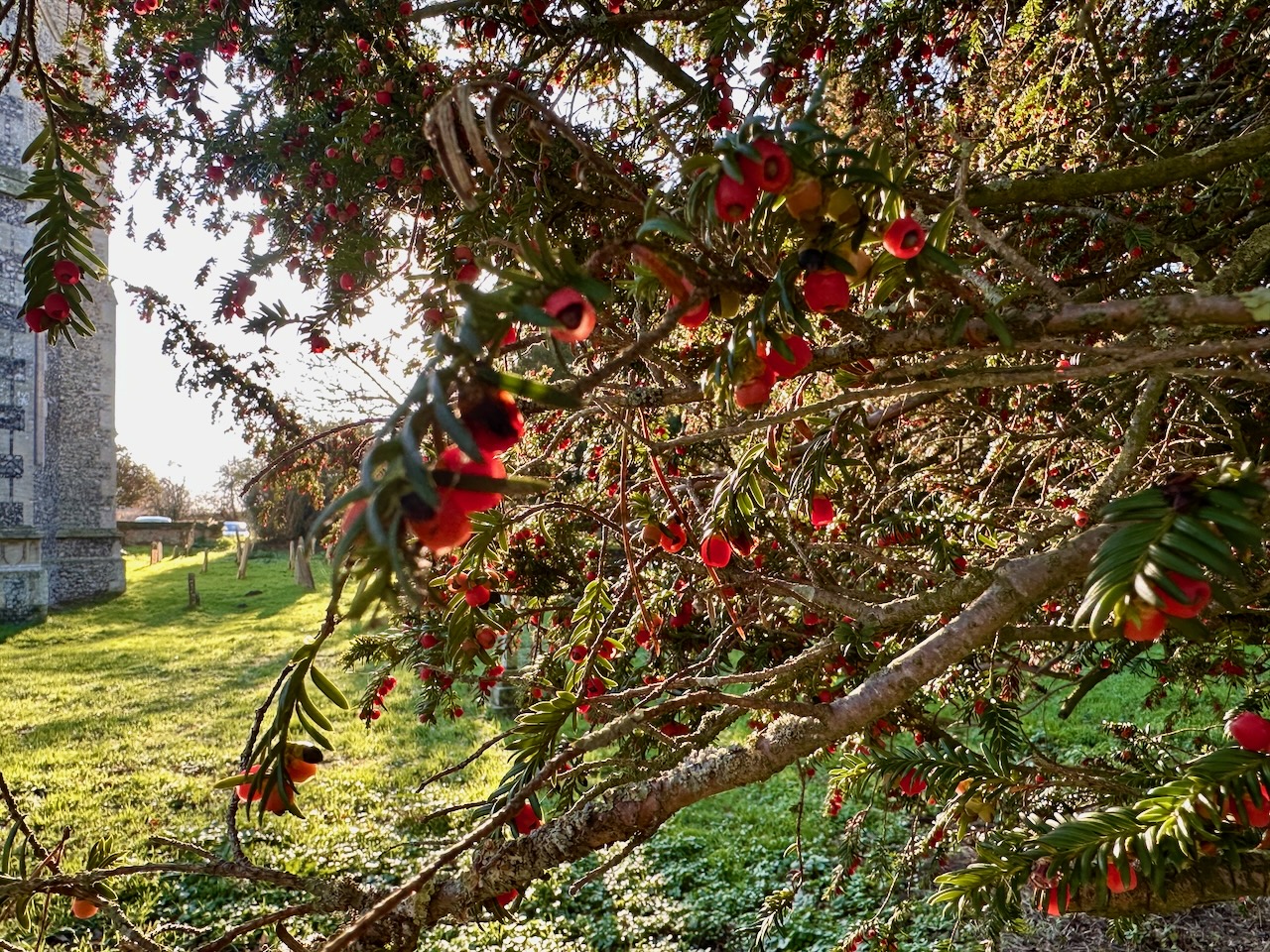
I went for a brief walk around the local church graveyard today, on my way back from the doctors — I’ve succumbed to the traditional Christmas viral cold / bronchitis combo. The gift that keeps on fucking giving.
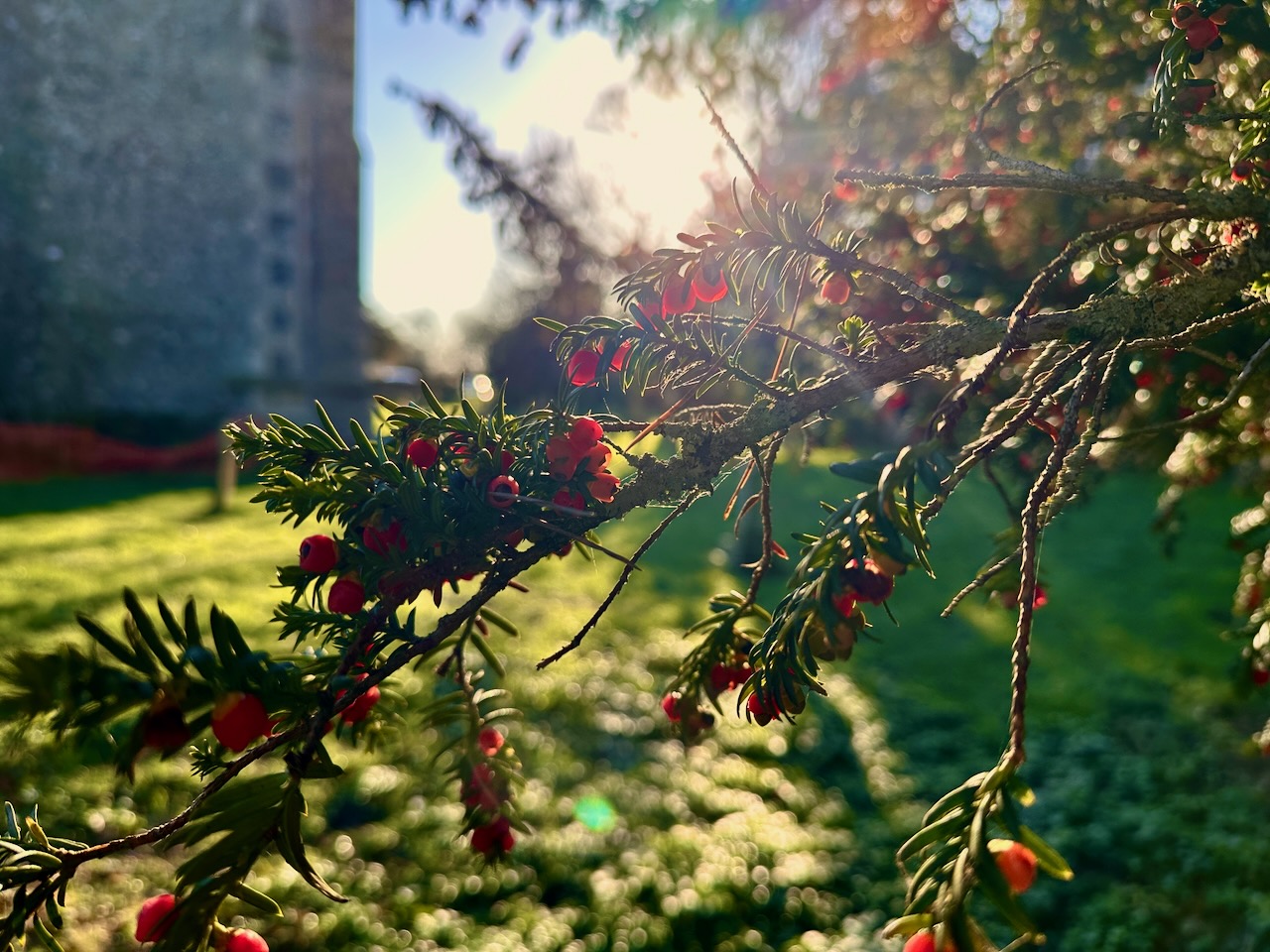
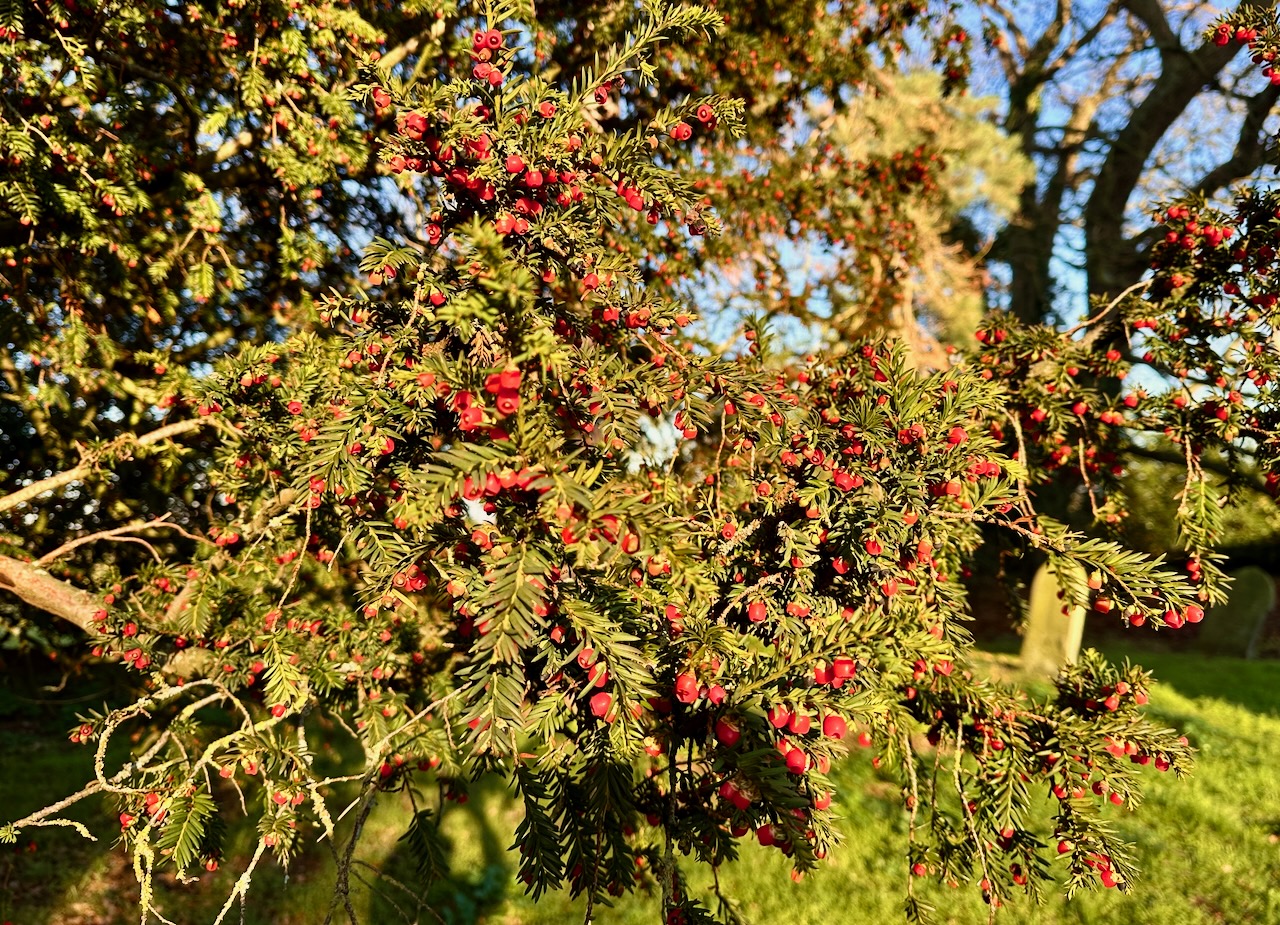
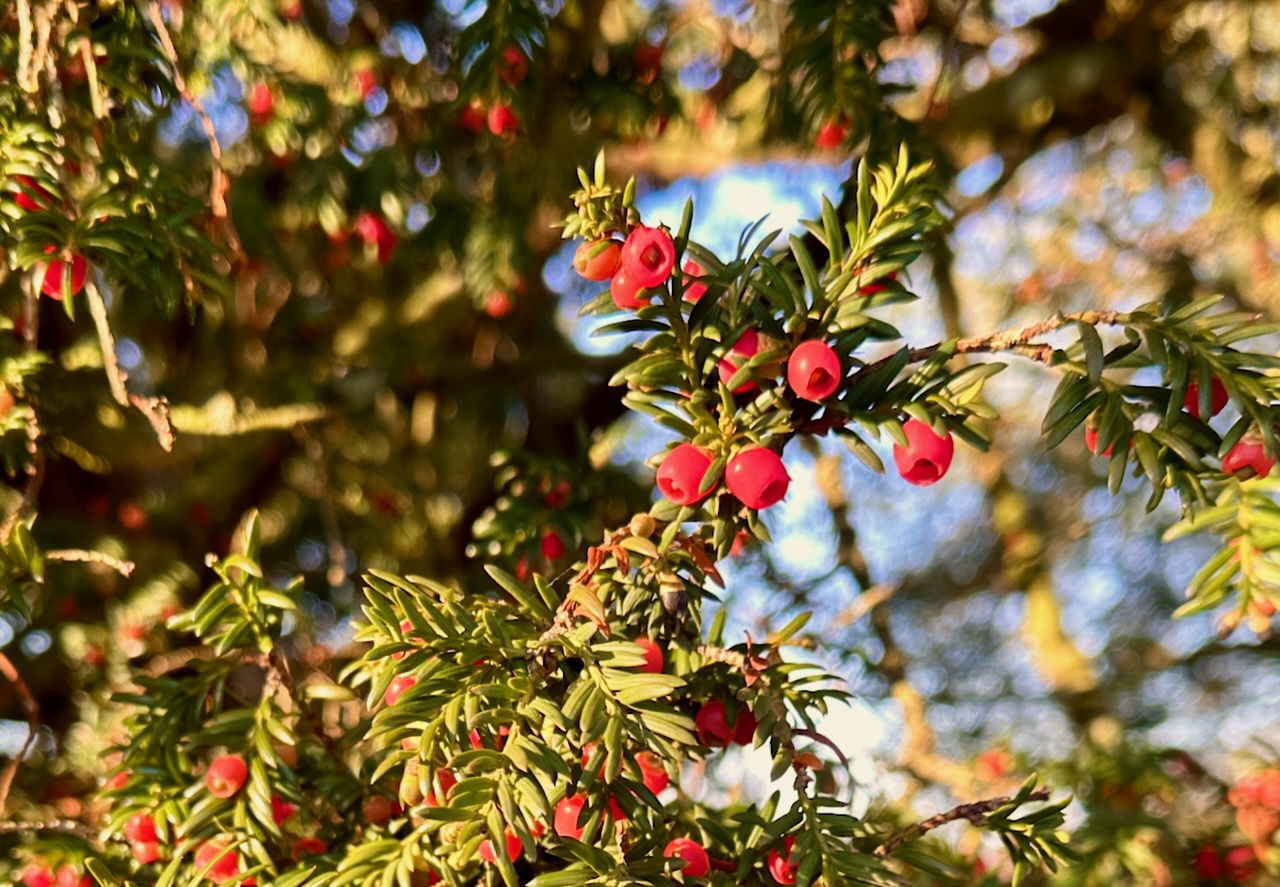
I love Yew trees (Taxus baccata). The berries are magnificent right now — just don’t eat them. If you do, spit out the kernels very quickly, or you’ll get very sick. Possibly dead. Nature doesn’t fuck about.
There are several Yews around Salhouse Church. I often wonder whether they were there before the main church was built in the 14th century. The site certainly has older origins. Maybe it was sacred long before Christianity turned up — first to the Norse who occupied East Anglia, before them the Saxons, before them the Celts, and before that the people who left those astonishing footprints on the Norfolk coast nearly a million years ago.
Who knows what kind of religion or leadership that hominid family followed. Hopefully not the same patriarchal bullshit we’re still trapped in today.
The Yews got me thinking about rebirth as the year turns. About how they grow — sending out looping branches that strike the ground, take root, and become new trees. That process repeats over centuries, meaning that over thousands of years Yews effectively walk across the landscape, if left alone. They’re said to have walked across from America when the continents were joined. Allegedly that’s where Tolkien got the idea for Ents (thanks, Bushcraft instructor Phil – check out https://www.philbrookelongbows.co.uk/).
That ties neatly to my personal motto: Keep On Keeping On. Be like a Yew.
We have to keep trying to make things better — not just for younger generations, who are utterly screwed as things stand, but for ourselves too. And for the climate. And for other animals, plants, birds, sea life.
What’s happening to the oceans right now is devastating: coral reefs dying, overfishing continuing, grotesque bycatch, ghost nets trapping, suffocating, killing. It’s heart-breaking.
So yes — we need to fight. Non-violently, but relentlessly. Fight for everything:
Fight the far right and hateful extremism in all its poisonous forms.
Fight the oil and gas companies making obscene profits at the expense of climate stability, nature, and human lives.
Fight corrupt governments and politicians who lie, profiteer, and mostly serve themselves. There are notable exceptions — but our own government, and much of UK politics, seems firmly lodged in the corrupt category rather than the redeemable one.
Fight media companies run by billionaire owners desperate to preserve the status quo and their hoarded wealth — whether social media giants or legacy press — pulling political strings while brainwashing us with consumerist advertising and clickbait bullshit.
Fight the narcissistic, misogynist, arrogant old white men (yes, there are women too, but far fewer) who have clawed their way to the top of the fetid political pile, treating truth, human lives, welfare, and civil rights as expendable commodities — traded for votes or simply discarded as democracy and the right to protest are eroded.
Fight banks and insurance companies that prioritise mega-corporations and polluting industries over ordinary people, worshipping shareholder profit while morality gets flushed down the toilet.
Fight the ultra-rich — the billionaires — who hold more wealth and power than any individual should, often avoiding tax while amplifying extremist views from inside their tiny, self-reinforcing echo chambers.
Fight fascism. It’s rising. The warning signs are everywhere. Thanks to my GCSE history teacher — and many books about the 1920s and 30s — for making that painfully obvious. Books are good.
Fight for those worst off: people suffering under neo-colonialism or living on the front lines of climate breakdown. They are dying because of our emissions, our lifestyles, our privilege, entitlement, arrogance, and ignorance — perpetuated by media propaganda, poor education, and comfortable denial.
Fight for Palestinians still being killed in Gaza, and in the West Bank where illegal settlements continue, aid agencies and journalists are blocked, tents sit on rubble, children starve or freeze to death.
Israel is, right now, acting as a terrorist state — and our government still supports it with arms, intelligence, and foreign policy cover. It is heartening to see so many Jewish people worldwide, including within Israel, opposing these war crimes — and to see young Israelis resisting the draft. Please support the UK hunger strikers.
Fight for the people of Sudan, where genocide continues. And for people everywhere —men, women, children — being injured, raped, displaced, and killed. Men use religion as justification, or don’t bother with excuses at all, to dominate, profit, rape, and murder as climate collapse accelerates and wars over finite resources intensify.
We do have abundant resources: sun, soil, ecosystems — if we care for them. But they don’t generate exponential profit for the already-rich, so they’re ignored. They just allow us to live.
You can’t eat money. We could eat the super-rich, but it wouldn’t be very nutritious. Or sustainable.
Fight for refugees fleeing war, climate catastrophe, and persecution — much of which we helped create. And if you don’t like refugees coming to the UK, then fight for foreign aid instead of cutting it. Cut aid, increase refugees. It’s not fucking complicated.
Fight those putting up flags to spread hate, lies, and division — marking territory for the far right. They target migrants, refugees, LGBTQ+ people, neurodivergent people, black and brown communities — anyone they can scapegoat instead of confronting those actually responsible. They’re manipulated by toxic media and lying politicians. I do wonder how many of those politicians are sponsored by Russia, the US, or both.
Fight for women’s rights — which after decades of struggle are now sliding backwards. And honestly, given the shit job men have done for the last 2,000+ years, maybe it’s time to let women run the show properly. The Abrahamic religions certainly haven’t covered themselves in glory.
Fight for the homeless, the mentally ill, disabled people abandoned by the state while funding is slashed to build obsolete aircraft carriers and weapons of mass destruction. Fuck that shit.
Fight the cult of eternal economic growth on a finite planet. Fight airport expansion. Fight the destruction of our remaining wild spaces, waterways, and seas. Fight pesticides killing insects, herbicides and fertilisers poisoning the land. Fight unnecessary new roads — we need public transport, not more cars. Fight single-use plastic; it’s just oil-industry brainwashing again. Screw Shell, BP, Exxon, Total, and the rest of them.
There is so much to fight for. So many injustices. How the hell do people just ignore it all?
Fight “the man.” Stand up for kindness, empathy, community, and solidarity. Grow things. Get soaked in the rain and dance anyway. Play music. Just… play.
We can resist this seemingly inevitable slide toward corporate rule, billionaire oligarchy, and societal collapse—but only if we stand up and take back power.
Resist.
People love to say they wouldn’t have stood by while books were burned, neighbours interrogated, friends dragged off to camps. Well, we’re edging frighteningly close to that shit now. Peaceful protesters in the UK are already being arrested in their homes, surveilled, raided.
Democracy, free speech, and the right to protest are being stripped away across the UK and Europe—and it’s far worse elsewhere, including the US, where armed forces are deployed against citizens by a deranged, orange, wannabe strongman and his boot-licking entourage.
So what am I trying to say?
I dunno. Be like a Yew.
Keep on keeping on. Relentless. Sheltering. Regenerative. Toxic to immoral, illegitimate power.
Work with your neighbours. Trees always do.
So yeah. Happy New Year. Roll on 2026.
And for fuck’s sake—resist before it’s too late.
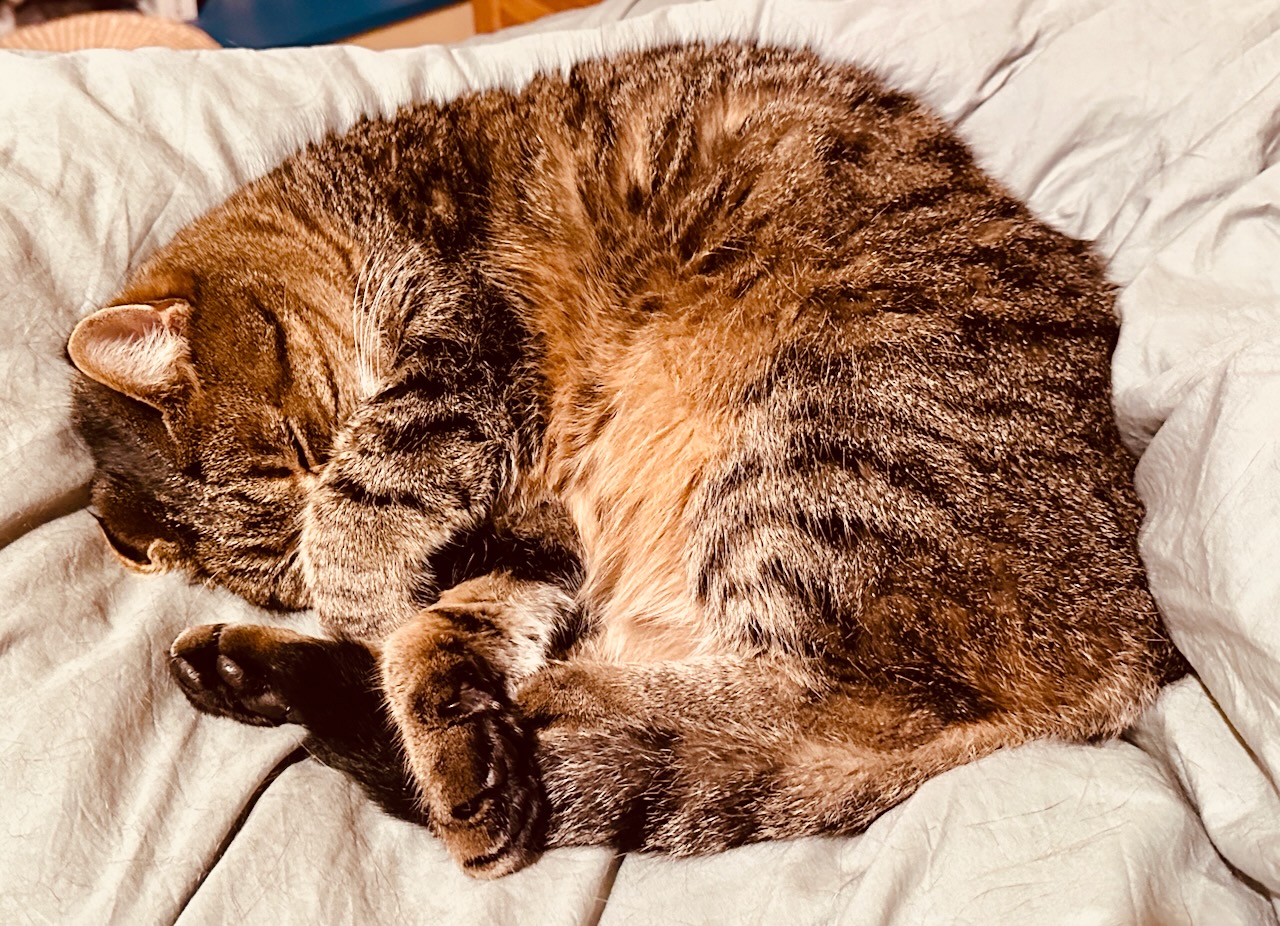
Or just have a snooze as it all collpases, like Gideon.
I find it increasingly strange, and frankly disturbing, how we’re being conned by politicians, much of the media, and mega-corporations. From birth, we’re bombarded by advertising designed to shape our thinking; by MPs who chase votes with half-truths, misdirection, or outright lies; and now by social media echo chambers that trap us in a cycle of misinformation.
As a Green Party member, I find it refreshing to have leadership that isn’t afraid to tell the truth. As a district councillor, I can vote in the best interests of my constituents – and with my conscience – rather than following the orders of a party whip. Zack Polanski’s election as Green Party leader, by a huge majority, has brought articulate and intelligent debate to the forefront again – on immigration, the climate crisis, renewable energy, and human rights. His policies on taxing the super-rich (the top 1%), reforming the private rental sector, renationalising water companies, and providing universal free childcare are resonating deeply with people across the country.
Green Party membership is now over 140,000, making us the UK’s third-largest political party. Polls put us around 15% of the vote, level with the Lib Dems and closing in on Labour and the Conservatives. Reform UK may be polling slightly higher, but perhaps that’s unsurprising when they’re not bound by things like telling the truth, or avoiding donations from dubious sources. People are joining the Greens in their thousands because we’re the only party that speaks plainly, answers questions directly, and puts people before profit.
Why don’t other political parties do the same? Surely an MP’s job is to represent their constituents – and by acting in their best interests, you’d think re-election would follow naturally. But that’s not how it works. Other parties are deeply influenced by corporate lobbying. Labour, for instance, met oil and gas company representatives over 500 times in their first year of power – that’s an average of two meetings every working day between ministers and fossil fuel lobbyists. Meanwhile, the Conservatives, Labour, and Reform continue to accept large donations from oil and gas interests, climate denial think tanks, and polluting industries. Is it any wonder, then, that their policies serve those industries – while the public is distracted with talk of immigration and welfare spending?
There’s a growing frustration with politicians who dodge questions or distort the truth. Brexit was, in part, a reaction to this. Westminster has become synonymous with elitism, corruption, and detachment from reality. It’s not even a criminal offence to lie in the House of Commons. Again and again, politicians mislead the public with impunity, aided by a media that too often fails to hold them accountable—especially those on the right.
Why isn’t Nigel Farage grilled about the £350 million-a-week NHS pledge that vanished after Brexit? Or challenged on the fact that immigration is essential to sustain our NHS, care sector, farms, and schools, as well as to support an ageing population and pensions system? Why aren’t we hearing that renewable energy is cheaper, faster to build, and infinitely safer than oil and gas?
In 2008, I was fortunate enough to visit the Great Barrier Reef on my honeymoon and swam among the coral and turtles – a breathtaking experience. Last week, I read that we’ve passed the planet’s first major climate tipping point: warm-water coral reefs are dying and will soon disappear. Hundreds of millions of people depend on them for food and livelihoods. Other tipping points – Amazon rainforest dieback, ocean current collapse, permafrost melt, and ice sheet loss – are not far behind. Each accelerates the next, creating feedback loops that speed up climate breakdown.
Then, this morning, I received an email from the Government responding to a petition to halt airport expansion. Part of it read:
“The Government therefore supports airport expansion where proposals contribute to economic growth, can be delivered in line with the UK’s legally binding climate change commitments, and meet strict environmental requirements on air quality and noise pollution.”
The list of planned expansions – Gatwick, Luton, Stansted, and beyond – was all about “economic growth” and maintaining the status quo. But if we don’t act decisively to cut emissions, climate breakdown will destroy any chance of growth – and in some regions, any chance of survival.
Carbon dioxide levels are still rising. Meanwhile, the fossil fuel industry funds anti–net zero campaigns and uses politicians as mouthpieces to protect their profits. Green energy offers a massive opportunity: it can create jobs, cut bills, and reduce emissions. We could lower bills immediately by cutting the link between electricity and gas prices, but that would hurt oil and gas profits, so it doesn’t happen. These same companies continue to receive huge public subsidies that dwarf support for renewables.
Airport expansion is simply incompatible with our climate goals. No amount of greenwashing through “sustainable aviation fuel” or dodgy carbon offsetting schemes will change that.
If we’re serious about telling the truth, we need to be honest about green energy too: why we need to decarbonise, why solar panels (covering just 0.7% of UK land – less than golf courses) can help power our future, and why upgrading the grid and installing battery storage is essential – even if that sometimes means projects are built near where we live. Time and money are tight, and we don’t have time to always wait for the perfect solution.
The clock is ticking. Hundreds of millions in the Global South are already dying from floods, fires, famine, and disease linked to climate breakdown. We’re not immune here either: UK farmers face failing harvests, rising food prices, and more frequent flooding. Some truths will be uncomfortable and require lifestyle changes – but that’s a small price to pay compared with a world of famine, fire, and forced migration.
Scientists and even insurance companies are warning us. The Institute and Faculty of Actuaries (IFoA) recently projected global GDP losses of up to 50% between 2070 and 2090 and warned that a +3°C world – possible as soon as 2050 – could cause over four billion deaths, social collapse, and mass extinction events. GDP loss seems almost trivial in comparison.
The Green Party tells it like it is – guided by science, compassion, and a commitment to act in the best interests of the majority, not a privileged few. Our membership continues to grow rapidly. We’re out on the streets, talking to people, telling the truth, and offering real solutions not tainted by corruption or corporate influence.
The good news? If we act now, we can still build a fairer, healthier, and more hopeful future – for ourselves, our children, and the countless other species we share this planet with.
Come join us – and let’s make hope normal again.
Promoted by James Harvey on behalf of Broadland Green Party, a constituent party of the Green Party of England & Wales PO Box 78066, London, SE16 9GQ
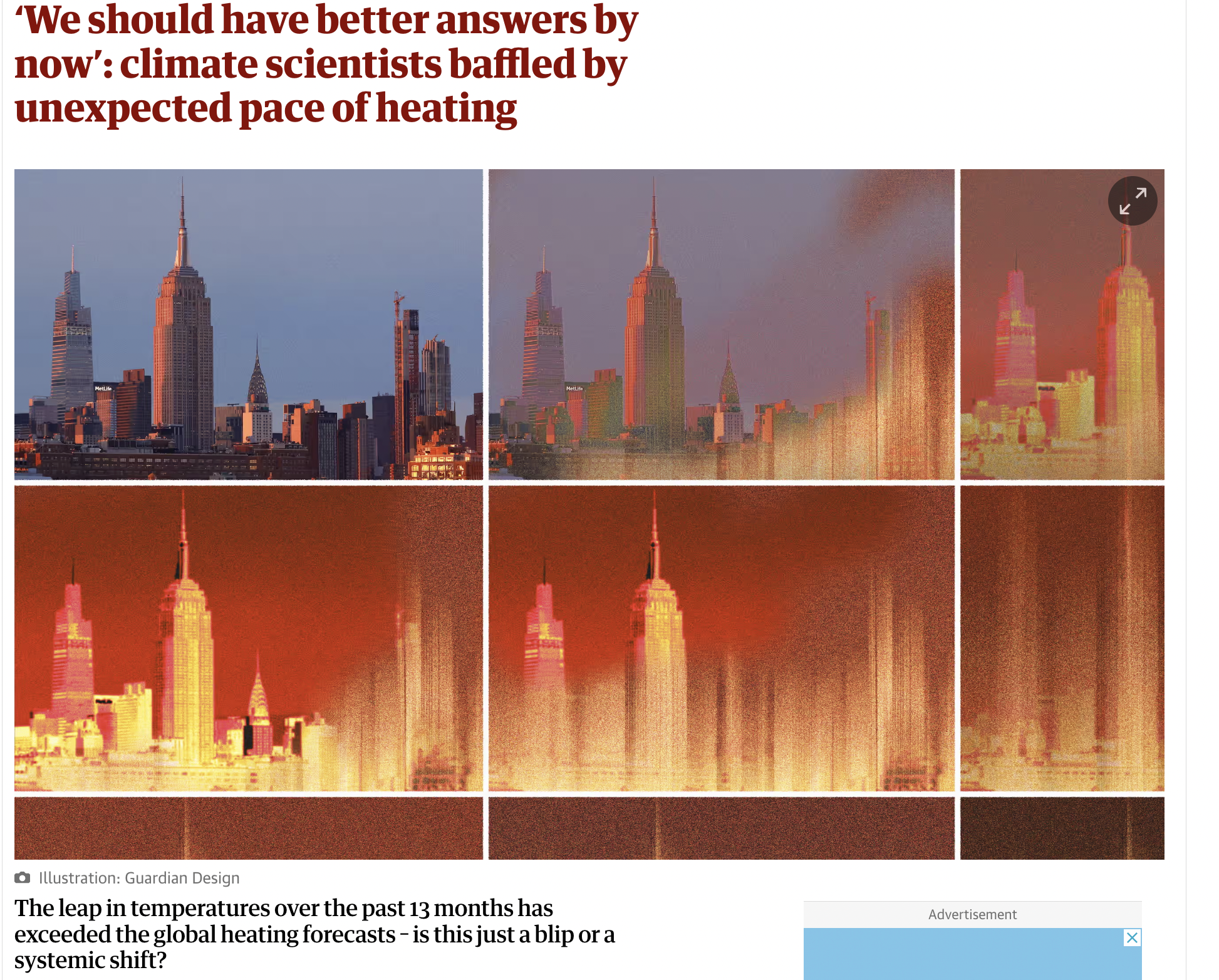
What’s published in the media on climate collapse isn’t usually the full view of scientists, not as bad as they think the situation really is. If you talk to climate scientists you’ll largely find them depressed, sick of not being heard, of being ignored by politicians. They have to ensure the information they publish is backed by facts, by peer reviews, but in private they’ll tell you it’s probably a lot worse than that, we just can’t prove it yet.
It is hard to compute. Our brains don’t want to think about it. We are averse to thinking about our own demise. It has got me thinking about it all again this evening.
The Mediterranean Sea is apparently 28oC in some places. It’s like walking into a hot bath. This is incredibly bad for habitats and wildlife.
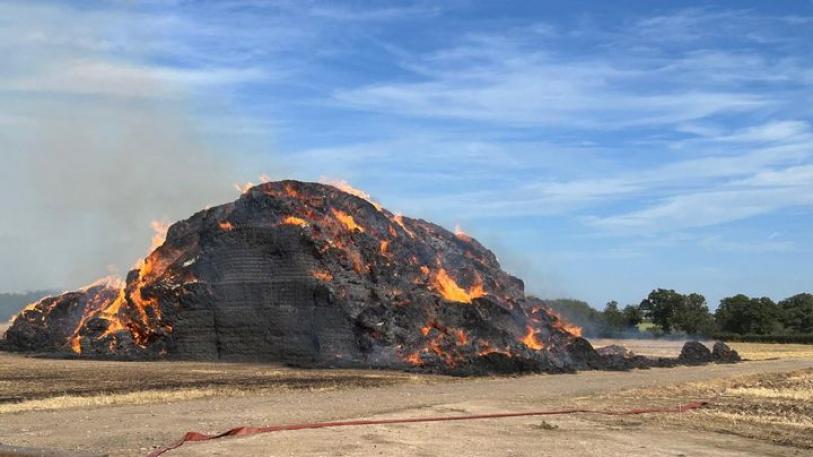
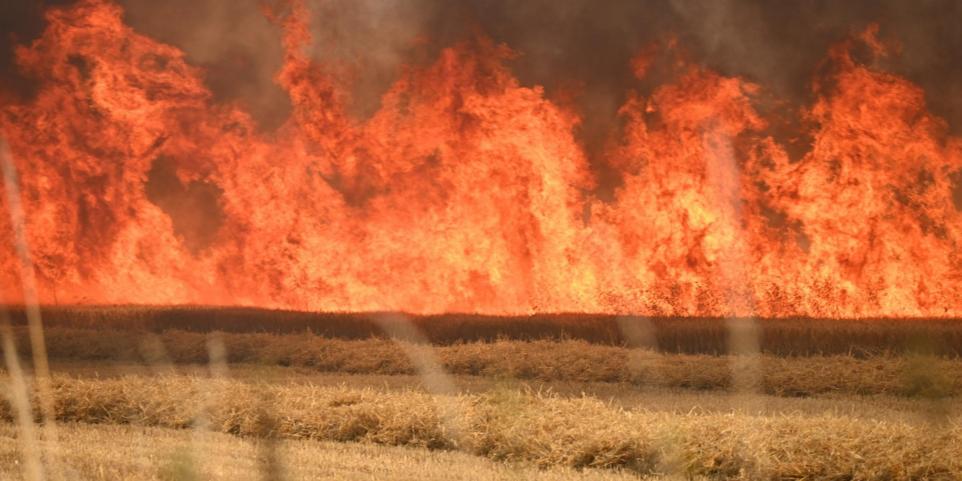
Temperatures records are being broken year on year, month on month, and sometimes day on day. We’ve just seen the wettest 18 months on record. Wildfires have burnt down half of Jasper in Canada and threaten Athens, California ablaze, similar in parts of Russia and South America: Patagonia, the Patanal in Brazil which is the world’s largest wetland, Venezuela and Chile. And in Australia, South Africa, Turkey, Cyprus, the list goes on, hardly anywhere is left untouched. We have field fires in Norfolk too, where I live.
Norfolk straw fire 15 August (source EDP)Norfolk field fire 15 August (source EDP)
Heatwaves in India approaching wet bulb mass mortality range. Tasmanian and Boreal (northern) forests dying. Harvests failing; Norfolk farmers had a hell of a time of it earlier this year, due to flooding, when they couldn’t plant crops or graze livestock. Italian and Swiss villages destroyed by floods, similar in Germany. 20,000 washed out to sea in Libya. 2022 floods in Pakistan impacting 33 million people. Sea level rise threatening low lying island states already. Amazon not absorbing carbon dioxide anymore and at risk of turning into desert. Bats and birds dropping out of the sky due to heat stroke. Caribbean islands being hit by record hurricanes which have destroyed all the buildings in some places, leaving women to give birth in the dirt. Devastating famine and water shortages in Africa. Water is now monetised, it’s being bought and sold to the highest bidders, traded on the stock market.
We’re on track for +2.7oC global heating, above pre-industrial averages, by end of century. It’ll probably be more than that due to the acceleration we’re seeing and tipping points being crossed such as the loss of albedo, meaning less of the sun’s radiation is reflected back into space, and methane being released from the permafrost. And the concentration of carbon dioxide in the atmosphere is still going up.
What does this mean? It equals food shortages, the mass migration of 1 billion people by 2050, if not earlier as it’s happening now, more wars for remaining resources which means more emissions, pollution and death. More holidays to places that are too hot to live in, or on fire, or flooding, or where the native populations are being made homeless or starving. It means economies will crash, people will lose their jobs, their pensions, their savings, their houses. There will be more civil unrest as people feel failed by the system. It means the rise of the far right, again already happening, which occurs when people are scared and need someone to blame; we know this from history. The breakdown of law and order follows, disease, pandemics and health service failure. Then, eventual societal collapse and the death of billions.
It’s not me saying this, it’s not my cause, it’s not Just Stop Oil or Extinction Rebellion’s cause either. It’s what climate scientists are stating, 99.9% of whom say we’re in big trouble due to global heating caused by our carbon emissions.
It’s what the UN Secretary General, Antonio Guterres, who is advised by climate scientists and the Intergovernmental Panel of Climate Change (IPCC) is saying; “we’re on the highway to climate hell with our foot on the accelerator“. The IPCC itself has said “the world is facing a “rapidly closing window of opportunity” to secure a sustainable future.” This window of opportunity is only a few years long, perhaps by the end of this decade, if not sooner.
And if you don’t believe them, or the International Energy Agency, Greenpeace, Friends of the Earth or the Red Cross, maybe you’ll believe Sir David Attenborough who said, amongst many other powerful things:
“Climate change is also really important. You can wreck one rainforest then move, drain one area of resources and move onto another, but climate change is global. If my grandchildren were to look at me and say, ‘You were aware species were disappearing and you did nothing, you said nothing’, that I think is culpable.“
Small communities might survive by the end of the century, in Northern territories, but they could all be screwed too if AMOC (Atlantic Meridian Overturning Circlation) stops. If that stops all bets are off, people could be squeezed into a very narrow habitation zone, where they’ll no doubt fight to survive. Here’s what Laura Jackson, a scientist from the MET office had to say on it. Her view is perhaps a moderate one, with other scientists saying the collapse of AMOC could come a lot quicker. We just don’t know for sure.
Some, if not all of this, is locked in. But we can still try to stop making it worse. We can come together, stop emissions that are causing global heating, stop burning oil and gas for energy, change the way we live (recycling just doesn’t cut it), grow food locally, stop eating so much meat, build resilient and well connected communities, reject consumerism and infinite growth, adopt doughnut economics. We can accelerate the transition to renewable energy, equitably across the globe, stick solar panels on every roof, paint stuff white to reflect solar radiation back into the atmosphere. We can stop building new roads, stop building houses in areas at risk of flooding or which include important wildlife habitats, preserve and restore nature, reuse and yes, recycle.
We could tax the super rich and use funds to build renewables and for adaptation. Tax the fossil fuel companies and put their execs on trial for genocide by oblique intent (see Rome statutes). Prosecute the media for spreading lies and half truths which have led so many astray. Prosecute corrupt politicians and business persons who have done the same and profited from it. Set up legally binding Citizens’ Assemblies to decide what we need to do. Change the whole system. If we do all this we might stand a fraction of a chance. We might not die.
At the moment though governments, the oil and gas industry, some banks and a lot of the media seem intent on waging war on humanity. We are being led astray by people we are told we should trust. I find it devastating when I hear people planning for 10, 20, 30 years in the future, for their kids futures, when the world is already on fire or flooding. What do you think our children are going to face in 10 years time, let alone by the time they are 50?
I’m not doom-mongering, I refuse to be complicit, even though we’re all trapped by the system we’re in and hypocrites to one degree or another. I refuse to stick my head in the sand and wait for someone else to sort it out. I refuse to be a bystander whilst millions die; that’s happening right now. I’m not being self righteous, or virtue signally, I’m panicking, I’m scared, I’m raging at a system which thinks we can just carry on as normal, and spends billions of dollars trying to convince everyone we can. More recently I’m massively saddened to see rampant racism and hate out on the UK streets, with young kids being swept up by it, I’m anxious due to receiving telephone threats from far right thugs after I attended counter protests. But I have to carry on, taking action is the only thing that gives me hope when I lie awake thinking how the lives of my niece and nephew, my godchildren, all children can and are being cut short. And that’s hard to write.
I will no doubt perish far sooner than my Mum. She lived to 83. I won’t.
But, I, along with thousands of other ordinary people will try to make a difference by taking non-violent direct action. I hope you do too.
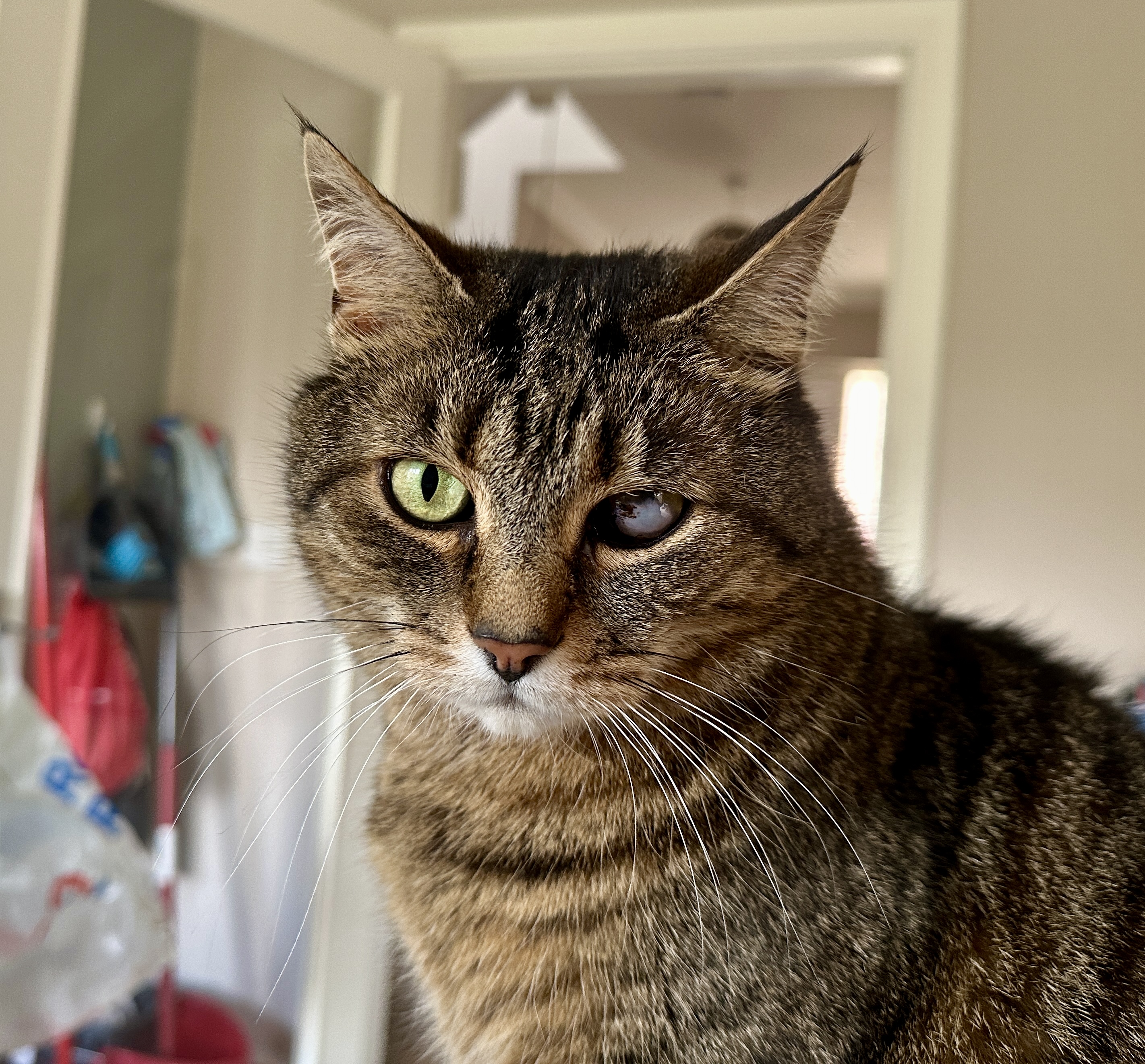
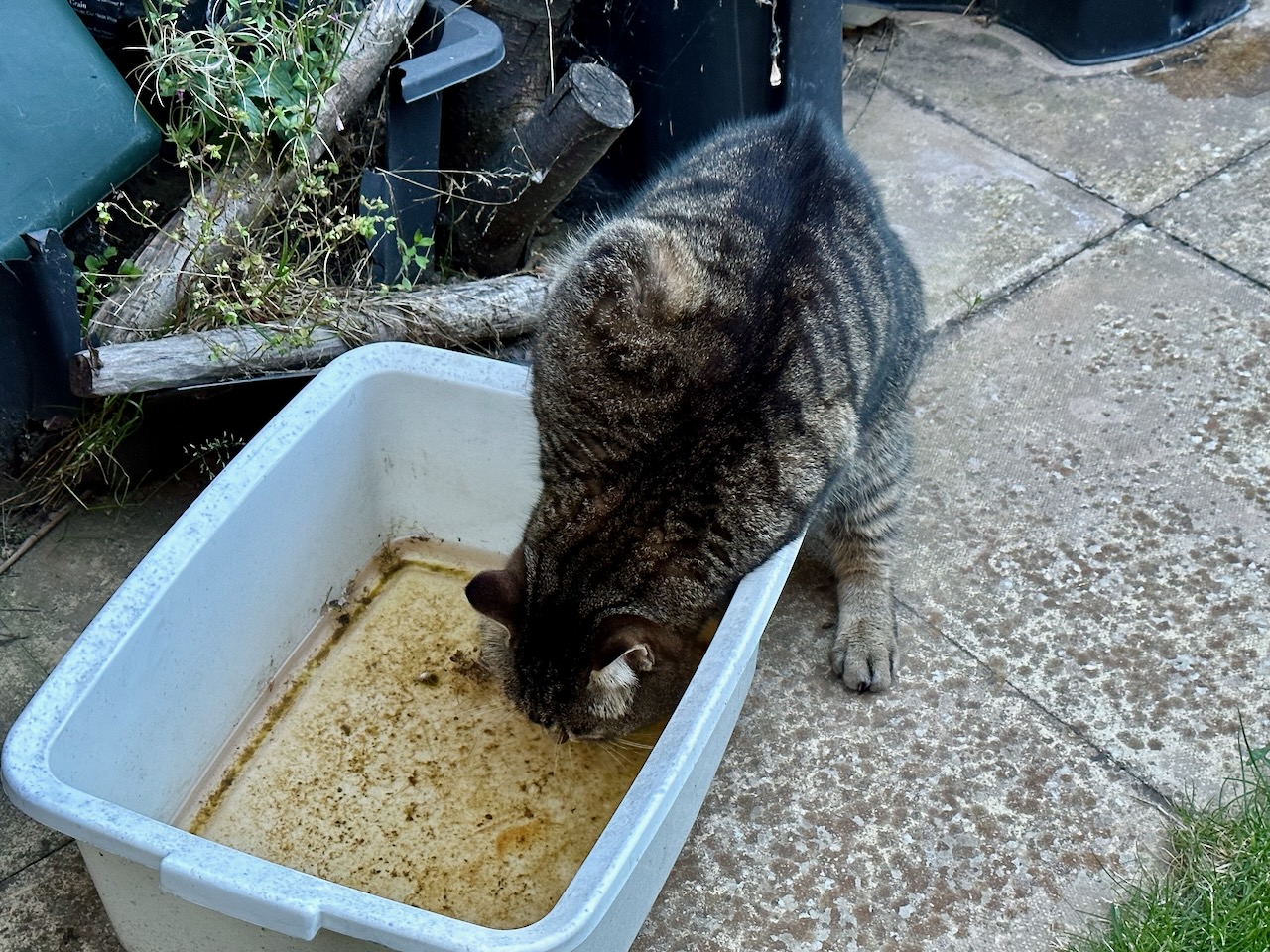
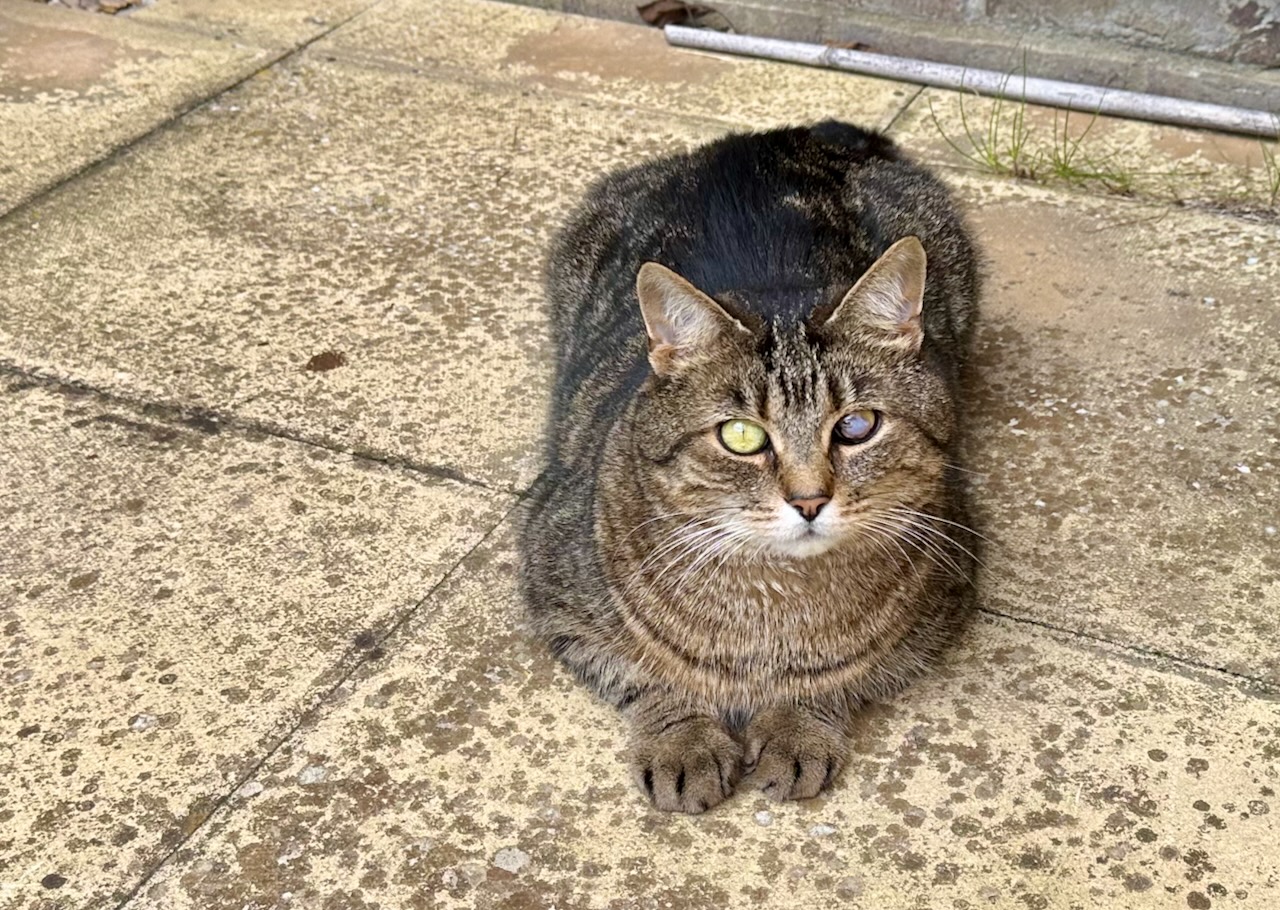
Couldn’t leave without a picture of Gideon, he is judging you, are you culpable?
Judgemental Cat
Feel free to message me if you would like further information on how to take action with Just Stop Oil or Extinction Rebellion, or with local ’causes’ in Norwich and Norfolk. I am growing to hate that word…’causes’.
It feels to me like we’re stuck. The current political system and western society we live in isn’t fit for purpose in terms of making the difficult decisions needed to secure a liveable future. We are too trapped by corrupt politicians, climate change denying corporations, and a way of life we don’t want to compromise.
We may go down in history as the first civilisation to end itself because it wasn’t deemed economically viable or politically popular to make the changes needed to survive. We won’t save ourselves or most of the species we share the planet with because it’s too expensive, and politicians are worried they might lose an election over it. Sounds crazy, but that’s what seems to be happening. Sunak announced approval of over 100 new oil and gas projects in the North Sea last week, which flies in the face of what climate scientists, the UN, the Government’s own Climate Change Committee, the Intergovernmental Panel of Climate Change, the International Energy Association and many other organisations are saying.
Economically, socially, and politically, are we really set up to deal effectively with the challenges happening now, let alone the challenges that are going to happen next year, in 10 years, in 50 years, due to the climate and ecological crises? Are we emotionally ready for it, or even awake to the fact radical change has to happen if we want our society to survive?
Churchill said “democracy is the worst form of government – except for all the others that have been tried.”
It’s very debatable as to whether we live in a true democracy in this country; we don’t have proportional representation. There are perhaps 2 other countries in Europe that have first past the post systems. I posit this is one of the reasons UK society is increasingly divided, and as to why decisions being made in Westminster make no sense to the majority of the rest of the country and are driving us further towards civilisational collapse.
Would another form of Government be better placed to save us from the mass migration, war, famine, drought, ocean death, food system collapse, economic breakdown, health service demise, panic and societal collapse we’re facing? I don’t know the answer to that question, but the Tory party are really making me start to wonder if we ought to try something else.
And sod the criticism we keep getting about using alarmist language. Have the critics actually looked at what’s happening right now? Wildfires in Canada and across Southern Europe, massive floods in China and the Philippines, harvest failures becoming increasingly frequent, ocean heatwaves killing millions of fish, and temperature records broken on a monthly basis. Let’s not even get started on how species extinction rates are way above the natural baseline. These are not just due to ‘seasonal changes’ or ‘a natural cycle’, this is proven beyond doubt to be down to human caused ‘global boiling’, quoting Antonio Guterres, caused by us burning fossil fuels. Anyone denying this needs to get their heads out of their posteriors, and have motivations thoroughly examined. Criminal charges need to, and no doubt will be made in many cases against politicians, media and journalists deliberately misleading the public, banks like Barclays and JP Morgan financing fossil fuel companies, oil and gas lobbyists and execs, and climate change denying think tanks.
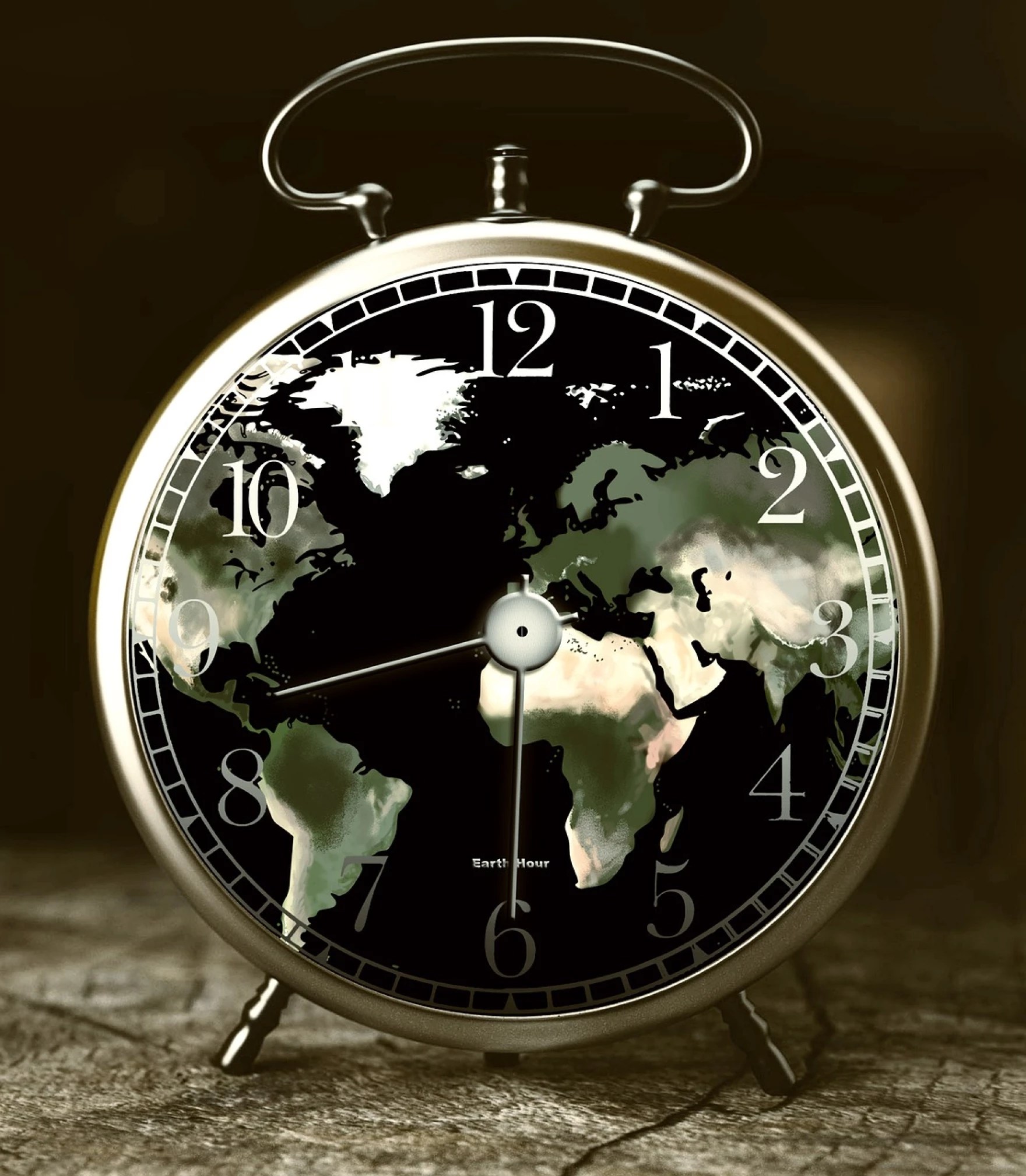
Earth Hour – Texas Public Radio – The Voice
Last week I was interviewed on Texas Public Radio on a show called The Source. I was nervous about being interviewed in my role as a Just Stop Oil spokesperson by the US State built on oil and gas. But…it was a really good experience, with lots of great questions and points from callers. One of the comments made was that the system of Government in the US isn’t fit for purpose either. Generally people get it, they get we’re in a crisis. We turn to our Governments for protection and solutions and they don’t seem to understand, and instead make things worse.
Why did Sunak announce the approval of over 100 new oil and gas projects in the North Sea? Profit? Energy security? Bowing to pressure from the likes of Murdoch and oil and gas companies? By the way this was shortly after his wife’s family business, InfoSys, signed a massive deal worth a reported $1.5bn with BP. I’m sure there is no connection.
It’s worth noting that new North Sea oil and gas:
Won’t come online for decades, in many cases beyond the Government’s net zero target of 2050, which will be blown by these new fields
Does nothing in terms of UK energy security; we don’t own it. BP, Shell etc own it and will sell it to the highest bidder
Is more expensive than renewable energy which is cheaper and quicker to build, but far less profitable for the monsters making billions at our expense
Will increase emissions which can’t be countered by carbon capture and storage; this is unproven at scale and mostly a way of excusing the stranded assets that stopping new oil and gas will cause, funny that
I love this world, the biodiversity, the people, the cultures, the amazing ecosystems we have that are a result of billions of years of evolution. Are we really going to destroy it all, in a matter of a few hundred years, to make the super-rich even richer, and to preserve a completely unsustainable way of life for people who mostly live in the Global North? The super-rich will only be richer for a short period of time, before the pitchforks arrive at their gated communities demanding justice.
We’re being betrayed by our politicians, much of the media, and by huge corporations, all of whom have been told what will happen if we continue on our current trajectory. The Government and politicians in general seem completely unable to face the truth and do something about it, which can only be because they’re afraid it will lose them the next election, as well impact the profits of vested interests, mixed in with a fair dose of denialism. This seems like madness to me, there won’t be elections or economics if society breaks down. As has been the case for too long it’s all about short term politics and short term decisions when in fact the choice is clear: Change or Die, millions are already dying because of the climate crisis.
What are the difficult decisions I’m talking about? Here are some I think about a lot.
Telling the truth: People deserve to know exactly how dire the crises impacting us are. I’d love to see the same amount of money spent on advertising and greenwashing by fossil fuel companies, and on fossil fuel lobbyists, instead spent on educating the public on the latest science and solutions. Did you know that there were more fossil fuel lobbyists than representatives of the ten nations most impacted by the climate crisis registered to attend COP27; around 636 lobbyists in total. And between January and March this year Government ministers met with oil and gas representatives 54 times. Is it any wonder their priorities aren’t in our best interests? Why isn’t the truth a priority? Because it would cut into profits and would be viewed as unpopular without the right education. Politicians don’t dare tell the truth, they’d be called out, hung, drawn and quartered, and lose the backing of their donors.
Stopping new oil, gas and coal projects: We have around 7 years of reserves in existing oil and gas fields to keep the lights on whilst we transition to a more sustainable way of living using renewables. We don’t need to open new fields if we invest in solar, tidal and wind, including onshore wind which is currently effectively banned in England; Ukraine built more onshore wind-farms than we did (we built 2) in the last few years, and they’re at war. Instead of subsidising fossil fuel companies to the tune of £236m a week, why don’t we direct that money towards renewables which are cheaper and quicker to build, and would create thousands of new jobs? Seems like a sensible decision to me, however that would disrupt the status quo and shift power away from those that currently have it.
Invest in the grid: To get the electricity from where it’s produced from renewable sources we need massive investment in our energy grid and storage. This would counter the argument of not having a reliable and resilient baseline power supply. This would be another decision viewed as unpopular by some, because of unsightly pylons, or trenches being dug for power cables. Again I think this comes down to education; what would people rather have, unsightly power lines or societal collapse? We should have started this decades ago, with a joined up plan, but of course that didn’t happen because it was too difficult, and the Tories would lose votes if they built pylons through the countryside. Oil and Gas mega-corporations would also oppose such developments; I heard recently that the objectives of companies like Shell are to survive for as long as possible versus their competitors, and to maximise their profits.
Insulate and retrofit houses: We need to stop poking round the edges and properly commit to insulating our existing housing stock, before retrofitting air source heat pumps to replace gas boilers. It’s not happening fast enough and there isn’t enough investment. If we implemented a proper windfall tax on energy companies, without loopholes they can offset against, we could fund things like this. It needs a big training programme to produce the skilled workers required, which would mean more jobs. We also need to make sure developers do a better job on new builds with insulation, solar panels made mandatory, and phasing away from gas boilers. This is all pretty difficult if you’re a politician worrying about an election in a few years time; no motivation to do the right thing.
Public Transport expansion and Electric Vehicles: I’m really sorry, we’re being sold a lie that swapping your petrol or diesel car for an electric one will make things better. Electric Vehicles are heavier, have a large carbon footprint when they’re constructed, and are not without particulate emissions which increase air pollution. Their weight makes them more dangerous, and could mean some structures such as multi-storey carparks and bridges aren’t suitable anymore. I’m also not entirely sure what’s going to happen to all the batteries when they reach the end of their useful life, although they’re improving all the time. I like electric vehicles, and think electric bikes are brilliant, but we can’t just swap one bad thing for another to keep the car industry and economy afloat; and where are all those rare earth minerals going to come from exactly? Invest instead in better public transport; trains, buses and trams. Invest in more cycle and foot paths (active transport). Introduce more clean air zones which in turn will mean less deaths from air pollution. Another difficult decision for those in power as in the short term it would no doubt be incredibly unpopular to tell people the age of personal car ownership is over. Just look at the reaction to ULEZ.
Consume less and change the economic model: Our emissions per capita (per the average person) are much higher in the UK and other westernised countries (the Global North) compared with the Global South. We consume far more in terms of single use products, meat, fast fashion and goods produced from fossil fuels. We also travel more, especially by plane. This is a massive privilege and not accounted for in UK emissions a lot of the time, as the goods are produced abroad and emission statistics don’t include shipping or aviation. This is one of the reasons the ‘UK is only responsible for 1% of global emissions, go and protest in China’ argument is so infuriating. It’s based on yet another lie. Selling the idea that we need to buy less stuff, eat less meat, and not go on holiday by plane as much is going to be a tough sell for politicians, so let’s strike this one off the list straightaway. It will however happen of its own accord if we don’t make the changes needed; not having a viable society equals lack of shops, food, and holidays.
On the economic model front we need to stop basing success on GDP (Gross Domestic Product = a monetary measure of the market value of all the final goods and services produced in a specific time period by a country or countries). Instead we could move to doughnut economics to ensure that “no one is left falling short on life’s essentials, and an ecological ceiling, to ensure that humanity does not collectively overshoot the planetary boundaries that protect Earth’s life-supporting systems.” Read Kate Raworth’s book for more information. The current economic model seems to rely on the fiction that our planet has infinite resources, which it doesn’t. We’ve got to move to a sustainable model or we’re just going to burn out; countries in the Global South are already quite literally burning out due to our addiction to GDP.
Sadly changing our economy would upset a lot of rich people, and those in power, and wouldn’t be painless for a lot of the population in the short term. But the long term benefits, and the fact it would help us survive seem, to me, to outweigh that. It would take a pretty charismatic and courageous politician to sell that though.
Refugees: You know how angry people are getting about thousands of migrants and refugees trying to get into the UK? It’s going to get a lot worse as parts of the world become uninhabitable, which is already happening. In the meantime the UK is cutting overseas aid budgets and pulling up the drawbridge. Shouldn’t we be doing all we can to help these people? A lot of the impacts being felt in places like Africa and India, and small island nations, are a result of our colonialist policies of the past, and the fact we’ve been burning fossil fuels for centuries. The people least responsible for the climate crisis are suffering the worst, and are the least able to mitigate and adapt to it. I get people have concerns about how much room we have, and our public services and infrastructure being overwhelmed, however surely we have a duty of care due to our past and present actions? The least we could do is increase our aid budget and cut emissions to give these people a chance in their own countries; they don’t want to have to move, we’re forcing them to. This is a political hot topic and it appears those in power, or aspiring to form the next Government, have decided it would be political suicide to help refugees. History will judge us, if we have one.
Protect our remaining wild spaces and seas, and re-wild: I really don’t get why this isn’t happening. Most of the public clearly support it and it would win votes. Yet we consistently cut down woodland to build houses and industry, ignore protected zones in our seas, and continue to pollute our landscapes, persecute wildlife, and destroy rare habitats. The UK is the most nature-denuded country in Europe. Our national parks are ecological wastelands most of the time. Insect populations are plummeting, an estimated decline of 64% between 2004 and 2022 due to the continued overuse of pesticides. Our waterways are full of sewage, and our fields and ground water full of excess fertiliser and animal faeces from agriculture. We’ve been getting it so wrong. Thankfully there are efforts to stop and reverse the destruction and pollution, and to rewild across large parts of the country. There are some brilliant efforts being made by farmers to change their practices, use less chemicals and not just grow monocultures. However they’re up against greedy developers, a Government that still wants to trash our countryside with new roads, and a general public misconception about what nature looks like and how it should be managed; see national parks comment. And of course big-pharma who really don’t want us to stop using all those nice chemicals they make for fertilisers and pesticides, and who rubbish and persecute soil scientists trying to convince us otherwise.
New roads: The Welsh Government has very sensibly said no to new road building, however we’re still ploughing ahead with it in England. New dual carriageways, bypasses and link road plans abound. I could write an entire post just about this, and how new roads equals more traffic (induced traffic demand) and more emissions, not too mention how the emissions from building them will contribute to breaking our net-zero targets. This is a sensitive issue in Norfolk, where I live, where there are several schemes going through at the moment including the Norwich Western Link road. The link road will destroy rare chalk stream habitat, cost a fortune, increase emissions, air, light and water pollution, all for the sake of cutting minutes of a car journey. Again, we need to stop our car-centric view of the world and invest in public and active transport, then we wouldn’t need all these new roads. This is another political hot potato, with pro-road campaigners and politicians accusing anti-road campaigners of being anti-growth, and not being in line with ordinary working class people. It’s a back and forth argument, however most politicians in England are still on the side for new roads for economic growth.
I really wish we had more joined up thinking across all these challenges. Why can’t politicians see we’re shooting ourselves in the foot? There are no doubt more examples of difficult decisions politicians won’t make, however maybe you could suggest some in the comments. I’m starting to feel a bit burned out about it all.
It does indeed feel a bit hopeless when you look at what we’re up against. How can we hope that any politicians that want to get elected are going to make these difficult decisions? But they could do, if they explained why they’re needed truthfully, why it is 100% necessary for survival, and that it could result in a better way of life after perhaps a tough transition period. We really need to move onto a global war footing to start solving these challenges, with daily updates similar to those we had during the COVID pandemic.
The benefits of all these changes will be massive when they happen. I say when they happen, because they have to happen if we want to survive. Better physical and mental health, more joined up communities supporting one another, and an appreciation of what’s really important in life. And the great news, we can still have things like the internet and lots of the stuff we enjoy today, but in a sustainable and balanced fashion with the rest of the world’s inhabitants, without breaking through ecological ceilings. I dream of nature being allowed to regenerate, clean air and water, thriving habitats and healthy soil, and of species currently struggling or nearing extinction making a comeback. I really believe that one of the reasons so many people are ill at the moment, both mentally and physically, is because we’re totally out of balance with nature. At a subconscious level I think we all know it. We’re all fundamentally a part of nature, not apart from it.
The longer we maintain our current destructive way of life the more difficult and expensive it will get to change things, and the more people and animals across the planet are going to suffer and die. I know we’ve locked in a lot of climate change impacts now as greenhouse gas emissions stay in the atmosphere for so long, but we need to fight against every fraction of a degree in temperature rise, and against every ecological tipping point being reached.
Why is Sunak, who appears to be spineless, so willing to go along with this countdown to extinction? I’m pretty sure his daughters don’t agree. Kudos to the Greenpeace supporters that climbed on one of his houses this week to call him out; they knew he and his family weren’t there, and knew how to climb the building safely. Feels like he’s a child trying to survive politics in an aquarium full of sharks, and he’s hiding in the coral which incidentally is dying due to yes, you guessed it, the climate and ecological crises. Sadly I don’t think Starmer will be much better. He’s already said he will keep the new oil and gas licenses the Tories have approved, and he seems pro most other things that will make matters worse, whilst supporting legislation to silence ordinary people protesting about it. We’re up against huge vested interests, worth billions of pounds, whilst activists only have a fraction of the resources.
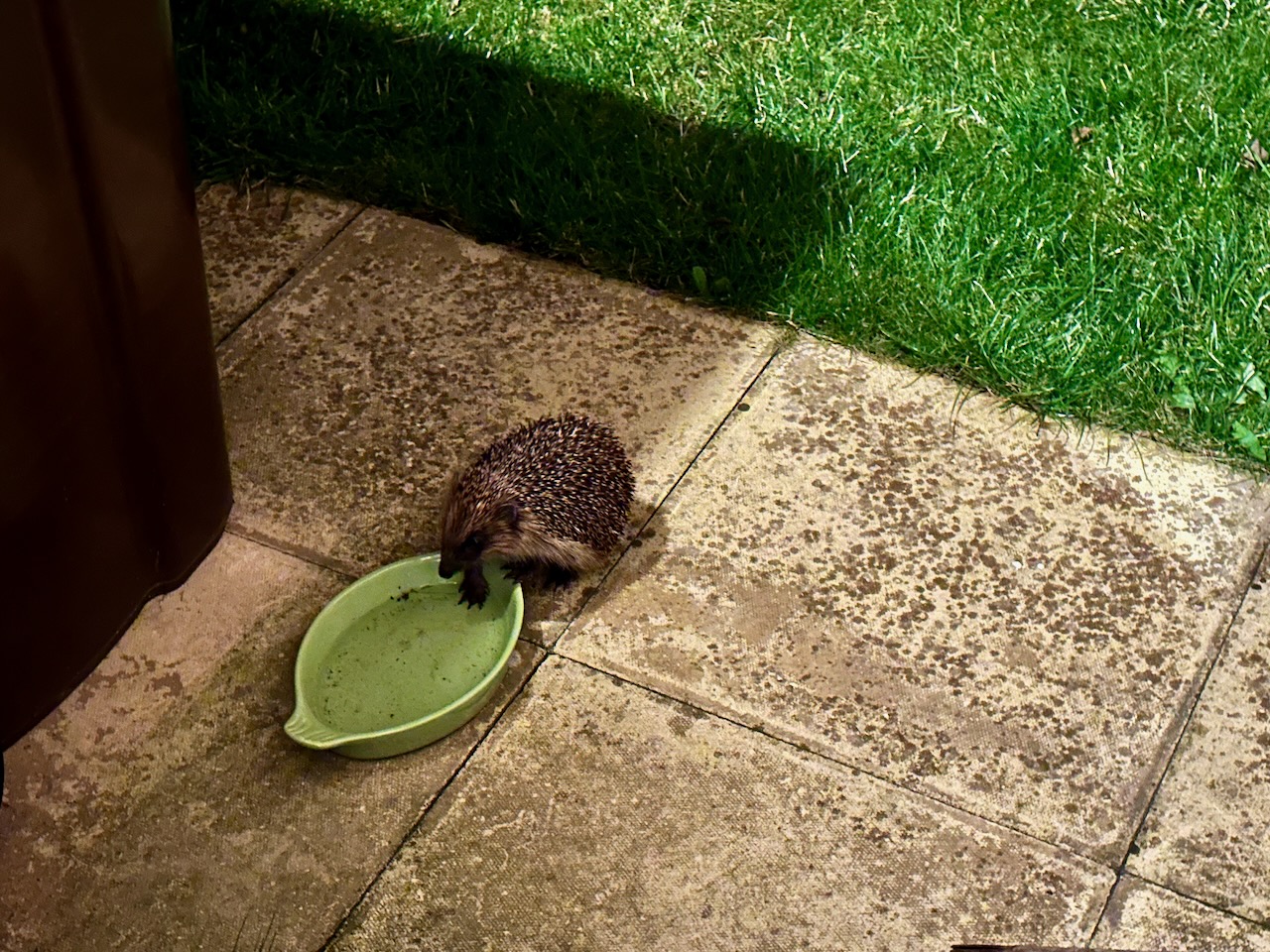
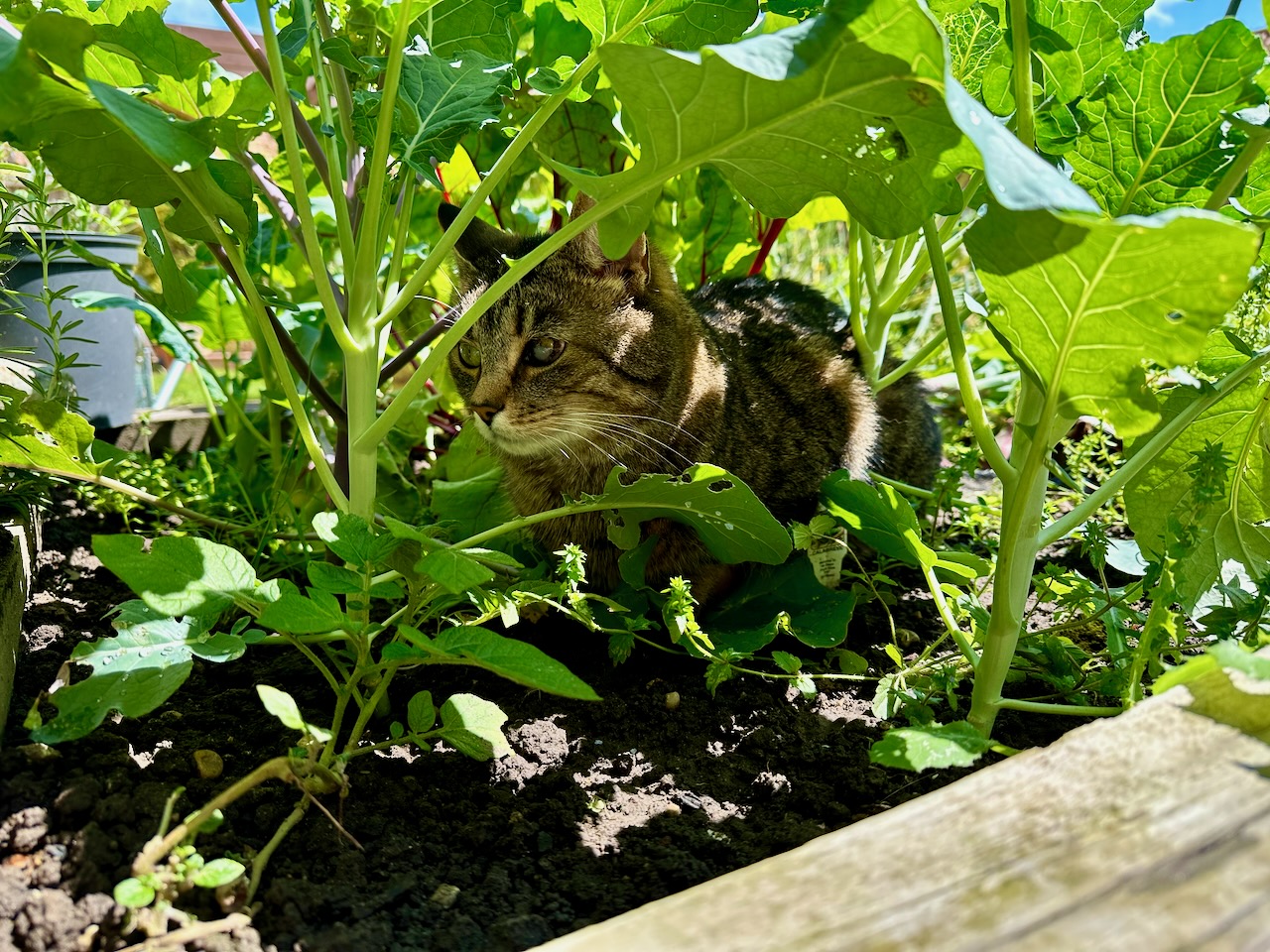
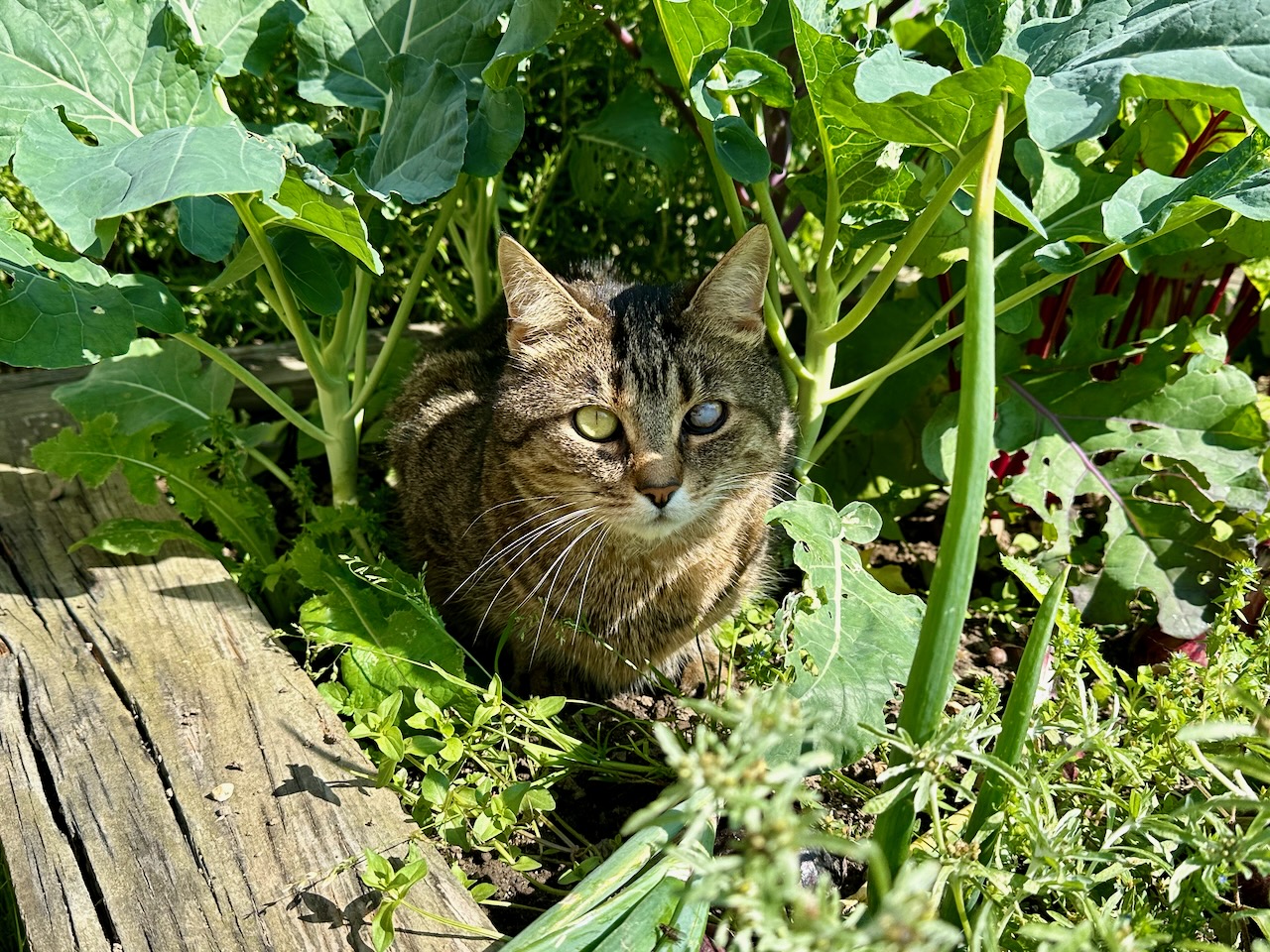
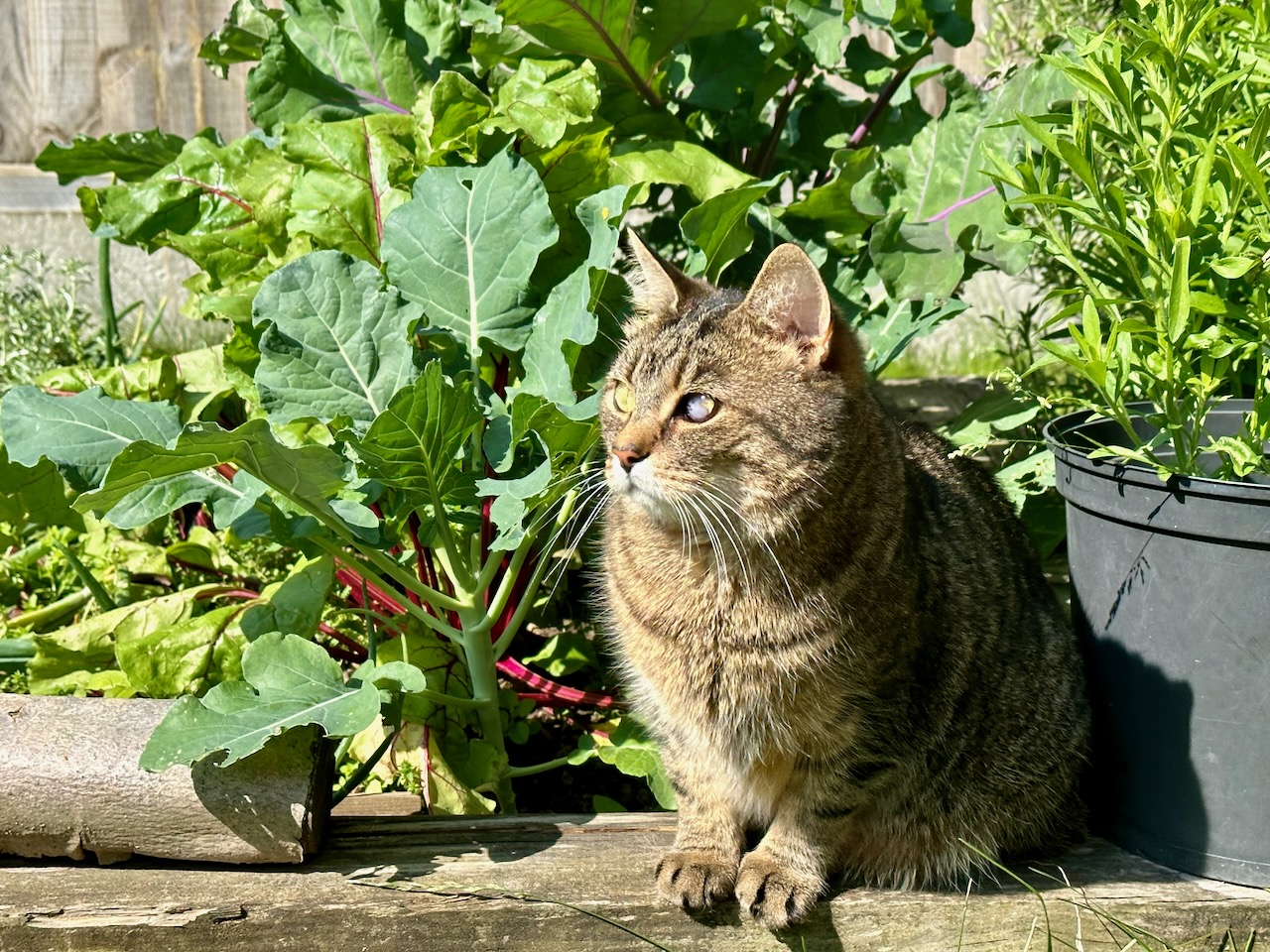
That was a heavy but I hope informative stream of consciousness, and I’d love to hear what you think about it all. By way of light relief here are some pictures of Gideon being his usual self, and of a hedgehog that’s visiting me each night.
Arrives most nights, about 11pmVisiting hedgehog having a drinkHiding in the brassicasIn the brassicas againHunting butterflies, I tried explaining about insect number declinesApparently rain water in a bucket is bestPropping up sunflower due to high windGideon supervising gardening
Finally, just to acknowledge the passing of Sinead O’Connor. Here’s one of my favourite songs of hers. What a powerful voice, full of emotion and conviction. Such a loss. And such a travesty that she was hounded by so many for speaking the truth.
I love it when it snows, and after several years of nothing significant the ‘Beast from the East’ brought buckets of the stuff over the past week. The only draw-back, from my point of view anyway, is that it makes cycling a little tricky; I don’t have any studded tyres.
More snow than Norfolk’s had in years
A winter wonderland
Salhouse Broad froze; although melting by the time I got this photo
Imagine if we could control the weather; but would that really be a good thing? The potential benefits around, for example, a predictable climate for agriculture, sunshine for the tourist industry, or rain for drought hit areas all sound good. But what about the impacts we couldn’t foresee or chose to ignore?
Controlling the weather in one region could adversely impact another geographical area, where perhaps they didn’t have as much money or influence. This downstream area could get hit by extreme weather, or mass species die-off events could become more common-place, such as the Saiga antelope catastrophe in Kazakhstan. In excess of 200,000 of this endangered species died in 2015, when human-caused climate change increased temperatures to such an extent it’s thought they triggered a bacteria present benignly in the antelopes at lower temperatures to cause hemorrhagic septicemia (blood poisoning and internal bleeding), with thousands dying within a few days of each other.
An increase in life-threatening diseases due to climate change could happen to human population centres, and some would argue it already is. For example Nigeria is currently experiencing an outbreak of Lassa fever, which in extreme cases has symptoms similar to Ebola, and has no vaccine. There are some theories that the increased frequency of this disease could be down to changing weather patterns.
So no, I don’t think we can be trusted to control the weather responsibly. We’re already doing it indirectly via human-caused climate change due to fossil fuel burning. The recent snowy weather resulted from unseasonably warm air being drawn up to the arctic, the Jet Stream slowing down and disrupting the polar vortex, which forced cold air and blizzards down to the UK. Whilst we experienced temperatures well below freezing in Norfolk, it was above freezing in parts of the Arctic, melting yet more of the already at record lows sea ice. This is explained much more eloquently and in far more detail on this website – well written and easy to understand; definitely worth a read.
Where am I going with this? I’m pointing out we often don’t really understand, or are unable to predict, the consequences of our actions on the planet.
As I mentioned in a previous recent blog post I’ve been pondering where we’re going as a species, and why we keep pursuing unsustainable growth and consumption, whilst the world literally collapses around us. Climate change is becoming a very tangible symptom of our labours. Surely we should be petrified for the future of our children and grandchildren, if not the other species we share the world with. Yes, the planet will survive us, however will anything else on the Earth be left by the time we check out?
There are lots of examples of as yet un-checked unsustainable activity in the present day, which we seem to be in denial about. All these have either obvious, as well as I suspect as yet unpredicted consequences. Here are a few examples.
Human population growth. The world’s population is growing at around 83 million or 1.1% a year, although this rate has slowed down since peaking in the 1960’s at about 2.1%, and is predicted to fall further to around 0.1% by 2100. The graph below shows how dramatic this growth has been in the last 200 years. The impact this puts on the environment, especially as more of the population start to live ‘western’ lifestyles, is unsustainable.
Agricultural land use. Asthis article in the New Scientist from 10 years ago says; humans are living completely beyond their ecological means. We knew this a long time ago but still pump fields full of fertilisers and pesticides, which in the long-term degrades the land and makes it less productive, as well as poisons the underlying substrates and surrounding countryside, reducing biodiversity. That coupled with soil erosion means scientists are predicting we only have a limited number of harvests left, maybe 100, due to our unsustainable farming practices. The good news is this should be reversible, given the right techniques and less reliance on chemical fertilisers. The big agrochemical companies, such as Monsanto, don’t really want you to know this for obvious reasons. Check out this video from Dr Elaine Ingham if you want to find out more, a real eye-opener.
Fishing. In many areas of the world we’re literally stripping the oceans bare of life to feed our appetite for seafood. Huge industrial trawlers and dredgers indiscriminately take everything, and even if by-catch is thrown back it’s probably not going to survive. Studies have shown that fish numbers have halved since the 70’s, with some species being hit particularly hard such as tuna and mackerel; a 75% decline in numbers. Continued unsustainable fishing practices driven by consumer demand, coupled with horrific plastic pollution and coral reef bleaching, paint a grim picture as far as recovery is concerned. If however large areas of our oceans are designated as marine conservation areas, such as the Arctic, perhaps they’ll stand a chance.
Meat eating. There are hundreds of articles out there, such as this one, describing the impacts of raising livestock on the environment. As demand grows due to an increasing population and new markets, the impacts will grow. These include a large contribution to the greenhouse gases causing climate change, increased pollution due to run off, increased water use, and more land being needed to for livestock resulting in deforestation. The amount of land needed to feed a human on meat is about 20 times more than needed for a vegetarian diet. This is clearly unsustainable. The answer seems obvious, eat less meat and dairy products, with the associated health benefits as side-effects.
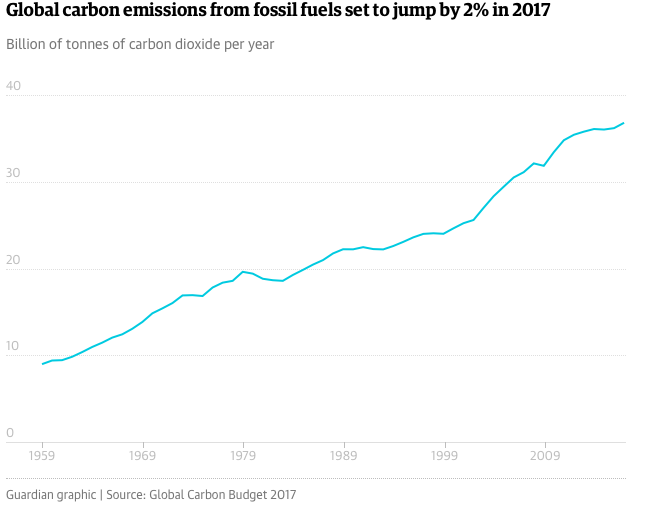
Fossil fuel use. We continue to burn vast amount of fossil fuels such as oil, coal and gas, in order to generate energy, heat our homes, or power transportation. The CO2 emissions from fossil fuel burning continue to increase, despite the Paris Climate Change agreement being signed in 2015. Burning fossil fuels is the primary cause of climate change. We have perhaps 100 years left of these primary fossil fuels, which means we’ll have used up what the world has to offer over the course of about 300 years, reserves that took millions of years to create. This has to be one of the best examples of unsustainable human-based activity, however with continued research and development hopefully alternatives such as electric cars (go Tesla!), renewables, or fusion energy will increase or come online soon.
CO2 emissions from fossil fuel burning
Those were a few examples of unsustainable activity, which seem to make less and less sense to a growing number of people, especially the younger generation who don’t understand how we could, as a race, have been so ignorant, and how we continue to pursue these activities. I think they’ll be an accounting at some point, and the history books won’t look back kindly on what will come to be regarded as criminal practices. It can be summarised quite simply…
Infinite economic, industrial and agricultural growth is unsustainable and therefore impossible when based on finite resources, coupled with environmental constraints
…not sure one can argue with that. A basic example of this can be found from studying the growth of a bacterial colony in a petri dish. The colony starts off slow, then grows exponentially using up the finite resources available, then dies off once the agar jelly runs out. A simple example but with obvious parallels to humans and the Earth.
There’s a lot of hope out there in terms of alternative more sustainable options, however these are reliant on:
Public take up of the alternatives, and a willingness on everyone to make sacrifices to ensure long-term sustainability
Funding for the research and development of these initiatives
The same initiatives not being blocked due to profit seeking by the incumbent industries, who wield so much power and influence
Politicians actually listening to their constituents and scientists
I’ve been reading recently about shifting baseline syndrome. Over time knowledge is lost concerning the state of the natural world, as people don’t perceive the changes taking place. Today’s younger generation won’t for example remember that gardens used to be full of butterflies, or that birdsong used to be so much louder, or that rhinos were once commonplace in Africa. It has to be a concern that the environment and biodiversity will continue to decline due to unsustainable activity, but people won’t realise the extent of the decline because they have no first hand experience of what things used to be like.
Over the last 25 – 30 years: (Source: WWF-UK Living Planet Report)
80% of freshwater species have declined
Over 50% of populations of land species have declined
40% of our forests have disappeared to agricultural land with 15 million trees lost each year just for soy production
1 in 6 of the planet’s species are at risk of extinction from climate change
I hope that education will fill this gap, and Deep Ecology will start to become part of the syllabus; humans are just one of many equal components that make up the global ecosystem. We’re not above or apart from it, we’re a part of it, and could not only survive but thrive if things are done the right way.
I don’t know how we change public opinion quickly enough to make the changes needed to ensure we can survive and thrive. Most governments don’t seem to give it a high priority, or are swayed by lobbyists driving their own commercial agendas, and whilst industry is changing it’s debatable whether it will happen quickly enough. It’s bizarre that we can continue so blithely down this path when you can for example see the ice melting, species dying, diseases increasing, the plastic in our oceans, antibiotic resistance rocketing, and extreme weather events due to climate change happening. I can only assume most people are in a massive state of denial, and refuse to wake-up, because to do so would cause a mental breakdown.
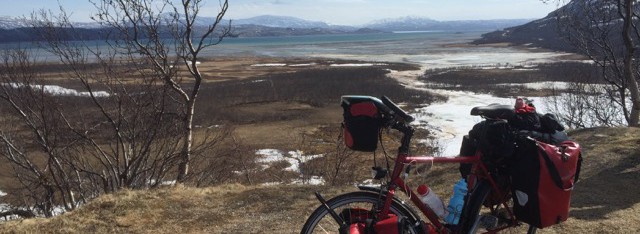
The underlying causes of all this have to be the drive to consume (we’re all indoctrinated to do so from an early age via marketing), what we are taught to regard as being successful in life, the pursuit of unreasonable profit and therefore money by a relatively small percentage of the population, and the often mistaken belief that more money will make you happy. After being on my bike for six months travelling round Europe, I realised you need very little in order to be happy. It looks increasingly like we need an alternative model from capitalism, which no doubt had its place in the past, in order to endure. That’s maybe a topic for another blog.
If you don’t already know about it Earth Hour takes place this weekend, where people are encouraged to turn their lights off from 20.30 in a show of solidarity for the planet. Here’s a link to the WWF website which has more detail on it – https://www.wwf.org.uk/earthhour
Well done and thank you if you made it to the end of that one. As usual my opinions are my own, however I hope that many of you will agree seeing as the evidence around all this is so easy to come by (see sources), and that you’ll conclude that we need to stop now and make some changes. I think everyone really can make a difference, because trends and movements spread and grow when they make sense. Let’s rectify this:
People and nature in Venn diagrams
As always, safe cycling, and please feel free to comment with any feedback, opinions or interesting links to further information.







 Self Propelled