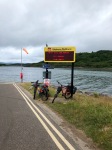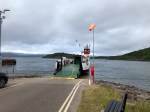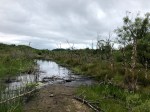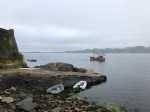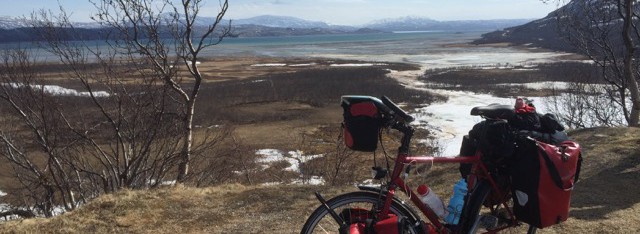
Bike Packing the Wild About Argyll Trail

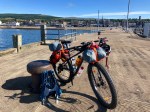
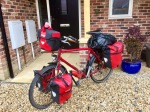
At the beginning of July I headed up to Scotland on the sleeper train from London to Glasgow, to ride some of the Wild About Argyll bike packing trail from Helensburgh to Oban. It’s a route I’ve been pondering for a while, and perfect to put my new Trek 1120 through its paces.

I thoroughly recommend the sleeper train for getting up to Scotland. A quick trip on the train down from Norwich, then fall asleep after a meal out in the big smoke, to wake up Glasgow. A courier picked up our bikes in London as there wasn’t room on the train for the trip up, but it was at no extra cost and we collected them from just outside Glasgow station upon our arrival. Judging from the courier’s agenda the bikes had an interesting journey up north, accompanying coffins!

From Glasgow we hopped on a local train up to Helensburgh where the Wild About Argyll Trail (#waat) starts, although we nearly didn’t get off at the right station due to being confused about Helensburgh Upper versus Helensburgh Central; we had to disembark rather rapidly under the critical eye of the train guard.

I usually go on tour on my own, however this time my friend Ian came with me; he has far more mountain biking experiencing than me, so I was hoping to pick up some tips! I was slightly nervous about navigating off-road, as well as negotiating some of the trails, so handy to have someone else along to share the ride.

Here are links to our routes on Strava, for interested readers.

Day 1 – Helensburgh to Ardentinny: https://www.strava.com/activities/1685170867/embed/a3c63e0a2b5adb46fbf201b24457b510535873a6

Day 2 – Ardentinny to Portavadie: https://www.strava.com/activities/1688609321/embed/4aed98e371a9d2af229b9bf9ea2f1f029de44b69

Day 3 – Tarbert to near Kilmartin: https://www.strava.com/activities/1690675904/embed/fdb8a418210b30123208ab1b69698b83e13e6a57

Day 4 – Final push to Oban: https://www.strava.com/activities/1691542197/embed/7dcef46ea6300e2ec74ecaa91896bdbb2398984d

Due to time constraints we didn’t complete all of the Wild About Argyll Trail, cutting out a few sections such as the loop around Dunoon and Kilberry, but we added on a trip to the Knapdale Forest Beaver trial, and had a very enjoyable and very much flatter ride alongside the Crinan canal. Here’s a picture sketching out complete route.
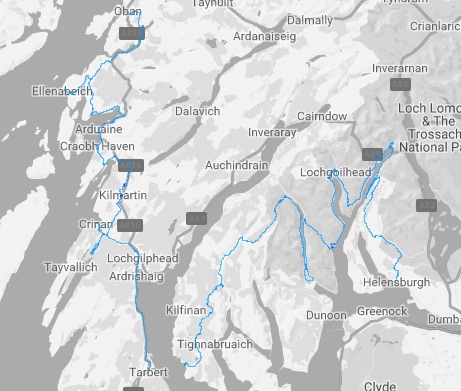
Helensburgh to Oban

Helensburgh to Oban

We decided not to take any camping stoves and cooking equipment with us, opting instead for cold food and pub meals along the way; this proved to be a wise choice and lightened the load.  Instead of bivvying we took tents, fearful of the midges; this also proved to be a wise choice. The midges were less of a nuisance than they have been on my previous bike trips to Scotland, but still voracious, as were the ‘Cleggs’, which we were warned about by a local and later learned are horseflies. The Cleggs landed a few bites, especially on long climbs when you don’t notice them landing on your legs till they bite you…ouch.

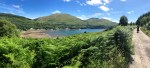
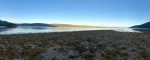
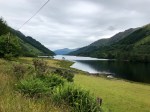
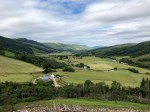
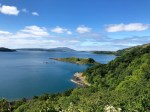
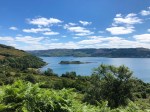
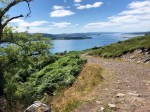
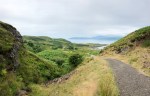
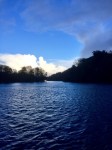
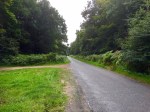
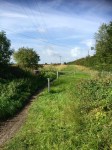
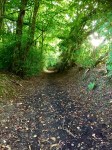
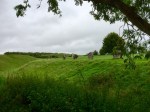
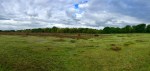
The scenery throughout the trail was pretty breathtaking, mixing forest and moorland, following the coast and cutting up over large hills, before plummeting down to small towns and villages.

I don’t think I’ve ever experienced weather in Scotland quite like it. In 2013, in a similar area whilst cycling round the coast of Britain, I experienced about a week of horizontal rain. We only had about half a day’s worth of intermittent showers, and sunshine for the rest of the time. One of the challenges started to be finding enough water to drink it was so hot, especially after a long climb. I carried three water bottles on my bike, having installed an extra cage just before the trip, and it was just about enough to keep me going between stops. Luckily there are cafes and pubs to refill at, as well as the occasionally outdoor tap courtesy of friendly locals.
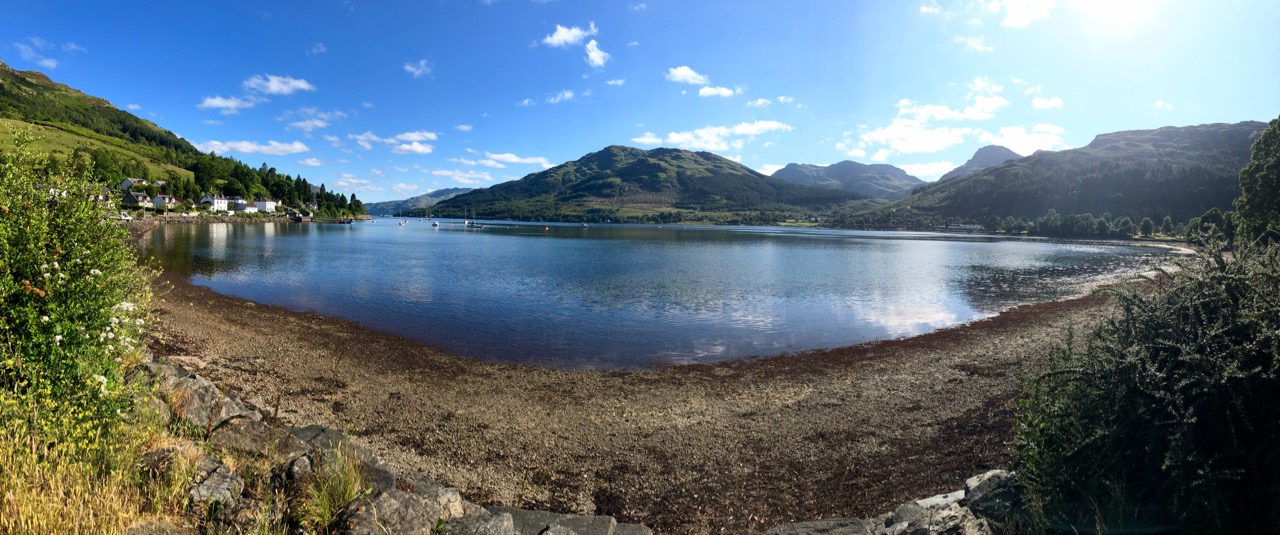
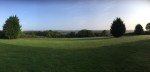
View across the bay from Lochgoilhead

View across the bay from Lochgoilhead

We stopped for a pint at the Goil Inn after a very exciting downhill section, during which I’d had to quickly learn the art of dodging crash inducing pebbles and boulders, and how to balance the bike round steep corners. Flat stones on top of other stones really don’t do you any favours at high-speed, although the oversized tyres on my Trek 1120 gave me welcomed extra traction.

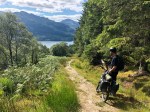
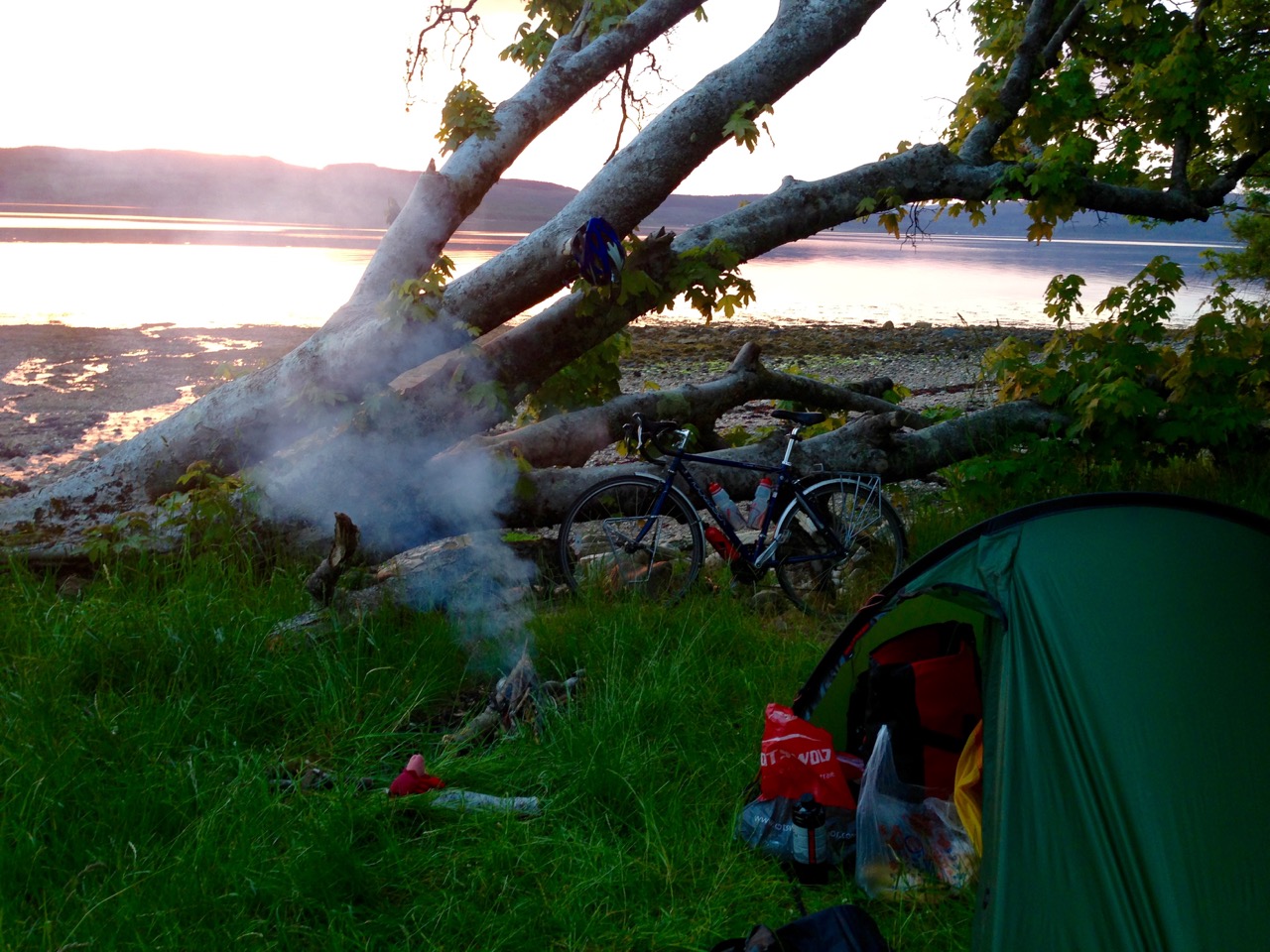
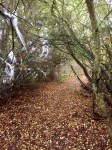
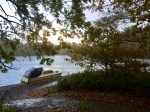
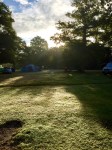
I loved the trails that sweep down off the hills onto hard-baked earthen trails underneath the trees, banking round corners and getting a run up to the next climb. Such a contrast to the Norfolk countryside. We camped next to the seashore in Ardentinny on the first night, literally riding into an excellent spot we had no idea was there. The only slightly disconcerting sight was that of Coulport across the waters, the storage and loading facility for the UK’s Trident programme.

The following day we road up over the pass to the Whistlefield Inn, a steep climb for first thing in the morning, before descending at high speed down to Loch Eck. We passed Puck’s Glen but didn’t climb up to visit it, having taken a slightly wrong turning earlier on; somewhere to go back to when I’m next up that way. After a very decent bacon sandwich at Sheila’s Diner near Rashfield we took the trail up the other side of Loch Eck, before cutting up over the hills, then down the hills, then up some more hills, before finally making it to Portavadie. Navigating was slightly tricky on some parts of this, however we could fall back on the GPX coordinates on Ian’s phone when the ordnance survey map got confusing.

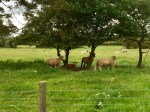
The cycling on this section was hard going but worth it.  Some really long climbs and remote forestry sections where we were on our own aside from flocks of sheep and the occasional deer. The only downside was sometimes the surface was a little too rough to go down at speed, due to the quantity of loose stones that had been put down for the forestry trucks.

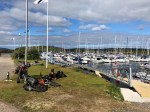
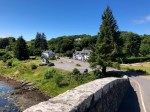
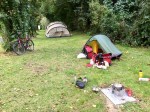
We wild camped next to Portavadie after enjoying a cold beer or two in the marina; we might have looked slightly scruffy but it was very pleasant sitting outside looking at the boats.

Sunday morning saw us take the ferry over to Tarbert, where we enjoyed a Scottish fry up and restocked on a few supplies before heading North to the Crinan canal. Our legs were feeling somewhat tired after an intense first two days, so we decided on an easier day, taking in the Crinan Canal and Knapdale Forest Beaver Trial.

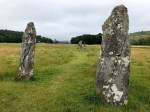
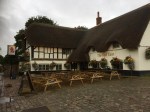
From Crinan we rode North to Kilmartin, following the valley and stopping to look at the cairns, burial mounds and standing stones. We had a wee dram of whisky and poured a libation for for the spirits, just to be on the safe side. There’s a good pub in Kilmartin, a perfect stopping point for a meal before finding somewhere to camp. The churchyard is also well worth a look, being full of old gravestones, some of which are carved into semblances of armoured men and swords. Ian found what are probably a few ancestors buried in there.

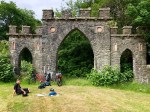
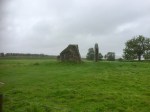
We weren’t entirely sure where we were going to camp but found Carnasserie Castle a few kilometres up the trail, which made for another excellent stopover. It was nice relaxing on the battlements, away from the midges, enjoying the views back down the valley and imagining what it was like centuries ago.

With the sun out again we decided to push for Oban on Monday, to allow for a day off on Tuesday before heading back down South. I was in more familiar territory now having holidayed up here several times over the years, but never quite in this weather.

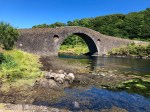
From Carnasserie Castle we pedalled to Ardfern, before cutting up and over the trail to Craobh Haven, then round to Kilmelford. The route then takes you alongside Loch Melfort to Degnish, where you take the trail over towards Seil Island. We diverted from the Wild About Argyll Trail at this point, over the Bridge over the Atlantic, to explore the island and Easdale.

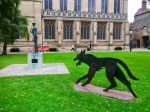
The route from Easdale to Oban involved a bit of road, before we were able to skirt inland and round the back through forest, before descending into the port. We passed a series of curious wooden fellas on the latter part of our journey.
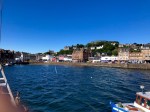
We stayed in a very reasonable hostel on our last night, before exploring Kerrera Island on foot the following day. There’s a ferry from Oban to Kerrera, and a good walk round the island – think was about 15 km, with an excellent eco type cafe to visit at the other end of the island.

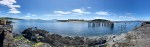
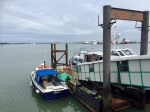
Kerrera Marina - when I grow up I want a yacht

Kerrera Marina – when I grow up I want a yacht

After 4 days on the bike, and a saddle I’m not used to, it was very pleasant to have a walk instead of pedalling.

After chilling out all day we picked up our bikes from the hostel and caught the train from Oban to Glasgow; a very scenic journey, during which the heavens opened and it rained – excellent timing. Then it was a simple matter of cycling the short distance across Glasgow to get the sleeper train back to London, with a side trek for a quick pint.

I had time for a quick pedal round London in the morning, before getting the train back up to Norwich. The cycle highways on London are excellent!

Overall my Trek 1120 was a pleasure to ride, performing excellently off-road, and with ample room for packing kit in the innovative rack system. I need to tweak a couple of spokes to fix a slight wheel buckle, but aside from that nothing broke. The seat dropper post is a great feature, giving you excellent stability when you need it, however I’m going to have to get the next size up for a more comfortable ride, due to my long legs, and I might replace the saddle with a Brooks Cambium or similar. I was slightly worried the oversized tyres would lead to too much rolling resistance, however with the bigger wheels this didn’t prove to be an issue, and it was definitely a lot of fun bouncing round the Scottish hills; it goes over anything, hence a friend christening it ‘The Tractor’ rather than ‘The Beast’, which was my first choice. Looking forward to taking it on more back packing adventures soon.

As for the Wild About Argyll Trail, I’d definitely recommend it as a bike packing route; a superb ride but not for the faint-hearted. For more info on the trail, and other great routes in Scotland I have yet to try, check out the bike packing Scotland website: http://bikepackingscotland.com


Writing to my MP

I made a commitment to myself at the beginning of the year to write to my local MP, Keith Simpson, concerning issues that I feel strongly about.  I figure you can’t complain if you’re not willing to do something about it, and also it’s going to help me keep sane in a world that increasingly makes less and less sense.

I may still write to him about being paid to cycle to work and how the Government could contribute to this, but I need to do some more work on that; they already indirectly contribute via things like cycle to work schemes, I’m just not sure they work very well. In the meantime I’ve sent the below, and am looking forward to seeing what he has to say.

Dear Rt Hon Keith Simpson MP,
I hope this email finds you well, and like me looking forward to it getting a little more spring-like soon. It was good to see you in the local press recently alongside the announcement that the last bit of the NDR will be opening soon.
I am writing to you concerning the increasing number of housing developments that are being planned around Norwich, which are starting to eat up more and more green field sites. I understand there is a housing demand, however I want to make sure this demand is being satisfied in a well conceived and sustainable fashion, without too much impact on the environment and our beautiful countryside, something I’m sure you can agree with.
To let you know a little about myself. I moved to Salhouse just over a year ago, and am loving living in the countryside after being in Norwich since I moved from the South East to go to UEA in 1993. I now work for Virgin Money as a Project Manager.
I recently read an article in the EDP (http://www.edp24.co.uk/edp-property/councillors-approve-380-homes-sprowston-1-5459687) which claims that a housing development in Sprowston will only have 10% of affordable homes, despite the Joint Core Strategy policy having a target of 33%. I would like to know if this is true (the EDP isn’t always 100% accurate), and what the reason for this deviation is. Is it a case of the developer saying they won’t have a sufficient profit margin if the affordable housing ratio goes above 10%, and if so has this been independently verified? I understand this development falls within the Broadland district.
My concern is that whilst we have a housing shortage, and need to build more homes, what’s the point if people aren’t going to be able to afford them? People may also overstretch themselves on the borrowing front, leading to bad debt and repossessions should interest rates go up, which seems inevitable in the short to medium term. My suspicion from reading other articles on housing plans is that very few will meet the recommended percentage of affordable housing. Perhaps the strategy needs to be revisited on this, or pressure put on developers to change their plans?
I also recently wrote to the Broadland Planning department concerning a small housing development that is being planned for the field behind where I live (Application 20180360). I know they don’t reply to individual emails, however I’d like to make you aware of the points I raised, especially considering Salhouse again experienced issues with flooding this winter. I have copied in the relevant section of my email of 31 March 2018 below.
1) Access to the new development via Barn Piece Close. I’m not convinced the road is big enough to be used by vehicles accessing the additional site. It’s quite narrow, and access on to the main road could start to become an issue with the increased number of cars. There could be a risk this turns into an accident zone as cars don’t exactly travel down Salhouse Road to the mini roundabout slowly. Also the dead-end close has children who play in it at the moment, and safety issues might result from increased traffic. Is there an alternative route into the site that could be considered, perhaps directly from the main road?
2) Mains sewerage capacity. I read in the parish magazine about issues with the village sewerage system overflowing, and not really being fit for purpose for the current number of homes. Is there not a risk the increased number of dwellings could cause more overflow problems. Should the sewer system be improved and expanded prior to any new development being considered? The sewer system recently overflowed again, thus proving this is still an issue.
3) Other utilities. Aside from sewerage, are other utilities such as gas, water, broadband, electricity etc of a sufficient capacity to supply the new homes, with no loss of service to the existing homes in the vicinity?
4) Further expansion. Would this development pave the way for even more development in the immediate area, which would exacerbate the above points even further?
5) I assume the standard ecological surveys ref bats, newts etc will be completed? We have enough threats to the UK’s biodiversity as it is. I would really prefer to see more brown site development going on.
I realise development on brown field sites can be more expensive, and that affordable housing is not going to be as attractive to developers seeking to maximise their profits. However, with the challenges first time buyers and lower earners face with getting on the housing ladder, and the threats our countryside and environment are up against, would it be possible to initiate a review of the planning policy to ensure it is benefitting everybody, and doing what it can to protect our rapidly diminishing natural spaces and biodiversity.
A supporting argument for this may also be that the housing market is slowing down due to fears of interest rate rises and lack of affordability. Hopefully this means we have the time to review plans and make sure we get them right?
I look forward to hearing from you.
Yours sincerely,
James Harvey


I’ll share any response I receive. I have a feeling this may be the first of many pieces of correspondence to Keith, however I’ll always try and make them constructive.

In my next post I’ll get back to plans for summer cycling trips; bike-packing in Scotland on the horizon.

Get paid for cycling to work?

I thought the ‘Beast from the East’ was behind us when I went out for a pedal round the Norfolk countryside on Saturday, and to begin with that appeared to be the case. The snow was contained to small patches in fields, and I merrily splashed down narrow lanes full of melt-water. What remained of the previous week’s blizzards was quickly disappearing, with rivulets of water joining together to form larger streams, and in some cases torrents, flowing quickly downhill. Beneath the retreating snow crocuses and other spring growth were appearing, soon to replace the snow drops. The birds were in fine voice, celebrating the snow’s retreat by collecting twigs for nests and generally getting jiggy with it.

I’ve recently rejuvenated my Ridgeback Panorama used for my Bike around Britain tour in 2013. My Oxford Bike Works Expedition Bike is off the road at the moment awaiting wheel repairs and a general post winter rebuild. It’s good to be back on the Ridgeback, despite it being a bit creaky these days; it brings back good memories and the larger wheels mean I’m a bit speedier on the morning commute.

So, the Ridgeback and I were speeding along, having taken in Woodbastwick, Ranworth, South Walsham and several other small villages, when we turned down a road near Burlingham which obviously hadn’t seen much sun.

No road closure signs required

No road closure signs required

Determined not to be defeated by this impasse, I decided carrying my bike over the still significant snow-drifts was the way forward. The drifts must have been at hedge-height level prior to the thaw.

Ridgeback portage required

Ridgeback portage required

I made it to the other side with feelings akin to those Amundsen must have felt on reaching the South Pole in 1911, however perhaps shorts hadn’t been the best choice of clothing for this outing, and my shoes were on the damp side by the time I hit tarmac again.

As well as weekend rides I’ve been using my Ridgeback for the daily commute, determined not to have to resort to driving which tends to leave me in a grotty mood for the rest of the day. I was snow-bound for a few days during the Beast from the East episode, and not being able to get out for a ride left me feeling irritable and fidgety. It took me a while to realise it was because I hadn’t been having my daily dose of exercise. Cycling has so many benefits, as I’ve extolled before, that I find it difficult to understand why you would drive if you have an alternative. Here’s 10 reasons to get on your bike:

  1. Health and fitness – stronger and better endurance, helps you lose weight, and keeps me prepped for my next tour
  2. Reduced risk of cardio-vascular disease and cancer, and no doubt many other diseases. Some studies have shown it’s better for your lungs than driving, as you avoid more fumes. It also appears to help maintain brain function due to better blood flow, reducing the risk of dementia
  3. Boosted immune system; read an article this week about pensioners who cycle regularly having the immune system of people in their 20’s
  4. Keeps you looking more youthful – or so I like to think
  5. Improved mental health – from exercise, being outside in the fresh air and nature, and taking some time-out each day
  6. Cycling has less impact on your body than, for example, running, so you save your knees! I know this to be true because I went for a run for the first time in ages on Saturday, and still haven’t completely recovered
  7. Less polluting than other forms of transport, so better for the environment and more sustainable. We really need to reduce our CO2 emissions
  8. It’s actually quicker than driving in cities, and you find places you’d never see in a car. It improves your navigational skills and sense of direction to boot
  9. You can eat more cake; other foodstuffs are available (and frequently taken advantage of)
  10. Improves your sex-life; apparently it’s all about muscle groups

There are other benefits to be had, however if that isn’t enough I don’t know what is? If you’re still not convinced how about being paid to cycle to work? In New Zealand one business owner has taken it to a new level and is paying his employees $5 a day if they commute by bike for 6 months, rising to $10 a day after that, paid as an annual basis. He’s paying for it out of business profits, and says it’s covered by the improvement in employee productivity and better health.

Here’s a link to the article on this:

https://www.theguardian.com/world/2018/mar/07/new-zealand-cycle-cash-10-a-day-employees-work-company?CMP=share_btn_tw

This got me thinking about whether we could do this in the UK. People are often more motivated, at least initially, by monetary incentives rather than the 10 benefits listed above; I know, weird isn’t it, you’d think you’d cycle for those alone with any money being a bonus. If companies can’t afford to do this themselves perhaps the government could offer grants to at least partially fund it. Their incentive to do this would be less stress on an already straining-at-the-seams heath service, as well as improvements to the transport network due to less road erosion, and less traffic jams. It really has to be a win-win for everyone. I suppose the government already pitches in via cycle-to-work schemes, which give you tax breaks, however there have to be the opportunities to encourage cycling.

I’m wondering how I can turn this into some sort of business case to present at work, however it might be a bit tricky to assign an actual £ value. Got to be worth a go though, as my gut instinct says the benefits of a more motivated, healthier and happier workforce would outweigh any costs.

And perhaps instead of all the money being paid in a bonus to employees they could opt for some or all of it to be paid to charity instead, with Gift Aid on top of these donations.

I’ll do some more work on this and maybe float the idea at work. It would mean we’d probably need more places to lock bikes, and maybe more showers, but these things are all doable. In the meantime if you have any suggestions or comments please let me know, all gratefully received; let’s get more people self-propelled!

Where do we go from here?

I love it when it snows, and after several years of nothing significant the ‘Beast from the East’ brought buckets of the stuff over the past week. The only draw-back, from my point of view anyway, is that it makes cycling a little tricky; I don’t have any studded tyres.

Imagine if we could control the weather; but would that really be a good thing? The potential benefits around, for example, a predictable climate for agriculture, sunshine for the tourist industry, or rain for drought hit areas all sound good. But what about the impacts we couldn’t foresee or chose to ignore?

Controlling the weather in one region could adversely impact another geographical area, where perhaps they didn’t have as much money or influence. This downstream area could get hit by extreme weather, or mass species die-off events could become more common-place, such as the Saiga antelope catastrophe in Kazakhstan. In excess of 200,000 of this endangered species died in 2015, when human-caused climate change increased temperatures to such an extent it’s thought they triggered a bacteria present benignly in the antelopes at lower temperatures to cause hemorrhagic septicemia (blood poisoning and internal bleeding), with thousands dying within a few days of each other.

An increase in life-threatening diseases due to climate change could happen to human population centres, and some would argue it already is. For example Nigeria is currently experiencing an outbreak of Lassa fever, which in extreme cases has symptoms similar to Ebola, and has no vaccine. There are some theories that the increased frequency of this disease could be down to changing weather patterns.

So no, I don’t think we can be trusted to control the weather responsibly. We’re already doing it indirectly via human-caused climate change due to fossil fuel burning. The recent snowy weather resulted from unseasonably warm air being drawn up to the arctic, the Jet Stream slowing down and disrupting the polar vortex, which forced cold air and blizzards down to the UK. Whilst we experienced temperatures well below freezing in Norfolk, it was above freezing in parts of the Arctic, melting yet more of the already at record lows sea ice. This is explained much more eloquently and in far more detail on this website – well written and easy to understand; definitely worth a read.

Where am I going with this? I’m pointing out we often don’t really understand, or are unable to predict, the consequences of our actions on the planet.

As I mentioned in a previous recent blog post I’ve been pondering where we’re going as a species, and why we keep pursuing unsustainable growth and consumption, whilst the world literally collapses around us. Climate change is becoming a very tangible symptom of our labours. Surely we should be petrified for the future of our children and grandchildren, if not the other species we share the world with. Yes, the planet will survive us, however will anything else on the Earth be left by the time we check out?

There are lots of examples of as yet un-checked unsustainable activity in the present day, which we seem to be in denial about. All these have either obvious, as well as I suspect as yet unpredicted consequences. Here are a few examples.

  1. Human population growth. The world’s population is growing at around 83 million or 1.1% a year, although this rate has slowed down since peaking in the 1960’s at about 2.1%, and is predicted to fall further to around 0.1% by 2100. The graph below shows how dramatic this growth has been in the last 200 years. The impact this puts on the environment, especially as more of the population start to live ‘western’ lifestyles, is unsustainable. 
  2. Agricultural land use. As this article in the New Scientist from 10 years ago says; humans are living completely beyond their ecological means. We knew this a long time ago but still pump fields full of fertilisers and pesticides, which in the long-term degrades the land and makes it less productive, as well as poisons the underlying substrates and surrounding countryside, reducing biodiversity. That coupled with soil erosion means scientists are predicting we only have a limited number of harvests left, maybe 100, due to our unsustainable farming practices. The good news is this should be reversible, given the right techniques and less reliance on chemical fertilisers. The big agrochemical companies, such as Monsanto, don’t really want you to know this for obvious reasons. Check out this video from Dr Elaine Ingham if you want to find out more, a real eye-opener.
  3. Fishing. In many areas of the world we’re literally stripping the oceans bare of life to feed our appetite for seafood. Huge industrial trawlers and dredgers indiscriminately take everything, and even if by-catch is thrown back it’s probably not going to survive. Studies have shown that fish numbers have halved since the 70’s, with some species being hit particularly hard such as tuna and mackerel; a 75% decline in numbers. Continued unsustainable fishing practices driven by consumer demand, coupled with horrific plastic pollution and coral reef bleaching, paint a grim picture as far as recovery is concerned. If however large areas of our oceans are designated as marine conservation areas, such as the Arctic, perhaps they’ll stand a chance.
  4. Meat eating. There are hundreds of articles out there, such as this one, describing the impacts of raising livestock on the environment. As demand grows due to an increasing population and new markets, the impacts will grow. These include a large contribution to the greenhouse gases causing climate change, increased pollution due to run off, increased water use, and more land being needed to for livestock resulting in deforestation. The amount of land needed to feed a human on meat is about 20 times more than needed for a vegetarian diet. This is clearly unsustainable. The answer seems obvious, eat less meat and dairy products, with the associated health benefits as side-effects.
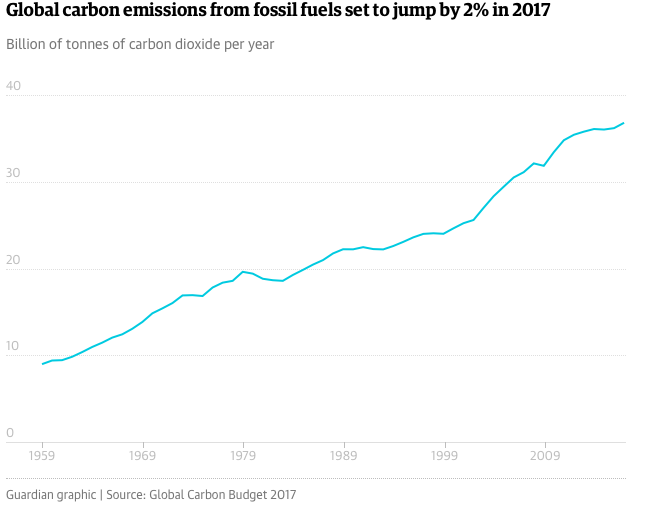
  5. Fossil fuel use. We continue to burn vast amount of fossil fuels such as oil, coal and gas, in order to generate energy, heat our homes, or power transportation. The CO2 emissions from fossil fuel burning continue to increase, despite the Paris Climate Change agreement being signed in 2015. Burning fossil fuels is the primary cause of climate change.  We have perhaps 100 years left of these primary fossil fuels, which means we’ll have used up what the world has to offer over the course of about 300 years, reserves that took millions of years to create. This has to be one of the best examples of unsustainable human-based activity, however with continued research and development hopefully alternatives such as electric cars (go Tesla!), renewables, or fusion energy will increase or come online soon.

    CO2 emissions from fossil fuel burning

    CO2 emissions from fossil fuel burning

Those were a few examples of unsustainable activity, which seem to make less and less sense to a growing number of people, especially the younger generation who don’t understand how we could, as a race, have been so ignorant, and how we continue to pursue these activities. I think they’ll be an accounting at some point, and the history books won’t look back kindly on what will come to be regarded as criminal practices. It can be summarised quite simply…

Infinite economic, industrial and agricultural growth is unsustainable and therefore impossible when based on finite resources, coupled with environmental constraints

…not sure one can argue with that. A basic example of this can be found from studying the growth of a bacterial colony in a petri dish. The colony starts off slow, then grows exponentially using up the finite resources available, then dies off once the agar jelly runs out. A simple example but with obvious parallels to humans and the Earth.

There’s a lot of hope out there in terms of alternative more sustainable options, however these are reliant on:

  • Public take up of the alternatives, and a willingness on everyone to make sacrifices to ensure long-term sustainability
  • Funding for the research and development of these initiatives
  • The same initiatives not being blocked due to profit seeking by the incumbent industries, who wield so much power and influence
  • Politicians actually listening to their constituents and scientists

I’ve been reading recently about shifting baseline syndrome. Over time knowledge is lost concerning the state of the natural world, as people don’t perceive the changes taking place. Today’s younger generation won’t for example remember that gardens used to be full of butterflies, or that birdsong used to be so much louder, or that rhinos were once commonplace in Africa. It has to be a concern that the environment and biodiversity will continue to decline due to unsustainable activity, but people won’t realise the extent of the decline because they have no first hand experience of what things used to be like.

Over the last 25 – 30 years: (Source: WWF-UK Living Planet Report)

  • 80% of freshwater species have declined
  • Over 50% of populations of land species have declined
  • 40% of our forests have disappeared to agricultural land with 15 million trees lost each year just for soy production
  • 1 in 6 of the planet’s species are at risk of extinction from climate change

I hope that education will fill this gap, and Deep Ecology will start to become part of the syllabus; humans are just one of many equal components that make up the global ecosystem. We’re not above or apart from it, we’re a part of it, and could not only survive but thrive if things are done the right way.

I don’t know how we change public opinion quickly enough to make the changes needed to ensure we can survive and thrive. Most governments don’t seem to give it a high priority, or are swayed by lobbyists driving their own commercial agendas, and whilst industry is changing it’s debatable whether it will happen quickly enough. It’s bizarre that we can continue so blithely down this path when you can for example see the ice melting, species dying, diseases increasing, the plastic in our oceans, antibiotic resistance rocketing, and extreme weather events due to climate change happening. I can only assume most people are in a massive state of denial, and refuse to wake-up, because to do so would cause a mental breakdown.

The underlying causes of all this have to be the drive to consume (we’re all indoctrinated to do so from an early age via marketing), what we are taught to regard as being successful in life, the pursuit of unreasonable profit and therefore money by a relatively small percentage of the population, and the often mistaken belief that more money will make you happy. After being on my bike for six months travelling round Europe, I realised you need very little in order to be happy. It looks increasingly like we need an alternative model from capitalism, which no doubt had its place in the past, in order to endure. That’s maybe a topic for another blog.

If you don’t already know about it Earth Hour takes place this weekend, where people are encouraged to turn their lights off from 20.30 in a show of solidarity for the planet. Here’s a link to the WWF website which has more detail on it – https://www.wwf.org.uk/earthhour

Well done and thank you if you made it to the end of that one. As usual my opinions are my own, however I hope that many of you will agree seeing as the evidence around all this is so easy to come by (see sources), and that you’ll conclude that we need to stop now and make some changes. I think everyone really can make a difference, because trends and movements spread and grow when they make sense. Let’s rectify this:

People and nature in Venn diagrams

People and nature in Venn diagrams

As always, safe cycling, and please feel free to comment with any feedback, opinions or interesting links to further information.

Sources

  1. BBC – Lassa fever: The killer with no vaccine – http://www.bbc.co.uk/news/world-africa-43211086
  2. Robert Scribbler – Sudden Stratospheric Warming and Polar Amplification: How Climate Change interacts with the Polar Vortex – https://robertscribbler.com/2018/02/28/sudden-stratospheric-warming-and-polar-amplification-how-climate-change-interacts-with-the-polar-vortex/
  3. World Population Growth by Max Roser and Esteban Ortiz-Ospina – https://ourworldindata.org/world-population-growth
  4. Unsustainable development ‘puts humanity at risk’ – https://www.newscientist.com/article/dn12834-unsustainable-development-puts-humanity-at-risk/
  5. Youtube – The Roots of your Profit, Dr Elaine Ingham, soil microbiologist, founder of Soil Foodweb Inc – https://www.youtube.com/watch?v=x2H60ritjag&t=3511s
  6. Huffington Post – Ocean Fish Populations cut in half since the 1970s: Report – http://www.huffingtonpost.co.uk/entry/crucial-marine-populations-cut-in-half-since-the-1970s-report_us_55f9ecd2e4b00310edf5b1b2
  7. The Guardian – Animal agriculture is choking the ​Earth and making us sick. We must act now – https://www.theguardian.com/commentisfree/2017/dec/04/animal-agriculture-choking-earth-making-sick-climate-food-environmental-impact-james-cameron-suzy-amis-cameron
  8. The Guardian – Fossil fuel burning set to hit record high in 2017, scientists warn – https://www.theguardian.com/environment/2017/nov/13/fossil-fuel-burning-set-to-hit-record-high-in-2017-scientists-warn
  9. Wikipedia – Deep Ecology – https://en.wikipedia.org/wiki/Deep_ecology
  10. WWF – Earth Hour – https://www.wwf.org.uk/earthhour

Brake the Cycle

A couple of weeks ago I came across Brake the Cycle, a touring company that organise adventures combining bicycles, caring about the planet, eco-communities and permaculture, with helping individuals find a new healthier and happier path in life. What better way to do that than on a bike? In short it’s all the sort of thing I’m passionate about, in trying to practise a more balanced, sustainable, and connected to nature lifestyle.

Here’s a video from their website that’s really making me look forward to touring again a bit later this year; I’m hoping to pedal down the Wild Atlantic Way in Ireland.

You can check out there website here – www.brakethecycle.xyz

If you’re thinking about giving cycle touring a go, but a bit nervous and would like to do it with a group of like-minded individuals, then I’d recommend checking them out. They organise tours in the UK, such as Lands End to John O’Groats and an Odyssey in Wales, to pedalling round Spain or Greece. And they’ll carry your luggage for you! A great way to see new places, make new friends, and experience the joys of cycle touring in a sustainable way.

I recently wrote a guest blog post for them, which you can read here – www.brakethecycle.xyz/single-post/bikearoundBritain

Incidentally I have no commercial connection to this website, I just really like what they’re trying to do and may well get a few friends to join me on one of their tours.

I’ve also copied in the blog post below, as I really enjoyed writing this one, and want to keep it for posterity.

Bike around Britain by James Harvey
Riding a bike. I don’t think I could do without it now. I get grouchy if I haven’t cycled for a couple of days. If I have to use my car to commute the day is definitely worse for it. On my 10 mile ride to work I see people stuck in their vehicles, looking grumpy, frustrated, bored, and disconnected from the world outside their sterile, sealed metal boxes.

Wouldn’t it be brilliant if more people used their bike to get to work? There are so many benefits to be gained from a regular pedal: mental and physical health, fitness, saving money, and less pollution. It’s actually quicker in towns, and you can eat more cake without worrying too much about the calories. You’re closer to the natural world too — not separate from it like so many people seem to be these days. As we move into Spring and everything starts waking up there’s more to see, smell, listen to and experience whilst pedalling.

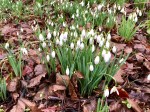
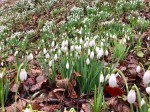
Snowdrop covered bank

Take the path less travelled

Cycling several times a week also means that when it comes to your next cycle tour your legs are better prepared for it, although it’s one of those hobbies where you really can get fit on the job. I started cycle touring properly in 2013, when a major life event made me re-evaluate what’s important. I took some time out and decided, fairly randomly, that I’d cycle around the coast of Britain. Why wait until you retire to start adventuring? You never know what’s going to happen. If you have the chance to do something different, to pursue something out-of-the ordinary you’ve always wanted to do, then go for it, ‘brake the cycle’ and take that first step out of your front door. Every step after that is easier. One of my favourite quotes, from Henry Rollins reflects all this:

‘No such thing as spare time
No such thing as free time
No such thing as down time
All you got is life time. Go!’

I didn’t especially know what I was doing when I set off round the coast. I bought a bike I’d been reliably informed was decent for touring, as well as camping equipment I could fit on it, and a whole  host of other bits and pieces I thought I might need. Once I’d packed my panniers I mounted my trusty steed, and gently tumbled onto the grass outside my house. It appeared I might have to cut down on what were going to be my worldly possessions for the next three months. That was the start of realising you really don’t need much to be happy. In fact, from what I’ve observed, the more people have the less happy they often are. You meet a lot of people when touring, whether it be in Britain, or in more remote places (for us) such as Albania, Scandinavia or Turkey. The friendliest and most content people I’ve met are often those that seem to have the least, from a material possession point of view; I’d argue they probably have the much more from a spiritual and non-material angle.

Starting from Norwich and heading to Lowestoft, on the East coast of Britain, before turning North, getting fitter as I went. I almost immediately had a crash on a Norfolk coastal path, when I discovered loaded touring bikes don’t cope well with sand. This wouldn’t be the last ‘stunt’ of the tour.

It didn’t really take very long to get to Scotland, however it took a me a disproportionate amount of time to get round the coast of that glorious country. There are so many ins-and-outs, up-and-downs, sideways then back up bits. Thankfully on a coastal tour it’s quite hard to get lost, all you have to do is keep the sea on one side, and in Scotland there aren’t a lot of roads to choose from when you get beyond Edinburgh. Another Scottish bonus is you can wild camp as long as you’re sensible and respectful, so finding a place to rest wasn’t hard.

Wild camping on the shores of Loch Fyne

Wild camping on the shores of Loch Fyne

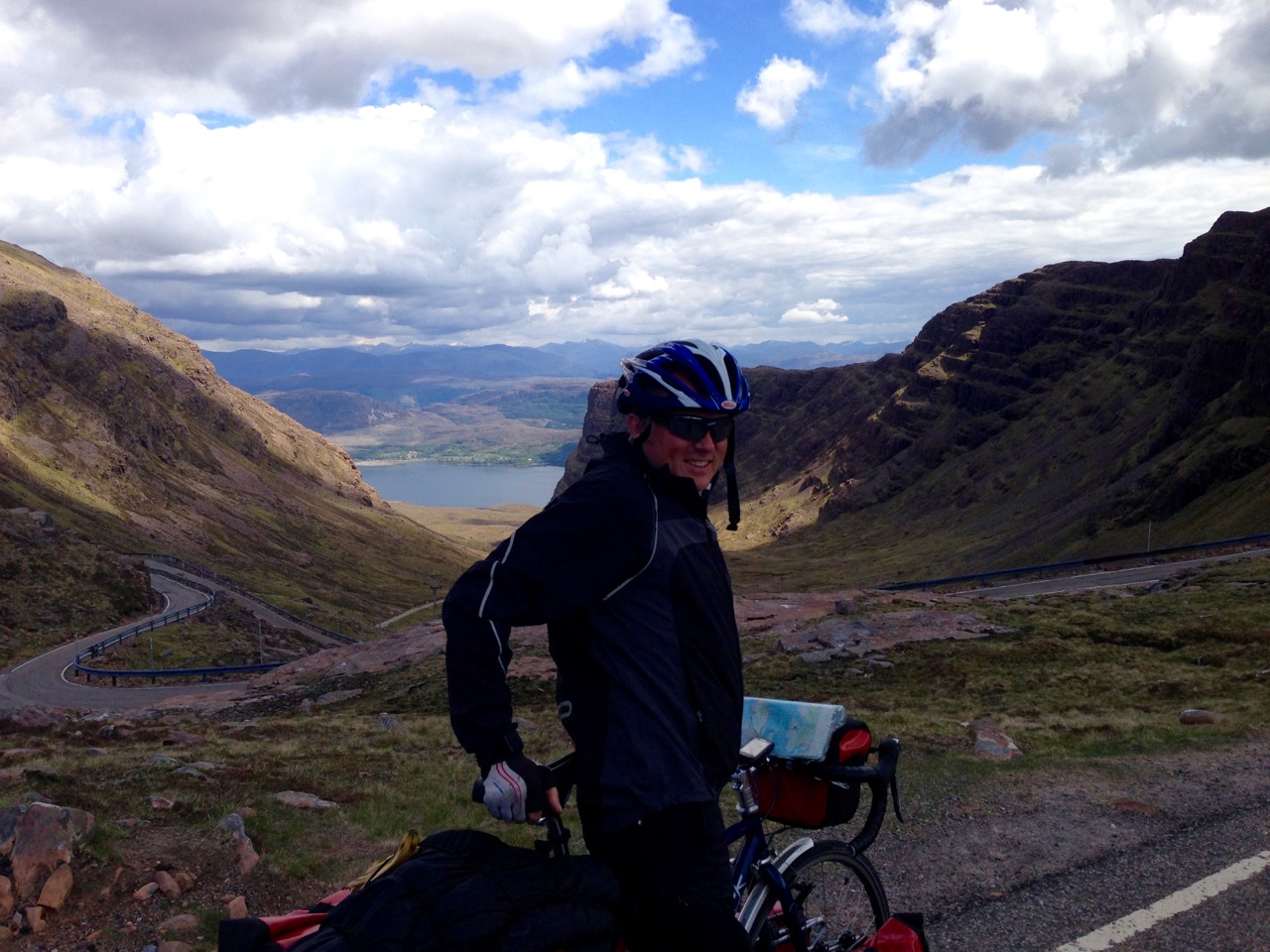
I always get asked what my favourite bits of a tour are, and it’s often hard to pick one. I know that the journey is definitely more important that the destination — the latter often being a bit of an anti-climax after all the adventures along the way. On my 2013 Bike around Britain tour I can definitely say Scotland was my favourite bit, aside from the midges which will eat you alive if you’re not careful. The coastline is amazing, especially the West Coast, and then there’s Orkney where I immediately felt at home,  and Skye and Mull which are quite different from the mainland. The wildness of Cape Wrath where I camped next to the lighthouse and ate fresh wild Atlantic salmon was amazing, and I’ll never forget cycling over the Bealach na Ba pass from Applecross, up the steepest ascent in the UK, then descending carefully down the other side with my brakes smoking. That’s feeling alive.

Bealach na Ba

Bealach na Ba

Eventually it was time to leave Scotland and cross back into England, via Gretna Green. That in itself was a culture shock after weeks in relative wilderness; coach loads of Japanese and Chinese tourists greeted me as I pedalled through, and I suddenly had to contend with roundabouts and traffic lights again, a rarity in the highlands. Then it was on to Wales which turned out to be, whilst beautiful, very wet and windy. In fact it mostly rained for all of Wales, but you get used to that kind if thing whilst cycle touring, as well as dirt and mud; my theory is your skin is waterproof, so all good. A few local cyclists I met on the road bought me the odd meal, or a pint, which kept motivation levels up.

When you’re on a long cycle tour you’re much more in touch with the natural environment you’re in, especially if you’re camping most of the time. You become attuned to the daylight hours as well as the weather, and are definitely very much a part of nature, rather than disconnected from it. On your bike you spot things you’d never see in a car, and meet people you’d never normally speak to. They’re interested because you’re on a loaded touring bike and they want to know where you’ve been and where you’re going ; this can often lead to free meals! You rest when you’re tired, eat when you’re hungry, and take a diversion to see something interesting if the notion takes you. I’d challenge anyone not to feel less-stressed after a week or two of that.


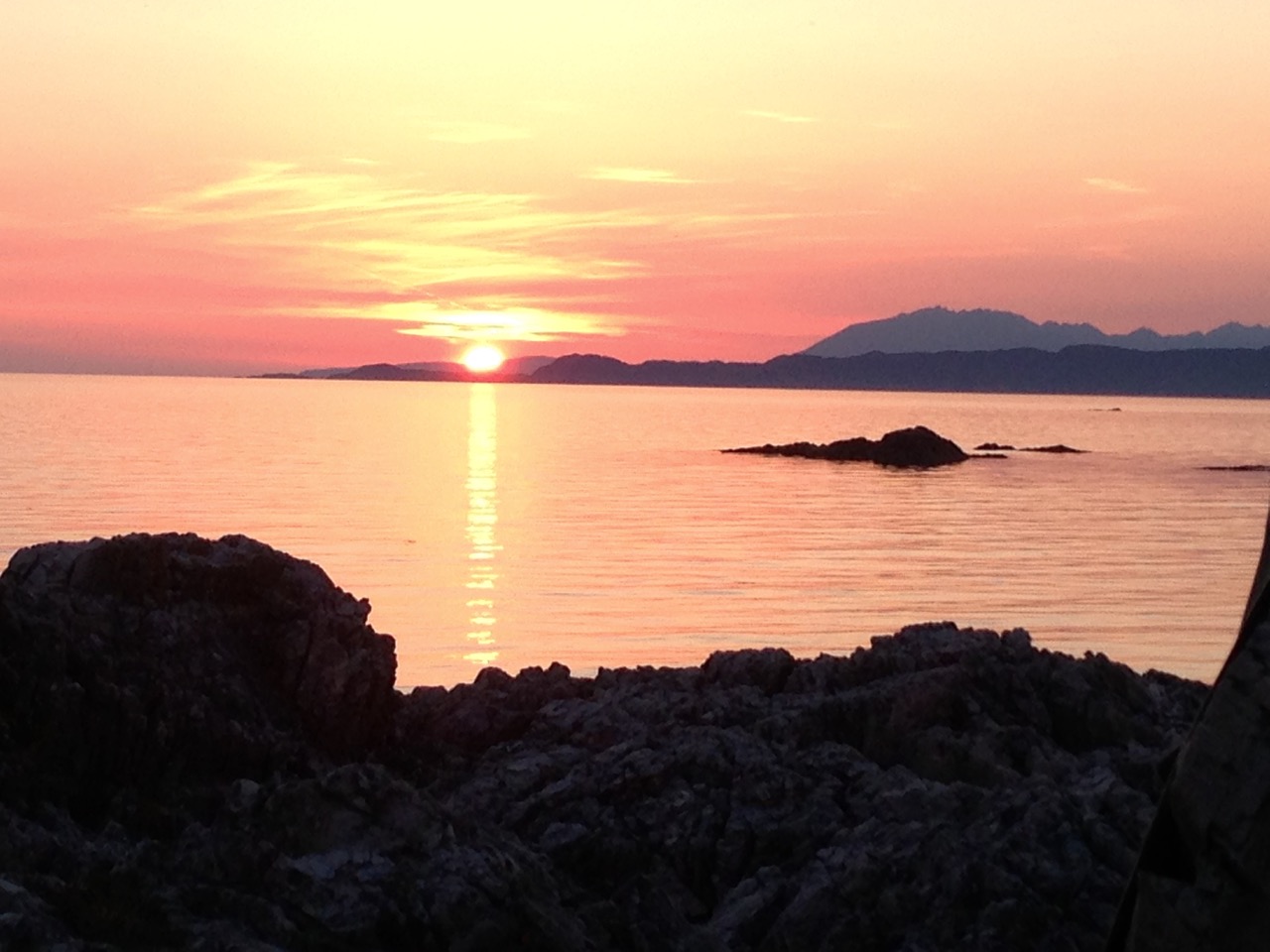
Cycle touring - enjoy spectacular sunsets in nature's embrace

Cycle touring – enjoy spectacular sunsets in nature’s embrace

The funny thing was as soon as I rode to the other side of the Severn Bridge it stopped raining. I could look back into Wales and it was still cloudy on the other side of the Severn, however I was now in sunshine. Wales is damp, lovely country, but damp.

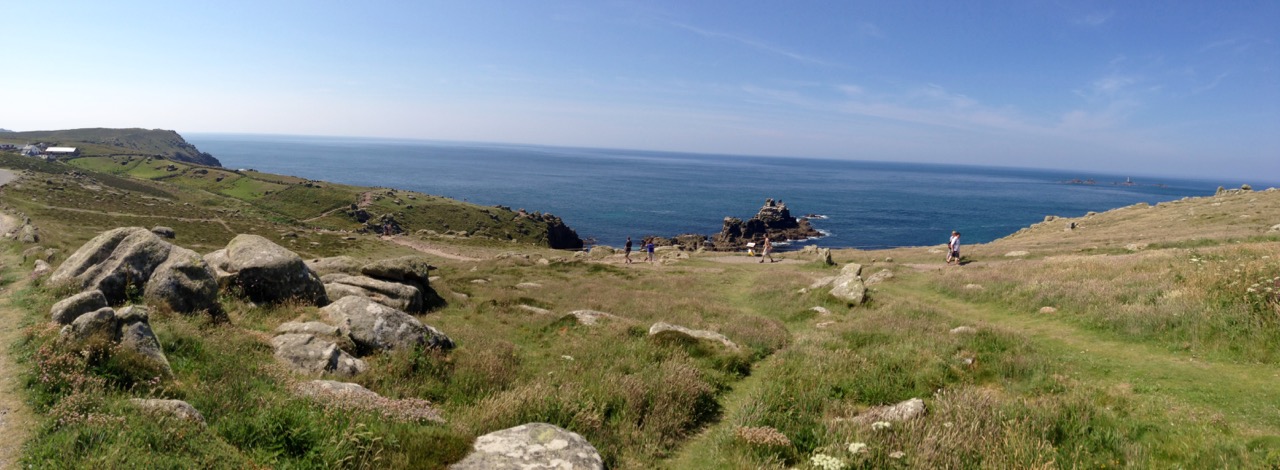
The South West was another highlight, although the hills were steeper than in any other part of the tour; I didn’t have to get off and push until I got to Devon. I rode to Land’s End on a wonderful sunny day, completing a rather long and unconventional John O’Groats to Lands End (‘Jogle’) trip. I laid back in the heather and dozed for a bit, listening to the waves crashing against the rocks far below. The sound of the sea, my constant companion for the three months of my  tour, is always relaxing and trance-inducing.

Lands End - listening to the sea

Lands End – listening to the sea

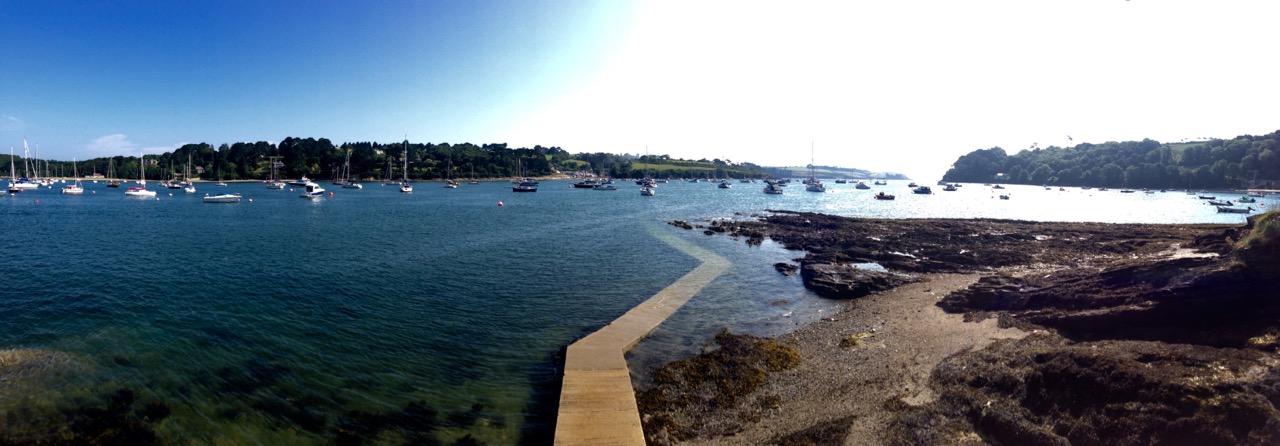
Along the South Coast it got a lot busier, but remained entertaining, with the odd ferry to catch over inlets and estuaries. There was more regular supply of ice-cream, and friends joined me along the way to experience a bit of life on the road.  After the peace of Scotland the South East was the opposite. A more frantic pace of life as well as an increase in traffic and prices, and more opportunities to get lost. As with everywhere folks still often wanted to say hello and find out what I was doing, or to offer hospitality.

Helford - ran out of road, waiting for ferry boat

Helford – ran out of road, waiting for ferry boat

Heading North across the Thames I joined the Tour de Latitude, taking a diversion to cycle to the music festival. It proved to be an excellent decision, a chance to catch up with a few friends and ease tired muscles, before heading back to the coast to finish the circuit back in Lowestoft, and home to Norwich.

I learnt so much about myself and the UK on that tour. Since then I’ve continued to go on adventures on my bike, including a six month pedal around Europe in 2015, taking in Nordkapp, Tarifa and Istanbul. But there really isn’t any need to leave  Britain to get away from it all, reconnect with nature, and try something new. We have so much on our own doorstep to enjoy, learn about and be part of.

You have a lot of time to mull things over whilst you’re pedalling. In the last two hundred years we’ve grown more and more apart from the natural world, somehow forgetting about it, or believing we’re above other species on this planet. There’s a constant pressure for growth, whether that be population, industrial, agricultural or economic, which is at odds with the finite resources we have access to, as well as our own wellbeing. I can’t help wondering if a lot of the mental health issues we experience today are caused by the realisation, by all of us at some level, that things aren’t right at the moment. Getting on your bike, whether that be for you daily commute to work or to take up touring, is a great way to start reconnecting with the world, to start working out what’s important, and to bring more contentment and satisfaction into your life.

People always seem to ask me what I’m going to do or where I’m going to go next? I ask, where are you going next?

“Alice: Would you tell me, please, which way I ought to go from here?
The Cheshire Cat: That depends a good deal on where you want to get to.
Alice: I don’t much care where.
The Cheshire Cat: Then it doesn’t much matter which way you go.
Alice: …So long as I get somewhere.
The Cheshire Cat: Oh, you’re sure to do that, if only you walk long enough.”

Lewis Carroll, Alice in Wonderland

James Harvey is a keen cyclist and advocate of two wheels for wellbeing. Find out more about his 2013 tour (with routes) here: www.bikearoundbritain.com. You can find James sharing his thoughts on the wonderfully titled www.selfpropelled.life and follow home on Twitter here @jam_har


Pedaling into 2018

Recently I’ve been pondering the terms ‘growth’, and ‘progress’, when they’re used to describe our aspirations as a race, in the developed ‘Western’ world anyway. It’s weird how we seem to think of progress and growth as building more, and consuming more of our finite resources. Is that really progress? It doesn’t seem to make that many people more content with their lot, or healthier, mentally or physically. If anything it just seems to create more problems.

We always have to pursue economic growth, but surely infinite economic growth is impossible when you have finite resources, and an economy that is based on using them. I think a different model is needed if we’re to really progress and grow as a species.

I’ll write a more structured blog on this in the near future. I might include some thoughts on the new Norwich Northern Distributor road, which as far as I can tell is just there to open up the countryside to more development, more ‘growth’. It’ll mean the closure of at least two of the roads I cycle down to get to and from work, which will no doubt mean more traffic channelled on to fewer roads, with more drivers getting annoyed with ‘bloody cyclists’. I’ve tried to find out some more information about new cycle paths the council might have planned to help cyclists get into Norwich safely, but haven’t found anything concrete yet. I fear I may have to pedal a slightly longer and more congested route, but will reserve judgement pending further investigations.

Rather than saying any more on the subject now, I thought I’d share a few photos from my January cycling, either from the commute, or the occasional excursion in search of pie and cake. A lot of people seem reluctant to get out during the winter months, however with the right kit it’s absolutely fine, and often more peaceful on the quieter roads. One just has to stay alert for any icy patches; might have done a couple of inadvertent stunts recently.

It’s great seeing the countryside change throughout the year. The tree branches are bare at the moment, but will soon start to bud, shutting away secrets that are currently in plain site.

And it’s time for snowdrops to appear in abundance. Lots of them on my route to work. I’m looking forward to seeing the bluebells once Spring arrives.

I pedalled home from work illuminated by the light from the blue super-moon the other day, an impressive site. My new camera phone took surprisingly good pics of it; I can use one of these for a cover on one of my short stories.

I’ve set a target of 5,000 miles (8,000km) cycling this year, which should be possible seeing as I regularly pedal 100 miles a week just on the commute. I’ll probably go for another tour in the summer or autumn for a couple of weeks, perhaps heading up to Derbyshire and over to Wales; route to be confirmed, maybe Europe instead. In the meantime I’ve been getting out at the weekend a bit, most recently up to Holt to grab a pasty and cake from Byfords. Bywords is a must visit for any hungry cyclist in the area.

My route from Salhouse across to Holt was on very quiet country roads, taking in the now closed RAF Coltishall, somewhere I don’t think I’ve been since I was a few months old (felt quite weird). It has rained an awful lot recently, meaning many of the roads have large puddles, or lakes as was the case below. I took the plunge and managed to forge through to the other side, about 30 metres away, without sinking into a pothole.

Just how far does the 'puddle' go on for?

Just how far does the ‘puddle’ go on for?

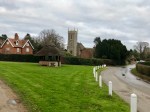
I think I might have to create an album of the churches I pass whilst out on my bike. I’m not particularly religious, but do like churches; their architecture and the often peaceful atmosphere surrounding them is attractive. These two are close to where I live, although there are dozens more, a legacy of Norfolk’s rich farming past and all the landowners competing via the medium of church building.

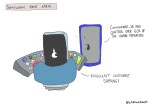
To close, here are a few cartoons I came across recently and thought were spot on, courtesy of @cartoonralph (you can follow them on Twitter). I think they accurately portray how disconnected we’ve become from nature, when we should be part of it, not set ourselves aside or above (there’s a blog to be done on deep ecology at some point too). The centre of the universe one is too true when it comes to our sense of entitlement as a race.

Enjoy the winter months and keep on pedalling!

Salhouse Broad…November 2017

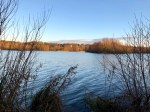
Autumn was definitely turning into Winter down by Salhouse Broad today, as I went for a wander round one of my favourite local spots.

It’s only a short distance from my house, and whilst lovely in the summer, in some ways it’s better in winter when you have the place to yourself.

Stormy weather has been blowing through all day, leading to some interesting light conditions for photos. I must remember to take my proper camera out next time, however the one on my phone is pretty good.

I managed not to get too wet, but did have to take shelter under the trees a few times as the rain blew through.

Sunshine and cloud made for a few good photos.

Places like this are inspirational for some of the short stories and poems I’m attempting to write at present.

You can read some of the ones I’ve finished, and a few that are in progress, on my Wattpad site. Here’s a link to my ‘Poems from the road’ which I’m slowly adding to: https://my.w.tt/UiNb/qZ6aT4L90H

I’ll shortly be adding the first few chapters of a new short story, all based in Norwich, but a slightly different sort of city to the one we know. I’d welcome any feedback.


Anger…

Most of the time cycling to work is great. It’s relaxing, keeps you fit, non-polluting, burns calories, and all the other positives.

Sometimes however it can leave me feeling a bit angry, for various reasons.

Today was one such day. I wrote a poem about it on my lunch break.

Anger
As I cycle…

Fields flash past
Forest, stream
Wild hedgerows
Full of thorns
Rooks caw
Cold, clear
Fresh, free, clean
Relax…
Turn the pedals
Breathe deep
Enjoy the moment

Then
I sigh…
Two young hedgehogs
Hit…
Dead
On the verge
Did they crawl there to die?
A blackbird
Head crushed, slain
Will sing no more
A pigeon
Ragged, bloodied, feathers everywhere
I pass more corpses
Rat, deer, rabbit
Hawk, pheasant
Lying on a tarmac altar
Sacrificed for what?

Plastic, litter
Infesting hedges, ponds
Fields, woodland, paths
No-where is spared
Polluting, poisoning
More jettisoned
From car windows
No thought
Heedless of damage
Why no shame?
Why so lazy?
Why think this is okay?

Fumes, foulness,
Exhausts belch
Black smoke, invisible toxins
More poison
Choking, chest hurts, throat burns
And new roads
Scar the countryside
More bad smells
Bitumen
Strangling Earth
Infected arteries
Opening the countryside
To more…
Death

Past the Broad
A small sanctuary
Peace
Smile returns
Weave down the road
Morning dogs!
Wildfowl paddling
Early morning rowers
Swans gliding
Majestics presences
Not enough

Drivers, many good
Some, not so
No indication
Pass too close
Abuse…thanks
3 mile commutes
Or less
Why not walk, cycle?
They won’t
Don’t think
Too hard
Too much effort

That’s why
I’m sometimes angry
Depressed, despondent
Can this ever change?
People won’t
Too selfish
Too…someone else
Until it’s too late
Then they’ll blame
Others
Instead…
Look in the mirror

END


Thankfully it’s not all bad, and a lot of people are trying to make things better. That was, however, cathartic.

Hit the road…James

I haven’t been on a decent cycle tour for a while, so decided my September break should be used for a pedal round some parts of the UK I haven’t visited before. I did the coast in 2013, and marvellous it was, but decided to head inland this time.

I set off from Salhouse, my new place of residence (moved earlier this year), through Norwich then down to Bury St. Edmunds. Day 1 took me to Cambridge via a slightly different route to the one I’d normally take. The bit down to Bury was alright, but not keen on the road from there to Newmarket. What was nice was to be on my bike again, letting the miles drift by, taking in Autumn sights, sounds and smells, and feeling work stress vanish surprisingly quickly.

After staying the night at my brother and sister-in-law’s house in Cambourne, saying hello to their new chickens, and playing with my niece and nephew, I set my sights on Oxford. I decided to try cycling along the Icknield Way, an ancient trail that runs from somewhere near Thetford all the way to Oxfordshire. It is cyclable, but not really suitable for a touring bike; would be fine for bike packing. After about 20km of hard riding, where my panniers kept dragging on the grass, I swapped it for the road, crossed over the M1 and into the Chilterns, a range of hills my brain had conveniently decided to forget about.

Now I’m fairly fit from cycling to and from work, and longer rides at the weekend, but Norfolk doesn’t have a large number of hills and a fully loaded touring bike weighs quite a lot. I didn’t have to push up any climbs, but there was quite a lot of huffing and puffing, and a bit of swearing. The Chilterns cycle way is a beautiful ride though, and nice to pass through somewhere I haven’t visited before. I stopped at a campsite near High Wycombe for the night, conveniently situated next to a pub, splendid. Incidentally, quite a few of the campsites on this tour, completely by ‘chance’, were situated in close proximity to pubs…a clear sign the gods were smiling on my efforts (apart from Loki who conspires with the sheep).

After a restful night I pedalled off to Oxford, stopping to eat blackberries on the way. It started to rain so I didn’t pause for long in the city, but did find a good pie shop to acquire lunch from. From there it was another pleasant cycle through the countryside, chatting to a few cyclists along the way, and perhaps stopping for a cheeky cider to cool down. My next campsite was near Malborough; forest campsite, cheap, cheerful and quiet, just the job, although there was a psychotic hill to get up just prior to the campsite, on tired legs, that took some doing.

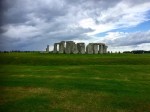
I awoke to a grey and damp day, but with the prospect of Avebury and Stonehenge on the horizon, places I’ve wanted to visit for a while. From Marlborough it’s a reasonably short ride to Avebury, where I stopped to look round the museum, and to pause for thought amongst the stones. There’s a lovely looking pub in the centre of the village, probably close to the centre of the stone circles, but it was a bit early for lunch and besides, wasn’t open yet. I really liked Avebury. There weren’t a lot of people about, the museum was good, and the place had a nice feel to it.

After a good wander about I set my sights on Stonehenge. There I was pedalling along, up and over hills, splashing through puddles, damp but enjoying myself, when I started to pass fields of sheep. Now I’m not saying it was definitely them, but feels a little bit coincidental that as I got near the top of a particularly long climb, where the rain really started in earnest, and the wind picked up, I fell victim to a puncture. I pulled over onto a farmer’s track to fix it, with rain infiltrating my waterproof. A flock of the devils regarded me with suspicion, and not a small amount of malice, from a nearby field.

It took me quite a while to fix that puncture, and there was quite a bit of cursing whilst the sheep continued to watch me, chewing, and occasionally bleating. Travelling Lobster was absolutely no help, you probably won’t be surprised to hear. I have a new back wheel as the old one wore out, and tyres seem particularly tricky to get over the rim; more practice required probably, but hopefully not in the vicinity of sheep.

I plunged down the other side of the pass towards the Salisbury plains and Stonehenge, getting slightly lost due to not looking where I was going and just enjoying freedom from the flock. Thankfully a helpful local pointed me in the right direction, and after a diversion round some closed roads I made it to Stonehenge.

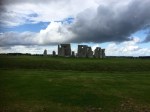
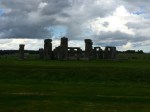
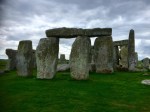
Stonehenge was good to visit, but expensive, and very busy. A warden told me I was there on a quiet day, but there were still bus loads of tourists arriving, being shuttled to the stones, taking a selfie and then getting back on their coach. To be honest the place felt a little dead, which was disappointing, perhaps due to the volume of people and general feeling of disrespect folks had for the ancient monument. I still enjoyed seeing the henge, and taking a turn around the museum to learn a bit more about what they’d found here, and the speculations on how it was built; personally I think it’s obvious that druids flew the stones here, as per Terry Pratchett. I noticed a small number of tents and caravans on some land next to Stonehenge, and wonder if they are there all year, perhaps travellers and pagans wanting to be close to an ancient nexus of power, who knows?

I rode the short distance from Stonehenge to the campsite near Berwick St. James, ideally located for anyone wanting to visit the area, and cheap if you’re on a bike. Whilst there I bumped into a fellow cycle tourer, Carl, on his way down to Cornwall to visit family. It was his first cycle tour in about 10 years, and he was loving it. Unfortunately he had the headwind the next day, which I managed, for once, to avoid.

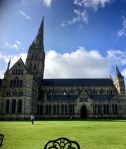
From Stonehenge I pedalled to the New Forest, passing through Salisbury on the way. I spent the day cycling around the forest, stopping for a double Cornish pasty break Lyndhurst. I spoke to a couple of locals who confirmed the village is always that busy; an endless stream of traffic flowing into and out of it, as ‘they’ refused to let a bypass be built in the seventies. I love the New Forest, despite the fact it’s a bit crowded, even in September. The gently rolling landscape, trees, heathland and wildlife are to be savoured.

After watching a convoy of horse and traps pass me on the road, making there way from some kind of event, I stopped for the night in Ashurst, possibly my favourite campsite of the tour; the staff were really friendly, the campsite beautiful with animals mixed in amongst the tents, and there was a pub next door! I had an interesting conversation with a 70 year old Australian lady about tents. She was travelling round the UK and was admiring my Hilleberg Akto, thinking it would be good for her next adventure; you’re never too old!!

After a restful night, post thunderstorm, I had a early start to try and make it down the coast to my parents house near Hastings. I wasn’t sure I’d make it, and had a back up plan to stop in Brighton, but was hopeful a strong tailwind would help me on my way.

I took the ferry from Hythe to Southampton, then rode round the back of Portsmouth and along the coast following a different route to that which I took in 2013, when I used a few more ferries and island hopped. The weather got steadily worse as I pedalled, with the wind building and rain getting harder. I did however pass several cycle tourers going in the other direction, who were having a much harder time of it; at least I was getting mostly blown in the right direction.

That was a tough ride, in-spite of the tailwind. Even for me it got a bit sketchy at times, especially when I got blown into the verge and had to perform a rapid and not particularly elegant dismount. One can forget just how powerful the wind can be! After around 107 miles, the longest leg of the tour, I made it to my parents house and shelter from the storm, which was really quite brutal by that point; very wet, very windy, kinda exciting.

I had the next day off, drying stuff, catching up with Dad, and meeting my friend Ian for lunch. Mum had travelled up to Cambridge to help look after my niece and nephew, but I hoped to rendezvous with her on my way back to Norwich.

Feeling rested and well fed I set off back North, through East Sussex and into Kent. East Sussex really is quite hilly, but lovely countryside and lots of familiar sights from my childhood. I made my way to Gravesend to get the ferry over the Thames; a passenger ferry you can take your bike on, much easier than going through London. Landing in Essex I rode to Kelvedon Hatch, the site site of a ‘secret’ nuclear bunker, with a campsite nearby which was most welcome after the busy roads and increasingly bad weather. It was another stormy night, with my tent getting somewhat battered, but the Hilleberg Akto is practically indestructible, despite the holes in the groundsheet caused by the voles (varmints) in Sweden, and once again did me proud.

From Kelvedon Hatch I rode back up to Cambridge and Cambourne, overnighting with family again and meeting up with Mum, before the final leg back to Norwich the next day. The weather was again a bit inclement, whatever that means, but the sun did come out as I pedalled through Thetford Forest. The dry spell was short lived, forcing me to take shelter under the bandstand, which isn’t a bandstand but I can’t remember what it’s called, in Wymondham; luckily there’s a baker nearby which helped pass the time.

I arrived back in Salhouse after pedalling around 600 miles, losing a few pounds, and generally feeling a lot more relaxed. Link to the map of my route:

https://www.strava.com/athletes/11810278/heatmaps/7ef5dc22#8/51.90967/-0.18951

To close here are a few pictures from the last couple of week’s in Norfolk, where Autumn has really taken hold. Autumn is my favourite season, and Norfolk looks beautiful.

Norwich beer fest soon!

Derbyshire wanderings

With holiday to use up, mainly due to poor planning on my part, I visited relatives in Derbyshire last week and had the chance for a wander through Dovedale, in the Peak District.

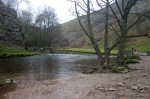
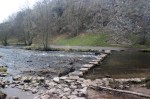
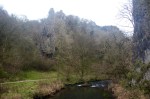
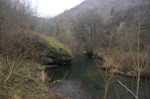
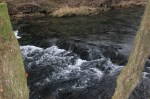
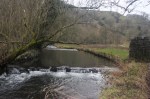
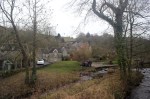
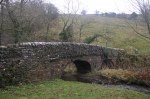
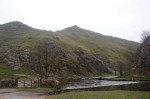
Dovedale, not far from Ashbourne, is a fantastic limestone gorge where you can walk alongside the river up to Milldale, or take various other paths to surrounding villages and other interesting spots. I haven’t been there since I was a kid, and remember crossing the stepping-stones with some trepidation the first time around. This time one of the stepping-stones had slipped downriver, so a less hazardous but rather boring bridge crossing was required.

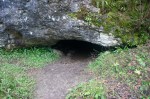
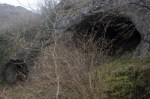
The path to Milldale winds alongside the river, and is relatively flat with only a few ups and downs. There are lots of caves to explore should you have the urge; I don’t know the history of the area very well however one can imagine people must have lived in them for thousands of years. I liked Reynard’s Cave, although it seems a little big for foxes.

It was a bit of a dull day, but that really didn’t matter and probably meant it was a lot quieter than in the height of the tourist season, making for a very peaceful walk. I spotted quite a few dippers flitting about on the river, a few wrens and an inquisitive robin, and a yellow wagtale.

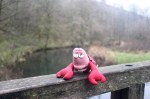
I passed various funky geological features including Ilam’s Rock, which I forgot to take a picture of as Lobster wanted his picture taken on the bridge, the 12 Apostles rocks, the Lion’s Head rock, the Dove Holes, all worth exploring more and it looks like a great climbing area too.

I’ve been watching a few of the old films we made for It’s A Trap recently, and couldn’t help thinking the area would make a wonderful location for some filming, probably involving Orcs or something; bit of a Tolkien landscape really.

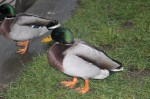
After about 3 miles I reached Milldale, encountering only a handful of other walkers on the way. It’s a good spot for some lunch, although I did get swarmed by Mallards and one bit my finger; worse than piranhas!

I always think Mallards sound like they’re laughing at you. These were some of the boldest ducks I’ve ever encountered, even stooping to plunge their beaks into my rucksack in search of sandwiches whilst my back was turned; Lobster was no help whatsoever incidentally.

There’s a lovely poem on the information boards in Milldale, written by an eleven year old in 2003. I think it captures the spirit of the dale perfectly.

MAGICAL DOVEDALE
The water chuckles and giggles over weirs,
Then the bobbing dipper disappears.
The wrens and goldcrest dart along the riverside,
Above the spires the clouds do glide.
Ilan Rock looks down on Pickering Tor,
While mosses and ferns creep over the floor.
Across the Stepping Stones we tread,
Look! That Rock shaped like a lion’s head.
The ducks dip under, just showing a tail,
And this is my magical spirit of Dovedale.

After lunch I wandered back down the gorge, passing a few logs studded with old coins, where people must have made wishes. I stopped and added my own.

At the entrance to Dovedale stands Thorpe Cloud, an isolated limestone hill rising some 287m above sea level. Again I hadn’t been up it since I was a kid, so proceeded to clamber the grassy path, being careful not to slip down the steep slopes as one of my aunts did as a child, breaking bones apparently. In fact quite a few of my relatives seem to have accidents of one sort or another here, mainly involving the stepping-stones; I’m wondering if there was sherry involved.

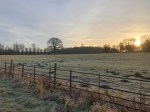
Nothing like a good walk in beautiful countryside, maybe involving a few hills, to bring a little perspective and peace. Back at work now, but at least the morning cycle ride takes in some countryside; looking good in the frost.

Frosty morning bike ride

Frosty morning bike ride

Only a couple of weeks until Christmas holiday starts!