Tag Archives: Self Propelled 2025

Why Aren’t They Listening?

The War between the Land and the Sea

Salt, Sea Devil ambassador: “These are the words of a politician, vetted and craven and hollow. You would answer.”

Barclay, Ambassador for human-kind: “Because we were stupid. That’s the truth of it. And the whole planet is going to hell right now because we didn’t understand the consequences.”

Salt, Sea Devil ambassador: “But now, you do?”

Barclay, Ambassador for human-kind: “Yeah, now we do. Still every day water companies are pumping poison and sewage into our rivers and oceans, all the while dishing out bonuses to their bosses. And the thing is, we are letting them get away with it! We’re just sat at home, flicking through our phones, making tea, thinking it’s someone else’s problem! But it’s not. This is my fault. We all played our part. Now we have to help fix it. And the thing is, our kids know this! Our kids. They’re way ahead of us! Why aren’t we listening? Well, today’s the day we start.”

Salt, Sea Devil ambassador: “I think you are my favourite human.”

_____________________________________________________________________________

This exchange from the new BBC/Disney+ series The War Between the Land and the Sea stayed with me long after the episode finished. The sets, costumes and visuals are impressive — but it was Barclay, the unlikely ambassador thrust into responsibility, who delivers the most piercing truth:

“And the thing is, we are letting them get away with it!”

“Why aren’t we listening?” 

Two lines that feel painfully relevant.

Water companies, oil and gas giants, the media, the banks, and the politicians who prop them up have been getting away with it for decades — and we’ve let them.

Where am I going with this?

This post is about why we must accelerate the transition to renewable energy, whilst also bringing essential services like water back into public ownership. For decades, executives have prioritised profit, bonuses and shareholders over public good. Since privatisation in 1989, it’s been yet another “victory” for neoliberal capitalism — one that has spectacularly screwed us over.

We’ve Been Betrayed

The science on greenhouse gases has been clear for almost two centuries.

  • In 1824, Joseph Fourier described the greenhouse effect.
  • In 1861, John Tyndall identified the gases responsible. The Tyndall Centre for Climate Change Research — named after Tyndall — is just down the road from me in Norwich.
  • In 1900, Knut Angstrom, discovers CO2 strongly absorbs parts of the infrared spectrum. 
  • In 1938, Guy Callendar showed that temperatures rose over the previous century. He demonstrated that CO2 concentrations had increased over the same period, and suggested this caused the warming. His claims were dismissed.
  • In 1968, US President’s Advisory Committee panel warned that the greenhouse effect is a matter of “real concern”.
  • In 1975, scientist Wallace Broecker put the term “global warming” into the public domain.

The above has been followed by countless IPCC (Intergovernmental Panel on Climate Change) assessments, and COPs (Conference of the Parties) to try to solve the challenge of climate breakdown. Some progress has been made, but not nearly enough.

We’ve known the facts. We’ve proven them. And yet oil and gas companies hid their own research, just as tobacco companies once hid the link between smoking and cancer. Billionaire-owned media outlets are defending them. Politicians were and are being lobbied into paralysis – just look at COP30. And so we are being lied to, misdirected and exploited whilst the planet is burning.

We have been failed time and time again by successive Governments who have put the interests of mega-corporations, profit and power, ahead of ordinary people. They have betrayed us to the altar of profit, lied, misdirected, and in some cases filled their pockets with blood money.

We didn’t “fail to understand” — we are being denied the truth.

We’re Not Stupid

Barclay says, “Because we were stupid.”

But we weren’t. We were and are being deliberately misled.

Instead of honesty, we got greenwashing, smokescreens, and faux responsibility — like BP inventing the personal carbon footprint calculator to shift the blame from corporations onto individuals.

Imagine if the public could be given the same clarity scientists shared recently at the National Emergency Briefing. The shift in understanding — and action — might come rapidly and radically.

National Emergency Briefing – https://www.nebriefing.org/

You can find recordings of the various segments of the National Emergency Briefing on YouTube.

How Fast Can We Decarbonise?

In the UK, we’ve reduced emissions — but we still emit far more per person than many countries with less wealth and fewer resources. And we should have made the major cuts twenty years ago. We’re now out of time for a gentle transition. We must act rapidly, even if it’s uncomfortable.

This will upset people, especially in a country used to convenience and abundance. But climate physics does not negotiate. Deaths, harm, migration, are all being caused right now by our carbon emissions.

Our Obligations 

We are privileged — often without realising it. Given our historic emissions, the UK has a moral obligation to move first and fast.

The alternative? Pull up the drawbridge, protect ourselves for a few extra years, and ignore suffering elsewhere. But our food imports, supply chains and future mass migration make that fantasy laughable.

Billions will be on the move. The question is whether we meet that future prepared — or panicked.

Tell the Truth

People are not being told the truth by politicians or the media. If they were, they’d understand what we are facing:

As laid out at the National Emergency Briefing, the collapse of AMOC (the Atlantic Meridional Overturning Circulation – a crucial system of Atlantic Ocean currents acting as a giant conveyor belt) could mean:

  • –30°C winters
  • extreme summer heat
  • chronic water shortages
  • the UK unable to grow food
  • the British becoming climate refugees

The irony isn’t lost on me; one wonders whether we’ll have enough small boats.

Extinction Rebellion warned we needed major emissions cuts in 2018. Oil and gas companies and wealthy governments around the world denied it, buried it, or have since waved around Carbon Capture and Storage — a technology unproven at meaningful scale, and one that conveniently ignores the huge emissions from extraction and transport of natural gas in the first place. Profit over life, again.

So, What Can We Do?

We need rapid, large-scale deployment of renewables:

  • Wind
  • Solar
  • Tidal
  • Geothermal – there’s some exciting stuff going on with old coal mines

Fusion power would be ideal, but remains underfunded and decades away. We also need to upgrade the grid and to build massive battery storage facilities. This is all doable and exciting, and will create huge potential in terms of sustainable economic growth, jobs and wellbeing, we just need the politicians in power to stop dragging their heels.

But there are obstacles. Solar is a prime example.

Solar Energy: What’s The Problem?
Rooftop solar is brilliant — low impact, popular, and efficient. But we no longer have the luxury of time. Large solar farms are faster to deliver and much cheaper per megawatt.

Using ChatGPT for initial comparisons (yes, with a pinch of salt but it saves me hours of trawling through websites and research papers), I asked, when looking at the electricity 4,000 acres solar panels could generate, what is cheaper and quicker to build – a large solar farm or rooftop mounted solar:

Large Solar Farms

  • 400MW: ~£400–600m plus land/grid costs
  • 800MW: ~£800m–1.2bn
  • Build time: 12–24 months after permitting

Distributed Rooftop Solar

  • 400MW: ~£600–800m (likely more)
  • 800MW: ~£1.2bn–1.6bn+
  • Rollout time: 5–10+ years

Planning times for solar farms could be slashed if government finally treated the climate emergency like an emergency.

And then there’s capitalism: energy companies don’t want millions of small producers cutting into profits. Legislation could fix this — but it requires political will. We already know neoliberal capitalism needs serious reform.

As for the criticism that solar farms use agricultural land:

  • They would occupy only 0.45%–0.82% of agricultural land, some of which is fallow at the moment anyway.
  • We already face food insecurity. Solar barely dents agriculture. 
  • Meanwhile, golf courses consume five times more land than solar would — and I know which I’d rather repurpose.

You can’t tee off on a golf course that’s underwater.

Unfortunately, there is significant opposition to solar farms, largely from people living near proposed sites — which is understandable

Grid Upgrades: The Unavoidable Backbone

We need new pylons, underground cables, or subsea routes — plus battery storage. None of this is optional, and the arguments are similar to the above. All options have ecological impacts, but we’re out of time for perfect solutions.

Pylons may be ugly, but they’re cheaper, faster, and even capable of creating wildlife corridors. France has even turned some into public art. If only imagination were a UK policy priority.

Large Scale Renewables Are the Clear Winner

Solar farms and other renewable energy sources are the clear winner if our priority is rapid decarbonisation. They are cheaper, quicker to build, will create new jobs and provide clean energy. They are our future proofing.

We face a choice: continue failing, continue betraying younger generations, retreat into selfishness and isolation—or respond to the climate and ecological emergencies with the urgency they demand, adopting something akin to a wartime mobilisation.

It may already be too late to avoid severe impacts. But every fraction of a degree of avoided warming saves lives, ecosystems and stability.

CO₂ rises → temperature rises → runaway climate impacts:

  • floods, fires, drought, famine, harvest failure, extreme weather, mass migration, ocean collapse, extinction events… and then societal collapse.

The stakes could not be higher.

The Path Ahead

We change — or we face the consequences.

The graph below shows how CO2 concentrations in the atmosphere have changed over the millennia, using data from ice core samples.

Carbon dioxide levels are higher than any time in the last 800,000 years

Renewables give us a fighting chance of reducing emissions and avoiding societal collapse. Oil, gas and nuclear leave only waste and devastation. Renewables can coexist with nature and even help restore it when designed well.

It comes down to communicating honestly, successive governments, oil and gas companies, supported and controlled by billionaire media magnates, have denied people that honesty: change now, or our children will not live to the same age we do. 

We don’t have to let them make us stupid, but they won’t change on their own.
We have to force it.

Let’s Take Back Power

From billionaires. From fossil fuel companies. From media moguls. From corrupted politicians who may not even realise how compromised they are. Let’s stop them getting away with it.

They’ve been getting away with it for decades. They are “craven and hollow.”
We can stop them.

And yes — I’m going to say it:

Vote Green. Let’s make hope normal again

Promoted by James Harvey on behalf of Broadland Green Party, a constituent party of the Green Party of England & Wales PO Box 78066, London, SE16 9GQ

BBC Coverage of the Climate Crisis: A Missed Opportunity

I recently wrote to the BBC to complain about their coverage of the climate crisis, which I, and many others, believe remains woefully inadequate given the existential threats it poses. Below is the complaint I submitted.

Coverage of climate change 

I’m writing to complain about the BBC’s inadequate coverage of today’s letter from the Climate Change Committee to Government on the UK’s preparedness for at least 2°C of global warming by 2050.

This is a matter of profound national importance, yet your main news programmes gave it little to no prominence. Such omission feels negligent at best, and at worst suggests a deliberate downplaying of vital information, whether due to editorial decisions, management influence, or political pressure. The public deserves transparency on issues that will shape our collective future. It is already known that Downing Street blocked a government report warning that the collapse of rainforests, reefs, and mangroves could raise food prices in UK supermarkets.

Earlier this year, the Institute and Faculty of Actuaries (IFoA) warned of escalating climate risks -more floods, fires, droughts, and ecosystem collapse. Their analysis projected GDP losses of up to 50% between 2070 and 2090, and warned that global heating of +3°C, possible as early as 2050, could cause over 4 billion deaths, societal collapse, and extinction events.

Despite the gravity of these findings, BBC reporting on the climate and nature crises remains inconsistent and insufficient. This undermines your stated purpose “to provide impartial news and information to help people understand and engage with the world around them.”

While I appreciate an article appeared on your website, this story should have led your main news bulletins, with clear context on what climate breakdown, mitigation, and adaptation mean for ordinary people. It would not have been difficult to feature credible climate scientists or policy experts.

I urge the BBC to give greater priority to the climate and nature crises, ensuring the public are properly informed and able to make meaningful democratic choices, particularly about which leaders and policies will act to safeguard our future and that of coming generations. 

You can read the letter I referenced here: https://www.theccc.org.uk/wp-content/uploads/2025/10/CCC-letter-to-Minister-Hardy-15-October-2025.pdf

The CCC warns that the UK must urgently strengthen its adaptation objectives to protect food security, infrastructure, public services, the economy, and access to financial services such as insurance. Many properties are already becoming uninsurable due to flood risk.

We are beyond the stage where it’s possible to mitigate all catastrophic climate impacts. Yet the current levels of adaptation -and even the plans for adaptation – remain unambitious and wholly inadequate. Inadequate seems to be the word of the day when it comes to both government and media responses to the climate and nature crises.

This is the response from the BBC I received last night:

Dear Mr Harvey,

Thank you for getting in touch about BBC News at Ten on 15 October.

We’re sorry you feel insufficient coverage was given to the letter addressed to the government from the Climate Change Committee (CCC), warning that the UK should be prepared to cope with weather extremes as a result of at least 2C of global warming by 2050.

We know that not everyone will agree with our choices on which stories to cover, or the order in which they appear. Our news editors make these complex decisions, based on the editorial merit of all the stories at hand. We accept that not everyone will agree with each decision – various factors are at play and there’s often debate in the newsroom too.

BBC News did cover this across our news outlets however and you can read the online report here:

https://www.bbc.co.uk/news/articles/cx24kllyye1o

The BBC has been reporting on both the effects of climate change and the changes that individuals and governments can make in order to reduce carbon emissions for many years. In recent years these reports have had increased prominence as the evidence grows about the speed and impact of climate change.

To read our latest News on the issue of climate change, you may be interested in the following link:

https://www.bbc.co.uk/news/topics/cmj34zmwm1zt

We can assure you that the BBC is committed to providing fair and impartial coverage of the latest News stories to our audience, and climate change is an issue that the BBC takes very seriously.

We very much value your feedback. Complaints are sent to senior management and we’ve included your points in our overnight reports. These reports are among the most widely read sources of feedback in the BBC. This ensures that your concerns have been seen by the right people quickly, and helps to inform decisions about current and future content.

If you’d like to understand how your complaint is handled at the BBC, you might find it helpful to watch the short film on the BBC Complaints website about how the BBC responds to your feedback. It explains the BBC’s process for responding to complaints, what to do if you aren’t happy with your response and how we share the feedback we receive.

Kind regards, 

BBC Complaints Team 
www.bbc.co.uk/complaints

I appreciate that the complaints team forwards feedback to senior management, and I can only hope that the BBC – and the wider media – will soon recognise the urgency of reporting on the existential crisis that is climate breakdown.

This crisis threatens the lives and livelihoods of billions over the next 25 to 50 years — and millions are already being affected, displaced, and killed by its impacts. It demands coverage that reflects its true urgency, accuracy, and frequency.

I’d be very interested to hear what others think — please feel free to leave a comment or share your perspective below.

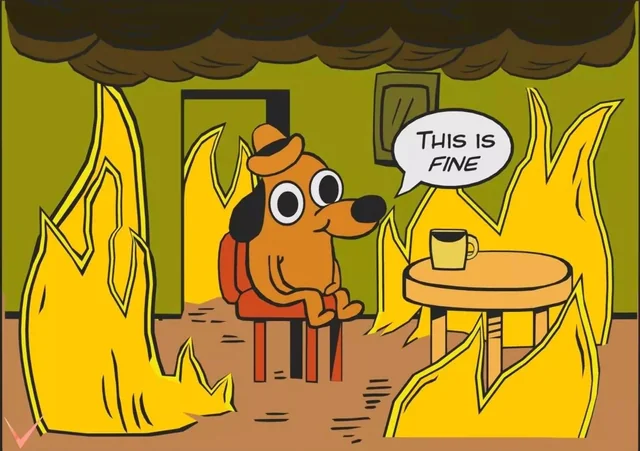
This is fine
This is fine


Let’s Make Hope Normal Again

I find it increasingly strange, and frankly disturbing, how we’re being conned by politicians, much of the media, and mega-corporations. From birth, we’re bombarded by advertising designed to shape our thinking; by MPs who chase votes with half-truths, misdirection, or outright lies; and now by social media echo chambers that trap us in a cycle of misinformation.

As a Green Party member, I find it refreshing to have leadership that isn’t afraid to tell the truth. As a district councillor, I can vote in the best interests of my constituents – and with my conscience – rather than following the orders of a party whip. Zack Polanski’s election as Green Party leader, by a huge majority, has brought articulate and intelligent debate to the forefront again – on immigration, the climate crisis, renewable energy, and human rights. His policies on taxing the super-rich (the top 1%), reforming the private rental sector, renationalising water companies, and providing universal free childcare are resonating deeply with people across the country.

Green Party membership is now over 140,000, making us the UK’s third-largest political party. Polls put us around 15% of the vote, level with the Lib Dems and closing in on Labour and the Conservatives. Reform UK may be polling slightly higher, but perhaps that’s unsurprising when they’re not bound by things like telling the truth, or avoiding donations from dubious sources. People are joining the Greens in their thousands because we’re the only party that speaks plainly, answers questions directly, and puts people before profit.

Why don’t other political parties do the same? Surely an MP’s job is to represent their constituents – and by acting in their best interests, you’d think re-election would follow naturally. But that’s not how it works. Other parties are deeply influenced by corporate lobbying. Labour, for instance, met oil and gas company representatives over 500 times in their first year of power – that’s an average of two meetings every working day between ministers and fossil fuel lobbyists. Meanwhile, the Conservatives, Labour, and Reform continue to accept large donations from oil and gas interests, climate denial think tanks, and polluting industries. Is it any wonder, then, that their policies serve those industries – while the public is distracted with talk of immigration and welfare spending?

There’s a growing frustration with politicians who dodge questions or distort the truth. Brexit was, in part, a reaction to this. Westminster has become synonymous with elitism, corruption, and detachment from reality. It’s not even a criminal offence to lie in the House of Commons. Again and again, politicians mislead the public with impunity, aided by a media that too often fails to hold them accountable—especially those on the right.

Why isn’t Nigel Farage grilled about the £350 million-a-week NHS pledge that vanished after Brexit? Or challenged on the fact that immigration is essential to sustain our NHS, care sector, farms, and schools, as well as to support an ageing population and pensions system? Why aren’t we hearing that renewable energy is cheaper, faster to build, and infinitely safer than oil and gas?

In 2008, I was fortunate enough to visit the Great Barrier Reef on my honeymoon and swam among the coral and turtles – a breathtaking experience. Last week, I read that we’ve passed the planet’s first major climate tipping point: warm-water coral reefs are dying and will soon disappear. Hundreds of millions of people depend on them for food and livelihoods. Other tipping points – Amazon rainforest dieback, ocean current collapse, permafrost melt, and ice sheet loss – are not far behind. Each accelerates the next, creating feedback loops that speed up climate breakdown.

Then, this morning, I received an email from the Government responding to a petition to halt airport expansion. Part of it read:

“The Government therefore supports airport expansion where proposals contribute to economic growth, can be delivered in line with the UK’s legally binding climate change commitments, and meet strict environmental requirements on air quality and noise pollution.”

The list of planned expansions – Gatwick, Luton, Stansted, and beyond – was all about “economic growth” and maintaining the status quo. But if we don’t act decisively to cut emissions, climate breakdown will destroy any chance of growth – and in some regions, any chance of survival.

Carbon dioxide levels are still rising. Meanwhile, the fossil fuel industry funds anti–net zero campaigns and uses politicians as mouthpieces to protect their profits. Green energy offers a massive opportunity: it can create jobs, cut bills, and reduce emissions. We could lower bills immediately by cutting the link between electricity and gas prices, but that would hurt oil and gas profits, so it doesn’t happen. These same companies continue to receive huge public subsidies that dwarf support for renewables.

Airport expansion is simply incompatible with our climate goals. No amount of greenwashing through “sustainable aviation fuel” or dodgy carbon offsetting schemes will change that.

If we’re serious about telling the truth, we need to be honest about green energy too: why we need to decarbonise, why solar panels (covering just 0.7% of UK land – less than golf courses) can help power our future, and why upgrading the grid and installing battery storage is essential – even if that sometimes means projects are built near where we live. Time and money are tight, and we don’t have time to always wait for the perfect solution.

The clock is ticking. Hundreds of millions in the Global South are already dying from floods, fires, famine, and disease linked to climate breakdown. We’re not immune here either: UK farmers face failing harvests, rising food prices, and more frequent flooding. Some truths will be uncomfortable and require lifestyle changes – but that’s a small price to pay compared with a world of famine, fire, and forced migration.

Scientists and even insurance companies are warning us. The Institute and Faculty of Actuaries (IFoA) recently projected global GDP losses of up to 50% between 2070 and 2090 and warned that a +3°C world – possible as soon as 2050 – could cause over four billion deaths, social collapse, and mass extinction events. GDP loss seems almost trivial in comparison.

The Green Party tells it like it is – guided by science, compassion, and a commitment to act in the best interests of the majority, not a privileged few. Our membership continues to grow rapidly. We’re out on the streets, talking to people, telling the truth, and offering real solutions not tainted by corruption or corporate influence.

The good news? If we act now, we can still build a fairer, healthier, and more hopeful future – for ourselves, our children, and the countless other species we share this planet with.

Come join us – and let’s make hope normal again.

Promoted by James Harvey on behalf of Broadland Green Party, a constituent party of the Green Party of England & Wales PO Box 78066, London, SE16 9GQ

Green Party

Our Countryside Deserves Better Than Endless Development

This is a blog post I wrote for the Broadland Green Party website, partly in my capacity as a Green Party district councillor. I think I therefore have to include a digital imprint, so here it is: Promoted by James Harvey on behalf of Broadland Green Party, a constituent party of the Green Party of England & Wales PO Box 78066, London, SE16 9GQ

It can often feel as though our farmland, countryside, and the few remaining wild spaces are being steadily consumed in the name of “growth” — the relentless drive to build more houses and satisfy developers’ appetite for profit.

This was evident at the recent Broadland District Council Planning Committee meeting, where permission was granted for 200 dwellings, including 90 retirement apartments, alongside a country park and parking. This decision was made despite the development not being in the local plan, and despite strong objections from the Parish Council, local residents, and Green Party district councillors.

Communities Ignored

Time and again, developments are approved against the wishes of local communities.
People are rightly concerned about a wide range of issues, including:

  • The loss of good-quality farmland needed for growing food
  • The destruction of nature — our woods, hedgerows, and wildlife habitats are under threat
  • Local roads already struggling with traffic and in poor condition
  • Overwhelmed sewerage systems and limited water supply
  • Insufficient local employment opportunities
  • Overstretched doctors and dentists, making appointments hard to get
  • Local schools with no spare capacity
  • Flood-prone land — a risk worsened by climate breakdown
  • Rising air and noise pollution from more houses and roads
  • Poor public transport links and lack of cycling infrastructure

Yet these legitimate objections are often ignored, overruled, or dismissed due to complex planning regulations and housing targets set by central government.

How the System Fails Local People

Planning officers frequently cite what can be a bewildering array of planning rules and legislation that make it hard for councillors — let alone residents — to challenge inappropriate developments.

Government policy requires councils to maintain a five-year housing land supply, ensuring “sustainable residential development” as set out in the National Planning Policy Framework (NPPF) 2024. Unfortunately, the Labour Government under their “Build, Build, Build” mantra increased the housing target for every Local Plan by 34%. Hence, no sooner had we agreed and published the GNLP it was out of date.

There will now be a “call for sites” in early 2026 to accommodate the extra 600 houses per year, an increase from 2,000 to 2,600. Because Broadland currently cannot demonstrate a five-year housing supply, developers are allowed to put forward speculative (or predatory) proposals for sites outside the Greater Norwich Local Plan (GNLP) – even when local people object.

It’s worth noting that Broadland Green councillors were not in favour of the GNLP, but without a plan, developers would have free rein to build wherever they wanted. Supporting the GNLP became, unfortunately, the lesser of two evils.

A Growing Sense of Anger and Frustration

We fully understand why residents feel angry and powerless as excessive housing developments encroach on towns and villages, straining local infrastructure and changing the character of cherished communities.

We can argue that new developments can bring opportunities, diversity, and economic benefits. While that may sometimes be true, it’s hard to make that case when local councillors and residents alike see their surroundings being irrevocably changed — often without meaningful local input.

The Challenge of Objecting

To make a legitimate objection, we must show how a proposal conflicts with planning policy. Each application must be judged on its own merits, and when there’s a housing shortfall, the so-called “tilted balance” comes into play — meaning that planning permission should be granted unless there are strong reasons for refusal.

This makes it incredibly difficult for communities to resist developments, even when the case against them seems obvious.

Developers and Trust

Many people simply don’t trust developers — and who can blame them? Too often, promises about affordable or social housing are quietly dropped once planning permission is secured.

Meanwhile, faith in national politics has eroded. Too many politicians fail to understand or represent the people they serve. The planning system itself is deeply flawed, with too much power concentrated in the central Planning Inspectorate, which can and does overrule local decisions.

If proposals for single “unitary councils” — Broadland has suggested three — go ahead, this erosion of local democracy could get even worse. All the while, the drive for endless growth continues on a planet with finite resources.

Smarter Solutions Exist

There are better ways to meet housing needs without destroying green spaces.

In England, there are over one million empty homes — including long-term vacant properties, second homes, holiday lets, and homes left empty due to care or probate. According to Action on Empty Homes, around 325,000 people are currently in temporary accommodation, with many more sleeping rough.

Instead of relentlessly building on our countryside to enrich a small number of developers, why not prioritise bringing empty homes back into use?

We also need a wealth tax to address the widening gap between the super-rich and everyone else, ensuring fairer funding for housing and public services.

Building the Right Homes in the Right Places

Some new housing is, of course, necessary. But it must be the right kind of housing — affordable for local people and built in the right locations.

We need more urban regeneration and brownfield development, not sprawl across our countryside and remaining natural habitats. It’s unacceptable that key workers in the NHS, emergency services or care-workers, and other essential services can’t afford to live near where they work, or that local young people are priced out of their own communities.

Likewise, those moving into new areas should have access to suitable housing — and that means utilising empty properties and building responsibly.

And it’s long past time to end the Right to Buy scheme, which has depleted social housing stock and worsened the housing crisis.

Hope for a Greener Future

The Green Party is growing, with more members and support than ever before. Under the new leadership of Zack Polanski, we will continue to challenge government policies that fail local people — both in councils and in Parliament.

With your support, we can build a fairer, greener, and more democratic future — one where communities have a genuine voice, and where hope becomes normal again.

James Harvey, Green Party district councillor for Plumstead Ward

Resist or Be Ruled: The Fight for Freedom in a Fractured World

We Are at Risk

An existential threat looms over us — one that grows stronger every day.

The world is being divided, conquered, and exploited by arrogant men — mostly, though not exclusively, old and white — and by their allies. Trump in America, Netanyahu in Israel, Putin in Russia, Orbán in Hungary, Xi Jinping in China, Lukashenko in Belarus, and Milei in Argentina to name a few. They are supported by political movements rapidly gaining power and influence: Reform in the UK, National Rally (Rassemblement National) in France, and the AfD (Alternative for Germany) in Germany.

The institutions and laws that were created after the Second World War to safeguard peace, democracy, and justice are being eroded, undermined, and dismantled — and they were built for a reason.

The Institutions Under Attack

These include the Council of Europe, of which the UK was a founding member — a leading human rights organisation.
European integration, beginning with the European Economic Community, built prosperity and trust between nations.
NATO, designed as a deterrent to aggression from Russia, China, and North Korea — though critics argue it has also been provocative.
The European Union, founded to promote peace and democracy, from which the UK was misled into withdrawing.

There are also critical human rights protections: the European Convention on Human Rights, the UN Convention on the Rights of the Child, the UN Convention Against Torture, the Human Rights Act, the Equality Act, and the fundamental right to peaceful protest.
Yet these cornerstones of democracy are being chipped away by successive laws restricting free speech and dissent — the very essence of a free society.

The Authoritarian Playbook

The first step for those who seek authoritarianism — and in some cases outright fascism — is clear: dismantle or discredit the institutions that oppose them. Then exploit public anger over poverty and inequality to consolidate power. The irony, of course, is that these same leaders are the ones perpetuating that poverty and inequality. They are taking us for a ride.

Trump appears intent on destabilising Europe and the United Nations, whether by design or through alignment with Putin. Both support Germany’s AfD — a direct threat to European unity and stability. Empowering the AfD is like planting dynamite beneath the foundations of peace and democracy that have protected Europe for decades.

Trump knows exactly what he’s doing. As a narcissist, he believes his actions are justified. In the U.S., he governs by emergency decree, steadily eliminating opposition. ICE agents patrol the streets, spreading fear; the National Guard is deployed to American cities under the guise of quelling “violence.” Trump describes Portland as “war-ravaged” — yet people there post pictures of peaceful parks, open cafés, and calm streets. He claims “It’s anarchy,” though he clearly has no idea what that word means.

Trump has even pardoned far-right rioters convicted of violence during the January 6th insurrection — an armed attempt to overturn a legitimate election. If you’re violent but pro-Trump, it seems that’s acceptable. If you care about honesty, equality, and justice, you’re branded as “woke.”

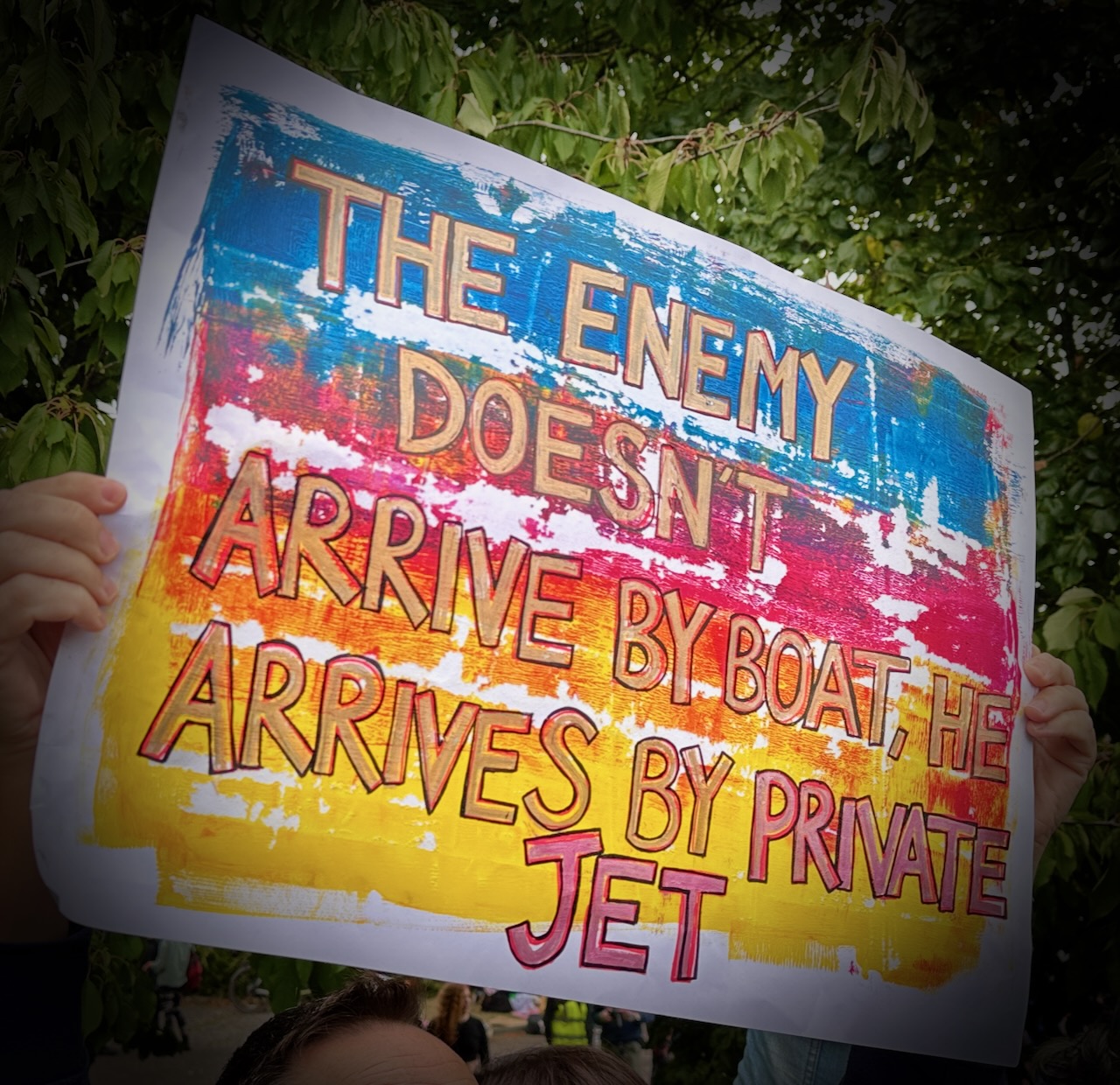
The enemy doesn't arrive by boat, he arrives by private jet

The Fragility of Freedom

Everything we now take for granted — our freedoms, comfort, and relative stability — could vanish in an instant. Trump is normalising military presence on American streets, perhaps laying the groundwork to declare sweeping emergency powers, suspend elections, or bypass democratic oversight. If not him, then perhaps Vance or another successor will.

Meanwhile, in Europe, governments are suppressing protest, increasing military budgets, and pandering to Trump’s ego. China grows more assertive. Russia, vast and patient, plays the long game. The world risks being carved up by the U.S. and its allies, by China and Russia, while nations in the Global South may only influence outcomes at the margins. Africa, rich in resources, remains exploited by all — Europe, China, Russia, and the U.S.

Over it all looms the climate and biodiversity crises, driving food shortages, violent weather, floods, fires, and mass migration. These may soon eclipse every political crisis — or accelerate our slide into protectionism and authoritarianism.

Choosing Courage Over Fear

The world feels increasingly frightening – and it’s okay to be afraid. What matters is how we respond to that fear.

Do we stay silent as freedom of speech and the right to protest are eroded? As citizens are arrested for demanding an end to genocide, or for calling for urgent action on the climate and nature emergencies?

Or do we stand up? Do we engage in protest and nonviolent resistance, call out hate and lies, and demand that our politicians act? Do we build a more tolerant, inclusive, and equal society — one that dares to reform the systems that no longer serve the people?

Recently, a video surfaced of a lone woman on the Norfolk coast confronting a group erecting nationalist flags. It was a small but courageous act, especially when others have been harassed or attacked for similar resistance. She refused to be a bystander. We all must do the same.

Resistance Begins with Us

We are being manipulated — by politicians, by media, by the ultra-wealthy, and by the far right’s lies and division. Patriarchy and privilege still dominate the stage. We are told what to think, who to blame, and which words are now forbidden. Migrants are scapegoated for problems created by the powerful.

We must rebuild from the ground up — stronger local communities, solidarity, and hope. Stop consuming the propaganda of our supposed leaders. Deploy hope, not hate.

Act now, before we are convinced that 2 + 2 = 5.

Courage calls to courage everywhere