Tag Archives: Environment

Why Aren’t They Listening?

The War between the Land and the Sea

Salt, Sea Devil ambassador: “These are the words of a politician, vetted and craven and hollow. You would answer.”

Barclay, Ambassador for human-kind: “Because we were stupid. That’s the truth of it. And the whole planet is going to hell right now because we didn’t understand the consequences.”

Salt, Sea Devil ambassador: “But now, you do?”

Barclay, Ambassador for human-kind: “Yeah, now we do. Still every day water companies are pumping poison and sewage into our rivers and oceans, all the while dishing out bonuses to their bosses. And the thing is, we are letting them get away with it! We’re just sat at home, flicking through our phones, making tea, thinking it’s someone else’s problem! But it’s not. This is my fault. We all played our part. Now we have to help fix it. And the thing is, our kids know this! Our kids. They’re way ahead of us! Why aren’t we listening? Well, today’s the day we start.”

Salt, Sea Devil ambassador: “I think you are my favourite human.”

_____________________________________________________________________________

This exchange from the new BBC/Disney+ series The War Between the Land and the Sea stayed with me long after the episode finished. The sets, costumes and visuals are impressive — but it was Barclay, the unlikely ambassador thrust into responsibility, who delivers the most piercing truth:

“And the thing is, we are letting them get away with it!”

“Why aren’t we listening?” 

Two lines that feel painfully relevant.

Water companies, oil and gas giants, the media, the banks, and the politicians who prop them up have been getting away with it for decades — and we’ve let them.

Where am I going with this?

This post is about why we must accelerate the transition to renewable energy, whilst also bringing essential services like water back into public ownership. For decades, executives have prioritised profit, bonuses and shareholders over public good. Since privatisation in 1989, it’s been yet another “victory” for neoliberal capitalism — one that has spectacularly screwed us over.

We’ve Been Betrayed

The science on greenhouse gases has been clear for almost two centuries.

  • In 1824, Joseph Fourier described the greenhouse effect.
  • In 1861, John Tyndall identified the gases responsible. The Tyndall Centre for Climate Change Research — named after Tyndall — is just down the road from me in Norwich.
  • In 1900, Knut Angstrom, discovers CO2 strongly absorbs parts of the infrared spectrum. 
  • In 1938, Guy Callendar showed that temperatures rose over the previous century. He demonstrated that CO2 concentrations had increased over the same period, and suggested this caused the warming. His claims were dismissed.
  • In 1968, US President’s Advisory Committee panel warned that the greenhouse effect is a matter of “real concern”.
  • In 1975, scientist Wallace Broecker put the term “global warming” into the public domain.

The above has been followed by countless IPCC (Intergovernmental Panel on Climate Change) assessments, and COPs (Conference of the Parties) to try to solve the challenge of climate breakdown. Some progress has been made, but not nearly enough.

We’ve known the facts. We’ve proven them. And yet oil and gas companies hid their own research, just as tobacco companies once hid the link between smoking and cancer. Billionaire-owned media outlets are defending them. Politicians were and are being lobbied into paralysis – just look at COP30. And so we are being lied to, misdirected and exploited whilst the planet is burning.

We have been failed time and time again by successive Governments who have put the interests of mega-corporations, profit and power, ahead of ordinary people. They have betrayed us to the altar of profit, lied, misdirected, and in some cases filled their pockets with blood money.

We didn’t “fail to understand” — we are being denied the truth.

We’re Not Stupid

Barclay says, “Because we were stupid.”

But we weren’t. We were and are being deliberately misled.

Instead of honesty, we got greenwashing, smokescreens, and faux responsibility — like BP inventing the personal carbon footprint calculator to shift the blame from corporations onto individuals.

Imagine if the public could be given the same clarity scientists shared recently at the National Emergency Briefing. The shift in understanding — and action — might come rapidly and radically.

National Emergency Briefing – https://www.nebriefing.org/

You can find recordings of the various segments of the National Emergency Briefing on YouTube.

How Fast Can We Decarbonise?

In the UK, we’ve reduced emissions — but we still emit far more per person than many countries with less wealth and fewer resources. And we should have made the major cuts twenty years ago. We’re now out of time for a gentle transition. We must act rapidly, even if it’s uncomfortable.

This will upset people, especially in a country used to convenience and abundance. But climate physics does not negotiate. Deaths, harm, migration, are all being caused right now by our carbon emissions.

Our Obligations 

We are privileged — often without realising it. Given our historic emissions, the UK has a moral obligation to move first and fast.

The alternative? Pull up the drawbridge, protect ourselves for a few extra years, and ignore suffering elsewhere. But our food imports, supply chains and future mass migration make that fantasy laughable.

Billions will be on the move. The question is whether we meet that future prepared — or panicked.

Tell the Truth

People are not being told the truth by politicians or the media. If they were, they’d understand what we are facing:

As laid out at the National Emergency Briefing, the collapse of AMOC (the Atlantic Meridional Overturning Circulation – a crucial system of Atlantic Ocean currents acting as a giant conveyor belt) could mean:

  • –30°C winters
  • extreme summer heat
  • chronic water shortages
  • the UK unable to grow food
  • the British becoming climate refugees

The irony isn’t lost on me; one wonders whether we’ll have enough small boats.

Extinction Rebellion warned we needed major emissions cuts in 2018. Oil and gas companies and wealthy governments around the world denied it, buried it, or have since waved around Carbon Capture and Storage — a technology unproven at meaningful scale, and one that conveniently ignores the huge emissions from extraction and transport of natural gas in the first place. Profit over life, again.

So, What Can We Do?

We need rapid, large-scale deployment of renewables:

  • Wind
  • Solar
  • Tidal
  • Geothermal – there’s some exciting stuff going on with old coal mines

Fusion power would be ideal, but remains underfunded and decades away. We also need to upgrade the grid and to build massive battery storage facilities. This is all doable and exciting, and will create huge potential in terms of sustainable economic growth, jobs and wellbeing, we just need the politicians in power to stop dragging their heels.

But there are obstacles. Solar is a prime example.

Solar Energy: What’s The Problem?
Rooftop solar is brilliant — low impact, popular, and efficient. But we no longer have the luxury of time. Large solar farms are faster to deliver and much cheaper per megawatt.

Using ChatGPT for initial comparisons (yes, with a pinch of salt but it saves me hours of trawling through websites and research papers), I asked, when looking at the electricity 4,000 acres solar panels could generate, what is cheaper and quicker to build – a large solar farm or rooftop mounted solar:

Large Solar Farms

  • 400MW: ~£400–600m plus land/grid costs
  • 800MW: ~£800m–1.2bn
  • Build time: 12–24 months after permitting

Distributed Rooftop Solar

  • 400MW: ~£600–800m (likely more)
  • 800MW: ~£1.2bn–1.6bn+
  • Rollout time: 5–10+ years

Planning times for solar farms could be slashed if government finally treated the climate emergency like an emergency.

And then there’s capitalism: energy companies don’t want millions of small producers cutting into profits. Legislation could fix this — but it requires political will. We already know neoliberal capitalism needs serious reform.

As for the criticism that solar farms use agricultural land:

  • They would occupy only 0.45%–0.82% of agricultural land, some of which is fallow at the moment anyway.
  • We already face food insecurity. Solar barely dents agriculture. 
  • Meanwhile, golf courses consume five times more land than solar would — and I know which I’d rather repurpose.

You can’t tee off on a golf course that’s underwater.

Unfortunately, there is significant opposition to solar farms, largely from people living near proposed sites — which is understandable

Grid Upgrades: The Unavoidable Backbone

We need new pylons, underground cables, or subsea routes — plus battery storage. None of this is optional, and the arguments are similar to the above. All options have ecological impacts, but we’re out of time for perfect solutions.

Pylons may be ugly, but they’re cheaper, faster, and even capable of creating wildlife corridors. France has even turned some into public art. If only imagination were a UK policy priority.

Large Scale Renewables Are the Clear Winner

Solar farms and other renewable energy sources are the clear winner if our priority is rapid decarbonisation. They are cheaper, quicker to build, will create new jobs and provide clean energy. They are our future proofing.

We face a choice: continue failing, continue betraying younger generations, retreat into selfishness and isolation—or respond to the climate and ecological emergencies with the urgency they demand, adopting something akin to a wartime mobilisation.

It may already be too late to avoid severe impacts. But every fraction of a degree of avoided warming saves lives, ecosystems and stability.

CO₂ rises → temperature rises → runaway climate impacts:

  • floods, fires, drought, famine, harvest failure, extreme weather, mass migration, ocean collapse, extinction events… and then societal collapse.

The stakes could not be higher.

The Path Ahead

We change — or we face the consequences.

The graph below shows how CO2 concentrations in the atmosphere have changed over the millennia, using data from ice core samples.

Carbon dioxide levels are higher than any time in the last 800,000 years

Renewables give us a fighting chance of reducing emissions and avoiding societal collapse. Oil, gas and nuclear leave only waste and devastation. Renewables can coexist with nature and even help restore it when designed well.

It comes down to communicating honestly, successive governments, oil and gas companies, supported and controlled by billionaire media magnates, have denied people that honesty: change now, or our children will not live to the same age we do. 

We don’t have to let them make us stupid, but they won’t change on their own.
We have to force it.

Let’s Take Back Power

From billionaires. From fossil fuel companies. From media moguls. From corrupted politicians who may not even realise how compromised they are. Let’s stop them getting away with it.

They’ve been getting away with it for decades. They are “craven and hollow.”
We can stop them.

And yes — I’m going to say it:

Vote Green. Let’s make hope normal again

Promoted by James Harvey on behalf of Broadland Green Party, a constituent party of the Green Party of England & Wales PO Box 78066, London, SE16 9GQ

BBC Coverage of the Climate Crisis: A Missed Opportunity

I recently wrote to the BBC to complain about their coverage of the climate crisis, which I, and many others, believe remains woefully inadequate given the existential threats it poses. Below is the complaint I submitted.

Coverage of climate change 

I’m writing to complain about the BBC’s inadequate coverage of today’s letter from the Climate Change Committee to Government on the UK’s preparedness for at least 2°C of global warming by 2050.

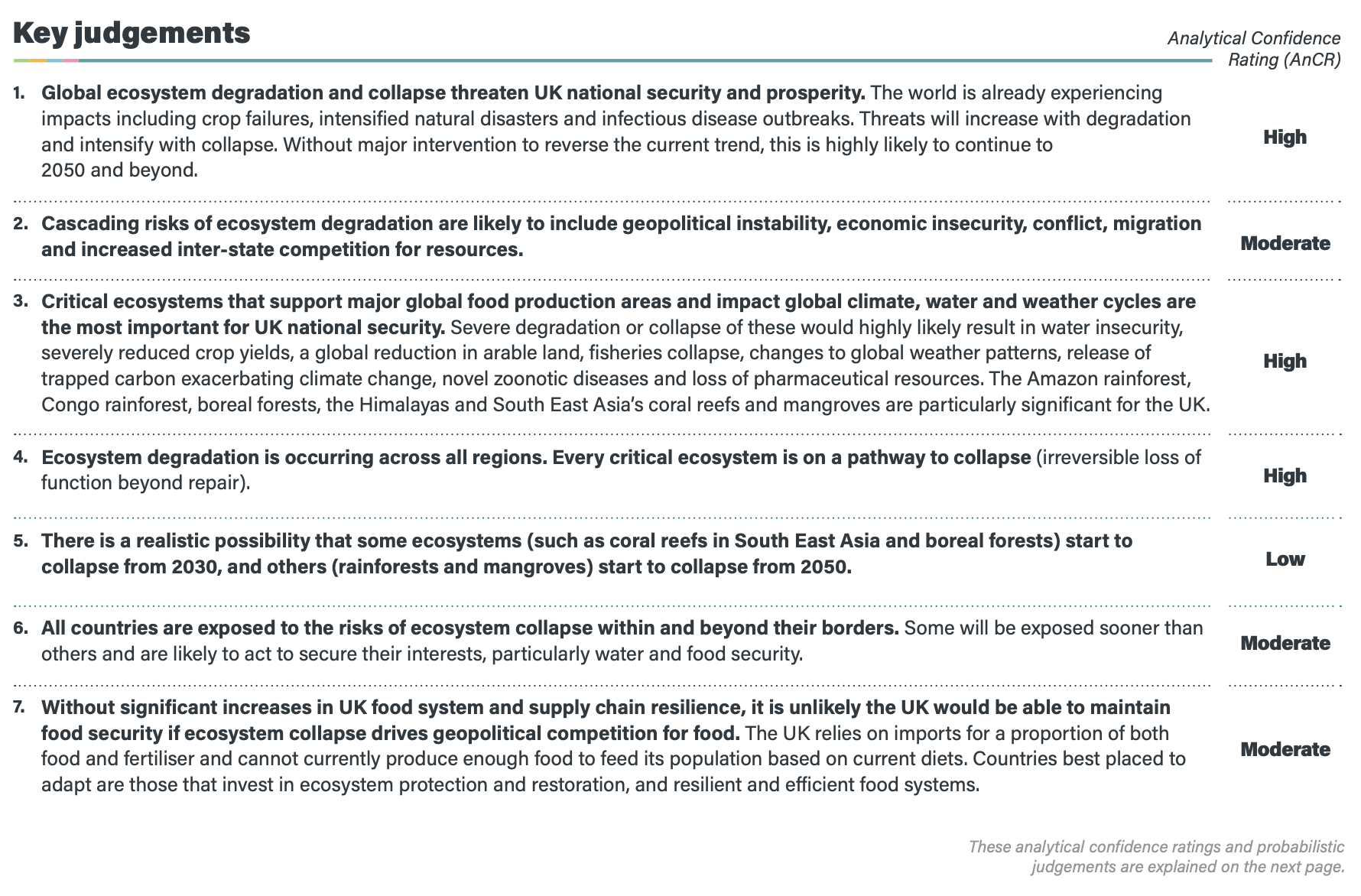
This is a matter of profound national importance, yet your main news programmes gave it little to no prominence. Such omission feels negligent at best, and at worst suggests a deliberate downplaying of vital information, whether due to editorial decisions, management influence, or political pressure. The public deserves transparency on issues that will shape our collective future. It is already known that Downing Street blocked a government report warning that the collapse of rainforests, reefs, and mangroves could raise food prices in UK supermarkets.

Earlier this year, the Institute and Faculty of Actuaries (IFoA) warned of escalating climate risks -more floods, fires, droughts, and ecosystem collapse. Their analysis projected GDP losses of up to 50% between 2070 and 2090, and warned that global heating of +3°C, possible as early as 2050, could cause over 4 billion deaths, societal collapse, and extinction events.

Despite the gravity of these findings, BBC reporting on the climate and nature crises remains inconsistent and insufficient. This undermines your stated purpose “to provide impartial news and information to help people understand and engage with the world around them.”

While I appreciate an article appeared on your website, this story should have led your main news bulletins, with clear context on what climate breakdown, mitigation, and adaptation mean for ordinary people. It would not have been difficult to feature credible climate scientists or policy experts.

I urge the BBC to give greater priority to the climate and nature crises, ensuring the public are properly informed and able to make meaningful democratic choices, particularly about which leaders and policies will act to safeguard our future and that of coming generations. 

You can read the letter I referenced here: https://www.theccc.org.uk/wp-content/uploads/2025/10/CCC-letter-to-Minister-Hardy-15-October-2025.pdf

The CCC warns that the UK must urgently strengthen its adaptation objectives to protect food security, infrastructure, public services, the economy, and access to financial services such as insurance. Many properties are already becoming uninsurable due to flood risk.

We are beyond the stage where it’s possible to mitigate all catastrophic climate impacts. Yet the current levels of adaptation -and even the plans for adaptation – remain unambitious and wholly inadequate. Inadequate seems to be the word of the day when it comes to both government and media responses to the climate and nature crises.

This is the response from the BBC I received last night:

Dear Mr Harvey,

Thank you for getting in touch about BBC News at Ten on 15 October.

We’re sorry you feel insufficient coverage was given to the letter addressed to the government from the Climate Change Committee (CCC), warning that the UK should be prepared to cope with weather extremes as a result of at least 2C of global warming by 2050.

We know that not everyone will agree with our choices on which stories to cover, or the order in which they appear. Our news editors make these complex decisions, based on the editorial merit of all the stories at hand. We accept that not everyone will agree with each decision – various factors are at play and there’s often debate in the newsroom too.

BBC News did cover this across our news outlets however and you can read the online report here:

https://www.bbc.co.uk/news/articles/cx24kllyye1o

The BBC has been reporting on both the effects of climate change and the changes that individuals and governments can make in order to reduce carbon emissions for many years. In recent years these reports have had increased prominence as the evidence grows about the speed and impact of climate change.

To read our latest News on the issue of climate change, you may be interested in the following link:

https://www.bbc.co.uk/news/topics/cmj34zmwm1zt

We can assure you that the BBC is committed to providing fair and impartial coverage of the latest News stories to our audience, and climate change is an issue that the BBC takes very seriously.

We very much value your feedback. Complaints are sent to senior management and we’ve included your points in our overnight reports. These reports are among the most widely read sources of feedback in the BBC. This ensures that your concerns have been seen by the right people quickly, and helps to inform decisions about current and future content.

If you’d like to understand how your complaint is handled at the BBC, you might find it helpful to watch the short film on the BBC Complaints website about how the BBC responds to your feedback. It explains the BBC’s process for responding to complaints, what to do if you aren’t happy with your response and how we share the feedback we receive.

Kind regards, 

BBC Complaints Team 
www.bbc.co.uk/complaints

I appreciate that the complaints team forwards feedback to senior management, and I can only hope that the BBC – and the wider media – will soon recognise the urgency of reporting on the existential crisis that is climate breakdown.

This crisis threatens the lives and livelihoods of billions over the next 25 to 50 years — and millions are already being affected, displaced, and killed by its impacts. It demands coverage that reflects its true urgency, accuracy, and frequency.

I’d be very interested to hear what others think — please feel free to leave a comment or share your perspective below.

This is fine
This is fine


Let’s Make Hope Normal Again

I find it increasingly strange, and frankly disturbing, how we’re being conned by politicians, much of the media, and mega-corporations. From birth, we’re bombarded by advertising designed to shape our thinking; by MPs who chase votes with half-truths, misdirection, or outright lies; and now by social media echo chambers that trap us in a cycle of misinformation.

As a Green Party member, I find it refreshing to have leadership that isn’t afraid to tell the truth. As a district councillor, I can vote in the best interests of my constituents – and with my conscience – rather than following the orders of a party whip. Zack Polanski’s election as Green Party leader, by a huge majority, has brought articulate and intelligent debate to the forefront again – on immigration, the climate crisis, renewable energy, and human rights. His policies on taxing the super-rich (the top 1%), reforming the private rental sector, renationalising water companies, and providing universal free childcare are resonating deeply with people across the country.

Green Party membership is now over 140,000, making us the UK’s third-largest political party. Polls put us around 15% of the vote, level with the Lib Dems and closing in on Labour and the Conservatives. Reform UK may be polling slightly higher, but perhaps that’s unsurprising when they’re not bound by things like telling the truth, or avoiding donations from dubious sources. People are joining the Greens in their thousands because we’re the only party that speaks plainly, answers questions directly, and puts people before profit.

Why don’t other political parties do the same? Surely an MP’s job is to represent their constituents – and by acting in their best interests, you’d think re-election would follow naturally. But that’s not how it works. Other parties are deeply influenced by corporate lobbying. Labour, for instance, met oil and gas company representatives over 500 times in their first year of power – that’s an average of two meetings every working day between ministers and fossil fuel lobbyists. Meanwhile, the Conservatives, Labour, and Reform continue to accept large donations from oil and gas interests, climate denial think tanks, and polluting industries. Is it any wonder, then, that their policies serve those industries – while the public is distracted with talk of immigration and welfare spending?

There’s a growing frustration with politicians who dodge questions or distort the truth. Brexit was, in part, a reaction to this. Westminster has become synonymous with elitism, corruption, and detachment from reality. It’s not even a criminal offence to lie in the House of Commons. Again and again, politicians mislead the public with impunity, aided by a media that too often fails to hold them accountable—especially those on the right.

Why isn’t Nigel Farage grilled about the £350 million-a-week NHS pledge that vanished after Brexit? Or challenged on the fact that immigration is essential to sustain our NHS, care sector, farms, and schools, as well as to support an ageing population and pensions system? Why aren’t we hearing that renewable energy is cheaper, faster to build, and infinitely safer than oil and gas?

In 2008, I was fortunate enough to visit the Great Barrier Reef on my honeymoon and swam among the coral and turtles – a breathtaking experience. Last week, I read that we’ve passed the planet’s first major climate tipping point: warm-water coral reefs are dying and will soon disappear. Hundreds of millions of people depend on them for food and livelihoods. Other tipping points – Amazon rainforest dieback, ocean current collapse, permafrost melt, and ice sheet loss – are not far behind. Each accelerates the next, creating feedback loops that speed up climate breakdown.

Then, this morning, I received an email from the Government responding to a petition to halt airport expansion. Part of it read:

“The Government therefore supports airport expansion where proposals contribute to economic growth, can be delivered in line with the UK’s legally binding climate change commitments, and meet strict environmental requirements on air quality and noise pollution.”

The list of planned expansions – Gatwick, Luton, Stansted, and beyond – was all about “economic growth” and maintaining the status quo. But if we don’t act decisively to cut emissions, climate breakdown will destroy any chance of growth – and in some regions, any chance of survival.

Carbon dioxide levels are still rising. Meanwhile, the fossil fuel industry funds anti–net zero campaigns and uses politicians as mouthpieces to protect their profits. Green energy offers a massive opportunity: it can create jobs, cut bills, and reduce emissions. We could lower bills immediately by cutting the link between electricity and gas prices, but that would hurt oil and gas profits, so it doesn’t happen. These same companies continue to receive huge public subsidies that dwarf support for renewables.

Airport expansion is simply incompatible with our climate goals. No amount of greenwashing through “sustainable aviation fuel” or dodgy carbon offsetting schemes will change that.

If we’re serious about telling the truth, we need to be honest about green energy too: why we need to decarbonise, why solar panels (covering just 0.7% of UK land – less than golf courses) can help power our future, and why upgrading the grid and installing battery storage is essential – even if that sometimes means projects are built near where we live. Time and money are tight, and we don’t have time to always wait for the perfect solution.

The clock is ticking. Hundreds of millions in the Global South are already dying from floods, fires, famine, and disease linked to climate breakdown. We’re not immune here either: UK farmers face failing harvests, rising food prices, and more frequent flooding. Some truths will be uncomfortable and require lifestyle changes – but that’s a small price to pay compared with a world of famine, fire, and forced migration.

Scientists and even insurance companies are warning us. The Institute and Faculty of Actuaries (IFoA) recently projected global GDP losses of up to 50% between 2070 and 2090 and warned that a +3°C world – possible as soon as 2050 – could cause over four billion deaths, social collapse, and mass extinction events. GDP loss seems almost trivial in comparison.

The Green Party tells it like it is – guided by science, compassion, and a commitment to act in the best interests of the majority, not a privileged few. Our membership continues to grow rapidly. We’re out on the streets, talking to people, telling the truth, and offering real solutions not tainted by corruption or corporate influence.

The good news? If we act now, we can still build a fairer, healthier, and more hopeful future – for ourselves, our children, and the countless other species we share this planet with.

Come join us – and let’s make hope normal again.

Promoted by James Harvey on behalf of Broadland Green Party, a constituent party of the Green Party of England & Wales PO Box 78066, London, SE16 9GQ

Green Party

What does it mean?

A friend said to me today that it’s still really hard to compute what it could mean, after I sent them a link to this article.

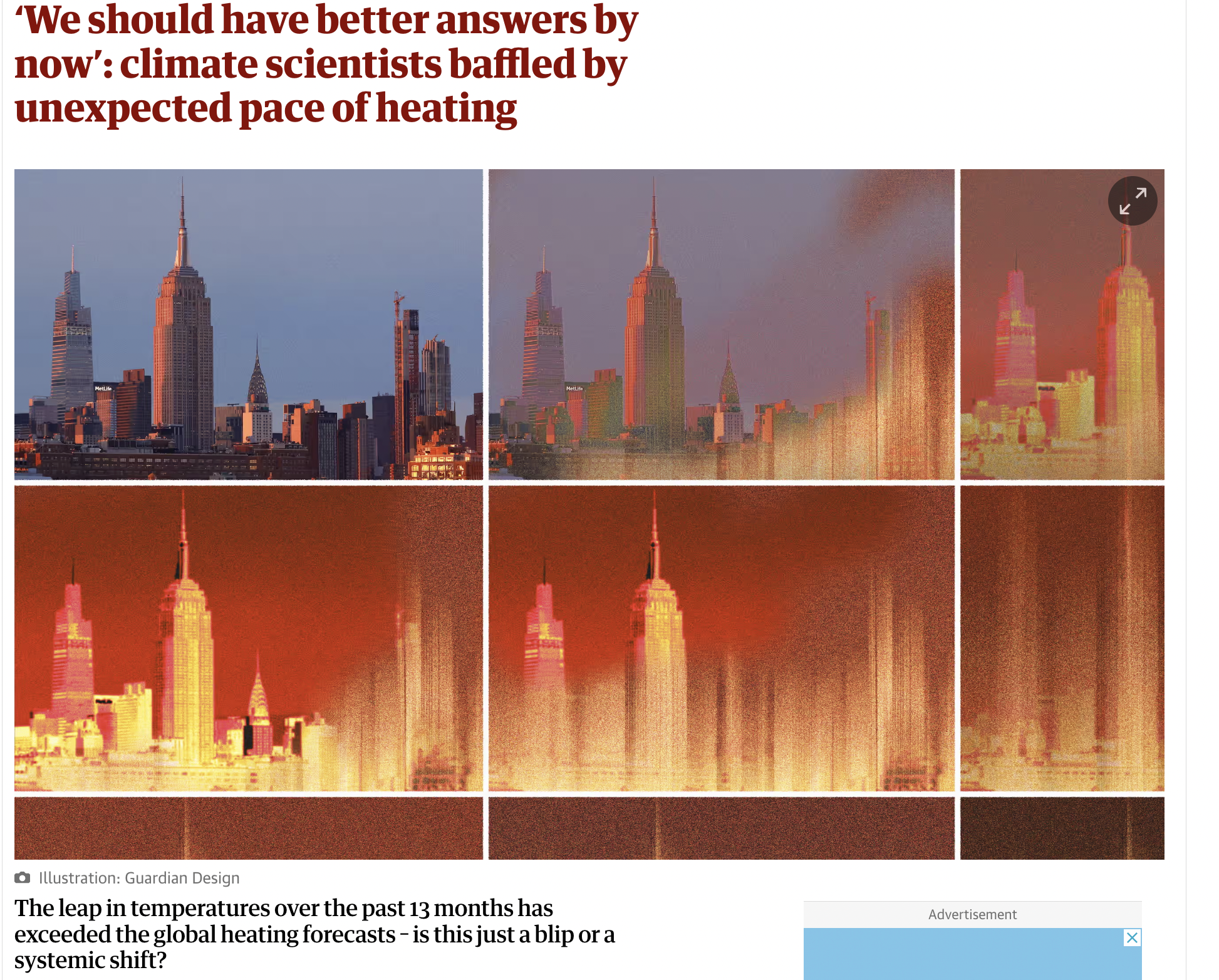
https://www.theguardian.com/environment/article/2024/aug/15/we-should-have-better-answers-by-now-climate-scientists-baffled-by-unexpected-pace-of-heating?CMP=Share_AndroidApp_Other

What’s published in the media on climate collapse isn’t usually the full view of scientists, not as bad as they think the situation really is. If you talk to climate scientists you’ll largely find them depressed, sick of not being heard, of being ignored by politicians. They have to ensure the information they publish is backed by facts, by peer reviews, but in private they’ll tell you it’s probably a lot worse than that, we just can’t prove it yet.

It is hard to compute. Our brains don’t want to think about it. We are averse to thinking about our own demise. It has got me thinking about it all again this evening.

The Mediterranean Sea is apparently 28oC in some places. It’s like walking into a hot bath. This is incredibly bad for habitats and wildlife.

https://www.euronews.com/green/2024/08/07/the-mediterranean-is-on-fire-experts-sound-warnings-about-why-marine-heatwaves-are-so-dang

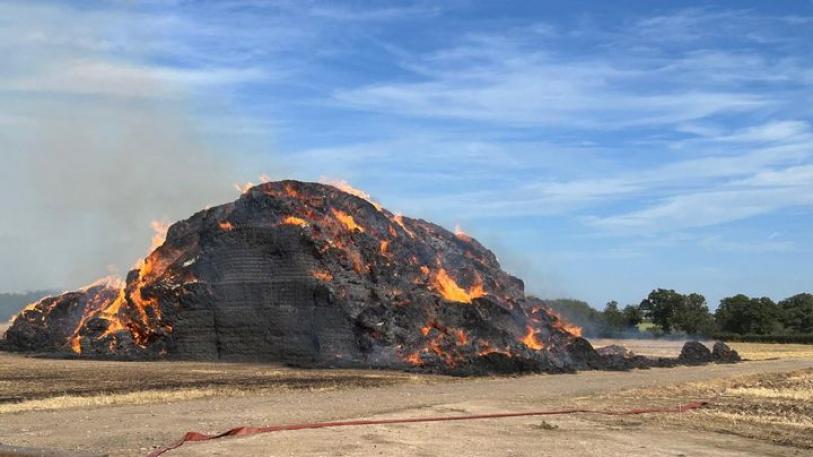
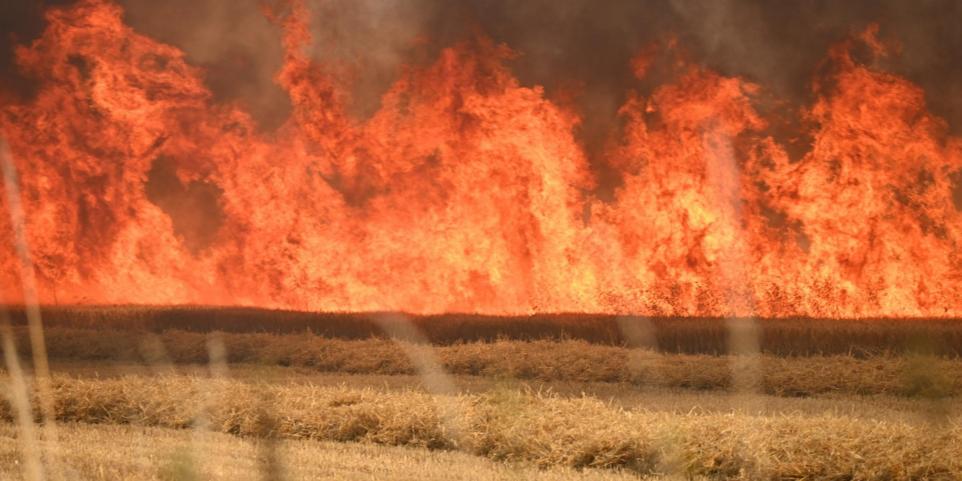
Temperatures records are being broken year on year, month on month, and sometimes day on day. We’ve just seen the wettest 18 months on record. Wildfires have burnt down half of Jasper in Canada and threaten Athens, California ablaze, similar in parts of Russia and South America: Patagonia, the Patanal in Brazil which is the world’s largest wetland, Venezuela and Chile. And in Australia, South Africa, Turkey, Cyprus, the list goes on, hardly anywhere is left untouched. We have field fires in Norfolk too, where I live.

Heatwaves in India approaching wet bulb mass mortality range. Tasmanian and Boreal (northern) forests dying. Harvests failing; Norfolk farmers had a hell of a time of it earlier this year, due to flooding, when they couldn’t plant crops or graze livestock. Italian and Swiss villages destroyed by floods, similar in Germany. 20,000 washed out to sea in Libya. 2022 floods in Pakistan impacting 33 million people. Sea level rise threatening low lying island states already. Amazon not absorbing carbon dioxide anymore and at risk of turning into desert. Bats and birds dropping out of the sky due to heat stroke. Caribbean islands being hit by record hurricanes which have destroyed all the buildings in some places, leaving women to give birth in the dirt. Devastating famine and water shortages in Africa. Water is now monetised, it’s being bought and sold to the highest bidders, traded on the stock market.

We’re on track for +2.7oC global heating, above pre-industrial averages, by end of century. It’ll probably be more than that due to the acceleration we’re seeing and tipping points being crossed such as the loss of albedo, meaning less of the sun’s radiation is reflected back into space, and methane being released from the permafrost. And the concentration of carbon dioxide in the atmosphere is still going up.

What does this mean? It equals food shortages, the mass migration of 1 billion people by 2050, if not earlier as it’s happening now, more wars for remaining resources which means more emissions, pollution and death. More holidays to places that are too hot to live in, or on fire, or flooding, or where the native populations are being made homeless or starving. It means economies will crash, people will lose their jobs, their pensions, their savings, their houses. There will be more civil unrest as people feel failed by the system. It means the rise of the far right, again already happening, which occurs when people are scared and need someone to blame; we know this from history. The breakdown of law and order follows, disease, pandemics and health service failure. Then, eventual societal collapse and the death of billions.

It’s not me saying this, it’s not my cause, it’s not Just Stop Oil or Extinction Rebellion’s cause either. It’s what climate scientists are stating, 99.9% of whom say we’re in big trouble due to global heating caused by our carbon emissions.

It’s what the UN Secretary General, Antonio Guterres, who is advised by climate scientists and the Intergovernmental Panel of Climate Change (IPCC) is saying; “we’re on the highway to climate hell with our foot on the accelerator“. The IPCC itself has said “the world is facing a “rapidly closing window of opportunity” to secure a sustainable future.” This window of opportunity is only a few years long, perhaps by the end of this decade, if not sooner.

And if you don’t believe them, or the International Energy Agency, Greenpeace, Friends of the Earth or the Red Cross, maybe you’ll believe Sir David Attenborough who said, amongst many other powerful things:

Climate change is also really important. You can wreck one rainforest then move, drain one area of resources and move onto another, but climate change is global. If my grandchildren were to look at me and say, ‘You were aware species were disappearing and you did nothing, you said nothing’, that I think is culpable.

Small communities might survive by the end of the century, in Northern territories, but they could all be screwed too if AMOC (Atlantic Meridian Overturning Circlation) stops. If that stops all bets are off, people could be squeezed into a very narrow habitation zone, where they’ll no doubt fight to survive. Here’s what Laura Jackson, a scientist from the MET office had to say on it. Her view is perhaps a moderate one, with other scientists saying the collapse of AMOC could come a lot quicker. We just don’t know for sure.

Some, if not all of this, is locked in. But we can still try to stop making it worse. We can come together, stop emissions that are causing global heating, stop burning oil and gas for energy, change the way we live (recycling just doesn’t cut it), grow food locally, stop eating so much meat, build resilient and well connected communities, reject consumerism and infinite growth, adopt doughnut economics. We can accelerate the transition to renewable energy, equitably across the globe, stick solar panels on every roof, paint stuff white to reflect solar radiation back into the atmosphere. We can stop building new roads, stop building houses in areas at risk of flooding or which include important wildlife habitats, preserve and restore nature, reuse and yes, recycle.

We could tax the super rich and use funds to build renewables and for adaptation. Tax the fossil fuel companies and put their execs on trial for genocide by oblique intent (see Rome statutes). Prosecute the media for spreading lies and half truths which have led so many astray. Prosecute corrupt politicians and business persons who have done the same and profited from it. Set up legally binding Citizens’ Assemblies to decide what we need to do. Change the whole system. If we do all this we might stand a fraction of a chance. We might not die.

At the moment though governments, the oil and gas industry, some banks and a lot of the media seem intent on waging war on humanity. We are being led astray by people we are told we should trust. I find it devastating when I hear people planning for 10, 20, 30 years in the future, for their kids futures, when the world is already on fire or flooding. What do you think our children are going to face in 10 years time, let alone by the time they are 50?

I’m not doom-mongering, I refuse to be complicit, even though we’re all trapped by the system we’re in and hypocrites to one degree or another. I refuse to stick my head in the sand and wait for someone else to sort it out. I refuse to be a bystander whilst millions die; that’s happening right now. I’m not being self righteous, or virtue signally, I’m panicking, I’m scared, I’m raging at a system which thinks we can just carry on as normal, and spends billions of dollars trying to convince everyone we can. More recently I’m massively saddened to see rampant racism and hate out on the UK streets, with young kids being swept up by it, I’m anxious due to receiving telephone threats from far right thugs after I attended counter protests. But I have to carry on, taking action is the only thing that gives me hope when I lie awake thinking how the lives of my niece and nephew, my godchildren, all children can and are being cut short. And that’s hard to write.

I will no doubt perish far sooner than my Mum. She lived to 83. I won’t.

But, I, along with thousands of other ordinary people will try to make a difference by taking non-violent direct action. I hope you do too.

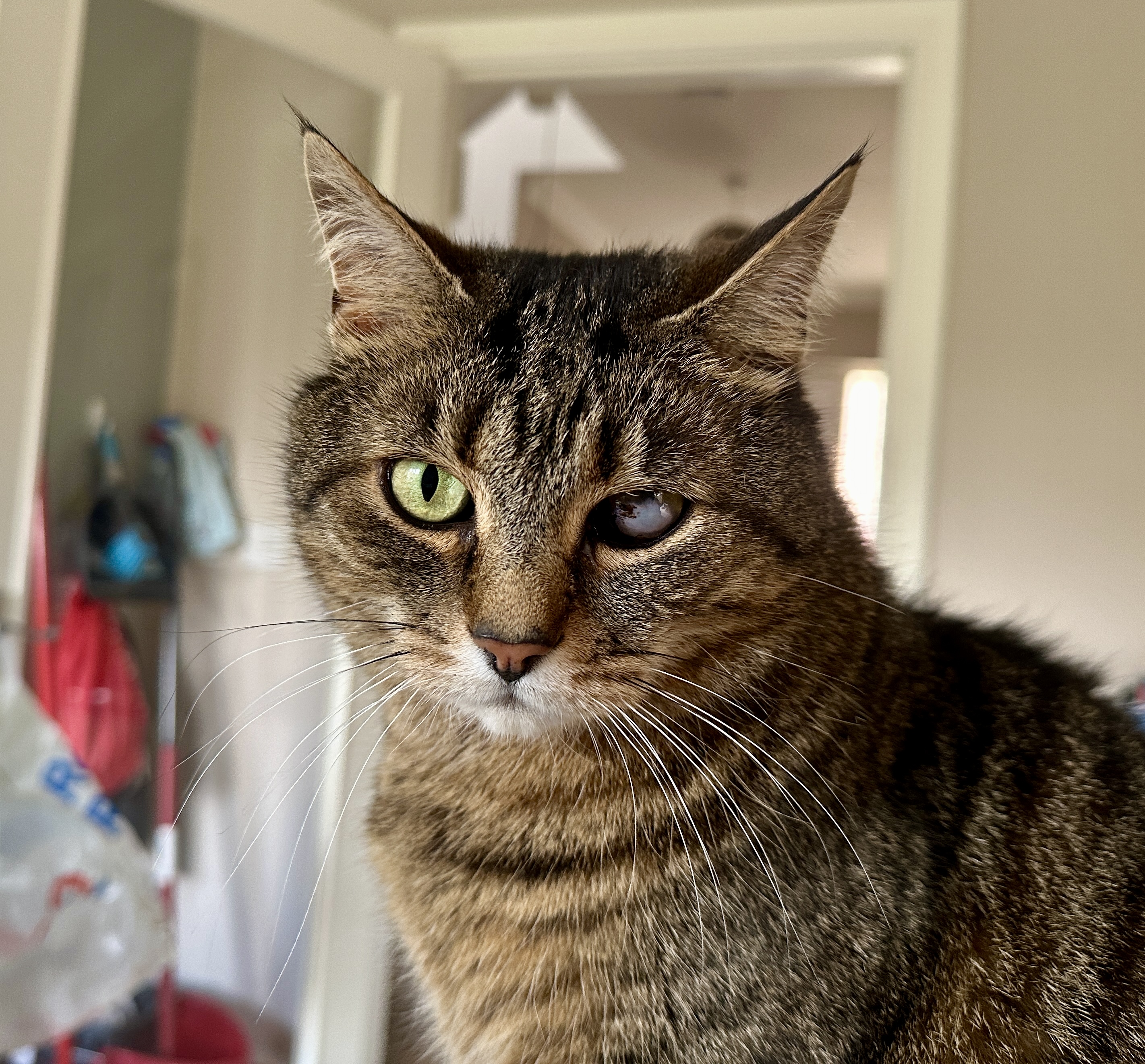
Couldn’t leave without a picture of Gideon, he is judging you, are you culpable?


Feel free to message me if you would like further information on how to take action with Just Stop Oil or Extinction Rebellion, or with local ’causes’ in Norwich and Norfolk. I am growing to hate that word…’causes’.

Norfolk – life in the slow lane (in a good way)

Norfolk. UK. It can be an odd place. There are the obvious jokes that seem to apply to any county that isn’t close to a huge metropolis, or which is agriculturally focussed. After 25 odd years of living here I still find the lack of serious hills a bit boring at times; having grown up in East Sussex with the South Downs, Norfolk can seem a bit flat until you get to the North coast.

It’s a beautiful county though; huge skies and horizons, the Norfolk Broads, the coastline and endless beaches, the picturesque little villages you stumble upon where time still seems to run more slowly than the rest of the world. The people are friendly and hospitable, and not hesitant about sharing a story or two, in fact it can be hard to get away if you engage them in conversation.

Today I went on a slow bike ride around a bit of the the Norfolk Broads, around Neastishead and Irstead, not far from Wroxham. I was deliberately pedalling slowly, just looking at everything, and pausing frequently. There were children playing in the country lanes, neighbours chatting on village greens and staithes (in a mostly socially distant manner) over a glass of cider (ok, can of scrumpy maybe). Nature was thriving everywhere with birds singing, mice foraging, lambs gambolling and even a glimpse of an Otter. And the plants, mighty Oaks and water loving Alder, hundreds of different wildflowers I can’t even begin to name, all buzzing with insect life.

What’s my point? I was just wondering why people feel the such a compulsion to holiday abroad, getting on a plane, flying to a concrete hotel complex somewhere in the world, with a sterile beach and swimming pool, food they ultimately complain about, with accompanying travel stress and carbon footprint. We have all this on our doorstep. Norfolk isn’t unique in having loads of places to explore and things to do. Coming out of lockdown why don’t we all fly less and visit the wonders on our own doorstep? I’m certain local businesses would appreciate it for a start, and connecting with nature in our local area is so good for folks.

I really enjoyed my slow bike ride today, and wander round Alder Fen Broad, then Barton Broad. Highly recommend visiting them; although maybe just leave Alder Fen Broad alone as it’s lovely and quiet, a bit of a hidden gem; so many Dragon Flies!

Exploring hidden pathways is fun, and did anyone else read Swallows and Amazons as a child?

I’ve really got to get myself a canoe. Sometimes paddling beats pedalling.

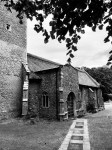
Anyone know the story behind the statue above Irstead Church doorway? Some kind of Broads Serpent maybe? I love how a ride round your local area can inspire your imagination.

Barton Broad offers another chance to see an example of car woodland; not much of this around anymore.

It’s been fun exploring my local area whilst I’ve been on holiday. I’m back to work next week, but hoping to work a bit less and get out a bit more!

Finally, for my Extinction Rebellion friends: Next Rebellion announced today, 01 September, Parliament Square in London if you’ve not got a local rebellion. Coincides with Parliament reopening. With Boris saying ‘Build Build Build’ (all the wrong ‘builds’ too), and 4C temp rises now predicted, it’s time to Rebel For Life; We want to Live!

Extinction Rebellion – where are we at?

Hi – this is a reflective post on Extinction Rebellion, with whom I’ve been involved for about a year and a half now, if not longer; recently time is starting to blur a bit. It will most likely be of interest to active rebels, but I’d invite anyone to read it and comment, as it’s useful to hear other opinions. I originally started writing it in a response to a post on social media, but apparently it’s a bit too long to fit in the comments!

Extinction Rebellion…Oct 2018 to June 2020

It was such a relief to me when Extinction Rebellion (XR) started in Norwich. Turning up at that first meeting in October 2018 to find there were lots of people like me, very concerned about the environment and ecology, and the path that we’re still on; 4oC temp rises, mass extinction, societal breakdown, mass migration and war, famine, drought, ecocide etc.

At the time the above were my main concerns, and still feature right up there on my worry list. Thinking about the future and what’s going to happen to everyone (humans, animals, plants, planet) genuinely does stop me from sleeping, and often makes me think everything pointless, because I’m not sure there’s anything we can do to stop this runaway train (unintentional link to HS2 there). There’s just not the willingness politically, or amongst business leaders, or amongst most of society in the UK to make the drastic changes we so desperately need. People don’t want to give up there comfortable, high-consumption, cosy and safe lifestyles; and by people I do mean most people in the western world. I totally acknowledge this is a challenge for me too!

I still think most people, even if they now know climate change is real, don’t really get the implications, or the impacts already being felt by the Global South and indigenous populations. Yeah, there were those fires in Australia, and didn’t South Africa run out of water, and what about those orang-utans (etc etc), but at the end of the day I can worry about that a bit then go back to my cosy lifestyle, as it’s not on my doorstep.

It’s not on my doorstep yet anyway. It will be soon but people don’t want their bubble broken, or to be taken outside of their comfort zone. It’s damned scary. Blissful ignorance is…well…blissful.

But once you’re properly awake, you can’t go back to sleep. And that’s why it was such a relief to find a group of people in Norwich, and nationally, who wanted to try and do something about an issue that has been on my mind for years and years. I think many of us, even if it’s at an unconscious level, have known something is wrong all our lives. Here was a group of people that really understood the depth of the crisis and changes needed. To us it’s obvious why you shouldn’t build another airport or more roads, damage vital habitats to build a railway or more houses, or push an unfettered economic growth policy. It’s obvious the modern way of life and capitalism is ultimately killing us. It’s now more obvious how this links in with Social Justice. All of this still isn’t obvious to most people though, and I can’t really judge them on that; it’s a hard topic and not widely discussed or accepted.

I’ve was never involved with any kind of activism before XR, and I think that’s pretty representative of a lot of our membership, aside from some of our ‘leaders’ (hesitant about using the word leader, probably mean more founders). We’re just ‘normal’, run of the mill UK people, with ‘normal’ jobs and lifestyles. And yes, a lot of us are middle classed, and very privileged; I for one acknowledge that. Until recently I didn’t know much about other movements and struggles, and for example I still view organisations like Unions with distrust (but trying not to judge).

Sure, I was worried about the NHS, Brexit, human and animal rights, racism, fairness, and a host of other issues, but for me these all paled into insignificance versus the Climate Crisis and Ecocide. In the end these two things have made me an activist, and got me out onto the streets. I think this is still the case for lots of XR members; the climate and ecological crisis is the issue that trumps all other issues, as if we don’t solve that there won’t be anything else left to fix. I still believe that to an extent. And I think a lot of rebels still want us to focus on that, and feel we might be trying to bring too many other issues into scope.

However, since those early XR days, I’ve learnt loads thanks to talking to lots of other rebels; I could reel off a long list of names and talks I’ve been too, but you’ll probably know who I’m referring to if you move in those circles. XR has been a gateway to the world of activism and learning more about the issues we face locally, nationally and globally. One of the biggest areas of learning has been around Global/Social Justice, and how it’s all linked. We can’t fix the climate and eco crisis without addressing Global Justice. And by Global Justice I mean acknowledging and taking action to stop the exploitation of the Global South and indigenous populations, and to support them on the front-line of the climate crisis; they’re already dying in their thousands.

It also means acknowledging and doing more to combat racism and inequality in our own country, for the same reasons, and that includes within XR. We need everyone’s voices (I exclude racist and some other categories from ‘everyone’) and to engage with all communities, not to distance ourselves from them, or say we don’t need them; I have personally seen this happen. We also shouldn’t take actions without understanding the impact it can have on communities which one doesn’t originate from. More empathy, outreach and understanding needed.

What can we do to make XR better? What can we do to fix what could be viewed as a make or break few months? I don’t have all the answers and shouldn’t expect to; we need everyone’s help with that.

What don’t I want to see?

I don’t want to see current rebels, who joined for the same reasons I did, leaving because they think being middle classed and privileged means they’re no longer welcome, or because it means they don’t really have a right to protest. I think I need to acknowledge and use my privilege in a constructive manner, to hopefully to make things better. I also acknowledge the ‘not feeling welcome’ bit is how a lot of BAME/LGBTQ must feel all the time.

I don’t want to see XR paralysed by internal politics, especially at a national level. I don’t want to see us starting to rely on a hierarchy that will stop us from doing anything; we’re a self organising system with demands, principles and shared values. We shouldn’t be held back because suddenly one of our previously key members/leaders is doing something we find is at odds with those principles and values; let’s move on.

There are quite a lot of very self righteous people (I hope I’m not one of them) around at the moment who are getting too judgemental perhaps. Too many egos? Maybe XR is being used as a platform for other causes where it’s not really appropriate to do so?

I also really don’t want to lose the grass-roots rebels we have, that would diminish us. I feel that if you’re part of something you care about, and think it might be broken somewhere, then it’s better to try and at least fix it before leaving; if you think it’s worth your time and effort, and isn’t going to bring you too much stress or ill-health.

What do I want see?

I want to see the 4th demand (Social Justice) put in place as soon as possible, and don’t want to have to wait for months of endless talk and meetings for this to happen. I personally think if the majority approve it in local groups, they can just add it at a local level, and national can catch up.

I want to see our existing rebels get motivated and out on the streets again for the right kinds of actions; targeted actions versus government and corporations. Not actions that are going to adversely impact already stressed communities.

I want to see peaceful mass actions at a local level. Sure, we should go ahead with national actions and large scale well considered, well-messaged, and well-managed Rebellions, but local groups shouldn’t just wait for these to happen, or be reliant on central ‘leadership’.

I want to see more outreach and discussion with working class and BAME communities. I would love XR rebel numbers to grow from their ranks, but if that’s not possible please can we learn from them, act in harmony with them, and support each other? I am certain we can do this with the BLM movement.

I want to see more education and trainings to help people understand how the climate and eco crisis is inextricably linked to Global/Social Justice. This will surely help bring communities together; more integration and learning on both sides. We need more actions specifically on Global Justice, or XR rebels turning out to support actions organised by these movements.

I want middle class XR members to understand why it’s more difficult for working class, LGBTQ, and BAME communities to rebel, and to support them where they can so they feel they are able to, so we can create a united movement across society. I think this is starting to happen, but we have a long way to go still.

I want people not to be afraid to speak what’s on their mind, ask questions, challenge statements, enter in to discussion. It’s the only way we really learn.

I desperately want people to pause more often for self reflection and to think about what they’ve learned, whether they need to learn more, and whether that means they need to alter their trajectory at all. Really – Before you judge a man, walk a mile in his shoes (empathy). We shouldn’t get paralysed by self reflection though; sometimes happens to me.

I want more people helping and doing stuff, rather than just talking about it, or criticising. I want less meetings and more actions.

I am probably wanting too much, and again acknowledge I am speaking from a privileged position, and that I still have lots to learn. Yep, I’m one of those middle aged, white, middle classed white blokes, but I don’t think that means I should just shut up; it does mean I should listen more though.

I move through periods when I think anything is possible, to periods of despair and grief, especially when I move outside my own echo chamber (but even whilst within it).

I’ve just got to carry on believing change is possible, and hoping we can work out how best to bring about that change as time goes on. But time is ticking, and frankly I’m increasingly anxious (or terrified ) about how little of it we have left to make the significant changes needed. Maybe only months, maybe years; those tipping points are looming. I am increasingly tempted to do what some have done, try and buy my own patch of land, somewhere remote, and prepare for the worst.

How do I feel better? By organising and participating in targeted non-violent direct action and positive outreach, centred around the climate and ecological crisis, as well as global justice. It feels right to me, when they’re the right sort of actions/outreach, and when they have some sort of impact. More of those sorts of actions, and I hope with an ever increasing number of Rebels, as well as cross-overs with other movements and communities.

Finally, a plea.

As we come out of lockdown I’m hoping we don’t go back to where we were prior to Coronavirus, and that we don’t let our government and business leaders take us back there by investing in the wrong areas, to drive more profit and growth for the benefit of a very small fraction of society. We new a new baseline to work from.

There are many positives to take from lockdown, such as being able to work from home, not needing to travel so much, consuming less in general, and how local communities have rallied around to help one-another.

I hope we can ‘Build Forward Better’, a green and sustainable future investing in the right things, which doesn’t include projects like HS2 (remember we can work for home), massive new road schemes, or housing developments on endangered biodiverse habitats.

I hope people realise that long term happiness and satisfaction is more about who you have around you, functioning communities, being able to play, being able to enjoy nature, being able to talk to your family and neighbours. It’s not so much about having to go on holiday abroad twice a year, or constantly buying new stuff you don’t really need at the expense of our environment, ecology and the Global South. Let’s stop sleep walking towards our own destruction.

We can be happy without all of that, in fact we can be happier than we are now, with less stress, mental and physical illness. We should be able to support one another across society to make this happen; a transition to a fair, sustainable, resilient, and green world.

Now stop reading my ramblings and go enjoy some nature, dance in the rain, play some music, talk to a neighbour, play a game, or just be in the moment for while.

Love and Rage.
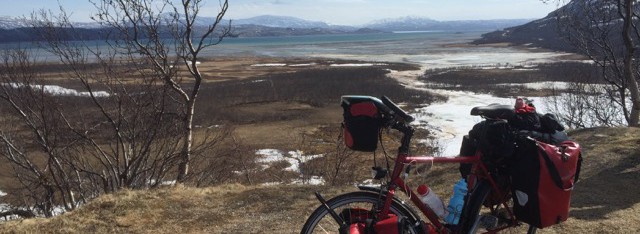
Please stop scalping Mother Earth

I haven’t written to the Council for a bit, or to my MP, however after pedalling round my local country lanes over the last few days I felt motivated to write the below. I might also submit this to the local newspaper tomorrow to see if they’d life to print a version of it. I’m sharing it on my blog as I’m sure many of you will feel the same way. Here’s a nice photo before getting into the letter; let me know quick if you spot any typos!

Norfolk waterway

Norfolk waterway with willow trees and cow pasture

03 June 2020

Dear Sir/Madam,

I’m sure like me being able to enjoy Norfolk’s glorious countryside over the last few months has been of great solace during lock-down. We have an amazing variety of habitats, plants, mammals and birds, and I was delighted to see the Swallowtail butterflies when I cycled up to Hickling Broad the other day.

I am currently working from home, as are many people; those fortunate enough not to have been furloughed or made redundant, or our committed key workers who run the risk of catching COVID-19. I try to get out once a day for some exercise, which generally involves a bike ride or a walk around the Salhouse area. At the weekend I go on longer rides taking in many of the county’s country lanes, teeming with wildlife and bird song.

One of the upsides of lock-down is that I’ve been able to get out in my local area a bit more, to appreciate nature in all its glory as Spring turns to Summer. The hundreds of varieties of plants and wildflowers, the insects in their multitudes that feed on them, the birds and mammals eating the insects; a wonderful trophic cascade. A couple of week’s ago I spotted a Stoat bouncing down a lane, hunting along the hedgerow, a sight that filled my heart with joy. It was accompanied by the magnificent sound of Skylark’s song overhead.

In the last two weeks it all seems to have dramatically changed, leaving me very sad, and filled with considerable rage.
Now when I cycle down the same routes the roadside verges, once teeming with life, are quiet, shrunken and lifeless things. They have been shorn down to the bare minimum, often the naked earth, as if Mother Nature herself has been scalped. Gone are the wildflowers and plants, the brightly coloured beetles, the butterflies around the nettles, the birds finding food for their young. There is no sign of the Stoat; there’s nothing for it there anymore.

I don’t understand why this is done. I have checked the information on the Norfolk County Council website on the page linked to below:

https://www.norfolk.gov.uk/roads-and-transport/roads/road-maintenance/trees-hedges-and-grass-verges

It says that roadside verges are only cut for safety reasons and not appearance. They are cut to ensure visibility and safety at junctions. It also extols the virtues of ‘almost 10 miles’ of roadside nature reserves; 10 miles, out of the 1000’s of miles of roadside verges we have in the county.

Now I get the safety and junctions point, and to an extent the visibility bit on some stretches, but the cutting goes far above and beyond this. Most cutting, aside from in the very few designated roadside nature reserves, is extreme, leaving very little cover. I am guessing this is to reduce the frequency of cutting, or is just down to ignorance or lack of care for the habitat being destroyed. I guess it’s also possible the contractors doing this work are assessed and have to make sure it’s clear where they’ve cut, and that the council is getting their money’s worth. I imagine there is a whole governance and sign off process around it that’s miles distant from caring about the safety of the plants, mammals and birds whose homes are being destroyed, or the vitality of the habitat that brings so such joy and relief to walkers and cyclists alike.

It’s not just roadside verges. There are reports of park or common land where wildflower meadows that have been allowed to grow, being dramatically cut back, with nesting birds disturbed or killed. Local residents in those areas have been rightfully devastated and angry to find their little bit of nature gone; it’s really bad for people’s mental health.

It appears the temporary reprieve nature had in many parts of the county, due to lock-down, is over. The stay of execution has expired. Not only are roads getting busier again, packed with traffic with a corresponding increase in roadkill (I passed a beautiful grass snake half squashed near Ranworth the other day, and lets not even get into hedgehog deaths), but we have restarted our relentless pursuit of dominance over nature. It’s got to be controlled, cut, shaped, moulded and turned to our purpose.

I request we change the way we’re looking at this. Roadside verges and hedgerows provide some of the last remaining habitat in the UK for our native flora and fauna. We’ve simply got to realise we’re a part of nature, not apart from nature. By destroying it, and roadside verges are just one simple but effective example, we’re harming ourselves and future generations.

Instead of cutting nearly everything back, which seems to be the case in most places, why can’t we reverse the policy and only cut at real key points, such as at junctions as the Norfolk County Council’s website references. On straight stretches of road, with a clear line of sight, there really can’t be any excuse for cutting down to the bare earth. We’re in a climate and ecological emergency, and desperately need to protect our remaining biodiversity. Instead of just a handful of ‘roadside nature reserves’ why can’t we have just a handful of ‘roadside cutting zones’ with the new normal being verdant habitat for wildlife. Give the plants, mammals and nesting birds a chance.

I’d like to talk about a couple of other things, just to support this.

The UK has been hunted, developed and farmed to within an inch of its life for thousands of years. We have very few wild places left, and a massively reduced diversity of plants and animals. Very few bits of ancient woodland, or habitat that has reached its climax state, remain. We are highly critical of other parts of the world who are destroying their own perhaps more obviously biodiverse habitat, such as rainforest, for example for agricultural purposes. The poorer nations doing this are often doing so to provide goods and services for us. They’re doing now what we’ve done to our own country for centuries, and our own corporations are encouraging them to do so in the name of progress and economic growth.

We’re massively exploiting the Global South for things like food, precious minerals for our mobile phones, palm oil and fossil fuels, with profits mostly going to line the pockets of the elite in the Global North. We’re privileged hypocrites and most of the time we don’t even realise it. Can’t we spare our remaining bits of nature the chop, and try and set a bit of an example for other nations? This also links in with social and environmental justice, but that’s a topic for another day.

The Coronavirus originated in China, and it seems evident that anthropogenic (human based) pressure on natural habitats caused the outbreak. Human incursions (habitat destruction, pollution etc) into natural habitat, stressing natural systems and balances, caused this horrible virus to jump to humans, leaving us with a global pandemic and widespread tragedy and grief. I’m not saying that cutting verges and hedgerows will cause a similar outbreak, but it’s the same principle; destroying nature harms us in the long run, and we’ve got to learn to live alongside it and not try and tame it all the time.

I was really hoping that we could emerge from the pandemic with a new strategy for life, a refreshed system, with no going back to old harmful and destructive practices. I know many people are trying to change the way they live, with working from home becoming the new normal, and perhaps reduced consumption rates and associated emissions. Please can we do all we can to encourage this, including stopping the highly destructive practice of roadside verge and hedge cutting where it’s not needed? It may seem like a little thing, but all these small steps add up to something bigger.

And if we can get a new normal, with more working from home and much less traffic on the roads, we could scrap other environmentally and ecologically destructive projects such as the Wensum Link Road, or housing developments on County Wildlife Sites such as Thorpe Woodlands, or plans to expand Norwich airport. We desperately need to invest in a greener and more sustainable future, and to relieve ourselves of the suicidal notion that unfettered economic growth is either possible, a positive measure of success, or leads to happiness and satisfaction.

I humbly request that as a county we revisit the policy on grass verge cutting, as well as decisions made in a different era on developments that are no longer needed, and which don’t make any sense when we know we need to reduce emissions and protect biodiversity.

If we don’t act now, we wont leave anything for future generations. Please stop scalping Mother Earth.

Yours sincerely,

James Harvey

Salhouse resident


P.S. Photographic evidence of excessive roadside verge cutting available upon request


Wild plants and flowers – Part 1

Over the last couple of months I’ve been able to get out a bit more, either before the lockdown started on my bushcraft course, or for my daily exercise regime now we’re having to practice social distancing. I’m grateful that whilst Coronavirus has brought hardship and grief to many, at least it came along in springtime, and with good weather to boot. I am enjoying walking or cycling through the Norfolk countryside, exploring hedgerows and copses, fields and Broads.

As well as birds and mammals getting busy with nest building, courtship and young, insects are buzzing and plants are growing. Since starting to learn about wild plants I’ve been amazed at the number of different types one can find in a small area. Different habitats can hold a multitude of different species; sunlight hitting a cleared woodland ride can cause dormant seed banks to germinate into colour, soggy marshland paths produce verdant green borders, and the hedgerows of Norfolk country lanes are just alive with plant life, in turn providing food and homes for animals and birds.

This year more hedgerows and road borders are being spared the chop and left to grow, leading to what seems to be an even greater abundance of springtime life. When I come upon a roadside verge that has been mowed, or a hedgerow that’s been flailed, I really notice the difference; sterile, smells empty, no colour, less buzzing and birds. It’d be great if Councils left far more of these areas to grow, and if people could leave at least a corner of their gardens to go wild, all providing vital habitat for plants and animals who are otherwise up against it.

As there are just so many plants to cover I’ve decided to split my blog into a few posts. I’ll cover ten or so species each time and see how far I get. Most species will be native to the UK, but they’ll be the odd non-native that slips in just because they’re interesting or have a pretty flower, or because I didn’t realise they were non-native. The definition of a native species seems to vary, but in general it’s a species which has evolved and is self-sustaining in a region, and which has not been introduced; although it could have arrived and colonised an area by natural non-human based means. To count as native the plant species needs to have been present in an area since ‘historical times’. Unfortunately I need another definition for ‘historical times’ at this point, as for example Sweet Chestnut (Castanea sativa), whilst widespread in the UK, is technically non-native as the Romans introduced it; good food source and building material.

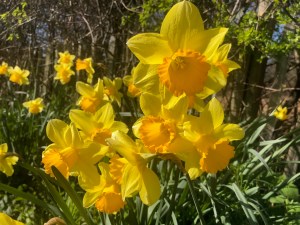
I’ve already included a picture of Daffodils (Narcissus), of which there must be hundreds if not thousands of different species. Their brilliance in early spring can drag you out of the winter doldrums, and they also have a number of different medicinal properties which I won’t go into right now (colds, burns, wounds). If I do mention any medicinal properties please don’t take my word as gospel; do your own research and don’t believe everything you read. I’m pretty sure none of the plants I cover will cure COVID19.

I probably should have thought about how I was going to order this a bit more, rather than just going through my photos including them as they come. But that didn’t happen so here goes.

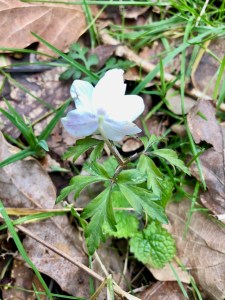
I’ll start off with the beautiful Wood Anenome ( Anemone nemorosa). I have to credit the second of the pictures below to the Wildife Trust website, as I needed another photo after realising the one I took a month and a half ago was from behind; not my greatest photography moment. The Wood anenome flowers from March through to May, although I think they’re about done this year. It has 6 or 7 petals (actually sepals) that can be purple streaked, surrounding yellow anthers. It’s low growing with slightly feathery leaves. I don’t know of any modern medicinal properties and think it’s probably quite toxic if you were to eat it. I always feel like Spring is firmly on its way when these appear.

The Wood anenome is an ancient woodland indicator species (AWI). An AWI is a plant species which is slow spreading, rather than a pioneer species that spreads by windblown seeds. They flower early before the tree canopy blocks out the sunlight, and are generally shade tolerant. Their rate of spread by natural means is limited to about a foot a year (if that), mostly via roots and bulbs, so when you see a carpet of bluebells, or a sea of Wood anenomes, you know they’ve been there for a long time. The definition of an Ancient Woodland is where there has been continuous tree cover since AD 1600; we have very little of it left in the UK, and projects such as HS2 definitely aren’t helping. If you’re in a wood and you see an AWI such as Wood anenome it’s a good sign the woodland has been there for a long time, and deserves respect and protection. One side note; the trees in an ancient woodland could still look young if it’s an area of coppice that has been managed for centuries, such as a traditional hazel coppice, so you won’t always see ancient Ent like looking veterans.

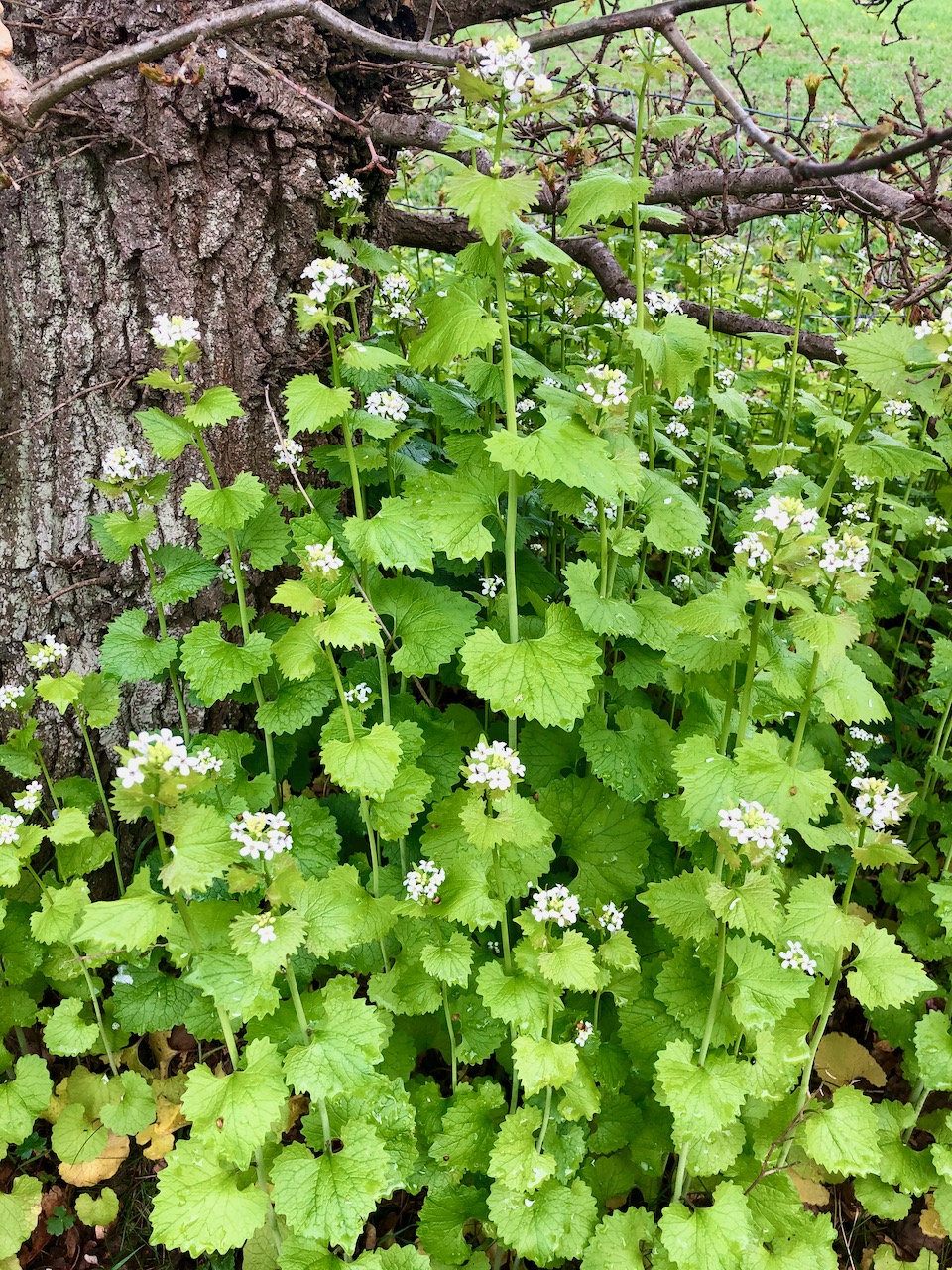
Next up is Jack-by-the-hedge, or Garlic Mustard (Alliaria petiolata), which flowers from April to June. The footpaths and hedgerows around me are full of this at the moment, but it can be found in woodland too. It’s a native biennial, biennial meaning it’s life-cycle goes across two years; it’ll flower in its second year. Perennial plants differ from biennials in that they live for more than 2 years, and can flower every year (not always though).

Jack-by-the-hedge

Jack-by-the-hedge or Garlic Mustard

I really like Jack-by-the-hedge. The leaves have a strong garlic taste, and can be eaten raw or boiled. You can eat the seeds that come later in the year which are also garlicky. Definitely a contender for Ransoms, otherwise known as wild garlic, which I’ll cover later or in another post depending on when my photo comes up!
Pedalling down country lanes at the moment I’ve seen a number of fine examples of the next entry, Greater Periwinkle (Vinca major). As suspected this plant was introduced to the UK, and can now be found throughout southern England. I’ve seen it in hedgerows where it trails and climbs, putting out these amazing purple flowers. I don’t think it has any particular uses, although maybe you could use the trailing stems to make rudimentary cordage.

Greater Periwinkle

Greater Periwinkle – amazing purple flower

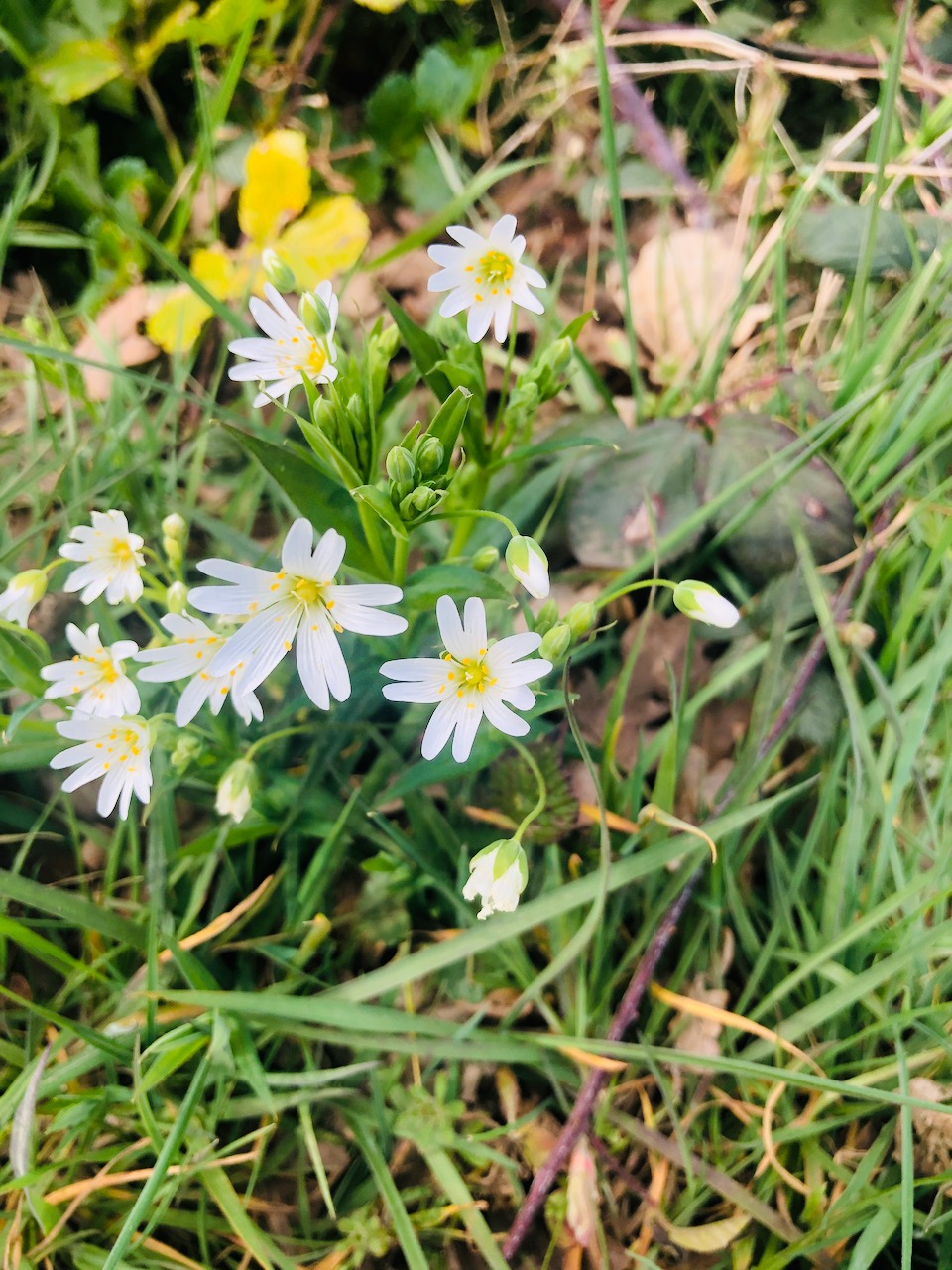
There are a lot of small white flowering plants around at the moment, and it’s easy to get them mixed up.  This next one could easily be confused with Greater Stitchwort, I reckon anyway, but is in fact Field Chickweed, or Field Mouse-ear Chickweed (Cerastium arvense). I’m finding this along field edges at the moment, as well as roadsides. It’s a perennial, flowering from April to August, and is edible, although I’ve never eaten it and apparently you might want to cook it because of the texture. Pretty distinctive 5 sets of paired petals and yellow anthers.
Field Chickweed

Field Chickweed or Field Mouse-ear Chickweed (Cerastium arvense)

On the subject of when plants are appearing and flowering in Springtime, it’s worth talking about how things seem to be happening earlier and earlier every year as average temperatures increase due to climate change. I was introduced the concept of Phenology by a conservation scientist recently.

Phenology is the study of periodic plant and animal life cycle events and how these are influenced by seasonal and interannual variations in climate, as well as habitat factors.

What I hadn’t thought about before, but now seems blindingly obvious, is the impact plants emerging, flowering and going to seed at different times, due to climate change, will have on other species that might rely on that plant. If for example plants are starting to grow earlier in the year, then caterpillars that feed on those plants may appear earlier. The problem is that they may be around before the bird nesting season, meaning a species of bird that relies on that caterpillar for feeding its young may now be caught short on food supplies. That’s just one example and I’m sure there are loads of other worrying changes of a similar nature that will impact our flora and fauna. Thank you to Dr Charlie Gardner, conservation scientist, for that info; I hope I got it right!

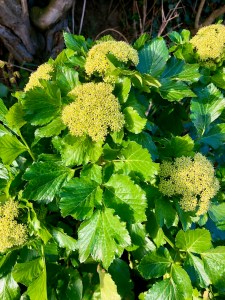
Climate change impact lesson over, back to plants. Here’s another one the Romans introduced because it’s a good food source. Alexanders (Smyrnium olusatrum), or hedge parsley, is a biennial, flowering from April to June, and there’s absolutely loads of it on the road edges and footpaths around me. I think it might be regarded as a bit of an invasive pest of a plant, and it certainly has quite a strong smell when there’s lots of it together. You can eat all of it which is handy; the leaves can make a white sauce or can be used as a herb, the younger stems cooked like asparagus, the roots make an alternative to parsnips and the flower buds can be eaten in salads. I’ve yet to try any but it’s on my to do list, I just get a bit nervous around the Umbellifer family, of which Alexanders is a member, as several of them can kill you very easily. Best not to get them mixed up really, and I’ll cover some of the poisonous ones on a future blog post.

Lesser Celandine (Ficaria verna) is another common plant I find in Norfolk, and throughout the UK. It used to be called Ranunculus ficaria but the Latin name has changed now, just to confuse matters. It’s a member of the buttercup family, as one might guess from the bright yellow flowers, and has other names such as pilewort. It also has quite distinctive heart shaped leaves. The name pilewort comes from its traditional medicinal use where the bulbous roots were used to make an infusion to treat haemorrhoids. The roots look a bit like haemorrhoids, which perhaps where the idea came from, but I have no idea as to their effectiveness; limited I suspect. It flowers from March to May, is a perennial, and can be seen carpeting banks and beside footpaths.

Lesser Celandine

Lesser Celandine (Ficaria verna)

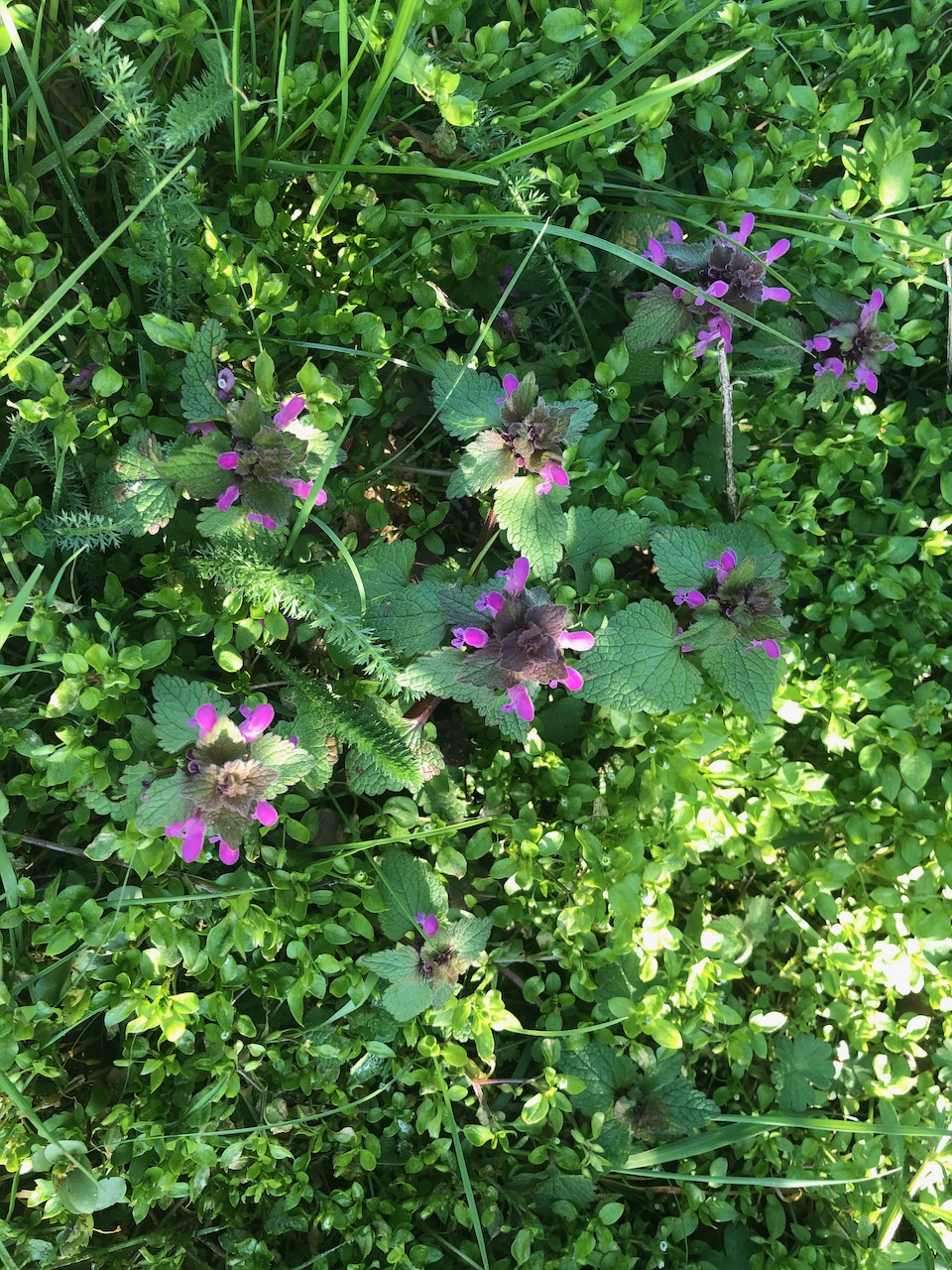
The photograph below isn’t perhaps the best example of the next entry, Red Deadnettle (Lamium purpureum), which is the first of several nettles I’ll include. This one doesn’t sting, flowers from March to October, and is again pretty common throughout the UK on verges, waste ground and field edges. I believe it does have uses in herbal medicine due to its astringent and diuretic properties, as well as being anti-inflammatory, anti-bacterial and anti-fungal, so you could use it for a wound wash or to make a poultice; nature is pretty funky when it comes to keeping wounds clean and helping them heal. It’s really not hard to find this if you go out for a wander.

Red Deadnettle

Red Deadnettle (Lamium purpureum)

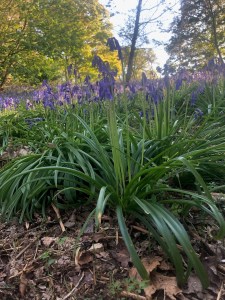
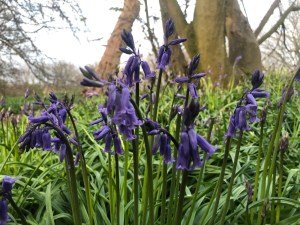
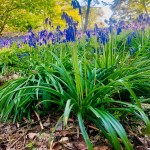
Another Ancient Woodland Indicator species can be found in our native Common Bluebell (Hyacinthoides non-scripta). This is a favourite of many, including me, not just for the colour that carpets woodland before the tree canopy closes, but also for the heady perfume they emit; such a lovely scent. It’s a perennial flowering from April to June, and is illegal to pick. I think it might be under threat from the Spanish Bluebell which was introduced and is escaping into the same habitat as our bluebell. When walking in the woods it’s good to take care to not step on bluebell leaves which are easily damaged; these plants take a long time to spread! Usage wise I think you can make glue from the sap and mushed up bulbs, but it really doesn’t seem like a good idea. They are also poisonous to eat, so let’s just leave them alone and admire their purple amazingness and heady scent.

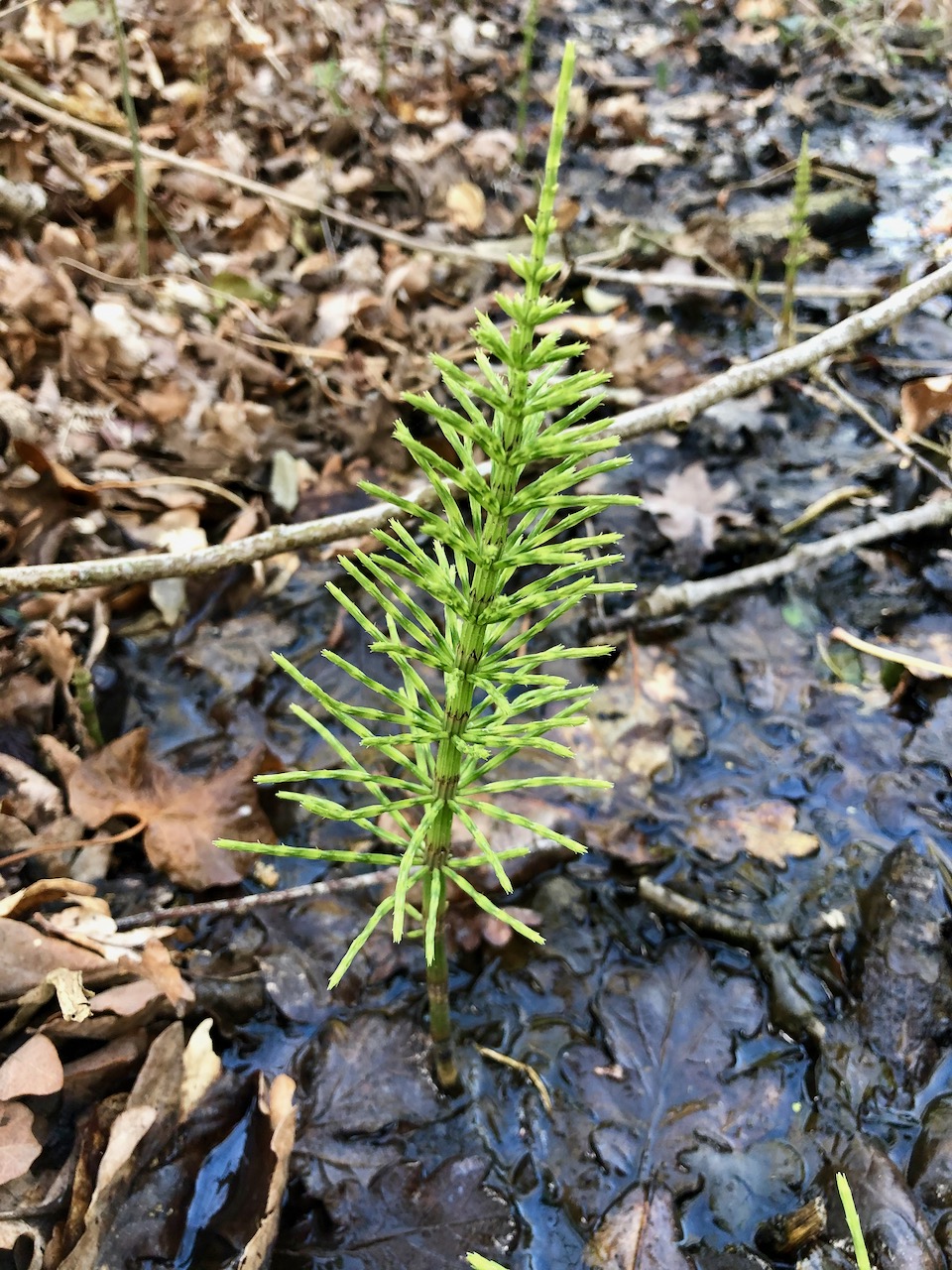
I’m not really sure of the exact species in my next photo, but it’s a Horsetail of some description. It was in a marshy bit of ground so could be a Marsh Horsetail (Equisetum palustre), or one of several other types, maybe Equisetum arvense. I don’t think gardeners like it very much as apparently it’s invasive and doesn’t flower, but I liked the vibrant green of it, and the intriguing shape and structure. I don’t know if it has any medicinal properties.

Horsetail

Horsetail (Equisetum sp.)

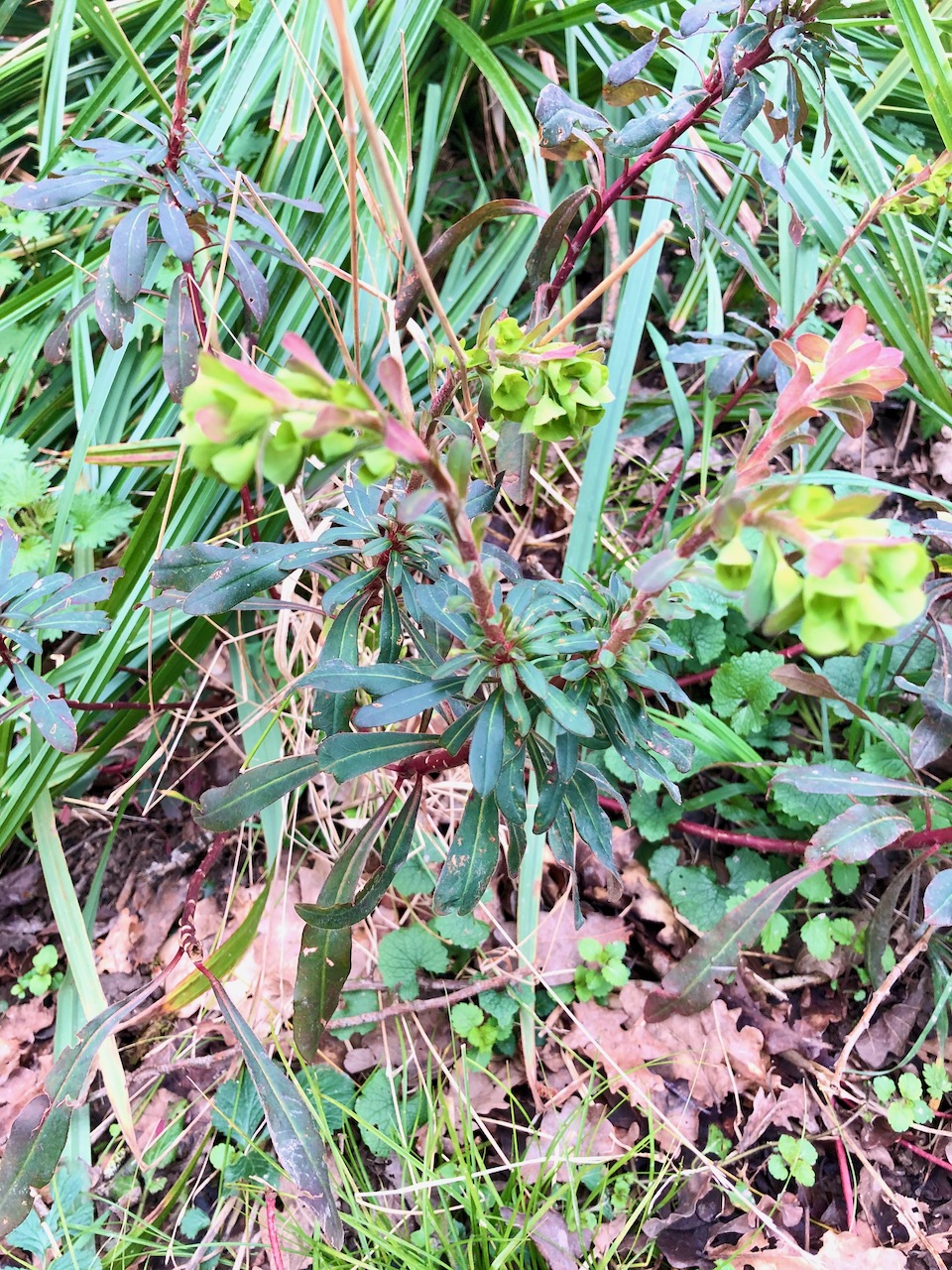
Wood Spurge is another AWI species, and pretty common in Southern England and Wales. It’s a perennial flowering from March to May, with yellow-green disc like flowering structures making it easy to recognise. As with other AWI’s it spreads slowly via underground rhizomes, creeping long the forest floor. The milky white latex sap from Wood Spurge is poisonous, and used to be used to burn off warts. Take care if you try this as leaving the sap on for too long can make your skin permanently photo-sensitve.

Wood Spurge

Wood Spurge (Euphoria amygdaloides)

I think that’s my ten species for this post, with Daffodils included as a bonus. There are hundreds of plants I could cover, but I’ll concentrate on the ones I can find locally, and also the ones that are featured on my bushcraft course. There are around 30 I need to learn the Latin names for, as well as their uses, so I’ll feed those into future posts if I can find them. There are just so many cool plants out there like Wood Sorrel, Foxgloves, Primroses, Bugle, Herb Robert and Pignuts, to name but a few.

If you spot any plants I’ve misidentified please let me know. I’m using a variety of books including the excellent Wild Flowers of Britain by Roger Phillips, as well as an App on my phone called ‘Picture This’ ,which doesn’t always give the right answer but often points me in the right direction.

More plants and flowers next week, possibly interspersed with an alternative offering should I be inspired to write something else.

Stay frosty 🙂

Bluebells, blossom, birds and beards by the broad

I don’t know what day of the lockdown it is, and haven’t really watched the news today. Sometimes I just want a break from all the bad news, anxiety inducing headlines, speculation and frankly at times moronic questions from journalists during the daily press briefings.

I’m getting particularly sick of hearing conspiracy theories about how the virus might have originated. I really don’t believe the Chinese manufactured it in a lab; it’s far more likely this has come from nature due to our continuing destructive practices bringing us closer to infectious diseases. We really need to address the ecological crisis, which of course is tired to the climate emergency. And don’t get me started on 5G nonsense, whether it be how 5G can spread the virus (give me strength) or other unscientific theories. Conspiracy theories don’t do anyone any good, and of course you can’t really argue with people that really believe them as they just claim your counter-arguments are all part of the conspiracy. It would be nice if some people weren’t so credulous, and eager to try and convince others of their lunacy. In severe cases it can really put lives at risk, and cause unnecessary disruption.

I’m pulling together photos from my recent wanderings for a blog post on wild plants you can find growing on your doorstep at the moment, however this is quite a lengthy enterprise. It’s amazing how many species you can find along paths and roadside verges. In lieu of that, here’s a short film from the woods down by Salhouse Broad I took today. Many Bluebells, a lot of Blackthorn blossom, birdsong and the odd beard.

Working from home is giving me many more opportunities to get out into nature in my local area, for my daily bit of exercise. I really hope others are getting the same opportunity, whether that be in the city, where nature can still be found thriving, or out in the countryside. Once we’re out of lockdown I hope that working practices will change for many, allowing more time at home with friends and family, perhaps a slower pace of life, and more time to appreciate the natural wonders we have in the UK.

The current crisis also seems to have stimulated a gardening resurgence, both for people growing their own food, as well as planting more nature friendly species to help wildlife. Both these are great things; growing your own food will make us far more sustainable and less environmentally damaging as a nation, and our insects, birds and mammals need all the help they can get at the moment.


We just need to remember to try and plant native species where possible, and ponds don’t need to be sterile ornamental things. The wild pond in my garden has birds visit it everyday, as well as a hedgehog at night; far more entertaining than coy carp, in my opinion.

Nature may appear to be thriving in many places in the UK at the moment, but it’s not all good news. On my cycle ride the other day I noticed yet more hedgerows have been torn down alongside a road where I believe new houses are to be built. Hedges provide such vital habitat for nesting birds and shelter for mammals, as well as wildlife corridors. I really don’t know why the hedgerows have been removed, especially during bird nesting season which I think it illegal. There still seems to be flailing (violent machine hedge-cutting technique) going on too, which I hate, not least because it sprays wood splinters all over the road causing me punctures; I’m more worried about the impact on wildlife though. I really wish we could try and live and ‘develop’ in a more harmonious way with the wildlife we have left. At least roadside verges seem to have received some respite this year, with less mowing; it’s amazing seeing all the wild plants and flowers growing.

Perhaps the lockdown will allow people more time to appreciate nature, notice its beauty, and take in the destruction happening. We need to get out of this state of denial and ignorance. We need nature as much as it needs us to protect it. Maybe lockdown will give people the pause and thinking time needed, and once we emerge we can turn the decline in biodiversity around, and put the health of the planet, ourselves, and that of future generations ahead of profit and so-called ‘growth’.

Plant blog to follow 🙂

A wander down country ways

Another week done and it’s suddenly Easter! I’ve fallen into a new routine and try to get out once a day for a walk or a bike ride, around work stuff. Dunno how long the lockdown is going to go on for, but feels like a few weeks at least. Was hoping to get down to my parents for Easter, but obviously that’s not going to be possible. At least I can still stay in touch with family via FaceTime etc. Happy Easter everyone!

One of my excursions this week ended up at Salhouse Church, where I sat under Yew tree for a bit. I wrote a poem about the Yew, a tree that has a lot of mythology associated with it. If you fall asleep under them you can end up having very strange dreams, especially when there’s pollen in the air.

Yew Tree at Salhouse Church

Yew Tree at Salhouse Church

A wander down country ways,
To ease the stress of strangest days,
I stumble on a church and grounds,
Yew trees gather close around,

These guardians of ancient sites,
Witnesses to age old rites,
Dare I climb its spiky limbs,
As evening comes and daylight dims,

Instead I sit and breathe in deep,
Will Yew tree pollen make me sleep,
And bring with it the strangest dreams,
Not everything is at is seems,

A gateway to deathly halls,
Its poison touch darkness calls,
But life and rebirth it can bring,
Something good to make one sing,

I didn’t climb this mystic tree,
Respectful of its solemn key,
I’ll find another trunk to climb,
And come back here another time.

I’ve been exploring a few new trails on my bike rides, finding new hidden gems I wasn’t aware of.

I’m not sure I’d be able to stay sane if I wasn’t able to get outside once a day. The good weather is definitely helping too.

Norfolk has a lot of churches, a testament to its rich farming past. Landowners competed for prestige by building churches, some of them quite large in relatively small villages.

For some reason I always convert church photos to black and white, seems to work quite well. As a counter here are some Bluebells from down by Salhouse Broad, which have started to come out in the woodlands round me; useful ancient woodland indicator species.

As usual it’s beautiful down by Salhouse Broad at the moment, especially given it’s relatively quiet, with plenty of room to maintain social distancing rules. Very grateful to have it on my doorstep.

I’ve been trying to get to grips with learning new plant species.  Hedgerows are crowded with new growth, flowers and colours. There are at least 4 species of nettle I’ve seen (dead nettles), as well as lesser celandine, stitchwort, chickweed, Alexanders; I think I’ll do a separate blog post for wild flowers and plants, which will help me learn their names, especially the Latin ones!

It’s great cycling at the moment, a real pleasure with so few cars on the road. I’m really hoping that when we get back to ‘normal’ people choose to use their cars less, maybe work from home more. It would do wonders for the environment, and hopefully mean people have more time to enjoy the important things in life. Less cars also means less road kill, which has been very noticeable over the last few weeks. Nature is definitely breathing a sigh of relief with verges left to grow, and animals and birds spared being hit by traffic.

I’ve been trying to get a bit of track and sign practice in too, as I’ll be assessed on it later this year. It’s got trickier this week as the ground is harder (not rained for a while), and given I only have a brief window of opportunity each day I can’t explore as much as I’d like to. I found a nice Muntjac deer print (think it is anyway), and the remains of a pigeon which I reckon was taken by a bird of prey. Also found a bearded lizard in my herb garden! (they might be pets though)

I’ll finish with a picture from Wroxham Bridge, showing a very quiet river. Last Easter Wroxham was packed with visitors, but today there’s practically tumbleweed blowing down the high street. Oh, and here are some cat pics too – current house guests leaving fur everywhere whilst enjoying finding new places to sleep.

Adios for now.